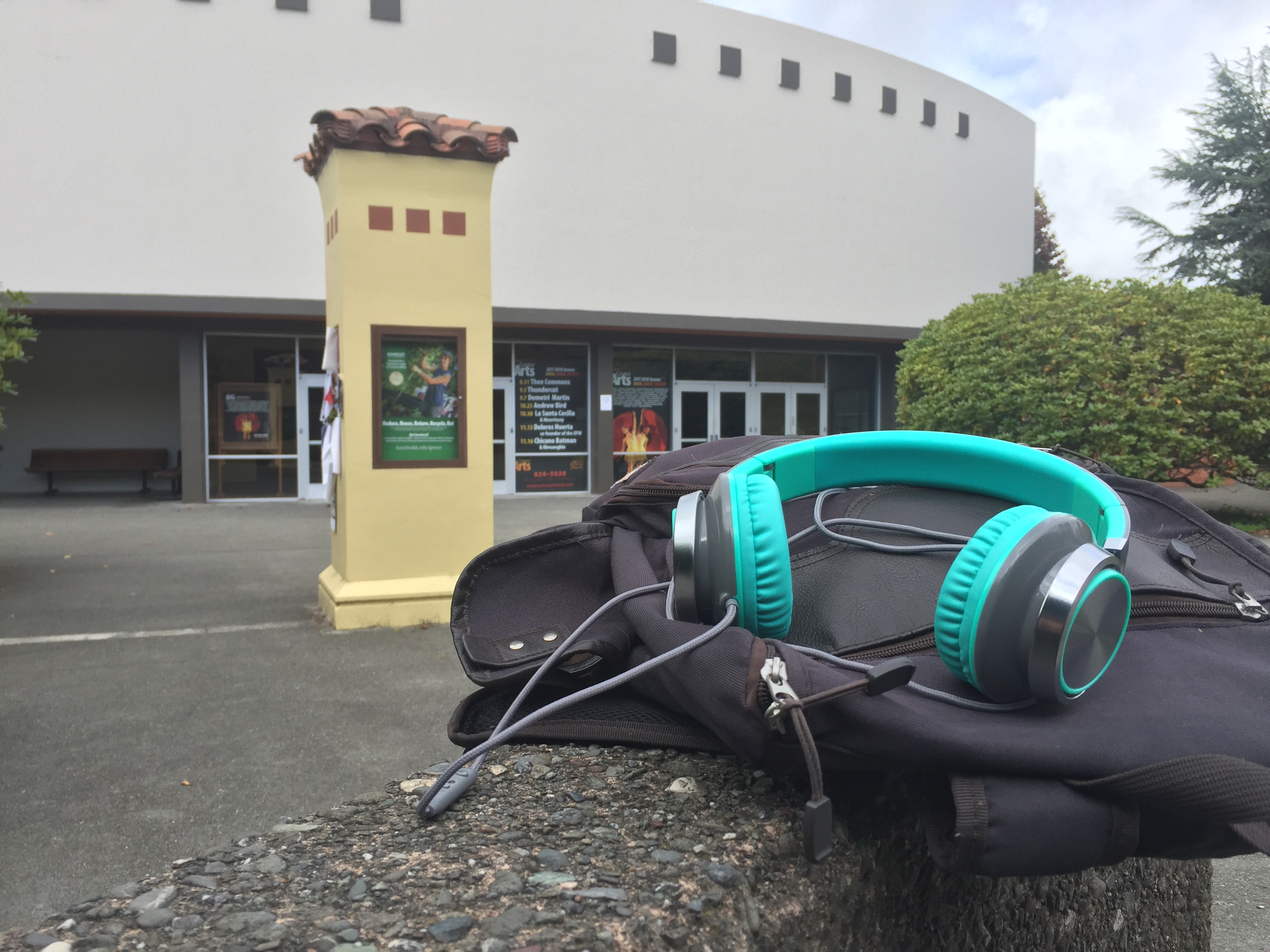
Students often walk around, to-and-from campus with headphones on and music turned up. With all of us having our own musical tastes, the thought of what others were listening to was an intriguing thought. Regardless of their tastes in music all of us students have one thing in common, and it is that our music means something to us.
Sophomore Wildlife Major, Tonita Johnson’s musical tastes are more underground. Her favorite artist is Nao, “She’s kind of alternative, and soulful,” Johnson said. Photo credit: Andre HascallSophomore Biology Major, Perin Swanson can be found listening to a variety of bay area music. However, he keeps old school songs close to home. Often listening to Mac Dre and Andre Nickatina, “Their rap style really shows what the bay is about,” Swanson said.Ashley Eckman, Junior Criminology Major prefers to have Kendrick Lamar in her daily playlist. “It pumps me up, it wakes me up and it cheers me up too, I guess,” Eckman said. Photo credit: Andre HascallKai Cooper (left), Freshman International Studies Major, often will listen to Doses and Mimosas by Cherub during her day. Amanda McDonald (Right), Freshman Environmental Education Major had to narrow her song choices down to one Artist, Esbe and their album “Bloomsdale”. Photo credit: Andre Hascall
With the official beginning of the new school year, clubs and organizations on campus are off to a strong start, including the African American Center for Academic Excellence, also known as the AACAE.
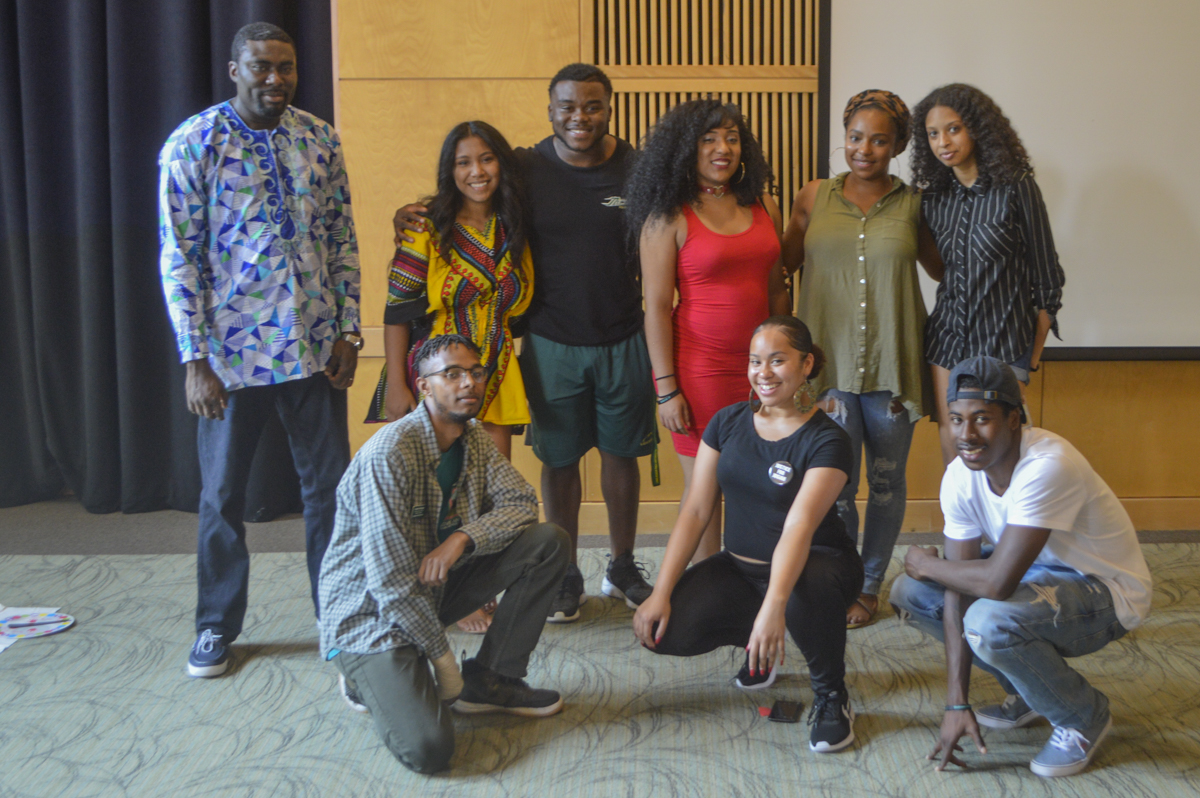
The Center hosted their first event of the semester on Sept. 2, 2017, a Welcome Black Reception, to incoming and returning Humboldt State University students. The event brought together students and faculty of all different ages, genders, and races together to kick off the new school year.
The AACAE is a student support space on the campus of HSU that aims to celebrate our multicultural campus by providing a guiding resource for students who identify as African American, Black or of African descent, as well as the entire university community. The organization was established in 2015 and since then has been continuously contributing to the efforts of making the Humboldt campus more inclusive and safe.
Games, snacks and music bring together students at “Welcome Black Reception” in the KBR.
Erin Youngblood-Smith, who is currently pursuing a master’s degree in Social Work and interning at the AACAE says, this semester, the Center’s goals are to continue helping, providing academic support and guidance for the student body of the HSU campus, as well as planning and collaborating with outside services, as well as other campus-based clubs on upcoming events.
Additionally, the AACAE has a serious agenda this semester, following the murder of David Josiah Lawson in April.
Jimento Aikhuele, a graduate student majoring in Environmental Engineering and intern at the AACAE said that the event is what brought him into the Center. “I knew the local [population] would be down and they might need support, one way or another.”
Both Youngblood-Smith and Aikhuele agree there is a gap between the Humboldt University community and the Arcata community that must be bridged.
“There cannot be a separation between the campus and the local community, there needs to be really structured communication,” Youngblood-Smith said, “stronger ties between the city and the university’ In order for all students to feel safe.”
Youngblood-Smith advocates education, such as conversations and workshops on safety in communities other than your own.
“That’s a priority, making sure our students know there are dangers everywhere and you need to be aware of them,” Youngblood-Smith said.
One student that has benefited from AACAE’s resources and proactivity is 19-year-old senior Psychology major Gabrielle Fox.
Fox says her transition to HSU would not have been as smooth if it wasn’t for the Center.
“There are people there who genuinely, truly want to see you succeed, it really makes a difference when you know you have somebody, who has your back and genuinely wants to see you the best that you could be,” Fox said.
According to Fox, to be willing to open your mind to different experiences and opinion is a significant step to inclusivity on campus and in the community.
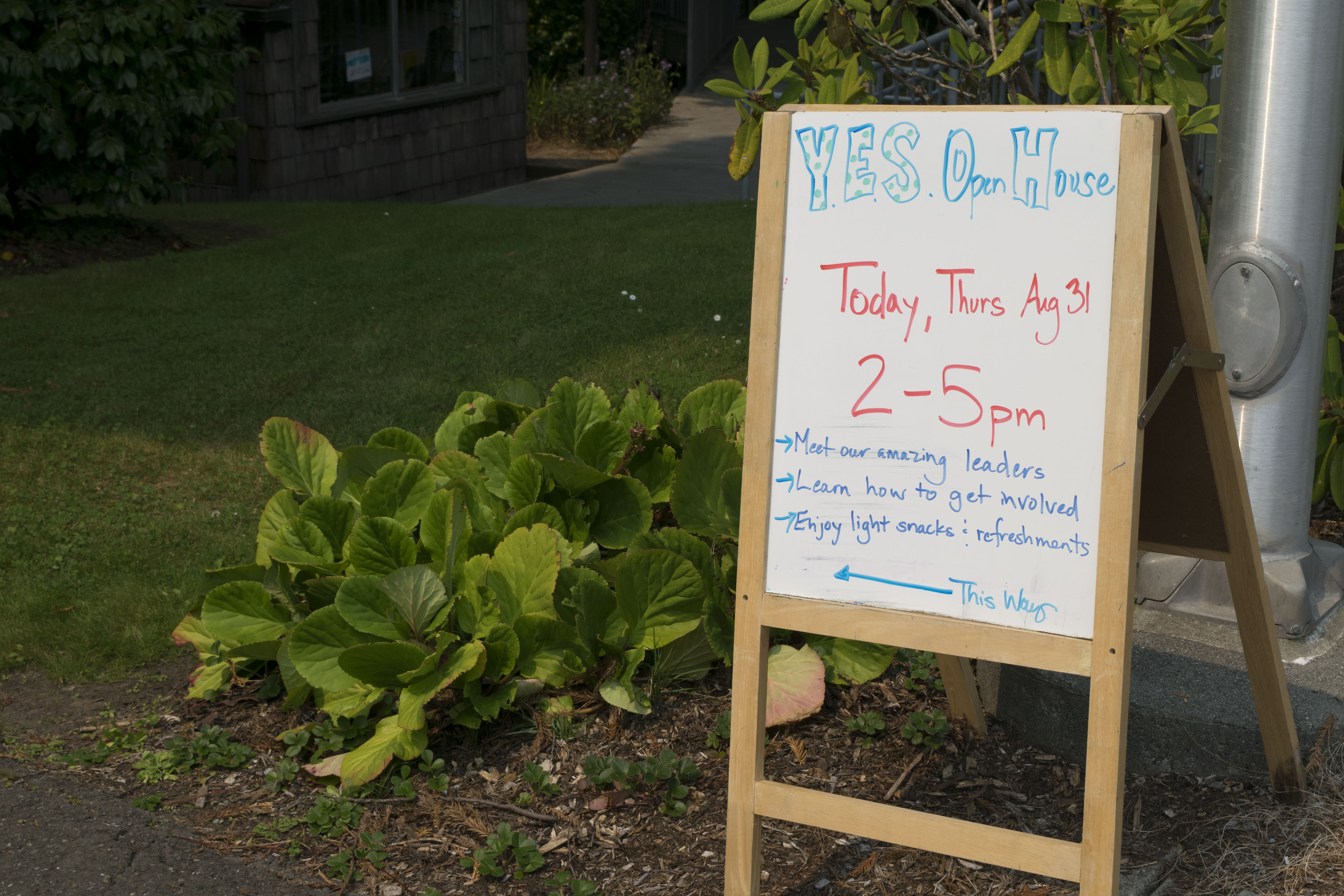
Thursday, Aug. 31, the Youth Educational Services house on campus, Y.E.S. House, held their open house for students and other members of the community to come and see what the Y.E.S. House has to offer.
Photo credit: Michelle Meyers
The Y.E.S. House is a completely student run program of the Associated Students of Humboldt State University and is under the department of Student Affairs. Since 1968, the Y.E.S. House has played a vital role in supporting students in becoming active members in their community and initiating social change by creating and implementing volunteer programs that serve the needs of the community.
Chalk leading the way to the yes house. Photo credit: Michelle Meyers
Currently, there are 13 different volunteer programs at Y.E.S. and each of them works with a different population within our local community. Their purpose is to offer support for any kind of needs they may have that arise.
New Games is one of the programs at The Y.E.S. and has been around since 1991. Cori Simons, a Child Development major at HSU and the newest Program Director of New Games explains that the program was created with the intention to promote “non-violence, non-competitiveness in children, and positive relationships between college students and children” through a wide range of team building games.
Cori Simons, New Games Program Director. Photo credit: Michelle Meyers
Simons said that New Games is still seeking volunteers and will eventually be hosting rummage sales and games days on the quad.
“We play a lot of improv games,” Simons said.
Cindy Xiong, freshman Wildlife major at HSU said that she stopped by the Y.E.S. House during her freshman seminar after her professor instructed her group to ask around and see what the campus has to offer.
“They told us about all of these different volunteer opportunities, and some of them interested me,” said Xiong, “As a Wildlife major, I wanted to do something that involved being outdoors.”
Xiong, who signed a volunteer slip, also expressed interest in the Environmental Education Program at the Y.E.S House.
Critical Race, Gender and Sexuality Studies major Oliver Winfield-Perez is the new Program Consultant at the Y.E.S House. He first joined as a volunteer for the Queer Mentoring and Advocacy Program because he wanted to work with queer youth in the community.
“Once I joined I found a very close knit sense of community within Y.E.S, I found friends,” said Winfield-Perez.
During his experience at the Y.E.S House working as a volunteer in the community and within his program, he said that he was able to develop certain professional skills, leadership skills,and social skills, which gave him the motivation to become a director for that program and then eventually apply for a position as Program Consultant.
“This year our theme is Empowerment and Activate,” said Winfield-Perez.
Winfield-Perez said his biggest role as the program consultant and the main focus of the Y.E.S. House is to promote community organizing on and off campus. They are also working to make HSU more inclusive.
“We are also really trying to support our student leaders, foster leadership, foster professional skills and communication skills within our students,” Winfield-Perez said, “and also create a sense of community and a support system for students on campus.”
According to Winfield-Perez, a good amount of students at HSU who have to fill a certain amount of hours for service learning come to the Y.E.S House to help meet that requirement.
“We’re really into service learning. Through our work of engagement within the community, we’re experiencing all of these things, so when we come back to the meetings, they reflect on what happened during times when they were in the community, what they enjoyed, what could be worked on, and then we take that knowledge and try to just apply it in different settings and, or apply it in the future,” said Winfield-Perez.
To submit a volunteer application with the Y.E.S House, you can complete the online volunteer contract located on their website.
As the end of last spring semester approached, sophomore Tonita Johnson, 19, had around $600 of leftover J-points on her meal plan. During the last weeks of the semester, Johnson was trying to spend her remaining points by paying for her friends who had used up all of their J-points.
“I paid for other people who ran out of J-points,” Johnson said, “I had to get rid of $600, I got it down to $92.”
Last year alone, $82,513 worth of unused J-points expired. HSU meal plan J-points expire at the end of every spring semester. Every year a number of students lose their leftover points. These already expensive points are nonrefundable and can’t rollover to the summer semester or the following school year.
Like many other students, Johnson took out a loan to pay for the gold plan she had last year. Students pay $1.96 for every $1 they get on the gold plan. The plan costs $5,544 while students only get $2,832 worth of J-points. $1,416 for each semester. This hidden,
prepaid cost is known as a fixed cost.
Johnson lost $92 of J-points, but adding the fixed cost fees she paid for when purchasing the plan brings her total loss to $180.
“That money would have gone towards my books and other stuff that I needed for this semester,” Johnson said.
Besides buying things for friends, before heading home to Los Angeles, Johnson spent some of her J-points buying things from the on-campus markets and left them at a friend’s house in Arcata that caught on fire this summer.
“My friend house caught on fire, a lot of those things that I’ve bought from all around got destroyed in the fire,” Johnson said. “Everything is gone. They lost a lot of stuff, I lost some of my stuff.”
HSU does not refund students any part of their remaining meal plan balance.
“They [HSU] should refund the points. I feel they have the ability to refund the points,” Joey Mularky, president of Associated Students, said.
Sahil Barot, a 19-year-old international student from India, said it’s a waste of money.
At the end of last spring semester, he had over $280 leftover points on his meal plan. He spent some of his remaining points on things from the on-campus markets, but still lost around $70 worth of J-points that expired.
“It was sad. It’s a lot, it’s a big amount,” Barot said. “With that money, I could buy my stuff for a month. My food, groceries, milk or cereal or vegetables and fruits I could buy it for a month.”
Barot’s family owns a farm in India where they grow cotton, potatoes and tobacco. His father helped him pay for the meal plan with their farm income savings. His father also took a loan to pay for his education.
“My father saved some money for me,” Barot said. “My father took a loan from a bank and got money from the farm.”
In a school where over 50 percent of student come from low-income families, there are no plans to consider refunding student for their unused meal plans money. This brings up the question, what does student who needs that money do?
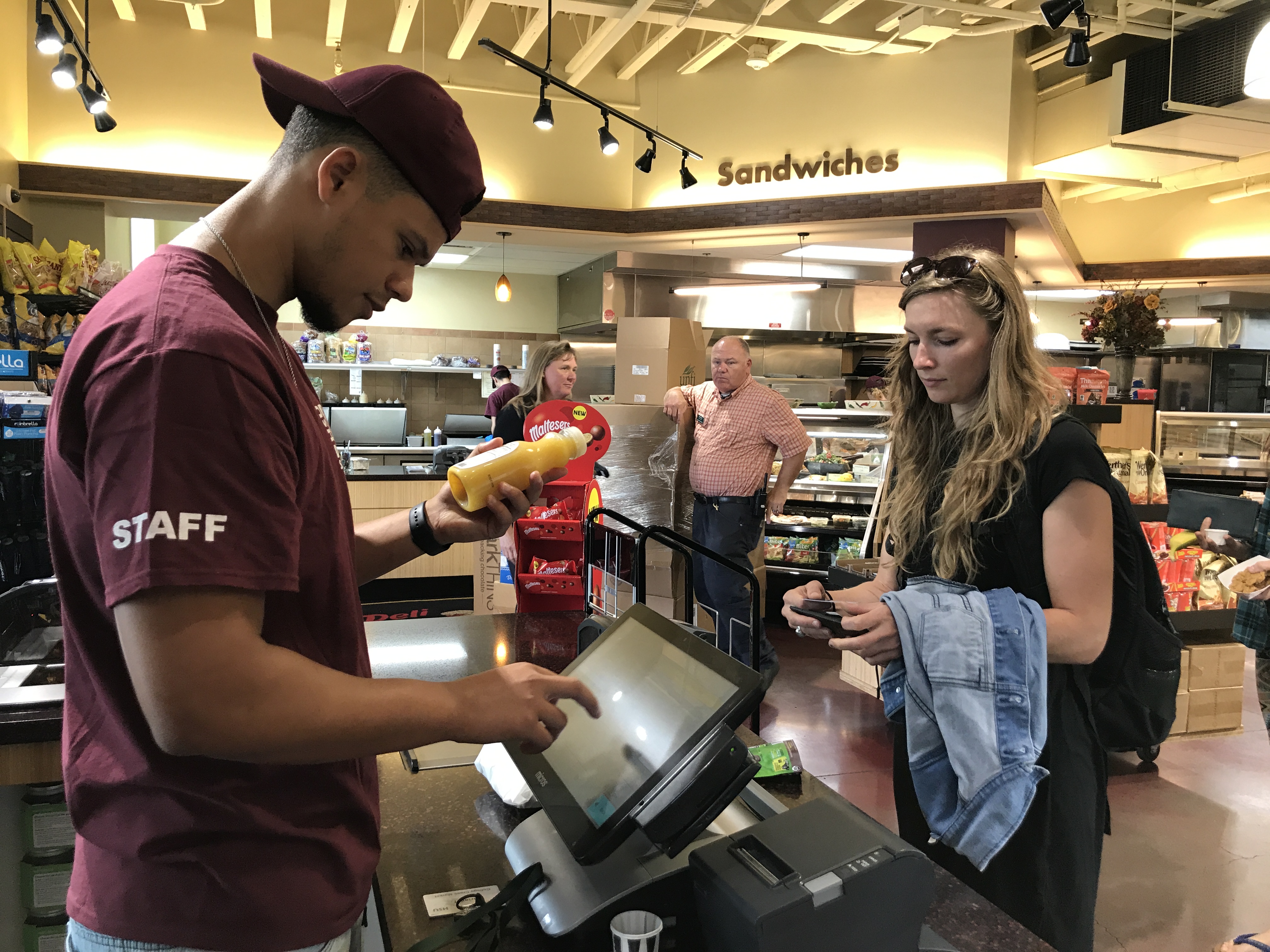
Brian Thompson (Cashier) checking out items for a student at the college creek marketplace. Photo credit: Ahmed Al-Sakkaf
“The answer to the question ‘What do student who need that money do?’ I don’t have a good answer for that,” said Ron Rudebock, the director of Dining Services. “Life is not fair sometimes.”
After spending the summer testing different data cloud services such as Dropbox, Box.com, Microsoft Onedrive, and Google Drive, Chief Information Officer for Information Technology Services Anna Kircher has said the university has selected Box.com.
According to Kircher, the university wanted to have this new system completely rolled out by the Fall 2017 semester. However, while they were conducting pilot tests over the summer, they found they still had questions with Box.com.
“We still had some questions, like how long would it take students to upload/download files when they’re in a large class,” Kircher said. “Also how will it look for students to access the files from Canvas.”
This fall, ITS and the university will be doing more pilot tests with Box.com to see if the new system will have functionality in the classroom.
Kircher said that around 12 classes and five hundred students will participate in this fall’s pilot tests.
“There will be two basic groups for the fall pilots, geospatial (GSP) courses and courses that will require large video and audio files,” Kircher said,
Most student concerns surrounded security and storage limitations.
Students currently have 200 megabytes available to them on the user drive provided by the university, and around 15 gigabytes within their Google accounts, which includes Gmail, Google Drive and Google Photos.
According to Kircher, security is one of Box.com’s biggest concerns, because they often work with clients who require high levels of security.
“One thing students won’t have to worry about with Box.com is space, using Box will give students unlimited space for files,” Kircher said.
Kircher said the university’s new goal for rolling out Box.com school wide is the spring semester of 2018, which will improve file storage for all students.
Maintaining peace, resolving conflicts, protecting the environment and much more between nations is not an easy task, but someone has to do it. The organization in charge of doing so is the United Nations (U.N.). This group consists of representatives from countries making policies to benefit their needs while trying to attend to other nations problems as well.
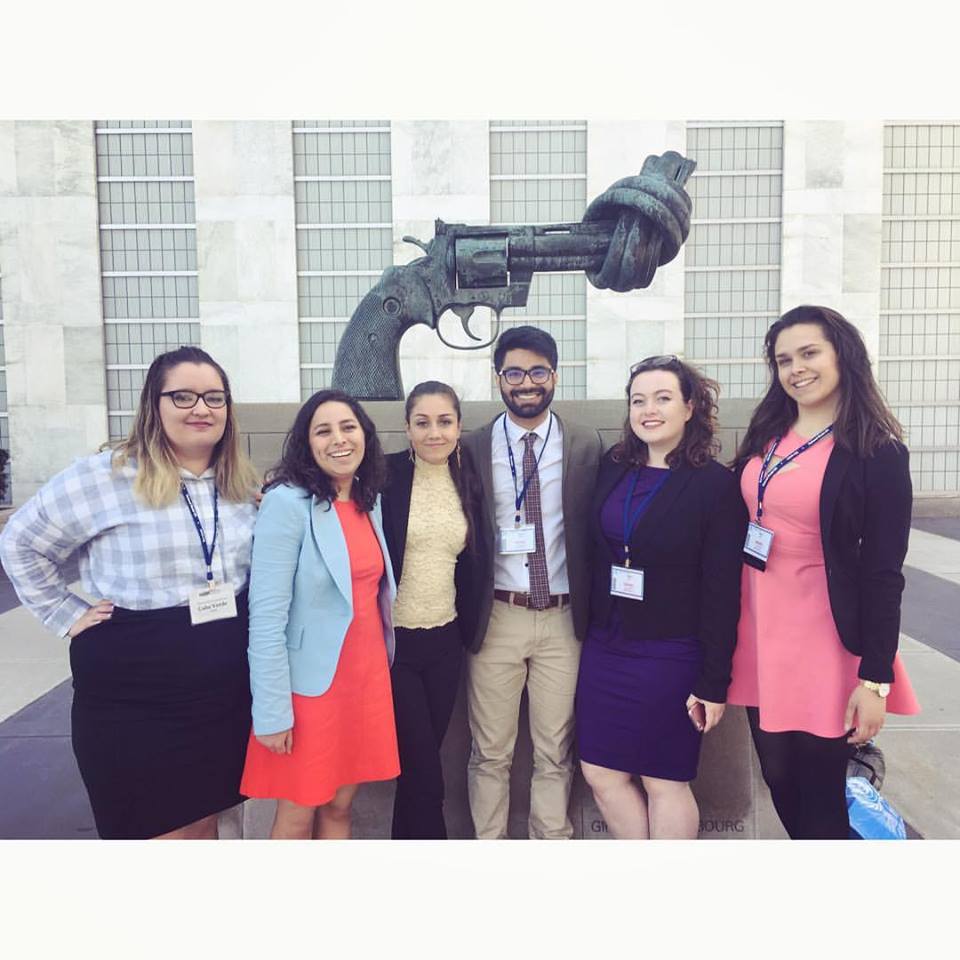
Jenn Bradley (left), Lorea Euskadi (middle), and Maggie Martinez (right) representing HSU at the Far West Model UN conference. | Photos by Juan Herrera
According to the United Nations website, the organization was set in place to keep international order following World War II to hopefully prevent another one from breaking out. Still, to this day, the U.N., based out of New York City, makes decisions and policies with the intent to maintain peace and security.
Now imagine a simulation of the actual U.N., but instead of country representatives, you have college kids from around the world meeting at one conference to try and maintain peace. Humboldt State University had the opportunity to compete in the Model United Nations (M.U.N.) conferences; Far West and Nationals. Nationals were held in the heart of New York City from April 9-13, then shortly after Far West was held in San Francisco from April 21-25 of 2017.
Maggie Martinez, a senior at HSU, was one of the eight representatives that went to Far West and Nationals. She talks a little about the differences in both conferences.
“Far West is slightly more lenient, but people are more aggressive in an unproductive way,” Martinez said. “Whereas Nationals people are aggressive in a productive manner.”
According to Martinez, at Nationals, the country HSU represented was Cabo Verde with a total of eight students. She then mentions at Far West HSU took on Russia, Yemen, and Bhutan with a total of 30 students.
A picture of the country (Cabo Verde) that HSU represented at Model UN Nationals. | Photo by Juan Herrera
Lorea Euskadi, senior at HSU, another one of the eight student representatives that attended both conferences talks about the importance of M.U.N.
“This a huge opportunity for college students to network with people that could benefit their future,” Euskadi said. “Model UN has taught me multiple life lessons, but the most important to me is a hard work ethic.”
According to Euskadi the Nationals conference is actually considered a National Collegiate Conference Association (NCCA) event with a broadcasted closing plenary in the actual U.N. headquarters building. She then mentions that due to Nationals being the world’s largest intercollegiate MUN simulation it brings a lot of stress and pressure on the students.
“Writing paper after paper for five straight days, with hopefully more than three hours a sleep a night, will mentally drain anyone,” Euskadi said. “Then having to make everything damn near perfect will put a ton of stress on the delegates putting in the work.”
Humboldt State will be attending next year’s Model U.N. at Nationals and Far West as well. Both conferences will be held at the same venue but the times are TBA for some time in 2018.
Martinez had one last part of advice for the future Model U.N. representatives that Humboldt State sends.
“Congregate, compromise and mediate,” Martinez said. “These three things helped me excel very well in the conferences.”
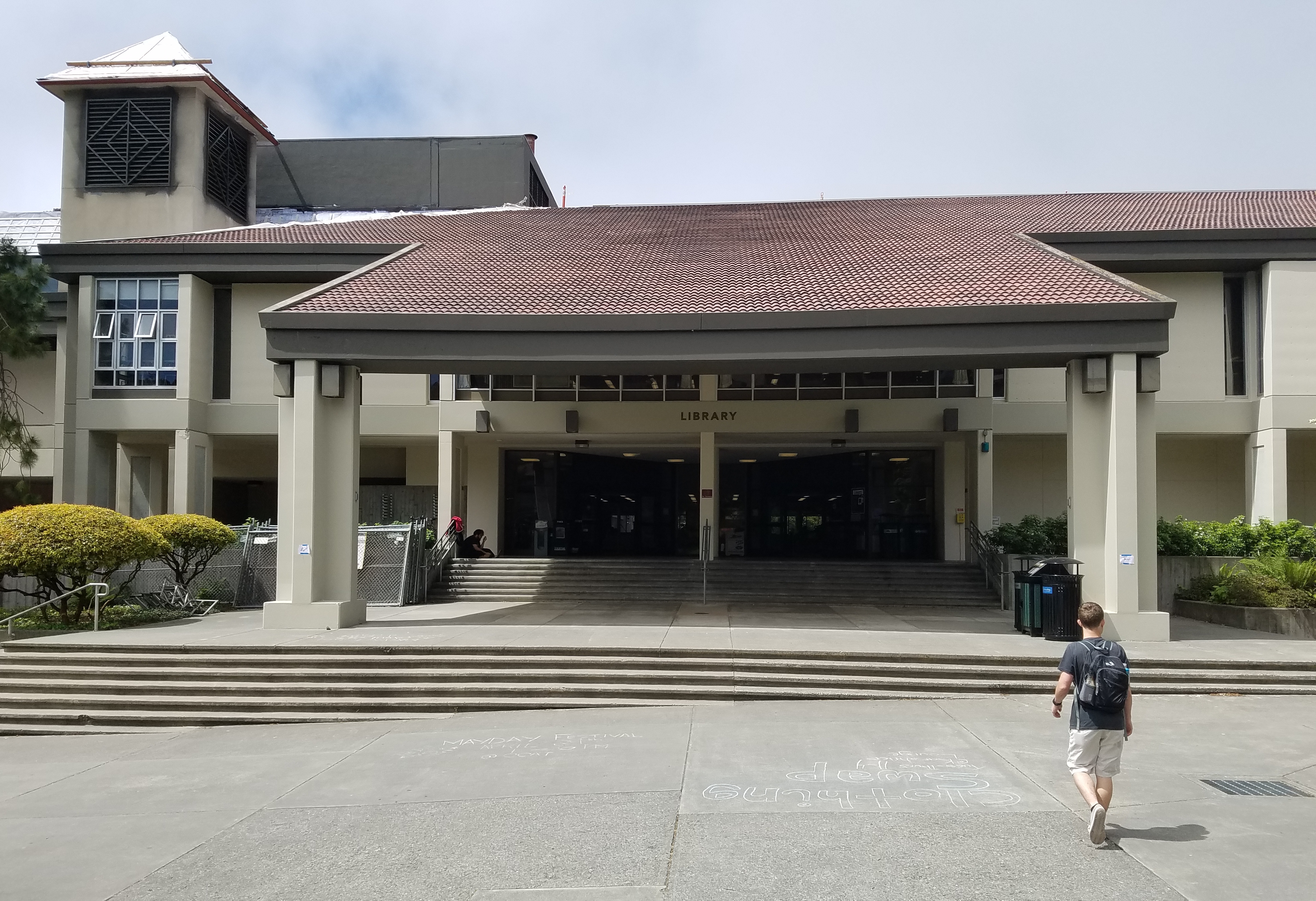
About $150,000 is being subtracted from the HSU Library due to extreme budget cuts the school is facing.
This means that $80,000 is coming out of library staff positions and $70,000 is coming out of the library’s research collection, including books, databases, and journals.
Students and staff will start to feel the impact starting July 1 when the budget cuts will take effect.
HSU students working on computers at the HSU Library. | Photo by Liam Olson
Cyril Oberlander, the Dean of the University Library, said he wants to assure students that the school is making its budget cut choices in favor of the students.
“We have to be strategic about our budget cuts in the end and decide what is most likely to help students out the most,” Oberlander said.
The library’s biggest concern is to make sure students have all the resources they need to succeed in their education. This means providing more textbooks on reserve, improving the technology, and putting in more tables for students to work at.
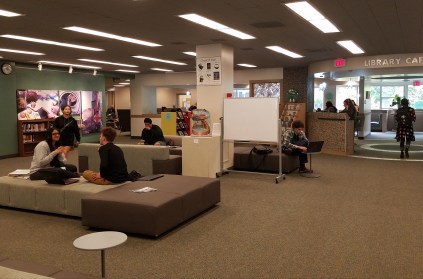
Recently the library has made new additions to the second floor of the library by adding big screens for students to hook up their computers to and collaboration tables with charger ports in order to make the library environment easier to study.
The Dean of the Library’s goal is to keep student jobs in the library.
“I would like to hire more students in the library,” Oberlander said. “Student employment is great for retention and many students are dealing with debt.”
HSU Financial Affairs has to make budget cut choices amongst its departments, and unfortunately, the school cannot hold off the debt any longer.
Students working and sitting in the HSU Library lobby. | Photo by Liam Olson
“We only have a budget that stretches so far and this is the year we have to make cuts,” Oberlander said.
According to Oberlander, there are two reasons the school is facing debt. One reason is out of HSU’s control.
“Federal and state funding for higher education has been gradually decreasing over the years,” Oberlander said.
The second reason for the debt is the school’s overspending. A meeting was held on April 9 where the HSU Center Board of Directors met to discuss the debt issue.
“During the last five years, the University has been overspending and this year the deficit is at $4.1 million,” Peg Blake, the VP of Enrollment Management and Student Affairs, said in the meeting’s release statement.
HSU students working in the HSU library. | Photo by Liam Olson
Hundreds of students flow in and out the library every day, many relying on the computer software, databases, and textbooks on reserve to get their degree. Jocelyn Barber is a junior environmental engineering major who relies on the library to get a hold of pricey textbooks required for a class.
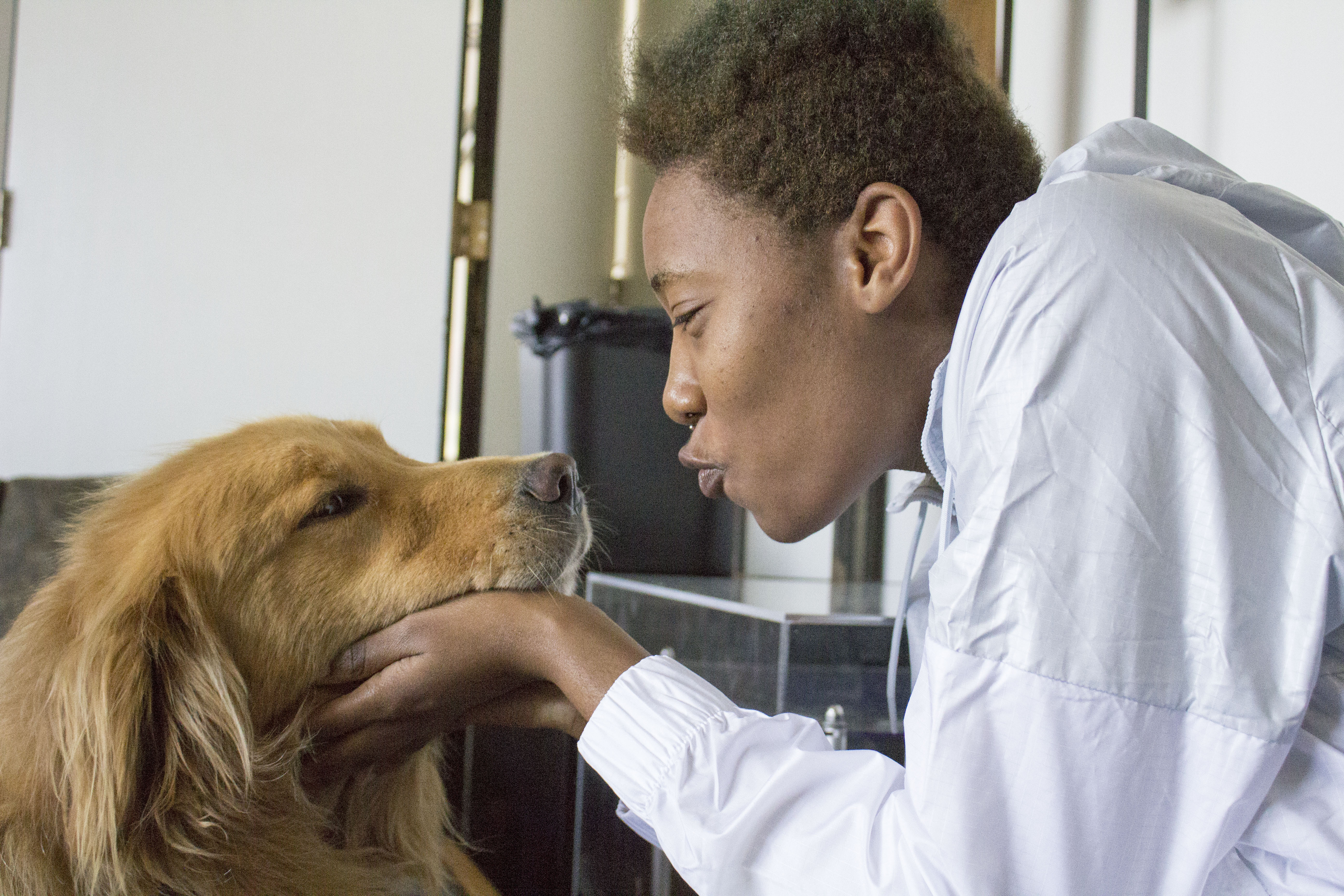
Students were able to pet therapy dogs to destress from the stressful workload of finals in the Jolly Giant Commons on April 29. Canyon Student Assistant Elisabeth Torretti and the Canyon staff put on the event for student residents. The therapy dogs will return to campus at the library on May 8 from 1-2:30 p.m. and May 9 from 6:30-8 p.m.
Freshman Kelly Donnell (right) and Freshman Madison Reed-Stacy (left) petting Wizard, 13. According to Wizard’s owner, he has been a therapy dog since 2013. | Photo by Liam Olson
Chris Irvin is the owner of the therapy dogs Chablis, 9 (in photo) and Wizard. Wizard and Chablis are Belgian Tervurens. | Photo by Liam Olson
Dave Nakamura is the owner of the therapy dogs Milo (in photo), and Tulla, 6. Milo and Tulla are both golden retrievers. Both have been working as service dogs for three or four years. | Photo by Liam Olson
Junior Kayla Stark petting Milo. Milo’s owner said that he has been working as a therapy dog since he was one year old, an unusually young age to begin therapy dog training. | Photo by Liam Olson
Chablis looking at the students who came to the dog therapy. According to Chablis’s owner, Chablis has been working as a therapy dog since 2014. | Photo by Liam Olson
Freshman Sophia Florez (left) and Junior Lyric Bell (right) petting Milo. | Photo by Liam Olson
Freshman Ky Martinez petting Tulla. | Photo by Liam Olson
For many students at Humboldt State University, any chemistry class is on a list of the hardest courses a student can take. Humboldt State has taken on a new temporary chemistry professor whom students are dubbing “passionate,” “exuberant,” “enthusiastic,” and “caring.” Walking into his office, some may mistake him for a student. He’s listening to Selena Gomez, One Direction and country music. But it’s his demeanor, not his music preference, that makesPuminan Punthasee so approachable.
Puminan Punthasee | Photo Credit: Humboldt State University Chemistry Department
“I’m not afraid to approach Pete, which I sometimes am with other professors,” said Kathryn Buzanski, 29-year-old student and Marine Corps veteran. “With Pete, I can email him, I can approach him, talk to him face-to-face, and have no worries.”
Punthasee’s approachability follows into his relationships with colleagues in the chemistry department. Joshua R. Smith, chair of the Department of Chemistry, recalls that the first time he met Punthasee. He found him to be funny and deeply empathetic. But it was his passion for teaching that struck Smith the most in the hiring process.
“He clearly had a passion for teaching, based on what he wrote in his application, and he clearly got that across during the interview as well,” Smith said.
This enthusiasm and commitment Punthasee brings to teaching chemistry blossomed long before Humboldt State. Dating back to his high school years in Thailand, Punthasee had to take science courses every semester in high school. Thailand’s education system requires six science courses in order to graduate.
“I wasn’t really a smart kid, I was slow, and couldn’t grab anything that the teacher taught us,” Punthasee said. “My grades were okay but weren’t as high as I wanted them to be.”
Before graduating high school, Punthasee discovered his passion for learning, as he found a role model at his tutoring school.
“This chemistry teacher at my tutoring school made chemistry understandable,” Punthasee said. “And that was the starting point that made me realize that if I could understand chemistry, maybe there’s some other stuff that I can understand as well.”
Following high school, Punthasee graduated from the University of Thailand, and continued to expand his horizons by enrolling in University of Missouri’s Ph.D. program for chemistry.
“I was in a Ph.D. program at the University of Missouri, and I hated the program,” Punthasee said. “It’s the nature of the Ph.D. program that makes you do a bunch of research, but I don’t like doing the research, so I found myself looking at the clock every five minutes.”
Although he isn’t passionate about research, Punthasee found his calling as a teacher. He’s won three awards for being a teaching assistant through his graduate program. He’s been awarded with the Number One T.A. Choice award twice, and has also accepted the Green Chalk award for being an excellent teaching assistant.
“I bet you that no science teacher does things like I do, not in this state,” Punthasee said. “Only two people follow my “Pete” style. Me, and my role model in Thailand.”
His efforts to reach out to students outside of the classroom further solidifies their appreciation for Punthasee as well. As a professor, he will send three emails each day on average, all for varying, but positive reasons.
“Pete really likes to send out encouraging emails,” said chemistry student Kate Panebianco.
Brooke Holdren, a 20-year-old science and art major at Humboldt State, also expressed how much the emails help her.
“I’ve gotten both general and personal encouragement emails. He’s really taking the time out to say specifically, ‘You’ve done this really well today’,” Holdren said.
“He sends the most emails out of any teacher I’ve ever had. It’s really great and encouraging, sometimes a bit over the top, but that just shows how involved he is in comparison to the other teachers I’ve had.”
What makes Punthasee such a well-liked professor boils down to how relatable he is. He’s just like any regular college student, and he likes to keep things simple because simplicity is easier to understand.
“It’s just human nature,” he said. “We don’t like complicated stuff, we like fun stuff.”
Attributing his best quality to being a “tremendously freaking hard worker,” Punthasee said his talent lies in his ability to simplify and socialize.
Buzanski explained this in a way that many of Punthasee’s students can empathize with. “He does want to be our friend, but more importantly, he wants to be our friend while we know he’s our teacher,” she said.
We need proper advising. Graduation is upon us, yet many students find themselves coming back next semester because they did not receive enough units to complete the graduation requirement. More students are taking more than four years to get their diplomas, and they have to pay even if they only need one or two classes. Freshman are told to take 15 units or more to graduate in four years, an unrealistic pressure to put on an 18-year-old. If you’re living on your own for the first time and taking on a financial burden taking more than 15 units could be too much. Other students are told to “double-dip” classes. “Double-dipping” is where classes count for two general education classes rather than just one. “Double-dipping” classes leaves a lot more room for students to finish up their major courses. But if some students finish their general education requirements and their major requirements too early they are left with elective credits to make up before meeting the 120 unit cap to graduate and earn their Bachelor’s degree. Some classes are only offered every other semester, and some are offered every two or four years which makes it hard for students to plan their semesters accordingly. This is especially a struggle for transfer students with upper division courses. Transfer students take some upper division courses that they need to take again at HSU. There is a lack of communication with advisors and students. Sometimes advisors are not available to students to discuss their future at HSU. Advisors aren’t fully trained to actually advise students on which classes to take. The university needs to train their staff to the fullest to be able to advise students accordingly. Students should make a four year plan of their classes so they could earn their bachelor’s degree in four years.
Last month, Netflix turned Jay Asher’s New York Times Bestseller, “Thirteen Reasons Why”, into a popular new series, but not everyone is excited about the outcome. The show has received high ratings and critical acclaim for its cinematography, but people are having different interpretations based on whether they read the books prior to watching the series. Those who have only watched the series are not grasping the brutal struggle with mental illness compared to those who read the books–the extreme differences between the series and Asher’s 2007 novel are apparent.
The biggest changes are within the main character’s portrayal, Hannah Baker, something fans of the book are displeased with. Netflix’s “Thirteen Reasons Why” tells the story of a high school teenager, Clay Jensen, who finds a box of tapes mysteriously on his doorstep one day. He listens to the tapes, which turn out to be a recorded suicide confession from Baker, who committed suicide two weeks prior. There are thirteen tapes, each are meant for a specific person who contributed to her decision to take her own life.
Grace Hall, a freshman environmental science major at HSU, is disappointed to see various differences between the series and the novel she admires.
“The series portrayed the story a lot differently,” said Hall. “People are watching it and are not having the right discussions about it later.”
Hall believes Baker is depicted as “whiny” and “a drama queen” in the series, which is not the same character she remembered from the book.
“It doesn’t highlight the fact that she has a mental illness,” said Hall. “In fact, it’s never even mentioned that she was depressed.”
Some argue Netflix changed too much within the plots, characters and storytelling. For example, the story is told by Jensen in the TV series, whereas Baker narrates all thirteen episodes in the novel. Also, Jensen and Baker are not close in the book, but they are undeniably friends in the series.
Taylor Walters, a freshman business major at HSU, did not read the novel and said she did have a good impression of Baker’s character.
“What I gathered from the show was that she blamed everyone else for her problems when she was the one who caused them,” said Walters.
Walters said the issues that Baker dealt with are common and happen to a lot of teenagers.
“Watching this made me angry,” said Walters. “These are things that happen to a lot of high school kids.”
HSU senior and environmental science major, Andie LeDesma, is upset with how Baker is portrayed on the show.
“Because they didn’t mention that the girl had a mental illness, I wouldn’t be surprised if people said she was whiny or overdramatic,” said LeDesma. “A person who has depression is going to react differently to bullying versus a person who doesn’t have depression.”
LeDesma believes it is important for Netflix viewers to be aware of the main character’s mental illness, otherwise the story gets misconstrued.
April 11 marked the opening of a new center for undocumented students called Scholars Without Borders Center for Academic Excellence located at the MultiCultural Center.
The students of the club F.R.E.E (Finding Resources and Empowerment through Education) have been determined to enact change and create a safe space for all undocumented students at Humboldt State, creating a more welcoming campus for future undocumented scholars.
Cesar Abarca, advisor of F.R.E.E. and professor of the social work department speaking to students. | Photo by Sarahi Apaez
Karla Sanchez, senior psychology major and president of F.R.E.E. has been working on creating this center since her freshman year in 2013.
The idea for this center has been in progress since F.R.E.E. established itself on this campus seven years ago.
F.R.E.E. founders were affected by their peers undocumented status and the roadblocks they faced and felt it was important to help them in any way they could according to Sanchez.
Sanchez said that there were many people working on this project way before it got passed down to her.
“I wish they were here to see this happen,” Sanchez said. “Because they fought tooth and nail for this.”
Sanchez herself felt that working hard on this was worth it for the people who would come after her and who would benefit from this.
HSU has 68 undocumented students currently attending the university. However, Sanchez said this number could be higher due to students not wishing to disclose their citizenship status.
“We are small as an undocumented community,” Sanchez said.
The center will help navigate students through school, and direct them to the instructors that will help them with what they need.
César Abarca, professor of social work and the advisor of F.R.E.E. has been the biggest help in Sanchez’s opinion. She acknowledges Abarca who has helped her and F.R.E.E. even when it was not his paid job to do so.
HSU student singing and playing guitar while students ate. | Photo by Sarahi Apaez
After so much change within the center’s presidency, students have been working on their own to make this center a reality.
Sanchez describes her experience as one of struggle to find resources and figure everything out on her own.
Sanchez has held a job since her freshman year and hasn’t had the privilege of living on campus or to go on as many outings as she would like. These are the privileges of being a citizen that she does not experience, the privileges of having financial aid, Sanchez said. She wants to make people aware of these privileges. She has had many roadblocks in her university experience regarding travel and financial difficulties.
Financial barriers have been one of the most significant barriers for undocumented students. Anayeli Auza, is undocumented student at HSU. Her passion for the center stems from her fear that she wouldn’t get enough support financially to graduate.
Scholars without borders will be a central place for undocumented students to receive legal help, emotional support and other resources. According to Auza, undocumented students do not have it easy when it comes to getting help. Students often have to go to different offices around campus to receive different services. Offices like EOP can only serve some of these students, and the other academic centers on campus don’t provide enough information for specific undocumented students needs.
The center will also serve to educate more students about the differences between undocumented students, the Deferred Action for Childhood Arrivals program, also known as DACA, and AB-540.
DACA is an executive order signed by former President Obama that gives undocumented immigrants the ability to receive work permits and driver’s licenses in addition to allocating some federal funding to support higher education. AB-540 is a 2001 state law that allows in-state tuition for anyone who attends a California high school for three years, among other requirements.
President Donald Trump has threatened to cancel Deferred Action for Childhood Arrivals during campaign speeches in the past. Recently, President Trump told the Associated Press that undocumented immigrants brought here as children can “rest easy.”
Although cabinet members say that undocumented immigrants who were brought to the country as children are not at risk for deportation, a 23 year old under DACA is currently having to sue the Trump Administration for being illegally deported. The 23-year-old sued after not seeing any documentation that explained why he was deported according to the New York Times.
CSU Chancellor Timothy White issued a statement about the CSU system’s stance on undocumented students. White did not outline an overall concrete stance but instead allowed each campus to create their own policy due to the diversity of the universities. HSU President Lisa Rossbacher joined more than 400 other university presidents in December 2016 to continue, uphold, and expand the DACA program.
The center is only being supported by the campus for a year, and they will need ongoing support after, according to Abarca.
“In the meantime they have to prove that this center will recruit, retain and graduate more students,” Abarca said.
$20,000 has been approved for the center to run for a year. Initially the center was granted $17,000.
“$3,000 has made a huge difference,” Auza said.
Once up and running, the center will be open 8 a.m. to 5 p.m. Monday through Friday.
Sanchez hopes that having a centralized space will make it so that people listen to the needs of undocumented students.
“Not put us on a pedestal,” Sanchez said. “But we’re equal.”
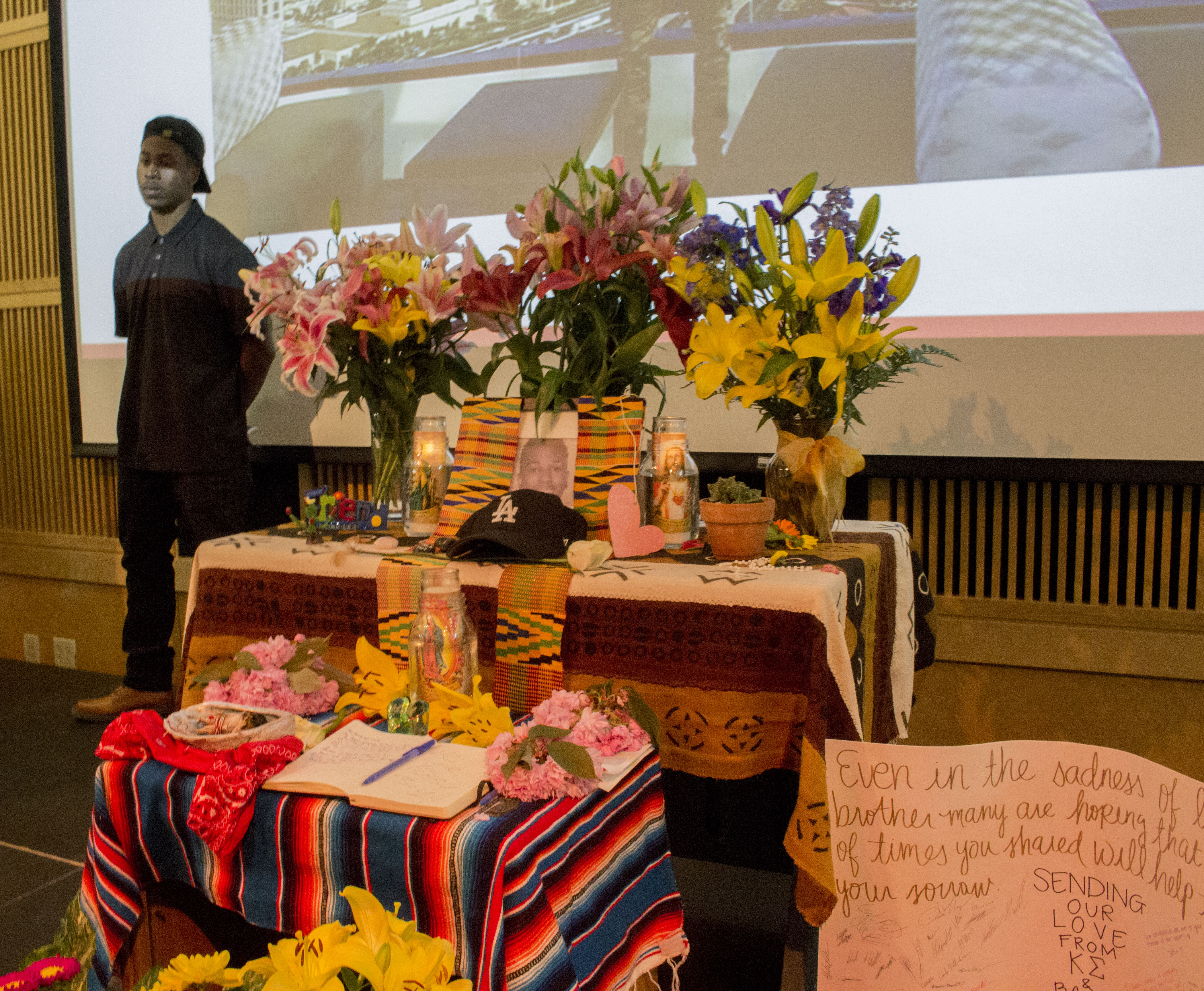
Family, friends, students, faculty and community members filled the KBR to remember David Josiah Lawson.
Lawson, a second year criminology major and president of Brothers United was stabbed and killed on the early morning of Saturday April 15.
Brothers United organized a vigil to remember their brother. The audience consisted of Lawson’s family members who traveled from Riverside, California.
Family members remembering Lawson at the vigil at the KBR on Thursday, April 20 2017. | Photo by Iridian Casarez
Brothers United remembering Lawson at the KBR on Thursday, April 20 2017.
Charmaine Michelle Lawson comforted by her children after the vigil on Thursday, April 20 2017. | Photo by Iridian Casarez
Lawson’s family hugging each other after the vigil on Thursday, April 20 2017. | Photo by Iridian Casarez
Family members, friends, community members and facutly filled the KBR to remember Lawson on April 20. | Photo by Iridian Casarez
Pastor Phil, Lawson’s old track coach and family Pastor, getting ready to say a prayer at the KBR on Thursday, April 20 2017. | Photo by Iridian Casarez
Chief of Police, Tom Chapman speaking at Lawson’s vigil at the KBR on Thursday, April 20 2017. “We’re going to get justice for Josiah,” Chapman said to the audience. | Photo by Iridian Casarez
Broke college student are three words that comfortably go together. However, students still spend money they do not have on things they do not need. Sometimes these items are expensive, making students have to work hard in order to afford them.
Illustration | Joe DeVoogd
One of these expensive items that students are willing to spend large amounts of money on, are shoes. Each student has a reason for why they shell out extra cash for shoes they may be able to buy for a cheaper price.
Some students like to buy shoes for the style and brand names. They want to look good walking around in their expensive shoes. Business administration major Paul Chavarria bought a pair of Jordan shoes for $300 as a reward for all of his hard work.
Chavarria worked hard to earn the money for his shoes having worked two jobs prior to getting his busser job that allowed him to be able to afford his shoes.
“I bought my first pair of expensive shoes back in 2011 through my job as a full-time busser,” Chavarria said. “I got my second check and wanted black and red Jordan 11’s from Footlocker.”
However, for some students, shoes are a necessity for the sports they participate in. Some sports such as baseball and soccer require special expensive shoes in order to play. Kinesiology major Jimmy Bautista had to buy expensive wrestling shoes in order to wrestle in high school. In order to buy the necessary shoes, Bautista had to spend money he earned from his part-time job.
“Most expensive shoes I bought were $120 for wrestling in high school,” Bautista said. “I no longer wrestle but can still fit a size 10 shoe.”
Sometimes students spend extra money on shoes in order to get better quality shoes that will last longer. By spending extra money, students would not have to constantly buy shoes since shoes of better quality last longer. Environmental engineering major Aaron Page bought an expensive pair of leather shoes for fire fighting. Page worked as a bartender for an entire year before saving enough money to be able to purchase his shoes.
“I bought $300 leather boots for fire fighting during the summer,” Page said.
More than a year after his initial purchase of his leather shoes, Page still wears them even while not working for the fire department. The quality of the shoes and the investment of the shoes make the purchase worth the while.
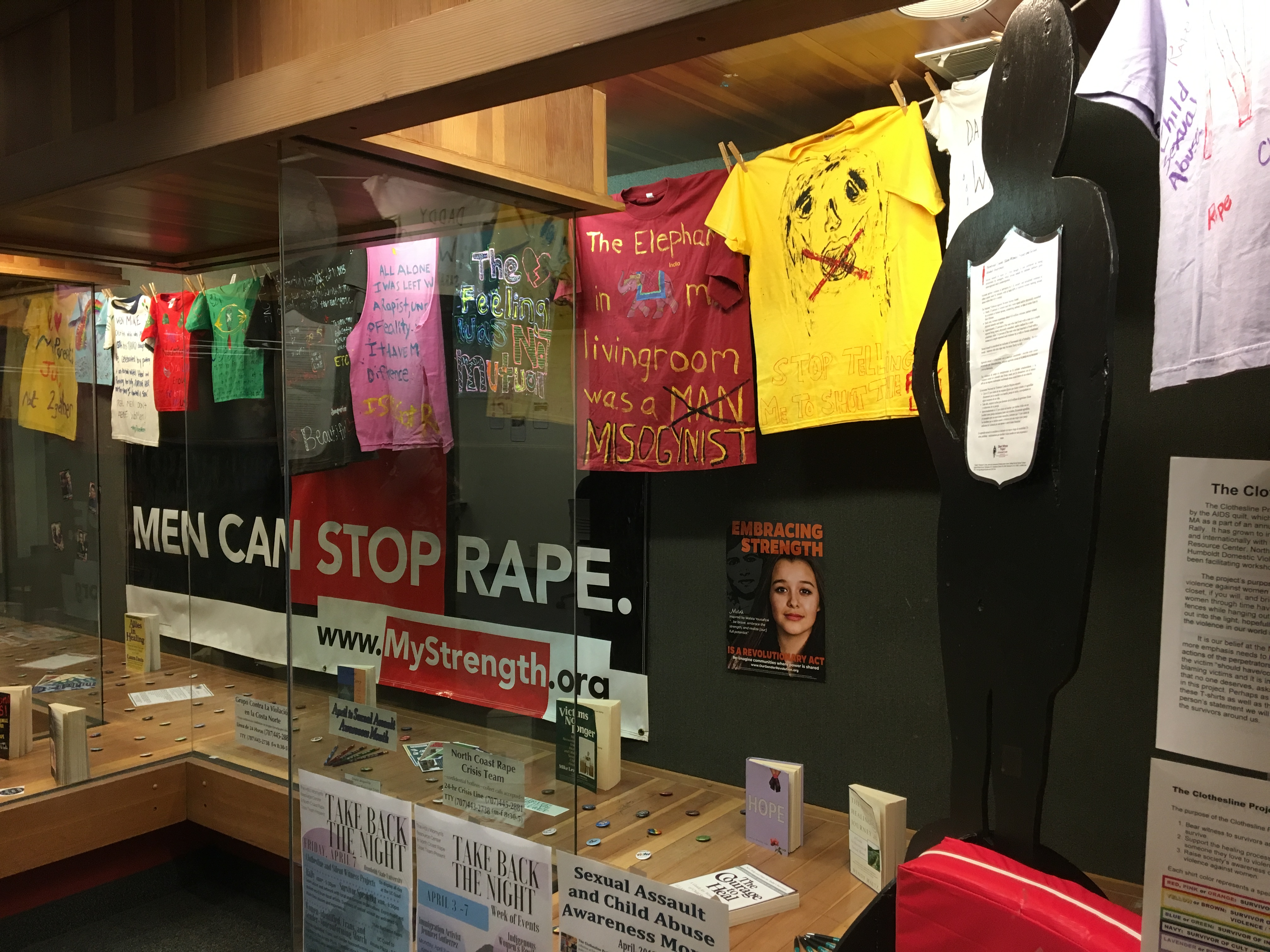
Students, faculty and members of the community came out to the Kate Buchanan Room this past Friday to show their support for survivors of sexualized violence.
One student who came out to show support was graduate student Irene Vasquez.
“I think it’s wonderful that the university cares about the students and is spreading awareness like this,” Vasquez said.
The university has been the host of the take back the night events since the mid-1980’s. Take Back the Night was co-sponsored by the North Coast Rape Crisis team and the Women’s Resource Center.
Paula Arrowsmith-Jones, Community Outreach Coordinator for the North Coast Rape Crisis Team, said that these events have been going on since the 1970s but have been held on and off campus since the mid-1980s.
“Back in the 70s women were told not to go certain places at night without a male chaperone,” Arrowsmith-Jones said. “Because if something happened it fell on the women. These events were created to reclaim everyone’s right to go somewhere and not get hurt.”
According to Arrowsmith-Jones, it’s important for the university to hold events like this because there is so much shame, secrecy and denial that surrounds sexualized violence, it’s about raising awareness for those who don’t think it happens.
Take back the night student coordinator and graduate student Ariel Fishkin said we are living in a rape supported society, where individuals are taught that “rape culture” is okay and where victim blaming is too common.
“I have experience with sharing,” Fishkin said. “People don’t realize that it’s a systemic thing that’s why we have these events.”
Take Back the Night was part of a week long event to let survivors know that they are believed. The week long event took place during sexual assault awareness month.
“Sexual violence is so prevalent,” Arrowsmith-Jones said “we want to show people affected that they are supported, we have counselors at all the events to help.”
The university does have a lot of student activism with Check It, Peer Health Education, and the Women’s Resource Center. Fishkin hopes to continue to bring awareness to this issue as a campus to the community.
Sophomore zoology major Katie Marks said it is amazing that the university is doing this because she knows people who have experienced sexualized violence and she wants to be a part of the change for a world without violence.
“Hopefully this will inspire other universities and communities to change too,” Marks said.
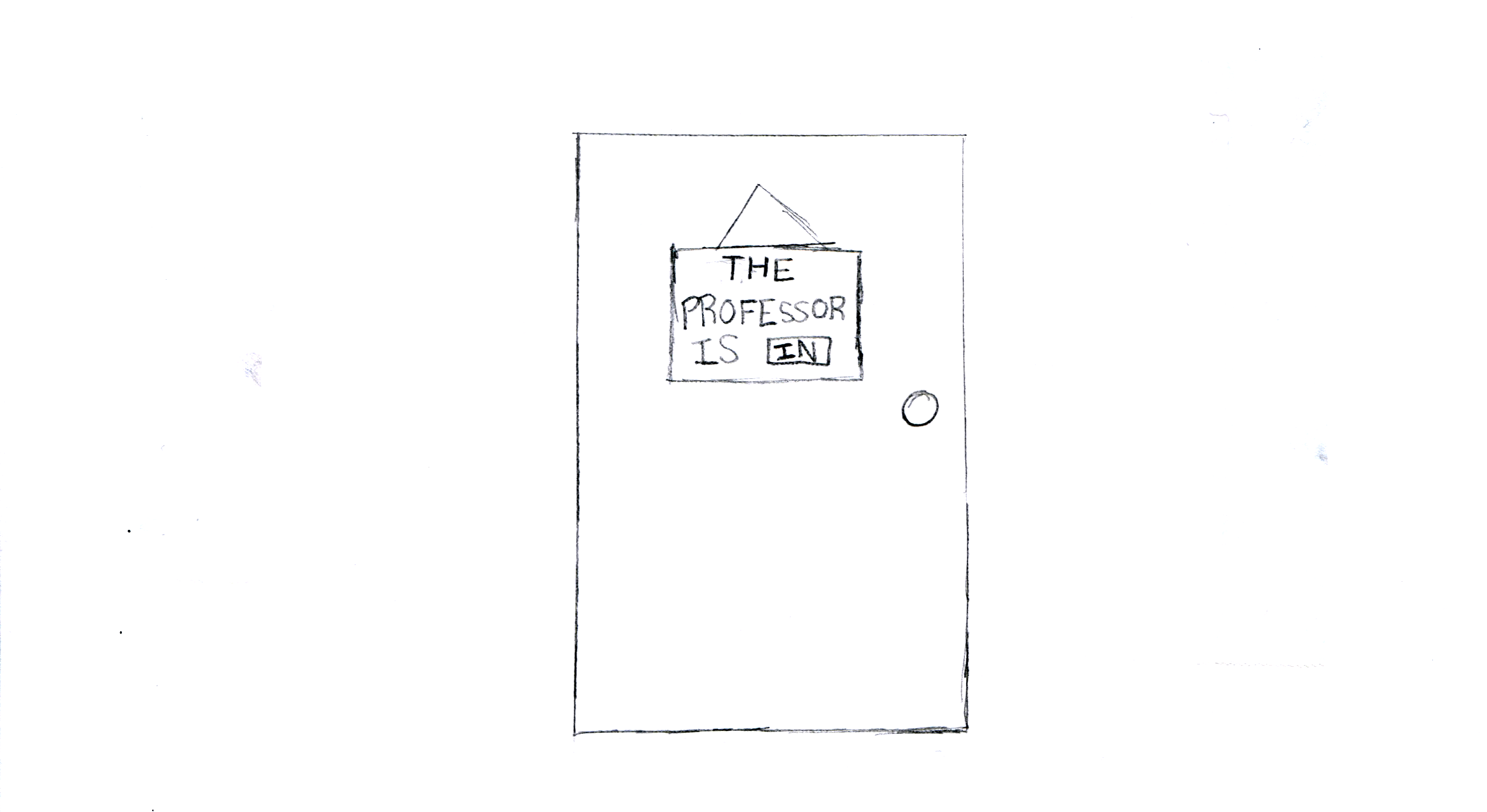
There may be times when students need that extra one on one time with their professor for things like making up assignments and exams, discussing grades or getting clarity on homework or a project. These are the reasons professors offer their students office hours. Most professors and lecturers have the days and times on their syllabus. However, not all teachers abide by their assigned office hours which sometimes makes it a hassle for students to meet with their teacher.
There are a few HSU professors that some students claim are hardly available during their office hours. However, when trying to get in contact with some of these professors for an interview they never responded.
In addition to reaching out to some of the teachers who students feel aren’t always at their office hours, a lot of HSU teachers who are always at their designated office hours responded with confidence about their abidance to their listed times.
Dan Faulk, a political science professor said that his students can always find him in Founders Hall room 118, and that he’s available even when his office hours are over.
“If you asked the teacher across the hall from me, you would discover that not only am I at my office for my office hours, but that I stay until way past my office hours, if there is a line of students outside my office door, or if students want to continue a conversation past normal office hours,” Faulk said. “My office hours are always right after class, so I am always in my classroom or at my office after class.”
Spanish professor Anna Montoya said the most reliable way to set up a meeting with her is through phone or email, and that she is always open to working with students on times to meet. “The best way to get a hold of me is through email or phone,” Montoya said.“ I’m also open to setting up a time to meet.”
Faulk and Montoya are some of the many professors here at HSU who abide by their office hours making it easier for students to meet with their teacher when needed. But for students who may experience the opposite with their professor, they can
use some of these strategies students have used while on their academic journey here at Humboldt State:
Samantha Pincus
Major: Forestry Wildland Fire Management Major
“I’ve found that emailing them with two different times during their office hours that I know I can meet up works and they’ll choose one,” Pincus said. “Even though it’s inconvenient to set up a meeting, it guarantees that they’ll be available.”
College of The Redwoods Student Naiomi Leitu:
Major: Nursing
“I usually follow them after class and ask them to answer my questions right away,” Leitu said. “Or I email them on their personal email!”
Yadi Cruz
Major: Criminology and Justice Studies
“Usually emailing them before showing up to their office hours, making an appointment with them, or asking them in person what time they’re going to be there,” Cruz said.
Tre’von King
Major: Business Management
“I try emailing them ahead of time. Some teachers don’t go to their office hours because no one shows up,” King said. “If you let them know in advance then they know when and where to be.”
Jhsiri Massey
Major: Art Education
“Email the shit out of them until it’s damn near annoying,” said Massey.
Alby Alawoya
Major: International Business
“I’ve had that problem in the past and honestly I just called my teacher out in front of the class,” Alawoya said. “I also left a note on the door that said ‘students look up to you, and you’re example of keeping your word makes a difference.’ After that my professor sent an apology email to the entire class.”
Treanna Brown
Major: Criminology
“I don’t have any strategies that could get them to show up to their office hours,” Brown said. “But I do think that they should make reasonable office hours. As students we aren’t as flexible as them. We work 9-5 jobs on top of however many units we have to take during the semester. Our campus is suppose to be the place where professors are more engaged but I don’t see that as much as I did my freshman year.”
Cynthia Godinez
Major: Psychology “I don’t think I’ve had that issue,” said Godinez. “All the professors I’ve had are good with meeting with students, and if they can’t make their office hours they’ll reschedule for another time. But I think a good strategy to prevent teachers from missing their office hours could be to just talk to them and suggest that they actually be there. Or maybe talk to someone that runs their department so they can figure out why that professor can’t make their office hours.”
Earlier this month, HSU students enjoyed a much needed week long spring break, but not everyone was relaxing.
While classes may have adjourned for a week, school work continued in motion. Students said they spent the free week studying for midterms because they were scheduled on the day they came back from the break.
Nicole Heighes is a senior psychology major at HSU. Heighes had a midterm on the Monday after spring break and a speech in her senior seminar the day after
“It defeats the purpose of spring break when professors place midterms on the Monday or Tuesday after the break,” Heighes said.
She spent hours studying over the break, going over study guides and preparing for her speech.
“You need a few days after Spring Break to get back into school-mode,” Heighes said.
Daniel Burrell, a biology professor at HSU, said he always considers the break when planning his midterms.
“I like to grade midterms over the break and thus plan my midterms before the break,” Burrell said.
He believes stepping away from schoolwork allows students to maximize their relaxation time.
“I feel that students prefer to finish their exams before break so they have the break to relax,” Burrell said.
Stephanie Toste, a senior business marketing major, typically has lots of homework throughout the week. Like Heighes, she had a midterm on the Monday after spring break and found herself using the break to study.
“Luckily I didn’t have any homework to do after the break, but I had a midterm the day we got back,” Toste said. “I prefer to have midterms before the break because that week is dedicated to getting a break from school.”
Some benefits come out of having midterms scheduled after spring break. Toste said that without class interrupting study time, students might be able to focus more on their midterms. “On the other side of things it allows students to not stress about going to class while trying to study for midterms,” Toste said.
There are seven weeks of the spring semester left. With no more breaks aside from Cesar Chavez Day coming up this Friday, studying and school work is in full swing till the end of the semester.
Julia Hunt left for the In-N-Out in Redding, California a little after 8 p.m. one night in September, arriving at the In-N-Out a little before midnight.
“My roommates and I were sitting on our couch all looking at Facebook and we came across a video of In-N-Out,” Hunt said.
The video sparked an idea. Hunt and her friends decided to drive to In-N-Out. They got in a car and drove for three hours to Redding in the dark.
“It was a bonding trip, we got to know each other better throughout the car ride,”Hunt said. “We would talk about our families and everything.”
Hunt and her friends made a pilgrimage to In-N-Out. Hunt’s trip to In-N-Out was about more than food, her and her friends got to share stories and memories from their childhood going to In-N-Out.
Yvette Valdez-Beas, a kinesiology sophomore, was also on the trip with Hunt.
“They were just like ‘be ready in five minutes’,” Valdez-Beas said.
They all got in a car and began their long and turn-filled road trip along state Route 299 toward Redding.
“We went to Redding and we took the 299 and I’d never been that way,” Valdez-Beas said. “ The drive was kinda scary because it was at night and I didn’t know how windy it was.”
Many people make the claim that In-N-Out is the best burger place. Valdez-Beas craves an In-N-Out burger whenever she has a burger from any other restaurant. No other burger can replicate the flavor and simplicity of an In-N-Out burger.
The round trip roadtrip totalled 240 miles and six hours of driving on dark and winding roads. In-N-Out served as the focal point of a bonding experience that these friends hope to do again in the future. Hunt, Valdez-Beas, and friends are not the only people who miss In-N-Out while behind the Redwood Curtain.
Alex Hain is a freshman psychology major who found the transition away from In-N-Out difficult.
“In-N-Out used to be the only thing I ate back home and I abandoned it,” Hain said.
Hain has been trying to organize a trip with friends to the new In-N-Out in Ukiah. The only thing stopping him from heading to the In-N-Out is finding someone able to drive him on a Sunday.
The new In-N-Out in Ukiah is about 25 miles farther than the one in Redding, but the drive takes about the same amount of time. The road to Ukiah is much less intimidating especially if it is dark.
Freshman marine biology major, Carlino San Miguel, misses the In-N-Out by his home in the Los Angeles area. He believes that its simplicity is what makes it so popular.
“They’re different than other burger place, it’s only hamburgers, you can’t get chicken strips or chicken sandwiches, it’s just straight hamburgers so you go there and you know what you’re gonna get,” San Miguel said.
While a six hour drive for a hamburger may seem impractical, these journeys done and planned focus more on feeling at home. San Miguel, Hain, Valdez-Beas, and Hunt all admitted to In-N-Out being one of their first stops while heading home.
Sometimes living in Humboldt can feel distant and isolated from what people are used to. In-N-Out offers that feeling of coming home.
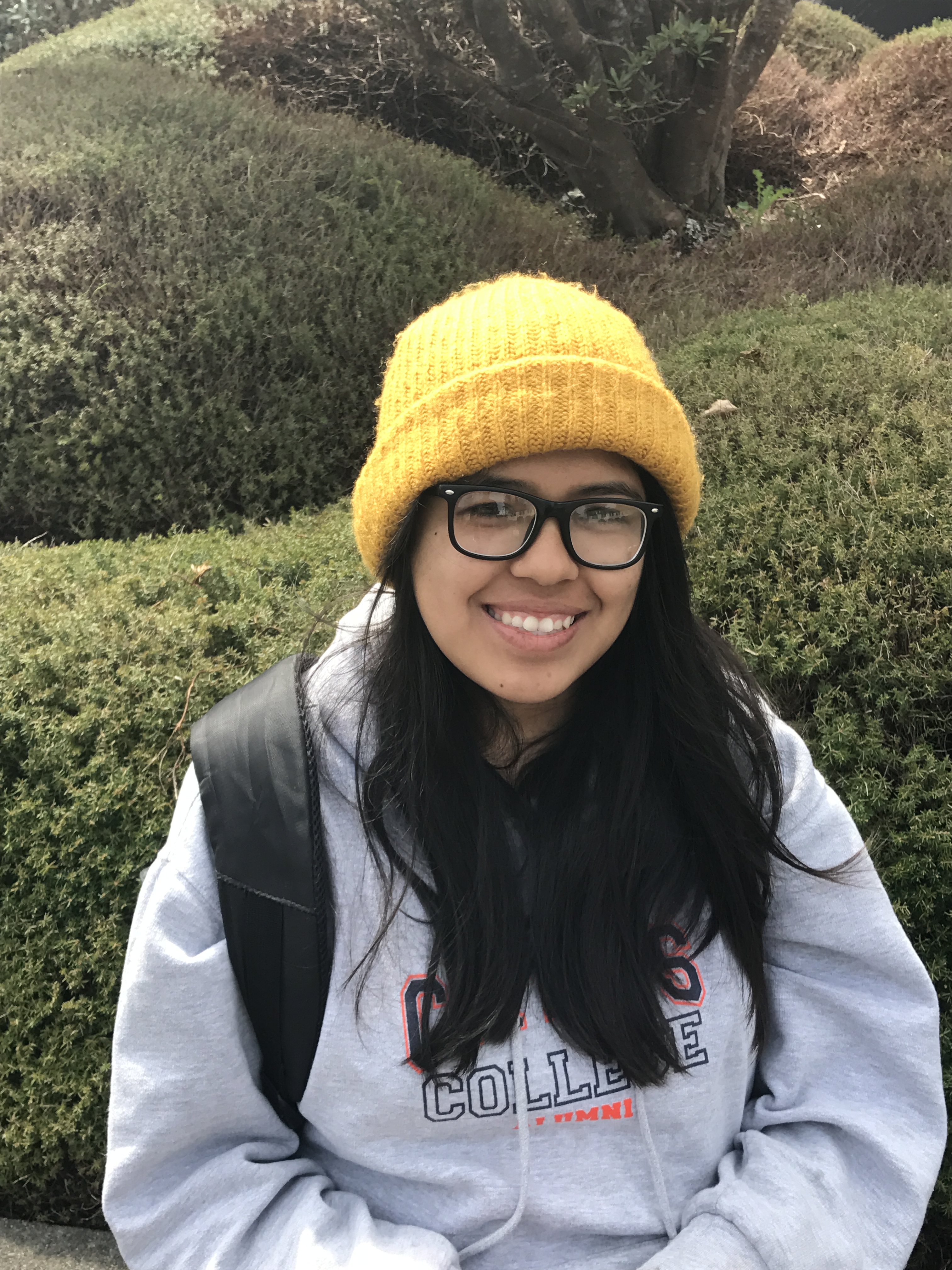
Jacqueline Gomez, junior, engineering “It was like a slap in the face because they’re not telling us where the money’s going. And I know Lisa [Rossbacher] got a salary increase. So she can get a salary increase, but we have to pay more tuition?”Brian Taylor, freshman. “If it was going somewhere to actually improve my time here, that’d be okay. But I’d want to know exactly where the money is going. I obviously don’t want to pay the extra money because I’m already going to have a lot of debt for four years of something I don’t even necessarily want to do, but I have to do because that’s what society has put in front of me.”Dèsha Arthur junior computer science. “I don’t think it’s justified. I don’t think it’s valid. The benefits that it’s going to bring – I don’t think the students think it’s worth while to charge us more. If you’re raising tuition you should be benefitting the students more.”Sarah Dunn, junior, religious studies. “I just think it’s bulls**t because it’s not going to fund something worth funding. No one – no student at least – is going to benefit from it. The CSU system just seems as corrupt as the government that runs it.”Khalil Robinson,senior, zoology and biology. “My biggest issue is that there isn’t enough transparency with what they’re doing with the money going towards tuition. They say we need it to build facilities to get more reach with the students. But then when the time comes we’re like ‘where is it? Why aren’t we getting longer library hours? Why do people in the dorms have to pay for toilet paper?’”
On March 22, the California State University Board of Trustees voted 11-to-8 to increase student tuition for the 2017-18 academic year by $270 for undergraduates. There are over 100,000 more students enrolled in the CSU system today than in 1985 and concurrently funding has decreased by 2.9 percent. The state’s gradual abandonment of CSU funding commitments has pressured the Board of Trustees to find alternative financial support for institution services.
The recent vote came as a blow to students and their families statewide who are already struggling with the costs of education. The CSU system is a public institution that relies on state funding to provide high quality education for its students. (jump) With diminishing state support, universities increasingly rely on students and their families to fill the void.
An increase of $270 for the 2017-18 academic year is especially tolling for the large number of low-income students currently enrolled in the CSU system. According to a report commissioned by CSU Chancellor Timothy White, 1 in 10 CSU students today experience homelessness during their college career and one in five do not routinely have enough food. Amidst rising living costs, the state of California is investing $6,888 per student in the California State University system as opposed to the $11,607 it invested in 1985.
The recent Board of Trustees decision strengthens pre existing barriers to higher education for current and prospective low-income students. Additionally, the quality of education students receive is compromised due to insufficient resources. As detailed in the California Faculty Association Spring 2017 report, “Equity Interrupted”, instead of providing a system designed to maximize access and quality for the benefit of the state of California, CSU’s are shrinking access to higher education because of increased tuition, and failing in its duty to support the new generation of CSU students so that they will help our state prosper in the 21st century.
Cost of tuition is not the only thing that has changed in California over the last 30 years. According to the CFA report, the CSU had over 150,000 more students in 2015 than it had in 1985, a student body increase of 64 percent over those 30 years. In 1985, 63 percent of the CSU student body identified as white, and only 27 percent identified with another ethnic group. By 2015, this changed to 26 percent and 62 percent, respectively. CFA Associate Vice President Dr. Cecil E. Canton said in front of the State Assembly in 2016, “as the student body of the CSU became darker, funding became lighter.”
Students around the state have been advocating for the CSU system to reclaim its title as the “people’s university” by demanding free, safe, inclusive, and quality higher education. Students opposing tuition hikes are now moving attention towards the updated budget proposal to be submitted by Governor Jerry Brown’s office this May. Those fighting tuition hikes have not lost hope. There is potential for the Board of Trustees to vote against tuition hikes in the future, which could put pressure on the state to increase the education budget. Other proposals and bills have surfaced, including Assembly Bill 393 which would prohibit California State University and the California Community Colleges from increasing tuition and any mandatory student fees until the end of the 2019-2020 school year.
Student groups currently focusing on this issue at Humboldt State University include: M.E.Ch.A., HSU Green, I.N.R.S.E.P., Double Dare Ya, Humboldt Unity Coalition Front, and Associated Students of HSU, and Power Up!. To find out more about the recent tuition hikes, relevant upcoming legislation, and how the CSU Board of Trustees operates, visit the Cal State website.
Maricela Wexler submitted this piece on behalf of Power-Up! A student advocacy group at HSU. Power-Up!
Photo of HSU’s Power Up! members discussing organizing strategies and tactics to address unequal access to higher education. Photo courtesy of Maricela Wexler
Oh where, oh where, oh where in the world is Humboldt State University President Lisa A. Rossbacher? President Rossbacher has been at best unavailable, and at worst dismissive and non communicative with The Lumberjack. The Lumberjack works to engage with and provide a voice for the HSU community.
By deciding not to engage with The Lumberjack, Rossbacher is deciding not to engage with her campus community. As the president of Humboldt State University, Rossbacher is in charge of supporting the campus community. A key component of delivering that support is communicating with and being available to the campus media.
Just like any governmental official, Rossbacher is held accountable to the public through the media.
The Lumberjack has time and time again reached out to Rossbacher for comments on the ongoing athletic deficit, the recent tuition hike, and even parking with not one response.
The Lumberjack is not only a media outlet but a mandatory class for all Journalism majors. Shutting out The Lumberjack also shuts out the 40 students who take the class every semester from having an opportunity to complete well-sourced, informative stories.
In doing this, she fails to reinforce HSU’s mission to support its students educational opportunities. Failing to communicate with the media distorts the facts, it leaves people confused, and it fails to promote transparency — the chief responsibility of a community’s leader. On occasion, we students gather and sing, shout and even march to support the issues that are important to us; however, the one thing that has been missing during all this time is the voice of our university leader President Rossbacher. The Lumberjack staff would like to hear from President Rossbacher. The student body deserves a chance to hear from the president within the pages of its own, historic newspaper. We need a president that is present.
One that shows up for the student body not only in making policy, but in communicating what steps, if any, are being taken to protect students and Humboldt State University’s values.
Monday morning hits and you are dreading rolling out of bed. The alarm has already gone off twice and you know your days of sleeping in, free afternoons with no back-to-back hours of homework, and evenings when you actually have time to cook a decent meal is over. A one week break hardly feels like enough.
However, playtime is over. It’s time to scrape your eye boogers, lace up your boot straps and hike hardcore obstacle course that is disguised as the Humboldt State campus and get back to work.
There are only have seven solid weeks of work left. Then you can go back to relaxing and hanging out with friends. Forget about the first half of the semester. Forget about whether you were crushing it or just hanging on by a thread. Look at spring break as a reset button. Here are some tips on how to refresh after spring break and finish with a successful semester.
Get Back on a Sleep Routine – Make sure you get the full eight hours of sleep but don’t overdo it. Oversleeping is just as bad as not getting enough sleep. Besides a whole host of physical illnesses, oversleeping can cause depression and anxiety. Be sure to get the proper amount of hours so that you can function properly.
Hydrate and Energize – Keep a clear head and make sure you are fueling your body with enough water and foods that give you energy so that you can make it throughout the day. Try eating a healthy breakfast packed with fruit.
Plan It Out – Don’t lose sight of your goals. If you want to succeed make sure you have a clear destination. It would be good to write out your goals and create a schedule. You don’t have to micromanage your schedule. However, glance back at it at the end of every month and make sure you are staying on point.
Have Some Fun – If you are feeling burnt out this semester, that’s because you didn’t take time to have fun. Fun doesn’t have to only come around with school allotted breaks. Schedule time, at least one day of the week, to relax and de-stress. Do something as simple as going to tea with the your homies, plan a game night, or even Netflix and chill. Do something that gets you relaxed and refreshed so you can continue your work without feeling depressed and overwhelmed.
Review – Bonus points for the A+ student who review their notes before school starts again. Refresh your knowledge. If you don’t use information everyday, you tend to forget about. Just do a quick breeze through of your class notes so that you remember were the class left off.
If you are worried about obtaining health care insurance, well… you should be. After House Republicans faced a firestorm of criticisms for hiding away on the Hill to hash out their healthcare reform policies, Republicans finally introduced their version of health care reform last Monday, March 5. The potential repeal of the Affordable Care Act, more popularly known as Obamacare, would leave college students at a disadvantage. We are still allowed to piggyback off of our parent’s insurance (if they have it) until we are 26 years old. However, for those who can’t, this measure creates additional expenses for college students. As college students working in Humboldt County earning a minimum wage of $10.50 per hour, the possibility of affording health care coverage under the GOP’s American Health Care Act is unlikely. Obamacare tried to secure affordable healthcare for all and is by no means perfect, but instead of taking the time to fix the deficiencies, Republican’s “Obama-lite” healthcare system is wasting time and money. While we are waiting for the new administration to learn the ins and outs of health care law, millions of people are at a standstill wondering how they are going to get and stay covered. The bill wasn’t released with an analysis from the Congressional Budget office, and even conservative republicans are worried about the negative impact the measure could cause on the economy. The bill notes four key changes that shifts the fiscal burden from the government back to the people: Refundable tax credits, health saving accounts, block grants, and high- risk pools. These fiscal policies might sound like a dream solution — to those who can afford it. Refundable tax credits is money the government is willing to give back to you. The problem with these credits is that they are based on age unlike Obamacare’s income-based regulation. Age does not dictate the severity of medical care cost. A refundable tax credit is insufficient cushion for the unexpected cost. Under this new bill, young adults are considered the less in need. The bill states just $2,000 are credited to individuals under 30 years of age. The new bill risks denying millions in coverage with its proposed block grants that would provide a fixed amount of money to states for their Medicaid programs. A fixed block of money that doesn’t rise with inflation, meaning that states might not be able supply coverage at the amount they have in the past. The GOP also sliped in a provision that would defund Planned Parenthood [PPFA]. At least 60 percent of Planned Parenthood patients use Medicaid or some other type of government based insurance according to PPFA. This means that if the program is defunded, all of these women would lose access to affordable health care. Although people with pre-existing conditions will still be protected under the new bill, they will potentially have to pay more if they want to be insured. Insurance agencies will be allowed to increase the premium of those with pre-existing conditions while everyone else’s insurance rates are reduced. On top of all these new policies that would drain young adults pockets, the new bill includes a penalty for people who let their insurance lapse. The bill allows insurance agencies to raise their premiums 30 percent. This makes it hard for people to even try to regain coverage after losing it. All of these methods have been tested, tried, and found to be lacking in effectiveness. Obamacare was enacted in the first place as a solution to these problems. While Obama care extended coverage to over 20 million people, the GOP’s health care plan seems to be ripping coverage out of the average American’s hands. The new healthcare reform bill may as well read: The poor, low-income, and persons with pre-existing conditions need not apply.
This website uses cookies to improve your experience. We'll assume you're ok with this, but you can opt-out if you wish. Cookie settingsACCEPT
Privacy & Cookies Policy
Privacy Overview
This website uses cookies to improve your experience while you navigate through the website. Out of these cookies, the cookies that are categorized as necessary are stored on your browser as they are essential for the working of basic functionalities of the website. We also use third-party cookies that help us analyze and understand how you use this website. These cookies will be stored in your browser only with your consent. You also have the option to opt-out of these cookies. But opting out of some of these cookies may have an effect on your browsing experience.
Necessary cookies are absolutely essential for the website to function properly. This category only includes cookies that ensures basic functionalities and security features of the website. These cookies do not store any personal information.
Any cookies that may not be particularly necessary for the website to function and is used specifically to collect user personal data via analytics, ads, other embedded contents are termed as non-necessary cookies. It is mandatory to procure user consent prior to running these cookies on your website.

























![Jacqueline Gomez, junior, engineering "It was like a slap in the face because they're not telling us where the money's going. And I know Lisa [Rossbacher] got a salary increase. So she can get a salary increase, but we have to pay more tuition?"](https://i0.wp.com/thelumberjack.org/wp-content/uploads/2017/04/mos1.jpg?resize=3024%2C4032&ssl=1)


