Earn money. Many recycling plants in California offer trade-in programs where you can redeem money from the cash refund value (CRV) of plastic, glass and aluminum cans. The CRV amount for aluminum cans under 24 ounces and for glass and plastic bottles is $0.05. Containers larger than 24 ounces are redeemable for $0.10. Here in Humboldt you can take your bottles and cans to Humboldt Sanitation & Recycling in McKinleyville or the Eureka Recycling Center.
Make something new. There are so much things that can be reused and transformed into something new. Milk cartons can become bird feeders and trash can become artwork. Locally, Scrap Humboldt offers hundreds upon thousands of recycled, slightly used and new items for sale to let your creativity soar. They host creation tutorials to show people how to turn something discarded into something useful again. You can also donate your clean recyclables to their Arcata location to add to their collection of items for repurposing.
Clean them. Clean your recyclables before you toss them. Be mindful of the journey your recycling has yet to take in this consumerist chain. Besides knowing what is appropriate to recycle, it’s also important to properly prepare items before you recycle them. Cans should be rinsed clean, plastic caps should be discarded and wrappers should be torn off of containers.
Compost. Compost what you can. Paper materials like cardboard and newsprint are great materials for creating new flower and produce beds. These items don’t have to end up in the trash or even the recycling bin. Paper is great for reducing decomposition stench from compost bins and the carbon in paper can help facilitate the breakdown of waste. Just be sure the paper you use in your compost doesn’t have glossy inks like magazine paper.
Throw away the rest. You might be recycling things that aren’t recyclable. Plastics numbered with 3, 4 or 7 are sometimes not accepted by curbside recycling programs. Check your local recycling plant’s policies on what materials they accept and what they reject. Things like pizza boxes, aerosol cans, batteries and styrofoam are not recyclable. Throw items like these away or find a proper disposal. Here on campus there are several recycling hubs which offer bins for proper disposal of batteries, computer products and cellphones.
‘From Wounded Knee to Standing Rock’ offers insight into 71-day rebellion
As Indigenous Peoples’ Week came to an end, one of the last events was an airing of the documentary, “From Wounded Knee To Standing Rock: A Reporter’s Journey” at the Eureka Theatre.
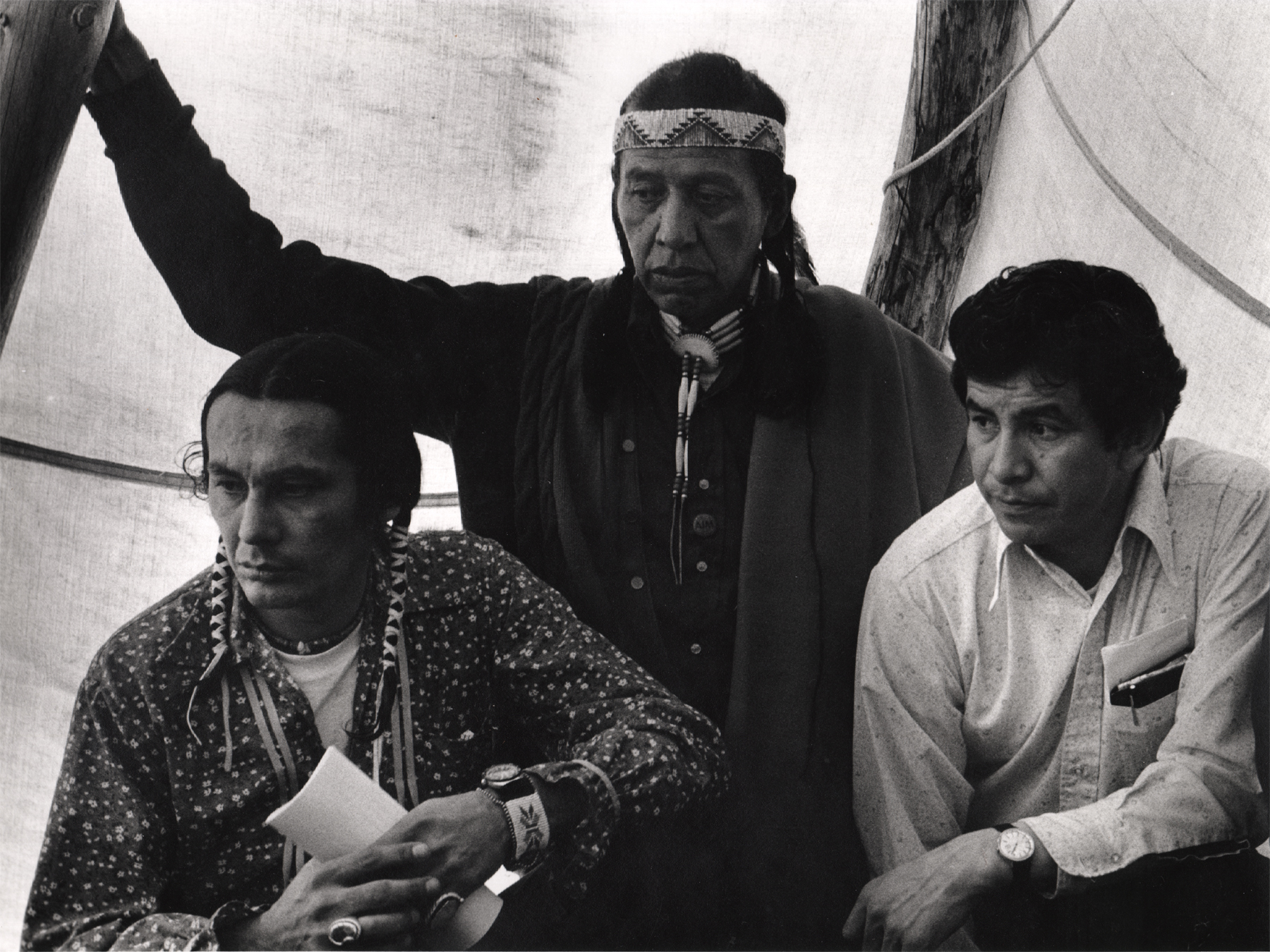
This story followed rookie reporter Kevin McKiernan and his experiences recording the events of the 71-day seizure and occupation of the town of Wounded Knee, South Dakota on the Pine Ridge Indian Reservation from Feb. 27 to May 8, 1973.
Photo courtesy Kevin McKiernan
Photo courtesy Kevin McKiernan
Photo courtesy Kevin McKiernan
Richard A. “Dick” Wilson was chairman of the Oglala Lakota Sioux of the Pine Ridge Indian Reservation. Protests started in response to failures of impeachment. Wilson had accusations ranging from giving jobs to friends and family, to suppressing his political opponents with his private militia, the Guardians of the Oglala Nation.
In addition, there were protests of the United States Government’s failure to uphold treaties with Native Americans. This was concerning since there was a history of abuse and neglect from American police and government. Cases such as State v. Bad Heart Bull served as a catalyst for the occupation.
As a result of the GOON squads’ weaponized militia, the American Indian Movement was brought in to assist the protesters. Wilson also received help from the American Government in the forms of U.S. Marshals Service and the FBI.
Photo courtesy Kevin McKiernan
AIM started as a grassroots movement in Minneapolis, Minnesota, to address police brutality towards Native Americans; and grew to represent all indigenous tribes and help them with the issues they have faced since European colonialism, as well as helping people reconnect with their heritage. Many people lost their history once Americans forced native youth assimilate into Euro-American society.
Acclimation to the colonizers’ lifestyles included forcibly removing Native people from their families, as well as preventing them from practicing their traditional customs. By accepting the different values as their own, such as Christianity, private property and material wealth, people became disconnected from their roots. AIM was a way for people to reconnect to their ancestors’ ways of life.
During the time of this occupation, the U.S. Government prevented media personal from entering the reservation or recording any discussions between them and the rebel leaders, such as Dennis Banks and Russell Means. They also implemented roadblocks to prevent aid for the natives.
McKiernan snuck in with the help of some rebels and slept on the floors of a church. While inside he recorded conversations with multiple members of the rebellion, shootouts with the FBI and USMS, took pictures of the aftermath of the altercations and recorded meetings with U.S. officials. Conflict escalated to the point of the USMS and FBI using helicopters, armored vehicles, snipers and automatic weapons.
Photo courtesy Kevin McKiernan
U.S. Marshal Lloyd Grimm was shot in the conflict and suffered paralysis from the waist down and Cherokee activist Frank Clearwater was shot in the head April 17, within 24 hours of his arrival, during a fire fight with federal forces.
Shootings were just one reason for keeping the media in the dark, by preventing coverage of the measures that the government took against the AIM and Sioux. At one point during the winter, Department of Justice appointee Kent Frizell, to manage the government’s response, cut off water, electricity and food supplies to Wounded Knee in an attempt to starve them out. They also made attempts to stir up distrust in the local factions, which lead to some activists being killed by their own allies, for fear they were government plants.
The final blow came in late April, when Lawrence “Buddy” Lamont, a local Oglala Lakota, was shot by a government sniper and killed. Soon after, both sides would come to an agreement to disarm. This led to the eventual end of the 71-day standoff between the Wounded Knee activists and AIM, and the United States assisted tribalists, serving as but one example of the Native American’s struggles since European Colonization.
Humboldt County residents put their survival skills to the test as Pacific Gas & Electric, California’s primary utility, shut down power across Northern California last week. The outage served as a wake-up call for those ill-prepared for disasters and emergency situations.
Heat is an essential element of our daily lives, something to prioritize. With the approaching winter season it’s important to know alternative options to keep warm. Below are seven ways you can warm up without electricity:
1. Hand warmers. Iron hand warmers are a perfect source of heat for smaller body parts. Hand warmers are great for heating up numb fingers or toes, but even more useful for pets. Small packs of warmth are a good heat source for small critters and reptiles that normally need electric heating mats.
2. Alternative heaters. Heaters are a modern day convenience but are limited due to using electricity. A more affordable, makeshift space heater can be made with a few cheap items that you probably have laying around your home. This heater requires tea light candles, two bricks and a terra-cotta pot. Construction is simple and consists of a few lit candles underneath an upside-down pot, that rests on top of the two bricks. The heat from the candles emanates through the top of the pot and warms up the spaces.
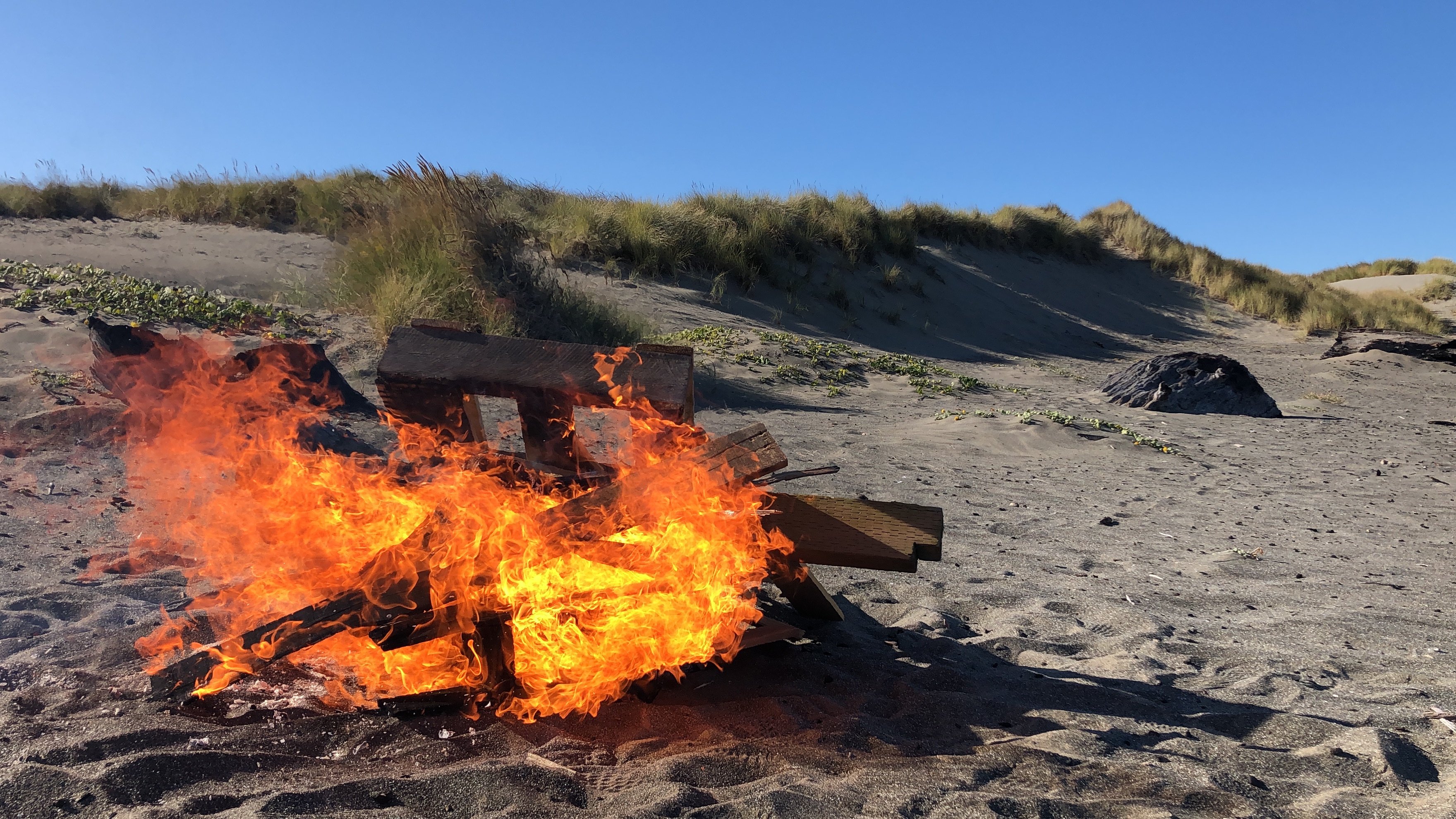
3. Fires. If you have a fireplace or an outdoor fire pit, use it! Making fires during power outages can be entertaining and helpful. Fire is mesmerizing, but dangerous so always be sure chimneys are clean and chutes are functioning before starting a fire in your home. Clean out debris and sweep the surrounding areas of your outdoor fire pit if you plan on using it outside or for light.
4. Hot water. If you’re unable to create fire but have a functioning gas stove, make heat with water. Boil water for a cup of tea or a can of food. Warming yourself up from the inside-out helps ease any muscle tension and stress. Boiling water to fill hot water pouches is another easy way to heat the body.
5. Exercise. Getting your heart rate going works up a sweat and warms the body. A quick sprint or jumping jacks in place flexes the muscles and circulates blood, keeping you warm.
6. Bundle up. Layering clothing or wrapping yourself in a blanket is the easiest way to warm up. Most of your body heat comes from your head, so adding a beanie or a scarf helps installation. Lastly, thick socks helps keep feet from freezing.
Home Away From Home potluck kicks off Indigenous Peoples’ Week
Arcata is home to the Wiyot Tribe and Humboldt State University sits on Wiyot land. The Home Away From Home Potluck is one example of the community’s attempt to welcome all members to interact and is a fun, inclusive way to start Indigenous Peoples’ Week.
The second Monday of October has become an opportunity to counter-protest Columbus Day. Along with a celebration of Native Americans, their history on this land and their culture, Indigenous Peoples’ Week highlights the customs of indigenous peoples and acknowledges the years suffering.
Arcata Mayor Brett Watson spoke on some of the actions the city has taken in order to support local Native Americans. Watson spoke of a proclamation from 2016 where Arcata officially recognized Indigenous Peoples’ Day.
“The university is our lifeblood and we see the diversity of the student body as a positive. We welcome students of all backgrounds.”
Wesley Chesbro
“Just on October 2, we did a resolution affirming our support for a United Nations resolution,” Watson said. “Acknowledging the rights of Indigenous people around the world.”
The inclusion and acceptance of Native Americans’ history is one way that the community is attempting to reach out to students of all ethnicities. Wesley Chesbro, local volunteer and HSU alumnus, believes the potluck is inviting and feels like home for students.
“What we hope happens is students will sit down with community members and develop relationships,” Chesbro said. “The university is our lifeblood and we see the diversity of the student body as a positive. We welcome students of all backgrounds.”
The Home Away from Home potluck is more than it’s food, it’s about a sense of welcome. The goal, according to Equitable Arcata’s Communications Chair Cati Gallardo, is racial equity.
“The Home Away From Home potluck started as a way to let students know they’re loved by the community,” Gallardo said. “We love our students and some of the feedback we received stated how we need to make a change in Arcata. Folks were feeling it wasn’t a racially equitable community and we wanted to change that.”
Skits from based off the 1490s were performed by a Native American comedy group. The potluck consists of community members coming together to donate food and local businesses offer gifts for raffle prizes as well as warm winter clothing donated by locals for students who may need them.
Other events for Indigenous Peoples’ Week include highlights of HSU’s Native American programs. The Native Forum provided guests with a geographical exposure to local tribes on Monday. Professor Rain Archambeau-Marshall is hosting a showing of Dodging Bullets followed by a post-film discussion on Wed., Oct. 16. The Native American Center will also hold an open house Friday, Oct. 18, where they will play Cards for Decolonization. To find out more information go to humboldt.edu or itepp.humboldt.edu.
Savage Henry Comedy Fest fills Blondies with laughter
Savage Henry’s 8th Annual Comedy Festival attracted 130+ comics from all over the nation to Humboldt County.
Cher-ae Heights, Eureka and Arcata organize venues for the comedy festival and Savage Henry provides the necessities to get the laughter going and the entertainment rolling.
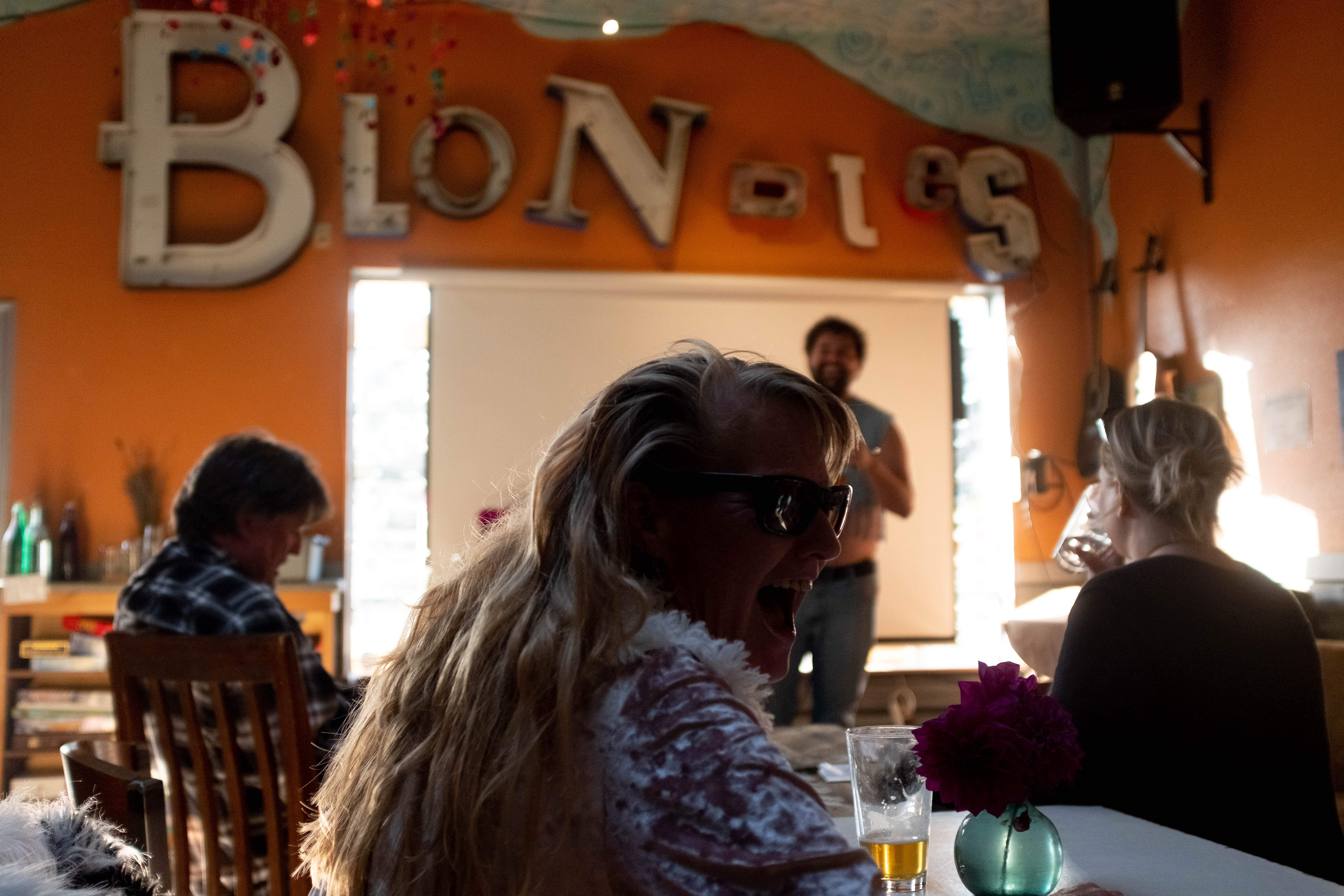
This year, one of Arcata’s venues included Blondie’s Food and Drink where a dozen comedians took to the stage to test their material, hopeful of making the audience laugh.
Peter Nellis, a resident comedian at Savage Henry, hosted for the evening and he was by no means a stranger to the comedic atmosphere.
First up was Sydney Hupp from Chico, California. Hupp was ecstatic to kick off the Friday show as echoes of laughter followed her relatable humor. Hupp’s material centered around the perks of living in a small town and tips on not succumbing to unhealthy vices.
After 10 minutes, Hupp thanked the audience and exited the stage, triggering another applause. The next comic to the stage was Tiffany Greyson, a comedian from Portland. Greyson joked about her past relationship dilemmas and distaste towards her son’s girlfriend.
Challenge arose when not all scheduled comedians showed up to perform. This, however, did not prevent comedians from finishing their sets. Instead, it was an opportunity for comedians to welcome new faces into Blondie’s by including them into their material.
James Couture pops open a bottle of champagne at the beginning of his set on Oct. 11 at Blondies in Arcata. | Photo Michael Weber
Comedian Michael Cella endured slight heckling from audience members and patrons, with one audience member distracting Cella as he carried beers to his friends. However, Cella was quick to respond and adapt, joking of making sure to sit down and enjoy the beers. Another audience member asked Cella a question, believing the event to be an open panel, but Cella politely answered the question and reminded them to not interrupt.
If the audience was testing Cella’s endurance, Cella was victorious and met with applause when he finished his set. After, Nellis took the stage again to give a big thanks to those in attendance and encourage others to attend the other comedy shows happening through the weekend.
The official Savage Henry venue in Eureka kept its doors open throughout the festive weekend and hosted an additional social gathering for comedy after dark.
“Tom Brady is not the devil. Bill Belichick is.”
Andrew Boydston
Bakersfield comedian Andrew Boydston told stories about his life and a set about substitute teaching quickly changed to sports and more specifically, Boydston’s distaste for the New England Patriots.
“Tom Brady is not the devil,” Boydston said. “Bill Belichick is.”
Boydston elaborated on his fantasy league and how Belichick impacted it. Boydston’s entertaining stories garnered positive audience reactions, with people laughing and nodding in agreement.
“Bill Belichick said ‘screw you’ to the fans by making these trades and then he demolishes our fantasy football teams,” Boydston said. “I hate him.”
With multiple shows happening around Humboldt County, Nellis and fellow Savage Henry members worked to make sure people enjoyed their time and most importantly, laughed.
“It’s been busy since it started,” Nellis said. “Moving from different locations and setting up, but everyone is enjoying themselves and that’s all that matters.”
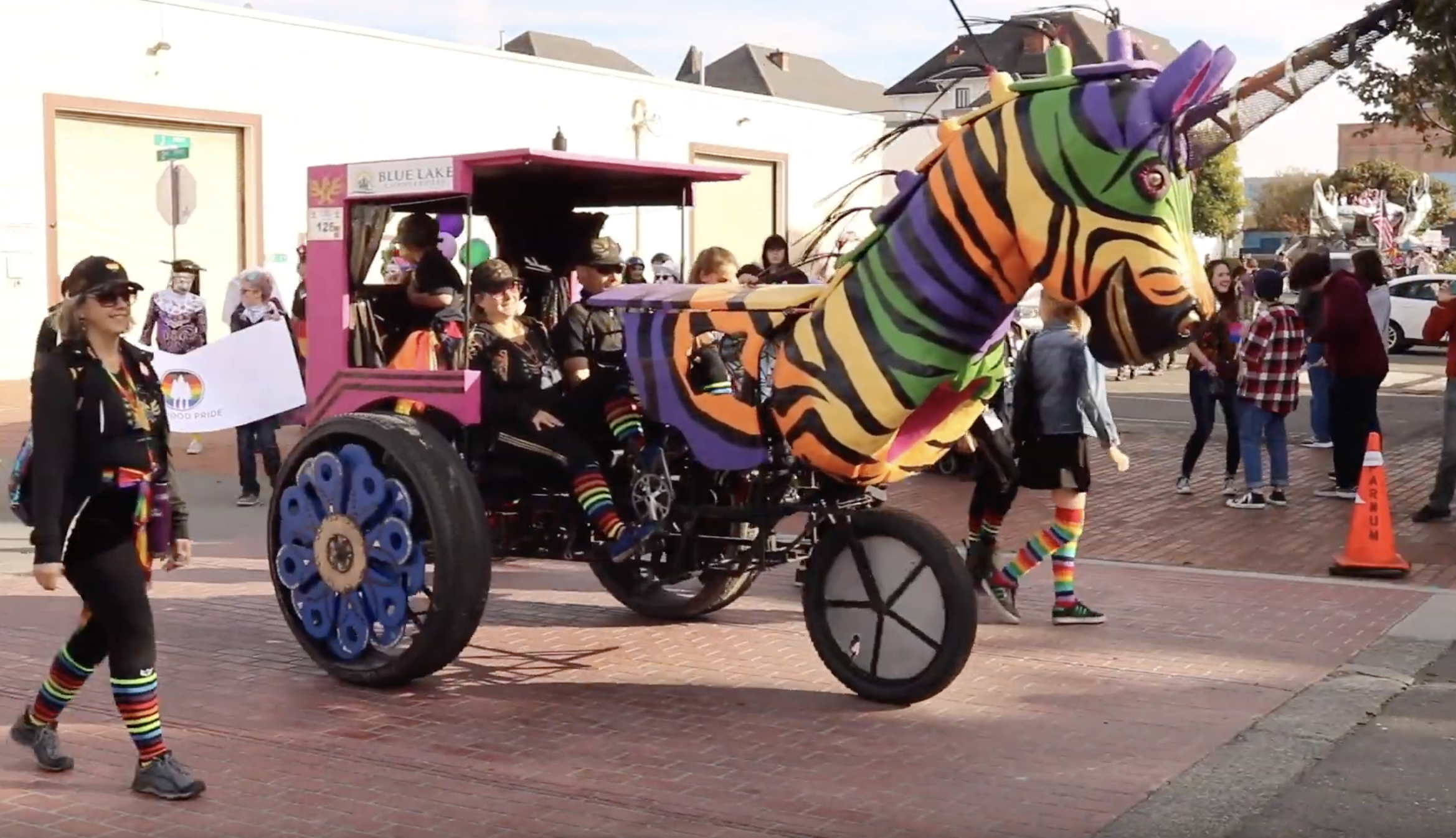
Humboldt County celebrated its 3rd Annual Redwood Pride in Eureka, California on Saturday, Oct. 12th.
Redwood Pride attendees gathered at the Jefferson Community Center for music, food and fun.
The community festival featured drag queen acts, tie-dye stations and face painting.
This year, Redwood Pride was celebrated a day after National Coming Out Day, and was made possible by The DreamMaker program.
“Redwood Pride is a DreamMaker project of the Ink People Center for the Arts,” Remy Quinn, the lead event coordinator, said. “They do the budget and things like that, and that allows us to focus on planning events for the LGBT community here in Humboldt.”
This event treats the isolated area of Humboldt County with an extra dose of pride outside of the traditionally celebrated pride month of June.
Annemarie Hurley, a social work major at Humboldt State, attended the event as her first Pride appearance.
“It’s nice to have events like this where we can connect with each other,” Hurley said. “Especially up here where we don’t have as much of a gathering area or it’s not as well known.”
Gatherings like this provide a safe space to celebrate uniqueness, oneself and the LGBTQIA community.
For these three athletes, weightlifting is more than just exercise, it’s a lifestyle
While many people are still sleeping or barely getting ready at 8 a.m. on a Saturday morning, powerlifter Lecsi Prince opens the doors of Arcata Health Sport and walks towards the weightlifting cage.
Prince warms up in the open-air weightlifting area and slides four 45 pound plates, two 25 pound plates and two 10 pound plates onto a bar. She pauses in front of the bar now loaded with 295 pounds. Prince clears her mind, sucks in a deep breath, bounces on her toes, quickly leans in and heaves the weight up onto her shoulders. Keeping her legs stable and her toes pointed out, Prince dips down slowly and up again. After three reps, Prince sets the bar down and exhales.
Kinseology major Lecsi Prince prepares for her morning workout at HealthSport at 8 a.m. Prince is a powerlifter and has osteoarthritis with a dream of changing the lives of people through exercise. | Photo by Jose Herrera
Twenty-three-year-old Humboldt State University student and kinesiology major Prince has four years of powerlifting experience. At 14, doctors diagnosed her with rheumatoid arthritis, a chronic autoimmune disease that affects the joints. It didn’t stop her from playing tennis in high school, and it doesn’t stop her now.
“I’ll have arthritis flares that will make it hard for me to even hold the bars,” Prince said. “So I’ve hit points where I go to the gym into a bench day and I can’t even wrap my fingers around the bar.”
When her joints are in too much pain and she’s unsure whether to take painkillers, Prince said she decides to not train for a day. Instead, she finds other activities that benefit her health; sometimes she hikes and other times she goes to the sauna as a means of heat therapy.
“On those days, it’s all a mental game,” Prince said. “My thoughts are that I’m so frustrated and I can’t do anything. It’s this draining helplessness. I’m not able to lift, but I can do something else healthy.”
Like Prince, Olympic weightlifter Luis Ruiz and women’s strength and conditioning coach Sierra Lathe are no strangers to overcoming their bodies’ barriers.
The three weightlifters have conditions and injuries they constantly work through to improve their form and records. Ruiz deals with recurring pinched nerves and Lathe has pre-existing injuries she sustained while playing sports in high school. Their injuries become more prevalent if they are not as cautious.
Sierra Lathe, the stength and conditioning coach for womens and mens crew teams, snatches 95 lbs while in the Student Recreation Center at Humboldt State University. Lathe graduated HSU in spring 2019 and now finds herself as a coach teaching athletes how to perform and train well. | Photo by Jose Herrera
Twenty-two-year-old Lathe works as a staff member for the Student Recreation Center at HSU. She graduated spring 2019 with a major in psychology and minor in child development. Lathe has a combined eight years of powerlifting and Olympic weightlifting experience.
As a former HSU athlete, Lathe now finds herself on the other side as the strength and conditioning coach for the men’s and women’s club crew teams.
“I still lift, but not as much because I don’t have time,” Lathe said. “Coaching is a whole other ball game. It’s definitely more fun teaching people how to do it now because I’ve done it for so long.”
She explains that Olympic lifting is more precise movements that use different parts of powerlifting together while powerlifting is “getting real big and strong” through three main exercises: squatting, deadlifting and benching. This is something Ruiz knows all too well.
Ruiz, 24, competes in national Olympic weightlifting competitions such as the USA Weightlifting Nationals, USA Weightlifting American Open and University Nationals. Ruiz placed second at the 2019 University National & placed fifth at the Under 25 championship in March. He can back squat 615 pounds and can do Olympic weightlifting movements like the snatch with 319 pounds and the clean and jerk with 405 pounds.
He says the pinched nerves are something that his body deals with on its own.
“I won’t be able to do everything that I need to and I definitely can tell in my body,” Ruiz said. “Part of it is that doing this for five years, ten years, or however long you do it, it definitely will take a toll on your body.”
Injury and pain is something Ruiz knew would be part of the bodybuilding process, but if given the opportunity, Ruiz wouldn’t change a thing.
“My mom thinks it’s a dangerous sport and she wishes that I wouldn’t put my body through what I do put it through,” Ruiz said. “But they’ve never told me that I needed something else to do. They understand that this is how I stay active and happens to be something I’m good at and so I compete in it.”
Prince and Lathe said they experience different issues as women athletes.
Sierra Lathe, the stength and conditioning coach for womens and mens crew teams, holds 110 lbs over her head while in the Student Recreation Center at HSU. | Photo by Jose Herrera
Lecsi Prince places knee wraps on themselves in preparation for 300lb squat. | Photo by Jose Herrera
Kinesiology major Lecsi Prince lifts and readies to squat 210lbs out in the cage at HealthSport during her early morning workout. Prince has osteoarthitis but continues to exercise because it’s their lifestyle. | Photo by Jose Herrera
“You have all these expectations as a woman,” Lathe said. “If you’re too strong, it’s too much. And if you’re too nice, it’s not enough. So, being able to be an athlete for so long feels pretty good.”
Lathe said people, generally men, stare when she trains, but that she’s used to it as a woman in sports.
“Especially if you’re someone who knows what you are doing,” Lathe said. “You’re either judged or not taken very seriously even though you know what you’re talking about.”
There are also moments where men approach Lathe about random things, sometimes assuming she needs help or to make comments that aren’t appropriate for a conversation with a stranger.
But looking past those moments, Lathe says there’s a lot of community and support in the gym environment, especially from women. And Ruiz says that although weightlifting is an individual act, there’s a lot of teamwork behind the scenes from the coaching and competitive aspect of training partners.
“I think it’s super important to have people that you train with because it pushes you to have friendly competitions within training,” Ruiz said. “To have someone who’s in your same level and train with you, I feel like you benefit more because of the little competition that you guys have.”
If anything, I’d give up free time outside of school and my job to be able to train than to have a social experience. Because the gym at this point has become where I met a lot of my friends.
Luis Ruiz, Olympic Powerlifter
Lathe and Prince share the same sentiment as Ruiz and agree that the people you train with and spend time working with to achieve similar goals become your greatest allies.
“If anything, I’d give up free time outside of school and my job to be able to train than to have a social experience,” Ruiz said. “Because the gym at this point has become where I met a lot of my friends.”
HSU Athletics strength and conditioning coach and kinesiology lecturer Drew Peterson works with a variety of students with different skill levels who come through the Student Recreation Center.
Peterson said that Prince, Ruiz and Lathe achieve great feats of strength and he believes physical strength is the key to activity and fitness.
“Anybody can get stronger and change your physique and increase your physical capacity,” Peterson said. “It just takes getting in here and doing a good job being consistent and staying on a structured program.”
Weightlifting comes with a set of drawbacks just like any other sport, but it remains a therapeutic process for Prince, Ruiz and Lathe. And the next day the three of them do what any average weightlifter does to get better – train again.
“I have a different perspective than most because my body does limit me,” Prince says. “For me it’s more of a therapy. It’s more of that I can push my body to this and nothing else in the world matters other than me just in the moment doing what I love.”
Bridging the cultural gap between the campus and community
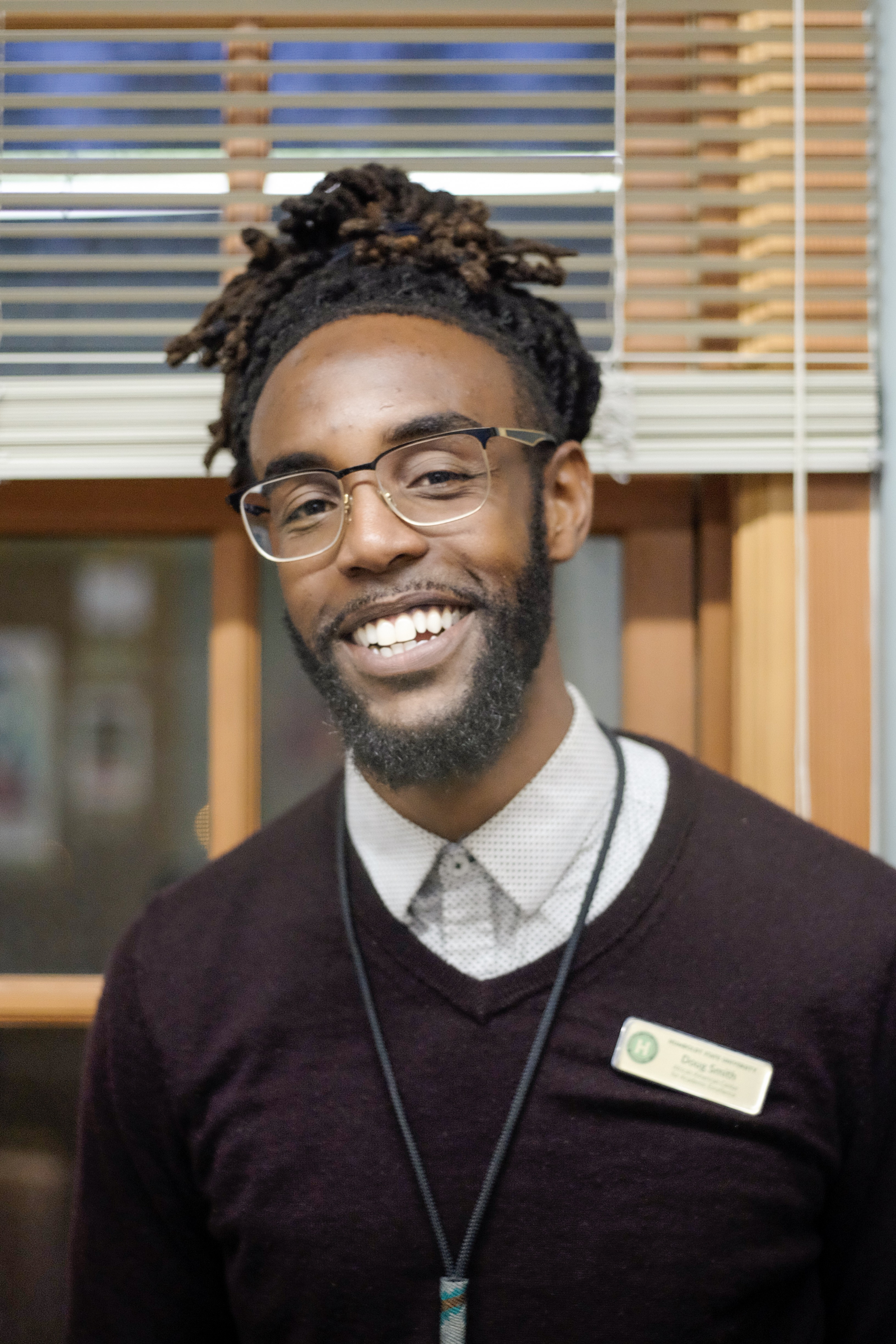
Douglas Smith drove up to Humboldt State for the first time in 2013 as a transfer student with big eyes for a small school.
Smith was seeking same the small school feeling that he got while attending College of the Canyons, away from his home in Los Angeles. At first, Smith experienced anxiety about being one the few people of color in Arcata, but he found a way to adapt and thrive in time.
Today, he’s the director for the African American Center for Academic Excellence, and is four months into his new role. Smith holds his own college experiences as reference when approaching the job.
“My big benefit to coming to Humboldt State was that I had these opportunities for cultural exchange with different kinds of people,” Smith said.
Smith believes the center should be a place that highlights the black experience and culture, a space where students and community can freely speak and learn. Smith hopes the center will strengthen the campus community and bridge the gap between the campus and locals.
Smith emphasized intercultural exchange as an important part of learning. One way the center achieves this is through Talking Drum, a safe space that gives students the agency to converse over the issues that matter to them.
HSU sophomore Brooklyn Reed is the new facilitator for Talking Drum. She met Smith tabling in the quad and offered some of her ideas on how the center’s discussions could be run.
“I talked to him about how to facilitate it, about what I wanted it to look like, how I wanted to build community,” Reed said. “He was just very, super supportive. Just yes, like, ‘let’s do this!’”
Reed wants to run the discussions the way she learned back home in Los Angeles. She also wants the chief of police to attend some meetings so that the center can hold the police accountable if they disagree with their conduct.
Smith’s approach to working with Reed speaks to how he wants to take a step back when it comes to campus dialogue. For his first couple of months, Smith said he spent the majority of his time listening to student feedback.
“I’m trying to come in with this idea of like, ‘Okay, I have some ideas for things,’” Smith said. “But I really want to learn and listen to what students’ needs are, and identify those needs before I go in and start making decisions here and there.”
In Talking Drum, students have a safe space that gives them the agency to converse over the issues that matter to them. | Photo by Michael Weber
This approach allows the Dean of Students Office to be informed by what the center is doing, versus managing from the top down. Letting students take control of the dialogue means that they will be directly influencing the Dean of Students.
“I have been wanting every [discussion] to be student-led, student-driven, and have that peer to peer connection,” Smith said.
Smith promotes the free exchange of ideas because he believes dialogue and cultural exchange is important to becoming part of the community.
One of Smith’s most profound influences on the way he approaches intercultural exchange occurred in his senior semester spent abroad in Santiago, Chile. When he landed, Smith recognized the feeling of being alone and started to familiarize himself with the local area.
“My experience in Humboldt County and at HSU as the ‘other,’ and learning how to move from a perpetual state of survival mindset to adapting and thriving prepared me in so many ways for my time abroad,” Smith said.
Smith’s directive for the center is a culmination of his experiences learning about other people.
“Having that cultural exchange and different kinds of people allowed me to have more diverse viewpoints,” Smith said. “I’m an extrovert. Inside, I might feel anxiety about me, but I’ve always kind of pushed myself to engage with people.”
The 6th Annual Zombie Invasion took over Eureka Arts Alive
With more than 30 people in attendance, the 6th Annual Zombie Invasion kicked off Eureka Arts Alive on Saturday, Oct. 5. Zombies of all-ages dressed in ghoulish make-up and outfits walked from the Humboldt County Courthouse to Old Town.
Josh Ferrell recounts his work and experiences on ‘Parts Unknown’ and ‘No Reservations with Anthony Bourdain’
Crammed into the Humboldt State library fishbowl, Josh Ferrell quickly silences the room with a startling picture of a busy street in Myanmar. An hour flies by as Ferrell recounts his time traveling the world and working with the late celebrity chef and traveler Anthony Bourdain.
Ferrell is as a freelance television producer. He helped produce the Travel Channel’s “No Reservations with Anthony Bourdain” and CNN’s “Parts Unknown.” But before traveling the world, Ferrell was an HSU journalism student minoring in history and captain of the rugby team.
Josh Ferrell speaks to a packed room in the HSU library fishbowl. | Photo by Megan Bender
“I loved going to Humboldt State, it looks completely different now,” Ferrell said. “It’s such a small, family-oriented place and that helped me come to terms with keeping it close, keeping it comfortable.The Humboldt mindset helps me get jobs and make people comfortable, keep things comfortable.”
Shortly after graduating, Ferrell worked as a park ranger and substitute teacher in Southern California. Eventually making the move to New York to pursue work as a production assistant and taking up physical training to make ends meet.
“I got discouraged so much and had an ‘is this for me?’ moment in New York when I was a production assistant,” Ferrell said. “But you need to stay persistent like ‘what else you got?’ because those contacts and that networking is what I got out of all the stress. At the end of the day, people remember a great attitude and that’s part of paying the dues.”
Ferrell’s mother, Sharon Ferrell, reminisces about his first day on the job with Anthony Bourdain in Brazil.
William and Sharon Ferrell watch their son present on his television producing career and work with the late Anthony Bourdain on Fri. Sept. 27. | Photo by Megan Bender
“He was in the mouth of the Amazon with Bourdain,” Sharon said. “I guess Tony [Bourdain] was behind him and a giant bird landed on his [Ferrell’s] shoulder and took a massive leak. It was running down his shoulder and his shirt and everyone started turning and leaning in to see how he would react and all Josh said was, ‘must be good luck, right?’ After that Josh had the job.”
Ferrell recounted his trips to Libya and Jamaica, which sparked the making of some of the more prominent and powerful episodes.
“Tony really wanted to do an episode in Libya,” Ferrell said. “This was back in 2013, it was important to show Libya in a different light because everyone was seeing war news and we thought it was important to show and tell the stories of people with hope.”
In 2013 Libya was in the midst of a civil war. Ferrell and his crew went with a security team due to the possible dangers.
Josh Ferrell introduces a photo of the bustling streets of Myanmar, from his travels and work on the shows ‘No Reservations with Anthony Bourdain’ and ‘Parts Unknown.’ | Photo by Megan Bender
“I didn’t sleep in Libya,” Ferrel said. “The security team told us to leave, but we pushed for a couple more days. It’s important to show relatability and showing people places and cultures is important.”
Some moments of Ferrell’s work may have been dangerous, but many were impactful.
When the crew traveled to Jamaica, a beloved local beach was in the midst of being scouted by Sandals, all-inclusive resort company. Ferrell and his team used the angle as a focal point in their episode, publicizing the controversy. Two weeks after the episode aired, Winnifred beach was declared public by the Jamaican government.
“Food as a vehicle is brilliant, it gets you in everywhere because everyone likes food. CNN brought us on as a food show, however, food was just the thread and platform we used to tell the stories we wanted to tell.”
Josh Ferrell
“Our ambition paid off and we told stories, supported science and talked about the greater good,” Ferrell said. “We realized we are super lucky and had to pinch ourselves like ‘Holy crap! We‘re very fortunate to be doing this!’”
Ferrell explained that the show wasn’t so much recipes or tutorials surrounding food and cooking, but rather commentary on specific regions utilizing food to find stories.
“Food as a vehicle is brilliant, it gets you in everywhere because everyone likes food,” Ferrell said. “CNN brought us on as a food show, however, food was just the thread and platform we used to tell the stories we wanted to tell.”
Josh Ferrell talks with an audience member. | Photo by Megan Bender
With food as the drive behind the episodes, stories opened up. But every episode took extreme preparation and at times, mandatory safety courses.
“Tony loved the military expression, ‘prior preparation prevents poor performance,’” Ferrell said. “There was no hand-holding because it was his show. Every two years the team takes a hazardous environment training course. It’s a three-day intensive course where you learn what to do when your shot in the chest or kidnapped.”
While not every episode required a safety course, shots took extreme preparation, and Ferrell recounts his time spent with Bourdain as inspirational and personal.
“I was extremely lucky to work with him and when he passed, I lost a friend,” Ferrell said. “He went to my wedding and he created a family of close friends. He helped me figure out what I wanted to do as a producer.”
Excited students speak with Josh Ferrell after his presentation on his work in the television industry. | Photo by Megan Bender
Ferrell credits Bourdain with a big portion of his career as well as the close-knit circle that surrounds him to this day. Ferrell worked his way to producing some of the most powerful and recognizable shows around the world. However, shoot days were often taxing.
“As a producer, I never slept,” Ferrell said. “We shot two scenes a day. We wanted each episode to be a mini-movie but we also tried to keep it under a 12-hour-day, ended up having a lot of 18-hour-days.”
Ferrell’s success in the film industry inspired the audience. Allison Lehenbauer, a film student, felt the need to do more.
“I feel mostly encouragement,” Lehenbauer said. “It’s easy to get overwhelmed in film, and now I know I need to do new things and learn more.”
Ferrell’s advice to students seeking his occupation is simple.
“Do as much as you can, you don’t know what you’re going to enjoy,” Ferrell said. “Try and learn more, especially in media, you’ll learn what you want to do. I love it all and that’s why I produce. I want to do it all.”
Many of these games are crap, immensely complicated or so dry they would bore even your grandparents. But some are actually fun.
I’ve been playing board games for years. Here are some of my most accessible favorites for various crowds.
For the actor:
“Monikers” is charades, but with a reliable set of cards to act out. To make things better, Monikers offers three rounds of increasing difficulty.
In the first round, you can do anything and say anything but the title of your card to try to get your friends to guess what’s on the card. In the second round, you get one word. In the third, you get only your miming ability. Monikers makes you laugh.
Monikers. | Photo by James Wilde
For the detective:
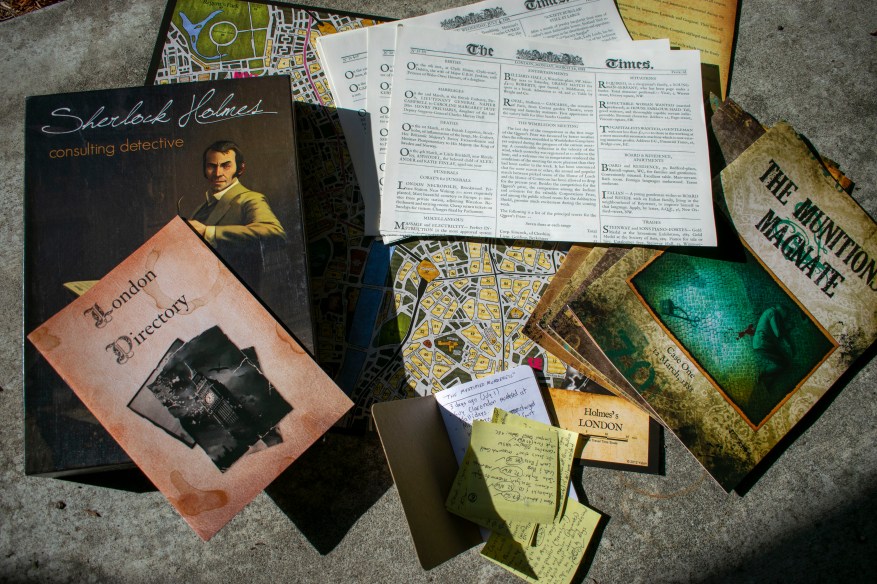
“Sherlock Holmes Consulting Detective” hands you a pamphlet for a crime mystery and tells you to go solve it. You and your friends work together, going to locations on a map to find clues or reading from facsimile newspapers to find leads.
The goal is to use as few clues as possible to solve the case. The game is reading-intensive and the cases often involve illogical jumps, but if you’ve ever wanted to be a detective this is probably the closest you can get without actually becoming one.
Sherlock Holmes Consulting Detective. | Photo by James Wilde
For the artist:
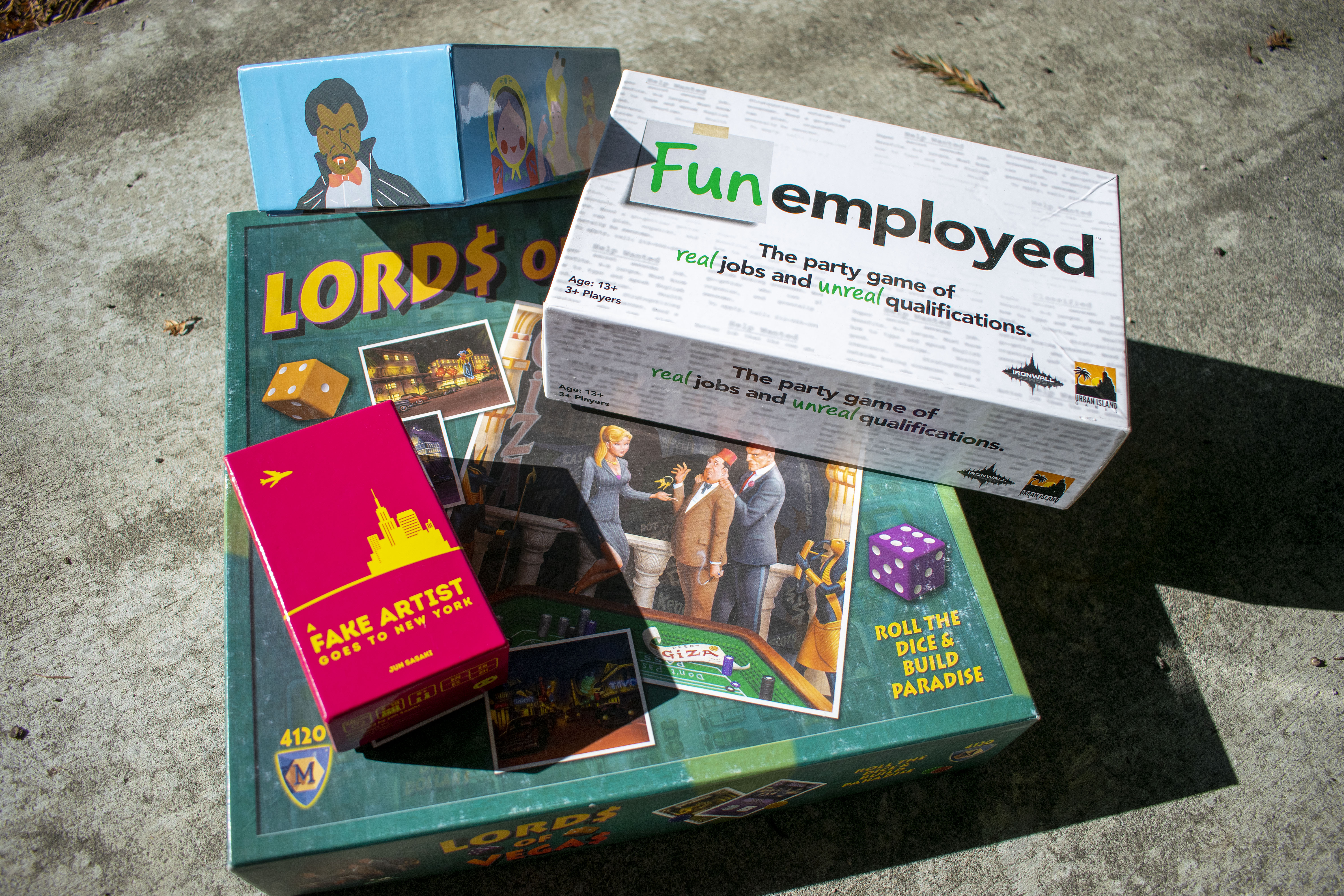
“A Fake Artist Goes to New York” begins with everyone secretly receiving the same object to draw. However, one player, the fake artist, has no idea what they’re supposed to be drawing.
Everyone goes around in a circle adding one line to the same drawing, and the players must then suss out who the fake artist is, before the fake artist successfully guesses what the object is. Bonus points to this game for coming in a tiny box.
A Fake Artist Goes to New York. | Photo by James Wilde
For the talker:
“Funemployed” is like a riff on “Monikers.” You get a hand of cards with varying words on them. When it’s your turn, you have to “apply” for a a job determined by a card drawn from a deck. Essentially, you’re giving your pitch in front of your friends.
The catch is that in your pitch, you have to include the terms from all of the cards in your hand. Good luck fitting “Fifty Cats” or “Scientology” into your pitch for that internship. Another game that’s guaranteed to make you laugh, so long as you play with people comfortable ad-libbing and talking a lot.
Funemployed. | Photo by James Wilde
For the gambler:
“Lords of Vegas”makes you into a prospective businessperson setting out to build Las Vegas. Compete with your friends to buy lots, build casinos, and talk your way into questionable trades to win the game.
It’s also very probable that at some point you’ll gamble your money at another player’s casino and lose everything. This game is basically what Monopoly should be. It’s also a little more complex than other games on this list.
Lords of Vegas. | Photo by James Wilde
For the storyteller:
“Tales of the Arabian Nights” is a choose-your-own-adventure book on steroids. You and your friends traverse around a map while reading from a booklet of stories and choosing your reaction to said stories.
There’s not much of a game here. Mostly, there are lots of laughs as your character gets captured by fire worshippers, turned into an elephant or has some other bizarre encounter. I recommend using the app to streamline the choose-your-own-adventure part.
Tales of the Arabian Nights. | Photo by James Wilde
In addition to nonperishables, Oh SNAP! offers fresh produce twice a week
Oh SNAP! is an on campus resource with a goal of helping Humboldt State students get food. During the fall semester, weekly stands of fresh-picked produce are available to students. Cooking a nutritious meal can be financially strenuous, but Oh SNAP’s farm stand is available twice a week.
For students like HSU junior and microbiology major Matthew Peter it was their first year using Oh SNAP! to get their groceries.
“This is technically my third time,” Peter said. “Now I’m trying to make an effort in coming.”
The farm stand wasn’t the only service that Peter used, he was also familiar with the Oh SNAP! food pantry which provides nonperishable ingredients to make full meals.
Peter says he enjoys the farm stand because he feels canned goods can go to students that need it.
“I feel veggies are more volatile, for lack of a better term,” Peter said. “If there’s any leftovers they will have to be used that day, whereas cans can be stored for later.”
Since the farm stand sets up twice a week, students have the opportunity to attend both days which Peter says he has started doing.
Linda Mateo and Pand Moua at the Oh SNAP Farm Stand on Wed., Sept. 25. | Photo by Alberto Muro
Unfortunately, not all students are aware of the Oh SNAP! program. Valerie Hernandez, a HSU senior and art major, says this was the first year she is using the program and didn’t recall it being mentioned during orientation.
“Some people think they need to fill out paperwork, but no, it’s easy for students,” Hernandez said. “All you need is your student ID. I forgot mine at home but they can still help you.”
If you accidentally forget your ID, like Hernandez did, don’t be alarmed because the volunteers at Oh SNAP! can still pull up your information.
HSU senior and social work major Pand Moua volunteers at the Oh SNAP! farm stand every week and says the program also assists students in applying for alternative ways of getting food.
“We have a ton of resources for students on campus,” Moua said. “We even help with Cal-Fresh applications and faxing.”
Cal-Fresh is a resource that alleviates complications for students who do not have time to access the food pantry or farm stand.
The Oh SNAP! food program is located at room 114 of the Recreation Wellness Center. Moua says that for students with disabilities, the location can be difficult to access but there are resources on campus to help.
“Disabled students can use the Students Disabilities Resource Center for transportation and come get whatever they need.”
The services provided by Oh SNAP! goes beyond food distribution, it also ensures the well being of HSU students.
The growing season for local farms affects the operational days for the farm stand, but the program should be accessible for students even after finals. The academic calendar on HSU’s website has the farm listed until the end of the year.
A look at one of the key players in the underground Humboldt electronic scene
Twenty-two-year-old Preston Thibo is a Humboldt State studio art major who mixes his own electronic music and throws underground parties, but that’s only a piece of what he envisions for the future of electronic music in Humboldt.
Thibo’s music career sprouted from his passion for throwing “renegades,” a term used to describe underground electronic concerts showcasing lesser-known artists at secret locations. He began throwing renegades a year ago, and soon found himself mixing music for his own shows.
“I wanted to give people a place to dance to electronic music instead of punk, which isn’t for everyone,” Thibo said. “And I didn’t see a scene up here so I created one.”
Throwing renegades was spear-headed because electronic music shows in Humboldt aren’t exactly accessible for people under the legal drinking age of 21 because electronic music shows are often held at venues that serve alcohol.
Thibo relaxing before heading to the stage for his set at The Jam on Sept. 22. | Photo by Jerame Saunders
This drove Thibo to begin working on full-fledged concerts stationed in landmark Humboldt locations. Eventually, he was sucked into becoming one of the showcased artists.
“I think I was on the forefront of making it happen,” Thibo said. “There are a lot of people up here who mix and who create, but there wasn’t really anywhere for them to perform.”
After the first renegade in 2018, the support from the community and fellow artists was substantial enough for him to throw more, all while performing at shows on and off-campus.
“The success in terms of money is not at all,” Thibo said. “Success in the terms of making people happy and giving people a good time, it’s been amazing.”
Preston Thibo plays music with a partner for a small crowd at The Jam on Friday, Sep. 20. | Photo by Jerame Saunders
Thibo was led to Humboldt to escape the urban trappings of Los Angeles and he quickly fell in love with the environment. However, there are still drawbacks to being an artist in such a unique area like Humboldt County.
“Pros are that it’s such a small community that you get to know everyone in it,” Thibo said. “But that can lead to a con as well.”
Thibo doesn’t necessarily consider his mixes as representative of the Humboldt electronic scene, which he describes as trippy, ambient and with deep bass.
“For me, I like to play disco and house music, and what gets people moving on an upper level and not so much on a downer level,” Thibo said.
“[Music] is everything to me. If I didn’t have a platform for me to share my music, I probably wouldn’t be as outgoing as I am today.”
Preston Thibo
According to Thibo, he is constantly striving to improve at making music, by accumulating better equipment and furthering his renegade brand called Esoteric Method with the name Kabbalah, his personal label as an artist. His other passions include stage design, making art installations and transporting people into the worlds he creates.
“I guess my goal is to unite people with similar interests who have awesome nights where they don’t have to worry about work tomorrow, school or class,” Thibo said. “They come and are in the moment and in the now, having fun with people they might not know.”
Thibo uses his creative outlets for social connection and to have a place where his music and art may impact the lives of others.
“[Music] is everything to me. If I didn’t have a platform for me to share my music, I probably wouldn’t be as outgoing as I am today,” Thibo said. “I grew up very shy and to myself. But now being able to play music and express myself through what I listen to with other people, it just makes me content with my every day life.”
To check out Thibo’s mixes, go to SoundCloud of MixCloud under the name “Monsieur.”
Humboldt State Alumnus Josh Ferrell talks food and travel storytelling
Join this Friday, Sept. 27, as the Anthropology and Journalism and Mass Communication departments invite Humboldt State University alumnus Josh Ferrell back to his stomping grounds to educate students on his dream-like career in a free event that is open to the university community and general public.
Ferrell graduated from HSU in 2005 with a Bachelor’s degree in journalism and mass communication. He quickly worked his way up the ranks and become a television producer for National Geographic and CNN. Some notable shows that he worked on include “No Reservations with Anthony Bourdain” and CNN’s “Parts Unknown.”
According to a press release for the event, Ferrell has traveled to more than 40 countries for his work with the late celebrity chef Anthony Bourdain (1956-2018). During the event Ferrell will discuss food and travel storytelling.
Visit the Library Fishbowl at 1 p.m. to hear Ferrell present Food and Travel Journalism: Compelling Storytelling in Digestible Portions.
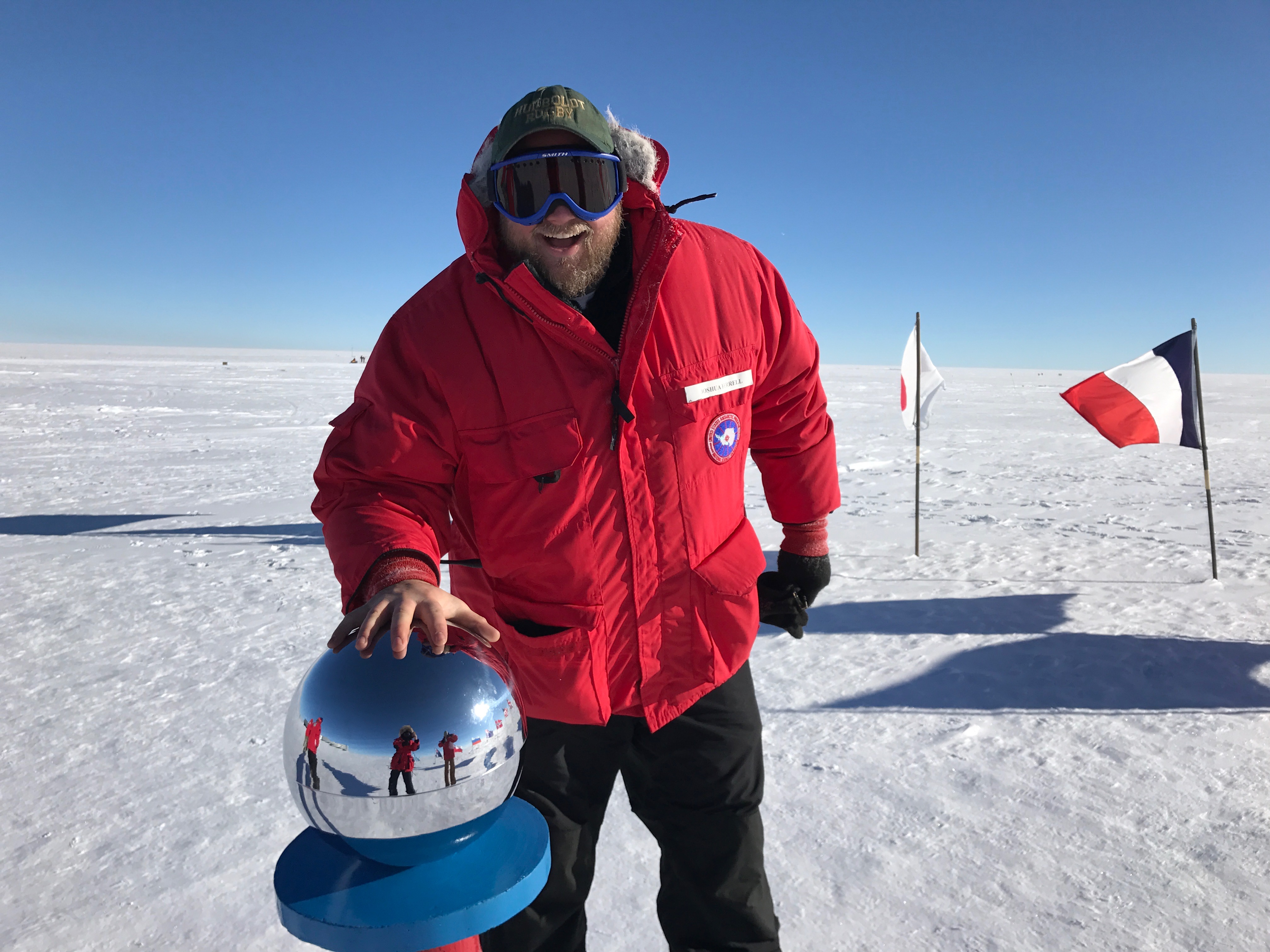
“Parts Unknown” crew shooting an episode in Antarctica. Josh Ferrell is center with Anthony Bourdain to his left. | Photo courtesy Josh Ferrell
Multi-instrumentalist learns to play 10 instruments in 19 years
Science can often disprove the idea of innate abilities found in humans at birth, but a discussion with Humboldt State botany major and multi-instrumentalist, Alex Rumbel, argues against this theory.
Rumbel’s capacity for understanding instruments has brought her to play over 10 instruments during the span of her 19 years of life and be a vital part of countless bands including Loud Neighbors Brass Band, the World-Famous Crab Grass Band, Laser Bear and Humboldt’s own Marching Lumberjacks.
Rumbel’s first memories of music date back to when she was five years old.
Alex Rumbel plays the trumpet after a show with her band, The Loud Neighbors Brass Band, on Sept. 7 at Outer Space Arcata. | Photo by Jerame Saunders
“My mom has always been a vocalist, and when I was a young kid, she performed in an a cappella group that sang at renaissance fairs,” Rumbel said. “I’d say the introduction to the rowdy bunch of people that come with a renaissance fair was good for preparing me to go to Humboldt State.”
Rumbel’s early musical ambitions sprouted from vocals but moved to guitar when she began studying music outside of school. With the extra finger dexterity from playing at such a young age, moving to a stand-up bass in middle school was a logical first step in learning to play multiple instruments.
“Instead of continuing in strings which could have been dead-end at some point,” Rumbel said. “I decided that I wanted to be a multi-instrumentalist.
“Humboldt County is a DIY thing, and that’s one of the things I love about being a musician here; I feel like there is less pressure to be something you’re not.”
Alex Rumbel
Trombone was the first brass instrument she picked up before she moved up to bass drums for the high school marching band. Rumbel’s high school music career was a flurry of new instruments and new bands. She played electric guitar, electric bass and drums for small rock bands. She also played in the drumline for a marching band, electric guitar for the advanced jazz band, percussion for a band performing in concert and advanced wind ensemble. Then, just for fun, she learned the viola for orchestra.
Rumbel broke her foot during her senior year of high school, which pushed her into social isolation. Because of this Rumbel started college with the mentality of not wanting to be a part of the social aspect of music creation.
“When I came up here, I brought my guitar just to play by myself and I brought my drum pad and my sticks,” Rumbel said. “But I didn’t intend to play in any bands.”
HSU student Alex Rumbel poses with her trumpet after a show with her band, The Loud Neighbors Brass Band, on Sept. 7 at Outer Space Arcata. | Photo by Jerame Saunders
After living in the dorms for a short amount of time, Rumbel found herself in the middle of the Marching Lumberjack’s “dorm storming” where they play around campus to recruit new musicians. She came down from her dorm and quickly found herself dragged back into band performance, learning yet another new instrument.
“I started playing trumpet,” Rumbel said. “That was the best decision I made after deciding to come to Humboldt State. When I first started playing the trumpet, it wasn’t as expressive, and it wasn’t as in tune with how I felt, but then it started becoming perfectly in tune with how I felt.”
It wasn’t long before Rumbel found herself ingrained in the local music scene, mainly playing trumpet for local bands. Recently, she found time to start playing bass for the Laser Bears. The local music scene is described by her as a very tight-knit group of musicians willing to collaborate, great venues with open doors to small bands, and a Do-It-Yourself/Psychedelic thread that defines Humboldt.
“Music has been my lifeline to everything else of meaning that I can imagine.”
Alex Rumbel
“Humboldt County is a D.I.Y. thing,” Rumbel said. “That’s one of the things I love about being a musician here; I feel like there is less pressure to be something you’re not.”
Rumbel’s musical journey shows how something physical like an instrument can have an undefinable effect on the musician playing it. Music has the affect of rippling through the audience as it leaves a piece of each artist in the minds of each listener, and that is one of Rumbel’s greatest connections with the art.
“Music has been my lifeline to everything else of meaning that I can imagine,” Rumbel said. “It has been my social connection for many years being in so many bands and interacting with so many people, but it’s also introspective in the same way, and I feel like, and I know it sounds cliché, I feel like I can actually express myself with music.”
There are many ways to make a decent biopic, but this wasn’t it
We’re all familiar with the term ‘clickbait’—that thing YouTubers, social media influencers and crappy publications utilize to get views by advertising mind-blowing topics that don’t pan out too much. Netflix is guilty of this.
Netflix advertises original movies with all-star casts on popular topics and many have been total flops. It’s mind-blowing to try to analyze why these movies haven’t worked out as there are usually decent actors and a whole lot of money thrown at scripts approved by Netflix executives. Yet, somehow we end up with biopics like “The Dirt.”
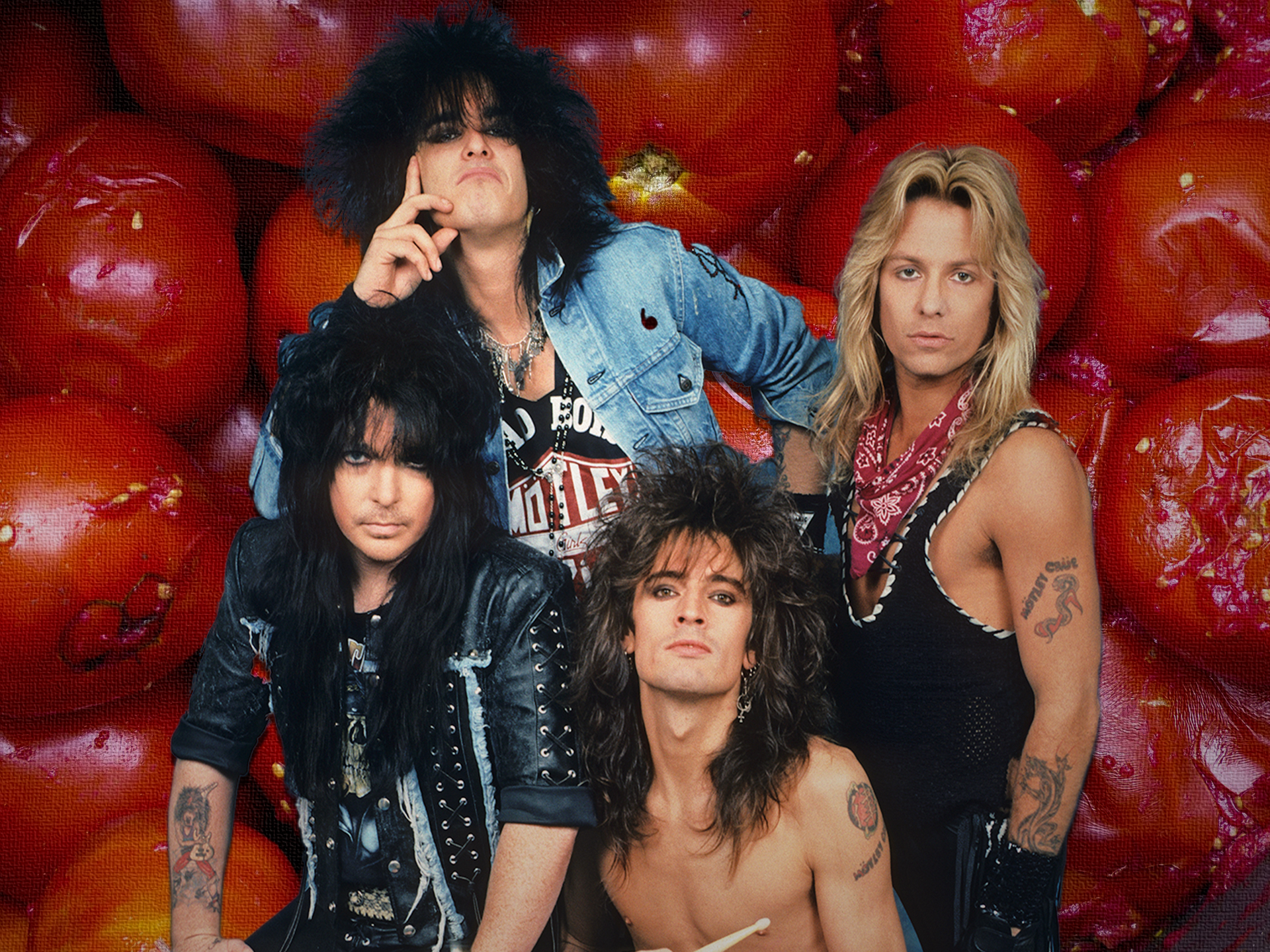
The film follows the life and times of the band Mötley Crüe, a rock group from the 80s that were as influential to rock as N.W.A. was to rap. The movie is based on the autobiography of the band by the same name and the production received first-hand help from the members themselves. Somehow, it still managed to suck.
I would go as far as referring to it as a dumpster fire, but one with a $28 million budget. I hate this expensive dumpster fire so much that it inspired me to start this column, investigating and deconstructing Netflix’s worst original movies.
“The Dirt” starts with a cliché voice over as we watch the band form, negotiate a signing and start making music before they dive headfirst into a world of debauchery. Despite this and heavy sourced material, the plot feels empty.
I would go as far as referring to it as a dumpster fire, but one with a $28 million budget.
There’s tons of drama, struggles with addiction and the rockstar lifestyle, yet all of it feels disconnected. What is a crazy and interesting true story turns into a passionless montage of crude humor, nudity and subplots that have no bearing on the rest of the story.
The poor structure and terrible acting could be forgiven if the writing didn’t feel so lazy. There were far too many conflicts that resolved due to convenience or off-screen. When the band formed they were down a lead singer. They sought out Vince Neil at a half-nude backyard party and gave him their mixtape in hopes that he’ll join their band.
Neil starts making out with a girl as a voiceover plays (did I mention that they pointlessly include these fourth-wall-breaking voiceovers that aren’t even consistent throughout?) of him saying he had no interest in joining the band because he was only in a band to get chicks.
Fast forward five seconds to him and this same girl at his house, the voiceover plays again and he randomly decides that he will call the band back. He hasn’t had an epiphany of any kind, Neil just decides to join the band. Instances like these are prevalent and pointless but, hey, writing like this gives us more time to watch the band do drugs and hang out with naked women. And, of course, see Ozzy Osbourne drink urine off the ground.
When I said that the movie was a bad montage, I wasn’t exaggerating. The filmmakers decided to take all of the band’s most iconic and emotional moments and reenact them for the camera. Then they threw in some basic cut edits of band arguments and performances. The scenes are exaggerated for shock value and not narratively rewarding.
This brings us to N.W.A. and their 2015 biopic. The exaggerations made by the screenwriters of “Straight Outta Compton”were intentional and contributed to tension within the movie which helped hold it together. The characters that N.W.A. struggled with in the film motivated the audience to root for their success.
Mötley Crüe’s biopic has no antagonists or even attempts to emphasize tensions felt between members. When the band gets back together at the end of “The Dirt,” I felt nothing.
Mötley Crüe’s biopic has no antagonists or even attempts to emphasize tensions felt between members. When the band gets back together at the end of “The Dirt,” I felt nothing. There was no struggle to get to that point and the movie never made a play for conflict in that regard. Besides external motivations, I also felt very little about Nikki Sixx’s overdose and his continuous struggle with addiction due to the way it was portrayed.
Meanwhile, I cry every time I watch Eazy-E receive his HIV/AIDS diagnosis in “Straight Outta Compton.” I don’t cry in the scene where he dies, but the scene where he is diagnosed. Why? Because after all the conflict that he and fellow group members survived, this moment pulls everything out from under them.
What happens with Sixx’s initial overdose and the band’s continuous struggles with addiction? The directors chose to do a thirty-second scene where the band decides to go to rehab. That’s cool, I guess. Not as much of an emotional impact, though.
And while we’re on the topic, here are some other things that bothered me about this garbage fire of a movie: Machine Gun Kelly’s over-acted and exaggerated portrayal of Tommy Lee, the recurring mention of the band’s lead guitarist Mick Mars always being sick and no one caring, the weird humor they try to force onto Pete Davidson’s character Tom Zutaut (including a scene where he speaks with a band member through a door while the same band member has sexual relations with Zutaut’s girlfriend), Machine Gun Kelly’s acting (again), the lack of cohesion between personal and on-stage life and finally, the lack of grounding in real world events. I, obviously, could keep going.
The absence of tension, overarching narrative or fun scenes showing off the band’s greatness doom this movie from the get-go. Even if you were able to look past those issues, the terrible writing and bad performances, the movie leaves you with nothing more than unintentional laughter and the urge to turn it off. Which isn’t anything that even shock value or sweet nostalgia can salvage.
JPEGMAFIA’s new album is a demented ride through the rappers mind
JPEGMAFIA’s third studio album, “All My Heroes are Cornballs,” was released Sept. 14 and it perfectly embodies the production characteristics that define his music.
JPEGMAFIA is the brainchild of music producer and rapper Barrington Hendricks. Hendricks gained interest in music by learning to sample while he was stationed in Japan with the United States Air Force.
After being honorably discharged in 2016, Hendricks moved to Baltimore, Maryland and began working on producing his first studio album, “Black Ben Carson.” In 2018, he released his critically acclaimed album, “Veteran,” which was a healthy introduction into Hendricks’ twisted, gritty version of postmodern, experimental hip hop.
The entirety of the “All My Heroes are Cornballs” album, from production to rapping, was done by Hendricks. Hendricks has yet to stray away from the things that define his music production. The choppy, industrial sounds that seem to harass your senses in the best possible way. The usual hi-hats, claps and kick sounds found in a generic rap beat are replaced with clicks, static and pre-2000s computer sounds which seem to invade your privacy. The framework for the bass and ASMR-like drum patterns are still prevalent, but this is what sets Hendricks apart from other producers in the genre.
While applying his signature drum patterns, Hendricks adds sounds that have never been used in his beats before. There are softer, inviting motifs connected to every melody behind the drums. They usually consist of a few soft piano keys with audio effects added, a lightly strummed guitar or synths that are reminiscent of ’80s and ’90s video games. The sounds radiate nostalgia, spirituality and a sense of peace which largely contrast the rough, nail-biting sounds of “Veteran.”
These sounds give a more introspective look into what makes Hendricks who he is rather than the persona he gives off in his music. The downside to the project has to do with the lyrics. He changes the flow of his raps on a regular basis but each time they still fall into a generic pattern. The lyrical content rarely strays away from the subjects of fighting internet haters with guns and being better than other artists. Most of the bars consist of Hendricks yelling one of his coined ad-libs. It’s hard to expect any different from a person who is labeled as an internet warrior with a track record of pissing off the alt-right. The lyrics become redundant and feel recycled from past albums.
Hendricks ventures more into singing on this project and surprisingly, it is one of the best things about the album. Some of the stand out tracks on this album are “Jesus Forgive Me I Am A Thot,” “Free The Frail,”“Thot Tactics” and ”BasicBitchTearGas.” He harnesses the energies of 90s R&B and it perfectly ties together the crunchy, psychedelic beats to produce one of his most personal projects.
The production on this album is perfect. The chord progressions, song transitions and signature drum beats are completely on par with the JPEGMAFIA sound. The only thing lacking is lyrical variance, but the singing and melodies make up for it entirely. This can easily be one of the best experimental rap albums of the year.
Asian, Desi and Pacific Islander Collective holds annual Mid-Autumn Moon Festival
The Mid-Autumn Moon Festival is an annual Chinese celebration dating back to the Zhou dynasty. At Humboldt State, the Asian, Desi and Pacific Islander Collective observed the traditional holiday with a free event on campus. Students and members of the community were invited to enjoy food and conversation with others in the Kate Buchanan Room.
Students and community memebrs work on Chinese calligraphy druing the Mid-Autumn Moon Festival put on by ADPIC in the Kate Buchanan Room on September 13. | Photo by Thomas Lal
Attendees were provided utensils to paint Chinese characters throughout the event and of course, enjoy mooncakes to properly celebrate the creation of their art. Mooncakes are a wheat based pastry seen as an essential part of the festival in Chinese culture.
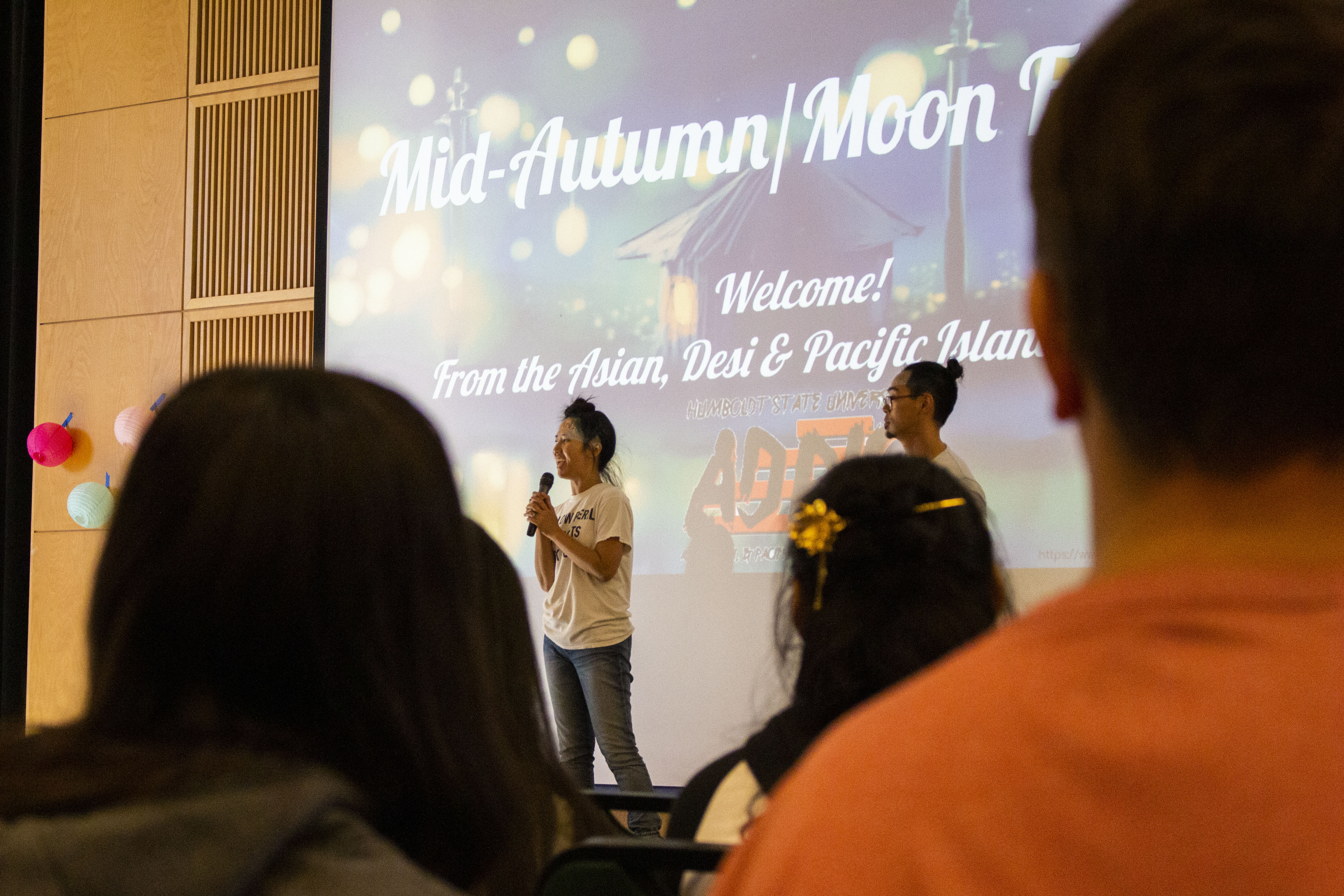
A short presentation from the ADPIC officers helped show the meaning of the event. They talked about how the Mid-Autumn Moon Festival is traditionally a time to spend with family or in absence, think of family members.
Jonathan Haeteurn performs a breakdance routine at the Mid-Autumn Moon Festival on September 13 in the Kate Buchanan Room. | Photo by Thomas Lal
After this, ADPIC member Jonathan Haeteurn and fellow Humboldt Rockers’ member Romel Robinson entertained the crown by break dancing. The dance may not have been expected from the event, but it was very well received with Haeteurn and Robinson being applauded throughout the performance.
“I want students, like me, to feel like they’re welcome. I’m from Kansas City. I get out here and there’s no one here that looks like me, I feel like I don’t belong. I feel like I’m always having to bring my chair to the table.”
Tammy Phrakonkham
Maria Castillo took her friend Afua Mensah to the event after hearing about it earlier that day. Mensah was happy that she had decided to join Castillo for her first Mid-Autumn Festival and said that she might be interested in attending more ADPIC events in the future.
Students and community members write Chinese calligraphy during the Mid-Autumn Moon Festival put on by ADPIC in the Kate Buchanan Room on September 13. | Photo by Thomas Lal
“I really enjoyed it,” Mensah said. “I’ve never had a mooncake before so I’m like, ‘this is pretty good!’”
The event was marked as the first event for ADPIC since becoming an Associated Students program. ADPIC President Tammy Phrakonkham was happy with the turnout from the campus and community, especially considering the lack of attendance at the events earlier in the week. She also believed that the amount of people that came out proved that there should be more support for the program from the school.
“I want students, like me, to feel like they’re welcome,” Phrakonkham said. “I’m from Kansas City. I get out here and there’s no one here that looks like me, I feel like I don’t belong. I feel like I’m always having to bring my chair to the table.”
Students and coummunity members enjoy a meal courtesy of ADPIC featuring mooncakes at the Mid-Autumn Moon Festival on Seotember 13 in the Kate Buchanan Room. | Photo by Thomas Lal
The ADPIC program passed around a petition supporting the goal of eventually having an ADPIC center on campus strictly dedicated to the progress and success of the program. In addition to aiming for a center space, the program recently procured a garden plot from the Campus Center for Appropriate Technology with the hopes of adding workshops for students to make different cultural cuisines.
“For five years prior, we were a club,” Phrakonkham said. “We have always been trying to fight to have our own center because a lot of the students felt like we weren’t represented here. When you think of Asians you aggregate that they’re all smart, they’re all rich or whatever. But half of us are South Asians or Southeast Asians. We’re also first generations and children of refugees.”
Free tacos, a climbing wall and a zip line took over Arcata
The Arcata Plaza was a site of fun and live entertainment over the weekend. On Sept. 6, the 2nd annual HSU Downtown Block Party shut down the streets surrounding the Arcata Plaza.
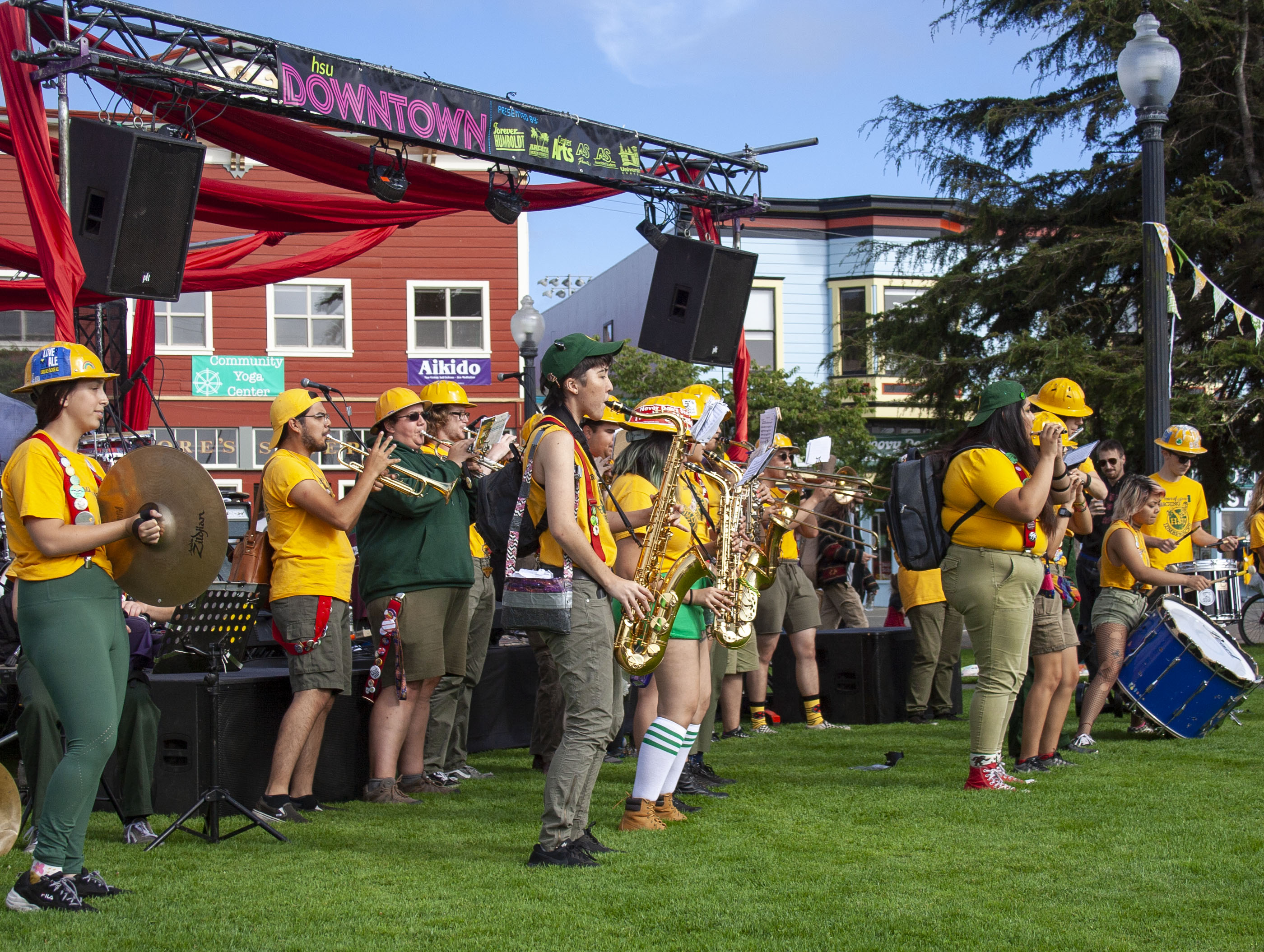
Music from Chulita Vinyl Club, Mesizto Beat and HSU’s notoriously loud Marching Lumberjacks provided live entertainment and kept the crowd on their feet. The block party was also home to other activities including a 200-foot zip-line and a rock-climbing wall.
HSU students, including seniors Mark Bernan and Adrian Haro, were recipients of an e-mail attachment containing entry credentials to the block party and vouchers for free food. After conquering the zip-line I spoke with Bernan, who is a music major. His main concern was his appetite and not the adrenaline.
Mesizto Beat getting down on the home stage at the 2nd Annual HSU Downtown Block Party. | Photo by Alberto Muro
“I’m looking forward to the tacos, I’m not going to lie,” Bernan said.
For some, zip-lining is on their bucket list. Bernan was already acquainted with going airborne.
“I tried zip-lining in Costa Rica before, but this was fun too,” Bernan said.
With a massive line that stretched from 9th Street towards the center plaza, Bernan and Haro were happy they arrived early.
HSU students and alumni were not the only ones enjoying themselves at the block party. HSU seniors and Native American Studies majors Gabby Encias and Christian Solorio brought their roommate Corey Jankowski along for the experience.
HSU Marching Lumberjacks keeping the crowd energized at the Arcata Block Party on Sept. 6. | Photo by Alberto Muro
Encias and Solorio have lived in the area since they began their studies and were delighted to see the large crowd in attendance.
“It’s nice to see everyone turn out for the event,” Enicas said.
Mass emails were not the only source of invitation distribution. HSU senior Solorio was informed by other means.
“I heard about this event through social media,” Solorio said.
Jankowski heard about the event through Encias and Solorio, but one main contribution to his attendance was the good weather.
HSU booths were present to distribute information about campus services. HSU students Alejandro Ochoa, Makito Takahashi and Alex Bravo represented the Multicultural Center and wasted no time welcoming people to their table.
From right to left: HSU Multicultural Center representatives Alejandro Ochoa, Makito Takahashi and Alex Bravo. | Photo by Alberto Muro
“There’s nice weather out right now and it’s going to start raining in a month so get out there while you still can,”Jankowski said.
The weather is currently a toss-up between overcast and sunshine, and thankfully the block party experienced pleasant conditions.
The Multicultural Center is notable for establishing services such as Scholars Without Borders, a women’s resource center and a kitchen to cook your food. HSU Senior and Biology major Ochoa talked about a new service for students.
“This year we will be introducing a non-binary closet which is open to anyone,” Ochoa said.
The new service offered by the Multicultural Center shows that the objective of campus resources is to improve student lives.
The 2nd Annual Humboldt State Downtown Block Party has come and gone, but don’t fret because the Arcata Plaza is home to a variety of entertainment.
HSU students pick rad fits to start the fall semester
Students wear interesting outfits to class everyday. Their outfits are often noticed, but rarely talked about. For those that are into fashion, we often try different styles or search for new clothes that represent our personality. The Lumberjack acknowledged a variety of students around campus wearing fashionable outfits during the first two weeks of school. HSU doesn’t disappoint when it comes to making rad fashion statements.
Jaime Cocking rocking an edgy, yet groovy look. Most of her clothing is thrifted. Her top is from Miranda’s Rescue and she cropped it herself. Her pants are from a friend’s dad who works at Cents, the shoes are from the Van’s store and she tops off the outfit with some sunglasses from Forever 21. Cocking says she tries to style a lot of her clothes like this because it makes her feel good and confident. She thinks this outfit is ‘very her’ to match her personality.
Sophomore Ethan Villalta struts his snazzy fit out in the quad. He got his jacket second-hand from his dad and the hat is a hand-me-down from his grandpa. He snagged the pants from the Dickie’s store and he bought the shoes at Vans. He feels this look is pretty casual and it was his first appearance in this outfit so he was pretty excited to show it off.
Brianna Myrick, a first year student at HSU, catches everyone’s eyes with her summery vibes. Myrick got her top from Brandy Melville, her skirt from Urban Outfitters, her shoes from Journey’s and she hand made her jewelry. She feels like this is an easy going outfit but she hates wearing tight clothing so she wouldn’t consider this her favorite outfit.
HSU senior Joseph Shanahan sits back, chill as ever, in his fit. His sweater is a hand-me-down from his uncle. He found his undershirt in a laundry room and cut it himself to make it more his style. Shanahan’s jeans were thrifted and he bought his sandals from REI Garage. He likes to dress comfortable and is always ready for any sudden weather changes.
Freshman Gabby Garza struts her comfy-yet-cute look to kick off her first year in college. Her shirt is from Brandy Melville, pants are from Avatar Imports, shoes are Fila Disruptor II’s and her necklace is from Forever 21. She wanted to feel comfy at school but still have style, and according to Garza, the looser the clothes, the comfier you’ll feel!
Robert Gonzalez, a first year student at HSU, kicks off his first of many college years with rad outfit. Gonzalez’s jacket is from Forever 21. Turtleneck and backpack are from Zara, jeans were thrifted and his Doc Martins are from Urban Outfitters. He feels confident in this outfit knowing other people like what he is wearing.
Sandra Zepeda, a junior at HSU, shows off her groovy outfit on campus. Her top is second-hand from a friend, the jacket was thrifted, she found the skirt at a Goodwill in Southern California and she bought the shoes online from T.U.K, an online retailer specializing in punk-rock fashion shoes. She feels confident in this outfit and according to Zepeda, this is the ‘Sandra Vibe’.
HSU’s Center Activities helps students get out and around Humboldt County
Trying to explore Humboldt but don’t have a paddle to go with your board? Center Activities is an on-campus resource available to students looking to get geared up and participate in local adventures.
The staff at Center Activities are friendly and attentive and they’re more than happy to help students find what they need to enjoy their day out in Humboldt County. Adventure Program Director Deserie Donae says Center Activities makes an effort to ensure students feel welcome on campus and in the community.
“We can outfit a student with anything but shoes,” Donae said. “We get people prepped and prepared to go out by providing food and transportation so people don’t have to think too hard about it. We want the outdoors to be easy and accessible.”
The Lumberjack has compiled a convenient how-to playlist of videos to guide readers toward fun activities. This list is a great way to introduce students to an outdoor lifestyle in a healthy way.
A hot and bothered rabbit and a troop of acrobats highlight the 21+ circus show
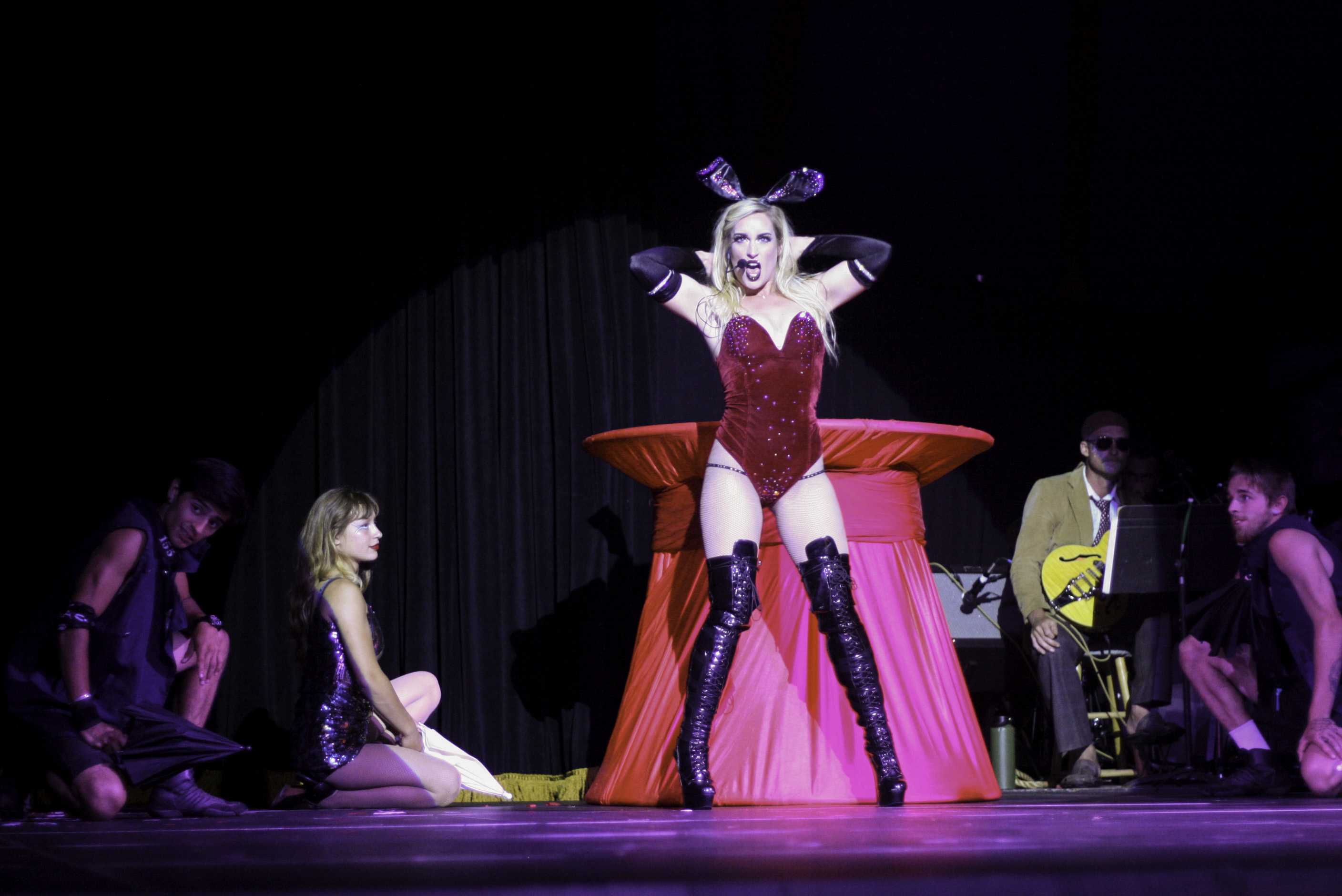
The Rabbit is out of the hat and she wants some action. Animal control is on the scene, face to face with a gang of nihilist bunnies who are ready to pounce. The Flynn Creek Circus was set up in a big, red and white circus tent in the Creamery District of Arcata.
The inside of the tent was warm. The audience’s voices were loud under the tent’s striped skin. The stage lights glowed a harsh, dull silver. A three person band charged with a buzz of anticipation playing a staccato drum, a perpetual accordion and a melodic guitar. A five-foot tall, eight-foot wide, magnificent red hat sat on the corner of the stage, otherwise known as the the magician’s hat.
The stage lights flashed and a hush fell over the crowd. After all eyes turned to the stage, the drum roll crescendoed into a crash as the curtains parted. Out came a sharp dressed man in a red suit who held a deck of cards in his hand.
The Flynn Creek Circus was set up in a red and white striped tent. The ticket booth was the eclectic trailer the left. | Photo by Collin Slavey
“You know what I am going to say next?” he said to the audience with a smile on his face. “Pick a card.”
The mix of sleight of hand, bravado and stage magic was just the start of the show. Popcorn and booze were also on the menu. After the magician’s magic act, Grenda the Science Chick made her appearance on stage with a platter ringed in butter shots.
“The story comes first,” Grenda said. “It’s what makes us different. The art director comes up with a story and makes acts serving the story. It adds a lot to think about. You wonder what’s next and become more invested in the characters.”
That evening was the 21-and-over show. The story was about the magician’s rabbit who had figured out how to get herself out of his hat. Life in a hat is awfully lonely, and she was desperately tense after a solitary life. She was on a mission to do what rabbits do best: reproduce.
“I’ve been in that hat for so long,” the Rabbit said. “Do you know how tough it is to be in a hat your whole life? Oh, my god it’s dreadful! I am so pent up. I have got to find me a carrot to chew on.”
Cue the nihilist bunnies. Animal control was on their tail with malicious intent. The magician’s rabbit was roped into the conflict on stage and the gang decided to make a stand as they whipped out K-bar carrots. Their performance devolved into a harrowing knife act and they were not messing around. The nihilists didn’t have a hare in the world. They made an acrobatic escape, bringing the magician’s bunny with them.
Nick Harden doubled as animal control and ticket salesman. Here he is grimacing after the credit card reader stopped working. | Photo by Collin Slavey
Nick and Wendy Harden played classic opponents: animal control and a stray cat. The duo did a unicycle act with acrobatics and headstands. It was a regular game of cat and mouse around the stage, their faces tight in concentration as Nick wheeled around the stage while Wendy maneuvered over his body in an impressive display of poise and balance. Clearly the duo has put years into their act.
“We were sold out the first night. I hope we can get you a ticket tonight,” Harden said. “Wendy stands on my head during our unicycle act.”
As the show came to a close, the magician performed his final act. It was an arcane rope act where he hoisted himself up and down, suspended 30 feet off the ground. He tied up the loose ends with his rabbit partner and encouraged her to find herself. The magician’s rabbit concluded the show with a descent into general apathy as the nihilist bunnies welcomed her into their ranks.
“Nothing really matters,” she said with a wink. “So I’m going to go get what I can get while I can get it. Know what I’m saying?”
The Flynn Creek Circus is based in Mendocino. The circus tours the North Coast and Oregon during summer, while the weather permits it. The 2019 season is halfway through and August 18 was the final show performed in Arcata this time around. Not to worry though, the next local shows will be in Fortuna on September 5, 6, 7 and 8. Tickets can be bought online or at the door.
This website uses cookies to improve your experience. We'll assume you're ok with this, but you can opt-out if you wish. Cookie settingsACCEPT
Privacy & Cookies Policy
Privacy Overview
This website uses cookies to improve your experience while you navigate through the website. Out of these cookies, the cookies that are categorized as necessary are stored on your browser as they are essential for the working of basic functionalities of the website. We also use third-party cookies that help us analyze and understand how you use this website. These cookies will be stored in your browser only with your consent. You also have the option to opt-out of these cookies. But opting out of some of these cookies may have an effect on your browsing experience.
Necessary cookies are absolutely essential for the website to function properly. This category only includes cookies that ensures basic functionalities and security features of the website. These cookies do not store any personal information.
Any cookies that may not be particularly necessary for the website to function and is used specifically to collect user personal data via analytics, ads, other embedded contents are termed as non-necessary cookies. It is mandatory to procure user consent prior to running these cookies on your website.