The Lumberjack


Students Serving The Cal Poly Humboldt Campus and Community Since 1929

Category: Reviews

  • What to make of All That’s Left of You

    What to make of All That’s Left of You

    By Kaylon Coleman

    What are we left with when all else is left within the control of others? When it all feels hopeless, when it feels like there’s nothing you can do? Over spring break, I was granted the opportunity to view the first showing in a series of films hosted by Shine a Light on Palestine and Watermelon Pictures, titled All That’s Left of You. Believe it or not, this was also my first time attending a film at the Minor Theater, which will present the series of films from now until May. If you’re interested in what the movie has to offer, the second and last showing of the film will happen tonight, March 25, at the Minor, with the next film in the series happening April 22 and the last film happening May 27.

    All That’s Left of You is a fictional narrative that showcases the lived experience of a single Palestinian family over the course of seven decades. The film takes us from the Nakba in 1948 up until “present day” in 2022. 

    This movie is powerful, it’s complex and it cuts deep. The non-linear structure reminds me a bit of City of God, where they must recount the backstory before the full story can be understood. The movie deals with loss, resilience, heart and hope. But, above all else, I think its central theme is about humanity — the human condition and experience.

    In a world where the voices of the Palestinian people are constantly subjected to the will of their suppressors, especially in the modern media landscape, All That’s Left of You is a standout film that amplifies the voices of Palestinian experiences, voices and art — by a Palestinian, for Palestinians. 

    The director, Cherien Dabis, who also plays the main female lead, did incredibly well within her role. While I want to give flowers to everyone for their performance, especially Sanad Alkabareti for his role as young Noor, I must single out Dabis for her artistry both on and off-camera. Her vision encapsulated Yafa and the West Bank through the progression of time and conflict incredibly. Dabis did a great job of placing the audience right there with the main characters, translating their emotions by showing, not telling.

    I also love the way the moral dilemmas show up throughout the film. Without trying to give anything away, the film encounters several scenarios where the main cast is stuck trying to make the best of impossible situations, with no true right answer. The film gives you a glimpse into the humanity of those who are often monstrified, and leaves you with a sense of contemplation and fervor.

    So, again, I ask: what are we left with when all else is left within the control of others? When it all feels hopeless, when it feels like there’s nothing you can do? We’re left with what we can control, what no one can take from you: our thoughts, our emotions, our values, our actions, our beliefs. We’re left with our humanity and all that encompasses. When everything is stripped away, that’s All That’s Left of You.

    Kaylon Coleman is a senior journalism major with a concentration in news and a minor in communications. He is the Life & Arts editor for LJ, Marketing and Communications lead for the Umoja Center and a part-time radio DJ and merch manager for KRFH. If you have a topic you want him to discuss, email him at kc403@humboldt.edu.

  • Iron Lung movie review

    Iron Lung movie review

    by Bodhi Haugen

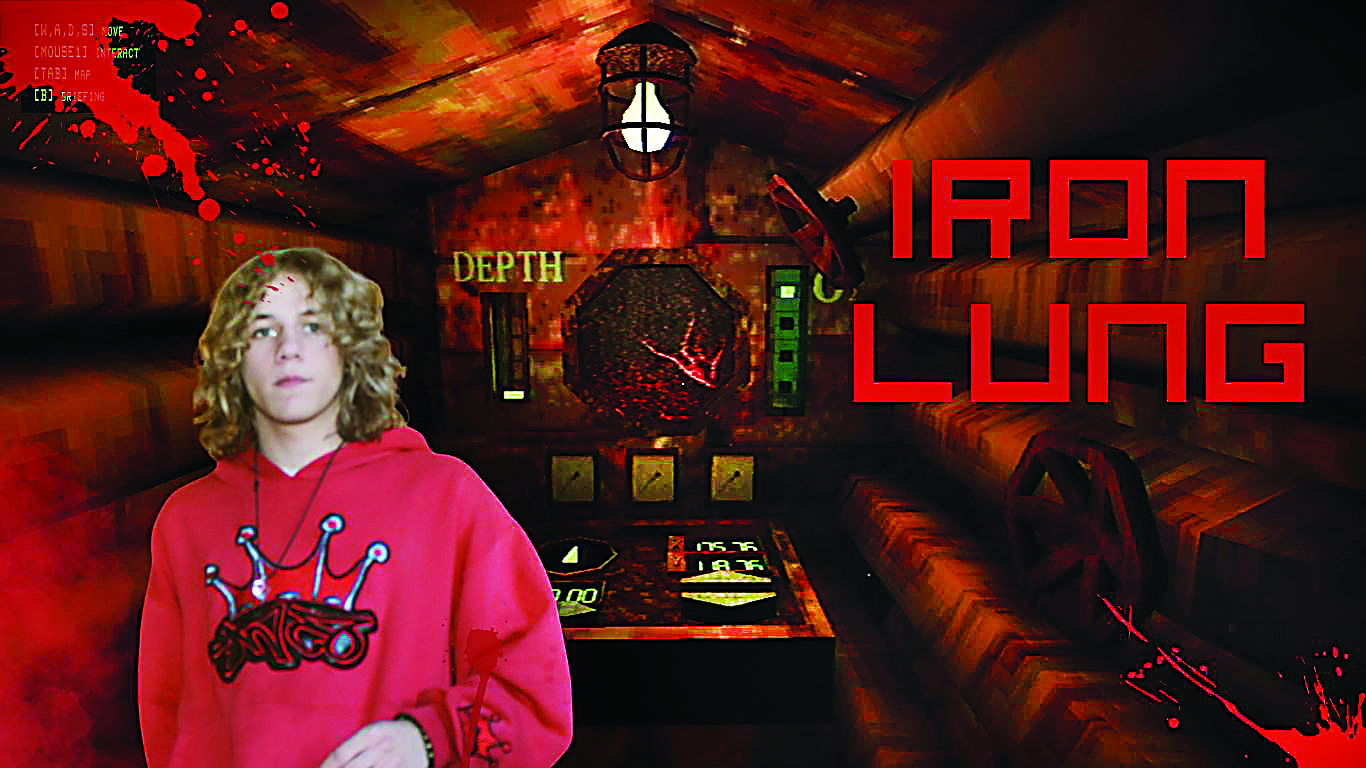
    Iron Lung is based on an unsettling indie horror game released in 2022. Mark Fischbach, also known as popular YouTuber Markiplier, served as the film’s writer, director, producer, editor, and lead actor. The movie was also entirely self-financed by Fischbach, which made the project even more ambitious. 

    I purchased my tickets a week prior and was excited to see Fischbach bring his passion project to life in theaters. I was stunned by what I saw when I walked into Broadway Cinemas late on a Friday night — I hadn’t seen a theater so packed since the release of The Force Awakens over 10 years ago.

    Going in, I wasn’t sure where to place my expectations for a YouTuber movie. I had concerns that the acting might fall short or that the thriller genre could be tainted by my preconceived knowledge of Markiplier as the protagonist. Still, I had hope. 

    Nearly the entire film takes place inside a cramped submarine, with the window and exit welded shut. In this universe, all known planets have mysteriously disappeared, leaving only a single planet with an ocean of blood behind, along with space stations where what remains of humanity survives. Simon, played by Fischbach, is assigned to explore the ocean floor as punishment for his crimes, tasked with researching the phenomenon known as The Quiet Rapture.

    The film excels at making the viewer feel claustrophobic. The submarine is dimly lit and tightly confined, and I rarely saw more than Simon himself could. This limited perspective heightened the tension in various scenes.

    Throughout most of the movie, the only characters we hear are Simon and various voices over the intercom built into the submarine. This places Fischbach’s performance under the spotlight, as the audience spends nearly the entire runtime alone with him. Although the acting wasn’t the best I have seen, Fischbach sold a convincing performance in many of the film’s tense scenarios. 

    A setting like this thrives on silence, and that’s where the movie occasionally stumbles. I felt that Iron Lung relied too heavily on unnecessary monologues from both Simon and the intercom, which pulled me out of the immersion in certain scenes rather than letting the tension speak for itself.

    Visually, the film does not fall. Fischbach was creative with his shot composition, which amplified the anxiety of being on an underwater vessel. The use of unconventional camera angles helped me feel like I was in the submarine with Simon, rather than just observing it.

    Despite watching gameplay videos beforehand and being familiar with Markiplier’s content, I left the theater with more questions than I had going in. The film expands on the game’s eerie lore, but not enough information is provided for all the pieces to easily fall into place by the time the credits roll. While this may have been intentional, a bit more clarity would have helped the average viewer feel a little less lost.

    This movie isn’t for everyone — if you’re a fan of the game or of Markiplier, you’ll probably love it, despite some flaws. As a passion project and self-funded film, Iron Lung is visually compelling and holds its own alongside big Hollywood budgets. Even if you don’t have any prior connection to the game or Fischbach himself, the movie is still worth watching, but it doesn’t necessarily need to be experienced in theaters.

    I give it a 78% on ripe potatoes.

  • Marty Supreme is a headache in cinematic format

    Marty Supreme is a headache in cinematic format

    Reel Talk with Julia

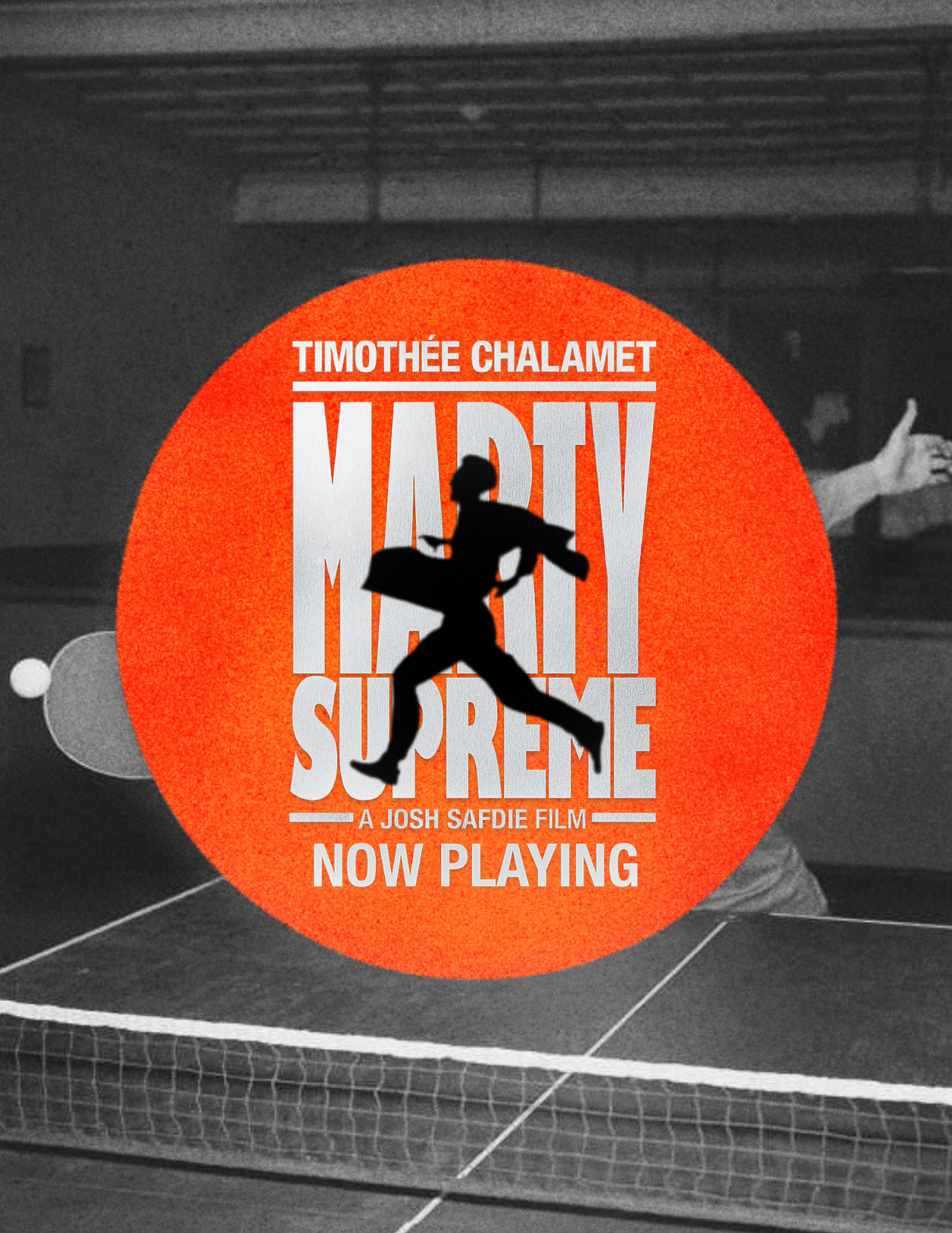
    I had the unfortunate displeasure of watching Marty Supreme, directed and written by Josh Safdie, over the winter break. This film is set in 1950s New York and follows Marty Mauser, a shoe salesman, hustler and above-average table tennis player, played by Timothée Chalamet. Mauser’s tale centers around the many trials and tribulations of how he made his mark as a world-class table tennis champion.

    What can I say positively about Marty Supreme? Let me think…well, Chalamet was amazing in this. Mauser is an extremely unlikable protagonist, which is the point. Mauser will stop at nothing to boost his ego just to serve his self-centered elitism. 

    Mauser wants the title of ‘best table tennis player in the world,’ but it’s one he most definitely doesn’t deserve. Notably I felt there was an extreme lack of ping-pong action for a character that seemingly only cares about the sport and nothing else — but whatever, I guess.

    To unpack the possible meaning behind making Mauser so unlikable, Mauser represents a human embodiment of achieving the ‘American Dream.’ The idea that anyone can achieve their dream often means you must cut down anything or anyone that gets in your way. Mauser does this time and time again through the film’s agonizing two-and-half hour runtime. All thanks to his selfishness and charisma, he makes headway towards his goal. I suppose Chalamet was a shoo-in for that kind of character.

    The rest of the cast honestly didn’t stand out to me. Which makes sense since this film is set in Mauser’s POV — of course, everyone in his life would be one-note nobodies that only act as obstacles or help him achieve something he wants. 

    This movie never lets you get oriented for a moment. You’re immediately thrust into a world of screaming chaos. If that kind of environment is your cup of tea, good for you, I guess? However, if you’re anything like my family, whom I regrettably dragged along, then you’re going to leave with a headache and a hankering for a stiff drink.

    I can recognize that I’m looking at this film through whatever the opposite of rose colored glasses is, I know what this film is trying to achieve. It’s chaotic and painful to watch by nature, but that doesn’t mean I have to give it its flowers either. 

     Marty Supreme doesn’t really have anything interesting to say that hasn’t already been said more eloquently by someone else. If you enjoyed this film, I urge you to ask yourself ‘why.’ Right now, I feel like the positive audience reviews about Marty Supreme remind me of how people say the Mona Lisa is a great piece of art. Do you actually think the Mona Lisa is an amazing work of art, or are you just saying that because everyone else is? Art is meant to be critiqued and analyzed, and if you claim to be a cinaphile but don’t even have the decency to form your own opinion, then maybe get off Letterboxd or something. 

    Although if you genuinely loved it, with opinions you didn’t steal from an Instagram post, I implore you to try to change my mind. Three outta 10 Julia’s.

    If you’re still interested in seeing Marty Supreme for yourself, then showings of the film should be available at the local Minor Theatre in Arcata. 

    Julia is a journalism major and the co-EIC of the paper. She loves film and is a regular on Letterboxd. She also enjoys going on walks in the forest and taking pictures to relax. If you have a movie you’d like her to review, please email her at jk328@humboldt.edu.

  • Five Nights at Freddys 2 caught a vibe

    Five Nights at Freddys 2 caught a vibe

    by Barley Lewis-Mccabe

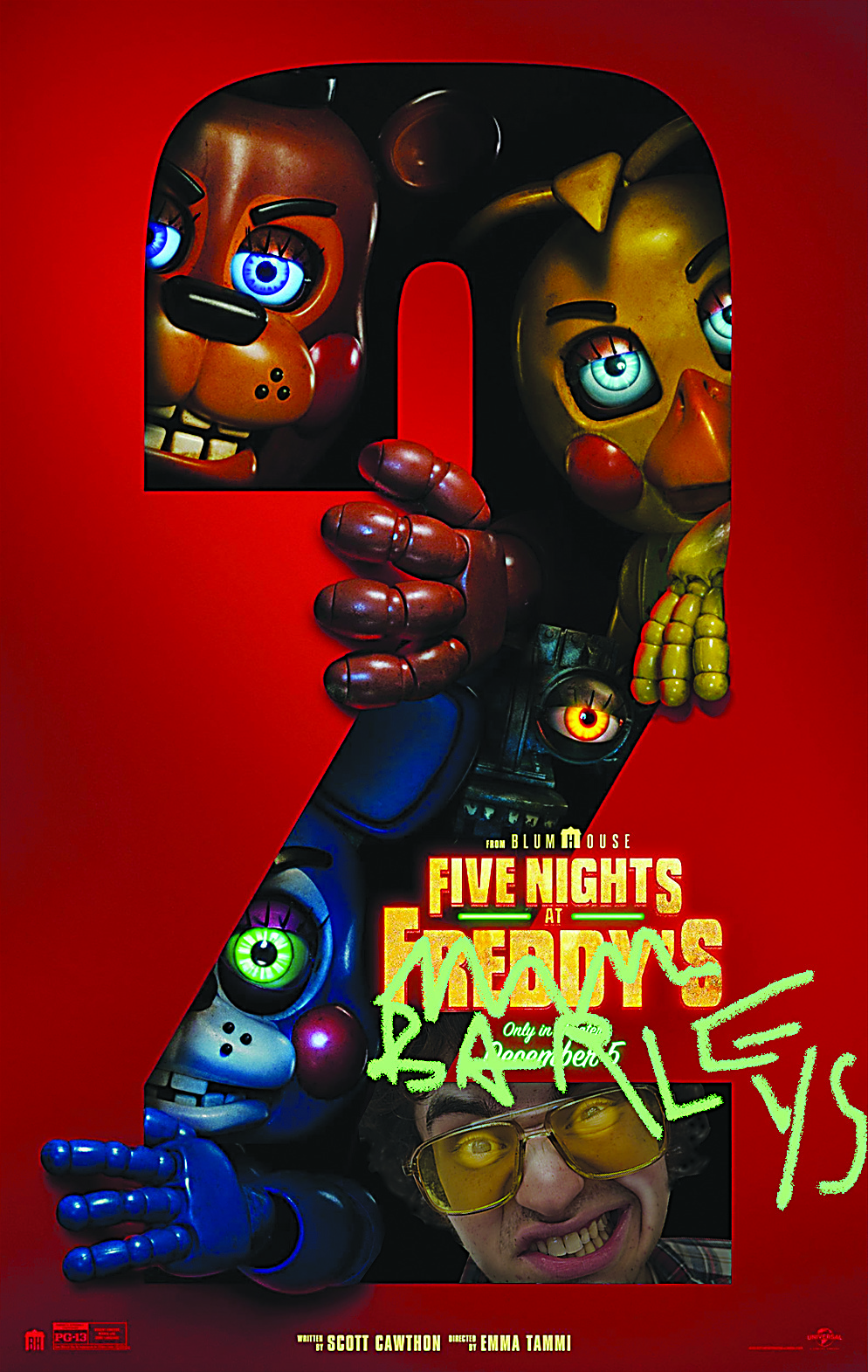
    I have to come clean. I did not see this movie in a theater. I bought front row seats to what may be the year’s best film, Five Nights at Freddy’s 2 (FNAF). However, it turns out that showing was at the same time as the Rock Auction, so I couldn’t go. Instead, I watched it on my TV via an HDMI cable and a totally legal website. I got to see the movie the way I’m sure Emma Tammi herself intended it: deep fried visuals, crunchy audio, theater sounds, laughs during parts where a laugh isn’t needed, coughs, sneezes, the ever present ‘Cinemacity.rip’ watermark and, of course, Spanish subtitles that couldn’t be turned off. So, let’s talk Freddy. 

    I didn’t go into this expecting a good movie. I only wanted a few things: cool robots, some callbacks to the games, to be a bit scared at times and to get out of my head. I wanted to watch a silly movie as an adult, based on something I liked as a kid. Despite everything I can happily say that I got everything I wanted.

    Much like the first movie, the filmmakers took a lot of liberties with the story of FNAF 2, and that’s what makes it so good — or, at the very least watchable. FNAF lore is confusing, stupid and made up along the way. If the movie had stayed faithful to the games, it would’ve been a boring, nonsensical mess. The movie knew what to do with such a dense cannon to work with, using the material for inspiration to tell a fun story with similar core beats. But it’s not all pepperoni pizzas — it has a threequel bait ending, the characters have no real purpose and at some points act at random, it has nearly the exact same story as the first and half the actors learned how to act from Gal Gadot. But that’s ok, it’s a movie with a lot of heart; a sequel that does its job, continues the story and isn’t just a soulless cash grab.

    Listen, not every movie has to win an Oscar, not everything has to be so serious, or important. Sometimes a movie’s artistic value isn’t in the content but in the experience. This is one such movie, a theme park ride of a film. I’m the intended audience for this movie: a college aged stoner who liked FNAF as a kid. I like it just because it is. It’s a fan service movie in the best way possible, because it’s actually fun to watch. While there’s no shortage of, “oh shit it’s that guy,” or, “what the fuck, its the thing from the game,” they have some really good scares, and it consistently keeps you on your toes. At the end of the day it’s a movie that looks cool — if you aren’t watching it filmed off of someone elses phone. Which, of course, I didn’t. Watch this movie with your buddies, kick back, don’t think so hard and enjoy something that doesn’t matter. Trust me, you’ll have fun.

    Barley is the opinionated opinion editor, photographer and an untraditional reporter who focuses on social change and stories with a real human impact. If you’d like to reach the grooviest dude in the newsroom email bl258@humboldt.edu.

  • Keeping it cozy at Froth Cafe

    Keeping it cozy at Froth Cafe

    by Dylan Jewett

    All I could think about was finding a fun place to relax this past cold, foggy Friday, ready to kick off my weekend. I decided on Froth, a local cafe just a half-mile from campus. After deciding to share the adventure with my two roommates, we packed into my car and made the brief drive to the cafe. The sky was dark and it started to sprinkle as we arrived.

    As we walked in, the warm lighting contrasted with the gloomy evening. The menu featured quite a few different coffee options, like matcha, teas, hot chocolate and a bar with beer and wine. I decided on an iced vanilla oat milk matcha latte and avocado toast and my roommates decided to split an egg sandwich.

     We settled into a cozy seating area near the bar and found my favorite part of our visit: the card and board game collection. The atmosphere of the cafe was warm, with quiet music playing and patrons on their laptops talking amongst themselves. After grabbing some playing cards and starting a game, the food and drinks arrived. 

    My toast was nice and crunchy, my avocado creamy, and the salt and pepper was a nice touch on top. The matcha was delicious, albeit a bit milk heavy. The egg sandwich was full of bacon, cheese and ham, and the sauce that it came with was also quite good, a bit sweet and spicy. The hot chocolate was also served with a massive dollop of whipped cream — a solid 8/10, perfect for a cold fall evening.

    As we snacked on our food and continued to play, more people poured in through the doors. Chatter filled the cafe and it became lively; I can only imagine what it’s like there for the events that they hold weekly. 

    Froth is a wonderful place for friends to gather, people to meet and a great place to eat and drink. On top of that, the decor is just incredible, I found myself in awe of the mural they had painted on the back wall depicting a mermaid pouring a coffee, with coral surrounding her body. Overall, Froth really is a gem here in Arcata, and whether you go alone while you wait for your laundry next door or you go with friends, you are sure to have a good time.

    Dylan Jewett is a fourth-year Journalism major at Cal Poly Humboldt. You can catch them wandering the forest, exploring the coast with their camera, enjoying live music and crocheting little things in their free time. Contact them at daj59@humboldt.edu.

  • Reel Talk with Julia

    Reel Talk with Julia

    Kill Bill: The Whole Bloody Affair, should I sit down in a theater for 5 hours?

    by Julia Kelm

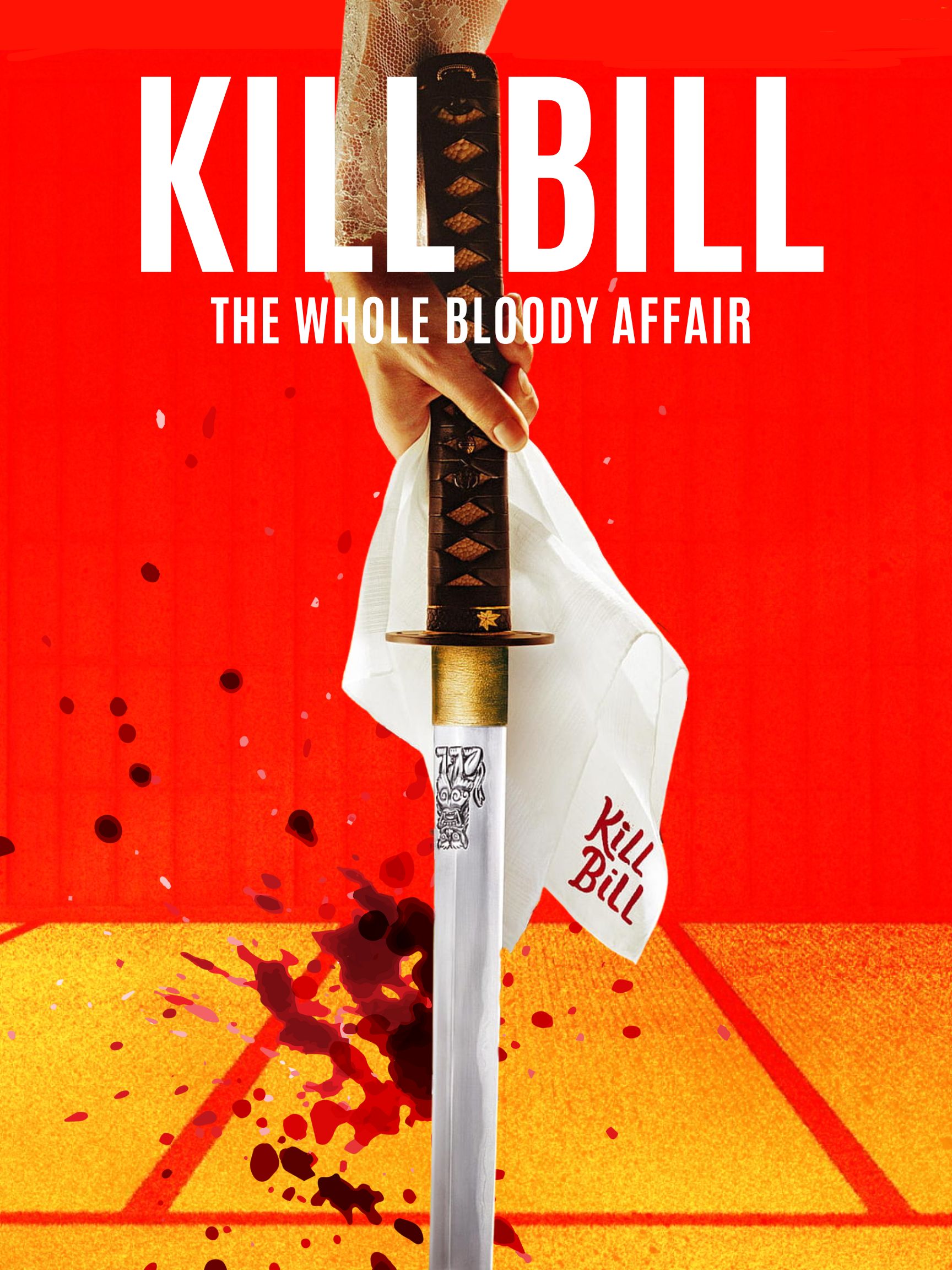
    Kill Bill: Vol. 1 and 2 are Quentin Tarantino cinema classics, returning to the silver screen this Thursday, Dec. 4, at the Eureka Broadway theater. 

    Those unfamiliar with these films, the plot follows the mysterious ex-assassin simply known as ‘The Bride’ — played by Uma Thurman. The Bride wakes from a coma and almost immediately seeks revenge against Bill and the Deadly Viper Assassination Squad, all of whom betrayed her and led to the killing of her unborn son. 

    These films, in typical Tarantino fashion, are intensely violent and chock-full of classic cinema references that would have Tarantino fanboys doing metaphorical backflips. I, on the other hand, find the first film great, but the second one is just okay.

    Much like how the second act of Wicked was — from what I’ve heard — unsatisfying, and disappointing, Kill Bill Vol. 2 doesn’t even come close to meeting your expectations after a much more riveting start. In my opinion, the first film is almost perfect and my favorite Tarantino movie. It’s a basic idea for a revenge story; however, it’s so extreme and jaw-dropping, with innovative editing and cinematography, that it deserves its praise. Tarantino borrows from many other filmmakers, including black-and-white scenes and animation, leading to an interesting, almost mixed-media artwork in film format.

    To summarize, Kill Bill Vol. 1 is an excellently presented action film that goes beyond meaningless violence and into what I would call contemporary art. With part two, you might expect everything good about the first film but better, or at least comparable in quality, right?

    Kill Bill Vol. 2, while not bad, is much slower, dialogue-heavy, and is generally less satisfying as a viewer going from the action-packed, hyper-violent style of the first film. 

    So would I recommend seeing Kill Bill: The Whole Bloody Affair coming to theaters? I’ll say yes if you prefer seeing films in the theatre, haven’t seen the films or are a huge Kill Bill fan. However, if you’ve seen them and don’t care — why are you reading this review? — then I would pass on the opportunity.

    You can watch both Kill Bill films for free by checking them out at the Cal Poly Humboldt library. You can also watch Vol. 1 by accessing the mysterious online school resource “Panopto.” If you can figure out how to access that, you can search for films there as well. Vol. 1 = 10/10 Julias Vol. 2 = 7/10 Julias.

    Julia is a journalism major and the life and arts editor for the paper. She loves film and is a regular on Letterboxd. She also enjoys going on walks in the forest and taking pictures to relax. If you have a movie you want her to review, email her at jk328@humboldt.edu.

  • Reel Talk with Julia

    Reel Talk with Julia

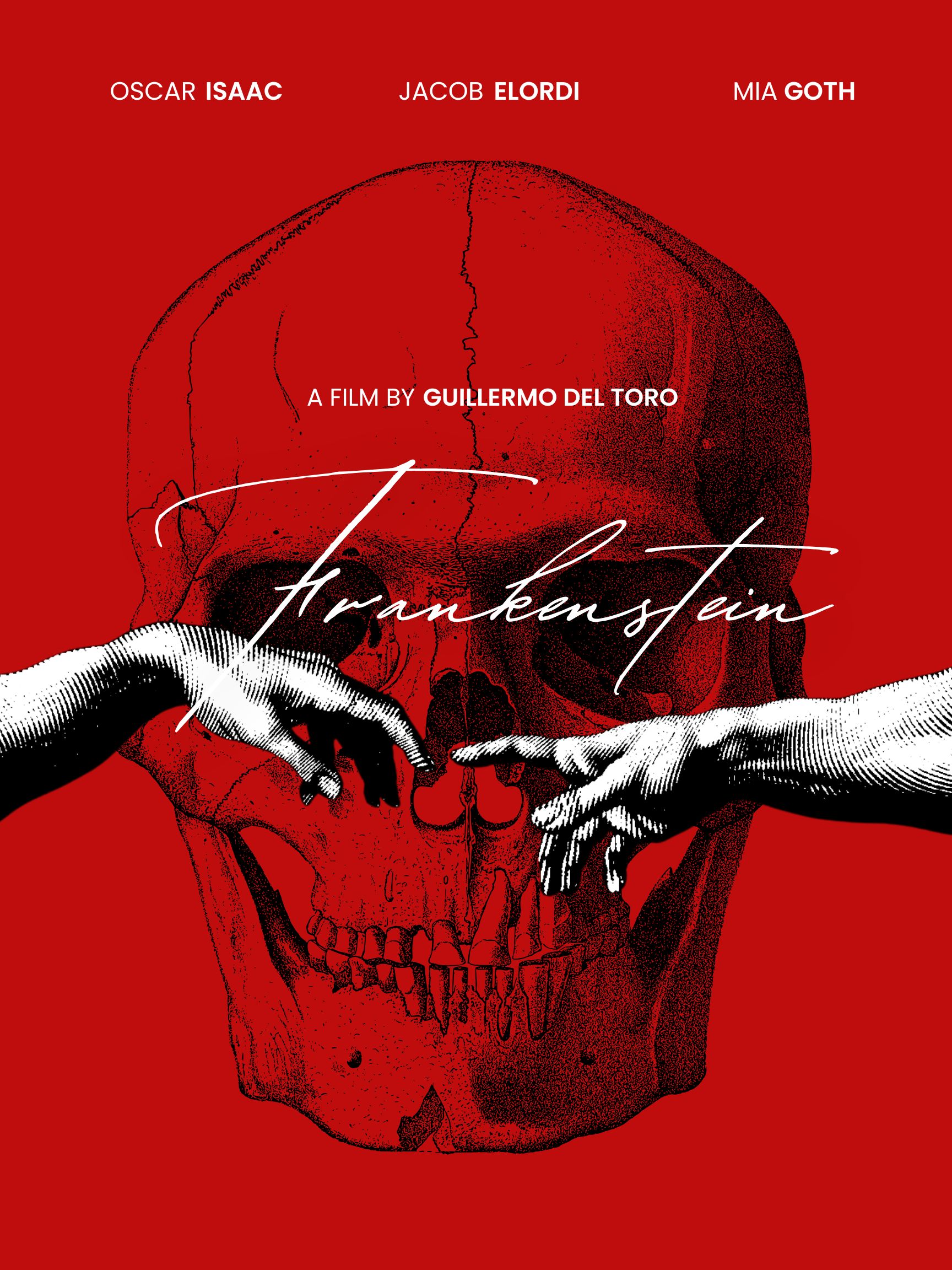
    I love Guillermo del Toro’s monsters – Frankenstein

    by Julia Kelm

    Frankenstein (2025) made a limited theatrical release on Oct. 17 this year, and then began streaming on Netflix on Nov. 7. The film is an adaptation of the 1818 gothic classic Frankenstein also known as The Modern Prometheus by Mary Shelley.

    If you are unfamiliar with the story, and I don’t know why you wouldn’t, it follows Dr. Victor Frankenstein — Oscar Isaac — a brilliant, yet egomaniacal scientist, who brings a creature made of the parts of the dead to life. The creature — Jacob Elordi — turns against his creator, hunting him to the edge of civilization, which is where the story begins and ends.

    I feel partially like a phony talking about Frankenstein since I have never actually read the source material. However, I think I make up for this with a sister who is obsessed with the story and has told me basically everything to know about the classic. I am also a major fan of Del Toro, who is my third favorite director — something to keep in mind if you like to keep track of the ‘Reel Talk’ lore.

    Anywho, although Del Toro’s film is one of the very few adaptations of the novel that stays somewhat true to the story, he does add his own creative flair and changes to the retelling of this tale. Without getting into the specifics of the story content, this is most notable with Del Toro’s classic art design elements. 

     I can not stress enough how perfect Elordi is to play the monster. In the novel, the monster is described as being 8-feet-tall, and although made of decaying flesh, he was strangely beautiful. The combination of classic Del Toro art design for the creature — gothic and fairy-tale like — and Elordi’s tall beauty, there’s absolutely nobody else I would cast. Elordi also plays the monster in such a kind and pure-hearted way, you can’t help but audibly aww. I hope he gets some award recognition for this role, as it stands out to me among this year’s potential Oscar nominees.

    Isaac was also excellent and really shines as an actor here. He plays Dr. Frankenstein as a cruel father to the creature, his own ego getting in the way of truly seeing the potential in his creation. Frankenstein is wicked in so many ways, but you can’t help but find him endearing and charismatic in the early minutes of the film. 

    However, to me, these were the only standout performances in the film. Elizabeth — Mia Goth — felt like one note to me. Although I understand her lack of depth, since the story doesn’t rely on her existence much.

    Unfortunately, I watched the film in the comfort of my own apartment on Netflix, since I didn’t have time to procure myself a drive to Eureka this week. Minor Theatre, it’s time to retire  One Battle After Another and show some other shit.

    However, I suppose I am grateful that I could watch it at all — and it makes it easier for you, too. It’s much more manageable to open up Netflix between what feels like exam after exam this year, than trying to get into that confusing ass parking lot at Broadway theater.

    So, please, try not to look down on me for not getting to the theater this week, my dear reader. I’d rate Frankenstein a solid 9 outta 10 Julias.

    Julia is a journalism major and the life and arts editor for the paper. She loves film and is a regular on Letterboxd. She also enjoys going on walks in the forest and taking pictures to relax. If you have a movie you want her to review, email her at jk328@humboldt.edu.

  • Daniel Caesar’s Son of Spergy Review

    Daniel Caesar’s Son of Spergy Review

    by Devin Bowen

    As the fall leaves turn different shades of yellowish-gold and each day slowly gets colder, Daniel Caesar’s new album arrives just in time for the agony and pain of the yearning fall season. Son Of Spergy, released earlier this fall on Oct. 24, is Daniel Caesar’s most recent project — and trust me, it will have you locked in. From his last album, Never Enough, Son Of Spergy brings that beautiful soft Daniel Caesar lust with insanely well thought-out lyrics that tell a real story.

    My initial reaction to seeing the album finally released was “Oh, God,” yet it was in excitement and fear. If you’re an avid Daniel Caesar listener, you know how easy it is to resonate with his music. So, of course, I grabbed my headphones, screamed to myself a couple of times, and started the heavenly listening experience. The album starts with the song Rain Down (feat. Sampha) and right off the bat, I got hooked. Caesar has a tendency to incorporate religion into his lyrics and does it in the best way possible. As someone who isn’t religious but more on the spiritual side, I still appreciate that connection he makes through his songs. In a bittersweet sense, it reminds me of some of Marvin Gaye’s religious songs like God Is Love. I may not have any connection to the song, but my finger is moving and my foot is tapping.

    The album is a decent 53-minute listening time and halfway through is where I really got into some of my favorite songs. Who Knows is the sixth track on the album and seems to be the most popular one so far and I understand why. It’s a very raw, human thought process of being with someone, especially being so young. The world rushes your brain to think you should know, but again, who knows, no pun intended. No More Loving (On Women I Don’t Love) [feat. 646yf4t] the second to last song on the album has to be my top favorite. It just has such a great beat drop, the soft vocals of Ceasar and the lyrics! Mhm.

    I would have to rate this album an 8.6/10. Caesar brings the spiritual connection to sex, struggle and life. This album is definitely for those who find themselves lost in a rush that could mean or not mean anything to them. Going back and forth with confirmation of yourself, finding comfort in a higher being, and repeating the actions. It is truly worth a listen, so go get yourself a hot drink or a cigarette and prepare for this album to make you an evil avoidant beast or a yearning spiritual puppy.

    Devin Bowen is a journalism major and also the social media manager for the student run radio station, KRFH. She admires collecting vinyl records and exploring new artists. They hope to spread new experiences and influence a different perspective with music and culture through The Lumberjack. Contact them at dlb155@humboldt.edu.

  • PinkPantheress provides perfect performance

    PinkPantheress provides perfect performance

    by Kaylon Coleman

    If you know me or have read my concert review for Tyler, The Creator’s Chromakopia tour, you know that nothing revitalizes my spirit more during a semester than a road trip or a concert, let alone both. Well, I treated myself to just that last week with PinkPantheress’ fall 2025 North American tour, and it was more than I could’ve hoped for.

    To give a little background, it was around summertime when I was back in SoCal, bored, scrolling through potential concerts to go to when I saw it: a PinkPanthress concert in the bay on my 21st birthday for a whopping 80 dollars. Thanks to installment payments and the lovely folks at Klarna, my ticket was secured and my excitement was unmatched. Fast forward to Nov. 12 and I’m on the way to San Francisco, giddy with anticipation.

    Along the way, I had to make a couple of mandatory pitstops — the first of which was the Motel 6 I was gonna spend the night at in Ukiah. Because I was doing a one day turnaround, and because I hate driving through the trees at night getting back up here, I decided to just bite the bullet and get a room. I’m extremely glad I did, because on the way back to Ukiah from San Francisco, it was quite literally raining cats and dogs. I had my hands at ten-and-two the whole way back and was laser-focused on not hydroplaning.

    After getting my key and taking a quick bathroom break, I made my way to the second mandatory pitstop along the way — Chick-fil-A. If you’re a Humboldt local, you know how much of a commodity the chicken restaurant is, having to travel a minimum of three hours to partake in the delicacy. So now, with my room secured and hunger satiated, the road was all that stood between me and Ms. Pantheress. 

    Upon my arrival, I barely made it in with the first wave of people they let go through the security waiting for the doors to open. After directing us up some stairs and through the main lobby the crowd split, with some choosing to purchase their merch ASAP, some grabbing a drink and others, myself included, choosing to rush the floor to secure their spot next to the stage. As someone who isn’t particularly gifted in the height department, it’s imperative to me that I try and grab the best vantage point I can get whenever I attend a concert. 

    After bonding with another concert goer about clash royale, it wasn’t long before the opening set started up. Headed by Nick Cheo, this had to be one of the best DJ sets I’ve ever seen in my life. I was already familiar with Cheo through his work on Instagram, so when I heard he was the opener I was ecstatic feeling like I got treated to a double feature. He absolutely killed it, overlaying tracks like Latch and I THINK to I KNOW coupled with the most heavenly jazz that I don’t know the name of. He absolutely did what an opener was supposed to do and now my hype levels were through the ceiling.

    After about 30 minutes of waiting it was finally time for the main event, the UK queen herself. As soon as the lights dimmed, the atmosphere was electric. The show opened with a narrator reminiscent of the one off Love Island welcoming everyone to the show, into a snippet of Illegal and finally commenced with Stateside. 

    Immediately, I was encapsulated by the performance I bore witness to. I’ve been to a many concerts in my time and let me say I’ve never seen one quite like this. This really helped demonstrate to me the difference between a show and a performance. Pink had outfit changes, background dancers, an interactive DJ and drummer to boot, it was purely sensational. Without question one of my top three concert experiences of all time; highly highly recommended to any concert goers. And if you happen to be reading this Pink, ilyyy <3.

    Kaylon Coleman is a senior journalism major with a concentration in news and a minor in communications. He is the opinion editor for LJ. He is also the vice president of the Black Student Union at CPH, Marketing and Communications lead for the Umoja Center and a part-time radio DJ and merch manager for KRFH. If you have a topic you want him to discuss, email him at kc403@humboldt.edu

  • Reel Talk with Julia

    Reel Talk with Julia

    Bugonia reminds us why corporations are our enemies

    by Julia Kelm

    Bugonia, directed by Oscar-winning filmmaker Yorgos Lanthimos, follows two conspiracy-obsessed men — Jesse Plemons and Aiden Delbis — who kidnap a powerful and influential pharmaceutical CEO — Emma Stone. They kidnap her, as they are convinced that she is an alien who intends to destroy Earth.

    I saw this the day after it premiered on Halloween at the Minor Theater in Arcata. I’m not sure if the projectionist was hungover or not, but I was lucky enough to see the first 10 seconds of One Battle After Another again before it was quickly cut off and switched to the correct film. However, after this minor snafu, we were back on track with the correct movie.     

    Bugonia is based on Save the Green Planet!, a 2003 South Korean sci-fi comedy film. However, Bugonia reshapes the narrative to fit into a more contemporary American capitalist culture. 

    Plemons plays Teddy, one of the conspirator abductors. He’s a young man who is clearly troubled, yet you can’t help but pity him. He represents what happens to people who’ve been pushed to their brink by a system that doesn’t care about their well-being. 

    Plemons plays this role excellently, which isn’t too much of a surprise since playing a crazy kidnapper isn’t too far from his usual roles. Especially in the context of his previous Lanthimos film, Kinds of Kindness.

    Stone is also excellent, showing a calm determination and subtle fear as she tries to escape the clutches of these weirdos. 

    There isn’t a lot I can say about this film without giving too much away, so forgive me if what I’m about to say seems vague. 

    Lanthimos is known for his unhinged, anxiety-inducing psychological thrillers. Bugonia is no exception to this; however, this film feels a lot more grounded —  ironic, since aliens play a key role.  

    The message of this film can be interpreted as how broken people are affected by the system and the depths they can fall into. This is then exacerbated by the abuse, trauma and mental illnesses that push these people over the edge. However, it doesn’t glorify the actions made by these people either; to me, it shows how there’s nuance to finding the middle ground between two largely differing points of view. 

    I would not recommend Bugonia to everybody, as the content can be a tad triggering and mildly disturbing. It’s also just bleak and depressing at times, so don’t go in expecting sunshine and rainbows — that’s a general rule for any Lanthimos film, though.

    Although, if you’re a fan of Lanthimos’ previous works, like Poor Things or Kinds of Kindness, then this will definitely be up your alley; 8.5 out of 10 Julia’s.

    Julia is a journalism major, and is the life and arts editor for the paper. She loves film and is a regular on Letterboxd. She also enjoys going on walks in the forest, and taking pictures to relax. If you have a movie you want her to review, email her at jk328@humboldt.edu.

  • Reel Talk with Julia: I wasn’t ready for Flow — I cried way too many times

    Reel Talk with Julia: I wasn’t ready for Flow — I cried way too many times

    By Julia Kelm

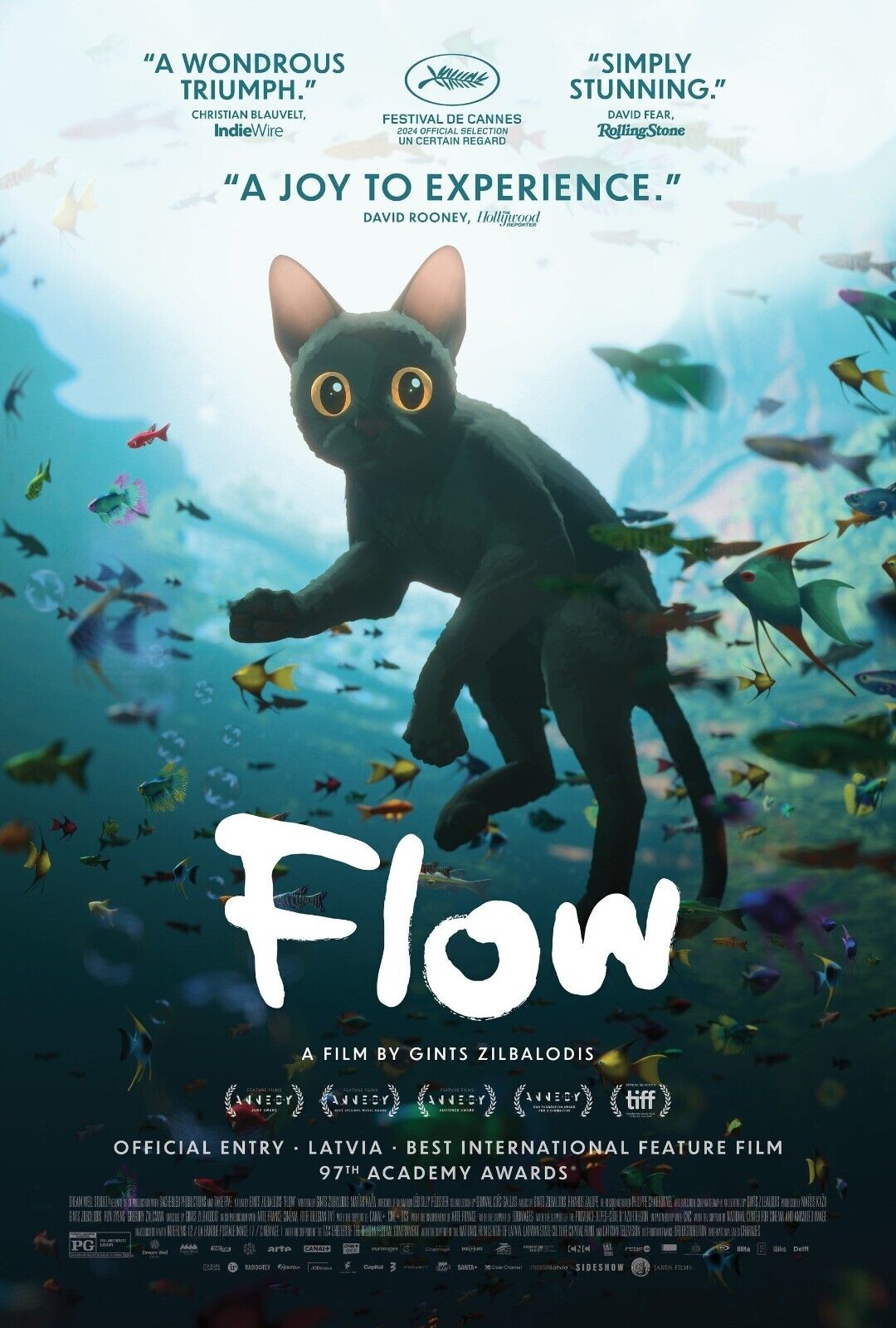
    Flow was directed by Latvian filmmaker, Gints Zilbalodis, and was first released theatrically in France on Oct. 30 of 2024.

    The film follows a nameless black cat as it is displaced by a great flood destroying their home. The cat finds refuge on a boat with various other animals and together they must navigate the challenges of their rapidly changing world.

    It was great to have the opportunity to watch this film from the comfort of Arcata’s Minor Theater. It’s been a small dream of mine to sip a beer at the movies, and the pale ale I had did not disappoint.

    Moving on from the theater itself, I want to mention how beautifully animated this film was. I thought maybe some sort of motion capture was used for the animals due to their very believable movement. However, Zilbalodis is paraphrased in Slant Magazine talking about how the film was animated. “It’s all animated by hand; we didn’t record any motion capture. Because it’s so specific, we needed to build everything frame by frame.”

    The natural environment of the film was also stunning and very pleasing to look at. I could definitely imagine myself taking cat naps in some of those beautiful locations.

    The art style and vibe of the film, to me, was very cartoony and full of life. I would say it’s reminiscent of the adventure video game Little Kitty, Big City, also released in 2024. 

    Having the viewer’s perspective of the world seen through the eyes of a cat, brings you down to earth. Reconnecting with the things we all need to live. Food, shelter, companionship—something that we can all relate to even.  

    When it comes to the plot of this film, I enjoyed it quite a bit. It’s amazing how attached I became to the animals without  a single word being  spoken throughout the entirety of the movie. 

    The cat has this especially sad meow it does whenever it’s in danger or afraid, and it really got to me, because I have a cat that looks just like the one here. I teared up on more than one separate occasion during the duration of the film—to say I was stressing any time this cat was in danger is putting it lightly.

    I think the lack of dialogue in this film was an excellent choice — that’s a huge achievement for a film in its own right. I think there is a slight stigma associated with silent films, with some assuming that a movie without speaking characters would be boring. Flow completely tilts that perspective by creating a film that anyone from anywhere can understand. 

    This film also presents a majorly important message to the audience about the dangers of increasing climate change in our world. With the themes of the fragility of nature, and how we need to work together to get through uncertain and scary times.

    If we place ourselves in the paws of these animals, maybe we can learn from them in terms of stewardship of our planet.

    Julia is a journalism major at Cal Poly Humboldt. She loves film and is a regular on Letterboxd. To quote Robin Williams in her all-time favorite movie, Dead Poets Society, “The powerful play goes on and you may contribute a verse. What will your verse be?”

  • A tale of two films, horrors and thrills: Heretic and Nosferatu bid a chilling farewell to 2024

    A tale of two films, horrors and thrills: Heretic and Nosferatu bid a chilling farewell to 2024

    By Nick Escalada

    This past year felt like a prolonged clash of highs and lows for the film industry, with blockbuster hits like Dune: Part 2 and Furiosa: A Mad Max Saga being offset by the likes of Coppola’s disappointing Megalopolis and the universally ridiculed Madame Web.

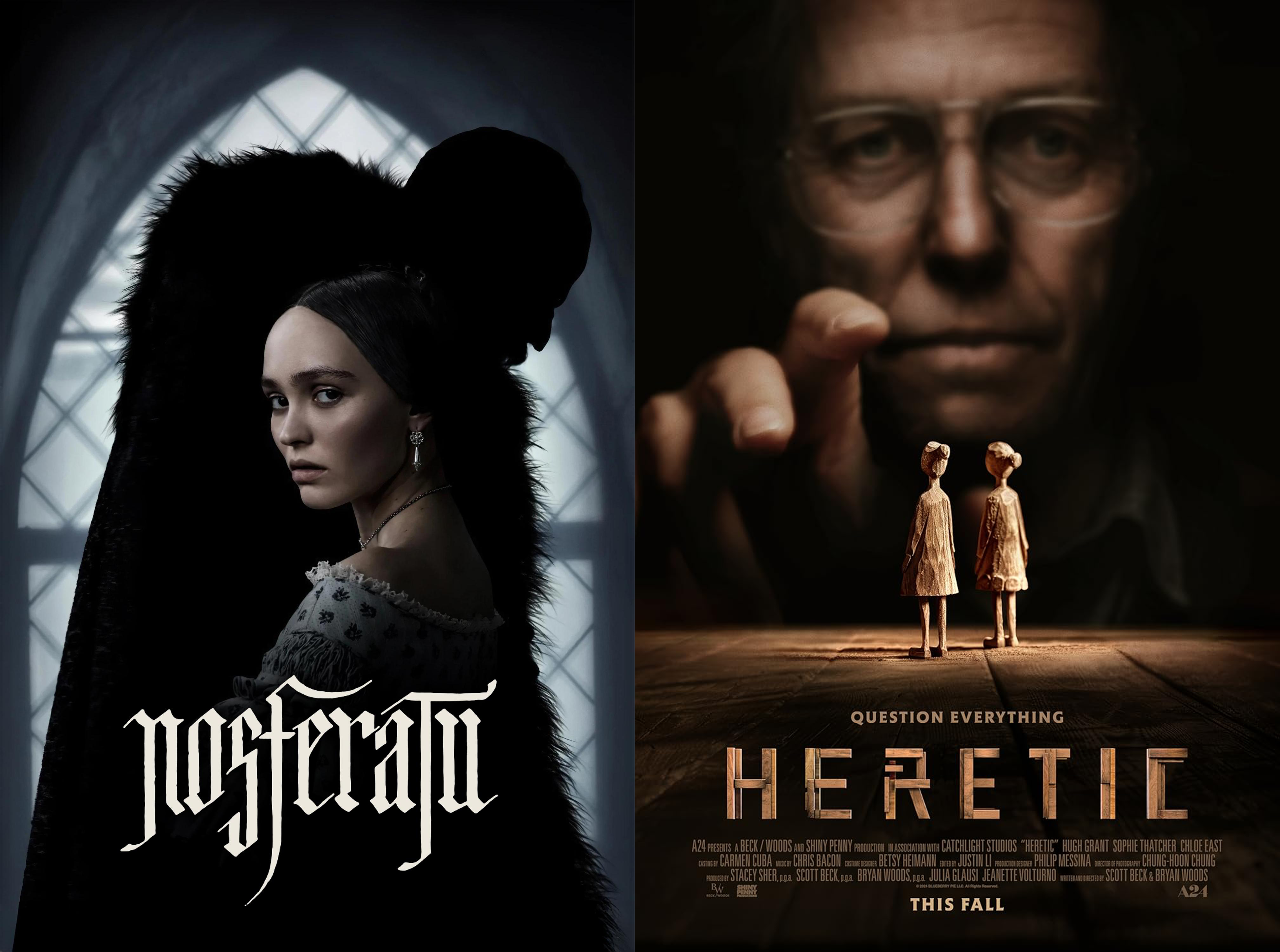
    One 2024 genre that rarely let me down, though, was the horror/thriller movie, whose consistency was punctuated in the closing months by two standout releases: Scott Beck and Bryan Woods’ Heretic and Robert Eggers’s Nosferatu. As someone who’s only started to grow comfortable with the conventions of the horror genre, I’m delighted to have been kept on my toes by back-to-back films that shake up the formula in their own ways.

    Heretic is a movie that almost demands a second watch. It is meticulously written in a way that asks you to pay attention, but also to take the time to reflect on what is being said. Plotwise, it turns the “find the killer’s weakness” trope on its head by making the villain a pedestrian-looking chatterbox, and instead draws your terror from not knowing what he plans to do and why. Two door-to-door missionaries are at first thrilled to be welcomed in by a man eager to discuss their faith, but they soon get the feeling that they won’t be leaving unless they play their cards right in the conversation.

    As you might expect from a movie with this title, there is a hefty deal of religious commentary, much of which is unashamedly explicit. What I realized to some relief by the end, though, is that Heretic pushes no agenda of its own, and like any good work of art, it offers ideas only to facilitate discussion amongst its audience. This movie might spur you to evaluate your own faith and how different people and norms have shaped it, and if not, hopefully you’ll heed the warning it issues about judging intelligence and morality based on first impressions. Heretic is available now on Google Play, Prime Video, Apple TV, and Fandango, and I highly recommend it.

    Nosferatu is a different beast entirely. Getting my gripes out of the way, its biggest pitfall is being marketed as a horror movie. Being an almost shot-for-shot remake of a 1922 silent film that somehow induced fear back then, Robert Eggers understandably sought to make this iteration hair-raising for a modern audience while retaining full reverence for its source material.

    Unfortunately, I feel that the result is two hours of noise and embellishment surrounding a pretty underwhelming central terror whose mystique has been spoiled for over a century. The movie even seems to acknowledge this weakness, as it relies on cheap, nonsensical jumpscares in a few instances to artificially maintain its tension.

    This is not at all to say that I didn’t enjoy my time with Nosferatu. The film excels narratively as an exploration of unconditional love and sacrifice. Count Orlock acts less as a villain and more as a calamitous force of nature that tests each of the main players’ devotions to one another, which manifest in varied and progressively tragic ways over the course of the story. Jokesters online are already poking fun at Lily Rose Depp’s frenetic performance as Ellen Hutter, but I think that the vampire-induced delirium coupled with Ellen’s unyielding affection for her husband Thomas makes her character all the more sympathetic and heart-wrenching. The star-studded cast is warranted with each actor deserving their own praise, and I’ll give a special endorsement to fans of dark gothic and Victorian atmospheres. Nosferatu is still in theaters and I advise that you don’t miss it!

  • Reel Talk with Julia: Overloaded with mediocre biopics, A Complete Unknown fails to stand out

    Reel Talk with Julia: Overloaded with mediocre biopics, A Complete Unknown fails to stand out

    By Julia Kelm

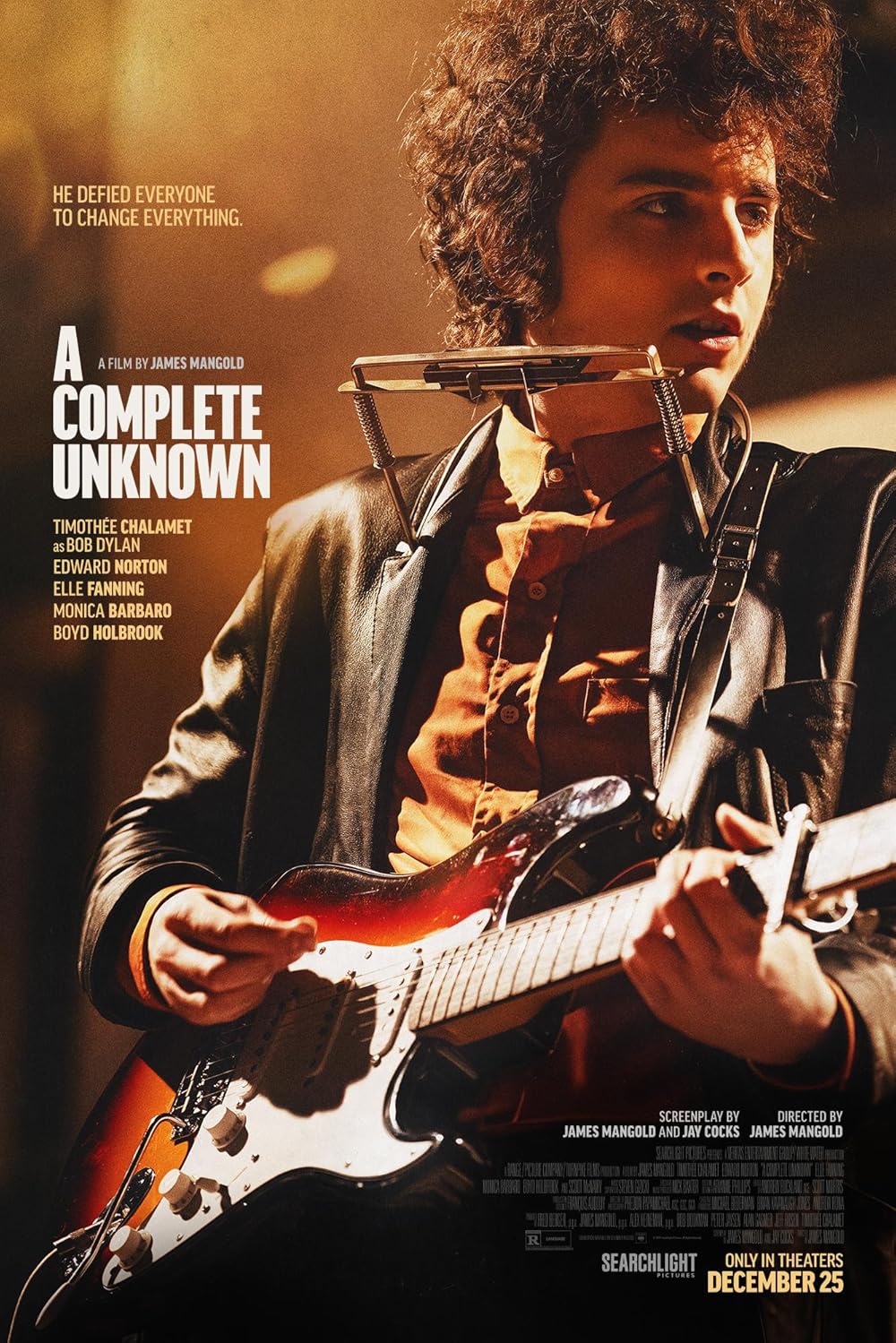
    A Complete Unknown was released in theaters on December 25, 2024. The film was directed by James Mangold and follows Bob Dylan, aka Robert Allen Zimmerman, played by Timothée Chalamet. The plot is about Dylan’s early career in the 1960s and pursuing his very controversial and revolutionary decision that changed the course of folk and rock music in America forever.

    I have been excited about this film ever since I heard about its production in February of 2023. I was even more excited when I saw the trailer, and realized Chalamet looked pretty convincing as Dylan. 

    I’ve been a fan of Dylan ever since my dad played his records for me as a kid, so I had relatively high expectations for the film. However, after seeing it on Friday, Jan. 7, I left the theater feeling mildly disappointed, but not surprised.

    There were a few things I loved about this film. One aspect is that the film opens with Dylan going to find Woody Guthrie, played by Scoot McNairy, who he finds at a hospital in New York. 

    Just as some Bob Dylan lore, and to give some context for why this scene is so important, Guthrie is — in my opinion — the most influential American folk singer of all time. There is a clear chain of events for how his influence changed music forever. 

    Guthrie was Dylan’s inspiration and idol. Without him, Dylan would not have made the music he did. If Dylan hadn’t made his music, he presumably wouldn’t have given the Beatles marijuana — a moment that helped spark their evolution into creating more experimental and iconic albums, like Sgt. Pepper’s Lonely Hearts Club Band

    Are you following my insane string of logic here? 

    To put it more simply, Guthrie’s impact on music history is tremendous and underrated.

    Seeing the moment Dylan met his idol and then singing “Song for Woody” did put quite a smile on my face. I was hoping this would be portrayed in the film beforehand and was not let down in that respect. 

    In addition, Chalamet’s depiction of Dylan was fantastic. He sang comparably well to Dylan, and really portrayed how much of a dick Dylan is, which was great to see.

    I would not be mad in the slightest if Chalamet was nominated for an Oscar this year.

    Now I can’t say I outright hated this film, because I think hate is honestly too strong of an emotion. 

    Ever since the success of Bohemian Rhapsody (2018), we have seen an overload of mediocre biopics almost every single year since.

    I wanted so badly for A Complete Unknown to do something different. It needed to stand out in some way so it didn’t follow the overplayed rise to fame story we’ve heard over and over again. Alas, this film drags just like the rest.

    The film focuses way too much on Dylan’s scandalous relationship with Joan Baez, played by Monica Barbaro. Instead, the time could have been spent on what an artist does at the expense of everything and everyone else to create their art. Making for a more venomous twist on the traditional, and overdone musical biopic. 

    Dylan is one of the most notorious assholes in the music industry. To this day, you don’t know if you’re gonna get a good show or not. It just depends on whatever his mood is like. 

    Instead, he gets whittled down to his “voice of a generation” status without regard for the labyrinth of contradictions that snake through Bob Dylan as a person and his discography. 

    To conclude, I’m not against more biopics being made. I think they can be fun and memorable like Dexter Fletcher’s Rocketman (2019) or Baz Luhrmann’s Elvis (2022).

    It looks like we’re at least heading in a more creative direction with the release of Michael Gracey’s A Better Man (2024) which also just hit theaters on Dec. 25th. I won’t lie, the CGI monkey has me intrigued. 

    Whatever the future of biopics holds in Hollywood, I’ll continue to stay tuned in.

    Fingers crossed they don’t fuck up the Bruce Springsteen movie starring Jeremy Allen White. 

    Julia is a journalism major at Cal Poly Humboldt. She loves film and is a regular on Letterboxd. To quote Robin Williams in her all-time favorite movie, Dead Poets Society, “The powerful play goes on and you may contribute a verse. What will your verse be?”

  • Reel Talk with Julia

    Reel Talk with Julia

    Hollywood’s soul-crushing toll on artistic integrity 

    By Julia Kern

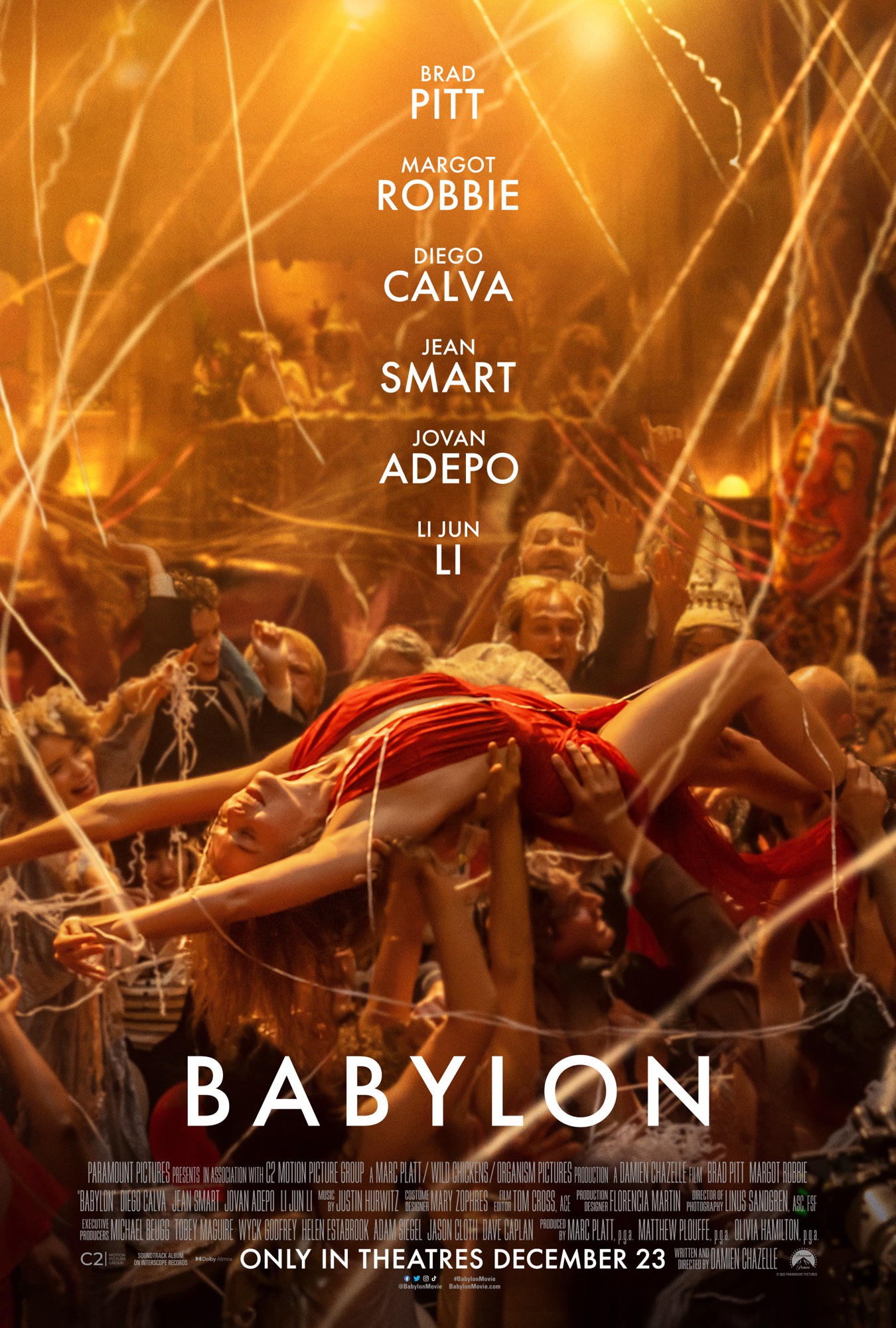
    Babylon, released in 2022 and directed by Damien Chazelle, follows the outrageous and shocking tale of the rise and fall of multiple characters in 1920s Hollywood. The film stars Diego Calva as Manny Torres, a starry-eyed young man with a passion for filmmaking who is eager to do anything to make his dream a reality. This 189-minute fast-paced, extremely shock-value-filled epic does not drag for one second. If you’re easily squeamish, particularly bothered by an extensive amount of piss and shit, or freaked out by a creepy Toby Maguire, you may want to avoid this film. However, if you’re obsessed with Hollywood lore and filmmaking in general — as I am — I encourage you to power through some of the more intense scenes.

    To give a broader overview of the film, it follows three major characters. Jack Conrad, played by Brad Pitt, and Nellie LaRoy, played by Margot Robbie, and the aforementioned Torres as they live in the ever-changing landscape of Hollywood. 

    Conrad is a successful silent film actor who, at the beginning of the film, is at the height of his career and ends with his life and career slowly sizzling out, as new actors come onto the scene leaving him in the dust. Something that stands out to me about Conrad’s character, and what he represents, is the immortality of fame. There’s a poignant quote near the end of the film where Conrad angrily confronts a journalist, Elinor St. John, who wrote a story about his fall from grace as an actor. However, in reply to his outrage, she reminds him of his legacy.

    “In a hundred years, when you and I are both long gone, any time someone threads a frame of yours through a sprocket, you will be alive again. You see what that means? One day, every person on every film shot this year will be dead. And one day, all those films will be pulled from the vaults, and all their ghosts will dine together, and adventure together, go to the jungle, to war together. A child born in 50 years will stumble across your image flickering on a screen and feel he knows you, like… like a friend, though you breathed your last before he breathed his first. You’ve been given a gift. Be grateful. Your time today is through, but you’ll spend eternity with angels and ghosts,” said St. John (Chazelle, 2022).

    I know that’s a long quote, but I can’t bring myself to cut it down. It just perfectly encapsulates the feeling and message of this film. It’s something I think about every time I watch, read, or listen to some form of art. I think about the faces, voices, and stories that would’ve been totally forgotten if it weren’t for this recording representing a flicker of that life.

    Laroy is also an interesting character and shares similar themes to Conrad’s and Torres’ characters. Laroy starts the film as a wannabe actress, trying to get herself noticed at big-shot Hollywood parties. Later, she becomes quite successful as a silent movie actress, but then in the latter half struggles with the transition to talking films. However, her struggles aren’t only with her acting; she battles addiction, along with finding it hard to fit in with the classier side of Hollywood, due to her party-girl persona getting in the way of anyone liking her. 

    Laroy is consistently mocked in the film. Whether that be in the beginning when nobody believed she could become a star, or how she acted in high-brow events, or when she couldn’t adapt to talking in film. Laroy represents wanting something so bad, getting it, and then losing it because of a mixture of self-sabotage and not being able to fit into Hollywood’s environment. All Laroy wanted was to be a star — and she got that. Although in contrast to Conrad’s slowly sizzling out career, Layroy’s burns hot and fast.

    Torres embodies an important theme and a core message of the film: no matter how hard you try or how perfectly you follow the rules, sometimes it’s just not enough. This theme is driven home by the film’s ending, which I won’t spoil in detail, but due to circumstances beyond his control, Torres is forced to leave his Hollywood career behind and settle into a normal life. Years later, he returns to Los Angeles. He watches a screening of Singin’ in the Rain, a film about the transition from silent movies to talkies. Ironically, the film mocks the very reality that Torres experienced. As the audience laughs, Torres weeps, devastated to see his former hopes and dreams reduced to a joke by the industry he fought so hard to be a part of.

    Maybe I sound too much like a jaded old man. Maybe it’s because I listen to too much Bob Dylan and identify a little too much with Tony Soprano. The truth of the matter is, I do have a pessimistic look at what it means to become a successful artist. It’s all because of the corrupt industry in which art must be produced to become successful. Hollywood is far from the rose-colored point of view most of us have, Babylon illustrates that. However, that doesn’t stop me from daydreaming about living my life as a successful artist. I think that will forever be my dream, even though it will only just be that — a dream. 

    Julia is a journalism major at Cal Poly Humboldt. She loves film and is a regular on Letterboxd. To quote Robin Williams in her all-time favorite movie, Dead Poets Society, “The powerful play goes on and you may contribute a verse. What will your verse be?”

  • Reel Talk with Julia: Dogma: Censorship, Controversy, now Lost Media

    Reel Talk with Julia: Dogma: Censorship, Controversy, now Lost Media

    By Julia Kelm

    Dogma, released in 1999 and directed by Kevin Smith, tells the tale of an abortion clinic worker, Bethany, played by Linda Fiorentino. The Metatron — the archangel who serves as the speaker for God — calls upon Bethany to save the world and entire human existence from being destroyed by two renegade angels, Loki and Bartleby, who are trying to exploit a loophole so they can return to heaven. Bethany goes on a quest to New Jersey, forming a group of unlikely characters to stop these angels.

    This religious satire is an entertaining, unique, clever, and hilarious film that pokes fun at Catholicism in a way that hadn’t been done before. Cast names include Matt Damon, Ben Affleck, Alan Rickman, Salma Hayek, Jason Lee, Chris Rock, and even Alanis Morissette makes an unexpected appearance in this film. My only gripe with the movie is that it’s a tad outdated, with a few unsavory jokes that I could do without.

    However, even with everything the film had going for itself, there was a lot of controversy surrounding the film even before its release. The Catholic League, an American Catholic organization, found out about Smith’s screenplay for Dogma after it was leaked online. The Catholic League thought Smith’s script was unattractive, to say the least, and voices from the organization went to work on bad-mouthing a film they hadn’t even seen.

    Because of this, the film was almost canceled. Originally, the film was supposed to be produced by Disney, but CEO Michael Eisner was afraid of offending The Catholic League and planned to shut Dogma down. However, an infamous Hollywood producer swept in to save Dogma. 

    Even with the bad press, Smith was determined to get his film to theaters. He even poked fun at the protesters, showing up at one of the meetups to bash the film alongside them. Despite Catholic boycotting, the film received fairly positive reviews and made $44 million dollars at the box office. 

    Unfortunately, Dogma is not on streaming sites or available to purchase anywhere, and it probably will not be for a very long time. Your best bet in finding a way to watch Dogma is by pirating it off a website or buying a bootleg DVD.

    There are a few sites where you can look for this film, although I would recommend looking for a version of the film off of YouTube. Pirating movies online can potentially lead to getting viruses on your computer, so be careful and maybe look into a vpn before watching. 

    Now, how did this happen? Why can’t we watch Dogma normally? An interview done by The Wrap with Director Smith shined a light on this dilemma. 

    “In order to tell the story, unfortunately, I’m gonna have to say the name that nobody wants to hear anymore,” Smith said. “But of course, Harvey Weinstein figures into the story.”

    The gist of the situation is that Smith worked with Miramax, a television production and distribution company that was notoriously owned and founded by Harvey and Bob Weinstein. Because Harvey Weinstein came in to save Dogma when he did, he personally owns distribution rights to the film and is not allowing the film to be bought, rented, or streamed digitally, for whatever reason. Smith has tried to make offers to sell the rights back to him, but Weinstein always declined or asked way above a fair price. 

    So now, Dogma sits on the metaphorical shelf of films that will collect dust and ultimately be forgotten. It makes me upset when I think about all the lost media out there. All the faces, voices, and stories that will fade away because nobody will remember them. I think of the times I searched for a movie on Amazon and it said something like, “This title is not available right now,” and I just stared at the screen in dismay wondering what had happened. This is why I’m a big advocate of buying physical media whenever possible. Owning physical media is the only way to ensure it stays and doesn’t get forgotten. Plus, buying DVDs, CDs, vinyl, 8-track tapes, or whatever, often pays your favorite artists more than streaming does. 

    So next time you’re at a thrift store, take a minute to look at the stack of dusty DVDs and see if you can find a copy of Dogma. Or, better yet, some other movie you almost forgot about. Don’t let media be forgotten; keep it alive and let those stories be replayed forever.

    Julia is a journalism major at Cal Poly Humboldt. She loves film and is a regular on Letterboxd. To quote Robin Williams in her all-time favorite movie, Dead Poets Society, “The powerful play goes on and you may contribute a verse. What will your verse be?”

  • Jennifer’s Body: The Underrated Feminist Cult Classic We Didn’t Appreciate Enough

    Jennifer’s Body: The Underrated Feminist Cult Classic We Didn’t Appreciate Enough

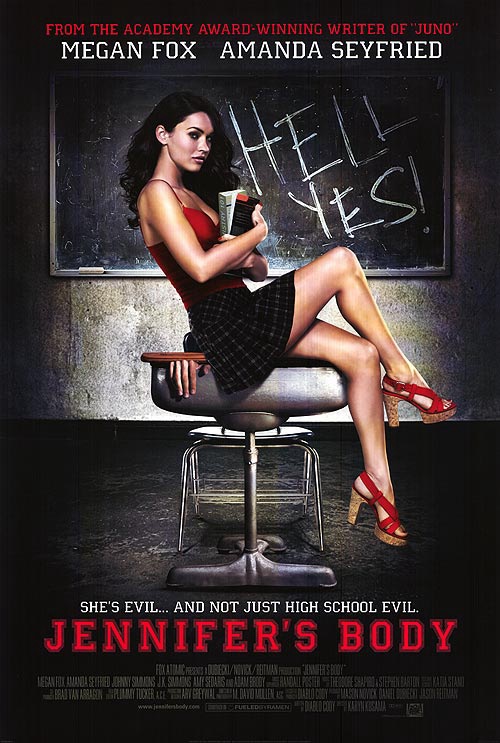
    Jennifer’s Body, released in 2009, is directed by Karyn Kusama. I would describe it as a comedy chick-flick meets horror film. It follows two childhood best friends, Jennifer played by Megan Fox, and Needy played by Amanda Seyfried. The plot follows Jennifer, a popular cheerleader, who is kidnapped by a Satanic emo pop-punk band as a virgin sacrifice so they can become famous. However, because Jennifer is not a virgin, she is brought back and possessed by a demon and goes on a murder streak. Needy, uncovering this knowledge, makes it her duty to stop Jennifer.

    On a surface-level inspection, one might conclude that Jennifer’s Body is simply a silly slasher film for people who are attracted to Megan Fox. I wouldn’t blame you if this is your perspective on the film. Upon initial release, Jennifer’s Body was marketed as a trashy sexy movie for straight men, when in reality, it’s actually a movie about female friendship and womanhood.

    Yes, Jennifer’s Body is a horror comedy, but it is also much more than that. I am dead serious when I tell you it’s a thoughtful perspective and scary examination of what it means to be a teenage girl or young woman. This is especially evident in Jennifer’s sacrifice scene, which is incredibly emotionally charged and brings me to tears every time I watch it. When Jennifer is transformed into a monster, I can’t help but feel conflicted. I almost feel like she’s justified because of the atrocities that were done to her. If only she was using her demon powers to only go after the band that did this to her.

    Needy and Jennifer’s relationship is compelling for a few reasons. Again upon first glance, these two characters fall under the stereotype of slut — Jennifer — and nerd — Needy. However, these two characters go beyond this stereotype. Instead, they represent to anyone who’s been a teenager before, the intense emotions, and the consistent theme of jealousy.

    Needy is jealous of Jennifer and Jennifer is jealous of Needy. There are many differing opinions on the nature of Jennifer and Needy’s relationship. The common conclusion is that Jennifer is jealous of Needy because she has a stable relationship with her boyfriend, Chip. While Needy is jealous of Jennifer’s social status, she doesn’t become outwardly jealous until Jennifer tries to steal and kill Chip. I am an advocate for the opinion that Jennifer is in love with Needy, and is more or less jealous of Chip — or any other person who shows interest in Needy specifically. This is considerably evident when Jennifer immediately chooses Colin, a boy who shows obvious interest in Needy, as her next victim. Other scenes represent Jennifer’s obvious queerness, as well. Such as Jennifer and Needy share a kiss, and then Jennifer suggests “playing boyfriend and girlfriend like they used to.” 

    Regardless of the deeper undertones of the film, it’s an overall spooky and hilarious time. Jennifer’s Body is the perfect film for Halloween, which is conveniently coming up in the next couple of weeks! If you’re interested in watching Jennifer’s Body, it’s available to watch on streaming for Disney+, and Hulu.

    Julia is a journalism major at Cal Poly Humboldt. She loves film and is a regular on Letterboxd. To quote Robin Williams in her all-time favorite mou-ie, Dead Poets Society, “The powerful play goes on and you may contribute a verse. What will your verse be?”

  • Conflict’s cost: Howl’s Moving Castle fuses war and nature’s fragility in a magical tale

    Conflict’s cost: Howl’s Moving Castle fuses war and nature’s fragility in a magical tale

    By Julia Kern

    Howl’s Moving Castle, directed by Hayao Miyazaki, is an adaptation of the original fantasy novel by the same name. British author Diana Wynne Jones first published this novel in 1986 by Greenwillow Books of New York. 

    The story follows our protagonist Sophie, a young milliner (a person who makes hats), who is turned into an elderly woman by a witch who enters her shop and curses her. Sophie seeks the wizard, Howl, in hopes of lifting the curse. However, Sophie gets caught up in Howl’s avoidance of being recruited to aid the king in a war which Howl has a pacifist outlook on. Sophie and Howl also have an eventual romance that blossoms between them throughout the runtime of the film. 

    Fans of Miyazaki’s films will note that a lot of his films, although made for all audiences, have political or personal messages meant for a more mature perspective. Themes of anti-war messaging, as well as the protection of nature, are most common. 

    Miyazaki is an artist as well as a storyteller. Miyazaki illustrates his message not just through the story and characters, but also the beautiful and sometimes frightening imagery.

    The world of Howl’s Moving Castle is a captivating one. The fictional, vaguely Germanic country of Ingary is colorful, bright, and lively at the beginning of the film.

    Nearing the end of the film, the ongoing war reaches the town. Bombs fall from fantasy-like airships, destroying the beautiful town we have come to know and love. The colors used are purposeful, in depicting how horrible and evil war is. Once a brightly lit and colorful world now turned to fire and ash. 

    Howl’s Moving Castle, although based on a preexisting work, was influenced by Miyazaki’s opposition to the United States invasion of Iraq in 2003. 

    Similar themes are shown in other works such as My Neighbor Totoro, Porco Rosso, Pom Poko, and many others. However, I think Howl’s Moving Castle most effectively combined these themes of nature and man’s obsession with war and destruction

    I think Howl’s Moving Castle is a beautiful movie, with an important message that can still be applied today. It’s often the case that animation is looked down upon due to its association with children’s content. This is why it’s important to remind ourselves that animation is a medium, rather than a genre. There are things you can show in animation that would never have the same effect in a live-action adaptation. I’m unsure if the message of the film would have the same impact if it was told without the stunning animation that Miyazaki provides.

    If you are at all interested in viewing Howl’s Moving Castle on your own time, you’re in luck! The film is celebrating its 20th anniversary and will be back in theaters from Sept. 29 through Oct. 12.

    Julia is a journalism major at Cal Poly Humboldt. She loves film and is a regular on Letterboxd, and is an ex-Regal subscriber (never subscribed)! To quote Robin Williams in her all-time favorite movie, Dead Poets Society, “The powerful play goes on and you may contribute a verse. What will your verse be?” 

  • A Life of Literary Glamor

    A Life of Literary Glamor

    Natalie Goldberg and her girlfriend face grief and illness

    By Alexandra Berrocal

    Ever since her Zen teacher Katagiri Roshi died, Natalie Goldberg has been slightly more sickly than other people. Colds that would leave most people fine after a few days took weeks for Goldberg to recover from. Despite this, Goldberg never started to ask serious questions about her health until she absolutely had to. 

    After going to the doctor for a routine check-up, she discovered that she had a rare form of blood cancer, with a high mortality rate. Later in the story, Yu-kwan, her beloved girlfriend of 4 years, is diagnosed with breast cancer. Let The Whole Thundering World Come Home explores what it is like to have cancer when your partner has cancer at the same time, which has to be an unusual situation.

    Although Goldberg is a prolific writer who has written extensively on many other topics, this is her only memoir on what it is like to have cancer. At the beginning of Thundering World, she encourages us to read The Great Spring, another book of hers. She says that The Great Spring is really a long, extended afterward to this story. 

    She also says that she wasn’t initially sure if she wanted to write about cancer. Part of her wanted to leave the past in the past, which I must confess is an unusual stance to take for someone who wrote Old Friend From Far Away, a book that encourages us to explore the past as a means of self discovery and self understanding. Cancer must be terrifying if a talented memoirist like Goldberg is afraid to look at it.

    This isn’t a story about how the cancer twins — as Goldberg called herself and Yu-kwan — supported each other through cancer. Throughout this book, there is an odd separation between the two. Sharing silence initially brings the pair together, but as the story goes on, it starts to tear them apart. This resolves at the end of the story, but both women struggle for a while as they go through their own journeys with cancer and are both too sick for one to act as a caregiver to the other. 

    Goldberg definitely admires Yu-kwan, and not just for her great physical beauty. She admires Yu-kwan for all she has accomplished in her life and all she has overcome. This prevents the descriptions of Yu-kwan from feeling like sexual objectification. For one thing, Goldberg’s admiration of Yu-kwan doesn’t feel terribly sexual. This is refreshing in a world where relationships between queer women are sexualized. Goldberg’s love for Yu-kwan definitely has a sexual element, but it’s not the entire reason why she loves and admires her partner. 

    Goldberg wrote this book having already written many books. Also, she didn’t write this story while she was actually experiencing cancer. She didn’t even write it right after she went into remission. She waited a while and then wrote her story. I think she wanted to put her past behind her.

    If anything, this is a story of reconciliation. Cancer drives Yu-kwan and Goldberg apart as each deals with their illness in their own way. However, after Goldberg makes a delicious roast chicken for both of them in the end, the two start to reconcile. The story ends on a hopeful note for both of them. I, too, love a good roast chicken.

    Alexandra Berrocal is a self-published author who has written fifteen books. She likes to crochet and draw, as well as read and write. She is from Orange County. They like dogs, and they sing alto in a choir. If you have an idea for a book she could review, email them at alexandraberrocal@gmail.com.

  • Mar’s Gaming Garage: A purrfect adventure through the eyes of a cat

    Mar’s Gaming Garage: A purrfect adventure through the eyes of a cat

    By Mario Orozco

    Lost in a robotic world, you journey through neon-lit streets as a cat trying to find your way back home. This week’s edition of Mar’s Gaming Garage will focus on Stray, an indie game recommended by a fellow journalism major.

    Stray is set in a cyberpunk environment filled with bright neon signs and crumbling buildings. The lost city is completely walled off with a giant dome., keeping the residents secluded from the outside world.

    I am typically not a huge fan of the cyberpunk aesthetic, but seeing this strange world from the perspective of a cat adds a fresh feel to an otherwise bleak setting. The environment is used creatively, with much of the gameplay only being possible because you’re a cat. 

    Stray excels at immersing the player into the role of a cat and does a fantastic job at incorporating cat behaviors. You can tear at carpet, knock things off shelves, scratch at wallpaper, and more. These actions are often used to chaotically progress through the story. Little details like these ground you in the feline perspective, adding life to the game.

    The characters in Stray almost entirely consist of robots. Despite this, they all feel very human, they have bonds with each other, care for each other, and overall are very emotional beings. 

    The secondary protagonist of Stray, B-12, is my favorite character in the game. Throughout the story, you recover B-12’s past memories, which allow you to unlock a very touching and emotional experience that I did not expect coming into the game. 

    Stray has two sets of antagonists. The first are small, mutated bacteria called Zurks. Zurks resemble wrinkly potatoes and share the primary goal of eating you and anything else in sight. They chase and leap at you from every direction, making every interaction with them extremely thrilling.

    The second and main antagonists of the game are the Sentinels. The Sentinels are small security drones that chase and shoot at you whenever you enter their view. While I enjoyed the Zurks, the Sentinels didn’t do it for me. Getting past them requires waiting and observing their patrol patterns, which wasn’t as fun as running for your life from a pack of potato monsters.

    While I enjoyed playing Stray, there are a couple of things I thought could be improved. The first is the game’s lack of replay value. While this isn’t a necessity, if Stray had more side quests, it could help flesh out the world more. The other issue is the lack of other animal-like beings. The addition of robotic animals could have created some funny and interesting interactions. 

    Overall, Stray is a short and sweet experience that I had a blast playing. It took me a total of 4 hours and 36 minutes to complete. While I had some issues with it, Stray was such a fun and unique experience and I rate it a 4.2 out of 5. If you love cats or are interested in dystopian games, I would definitely recommend Stray to you.

    If you have any games you would like me to review, you can email marsgaminggarage@gmail.com.

    Mario Orozco is a writer and assistant social media editor for The Lumberjack. He transferred to Cal Poly Humboldt in 2022 and his favorite game of all time is The Legend of Zelda: Breath of the Wild.

  • Mar’s Gaming Garage: Until Dawn 

    Mar’s Gaming Garage: Until Dawn 

    By Mario Orozco

    For my first game review of the new semester, I took a recommendation from an anthropology major and played Until Dawn. With the game getting a remaster in the coming months, now is a perfect time to dive in and see if Until Dawn is worth your money.

    Until Dawn is an interactive horror game released in 2015 that follows a group of friends trying to survive on Blackwood Mountain. The game has a butterfly effect system that allows players to shape the narrative through their own decisions, making the experience a little bit different for each individual player. 

    My playthrough of this game would definitely be looked down upon by the perfectionists of the gaming world. By the time I made it to the end, only three of the eight protagonists had lived to tell the tale. Despite my lackluster performance, Until Dawn was an amazing experience that kept me hooked the entire time. 

    The first aspect of Until Dawn that I enjoyed was the cast of characters. Each one of the main cast has their own individual journey that develops their character as you progress through the story. The relationships the cast have with each other also changes depending on your choices. The beautiful part of character development within Until Dawn is that the decisions of the player can shape whether someone changes for better or for worse. 

    Until Dawn also excels at establishing its atmosphere. Most of the game takes place in a remote lodge in the middle of a snowstorm, adding feelings of isolation and vulnerability. The dark hallways, creaking floors, eerie music, and distant whispers give a constant uneasy feeling – as if something could jump out at you at any second. The game also incorporates moments of silence in a way that makes you feel like something is always just out of sight. 

    The final aspect I enjoy about this game is the branching narratives. I am a sucker for interactive storytelling, especially interactive storytelling that matters to the player. Until Dawn is a game where your decisions definitely matter and can lead to the survival or death of your favorite characters. Until Dawn’s butterfly narrative provides so much replayability, even the smallest change in the way you play can drastically change the fate of the characters and change the relationships they have with one another.

    Despite all the good things about Until Dawn there is one main issue that I have with the game. Funnily enough, my favorite part of the game is also what I think could be improved. While the decisions of the player definitely matter, all they really do is determine who survives and who doesn’t. If certain decisions could also affect the ending of the game, it would add even more to the already high replay value. With the remaster coming Oct. 4, maybe this is something we’ll see in the near future.

    Until Dawn took me a grand total of 9 hours and 13 minutes to complete. I genuinely enjoyed every minute of it and would rate it a 4 out of 5. If you’re into suspense filled horror, interactive games, or both, then I definitely recommend Until Dawn. Based on how good the original game was, I’m sure the remaster will be just as good – if not better.

    If you have any games you would like me to review, you can email marsgaminggarage@gmail.com.

  • Mar’s Gaming Garage: Super Monkey Ball: Banana Blitz

    Mar’s Gaming Garage: Super Monkey Ball: Banana Blitz

    By Mario Orozco

    For the final game review of the semester, I took the recommendation of a fellow journalism major and played “Super Monkey Ball: Banana Blitz.” The “Super Monkey Ball” games have piqued my interest since childhood and Banana Blitz served as my overdue introduction to the series. Fortunately for me, it seems like I didn’t miss out on anything that special.

    Unlike the past games that I have reviewed thus far, I didn’t particularly enjoy Banana Blitz, at least the main single-player portion of the game. The main game revolves around you controlling a monkey in a ball and traversing through different levels leading up to various boss fights. 

    While I didn’t love this game, there are some aspects that I thought were pretty fun. The first thing I liked about Banana Blitz were the boss fights themselves. The designs of the different animals that we must battle are all very fun and creative. The boss fights at the end of the worlds were also a breath of fresh air after struggling through the levels leading up to them.

    My favorite part of Banana Blitz wasn’t a part of the main game at all. The party games section was the best part of this game by far in my opinion. It consists of 50 different mini games that can be played solo or with your friends. There is such a wide variety of different games to choose from and plenty of replay value, whether you’re competing against your friends or just trying to beat your own high scores. This was my saving grace for Banana Blitz and the reason why I will likely go back and give it some more playtime in the future.

    Now to the negatives. The camera and the way it shakes and twists rapidly with every movement made me feel nauseous. I eventually got used to the movement, but the first couple hours of this playthrough were exceedingly difficult as a result. Getting used to the movement of the monkey’s is also challenging. It is very sensitive, making it easy to accidentally fall off the course and make frustrating mistakes. These two things combined made it both disorienting and frustrating at the same time. 

    The final thing I didn’t like about the game was how repetitive it got. There are 100 total levels that have a very similar structure to each other, which can dampen the experience over time. This might not be the case for most people, however. I played the game entirely in one sitting which I definitely don’t recommend.

    Overall, “Super Monkey Ball: Banana Blitz” has its strengths and weaknesses, but is overall a decent game. It took me a total of 5 hours and 49 minutes to complete the main game. If I was rating the mini games alone, I would give Banana Blitz a 4 out of 5. However, with everything in consideration, I give “Super Monkey Ball: Banana Blitz” a 2.5 out of 5. 

    I do not recommend the game if you get motion sickness or are looking for a relaxing gaming experience. If you want a fun party game to play with your friends or a challenging game to speedrun, this might be the game for you.

    If you have any games you would like me to review, you can email marsgaminggarage@gmail.com.

  • Mar’s Gaming Garage: Buddy Simulator 1984

    Mar’s Gaming Garage: Buddy Simulator 1984

    By Mario Orozco

    Independent developers have created many hidden gems in gaming, and this week’s game is one of them. “Buddy Simulator 1984” was recommended to me by a liberal studies elementary education major and was one the best indie-horror games I have ever played.

    “Buddy Simulator 1984” is one of those games that kept me thinking even after I completed it. This game was a psychological adventure that I can’t say I have experienced from very many games. The first main aspect of this game that I really enjoyed was the progression of quality that the game undergoes as you progress. The game is played from the perspective of an old 1984 computer and it starts off as a simple text based role-play game (RPG) that has been created for us by our new AI buddy. As our buddy learns and evolves, so does the game, with the graphics becoming 2D and eventually 3D as the story continues. Despite the increase in quality over time, it still keeps that nostalgic pixelated design, continuing the feel of an older game.

    The next aspect of “Buddy Simulator 1984” that elevates this game to a whole new level is the way your buddy becomes more mentally unstable as the game progresses. It obsesses over being your only friend and making you happy to the point that it becomes terrifying. Multiple creepy glitches occur throughout the game whenever something causes it to feel negative. These glitches ranged from uncomfortable text filling the screen to seemingly being inside your buddies mind viewing its overwhelming thoughts. Depending on the way you play the game, your buddy gets increasingly hostile towards you for disobeying its directions and “ruining the game” that it worked so hard to create for you. Witnessing the buddy’s codependency drive it to the point of insanity was spine-chilling, yet sad.

    The underlying plot of this game is the final aspect that made it so great. There are multiple “glitches” that occur throughout the playthrough that give the impression that your buddy may not have full control. Characters appear where they shouldn’t and interacting with them causes the game to become distorted. A few times when interacting with characters, they can be seen calling you a different name that immediately glitches back to the correct name. This implies you aren’t the first person this has happened to, and gives insight into the insecurities that your buddy has about losing you. 

    There are only two minor complaints that I have with this game. The first is the length. The game is super short, and I wish there was more content, because it was genuinely such a unique experience. However, there are multiple endings to the game that can help extend the playthrough. The other complaint I have is the fact that the game only autosaves, so after completion, you have to play through the entirety of the game again to get a new ending instead of being able to access a specific save point. 

    Overall, “Buddy Simulator 1984” was one of my favorite indie-horror games that I have ever played. It took me a total of 6 hours and 12 minutes to complete and was a joy throughout. I rate this game 4.4 out of 5, it is definitely worth playing and I recommend it to anyone who enjoys glitch-horror.

    If you have any games you would like me to review, you can email marsgaminggarage@gmail.com.

  • Mar’s Gaming Garage: Spider-Man 2

    Mar’s Gaming Garage: Spider-Man 2

    By Mario Orozco

    Superheroes and video games are two things widely beloved by many and this week’s game combines the two. “Spider-Man 2” was recommended to me by a forestry major and was a long but delightful gaming experience.

    “Spider-Man 2” is one of, if not the best superhero video game I have ever played. I absolutely loved everything about this game. The first main aspect that I enjoyed was the gameplay. It took the combat and web swinging from the previous Spider-Man games and improved it with new combat and traversal mechanics for each of the playable Spider-Men. Also, the ability to switch between both Peter Parker and Miles Morales kept the game fresh, with each having their own unique style of gameplay.

    The next aspect of “Spider-Man 2” that I enjoyed was the sheer amount of things that can be done. Both Spider-Men had their own individual sets of missions as well as cooperative missions. This combination made it feel like I was playing two games in one. The game did a great job taking these two individual paths and intertwining them into a cohesive and engaging story. Experiencing the two Spider-Men fight both as a team and as enemies helped take this game to a brand new level. There is even one small portion where you get to play as Venom and basically destroy everything and everyone in your path. 

    The final aspect of “Spider-Man 2” that made the game so great was the story. The storytelling in this game was amazing and it had many emotional moments that hit so hard. The main story of this game was beautiful from both sides with Peter’s story being one filled with pain and heartbreak while Miles’s was more about fully coming into his role as Spider-Man. Another thing that needs mentioning is how the game took some of the old characters from the previous games’ side quests and gave them more depth through new side quests. The side quest about Howard and his pigeons was told so well. It wasn’t another instance of Spider-Man fighting villains, but a heartfelt story about a guy helping a friend. Getting insight into Howard’s life and helping fulfill his final wish before death made me cry upon completion. It says a lot about the quality of “Spider-Man 2” that even just a side quest could cause such a strong emotional response.
    The only negative thing I felt about this game was some of the side quests were slightly repetitive at times. Some of Miles’ side missions, specifically the ones involving his high school, were a little boring, with little to no combat portions. The rest of the repetitive missions often had some kind of fun multi-enemy combat portion, which made them much more enjoyable to play through. 

    “Spider-Man 2” took me a total of 23 hours and 18 minutes to complete all of the main and side missions. It was such a fun experience, and I rate the game a 4.6 out 5. “Spider-Man 2” is definitely worth playing, and I wholeheartedly recommend it to anyone who likes open world story games. 

    If you have any games you would like me to review, you can email marsgaminggarage@gmail.com.