The Lumberjack


Students Serving The Cal Poly Humboldt Campus and Community Since 1929

Category: News

  • HSU shares its Annual Security Report

    As part of The Jeanne Clery Disclosure of Campus Security Policy and Campus Crime Statistics Act, Humboldt State University has once again released its Annual Security Report (ASR).

    Colleges and universities that receive federal funding are required to release a report on crime statistics that occurred on the school’s campus each year. This year’s report covers the start of January 2018 through December 2020.

    “We share this information in a spirit of openness and with a deep commitment to fostering a safer environment for teaching, learning and living,” President Tom Jackson said in the report.

    This year, HSU’s report noted that the previous Clery Director and Clery Coordinator retired at the end of 2020. Allan Ford, the interim Title IX Coordinator and DHR Administrator, filled in as Clery Director and Nicki Viso, the Program Analyst in the Title IX & DHR Prevention Office, filled in as Clery Coordinator.

    “This has given us an opportunity to review our procedures and ensure we are up to compliance with the Clery Act,” Viso said. “I appreciate the efforts of the Clery Compliance Team, especially Housing, Dean of Students, and UPD, to complete this internal review.”

    Ford commended Viso for establishing the Clery Compliance Team and for taking the lead role in compiling statistics.

    Despite the pandemic, Viso said that there were no major changes in the report due to COVID-19. There were, however, adjustments to procedures like establishing Clery geography. What this means is the geographic area for which an institution is responsible for disclosing crime statistics.

    A notable observation was that there were no hate crimes reported in 2020. There were however six reported offenses of rape and five reported offenses of fondling both on campus and in campus residences.

    Ford stressed the difference between a crime and a report. Any allegation that fits into specified criminal criteria and allegedly took place within clery geography can appear in the report.

    “I want to make a distinction between what has been reported to UPD and what has not,” Viso said. “The Clery stats and our actual crime stats are different. There has not been an increase in crimes reported to UPD.”

    Viso also clarified that the ASR records offenses when they were reported, not when the situation occurred. For example, if an incident was reported in 2020, but occurred two years ago, it would still be counted in the 2020 statistics.

    University Police Department Chief Anthony Morgan said that he hopes that victims of sex crimes feel like there’s a reporting channel that they can count on.

    “These things need to be reported and I would encourage people to report to us, but I also understand that sometimes people don’t feel comfortable and I hope we get to a place where they do,” Morgan said.

  • 2020 Security Report Revisits Cannabis Policy

    2020 Security Report Revisits Cannabis Policy

    Changing campus dynamics over the last two years have left permanent changes to many of Humboldt State’s policies and procedures. One such change came with the release of the Annual Security Report, a three-year analysis of crime statistics.

    The reports are led by the Clery Compliance Team in compliance with the Jeanne Clery Disclosure of Campus Security Policy and Campus Crime Statistics Act, otherwise known as the Clery Act.

    In 2020, both the Clery Director and Clery Coordinator retired. Allan Ford filled in as director and Nicki Viso acted as coordinator. In their new roles, Ford and Viso revised campus requirements to report cannabis policy infractions.

    “Our understanding of what constitutes a Liquor Law referral for disciplinary action and Drug Law referral for disciplinary action evolved, which has resulted in a decrease in our statistics between 2019 and 2020. These three factors contributed the most:

    • Residence halls are considered private residences once a locked door is encountered.

    • Individuals who are 21+ can have possession of up to 28.5g of cannabis.

    • Individuals under 21 must have possession of a usable amount of cannabis to count as a statistic,” the Annual Security Report reads.

    These new requirements allow the campus’ security report to reflect California’s cannabis restrictions as well as focus on underage use of controlled substances. In previous years, “drug law referrals” made up a majority of crimes reported. Last year’s report identified an approximate average of 133 referrals per year from 2017-2019. This year, the report listed only 21.

    Previously, security reports would overwhelmingly reflect drug referrals that did not violate state law. Now, the reports will more accurately reflect encounters with illicit substances or quantities, and underage possession.

    The university has made it clear that possession and use of cannabis remains prohibited at Humboldt State. However, efforts made by Humboldt State administrators along with University Police allow our campus to more accurately report on student safety. Humboldt State Chief of Police Anthony Morgan responded to these changes.

    “Nothing has changed in the way we respond to [drug and alcohol] incidents on campus. One of the things I think the campus does a good job of is trying to administratively handle these incidents versus make them a law enforcement issue,” Morgan said.

    The annual safety report is a reflection of the security of the student body. For many prospective students and their families, this report is the best way to understand the quality of life on campus.

    As Humboldt State adapts to a rapidly changing world, current and prospective students need to be informed about the safety of their community. This change in the annual security report is one more step campus administrators have taken to respond to that need.

  • Cleaning Up Our Act

    Cleaning Up Our Act

    California’s Coastal Clean Up Month, formerly Clean Up Day, is upon us. This beloved California tradition is dedicated to cleaning up our cities and streets, as well as focusing our attention on one of our prized ecological areas, the beach.

    The California Coastal Commission (CCC), established in 1972 and made permanent in the California Coastal Act of 1976, is responsible for, “the biggest, single day volunteer event on the planet” according to the Guinness Book of World Records. This momentous day has evolved from a single day to a month-long volunteer extravaganza with 74,000 volunteers collecting nearly a million pounds of garbage from our waterways in 2019. As the movement has grown, efforts have turned inland where the majority of waste originates.

    Data collection has been a central force in the decades of trash clean ups. Throughout the years, the CCC has found that up to 85% of trash collected on beaches originates on land.

    Eben Schwartz is the Marine Debris Program Manager and Outreach Manager for the CCC.

    “If the trash is coming from land then we should try to stop it where it starts, so we started spreading our cleanups inland. We’re now at the point where we’re cleaning just about everywhere in California,” Schwartz said.

    Through data collection, the CCC has found that the worst polluter is cigarette butts, an incredibly toxic form of plastic pollution. Don’t be fooled, although the material that makes up cigarette butts is known as cellulose acetate, this is not a plant based product. Cellulose acetate is a plastic, primarily a mixture of rayon and paper. Cigarette butts make up the largest category of collected items next to food and beverage containers.

    “When you look at categories of debris that’s out there, by far the largest category is food and beverage packaging. Basically you take a convenience store and shake it upside down, and anything that falls out is what we’re finding in our environment,” Schwartz said.

    Schwartz is primarily responsible for public education to get people involved in coastal stewardship, mostly through large volunteer events like Coastal Clean Up Day. Unfortunately, the pandemic has taken its toll. Data, although less robust than past years, shows that pandemic trash and single use items such as plastic bags have impacted our beaches and waterways. Since the 2014 plastic bag ban, plastic bags slowly receded down on the list of the top trash items. During the pandemic, when the ban was lifted for just two short months, bags jumped right back to the sixth position on the top ten list.

    “It really did show what an impact the pandemic was having on our environment,” Schwartz said. “The other interesting tidbit was that PPE – masks and gloves, but mostly masks – came in as the twelfth most picked up item in 2020, which is shockingly high for an item that has just recently been introduced to our society.”

    Along with the pandemic’s uptick in production and discard of plastic products, Schwartz points out that producers of these products need to take more responsibility for the trash they introduce to the public.

    Locally, the North Coast Environmental Center (NEC) also points to producers to take more responsibility for the garbage they produce.

    Ivy Munnerlyn, the Coastal Programs Coordinator for NEC said, “Preventing [trash] from being created in the first place is a lot more effective in the long run.”

    NEC has worked with the city of Arcata for their single use plastic ban. Statewide, groups have been working to create extended producer responsibility bans which would tax those actually responsible for creating the waste. Caroline Griffith is co-executive director and EcoNews journalist for NEC, these extended producer responsibility acts raise the money to implement local and actual recycling programs instead of shipping plastic waste to developing nations. These bans also incentivize consumers and producers alike to utilize other products.

    Statewide beach clean ups started in 1985, but the city of Arcata predated statewide efforts by over ten years with the Arcata Recycling Center, boasted as the birthplace of beach clean ups. This noble effort, unfortunately, was diverted as the nature of recycling fell to a capitalistic venture.

    “Slowly, recycling became an industry. That really shifted how things worked,” Griffith said. “They wanted to recover materials versus actually making things into new materials. There’s that financial incentive that really changed it.”

    Although the history and current reality of plastic is a highly complex issue, there are ways for beach lovers and climate activists alike to get involved this month. Local cleanups are scheduled every weekend in September, and people can sign up through the NEC website, www.yournec.org, to attend cleanups in their neighborhoods. September is a wonderful month to get involved but, as Griffith puts it, cleanups should be much more common practice.

    “We should be doing this all the time,” Griffith said. “It’s fun to have one big event where we all do it together, but really making a habit of it and doing it regularly is the most effective. Then you actually do see those waste patterns in your neighborhood – you know where that waste is coming from.”

    Armed with information, you can go to local businesses responsible for making waste and let them know what the problem is. Hopefully, these businesses will be responsive and work with you to make changes.

  • HSU’s new Student Activities Center

    HSU’s new Student Activities Center

    The old University Center at HSU has been transformed into a three-story Student Activities Center where students are able to relax, study and enjoy each others company. There are a number of amenities that students can enjoy, from new food places such as Bigfoot Burgers and a variety of spaces to congregate to play board or video games with friends.

    Jason Meriwether, Vice President of Enrollment Management, said that almost everything that students envisioned last semester for the new center was implemented.

    “The student activities center is built from feedback from our students and fulfills our vision for an improved student experience at HSU,” Meriwether said.

    They said that the SAC is also designed to be a more centralized space for all student needs.

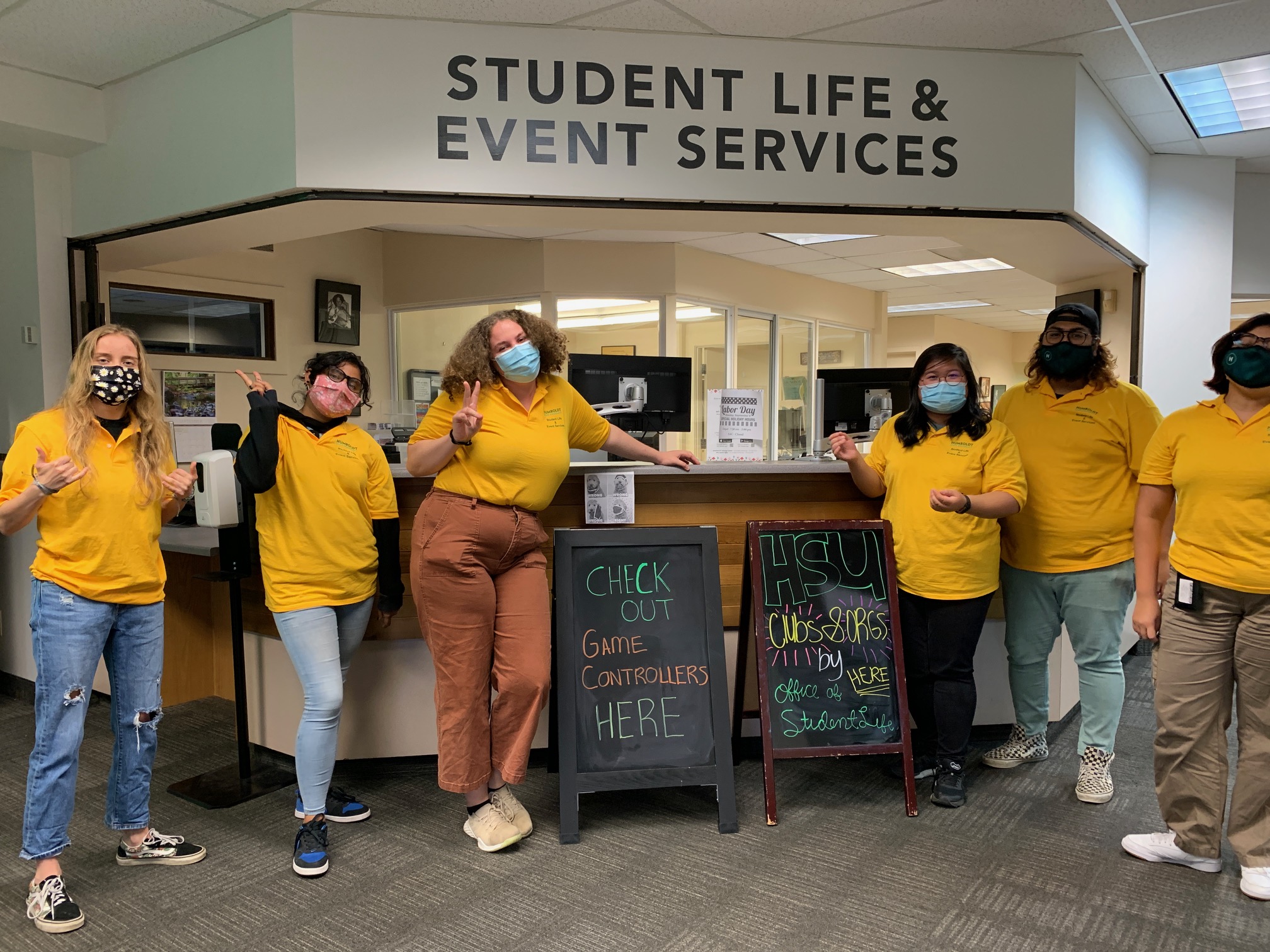
    In addition to the large spaces dedicated to study and leisure, the first floor also contains a Student Life and Event Services desk where students can go to find out anything about student life on campus. From purchasing tickets for events to finding out information about campus clubs, in addition to a number of other services.

    Wendy Sotomayor, SAC director, said that students are really going to benefit from this more coordinated and improved service.

    “With the merging of the Student Life and Student Activities Center areas, we now have a one stop shop for student focused services,” Sotomayor said.

    They also said that everything in the center, apart from locker rental, is free for all students. Sotomayor also said that all the furniture in the center is refurbished from across campus. The only additions are the arcade games, video games and board games that were added to the space for students’ entertainment.

    Sotomayor encourages students who visit the SAC to provide their feedback because the center is going to continue to adapt to the needs of the campus community.

    “We’ve started here and we’ll be asking: What would you like to see next?” Sotomayor said.

  • Uncomfortable Conversations

    White people are scared to talk about whiteness. Trying to have conversations with my family members about race is like pulling teeth. If confronted, they either get mad or do/say something racist and refuse to acknowledge what they just did. I am white and I used to say things like “I don’t see race I see people,” which, looking back, is a load of bullshit because I didn’t know how to talk about my whiteness and race.

    It’s incredibly invalidating to people’s experiences and lives to say “I don’t see race.” Saying that means you don’t see their culture, you don’t see the pattern of violence People of Color (POC) are confronted with every day, and you’re not seeing the racial injustice that happens every day.

    I grew up not having to acknowledge or even know that the white experience is completely different and unequal to those that aren’t white. When I started forming my own opinions and seeing things without input from my family and community, I realized that my version of feminism was really white feminism. It didn’t specifically include nonwhite people. Sure I could see the injustice against women, but I was practically blind to racial injustice.

    Having racial anxiety isn’t the same for POC and whites. POC experiencing racial anxiety is from discrimination hostility and hate crimes, while for white people it is from the possibility of being seen as racist. It’s not an excuse to not have a conversation about race. If you say something racist, listen to the people telling you so. Own up to it. Don’t use your own ignorance as a weapon powered by centuries of institutional power.

    Being uncomfortable isn’t an excuse either, it’s something white people need to face. When white people say ”Ugh, I hate white people,” it’s them trying to separate their experiences from other white people’s experiences like they are two separate things. However, they are the same. Those saying “I hate white people,” while being white are almost more damaging, because they are using their white privilege to deny it.

    Not talking about race is screaming your answer of where you stand and what you choose is to be ignorant. Silence is an answer and it’s not a good one. Fellow white people, please have conversations about race. Feel uncomfortable, be criticized, and stop saying you’re sorry. That doesn’t move the conversation past your own feelings and misplaced guilt, it just stops the conversation from having an actual meaning that matters.

    It is not the job of POC to educate whites or to talk about race. White people – myself included – need to take initiative to do better, to admit fault where there is a fault, to start a conversation about race, and to be a vocal ally through your actions without speaking over the people we claim to support.

  • I Hate Cows

    I Hate Cows

    Students learning in the face of a climate crisis are posed with the awkward situation of being informed of impending doom and possibly feeling helpless to do anything about it. It is not uncommon to feel climate anxiety. So often it can feel like too little is being done too late. With UN Climate reports literally calling out red alerts it’s hard not to direct your anxiety somewhere. Personally? I’ve been fostering a growing hatred for cows.

    The beef and dairy industries have a reputation for high carbon output and environmental degradation. With a convenience based society that thrives on overconsumption it is easy to see how. When you begin to look at cattle as a reminder of greenhouse gas emissions you might start to feel resentful. I mean sure, they are cute, but at what cost?

    To a spiteful vegetarian it can be frustrating to see the accessibility of beef and the inaccessibility of more eco-friendly diets. Picking up a menu and looking for a veggie-friendly meal is like a dismal game of Where’s Waldo.

    Many Americans don’t have access to produce due to food deserts, areas of intersection between low accessibility and low income. For many that live in food deserts, beef is the easiest and most affordable meal. Long term health issues and inefficient proteins are easy to obtain in Anytown, USA.

    Cattle emit a whopping 99.48kg of carbon dioxide per kilogram of food product. Which is 60 kg of carbon dioxide more than other veggie and meat alternatives.

    To put it frankly, it’s cows that are pushing us over the edge, a cow tipping point if you will. Their greenhouse gas hoofprint does not just account for methane production. It also involves the grain produced to feed cattle, processing, and transportation of beef products. Cattle also require a great deal of land. I can’t think of a road trip I have been on without seeing cows, cow fields, and feedlots.

    I do not hate cows or have an actual vendetta against them, I am just a young person grappling with a climate crisis that creates an uncertain future. It is easy to feel helpless in the face of the climate crisis. Individual action will not solve the climate crisis, but it helps me cope.

    Cutting meat out of my diet and having a vendetta against cows themselves makes me feel a little better about the situation. I do not even wish to see an end to beef and dairy industries, I understand that my diet is not for everyone. All I wish for is more ethical and conscious consumption.

    Fortunately, there is a silver lining. Here in Humboldt we have access to local beef farms, with sustainably sourced and ethically raised cattle. Solutions like changing livestock diets to reduce emissions within livestock lives can also help.

    Yes, this means fewer cow farts and less methane emissions. According to a report from the Intergovernmental Panel on Climate Change, reducing meat consumption in any capacity, will help to reduce negative environmental impacts overall.

    “Decreasing meat consumption, primarily of ruminants, and reducing wastes further reduces water use, soil degradation, pressure on forests and land used for feed potentially freeing up land for mitigation. Additionally, consumption of locally produced food, shortening the supply chain, can in some cases minimise food loss, contribute to food security and reduce GHG emissions associated with energy consumption and food loss.” (IPCC, 2019)

    There is still hope and fewer reasons to hate cows, especially here in Humboldt. Holding our systems accountable and consuming mindfully can help us mitigate our climate crisis.

    It is time we reevaluate our beef consumption and sources. If we are to make it through the climate crisis we need to become more aware and hold our system accountable.

    I hope that maybe you hate cows a little more after reading this, just enough to go meatless for at least one day a week, or to check out our local farmers’ market on Saturday and pick up some better beef.

  • Lumberjack sports update

    Lumberjack sports update

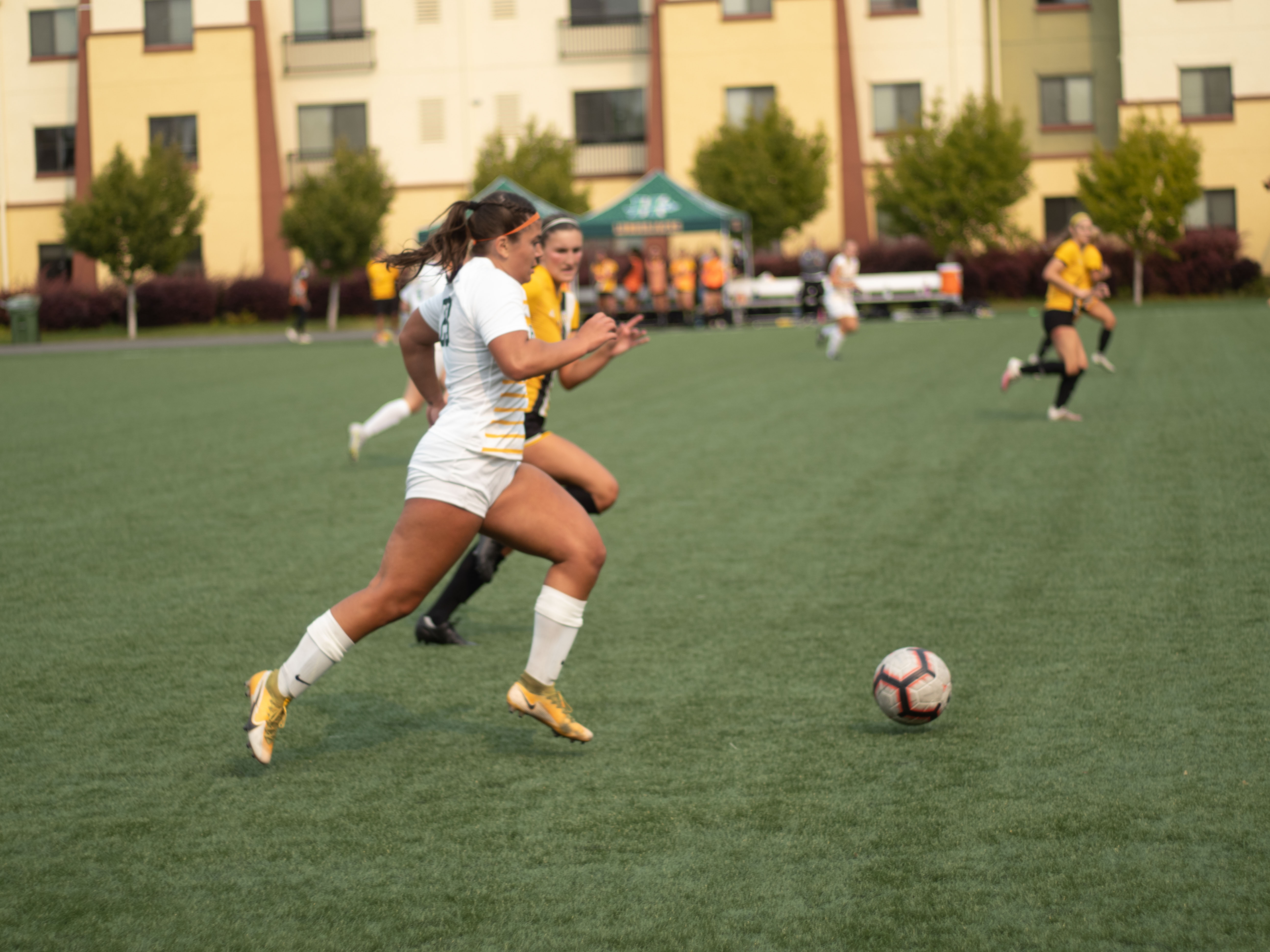
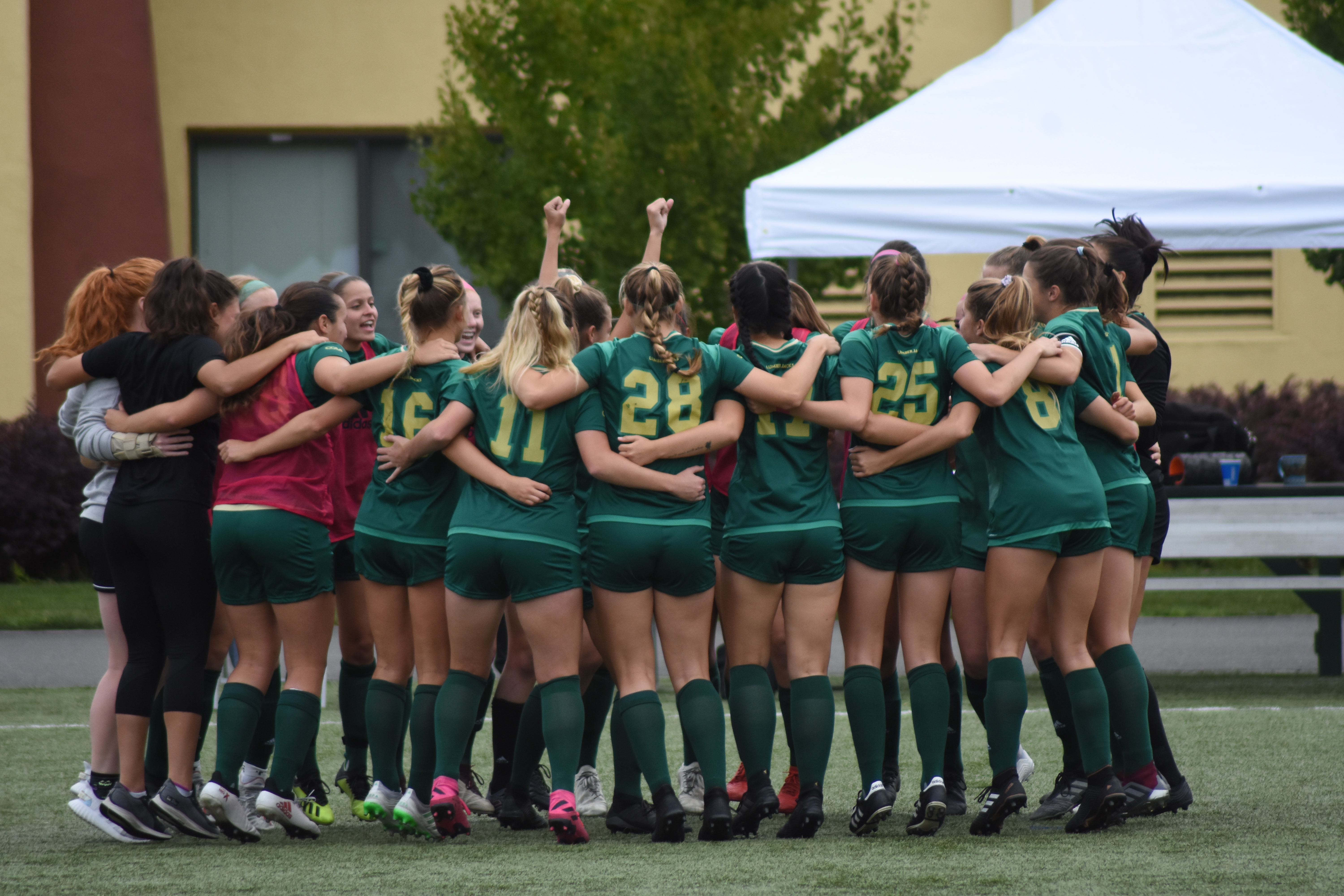
    Men and women’s soccer began their season last week with two home games for the women’s team and two away games for the men’s team.

    The women’s team tied their first match Friday 0-0 against Dominican University. The game went into double overtime but neither team took home a W. Sunday, however, the women’s team won against the University of Hawaii 2-1.

    Senior center back Claire Bareilles believed this weekend’s matches will help the women’s squad going forward.

    “I’m super proud of the performance today,” Bareilles said. “We definitely had a few slow starts in the season with our exhibition games, but we really turned around last game and we carried that momentum through this game.”

    Senior forward Kendall Spencer also said she feels the makeup of this year’s squad prepares them for more success later this season.

    “I feel like we have a really strong team,” Spencer said. “We have a lot of energy. We’re young, which is good, because they [the younger players] bring a lot of energy for us older players. I think it’s just a really good step forward for us.”

    The men’s team played two matches in Salt Lake City, Utah to kick off their season. The men’s team beat Westminster College for their season opener Thursday and took home another victory Friday against Northwest Nazarene University whom they beat 4-0.

    Men’s soccer will play two matches in Hayward, California this coming Friday and Sunday while the women’s team will be traveling to Monmouth, Oregon to play against Central Washington University on Friday and Western Oregon University Sunday.

  • Outdoor sports enthusiasts urge students to be mindful while sending

    Outdoor sports enthusiasts urge students to be mindful while sending

    One of the greatest aspects of Humboldt is access to public lands, something that any student can appreciate. There are many ways to enjoy the outdoors in Humboldt by taking a mindful moment between classes in the Community Forest, enjoying a day off at the beach, or hiking one of the many trails that adorn the Lost Coast.

    Humboldt offers great coastal climbs, bike trails through redwoods, hikes with views, and more. As students return to Humboldt, or even experience it for the first time, it is important to be courteous to public lands.

    Humboldt County was established on Wiyot land, a Native American tribe. Tribes and Nations in Humboldt County include Hupa, Karuk, Mattole, Tolowa, Wailaki, Wiyot, and Yurok. It is important to acknowledge this and to act on that acknowledgement with intention and respect as we appreciate the outdoors.

    Taylor Kibrick, a senior attending HSU majoring in ecological restoration, discovered Humboldt’s beauty throughout the pandemic. He frequented Humboldt beaches to climb and hiked the dunes. He found his people outside through activities like hiking and climbing. He does his best to leave no trace and packs out anything he packed in, but he still runs into discourteous outdoors-goers.

    “The most at Moonstone. I’ve seen people hogging the wall, chucking ropes down from the top of the wall without calling out first. It’s stuff that seems small but can be annoying in such a communal space,” Kibrick said.
    As an ecological restoration major, Kibrick looks at interactions between people and the environment with a trained eye, noting how erosion or just plain litter impacts an ecosystem.

    “Hiking has become more and more popular, natural areas are seeing more social trails as a result of increased foot traffic, causing habitat degradation and intense erosion. If we still want natural areas to recreate in, it’s our responsibility and in our own benefit to care for our natural parks by respecting the land and following established trails,” Kibrick said.

    It is easy to think that individual impact will not amount to much, but it all adds up.
    Try and stay on trail to prevent trails from being ruined and disruption of local ecosystems. According to Leave No Trace, a non-profit dedicated to conserving the outdoors, there are seven principles to help minimize impact as outdoor goers enjoy nature:

    1. Plan ahead. Planning ahead helps understanding impact to prevent damage to any resources. It is also important to ensure the safety of everyone on the trip. For some, that means to be aware of what areas are culturally significant. Climbers in Humboldt need to be aware of what spots are okay to climb and which are not. For example, a few rocks near the mouth of the Klamath look like a great spot to send, but are culturally significant and should not be climbed.

    2. Travel and camp on durable surfaces. Stay on trail. Humboldt trails see a lot of foot traffic and that has an impact over time. The best way to minimize erosion and keep trails enjoyable for all is to stay on them. Going off trail can lead to ecosystem degradation and poorly impact waterways.

    3. Dispose of Waste properly. This one is easily summarized as pack it in, pack it out. Leave nothing behind and take all trash. This also means to properly dispose of human waste, to prevent water contamination or the unfortunate case of letting it ruin someone else’s hike. Either dig a six inch deep hole at least 100ft away from any water source or pack it out.

    4. Leave what you find. Keep the ecosystem intact, take only pictures, and leave only footprints. Humboldt has lots of great finds, but leave them for others to enjoy.

    5. Respect wildlife. It’s for the safety of yourself and wildlife. This also extends to feeding animals, which can cause an unhealthy dependency on humans that could put the animal in further danger. If you see an animal give it some space. If you think it needs help, reach out to the Humboldt Wildlife Care Center. Lastly, keep pets leashed to prevent any unfortunate animal encounters.

    6. Minimize campfire impacts. Most wildfires are caused by people and with dozens of fires already active in California, it is important to reduce impact. Campfires should be completely extinguished before moving on. Avoid parking cars in dry grass. Pay attention to local fire regulations and be informed.

    7. Be considerate of others. Try not to create negative impacts for others’ experiences. Public Lands are important places of access for everyone.

  • Welcome back with Oh Snap!

    It wasn’t until my third year at HSU that I discovered Oh SNAP! and I wasn’t alone in being so unaware. Oh SNAP! Is a food program on campus for students, by students. Their mission: “to increase access to nutritious and culturally appropriate food for all Humboldt State University (HSU) students by engaging in campus and community partnerships and by raising awareness of food insecurity among our peers.”

    I spoke with a staffmember at Oh SNAP, Ravin Craig, a member of the Recreation and Wellness center and in charge of some of the programs and asked them what Oh SNAP! means to them.

    “Oh SNAP! Is a student-led initiative to make sure students have access to the food that they need to succeed – to have the food they need to be their best,” said Craig. Focusing on cultural foods and allergies are another big thing. ‘Having cultural foods is also important. Helping students find where they can get certain foods. For some people, they need to know where the food came from or how the food was treated. We meet a lot of different needs that are culturally appropriate. Food is a basic human right and having restrictions don’t change that.”

    In 2016 Oh SNAP! conducted a study of HSU students showing that 53% of students suffered from low or very low food insecurity, while 59% of students make their meals smaller to prolong their food supply or altogether skip meals. Without proper food, people have increased stress levels, lose sleep, suffer a loss in productivity at work and school, and their mental and physical health suffers.

    “Up until the pandemic, there were large increasements of students needing Oh SNAP! even with enrollment decreasing. Food insecurity is not unique to HSU it’s part of all CSU,” said Craig. “ Seeing the future of Oh SNAP! Our goal at the moment is to stay consistent. We’ve had gardening classes before but it was never fully planned out and would just be something people would walkthrough. Working with different partners to actually host gardening hours and classes. It’s a big change and. There could be some movement from campus. There’s food politics and food sovereignty. Agriculture or food politics that academically would serve well for students. Many people use the serves but there’s a lot of students who are interested in the way Oh SNAP! is even needed.”

    Food insecurity is a major public health problem in today’s society and Oh SNAP! is here to help. They provide basic necessities and connect people with resources like CalFresh and other outreach programs and events. Oh SNAP! also provides an on-campus food pantry with free fresh fruits and vegetables during the fall for all HSU students.

    There are many ways to join Oh SNAP! through working, volunteering, internships, and even clubs. September 14th is Oh SNAP!’s first cooking class of 2021 with Roger Wang, Associate Dean of Students on how to make mac & cheese. There are many videos of past cooking classes available on their website for free. Make sure to check out the Oh SNAP! calendar for pantry open times and when fun events like cooking classes are.

    Oh SNAP! is in the process of moving from the JGC back to the Recreation and Wellness Center and will be releasing their full fall schedule soon. All distribution will be held outside their location. Oh, SNAP! Will be closed this week. Students can also book appointments for Calfresh Outreach.

    Fall 2021 Hours:

    Wednesdays (Farm Stand, Fresh Produce Only): 10:30am-2pm

    Thursdays (Bags of non-perishables with fruit when available): 2pm-6pm

    Friday (Bags of non-perishables with fruit when available): 9:30am-11:30am and 2:30pm-4:30pm

    Saturday (Bags of non-perishables with fruit when available): 10am-3pm

    It is possible that a few times throughout the semester they will be closed to fully restock. Make sure to check out Oh SNAP!’s Instagram (@hsuohsnap), sign up for their mailing list, or regularly check out the Oh SNAP! website to know when these happen. All hours are also posted outside the Recreation and Wellness Building.

    Craig wanted to give one last message to anyone who reads this, “If you have ever thought about using our services but were unsure come by and talk with us. You can schedule a Zoom meeting too. We can talk about anything. It doesn’t have to just be about Oh SNAP or the pantry. It’s always better to ask than to not. It’s nice to know that there are people around that can help and answer any questions you might have.”

  • The Best Restaurants in Arcata Under $10

    The Best Restaurants in Arcata Under $10

    Japhy’s Soup and Noodles located on 1563 G Street right outside of campus, Japhy’s has a cozy atmosphere and open indoor dining. They have a tasty selection of soup and noodles prepared with locally sourced ingredients. Boasting a fairly priced menu with several options available for vegetarians, Japhy’s is an excellent option for any college student looking for a healthy meal. Their Thai-style curry in particular is as delicious as it is affordable, priced at an affordable $5.75 for a cup or $8.75 for a bowl.

    Roman’s Kitchen is a food truck located only a few hundred yards off-campus on 1301 D Street. Anyone looking for a hearty American meal will be satisfied with the excellent hamburgers and sandwiches served here. Roman’s greatest strength is its robust selection of different types of burgers and sandwiches. With seventeen different burgers and 18 different sandwiches, there is always something new to try. The guacamole burger, priced at $9.60, is a standout for anyone with an avocado craving. They also have a fantastic fried mushroom plate for the same price of $9.60. If you’re willing to wait outside for 15 minutes or so, Roman’s is a great option located conveniently close to campus.

    Sushi Spot is on 670 9th St. right outside of the Arcata Plaza. Both indoor seating and takeout are currently available. They have a wide selection of affordable sushi and a myriad of other Japanese dishes. Sushi Spot distinguishes itself from many other sushi restaurants by having a sizable vegetarian sushi selection, all of which is priced under $10. One of their most unique items is the Sushi Monsters collection which is all deep-fried sushi plates. The crunchy salmon roll has avocado, cream cheese, and salmon with a chili garlic sauce, and comes out to a reasonable $8.95.

    Don’s Donuts and Pizza is located in the Arcata Plaza. Unsurprisingly, they are best known for their pizza and donuts. However, they have fantastic and affordable lesser-known meal options. Their pizza bagel is only $4.99 and it is a perfect lunch option. It comes with pizza sauce, cheese, and oregano, and you can choose one extra topping or add a dollar for two toppings. They also have personalized sandwiches for $6.50.

    Tacos La Bonita is a taco truck on 1499 Spear Avenue. Featuring some of the best Mexican food in town, La Bonita’s has the most options under $10 on this list. In fact, everything on the menu costs less than $10. You can get a burrito for $6.99, a chimichanga for $8.99, or one of their tacos for just $2.50. The chavindeca is especially delicious and comes in at only $5.99. Despite the affordable pricing, the quality of the food is on par with more expensive Mexican restaurants in town and tastes considerably better than Taco Bell ever will.

    Eating out can be really expensive and for some new students, it can be tempting to seek out the more familiar fast-food restaurants. Despite Arcata’s small size, it hosts restaurants with food from all over the world. Skip out on fast food and try something new for a more nutritious and filling dining experience.

  • HSU enrollment decline

    HSU enrollment decline

    Humboldt State University has opened its big green doors to the world once more and students are once again flowing through these bright and hallowed halls after an unprecedented hiatus during the onset of COVID-19.

    However, the number of students who ended up attending school has gone down significantly, not only just since COVID-19 hit, but as a general trend over the last five years, according to data released by the HSU Division of Enrollment Management.

    Applications have gone down by 38% since 2016, and more downward trending is predicted due to declining birth rates in California. The data also showed that 10,538 students applied to HSU for the Fall 2021 semester, 1,208 of which ended up registering for classes, compared to 14,226 and 1,642 respectively in Fall 2019.

    On a more positive note, average GPA seemed to go up at the very onset of COVID-19. According to data on the HSU website, the average freshman GPA rose from 2.75 in Fall 2019 to 2.95 in the Fall 2020. Sophomore GPA rose from 2.96 to 3.06, and a similar trend was seen henceforth for all over class levels from the fall 2019 to the fall of 2020, with the exception of the credential program which saw a drop from 3.96 to 3.90.

    These numbers were released just days apart from the submission of HSU’s official application for polytechnic status, which claimed outright that a polytechnic designation would drastically increase enrollment.

    “Humboldt State University would expect to see enrollment increase 50% within three years and 100% within seven years, immediately adding highly educated and trained graduates to the California workforce,” the document said.

    In an interview, representatives from the HSU Admissions team acknowledged the challenges that lay ahead but maintained a vigorous enthusiasm that these goals are more than attainable with some of the changes and improvements they have implemented.

    “We’re building housing that’s going to be connected to academic space and have learning communities and residential Learning and have more connection with advisors and the career center because that’s a key part of seeing students stay. And then the other part is a sense of belonging,” Dr. Meriwether said.

    The plan for polytechnic status includes funding for more student housing as well, an age-old issue for HSU. Dr. Meriwether said the plan would provide housing for roughly 2,200 students both on and off-campus.

    An expanded look at some of the work being done by the Admissions Team to both bring students to HSU and keep them there will be covered in a future issue of the Lumberjack.

  • Polytechnic plans propel need for more housing

    Polytechnic plans propel need for more housing

    On Sept. 1, HSU announced that President Tom Jackson submitted the final draft of the prospectus to Chancellor Castro that resulted from the self-study that the university went through in Spring 2021 for the possibility of becoming a polytechnic institution.

    Governor Newsom signed a budget in July authorizing Humboldt State with $433 million of one-time funding and $25 million in ongoing funding. Since then, many within the university’s community have questioned where exactly this money will be allocated.

    University provost Jenn Capps and Deputy Chief of Staff Lisa Bond-Maupin held a Polytechnic Self Study session on Aug. 26 where they answered questions about the large grant of money given to HSU.

    “This [Polytechnic Prospectus] is, again, a living document and can be updated and changed as we go and as we go into planning,” Bond-Maupin said.

    They said that it is important to make sure that the allocated money is used for the best and most optimal purposes, but also fits into what HSU is about. Bond-Maupin also said that many of the community’s concerns point to some of the challenges that they are facing with the prospectus, but some are a matter of perception. They said that one concern that is part of this reality is the accessibility of housing for students, as well as faculty and staff.

    “That is one of the things that keeps me up at night, how to create a space for faculty and staff to live and work, as well as our students,” Capps said.

    They pointed out that the lack of housing for the campus community was one concern that really hit home for the Chancellor and the Governor. Capps said that the reason for the gigantic $433 million was to primarily support and fast-trac accessible housing for students.

    In the prospectus, one of the challenges that the university presented is that of the local community not being able to grow at a pace to support the institution’s aspirations and growth.

    Grant Scott-Goforth, HSU’s communications specialist, said that President Tom Jackson and the surrounding community are consistently working together to envision the progression that will have to come as the university seeks a polytechnic designation.

    “The university leadership and city leadership teams meet frequently and this is part of an ongoing dialogue,” Scott-Goforth said. “Both groups know the importance of providing safe and accessible housing options both on and off campus.”

    The 143 page prospectus that was made available to the public shows that housing is in the early planning stages. The document said that, with the infusion of the money given from the state, HSU can expect to see a 50% increase in enrollment within the next three years and a 100% increase within seven years.

    During the session when asked about housing, Bond-Maupin ensured that President Tom Jackson is putting accessible housing on the forefront of his agenda within the next several years.

    “Working with President Jackson, I can say that this [accessible housing] is his number one concern apart from all the other things that he cares about,” Bond-Maupin said.

  • California’s gubernatorial recall election

    There have been many attempts to recall governors in the past, but the recall election to get Gavin Newsom out of office is only the second time in California’s history that a recall has made it onto the ballot. The only successful recall attempt of a California governor was in 2003 when Governor Gray Davis was voted out of the office and replaced with Arnold Schwarzenegger.

    There have been five failed attempts to collect enough signatures to recall Newsom. This latest attempt was led by Republican Orrin Heatlie, a retired sheriff’s deputy.

    HSU professor Erin Kelly who teaches a class on American institutions expressed that pro-recallers are criticizing Newsom for his detachment from the suffering of Californians during COVID-19.

    “This recall is happening in an extremely partisan atmosphere, with California Republicans (who are in the minority) overwhelmingly in favor of the recall, while Democrats oppose it,” Kelly said. “This is an expression of discontent from a party that has been largely powerless at the state level for some time.”

    Kelly mentioned how that he’s also faced criticism because of unemployment benefits that went to incarcerated people, tax rates, gun and ammunition restrictions, and continued restrictions related to COVID-19.

    The Recall Gavin Newsom website, created by Heatlie and others, also lists unemployment, homelessness, and policies relating to immigrants as reasons why Newsom should be recalled.

    In order to get a recall on the ballot, a petition must have signatures from 12% of voters from the previous election for governor and from voters in at least five different counties. July 1, California’s Secretary of State, Shirley Weber, certified that these requirements were met and the election was set for Sep. 14.

    Voters will be asked if they want to recall Newsom and who should replace him. If more than 50% of voters responded “yes”, the candidate with the most votes from question two will replace Newsom. Unlike in a regular California election, a majority of the votes is not required for a recall election candidate to win.

    Fourth-year political science major, Eddie Rivera had something to say about the matter.

    “This is troublesome in any democracy because hypothetically someone with 20% of the state’s support could become governor,” Rivera said. “This really does seem to be a cheap power grab by the California Republican Party.”

    There are 46 candidates running against Newsom in the recall: nine Democrats, 24 Republicans, two with the Green Party, one Libertarian, and 10 with no party preference. The frontrunner on the Republican side is Larry Elder, who tossed his hat in the ring in July after challenging a requirement that candidates must disclose tax returns from the past five years.

    Although he isn’t officially endorsed by the state GOP, Elder continues to lead in the polls, according to Fivethirtyeight. Elder, 69, is a radio talk host who has described himself as ‘fiscally conservative and socially moderate.’

    Among other initiatives, Elder said that if elected he will suspend mask and vaccine mandates right away, calling them an ‘assault on freedom.’

    The leading Democrat candidate is YouTuber Kevin Paffrath, 29, If elected, Paffrath explained how he will focus on policies regarding income tax, homelessness, and education. Regardless of the recall result, Paffrath said he will run again in 2022.

    Journalism freshman Gerardo Hernandez, a registered Democrat, is in favor of the recall. Hernandez believes that issues regarding homelessness, unemployment, education, and income loss have gone unresolved under Newsom.

    “I believe that our governor is an incompetent leader that has not made significant changes to benefit our state and I think now is the perfect opportunity to get rid of him and have new leadership,” Hernandez said.

    Hernandez plans to vote for 36-year-old Republican Assembly Member Kevin Kiley, who has authored bills on free speech on college campuses, school choice, and protections for victims of sexual abuse.

    Kelly said that even if the leading candidate, Elder, was voted in, he’d face Democratic supermajorities in the legislature so he wouldn’t be able to get much done without using executive orders and emergency powers. Whoever the winning candidate is, they’d only serve for a year before they’d have to run again in the 2022 election. The Democratic Party is urging voters to vote against the recall and leave question two on the ballot, who should replace Newsom, blank.

    Kelly encourages everyone to vote, especially young people.

    “This is your state, this is your future, and it is an easy thing to do,” Kelly said.

  • Starting Somewhere

    As I come into my last year here at HSU, I’m debating what almost every senior in college debates; ‘should I get my masters?’ Of course, it’s not because I actually want to continue my education; it’s from the fear of what comes next after college. From the looming shadows of loan collectors waiting for my graduation date to relatives asking me what’s next. How should I know what’s next? I barely know what I’m doing next week, let alone what I’m going to be doing for the rest of my life.

    Looking at social media, I’m met with videos of incoming first-year students excited to move in and meet their future classmates and lifelong friends. It gives me a wave of nostalgia for my first day. It almost makes me wish I could go back in time to experience that excitement and fear, sort of when you reach the top of a rollercoaster, and it’s about to drop down.

    I can remember the fear and excitement I had when I transitioned from being a senior in high school to being a freshman in college. I was able to speak with some incoming freshmen this past week, and it was a wonderful experience to see what it’s like to be a freshman again.

    Markus Orr, an incoming Wildlife major, is one of the few people I had the chance to meet.

    “I’m excited to experience college and being away from home. I am also looking forward to meeting people and activities on campus. Being new here feels very nerve-racking, but I am still excited. I am worried about how well I will handle the change from high school classes and work to college classes and work, but I think I’ll survive just fine.”

    This year, Orr is living in Creekview and is excited to see what the future has in store for them.

    “I am also excited for more challenging and hands-on experiences I didn’t get in high school. Also, there are so many clubs that I am excited to explore.”

    Meeting people has always been a nervous event for me, and I know I’m not alone in that, especially when meeting your future roommate.

    Jayda Carbajal talks about how it’s been being new to HSU and what it’s like sharing a room with someone she’s never met before.

    “I’d say the thing I’m most excited about being a new student here on campus is being able to get to know the wonderful community around me and be outdoors more. It’s been so wonderful so far getting to know my roommate. She has been so sweet, kind, and has made me feel very comfortable,” Carbajal said.

    “The transition has been a little hard coming to college just because I miss my family so much. I’ve just been pretty homesick. However, I’m so excited to get started with classes and learn more about the wildlife and beautiful nature that surrounds us.”

    When I had my first ever tour of HSU, before I was even a college student, I knew I had found my community. Walking around, I realized how different this tour was from all the other campus tours I had taken at other colleges. People were friendly and would walk up to the group to say hello and interact with future HSU students. I had found my people.

    Emilie Cates told me how excited they were to meet other people with the same interests and ambitions finally.

    “It always helps me get motivated with my work when other people are also looking forward to learning. I’m a theatre major and want to see what opportunities for playwriting the school has. It’s a passion of mine, and I want to pursue it at the school,” Cate excitedly told me.

    “I’m also excited to explore the vast wilderness boarding the school. I recently made the Humboldt cross country team and have loved being around the other runners. They inspire me to work my hardest and give it all I have. Humboldt so far has been a great experience, including the awesome food at the J. I have high hopes for this year.”

    Being a senior in college is terrifying and exciting because you get to interact with people just starting their college experience and offer advice the same way seniors had told you when you first started. It’s a community of people of all ages, races, genders, and identities, and it’s a community I will cherish forever. Although the idea of a future without academics fills me with uncertainty, I look forward to seeing what my future holds.

  • The loss of a frog

    The loss of a frog

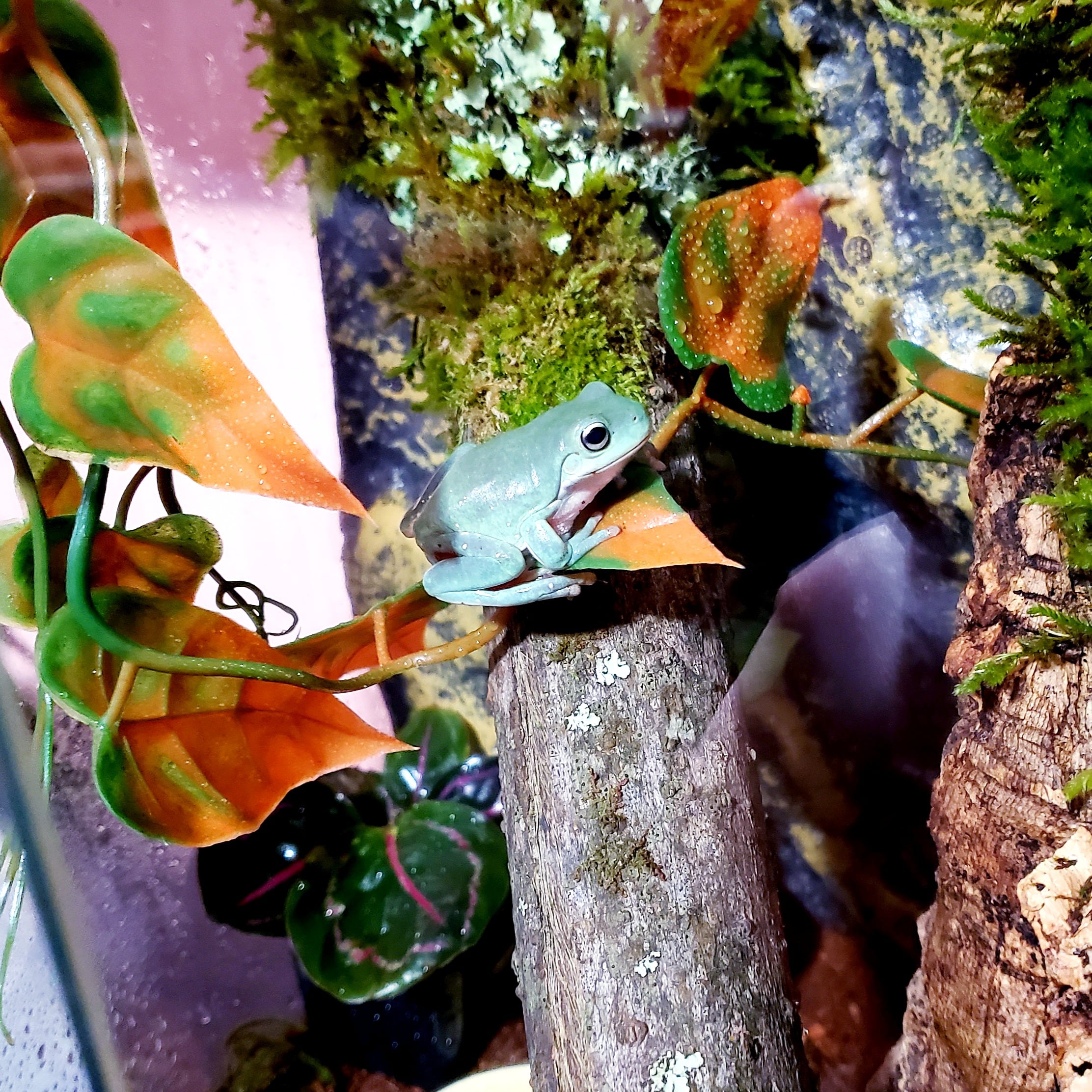
    Everyone may not understand the value of a pet, especially that of animals other than cats and dogs. Creatures such as fish are often treated as a decoration rather than a living being that deserves care and attention. While the average person may not dare to ask for your dog’s collar and bowl within a week of your loss, many would see nothing wrong with requesting a fish tank or terrarium whose occupant is no longer with you. This sort of societal apathy towards the lives of animals is part of what makes the loss of a pet so painful. Not only have you lost something that you loved and that loved you unconditionally, but with so few that understand, your options for support are limited. Even on pet loss forums, discussing the loss of a more unusual animal can and will get you hateful messages about how you should be thankful it wasn’t a dog.

    My pet frog Fitzwilliam passed away recently. He’d become lethargic and started eating less, and before I could bring him in to the only vet in the county that even treated amphibians, he was gone. I spent that day unable to move from my couch, barely able to eat or speak.

    I find it difficult to express my grief in writing. I loved that little guy. He was a baby, my baby, and now he’s gone. Of course I blamed myself. That’s part of the bargaining phase, right? Maybe if I’d been able to act quicker, I could have found him another vet. Maybe if I’d been more meticulous in cleaning his tank, he would never have gotten sick in the first place. Maybe if I had been better, I don’t know how, but if I’d just been better, he would still be here. He was only about six months old, just a baby. He should have had at least a decade ahead of him. Why couldn’t I give him that?

    I had no one to talk to. Less than a day after losing him, people suggested simply getting a new frog as if he was an object to be replaced. For some people, moving on with a new pet might be best, but I couldn’t do it. I broke down in tears just seeing a stuffed frog in a store. I couldn’t handle having something that looked like him, sounded like him, but wasn’t him. It would be unfair to expect another animal to live up to him when the pain is still so fresh.

    The truth is, I have been through a lot this summer, and in his own way, Fitz was there for me through everything. When I was feeling down, he was content to hop onto my hand and sit with me for as long as I needed. When I needed something to do, he had plants to mist and a water dish to refill. When I needed a distraction, he was there, perched on his favorite branch and ready to be admired. Even when I put on sad music, he would croak along to it. His favorite band was The Mountain Goats.

    I am certain that many readers will see this as the ramblings of an overly emotional person with unhealthy attachments. Maybe they’re right, and they can go right back to drafting a letter to the editor about how I don’t understand real pain and other people have things so much worse than I do so I should just shut up. I just want you to know, he mattered to me.

  • Students Need More Accessibility To Health Care On Campus

    Students Need More Accessibility To Health Care On Campus

    A couple weeks before the start of the Fall semester, I incurred an injury during a walk near my house. It was in my best interest that the injury get looked at right away, so I called the Health Center on Campus. Upon dialing the number, I got a message that the facilities were closed but I could leave a message at a different number. I tried out the new number and actually spoke to someone there, Tracy. I let her know of my situation and she said she would see if anyone was on campus who could help me out. Unfortunately, I was told no one was on campus to help me with my wound, but that I could call back when they opened on Monday, August 16.

    I am a transfer student, that lives about a mile off campus. I lost my job due to covid, and as a result, my insurance. So I’ve relied on the campus to help me with any health needs when necessary. As I drove to urgent care (having a slight meltdown with a close friend over the phone) I realized how inconvenient and unsafe it is that there is not one nurse practitioner on the Humboldt State University campus to care and treat for any students, faculty or staff should there be a need when we are on break.

    For the upcoming fall semester my health service fee is $333 and my health facilities fee is $33. I have no doubt that this helps cover the cost of services and facilities during summer and winter break. I feel I deserve a bit more transparency as to where this money is going, if I don’t have access to care, yet I am helping keep the lights on. As a Humboldt University student, I can use my student ID for perks, discounts and public transportation throughout the year, even during summer breaks. Why is there a disparity in my access to healthcare on campus when we are between semesters?

    Not everyone leaves Humboldt County between semesters. During off seasons, sports teams utilize the facilities, incoming freshman visit the campus and current students still utilize programs like Oh Snap! This year, early housing check in began on Saturday, August 14, two days before the Health Center would be available to students. When I called the health office on Wednesday, August 18 to make an appointment for the vaccine clinic, I got sent to voicemail. I am still awaiting a call back.

    I expect that if I am paying the amount of tuition that I am, It is imperative that I receive the option to care year round. During a global pandemic, when care is harder to come by, it should be made simple for the University’s students to receive it. I implore the Health Center, as well as Humboldt Administration, to provide more information to it’s students and staff about what options are available to us, what services are provided and rethink our accessibility to said services, so we can be cared for year round. This would provide holistic understanding of us not just as students, but real people, who use our breaks to recharge before entering another semester.

  • Fall sports return

    Fall sports return

    After almost two years since the last conference-sanctioned competition, Lumberjack athletic teams will finally gain the opportunity to compete for conference championships and national qualifying after the California Collegiate Athletic Association (CCAA) announced it would return to play for the first full seasons since 2019.

    Below are previews for each fall sport and what to expect when the ‘Jacks take the field again this fall.

    Volleyball

    Head Coach Kelly Wood returns seven women and welcomes 13 newcomers in the squad’s first official season since 2019. A new rotation and fresh faces will be crucial to help revitalize a program that has only won a single conference game in the last two seasons.

    The team returns it’s top offensive weapon in junior outside hitter and 2019 all-CCAA honoree Lenox Loving, who led the team and finished fourth in the conference in kills last season. Setter Riley Tishlarich will look to manage the offense as the teams top returning assists leader. On the defensive side, libero Carla Crespo will anchor the team in digs alongside Loving. Malia Coyle returns as the team’s lead blocker.

    The Lumberjacks begin their 2021 campaign on the road with a scrimmage match against Sonoma State on Friday, August 27 in Rohnert Park, CA. From there, they will play the next eight matches away, not returning to the friendly confines of Lumberjack Arena until a CCAA match against Stanislaus State on September 24.

    Women’s Soccer

    New coach Grant Landy will have his first crack to help the Lumberjacks climb the CCAA ladder after a short exhibition season in spring of 2021. The team faces no shortage of experience, with 19 returning players this season. Coming into the pre-season rankings tied for eighth in the conference, they will look to qualify for the six-team CCAA tournament in November.

    The graduation of key players such as Lindsey Stoner and Sabine Postma, who both finished in the top 10 of the conference in multiple offensive statistical categories, opens up opportunities for multiple players to fill in. Seniors such as Tana Eri, Poppy Cartledge, Claire Bareilles, Mia Castaneda and Kendal Spencer will offer experience and leadership. Defensively, the Lumberjacks will have to fill in for goalkeeper Katie Talbert, who ranked fourth in the conference in shutouts per game and saves per game in 2019. She currently plays professionally in Iceland.

    The women began their season with a pair of exhibition matches against National Association of Intercollegiate Athletics (NAIA) schools Southern Oregon and Oregon Tech. They play a final exhibition game against Santa Rosa Community College on Saturday, August 28, before starting their regular season on Friday, September 3 at home versus Dominican.

    Men’s Soccer

    Much like the women, the men’s soccer team comes off a successful spring exhibition season in which the team finished 4-1-1. After finishing 10th in the CCAA in 2019, they enter this season ranked ninth in the conference.

    Marco Silveira and Devin Hauenstein return as the teams top offensive outputters from a 2019 squad which finished third in the conference in shots and goals. They will be bolstered by new young talent such as Thomas Augee and Gou Nitta, who both played well in the shortened spring season.

    The team began the season with an exhibition match against Southern Oregon on Saturday, August 21. They will begin the regular season on the road against Westminster College in Salt Lake City on Thursday, September 2. They return for their first home match on Friday, September 17 against visiting Simpson University. This also marks the beginning of the team’s 50th anniversary season.

    Men’s Cross Country

    Men’s cross country comes off a 2019 campaign that saw its best team finish at the conference and regional levels since head coach Jamey Harris took the reins in 2017. The men finished sixth in the CCAA and 11th in the West Regional Championships. It also saw senior Daniel Tull qualify as an individual to the national championships, the first Lumberjack male to do so since 2012. With only a few graduates from that team and an impressive recruiting haul, the Lumberjacks will look to improve and crack into the top half of the conference.

    The team returns a handful of fifth year seniors, such as Carson Cohn and Michael Gengo, which the team will rely on for leadership and experience. Junior Shane Burton also returns from the 2019 squad as one of its top finishers. Beyond that, a fresh crop of athletes will also look to make their mark in their first official cross country season since Covid. Sophomore Carson Smith had an impressive spring season where he broke the 15 minute 5k barrier as a freshman.

    Women’s Cross Country

    The women’s team returns three runners from its 2019 team, as well as a handful more from 2020, when no competition occurred. The team had a few opportunities to compete on the track this past spring, and they hope to carry this momentum into the fall in efforts to improve their 2019 performance, which saw the ‘Jacks place seventh in the conference and 13th in the West Region.

    Returners from that squad include graduate student Rosa Granados who finished one spot out of all-Conference honors in 2019, and juniors Saedy Williams and Lucy Atkinson.

    Both the men and women will host their lone home invitational on Saturday, September 18 at the Humboldt Invitational at Baywood Golf and Country Club in Arcata.

    *Full disclosure: the author of this piece is a member of the men’s cross country team at Humboldt State University.

  • Wildfires Burning through California

    Wildfires Burning through California

    At 1 p.m. on Monday, Aug. 23, state officials provided an update on the response and recovery efforts to California’s wildfires via livestream on the twitter page of the Governor’s Office of Emergency Services.

    Mark Ghilarducci, the Director of Cal OES, took to the stand to give an update on the current fire situation across the state of California and the coordinated efforts to protect the state.

    “As of today, we have more that 13,000 state personnel helping combat these wildfires across the state,” Ghilarducci said.

    They also mentioned that as of Monday afternoon, Governor Newsom requested a Presidential Major Disaster Declaration to Aid Wildfire Response and Recovery Efforts for individual assistance, public assistance and hazard mitigation for the following counties: Lassen, Nevada, Placer, Plumas, Shasta, Siskiyou, Tehama, and Trinity.

    Ghilarducci said that the request for Presidential assistance is in response to the already immense residential and infrastructure damage across the state in addition to what is to come.

    Thom Porter, Chief Director of Cal Fire, was up next on the podium to provide an update on the fire agencies that are currently combatting the wildfires across the state, as well as what resources are looking like among these crews.

    “All of these fires have their own specific needs for resources,” Porter said.

    They said that we are currently in the middle point of the peak season for resources, so it is essential that they are used wisely. Porter explained that this means prioritizing resources to areas of California that are at a moderate risk level for new big fires.

    Porter goes on to say that California is ahead of pace this year for the second year running. They said that the state is almost three times over the average acres burned over a five year period with this season alone.

    “Fires are burning in ways that nobody has seen before,” Porter said. “Mother nature is in control and we are doing everything we can to save your lives and property.”

    Tony Scardina, Deputy Regional Forester, then provided updates on forest and road closures.

    “We, in California, are currently at preparedness level five which was triggered on July 14,” Scardina said. “That is the third time in 20 years that that has ever occurred.”

    Scardina said that the fires that we are seeing are unique and historic. They said that the Dixie Fire is currently the number two priority fire in the state right now and its perimeter is 500 miles. This gives a picture of the size and magnitude of these fires that are being combatted.

    There are currently nine large, active fires in the state of California and as of Sunday, Aug. 22, the state decided to close nine national forests to ensure the safety of citizens.

    Porter said multiple times that preparedness is key in keeping people safe.

    “You need to be ready to GO,” Porter said. “Every Californian needs to be ready.”

    It is important for the citizens of California to put together a bag of important documents and have a set plan of action at all times.

  • The New HSU Bookstore

    The New HSU Bookstore

    The HSU bookstore has moved! It is now located at the former Tri-counties Bank on the corner of 8th and G street in the Arcata Plaza. The store is under renovation, but plans to have a soft opening near the end of the year and a grand opening during the spring semester of 2022. The benefits of the bookstore relocating would be for the student who grew up in urban cities to feel more comfortable and to have a more thriving community, whether financially and socially. Another few great benefits will be job opportunities, local high schools, College of the Redwoods, and other vendors will be selling merchandise/gear at the new storefront.

    “The new bookstore will have a small coffee and tea lounge for customers to enjoy while shopping. It will also provide easy access to parking for shoppers, especially tourists, prospective students, and families visiting from out of the area.” As stated on the Humboldt State Now page.

    So what happens to the old location? It will be changed into a “lounge space, activities, and entertainment. [Upon student request ] the bookstore will maintain its current warehouse space on campus for receiving and picking up textbooks, along with handling textbook rentals, and the university is exploring delivering textbooks to students in residence halls. The College Creek Marketplace on campus will continue to sell HSU Bookstore items in the store and expand upon the current selection.” As written on the Humboldt State Now page.

    Amber H., a former HSU student, said, “When I was a freshman in college, I remember every time I walked off of campus alone, I instantly was lost and felt completely out of place. Being from a really urban and diverse community, Humboldt was very foreign to me, as I would expect the new students from similar backgrounds to feel.”

    HSU’s campus within its own, is its own community. As soon as you step off that campus and into the official City of Arcata you will instantly feel like a fish out of water, especially if you are a person of color. As of this year, Arcata’s population is 18,801 people, and 74.95% of that population being white Americans, 4.08% Asian, 2.62% Black or African American, and only 2.16% Native American. So just imagine the culture shock one would feel walking through the streets of Arcata with $200 dollars worth of books in your hand.

    The relocation has a plus side and a negative side. One being all the great benefits listed above. Job opportunities, getting to know the community, and the community itself working together to become financially stable. The downside would be the safety of all students and racial prejudice in the community as well. There is quite sometime before the grand opening so hopefully, more information will be provided soon.

  • New dining plans for students and faculty

    New dining plans for students and faculty

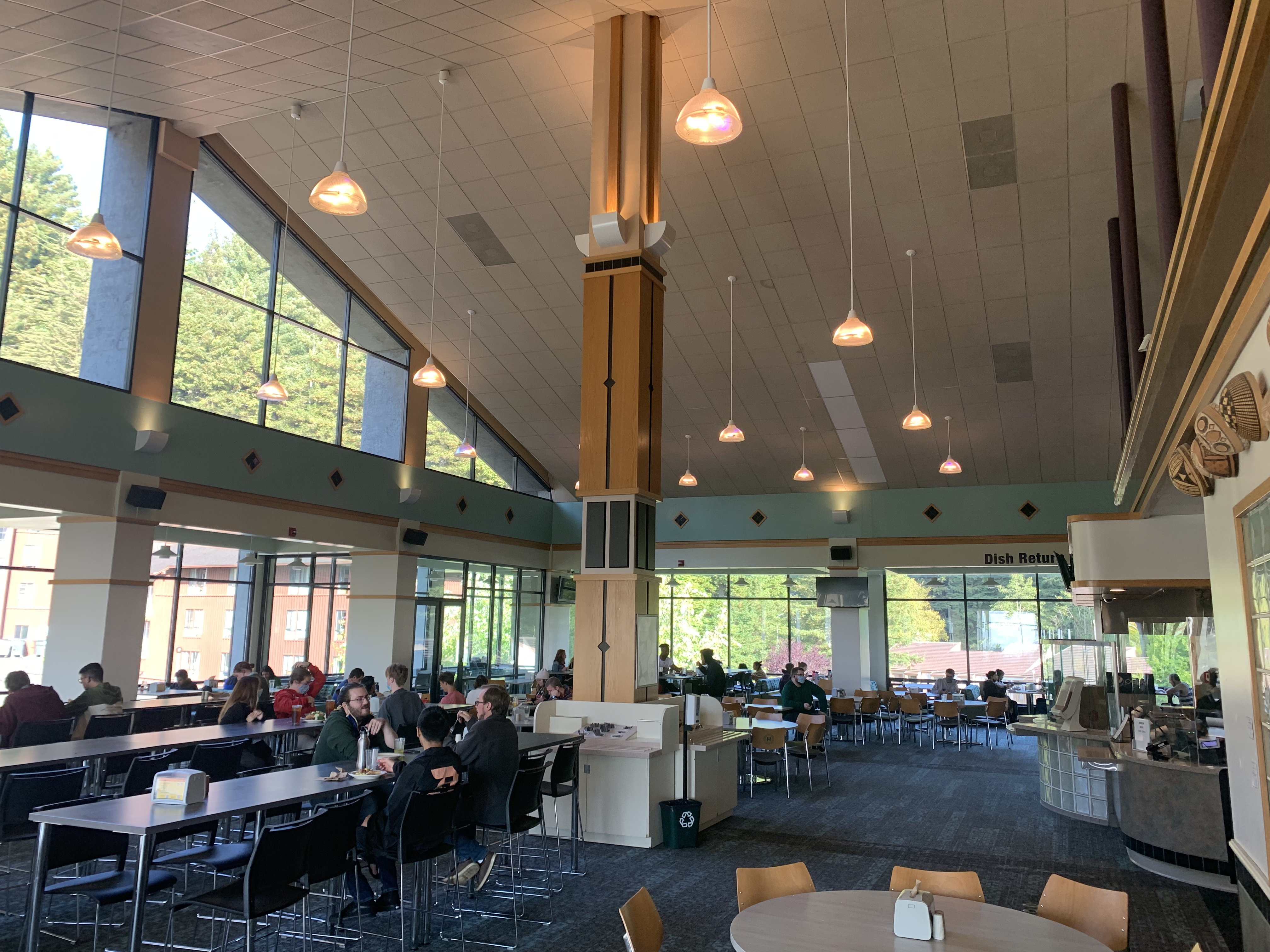
    Humboldt State University is replacing the J-point-based meal plans with new meal-swipe-based plans.

    HSU’s old plans had been around for over 20 years, but they’ve now switched providers to Chartwells Higher Education Dining Services. There are a total of 15 meal plans, including plans for on-campus residents, commuters, faculty, and staff.

    “They are heavily invested in local products, local farmers and sustainable serving as well as sustainable disposable type things, trying to do more to help us on the campus,” Senior Director of Housing Operations and Auxiliary Services, Todd Larson, said.

    According to Larson, Chartwells has brought HSU’s dining operation to the industry norm. Larson also said that meal plan costs have gone down by about $800 to $100 per person per year.

    These new plans are a combination of all-you-can-eat meal swipes, meal exchanges, and flex dollars. Some student plans even include guest meals which some students used for their parents during move-in.

    “You can eat all day long, you never run out of points and so it’s entirely solved that food insecurity issue for folks,” Larson said.

    With J-points, students would pick out their food and pay for everything at the end but with this new system, students use a swipe to get in and it’s all you can eat.

    Also new this year is the J will have Executive Chef, Lalica Mariano.

    “We will be doing a lot more plant-based foods,” Mariano said. “Our projected cycle has a lot of variety featuring as many fresh products that we are able to get in the area.”

    Alyson Ashamalla, a sophomore anthropology student at HSU, said that she does a lot of her own cooking at home because there were times in the past when there weren’t many meatless options to choose from at the J.

    “I am hopeful that this year they will work to listen to student feedback and make the necessary changes to provide decent meals for all but we will see as time goes on throughout the year,” Ashamalla said.

    Allison Hair, a second-year student at HSU, has similar opinions. Although she’s enjoyed dining at the depot, she feels that so far the J doesn’t have many options for vegans and vegetarians.

    “We are hoping that they will expand the options since the J is one of the main places we can get food at this semester,” Hair said.

    There’s also new technology, you can check your swipes, exchanges, and flex dollars and also add funds through the GET app. You can also pre-order food and items from several dining locations through the Boost: Mobile Food Ordering app. In addition, there’ll be a launch of a catering system for events and clubs in the future.

    In the past, OhSnap would donate J-points to students if they were running low, Larson said that he is still working with OhSnap to create a swipe collection system to donate swipes to students who need them.

  • Fall 2021 COVID-19 policies

    Fall semester will start Aug. 23 and things have changed since last spring regarding the delta variant, as well as the availability of a vaccine for COVID-19.

    Grant Scott-Goforth, communications specialist at Humboldt State, gave voice to the answers about the policies this semester.

    “All student residents are required to be vaccinated against COVID-19 or receive a medical or religious exemption,” Scott-Goforth said. “In addition, masking is required everywhere indoors on campus and outdoors whenever you can’t maintain a six-foot distance from others except for in one’s residential space with no one else present.”

    This applies to all students including those who live on campus. Although some classes were face-to-face last semester, there were restrictions such as six-foot distancing and masking. This semester there will be some face-to-face classes, which are scheduled to meet two weeks after the start of the semester.

    “All classes are virtual through Sep. 6,” Scott-Goforth said. “Beginning Sep. 7, some classes will be conducted in-person.”

    Similar to the spring semester where some classes will be in-person, but depending on the teacher is when they can start.

    Freshman, Cole M. Burton, is living in on-campus housing. Since Burton arrived at HSU, he has worried how the guidelines will affect a student’s life on campus and academics.

    “Based off of my two days of being a dorm resident here at Humboldt, it is an unfair assumption as to how well social distancing guidelines will work in order for students and staff to enjoy Humboldt both from a learning and teaching perspective while being free of the COVID-19 pandemic and gaining a good college experience for everyone,” Burton said.

    Overall, Burton understands the policies for COVID-19 and how HSU has decided to continue learning for students but it is different regarding the opinion of the entire student population.

    “I do agree with HSU’s policy on COVID-19, but to restate, it is difficult to predict an outcome based on what I’ve seen regarding students, residents and my choices in preventing the potential spread,” Burton said.

    Julia Rivera is a freshman at HSU who is also living on campus. Online schooling hasn’t been much of an issue for Rivera.

    “Just making sure I stay on top of everything and putting all dates in a planner definitely keeps me organized,” Rivera said.

    As a freshman coming onto campus during a pandemic, it could be a different experience. Rivera does feel some positivity about the fall semester.

    “Make friends with your neighbors, we’re all freshman who need to network more,” Rivera said.

    Nevertheless, the fall semester is starting with policies and guidelines put into place and there are freshman outreaches for questions and information.

    “It will be important to continue checking their HSU email and campusready.humboldt.edu for updates, as policies can change due to the fluid nature of the pandemic,” Scott Goforth said. “Vaccines and masking are required as we start the semester to ensure everyone’s safety. Please be courteous to your peers as we all adapt to these changes. And welcome to Humboldt State!”

  • HSU Hosts Lassen Community College Students Amid Ongoing Dixie Fire

    HSU Hosts Lassen Community College Students Amid Ongoing Dixie Fire

    In the early hours of Aug. 10, around 30 student athletes and coaches arrived at HSU after being evacuated from Lassen Community College (LCC) in Susanville, CA.

    Four days later, the group made their way back to Susanville only to turn around on Aug. 18 and head back to HSU with another 70 students and staff.

    Humboldt State University released a statement on Aug. 18 announcing the arrival of the now 100 plus LCC students.

    “This is a difficult time for the LCC community and we ask HSU students, staff, and faculty to please keep them, their loved ones, and all the communities that have been affected by wildfires throughout the region in your thoughts,” the press release said.

    HSU made sure to emphasize the precautionary measures that were being taken to adhere to COVID-19 guidelines. The press release said that majority of the students and staff were vaccinated, but they were all tested upon arrival at HSU to be sure there were no positive cases.

    Back in Susanville, the LCC campus was being used as an evacuation shelter for those who had to leave their homes in surrounding areas. The college was well seasoned in this department as it had to act as a shelter on two separate occasions last year.

    Trevor Albertson, President of LCC, knew that acting quickly and efficiently was important as conditions drastically started to deteriorate in the days leading up to the relocation of students and faculty to HSU.

    “It was awful, we had smoke so thick that you couldn’t see 100 feet in front of you,” Albertson said. “We had ash and debris falling all over campus; it was just horrid.”

    They said that you never really expect to deal with a situation like this until you are thrown into it.

    Albertson is especially grateful for the help of President Tom Jackson who he called at 2 a.m. asking for help. Jackson instantly told Albertson to send his kids up to HSU and extended a helping hand without hesitation.

    “There were people here who didn’t have a home, didn’t have food to eat and HSU gave them that,” Albertson said. “What is more basically human and decent than that.”

    Albertson made a quick trip up to Humboldt on Aug. 22 to speak with their students and since then, the LCC students and staff have returned to their campus. Their classes remain online and they intend to begin in-person classes in a week.

    One concern that Albertson said they are now facing for their student athletes is the impact the wildfires will have on their sports seasons.

    Andray Chitehwe is a freshman on the men’s soccer team at LCC from Zimbabwe. They reflected on finding out the sudden news of relocating from Susanville to HSU and the time spent with their team in Humboldt.

    “The first time we found out, I didn’t know what to expect,” Chitehwe said. “I was surprised by the news that we were relocating.”

    Chitehwe also said that the time spent in Humboldt was enjoyable and they hope that they get to experience something similar, minus the circumstances, again. They said that the services that HSU provided were top notch.

    Although the students were able to return to Susanville, LCC continues to house evacuees from surrounding towns that are still under threat. Fire crews have since left the college and moved elsewhere to continue their fight against the ongoing fires.

    As of Aug. 24, the Dixie fire has burned 1,137 square miles and is 40% contained.

  • Climate change takes center stage

    Humboldt County has become the focal point of the climate change crisis recently, as North Coast Congress member Jared Huffman and United States Secretary of the Interior, Deb Haaland, visited the area to highlight the negative implications of climate change as well as the natural solutions the county offers.

    Firefighters are currently battling the Monument Fire, burning east in Trinity County. Huffman, who represents Humboldt County federally as part of California’s 2nd district, visited the base camp in Willow Creek on the morning of Wednesday, Aug. 11. He received a briefing from officials who talked about containment efforts and the struggles firefighters face from lack of resources and personnel.

    At the time of publication, the Monument Fire currently sits at over 130,000 acres, with 10% containment.

    In the afternoon, Huffman joined Secretary Haaland at Wolf Creek Education center in Redwood National Park to highlight efforts by national and state park services, local agencies such as Save the Redwoods, and tribal groups in combating climate change via forest restoration practices and carbon sequestration.

    The day prior, Secretary Haaland visited Woodley Island on Humboldt Bay to highlight plans for offshore wind energy development.

    This visit comes fresh off a recent report by the Intergovernmental Panel on Climate Change (IPCC) on Aug. 9, which warns of unprecedented warming patterns if greenhouse gas emissions are not drastically reduced.