The Lumberjack


Students Serving The Cal Poly Humboldt Campus and Community Since 1929

Category: News

  • Soccer teams split with East Bay

    Soccer teams split with East Bay

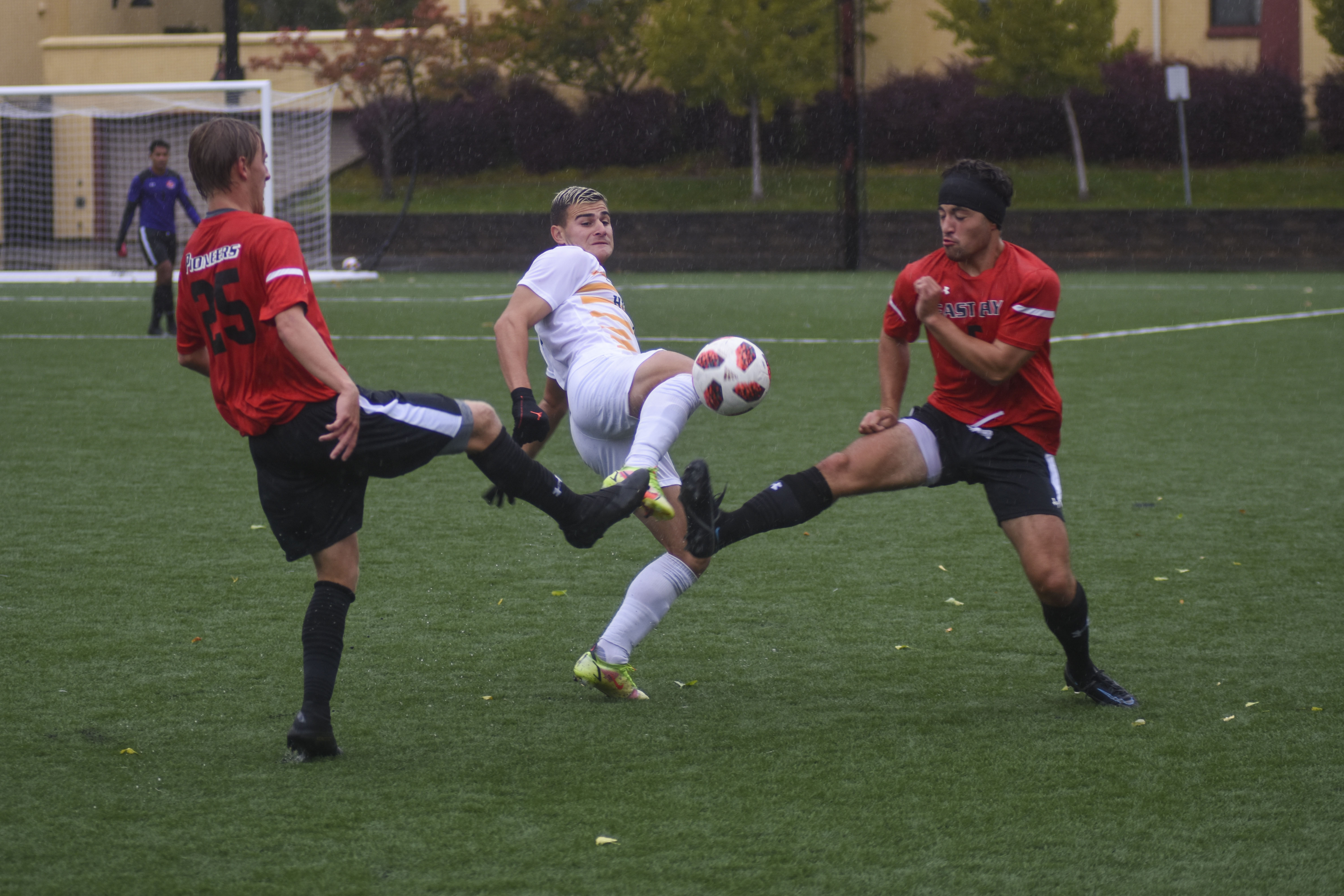
    Men’s soccer wins big

    Pouring rain did nothing to dampen the offensive firepower of the Lumberjacks on Sunday, as the squad scored a season high six goals in a dominating 6-1 victory over visiting Cal State East Bay to remain afloat in the hunt for a CCAA postseason spot.

    For head coach Fred Jungemann, no amount of rain could hinder what he felt was a great all-around effort from his squad.

    “It was a great day,” Jungemann said. “We were a little worried about the weather at the beginning and got off to a little bit of a sluggish start, but they scored a great goal and I think it really kind of got everybody’s mojo moving in the right direction.”

    The mojo began early and often for the team, with no shortage of Jacks getting in on the action. Five total players netted goals on the day. The first came from Daniel Adeyeye in the 17th minute off a Marco Silveira corner kick. From there, the team scored often, netting two more before the half and three more in the second half.

    “I think it clicked a little bit today,” Jungemann said. “Guys were really feeling it and there was a lot of energy going forward as well, which is something that we’ve been missing.”

    Defensively, goalkeeper Adrian Gallardo recorded 4 saves, keeping the Pioneers scoreless until the 64th minute.

    Coach Jungemann also emphasized the importance of keeping the pressure on as the game progressed.

    “I think it’s just human nature,” Jungemann said. “When you’re up 3-0 at half, you want to relax a little bit. But I think for us today, it was really important for us to build some confidence out of this game by continuing to play well and then to do the things that it takes for us to be successful.”

    The victory on Sunday capped off a successful weekend for the Lumberjacks, who also won a road match on Thursday, Oct. 14 against Stanislaus State, 2-1. Both wins may prove crucial in securing a spot in the six-team CCAA tournament in November, with only five more regular season matches remaining.

    Women’s soccer drops low scoring affair

    The Lumberjacks executed tactically and made few mistakes, but failed to generate any offense of their own, dropping a 1-0 match at home against the Pioneers of Cal State East Bay.

    For head coach Grant Landy, the loss feels more frustrating given that his team has done everything he has asked of them.

    “We honestly fell asleep for 30 seconds,” Landy said. “They capitalized. We really just made one mistake all day.”

    The lapse came just two minutes into the second half, when East Bay’s Tami Kwong connected a shot to break a scoreless tie. From there, the Lumberjacks failed to equalize, despite outshooting their opponents 11-8.

    For Landy, the result doesn’t reflect the work and improvement his squad has shown throughout the season.

    “There was so much good today in so many ways.” Landy said. “We clearly created some really good chances. It’s one of those years where we’re just not getting a bounce here or there that we need to kind of change the game. There’s not much you can do about it other than just plugging forward.”

    Men’s soccer (8-2-2, 0-2-2 CCAA) and women’s soccer (3-6-4, 0-4-2) remain home this upcoming weekend for their final homestand of the season. Both squads play on Friday, Oct. 22 against Northern California rival Sonoma State, followed up with a senior day matchup on Sunday, Oct. 24 against San Francisco State.


  • Coming face to face with the reality of morality

    Hands dig into soft ground. Dirt is shuffled around as grass is pulled. The late afternoon sun beats down upon each of our backs as we work on our hands and knees, only utilizing the simple tools of water and baking soda to clean marble slab after marble slab. There are dates ranging as far back as the 1850s to as recently as 2021. Lifespans that ended too soon mixing with those that lived almost a century. Simplistic designs lay next to towering pillars. Yet, every one of its residents is equally buried under 6 feet of earth.

    For well over a year now, the many religious studies majors here at HSU have come together, under the direction of professor Sara Hart, to help clean the tombstones at Greenwood Cemetery in Arcata, a weekly endeavor that has taken place almost every Friday since its first conception. The event was originally created as a volunteer opportunity in association with the Arcata Veteran Hall for one of Dr. Hart’s classes, in which students would help tend specifically to the veteran graves of the area. Now, in partnership with the American Legion Auxiliary, the event has expanded to include any and all graves located within the Greenwood Cemetery.

    “I’m a big believer in service learning,” Hart said, expressing her inspiration in starting this practice. “I think service-learning is crucial to a full and flourishing intellectual experience.”

    Madeline Wilson, a religious study major at HSU, was one of the volunteers there at the time. She explained how she has been participating in the Friday graveyard clean-ups for well over eight months now, often bringing her friends and roommates along when they express interest.

    “[My friends have all had] differing responses, one of them decided that for his mental health that he needed to tap out after 15 minutes,” Wilson said. “He came, witnessed what we were doing, and went ‘this is a little too much for me’ and decided to walk home. A few others [however] have participated and really gotten into it!”

    For many who have come and continue to come to the event, strong emotional responses are not uncommon. These emotions, however, are not always negative and as Dr. Hart often expressed, are healthy and necessary to confront at times.

    “It’s been powerful for a lot of students,” Hart said. “I think in some ways this makes it easier, to [be able] put a physical face on an otherwise very scary mysterious thing. [It] makes it feel very embodied and earthy and natural… It reminds you that everyone is going to end up somewhere.”

    When asked what brought Wilson here time and time again, they explained the spirituality of it.

    “I feel really compelled by the energy exchange of it, by the physical attention to the tombstones, to the folks of the past, and to history more broadly,” Wilson said.

    Overall the reaction that the group has received by passersby has been overwhelmingly positive. Many of those visiting in grief and mourning instead find some amount of comfort in knowing at least some people are looking after the resting place of their loved ones.

    “A few months ago we had someone who was about to bury his brother the coming weekend,” Wilson said. “He came on site and talked to Dr. Sara for a long long time and then was talking to us as a group for a bit. That conversation was compelling, hearing about his own grief [and] his response about burying his brother…”

    While the event is targeted towards those in the religious studies department at HSU, those in the public interested in joining are absolutely welcomed to join as they please, even just to simply be with the group, no grave cleaning is explicitly required. Before saying my goodbyes, I asked if Dr. Hart has any words of encouragement to those interested in joining.

    “Everyone ends up here someday…” she said, Wilson quickly adding an additional “Might as well make it look pretty.”

  • Danza Azteca and indigenous culture at HSU

    Danza Azteca and indigenous culture at HSU

    The smell of copal incense fills the quad as dancers don their cultural wear. They are wearing bright and ornate traditional garb. As the dancers step into their space, the rattling of their ayoyotes announces their entry. Dancer Raymond Ramirez blows a conch horn and the drums beat to start the Danza Azteca performance. Students walking by cannot help but stop to see the occasion.

    Danza Azteca is a traditional form of dance to honor Earth, elements, and connection. The HSU community turned out to learn and participate in the cultural event on Friday. The colorful and energetic performance helped to share culture on campus.

    Milagros Ayoltzin, one of the dancers, began at the age of 6. Her 35 years of experience have helped to keep the culture alive. She began dancing in Los Angeles with one of the first Danza Azteca groups in the United States, Xipe Totec. She believes that it an important to bring culture to campuses.

    “It’s very important to share your culture,” Ayoltzin said. “Expressing ourselves is so important because it keeps us rooted to who we are. I think it’s something that is being lost. But it can help you find yourself no matter where you are.”

    HSU students can now learn about Danza Azteca on campus too. Salvador Hernadez is an HSU student who is currently in the Danza Azteca class. The class debuted this semester with an accompanying club.

    “We learn about the dances, the four directions, the ceremonies, we have the alter, blessings, and how to drum,” Hernadez said. “It’s my culture. Growing up, I never got to learn this. It’s exciting seeing it now even though it’s so far away from home.”

    Hernandez recommends the class or club which meet on Wednesdays 7-8 pm. He thinks of it as a family and as a space to heal from the stress of the day.

    “It’s spiritual when you get in the classroom, and you hear the drums beating, and you feel one with the Earth and yourself. You go and dance and get all the stress out. It’s emotional, but it’s like I’m having a bad day lets go dance about it.”

    Hernandez enjoyed watching the Fire Serpent dance as the dancers held fire to their skin. Dancers ask permission from the serpent to approach a flame. The Fire Serpent dance takes place as a ceremony every 52 years representing a reset. Dancer Juan Ruiz explained the personal meaning behind the dance after the event.

    “We’re all going through some struggle, some battle, [this dance] is a reminder to capture, reset, and keep going,” Ruiz said. “It is a way of closing and ending a cycle. It’s connected to every one of us.”

    Along with the performances on Friday and Saturday, dance, drumming, and copili feather workshops took place in the Jolly Green Commons throughout the weekend.

  • Chance to win free money

    The Humboldt State University Financial Aid Office just made the final disbursement of funds from the Coronavirus Aid, Relief, and Economic Security (CARES) Act to students that qualified. If you did not qualify and are facing financial hardship, there are still funds available. Leftover funds will be disbursed to students that fill out a Hardship Funds Request form that are experiencing financial hardship.

    The maximum request amount per student is $750. Once you have submitted the form, there will be a two to three week waiting period where you may be accepted to receive funding.

    The form consists of a request amount and a text entry to express your position of financial hardship. Explain why you are requesting aid and what you need to use it on. This is a private form between the student and the Financial Aid Office, so there is no need to be embarrassed of your financial situation. This money is here for you, because you need it.

    To access this form, check your HSU email account for an email from the Financial Aid Office about applying for Covid emergency funds. You may also contact finaid@humboldt.edu or call (707) 826-4321 with questions. More information can also be found on the Financial Aid Instagram page (@hsufinaid) as well as their website finaid.humboldt.edu.

  • Purchase hot food with food stamps

    The federal Supplemental Nutrition Assistance Program (SNAP) is allowing the purchase of hot food in Humboldt County from Sept. 29 to Oct. 28, 2021. CalFresh is the statewide program, and recipients are also included in this waiver. This will allow people to replace food that was lost due to the wildfires, according to the Food and Nutrition Service (FNS) disaster assistance program under the US Department of Agriculture. The wildfires have persisted through the years and increasingly cause more damage and lack of accessibility to food for the local communities affected. Counties that are included in this waiver to purchase hot food are Butte, Glenn, Humboldt, Mendocino, Plumas, Shasta, Siskiyou, Tehama, and Trinity.

    Humboldt State University students participating in the CalFresh program find this waiver very helpful. Hannah LeWinter is a wildlife major, and has been on food stamps for almost two years.

    “It’s basic human rights to have access to food and shelter,” LeWinter said. “And they’re already struggling with the shelter aspect, because of the wildfires. And then on top of that, to have food struggles is even harder.”

    Due to the wildfires becoming larger and more frequent, it has affected people’s accessibility to basic necessities like food and shelter.

    LeWinter adds that some people struggling through the wildfires wouldn’t have access to stovetops or the ability to make hot food.

    “This [waiver] is especially important for those people who are being displaced from their homes to have access to a hot meal,” LeWinter said. “I think that everyone is deserving of that comfort.”

    Sarah Somers is a recent graduate of Humboldt State University, and also uses food stamps. Somers acknowledges the stigma around using benefits. Somers would like to dismantle the negative light that this program seemingly exists under, as the limitations to what can be purchased are very strict and specific.

    “We’re just trying to live here,” Somers said. “We’re just trying to eat food and not starve.”

    Jasmyn Lemus is also a student at HSU that uses food stamps. Lemus is very grateful for the ability to purchase hot-and-ready food through food stamps, but wishes that the termination date of this waiver was not approaching so soon.

    “I think they should definitely keep it around,” Lemus said. “I don’t think the wildfires are going to stop.”

    Lemus works in a local grocery store and has seen many wildfire survivors coming in first hand.

    “The last thing on their mind right now is, ‘oh, what should I make for dinner?’” Lemus said. “So having that hot-and-ready option is just very necessary.”

    Lemus noted that this should be extended because so many people are in tough positions as well. Lemus spoke about the firefighters working long days or people coming from an overnight shift.

    Somers reinforces that the FNS should be extending the waiver, and allowing the purchase of other necessities within these limitations.

    “I think they need to extend it to more than just hot food, but also toiletries like tampons, toilet paper and paper towels,” Somers said.

    LeWinter acknowledges the tough financial positions that most people on benefits are placed in.

    “If you’re already someone who’s struggling financially, enough to qualify for EBT [electronic benefits transfer], then you’re probably struggling in other aspects of your life,” LeWinter said. “So having access to hot food would be a benefit, if they potentially keep something like that on there.”

    Since the pandemic started, the ability to sign up online has become more user friendly and easier to upload documents. If you are interested in signing up for benefits through CalFresh or SNAP, contact the on campus HSU food service program, OhSnap! A good place to start learning about the application process is on their instagram page (@hsuohsnap).

    Lemus encourages other students to sign up for this program, as it is there to help people who need it.

    “We shouldn’t have to fight so much for food,” Lemus said. “If the government is offering assistance, we should not feel bad accepting it.”

  • Native American Studies Department breaks ground on Food Sovereignty Lab

    After years of research, planning and proposals, a groundbreaking ceremony for HSU’s Native American Studies Department’s Rou Dalagurr Food Sovereignty Lab was finally held on Oct. 8. The goal of the lab is to study traditional Indigenous food systems and promote Indigenous representation.

    The idea for the lab was developed in the fall of 2019 by Cutcha Risling Baldy, Ph.D., the chair of the Native American Studies Department, and her Indigenous natural resources management practices course students. Later on, assistant professor of Native American Studies Kaitlin Reed, Ph.D., came on board as the lab’s co-director.

    “The students have been at the heart of literally everything this lab has accomplished so far,” Reed said at the groundbreaking ceremony.

    Two of the students instrumental in this project, Cody Henrickson and Carrie Tully, spoke about the journey of the lab’s creation at the ceremony. Henrickson talked about how the community he found at the Native American Studies Department and his personal academic success are nourished by programs like Rou Dalagurr.

    “The implementation of programs and spaces like Rou Dalagurr are vital to the well-being and success of Indigenous students,” Henrickson said. “Not only will this lab directly serve to support Indigenous students, but also the school as a whole, our local Tribes and our community.”

    Bringing her daughter up to the podium with her, Tully explained that one of the main reasons for creating the lab was for the youth. Tully said that the whole team is excited to pass on these opportunities to the youth because the lab is something that will go on and grow for generations to come.

    The lab is located in what many people know as Wiyot Plaza near the Goudi’ni Gallery and the Native American Forum. The name ‘Rou Dalagurr’ means “everyone works” or “work together” in the Wiyot language. Since HSU occupies Wiyot land, Risling Baldy said it was important for the team to name the lab in the Wiyot language.

    During the colonization and genocide that Native peoples experienced, Indigenous food practices and other traditions were disrupted and access to healthy traditional foods became restricted. Reed said that this lab is a great stride toward righting the wrongs and injustices that Indigenous peoples experience in their landscapes and in their bodies.

    Indigenous food sovereignty goes far beyond the cultivation or preparation of foods. It’s about the environment, climate resiliency, the land, and practicing ceremonies which are connected to the environment and Indigenous foods.

    “Indigenous peoples know that all things are interconnected,” Risling Baldy said. “So, food, it is connected to the health of our environment, and that is connected to the health of our people and that is connected to the health of our political systems and our ability to exercise our sovereignty and self-determination.”

    Risling Baldy said that it is only through the generosity of community members, alumni, and organizations that they’ve been able to raise enough money to start the remodel of the lab, but the work is not done yet. They are still in need of student volunteers and additional funding.

    “I am most looking forward to celebrating with the students and to starting our many dream projects that we already talk about with each other as we are doing the planning work,” Risling Baldy said. “We already have some funding for the start of our internship program so getting students into the community-based work is going to be important for us at the beginning.”

  • A midnight masterpiece

    Horror films are set to scare and terrify the audience, giving them the essence of dread, and fear, using people’s fear to invoke a response. The typical horror film usually has a shocking end, something to keep the audience captivated in the cathartic experience. Horror indulges our primal side, and our fears of vulnerability, being alienated, and the unknown.

    Everyone can find a piece of themselves in horror, and there’s that sense of superiorness that comes from yelling at the dumb protagonist for looking out the window at night.

    Now if you are a fan of anything that goes bump in the night, you have probably seen Haunting of Hill House, Doctor Sleep, Before I Wake, or even Gerald’s Game. All of these movies are creations of director Mike Flanagan, who has once again made a wonderful experience filling you with dread the entire time.

    Midnight Mass is the newest creation that gives you the feeling of being watched and maybe a little bit of that Catholic guilt even if you weren’t raised Catholic. The new miniseries tells the story of a small fishing town located on an isolated island and the happenings inside the community.

    The main focus of the story is Riley Flynn, played by actor Zach Gilford, and his alcoholic blunder which landed him in prison for four years after killing a young woman. He returns to his hometown that now looks abandoned after years of being gone. A man who was once an altar boy is now a disgraced outcast.

    The town is mostly made up of devout Catholics and Riley further fails to fit in after he lost his faith in prison. Riley isn’t the only returning outcast. A childhood friend, Erin Greene, showed up a few months beforehand, pregnant and divorced joining Riley in the refuse of the town.

    Following the return of our lead, we meet Father Paul, a new parish priest. Father Paul’s arrival brings forth a mixture of supernatural and miraculous events with injuries healed and faith slowly being restored. From the start, it’s clear that theres something not quite right with Father Paul. The missing Monsignor and the overbearing member of St. Patrick’s Church, Bev Keane point to a more sinister plot.

  • Super Smash Bros Club: KO’ing loneliness with video games

    The Humboldt State Smash Crew has resurrected and is meeting every Friday at 5pm in Nelson Hall room 102. Casual conversations and practice matches take up the first few hours of the evening. However, after 7pm rolls around, the gamers face off in a bracket-style tournament.

    President of the club, Justin Packham, said that the Super Smash Bros Club offers a place of community for freshman and transfer students alike. He had previously been a member of the Smash Bros Club before it was disbanded because of COVID-19. Packham is a junior now, but he said as a freshman the club was a great opportunity for him.

    “I was feeling very homesick,” Packham said. “It was the first time I had ever been away from home for so long and for such a far distance away. So it was just a nice place where I could come and bond with people over this game I played and I made some of the best friendships I’ve ever made up here.”

    Packham revived the Smash Bros club after the old one dissolved and he plans to retain the same atmosphere that made him feel so welcome as a freshman. For Packham, it is about having a safe haven for people to unwind after classes and meet with fellow students.

    The Smash Crew plays a variety of fighting games, not just Super Smash Bros. Everyone can bring their own gaming setup and any fighting game that members want to play are welcome. A new hot topic in the fighting game scene is “Nickelodeon All-Star Brawl.” The game is essentially Super Smash Bros with characters from Nickelodeon cartoons instead of Nintendo characters. Packham says the game is fun but also trash. Several other club members chimed in to agree with that statement.

    The club has a more friendly than competitive atmosphere, but that does not mean they do not compete. In previous years they have done trips to one of the largest Smash Bros tournaments in the country, Genesis 8. The event takes place this upcoming January in San Jose and Packham is hoping to bring down a group of club members to compete. The event offers cash prizes and tournaments for several different fighting games. Packham hopes to get funding from the school for the trip but that all depends on how many people join the club or how much fundraising they can do.

    The Humboldt State Smash crew is open to the public and is welcoming any new members regardless of experience with video games. People are welcome to bring their own gaming setup and there are extra controllers and consoles available for people who don’t have their own.

  • HSU archery club hits the target

    HSU archery club hits the target

    On Thursday nights, the Student Recreation Center is home to a group of students armed to the teeth. The fluorescent-lit astroturfed club sports field hosts the HSU Archery Club and Team. Archery novices and experts practice their craft side by side. Now that campus life has returned, they welcome new members and prepare for competition in the spring.

    Juliana Suzukawa, a fourth-year student, continues her passion for archery through the team. Suzukawa got into archery when she was 15 and now competes and holds the rank of Team Safety Officer.

    “We go down to Davis and compete with other schools from around the state,” Suzukawa said. “I think that students should join the club and try out for team. archery is really good for helping you focus and for de-stressing.”

    The club is open to students of all skill levels. They offer instruction and equipment to anyone interested.

    Sophia Aulbach got into archery through the HSU club. Aulbach started as a freshman but had to stop when the pandemic rolled around. Now that campus life is returning, Aulbach is excited to get back into it.

    “I like shooting things. Archery is a lot of fun,” Aulbach said. “We have an instructor, and for me, who started as a beginner, it was great to spend time learning for the first few weeks. They have all kinds of extra bows and any equipment if you forget or don’t have your own.”

    Elijah Vestal is a freshmen who got involved with the club as soon as possible.

    “I do love it. If you’re into archery or if you’re not into archery, you should totally come. If you feel like you might want to, you totally should,” Vestal said.

    Anthony Perez is a senior at HSU and president of the club and team. He organizes space for people to come out and shoot or for more serious folks about competing.

    “It’s a chill environment to go up to the line and just have fun with archery,” Perez said. “We get equipment out to newbies and get them coached so they can feel on par with everyone else on the line.”

  • How Relationships Influence Longevity

    At one time or another, we have all wondered what the key to a long and healthy life really is. Typically you would think that eating clean and vigorous exercise is the key to success, but a study conducted in the 2000’s had shocking results. While diet and physical activity are important, the relationships we have in life greatly outweigh the two.

    As part of an expedition with National Geographic, Dan Buettner scouted the globe to find regions where there are the highest densities of elderly people. Five locations scattered around the world exhibited remarkable longevity: Okinawa, Japan; Sardinia, Italy; Nicoya, Costa Rica; Icaria, Greece and Loma Linda, California. These places are referred to as blue zones.

    Amanda Hahn, is a psychology professor at HSU who understands the social strain that comes with going to school online. She forms study groups for her students to ensure they have a support group at all times.

    “Social integration has been shown to be the single biggest predictor of longevity,” said Hahn. “Having a core support network is crucial. Also how much you interact with people, whether it’s good or bad.”

    Analysts of the blue zone study found that genes account for only a small portion of our longevity. Lifestyle choices reigned supreme. Other indicators found in the blue zones are eating wisely, moving naturally and often, and having a purpose in life.

    Besides being good for the mind, hearty relationships create a biological force field against disease and decline. Social isolation is the biggest public health risk we face in the twenty-first century.

    In 1938 Harvard began The Grant Study, one of the most well known longitudinal studies ever done. This study followed hundreds of men throughout their lives and collected data about their physical and mental wellbeing. They found strong relationships positively influenced lives more than wealth, fame, or IQ.

    Robert Waldinger, a professor of psychiatry at Harvard Medical School and current director of the study, found that strong relationships delay mental and physical decline. We often forget that nurturing our relationships in life is a form of self care.

    Many have been quarantining, especially the elderly since they are at a higher risk of catching the virus. Some were able to stay connected through technology during lockdowns. The elderly are not as tech savvy which isolates them even more.

    Isolation is difficult for everyone, but if one doesn’t have a solid social network it can be especially hard. Centenarians (people the age 100 or older) in blue zones are never left alone. Which differs vastly from most of the world where people live far from loved ones.

    Julianne Holt-Lunstad, a researcher and neuroscience professor at BYU found that all social interactions do not need to be positive, anything will do. Grumpy centenarians are alive and well, but they are constantly surrounded by their tight-knit support group. Whether it is their family, friends, priest or the local market owner, these centenarians are well respected and taken care of.

    “When we feel some sort of threat, such as a pathogen, we tend to hunker down into our trusted inner circle,” Hahn said. “We get an us versus them mentality. So I can see why the pandemic has strengthened some relationships.”

    Ultimately, the relationships we have in life can help add years on to our lives. Do you want to start integrating positive social changes into your life? Try to start a conversation with the grocery store clerk, and maybe call your mom more than once a month.

  • Earthquake Preparedness in Humboldt County

    Humboldt County has always experienced large earthquakes, and it is important to be prepared. The international ShakeOut drill is coming up on Oct. 21, 2021 at 10:21am. This is an opportunity to ensure that you are prepared in case an earthquake hits Humboldt.

    Humboldt State University is located near a triple junction point right off the coast. This is where the Pacific, North American, and Juan De Fuca tectonic plates meet to form a very hazardous fault. Humboldt county is the most tectonically active region in the lower 48 states, according to the research done by professors in the geology department at Humboldt State University.

    The Cascadia subduction zone is where the tectonic plates are subducting under the North American plate. Humboldt State University professor, Melanie Michalak, explains that the subduction zone has large magnitude earthquakes every 300 to 500 years. With the last one being in 1700. It is capable of producing earthquakes with a magnitude of 8 or 9.

    Melanie Michalak, a geology professor at Humboldt State University, has taken part in the ShakeOut drill for years and even practices in class with her students. During the drill she lets her inner child come out and pretends she is in a large magnitude earthquake.

    “If you don’t practice, a common impulse is to run,” Michalak said. “That’s natural as humans since we have a flight or fight response. But if you practice these drills enough you will learn to drop to the floor and it will become second nature. The best thing to do is start early with children, it could potentially save their life.”

    The national ShakeOut drill is a reminder of the Drop, Cover, and Hold method, that will only be a quick reaction if you practice. When an earthquake hits, it is best to make yourself as small as possible, and to tuck into a ball and cover your head. If it’s possible to get under something sturdy, do that. But at least make sure that your head is protected.

    Almost everyday little earthquakes occur between our feet, but are imperceptible. But every now and again, a big one hits. This earthquake could knock your TV off its stand if not mounted correctly, or knock a lamp over that was placed on an unstable shelf. The actual earthquake isn’t the only thing to fear, there are probably dozens of earthquake hazards all over your living space, according to the “Living on Shaky Ground” guide created by Humboldt State University, which includes more information on local hazards and preparation.

    A hazard that comes with living on the coast and next to many tectonic plates is tsunami’s. Littered across the county are various tsunami warning signs, these are placed in areas that are susceptible to these large waves. The last time a tsunami hit Northern California was in 2011, following the largest earthquake in Japan. It took nine hours to cross the ocean and ended up destroying some of Crescent City according to the Redwood Coast Tsunami Work Group.

    Living in Humboldt places you in one of the most seismically active areas in California. Daniel O’Shea, an oceanography lecturer at Humboldt State University, warns of the danger that could occur if Humboldt were to be hit by a tsunami.

    “The earthquake is your warning sign,” O’Shea said. “That is nature telling you to get off the beach, get inland, and get uphill. If we have a major subduction zone earthquake, a megathrust event, more than likely roads are going to get wrecked, bridges might collapse, we just don’t know what will happen.”

    Amanda Admire is a geology lecturer and researcher at Humboldt State University. Admire has also participated in the ShakeOut drill for years.

    Admire has their students participate every year as well. It is as simple as retaining the muscle memory to react when an earthquake hits. But Admire also recommends that students have an emergency go-bag ready and an evacuation route prepared and timed.

    “Creating an emergency kit for a disaster is really important, and can be really helpful, especially in California,” Admire said. “We have more disasters than just earthquakes and tsunamis right, we also have wildfire hazards, we have landslide hazards.”

    These emergency kits could consist of items such as shoes and socks, because an earthquake could hit in the middle of the night. Make sure that medications are packed, and also things that children or pets need. Cash is very important, because if the power were to go out, then debit cards and online banking would be rendered obsolete. Your cell phone will be a mere paperweight without a charger, so it is always important to memorize and write down contact information. Canned or packaged food items are easy to store in a go-bag. Bring an item for comfort, whatever that is to you. Lastly, having an evacuation route prepared and timed is important, because it is good to know how long it would take to make it to high ground.

    Register at Shakeout.org to participate in this international earthquake drill on Oct. 21, 2021 at 10:21am.

  • Seasonal depression meal ideas

    Fall is finally upon us and you know what that means. The shelves have been restocked with pumpkin spice everything, but left behind on those shelves is your summertime self esteem because guess what else is here, seasonal depression. Don’t worry, we have a new array of seasonally fitting meals that you can make to get you through the fall time.

    1. Bagel and Cream Cheese – You’re probably a vegan if you attend HSU, but if you are affected by seasonal depression then it probably doesn’t matter that you’ve eaten cream cheese for six days in a row. It doesn’t matter that your stomach feels horrible because you’re going to feel horrible anyways.

    2. Microwavable Lasagna – This probably tastes better in the oven, but I still don’t know whether it’s allowed to leave the film on the box, even though that is what the directions say. I don’t know if I believe them, so just put it in the microwave. You can get any sort of lasagna.

    3. Sleep – Some days you will feel so horrible that you just have to eat sleep for dinner.

    4. Watered Down Iced Coffee – When the person at the coffee shop drive thru window handed you that cup, I bet that seasonal depression went out the window. But then you have to stir it, and it doesn’t look that cute anymore. You can get oat milk as a vegan substitute, but you’re drinking coffee so you’re going to anally evade yourself all day anyways. Don’t forget to add pumpkin spice.

    5. A Double Shot of Tequila – This is always a quick and easy snack for any time of the day. I like to garnish this with pineapple juice. This is served best on an empty stomach.

    6. Freezer Burned Stir Fry – This is one of my personal favorites. With this meal, you actually have to put some effort into cooking, so it always gets me out of my funk for like five minutes and makes me feel productive. Since seasonal depression is just one flavor of my depression, I don’t clear out my freezer all year long. My frozen vegetables always look like cute little snowballs before I toss them in a pan. It’s okay if the best by date has passed because they’re in the freezer.

    7. Tech Deck Wheel – One time I dared my roommate to eat a Tech Deck wheel. They were doing pretty bad.

    8. Cherry Tomatoes – Eating a balanced meal is really important to improve your mental health, so make sure to add some greens to your diet in the form of loose, uncooked vegetables.

  • Savage Henry hosts 10th annual comedy festival

    Savage Henry hosts 10th annual comedy festival

    This past weekend marked the tenth annual Savage Henry Comedy Festival, drawing in over 100 comedians from in and out of the area for a three-day festival with almost 40 shows in ten different venues.

    The Savage Henry comedy club opened its doors for the first show of the festival on Thursday, October 7. The entire venue was filled with a pink spotlight-tinted haze, courtesy of several fog machines provided by the event’s sponsor, Terplandia. The fog itself was infused with Blue Dream terpenes.

    The comedy club was not packed, owing to COVID-19 regulations, but having a physical show at multiple venues was a huge step up from last year, which was held mostly over Zoom. The pandemic definitely took its toll on the comedy scene, but for Chris Durant, owner and founder of the club, the support from the community was indispensable.

    “It really gave us a reason to keep this place open,” Durant said. “Every time we felt like giving up, we’d get some support from the community and be like alright, let’s see what we can do.”

    Unlike many comedy festivals, Savage Henry doesn’t have a submission process, but instead books its talent on an invitation basis.

    “It’s fun, I call it my fantasy football,” Durant said. “These are all friends of mine. I’m meeting some of them for the first time in person, but they’re all friends of mine. Friends of friends of friends kind of thing.”

    The shows themselves were a show of many diverse styles of stand-up, with various comedians taking turns hosting. LA-based comedian and HSU graduate Alec Cole lent his dry, understated style to the second show of the evening, introducing each comedian with a (hopefully) joking list of their crimes against humanity.

    “I know it’s been pretty hard out here, as would be imagined given everything in the past year, but it feels like everyone who’s come out so far is just out for a good time,” Cole said.

    Cole got his start performing comedy locally, and was glad to be back. He had moved to LA to pursue comedy, only to have his plans set back by the global pandemic, a case of COVID-19, and a bout of mercury poisoning.

    “After I had COVID, I tried to take better care of myself so I went pescatarian, but I didn’t do any research, and I just ate too much of the wrong fish,” Cole said. “So yeah, last year was a doozy, but now I’m back out doing stand-up.”

    San Francisco-based comedian Rachel Pinson has been performing comedy for four years, gathering much of her material from her own life.

    “It’s almost like the job of the comedian to take stuff, especially traumatic things or really harsh things, and make them in a way that’s palatable and funny,” Pinson said. “A lot of my comedy is about being a woman and the stuff we face every day, like harassment, and turning around. It’s like growing up and being made fun of, and just being able to make fun of myself before the other people do.”

    Pinson has definitely experienced something of the “boy’s club” mentality in comedy.

    “There’s definitely times when I’ll hear stuff when I get off like, ‘that was a great set, and I’m talking about her jokes, hahaha!’” Pinson said.

    However, she has found that the sexism of the business can be worked to her advantage, being able to be brought on as a “diversity hire.”

    “People are like, ‘we need a female!’ and I’m like ‘you haven’t even seen my set,’” Pinson said.

    HSU graduate and headlining comedian David Eubanks got his start at The Jam in Arcata after seeing an open mic flyer.

    “From the first time I did it, I was just hooked,” Eubanks said.

    Eubanks encouraged any student considering trying stand-up to come to a local open mic night and try something out. The local comedy scene is always looking for more talent, and the festival has been welcoming to newer comics.

    “Humboldt State University, hire me for a private gig,” Eubanks added.

  • Picnic at the Park Gets Political

    Picnic at the Park Gets Political

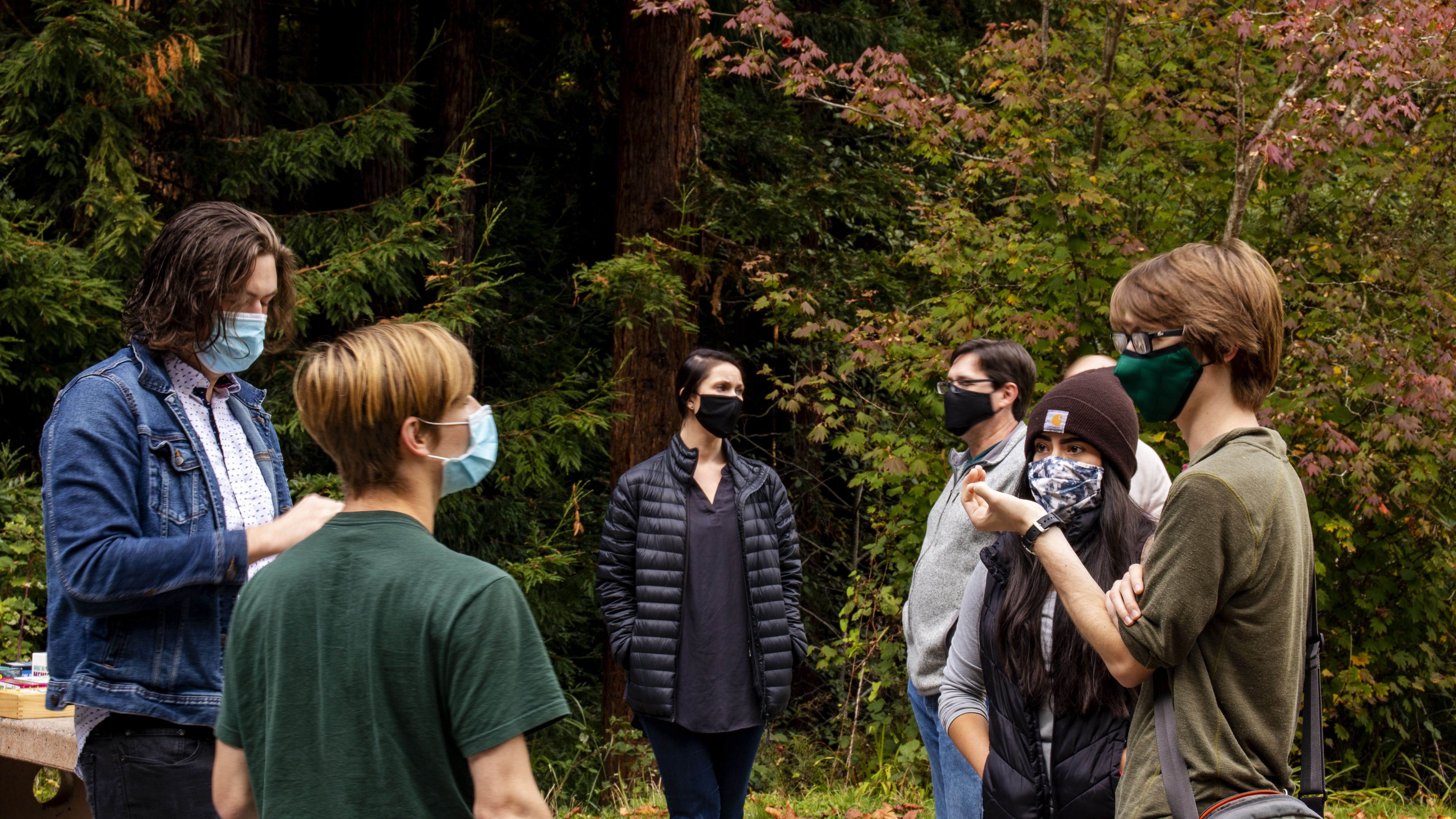
    On Oct. 8, 2021, the Politics Club held their first in person meeting since the pandemic began. Their new goal is to create a communal setting for students to come and meet one another face to face again and be able to have open discourse about current political issues. It is not a requirement to be a political science major, anyone is welcome.

    Tani Sebro is the advisor for the Politics Club and a professor at HSU. Sebro acknowledged the impact of the COVID-19 pandemic on the Politics Club, in terms of loss of recruitment and engagement. Because who wants to show up to another zoom meeting?

    But this semester is the first opportunity for students to meet in person once again. There were about 20 students and faculty that came to Redwood Park to enjoy some snacks and board games.

    “I think that rebuilding that community that was there before the pandemic is probably the main focus right now,” Sebro said.

    The goal of this meeting was to just meet, first and foremost. Students that have classes with each other online were finally able to meet face to face, but masks are still required obviously.

    Henry Myers is a political science major, who was excited to meet more of his classmates at the park to engage in questions about the political.

    “Joining the politics club was a good way to meet other people interested in being involved in politics, academics, and stuff,” Myers said.

    Rainer Shea is another political science major that came to meet people involved in the activist community around Humboldt.

    “My goal is to build relationships that can get me more connected to this community, like the more politically active parts,” Shea said.

    Anyone can be an activist, it does not just have to be political science majors. There is a whole group of people just interested in conversation about politics beyond what is being discussed in a classroom setting.

    Serena Archila is the president of the Politics Club. Archila took on this leadership role to learn from and work with others and to grow as a student in the political community, not just in the classroom.

    “This is really something that I’m passionate about, and I want to continue that outside of school too and have conversations that are important,” Archila said. “In Politics Club, you see a bunch of people with different backgrounds coming together and talking about what is going on in the world.”

    Humboldt State University is a small campus, so the opportunity for community connection is huge. There is so much that can be done for the students and the local community, as well as the bigger international community of global governance. It all starts with conversation.

    Come join the Politics Club on Fridays at 4pm, locations varying as it has been held on zoom up until this meeting. Follow their instagram for meeting updates @hsupolitics.

    “If you are interested in questions about the political, which is everything, because everything is political, then you should join us!” Sebro said.

  • Goodbye writing proficiency exam

    On the afternoon of Friday, Oct. 8, students that registered for the Graduate Writing Proficiency Exam (GWPE) received a notification that this long standing graduation requirement was removed from Humboldt State.

    Instituted in the 1970s, this 100-minute exam stood in the way of graduating seniors for the better half of the last century. This requirement was a way for California State University campuses to validate the writing aptitude of its students.

    Before the announcement was made, students were obligated to register for the exam after completing 60 units and a general education written communication course. In making this decision, Humboldt State administration has signaled that the academic expectations it has for students have developed past the need for a short exam testing competency.

    More information regarding the fees associated with the GWPE is set to be released next week, along with a formal announcement. Until then, students that were anticipating registering for the test can pocket the $32 registration fee. Those who paid already can expect to receive more information about their fees later this week.

    With midterms quickly approaching and finals on the horizon, another check can be marked off the long to-do list for graduating seniors.

  • Say YES to Volunteering

    Say YES to Volunteering

    YES program is back on campus offering once a week in-person, hour-long volunteer programs. The program, like all others, was stymied when the COVID-19 pandemic began.

    The YES program is a student-led community engagement program focused on youth services in and around the HSU campus. The program has been at HSU since 1968 and initiated over 70 community programs. This semester they are offering nine programs for student internships and leadership opportunities.

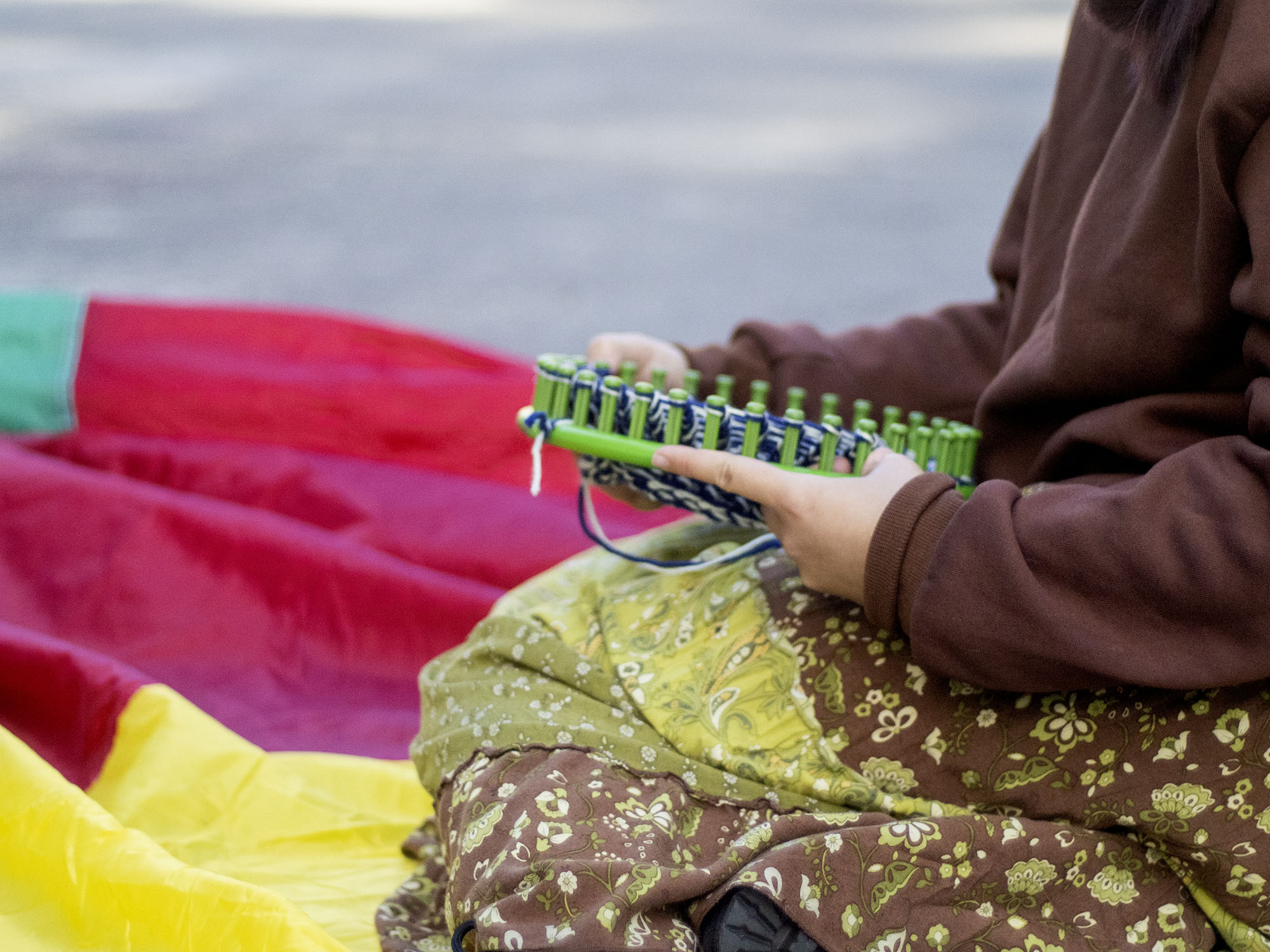
    We spoke to Melea Smith, the YES program coordinator, about the Potowot volunteer gardening program as well as the drop-in knitting program. Both programs are part of the Volunteer Opportunity Program (VOP) and offer short-term in-person volunteering to HSU students. Access is limited in both programs but requires no previous experience. The volunteer gardening program requires a sign up for their Thursday hour and a half work. However, the knitting group is first come first serve. Knitting takes place at noon on Wednesdays and volunteers are asked to come a few minutes early to get situated.

    “What I found is that it’s a really sweet way for students who want to connect or volunteer to come together for an hour and do something that’s creative and it’s a big stress reliever,” Smith said.

    The VOP Potowot gardening project is a collaborative effort between the YES program and United Indian Health Services (UIHS). This program has helped students at HSU learn various organic gardening techniques as well as give much needed support to run the UIHS three acre garden. This semester, volunteers have helped harvest squash, pick blackberries for jam, weeded and prepped garden beds and helped maintain artichokes.

    Jude Marshall, the community nutrition manager at UIHS has said that HSU students are welcome to help with volunteer efforts, while gaining practical experience in the garden.

    “When they come in they’re going to get hands-on education on whatever’s needed at the garden,” Marshall said. “Each week it’s something different.”

    Jasmine Rafferty, a transfer student to the social work program, has been attending the gardening program since this semester’s start. Rafferty has found a great community within the gardening volunteer program and the YES House.

    “I’m honored and grateful to be participating in the program because it’s addressing the needs of our community and students alike so it just brings everybody together,” Rafferty said.

    The drop-in knitting program is currently led by student leader Bran Hoyt, an art studio and art education major. Hoyt has been volunteering with YES since spring of 2019 after joining one of YES’s semester-long volunteer programs following their transfer to HSU.

    “YES has kind of really been the heart of my HSU experience,” Hoyt said. “It has connected me with other leaders on campus and helped build my own leadership skills.”

    Student leadership is a feature of the YES House and empowers students to find leadership roles based around their interests or major.

    “Within YES there’s a really beautiful structure of student leadership,” Smith said. “Volunteers fuel the program, program directors help lead those volunteer programs, and then the program consultants help mentor and support student leaders as they learn how to lead their program and other parts of their internship.”

    The drop-in knitting program will meet weekly until November 17 with a volunteer limit of 10 people. The Potowot gardening project will end three weeks earlier on October 28 and is limited to 15 student volunteers each session.

    Amanda Ramirez-Sebree was a part of the YES program during her time at HSU from 2014 to 2018 and even held the position of governing body co-chair within the program. Ramirez-Sebree credits her time with YES as the inspiration to her current career as a school teacher.

    “You get to build relations and get connections with those around you,” Ramirez-Sebree said. “You get to give back to a community that is serving you.”

    YES currently has plans for more in-person volunteer opportunities next semester but is still working on the dates and programs that will be offered.

  • It’s not you, it’s your gut microbiome

    I found out what a gut microbiome is this summer. The information and concept of gut health fell into my lap following a semester full of Crunchwrap Supremes, frozen hashbrowns, espresso shots, and so much toast. My stomach was pleading for help by the end of my freshman year and I don’t doubt I was the only one based on the placement of my bed right against the shared wall to the communal bathroom.

    So what is a gut microbiome? Do you have one? Do I have one? What’s all the fuss about it?

    According to the Harvard TH Chan School of Public Health, our gut microbiome is made up of small microorganisms called microbiota that are located in our small and large intestines. Our network of microbiota is completely dependent on the microorganisms we were exposed to as infants from our mother’s birth canal and breastmilk, but are altered after childbirth based on our environmental exposures and dietary choices.

    A healthy gut microbiome is exposed to healthy and harmful microbes, but usually is perfectly balanced to break down hard-to-digest compounds like carbs and dairy. If you are taking bacteria-killing medicine like antibiotics or not eating enough probiotic foods to nurture the gut bacteria, they will be unable to work together to synthesize foods into amino acids and vitamins, therefore making you more susceptible to illnesses and weakening the immune system. The gut will also break down potentially toxic food compounds and be able to protect from pathogenic organisms entering the body through spoiled food or water.

    Now that the science talk is out of the way and we can see the connection between your gut bacteria and immune system we can get into the fun stuff. What can you do to heal your microbiome? I was posed with the same question this summer and found the gateway drug that is probiotic foods. Probiotic foods have live bacteria, usually from a fermenting process that can help balance out your healthy gut bacteria. First, it started with a simple purchase of a jar of kimchi, a fermented cabbage, and it has progressed to me slamming down kombuchas with every meal.

    If you wake up with that dreaded tummy grumbling, lack consistent bathroom visits, or just have the urge to get your belly in check, upping your intake of probiotic foods to heal your gut flora may benefit you as it has me. I’m not a scientist but I do know cracking open an ice-cold GT Dave’s Mystic Mango kombucha following a weekend full of greasy pizza slices and brightly coated Red 40 chips gets me feeling right. I still haven’t learned the healthy balance between destroying my insides with gas station candy runs and restoring my gut health like Instagram health influencers, but I think my insane intake of sauerkraut is doing something. No more early morning nausea and dunking my head in a toilet bowl to calm my gut, probiotic foods have been doing it for me.

    So next time you are feeling the wrath of some greasy burger from Saturday night, don’t be afraid to head to the co-op for some kombucha or maybe even a jar of pickles to keep your gut microbiota soothed.

  • Humboldt Fashion for the Fall: Do’s and Do-Not’s

    1. Do shop sustainably. Your high-end-whatever isn’t going to be the flex you think it is here. Wearing second hand clothing, supporting local thrift stores, and checking out free piles is a staple of the community. You can throw a nice fit together for a few bucks, provide a smaller carbon footprint, and avoid fast fashion companies.

    2. Do wear layers! You will quite literally be sweating everywhere you go on campus if you don’t wear layers. By the time you sit down in class after walking up the stairs to Founder’s Hall you’re going to need to take your jacket off, which you also needed, because it is freezing in the mornings here. Can not stress this one enough.

    3. Don’t be barefoot! Alright, this one is just me telling you not to do this because I think it is kind of nasty. Especially if I’m eating and I look over at someone’s feet, like really… I do have to acknowledge the sustainable benefit of this though, and I applaud your efforts.

    4. Don’t be a white person with dreadlocks. I am serious about this one. It is so blatantly racist and appropriating of black culture. It is not a cool hippie look, it is a part of people’s culture and you are walking all over it. Don’t.

    5. Do wear comfy shoes. Alright, keeping this separate from the barefoot chat, you are going to look ridiculous trying to walk around freakin’ hills and stairs university in heels. You don’t have to be a dork and wear running shoes with your jeans, but throw some sneakers on at least. Also have a pair that you don’t mind getting dirty if you’re going to the forest, because it’s about to get super muddy.

    6. Don’t feel like you need to gender conform. Be who you are and let that reflect and be expressed through your style. You can do literally whatever you want! We’re all adults here, nobody can tell you how to dress, except for me of course. Just don’t hurt anybody with tools of racism in your style and I’m sure you will look hot.

  • Creepy Crawlies

    Creepy Crawlies

    In Humboldt, people will usually see spiders and bugs of all kinds, some freakier than others. They do not need to have entomophobia, the phobia of bugs, to be freaked out by creepy crawlies. There are good reasons why people are so scared of bugs.

    Many people are just scared of bugs. However, that fear is not the same as the fear of a mountain lion attacking. If anything, the fear people have for bugs is more related to the feeling of disgust. The brain doesn’t think that a bug is going to overpower and eat them.

    The Department of Biological Science is the place to go when looking for answers regarding this phenomenon. Jose Szewczak, a professor of Zoology at HSU, speculated on the origin of this discomfort.

    “People fear bugs because some can bite and get in places where you don’t find them, and so they can surprise you,” Szewczak said.

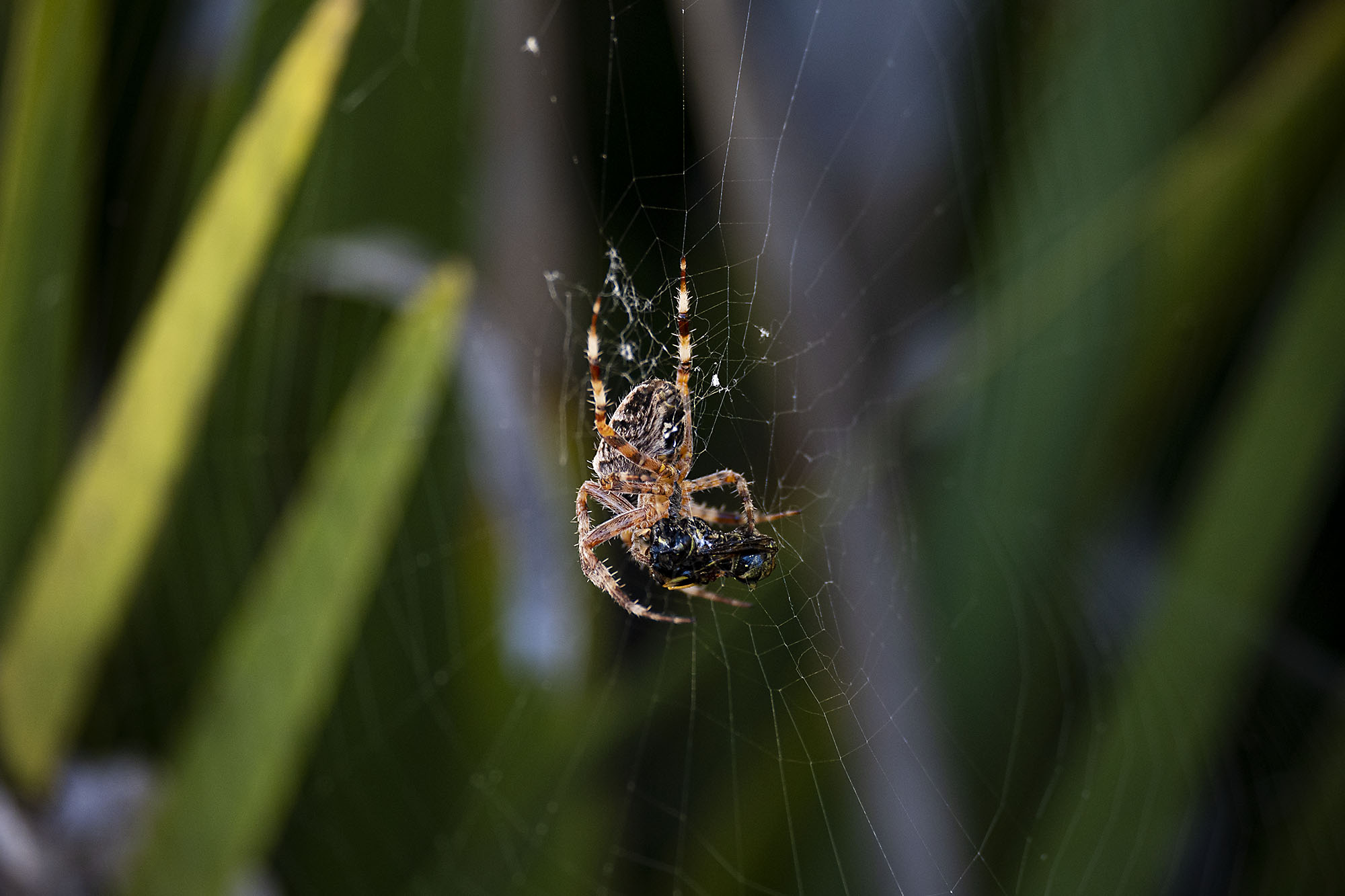
    Psychology Professor Paul Rozin of the University of Pennsylvania traced the evolution of revulsion across the animal-human boundary. Those reactions evolved from instinctive reflexes to a more complex, culture-molded emotion. Disgust shifted from a reaction to avoid physical harm to one that wards off harm to the soul. That feeling some people get when they see a giant spider crawling towards them is a rejection response. The rejection response is an instinctive reaction towards things we find downright gross and is shaped by upbringing and genes. The rejection response is on the same level as our fight or flight response, and it’s all meant to protect ourselves. Even bugs like the cute pumpkin spider, famous in Humboldt, are not safe from this fear response.

    In California alone, there are quite a few hazardous bugs, according to the Insect Identification website, a non profit organization that uses the findings of fellow scientists. Take the infamous black widow. While she’s living her best girlboss life, she’s also a danger to human life. Her venom has neurotoxins that can cause muscle cramping, raised blood pressure, and even damage your nervous system. Due to the similarities between a bug that stings or bites and one that does not, it’s hard for the brain to automatically differentiate between the harmless and dangerous bugs. As a result, our brains tell us to stay away from bugs altogether.

    Assistant professor Catalina Cuellar-Gempeler said that there are many different kinds of bugs, even ones you can’t see.

    “My work focuses on microbial organisms – fungi, bacteria, microscopic animals, and plants.” Cuellar-Gempeler said. “I guess you can call them bugs! Other people say bugs referring to insects, or arthropods if you include spiders, mites, roly-polies, even snails and millipedes.”

    “There may be different reasons why people like or dislike these different groups, including disease, poison, or just too many legs or slimy,” said Cuellar-Gempeler. “Oftentimes, it is a cultural response passed on generation after generation. My grandmother had all these magical opinions on how moths would bring bad luck.”

    There are so many different and even personal reasons for this fear of bugs. Whether it’s a fear of spiders or a fear of snails, it’s all valid. When people point out not liking the creepy, slimy look of a bug or a bad experience of waking up to something with too many legs crawling across your face, it’s a universal fear.

    I asked Michael A Camann, a Zoology and Ecology Professor, what his thoughts on bugs were and if he had some reasons to be grossed out by bugs.

    “I’m an entomologist, so I’m not generally grossed out by insects,” Camann said. “There are some I won’t handle alive, but that’s because they’ll bite or sting and I’d rather not be bitten or stung. I don’t have anything good to say about bedbugs. Physiologically, insects have lots in common with other animals, including vertebrates, so they are often model organisms of choice in laboratories. They have complex interactions with their environment so they’re interesting ecological subjects. They perform valuable ecosystem services, like pollination and connecting different trophic levels in food webs.”

  • COVID-19 Vaccine Rate at HSU

    On Aug. 23, the Pfizer-BioNTech COVID-19 vaccine was approved by the FDA. Access to HSU facilities require everyone to be fully vaccinated and submit proof of vaccination or apply for an exemption and submit weekly COVID-19 testing.

    In April 2021, California State Universities mandated that all students, faculty, and staff who access campus facilities must be fully vaccinated against COVID-19, contingent upon Federal Drug Administration (FDA) approval of the vaccine.

    Grant Scott-Goforth, the Communications Specialist at HSU, has explained guidelines for campus.

    “All students, staff, and faculty were required to submit their vaccination status attestation by September 10,” Scott-Goforth said. “The means they had to attest they were vaccinated or have an approved exemption. We’re working to ensure that those who have not attested are not accessing campus and are 100% remote. The goal is to have 100% of students, staff, and faculty submit their vaccination status attestation, and to have as close to 100% vaccination as possible.”

    According to Scott-Goforth, as of Friday Sep. 24, 98% of students have submitted and completed their attestation forms. 95% of all students enrolled in face-to-face classes are fully vaccinated.

    The rate of employee vaccination is slightly lower. 92% of employees have submitted and completed their attestation forms. Of all employees, 87% are fully vaccinated.

    Karen Selin, Medical Director at HSU Student Health and Wellbeing Services, shared the vaccine protocols for HSU.

    “All students, staff, and faculty should be vaccinated against COVID-19 with 2 doses of Pfizer or Moderna vaccine or a single dose of Johnson and Johnson vaccine,” Selin said.

    Selin said that vaccinations are available to students on campus.

    “They can call Student Health and Wellbeing Services for further instructions at 707-826-3146,” Selin said. “We currently provide Pfizer vaccination at the Student Health Center. There are separate vaccine requirements for other vaccines such as measles, mumps, rubella. That information is available on the student health website.”

    There are options for those who may have medical or religious exemptions. Students can apply for an exemption on the MyHumbodt portal, and faculty and staff are able to do so through their PeopleSoft.

    “Students who qualify for an exemption must submit to weekly COVID-19 testing,” said Scott-Goforth. “Students who are not accessing campus facilities could note as much in their attestation. Free COVID-19 testing is available to students, staff, and faculty at the Great Hall Monday through Friday 8 am to 5 pm. We are currently contracting with Fulgent to conduct testing.”

    Michael Allen, a contracted tester for Fulgent, explained the process of testing students. The process is fairly simple.

    “[The COVID-19 test] should take anywhere from two to five minutes, just walk in and we will test you,” said Allen.

    If you don’t have a student ID, a driver’s license, passport, or Canvas account with your name on it is acceptable. Results can be expected in 48 hours by text or email.

    According to Selin, Fulgent will bill your health insurance company, but will still test you at no charge if you do not have health insurance. There is testing for symptomatic students located at Student Health and Counseling.

    For more information on the HSU vaccine requirements and exemptions, head to https://campusready.humboldt.edu/testing_vaccine#92

  • Huddie’s Harvest is here

    Huddie’s Harvest is here

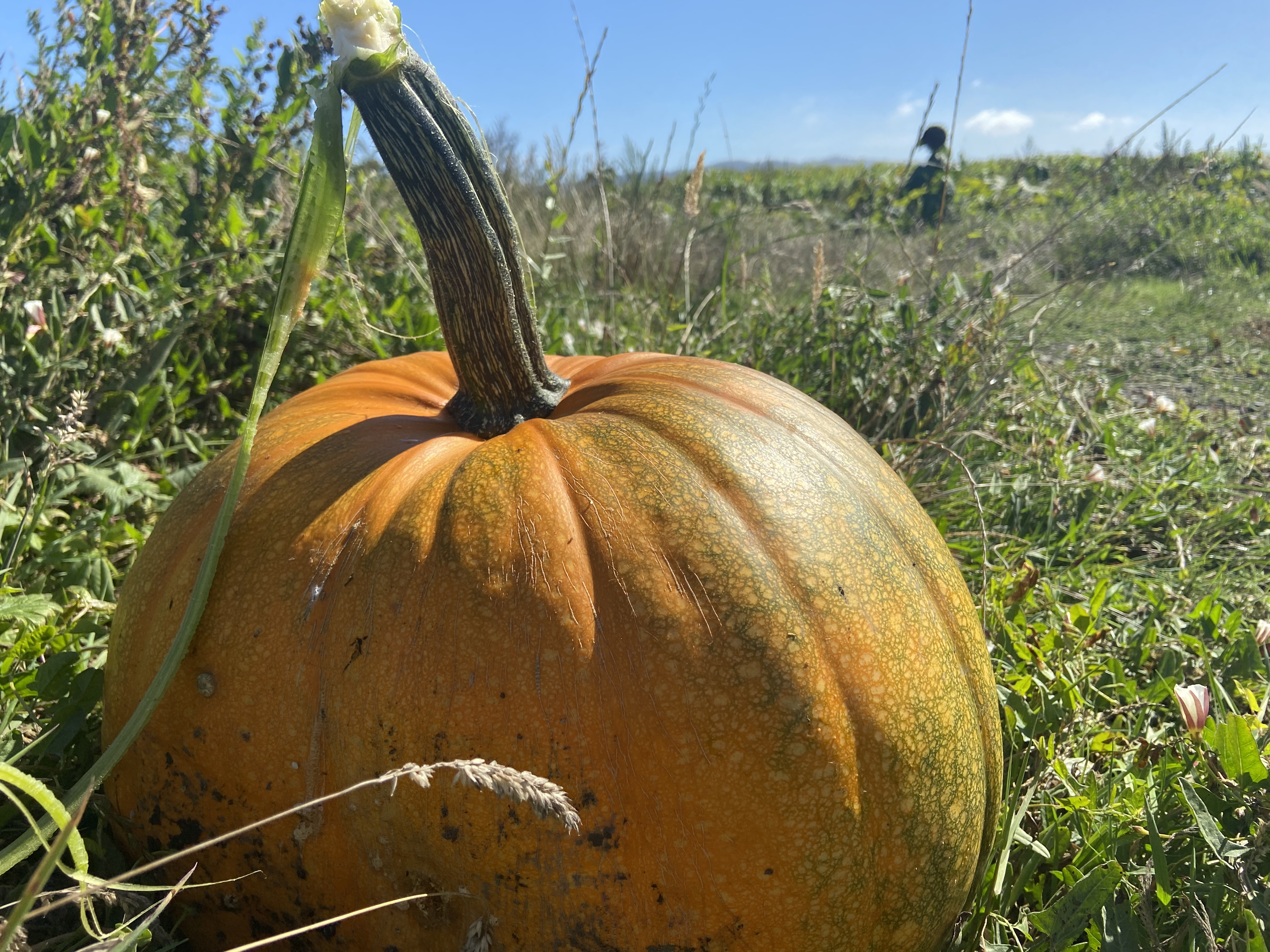
    A field of sunflowers gently swaying in the breeze, the excited yells of a family lost in the corn, stacks of vibrant and varied pumpkins. It seems like no matter where you are in the country, pumpkin patches offer a nostalgic and familiar fall feeling, and Huddie’s Harvest is no different.

    Located in the Arcata Bottoms at 3364 Foster Ave, Huddie’s Harvest is a mere ten-minute drive from the Humboldt State campus and even less if you live downtown.

    Jeff Mason waits at the front stand with an infectious grin. He’s the co-owner of Huddie’s Harvest and helped convert it from a dairy farm with his mother in March of 2020. This is their second autumn as Huddie’s Harvest, and Mason says that they have already expanded their harvest considerably.

    “From last year to this year, I doubled the number of pumpkins I planted,” said Mason.

    They also have a three-acre corn maze that Mason says he might have made a little too difficult this year. He sent his twelve-year-old cousin through the maze and said it took her thirty minutes. Surprisingly enough, Mason wasn’t kidding. The maze took me around half an hour as well and I had to enlist the help of a lost couple in order to find my way out.

    When it comes to pumpkin varieties, Mason says they have fifteen different types of pumpkins this year.

    “Big, small, green, white, yellow, everything,” said Mason.

    Prices of the pumpkins range by size instead of weight and generally fall between $3 to $7. However, there is a special deal going on currently where pumpkins can be found for free. Hidden in the patch there are several different pumpkins marked with cookie cutters. These pumpkins are either marked with a heart, star, or apple. Any pumpkin found with these markings is free.

    Pumpkins and corn aren’t the only features at the Harvest this year. Mason has teamed up with the Arcata FFA floral design class.

    “I worked out a deal with Arcata FFA floral design class and they designed some bouquets for me, and I have those for sale as a fundraiser for them,” said Mason.

    Huddie’s Harvest offers a friendly and laid-back atmosphere. While they are lacking food options currently, they still make for a relaxing refuge from the oncoming stress of midterms and our political climate.

    Huddie’s Harvest is open from Wednesday to Sunday from 10 am to 6 pm.

  • Zendegi: The Local Band Dishing out Brutal Psychedelia

    Zendegi: The Local Band Dishing out Brutal Psychedelia

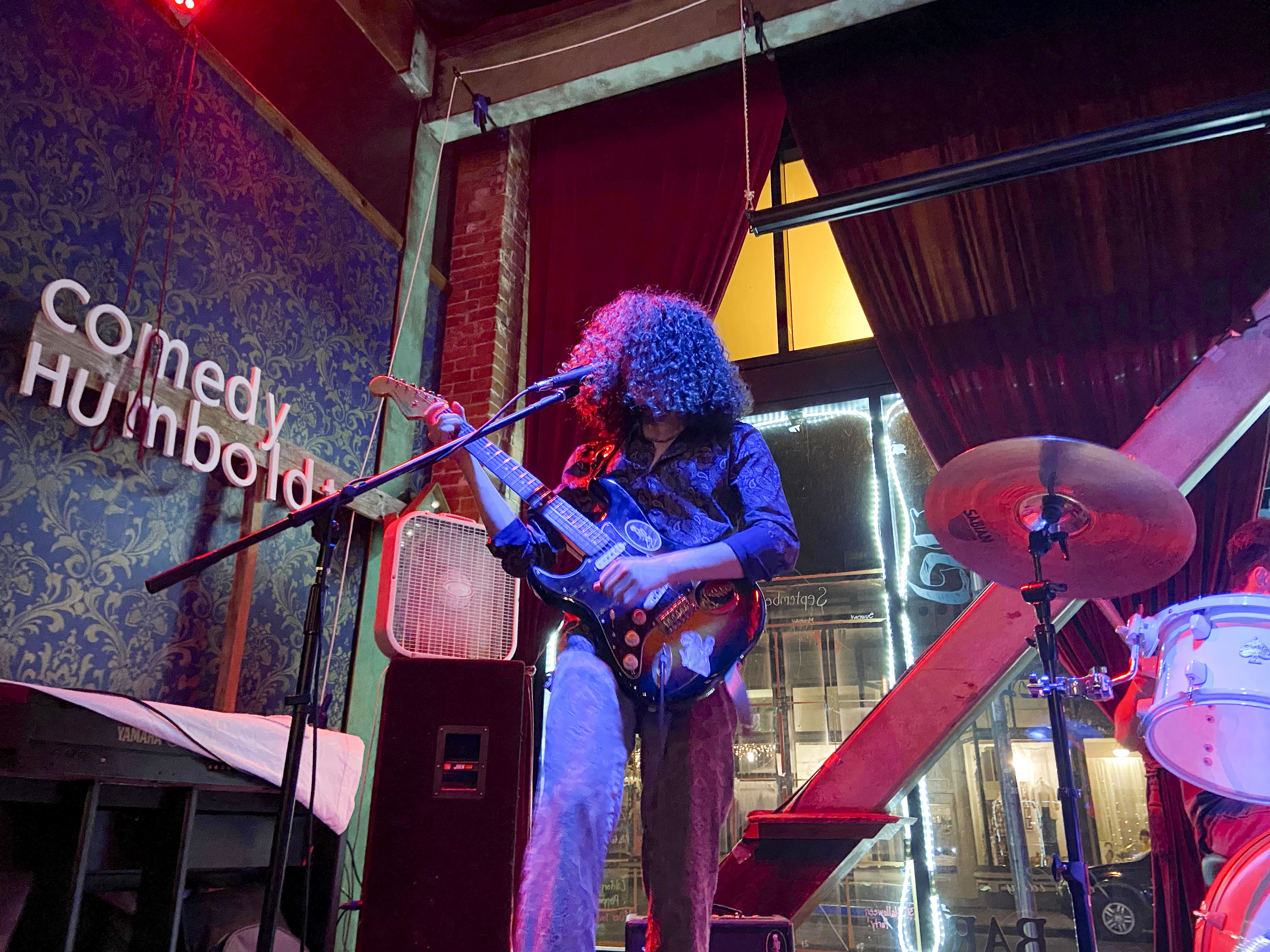
    Siren’s Song Tavern was packed the night of October 1st. Sweaty college students and tipsy locals alike had just finished jamming out to Birdpaw, a local band covering pop-punk classics. Birdpaw opened for Zendegi and the energy of the crowd was already at a boiling point by the time Zendegi began to take the stage.

    Someone from the crowd shouted wildly as Kaveh Khajavi tested out his guitar. What ensued was a night of frantic moshing and drunken mayhem.

    Zendegi is a psychedelic metal band formed by close friends Kaveh Khajavi and Kai DeRego-Frankel. They met through mutual friends as high school sophomores in Sacramento. Khajavi already had experience playing guitar and DeRego-Frankel played the drums so the two were a natural fit. They bonded through their love of the Grateful Dead and soon after meeting, they started their own band.

    “Just from a DM he met me and we jammed in my garage for the first time, it was really something else,” said DeRego-Frankel.

    DeRego-Frankel has been drumming since he was seven years old and said that playing for the band has helped improve his skills considerably. He was inspired by classic drummers like John Bonham, Chad Smith, and Bill Ward.

    Khajavi doesn’t see the band as fitting under any singular genre.

    “There’s a lot of stuff that’s folk-influenced, and there’s a lot of stuff that’s like metal and punk,” said Khajavi.

    He explained how their sound is a balance between soft and heavy with a consistent psychedelic influence.

    Khajavi started playing guitar when he was ten years old. Since then, he’s had diverse training. From learning the basics of music theory and guitar to lessons in blues and folk, Khajavi has created his own sound from a variety of influences.

    “Some of my earliest memories from life are hearing “Black Sabbath” played around the house, they’re actually a great influence on the music we make,” said Khajavi.

    Zendegi has an infectious and chaotic energy that kept the crowd raging late into the night. It was a refreshing and somewhat strange experience after the last year and a half of avoiding crowds.

    There’s nothing quite like the feeling of being in a mosh pit. It’s a violent and simultaneously friendly experience where sure, you might get elbowed in the face and pushed on your ass, but someone will almost always be there to pick you off your feet and push you back into the fray afterward. It’s not the place to be if you’re still worried about catching the worldwide pandemic. However, if you’re looking to dance away all your frustrations, there isn’t a better legal way to do it.

    Zendegi’s discography can be streamed anywhere you listen to music and they will be playing at Siren’s Song Tavern in Eureka on October 15th at 8 pm.

  • Onward and Upward

    Project Rebound was born as a way to help offer new opportunities to the formerly incarcerated. The project gives students tools to succeed outside the prison system, offering help with admission, finding homes and jobs, financial aid assistance, help with legal services and much more. In essence, the project helps students find community on campus and acclimate to life outside the criminal justice system. These efforts help redirect the school to prison pipeline to an education centered mechanism that inspires students to thrive and further their educational pursuits.

    For Tony Wallin, HSU graduate and Project Rebound program coordinator at HSU, the program is more than just an association.

    “Now we have a program, really a family, a support system, a network where all the staff members are formerly incarcerated, as well as students,” Wallin said.

    Project Rebound has been a feature of the CSU system for over 50 years. However, Humboldt State joined the consortium, with major help from students, in 2020. Since its inception at Humboldt State, the program has provided resources for the formerly incarcerated as well as made efforts to educate faculty and other students.

    HSU’s Project Rebound has sponsored events via Zoom and held workshops for full campus education about what it means to be formerly incarcerated, as well as how flawed the prison system really is. Former topics included liberating women in prison, COVID-19 in prisons and most recently, a panel with Dr. Xuan Santos and Martin Leyva entitled, “We have nothing to lose but our chains- the art and culture of being OGs, Opportunity Givers.”

    This semester, the project has expanded its efforts and implemented a workshop with children currently incarcerated at juvenile hall. This program is designed for incarcerated youth to connect with college students that understand what they are going through. The ten week program just entered its third week and things are going well.

    Jeremy Tietz, current HSU student and Outreach Specialist for Project Rebound, participates in the youth program. He said that kids in the program were somewhat hesitant, but as they learned what Project Rebound was about, were thankful for their efforts.

    “They thought we were just going to be another group of of white, square guys coming in and teaching some lame-ass class,” Tietz said. “Almost all of them came up to all of us and thanked us for showing them respect.”

    For students of all ages, these outreach programs can be vital tools for success. This is why Project Rebound at HSU has been so welcomed and important. For many formerly incarcerated people, education is the mechanism and platform for victory.

    In the recent Zoom with Dr. Xuan Santos, Executive Director for Project Rebound San Marcos, Dr. Santos reiterates the message of education. Interspersed with stories of his past and the problems he encountered, the ultimate message was get educated and support people getting educated.

    “The ultimate goal is to destroy those chains,” Santos said. “Nobody deserves to feel like we have hopelessness in this world, we should be a community of hope.”