All photos by Alex Anderson


Nestled away in Old Town Eureka on 2nd and D street is Good Relations, Humboldt County’s very own independent lingerie and sex store. Founder Linda Meyers began the company in 1983 while attending Humboldt State University for mathematics before changing her focus to psychology.
“I was going to be a junior high school math teacher way back then, and then I realized I would probably wind up getting fired because I would drive a kid to the [sexual health] clinic,” Meyers said. “So I just decided to skip that part and go immediately to the next career.”
Meyers is a fourth-generation Humboldt State graduate. She attended elementary school in Gist Hall because her father taught at Humboldt State. Meyers graduated from Humboldt State in 1988 with a bachelor’s in psychology and got her Doctorate in psychology in 1994. She also lectured for 25 years in the psychology and Multicultural Queer studies department up until 2017.
Adorned in a golden labia necklace and sporting dark red painted nails, Meyers welcomes all customers in her Eureka store with her beaming smile. Good Relations opened its first store in the early 90s after Meyers wrapped up nearly 1000 of her own “pleasure parties”. Meyers compares these parties to the Tupperware parties of the 1980s, where she would bring her basket of sexual health goodies to different houses for those attending to buy.
“It was all word of mouth,” Meyers said. “Usually I knew somebody who had referred me.”
Good Relations was an at-home company in its foundational years until the first storefront opened in Arcata in 1995. A second location was opened in Eureka in 1998, and is now the only open location. This year, the store will be celebrating its 40th anniversary.
Meyers is grateful for Good Relations giving her the ability to have a free schedule within her work life, especially when she was still attending school and raising her children. Meyers mentions opening her first store was the result of her eldest son asking why there were penises on a shelf in their spare bedroom that Meyers worked out of.
Good Relations is focused on sexual education and creating a welcoming atmosphere for any curious or experienced customers that walk in. Meyers mentioned accessibility and diversity is the main focus within the company from differing skin tone options for lingerie, custom corsets, and lingerie sizes up to 5x and up if needed.

“Auntie-ing people is in my nature, it’s in my culture, it’s in every cell of my body, and the nice thing about having a place like this is it’s very appropriate to auntie people, right,” Meyers said. “Aunties will kind of tell you what you need to know, even sometimes if you don’t really want to hear it, so we tell the truth. We educate the stores as a front for sex-ed and always has been.”
Good Relation’s success for the past 40 years can be attributed to Meyer’s efforts to bring in a well-trained staff and make sure they are knowledgeable in all topics around sexual wellness and education, as well as consent.
Abby Beha, an employee of Good Relations, mentions the three-month-long training of videos, pamphlets and tests is a crucial part of employment, but is necessary for trying to help people have better sex lives.
“I just want them to feel welcomed, and that they can ask any question without feeling that they’re gonna get made fun of or ridiculed,” Beha said. “Everyone starts somewhere and we’re just here to help.”
A new employee, Gabrielle Castro, has only been working at Good Relations for a month after a second try at applying for the position and is grateful for the opportunity to help others.
“I really do believe that personal human pleasure is a basic right,” Castro said. “Everyone should have the opportunity to experience what they want to experience before their deathbed and shouldn’t have to wait till they’re in a retirement home partying their ass to be able to do it.”

Tattoo artists, enthusiasts, piercers and piercers alike came together this past weekend for the 13th annual Inked Hearts Tattoo Expo at the Blue Lake Casino and Hotel. Featuring over 30 artists, the three day event allowed attendees to get tattoos, piercings and to simply witness tattoo artists’ work.
Not unlike the planners and artists themselves, some patrons have been looking forward to the event for weeks. Take for example, Ashley Juarez-Mazariegos who came to the expo for a long-awaited tattoo.
“It’s my first time at the expo so it’s exciting,” Juarez-Mazariegos said.
As music rang and tattoo needles buzzed, attendees excitedly chatted with artists and meandered around their booths. Expo goers were not the only ones excited. What started as a rushed event scrambled together in 3 months and just a $15,000 budget back in 2009, has turned into a much-anticipated showcase of art that draws numerous tattoo artists from Humboldt County and beyond. Co-hosts and owners of NorCal Tattoo Ted and Amy Marks spoke about what an event such as this brings for the community.
“Humboldt gets to see the best work they’re ever going to see, and artists get to see Humboldt for the first time,” Ted Marks said.
This so-called heart-to-heart connection is what in part inspired the convention, and the logo for that matter. According to the Marks’, the event allows for local artists to work alongside artists who have traveled great distances to get to the event.
Ventura Tattoos for example made the over 600-mile trek from Southern California to be in Humboldt for the event. Artist Danny Rentevia expressed excitement for the convention, despite what he described as the stress and jarring nature of leaving the familiarity of their shop and coming here.
“It’s a great event, it’s a great time,” Rentevia said. “It’s just fun to be here.”
As a local, Amy Marks touched on how the expo has grown into the event that it is now and what that has brought for the community.
“I love [this event], especially growing up here there was never anything like this,” Amy Marks said. “Nobody’s done it up here, so it’s fun for us to work together.”

More than just a prime time to get a tattoo, featured tattooists say the event serves as a sort of celebration of the art form, or at the very least a chance to interact with other artists. The event allows for artists to speak of their work with each other and clients, be highlighted in daily contests, and even get tattooed by fellow artists.
“This cannot be replicated, I guarantee it,” Ted Marks said. “[Large shows] are cool and sometimes there’s a lot of people, but none of the artists talk. And art doesn’t grow in that environment.”
As a relatively small event, Ted and Amy marks have gotten offers to expand their operation, offers that they have readily denied.
The Marks’ also commented on what Cal Poly Humboldt students have brought for their shop and expo. Ted Marks mentioned his pride from seeing new students come to their shop to bond with new roommates and friends to witnessing them graduate.
“It’s amazing, without [the students] we’d be done,” Ted Marks said. “Cal Poly keeps us going.”
While the event has passed, students have not missed their chance at a tattoo. Artists featured at the event can be found through the event’s Instagram page @inkedhearts_tattoo. Students can also enjoy discounts for good grades at NorCal Tattoo. They are located at 750 16th St., in Arcata, and can be contacted by phone at (707) 496-7034 or Instagram @norcaltattoo707.

In a Western world fraught with the tasteless chrome of modern design (AKA gentrification), we seek refuge in vestiges of the past. That’s why nothing hits home more than the timelessness of a good ol’ fashioned diner.
Americans love diners; besides baseball, rock n’ roll and the worst gun violence in the world, it’s a sliver of culture we can really call our own.
What does it take to be a diner? I can tell you it is not looking like the nauseating drab that is Toni’s. What they need is a waitress who is certainly going to call you hun. They need to serve eggs, sausage, bacon, toast and pancakes. They need to have the worst coffee you’ve ever had in your life. The food is always mediocre at best and the interior design needs to look like the inside of a 1970’s old folk’s home, or the kind of retro where you’d expect Elvis to walk out of the bathroom at any moment.
Deb’s Great American Hamburger Co. – 5/5 stars
Tucked away in the 1,500 person town of Redway, just a 5 minute drive from Garberville, lives Deb’s Great American Hamburger Co. If you ever really want to wow a hot date or need a moment of respite on your heinous commute to anywhere south of Humboldt county, this is the place to go.
Walking in, I could tell it’s the kind of spot that serves as a living room for locals. A little boy was running around while his parents watched a show on their laptop. In the corner were several arcade games where two guys drank beer and cussed over a deer hunting game. Then there was me, bent over a slice of pie.
It’s got faded black and white checkered floors, and the walls are adorned with tacky Betty Boop memorabilia and pictures of motorcycles. It’s got classic American breakfasts and dinners. It’s wonderfully retro; the ghost of an American past. It’s the closest you’ll ever get to a Twin Peaks diner around here. If you need a muse to write a Tom Waits song, this is the place.
Kristina’s – 5/5 stars
Kristina’s is a place you can’t miss, resting right at that sharp turn as you drive the 101 north, just before that shady strip through downtown Eureka. It’s got an inviting pink exterior and abundant booth and bar seating that makes it look hauntingly empty on a quiet night. It lies more on the old-folks-home side of the design spectrum, but just a tad saucier with pink neon lights, red accents and funky carpeting.
Here, you can eat a classic diner breakfast anytime between 6 a.m. to 9 p.m., or go crazy and get some New York steak and scampi for dinner. My waitress didn’t call me hun but she was wearing 4-inch platform knee high goth boots and that was good enough for me.
Samoa Cookhouse – 6/5 stars
Dear reader, I am saving the best for last. In the odd little town of Samoa lives the revered Samoa Cookhouse, which has literally been in business for 150 consecutive years. It was originally an old dining hall that fed 500 mill workers at a time but opened up to the public sometime in the 1960’s.
It’s a huge red building overlooking the bay that always has stray cats lurking around outside. Inside is a massive cafeteria layout with plaid tablecloths and old logging equipment adorning the walls. They even have a little museum where you can eat amongst rusty old chainsaws and other ambiguous logging paraphernalia.
Their only menu item is a breakfast, lunch or dinner special that changes everyday of the week that they serve family style. You can eat breakfast until you pop and it’ll only be $14.25. To my luck I landed on their sausage, scrambled eggs, and homemade toast special, but I was weak, and barely made it through two rounds of their perfect diner breakfast.
When this world gets a little too shiny for you, when the fluorescent lighting of the classroom starts to burn a hole in your brain, when TikTok starts digging your personality into a grave, you can time-travel away from all your problems in the dusty neon lights of Humboldt’s diners.

Every Tuesday, Word Humboldt takes over Northtown Coffee to host their free open mic nights, where anyone is welcome to join and perform. From 6 p.m. to 9 p.m., you can expect everything spoken word, from poetry, song, and rap to short stories and improv. The nonprofit builds a thriving poetry scene through safe, supportive, and accessible events for new and seasoned writers of all ages.
The beginning half of the night is saved for the community to share, and the second half of the night is for seasoned staff writers. To wrap up, everyone writes a line of poetry to add to a collective group poem.
Word Humboldt was started six years ago by co-founders Dylan Collins, Wil Gibson, and Susanna Gibson. Eureka poet laureate Wil Gibson prides the organization on curating a radically inclusive environment, where people feel safe in expressing themselves and being vulnerable.
“The basis of Word Humboldt is to reach out to the community to make poetry accessible for everybody; to amplify and uplift underrepresented voices,” Gibson says. “You can’t be a poet in a vacuum.”
Gibson lived many years as a traveling poet and has performed at enough open mics to know what works and what doesn’t. This informed his belief that open mics should be free so that they are accessible to all, to encourage people of all ages and walks of life to attend and share so that everyone has a chance to feel seen. The love that permeates this community is what makes it special.
“We built this community wanting love to be the main focus,” Gibson says. “You can feel the love between the crowd and the poet.”
Bamidele Menchu Hotep has been attending the open mics since 2019 and is now on the Word Humboldt board of directors. He sees this community as family.
“The importance of a writing community is that we’re able to inspire each other through our work,” Menchu Hotep says. “Through our writing we heal, so this is a community of growth and healing.”
For Julie Avina, an environmental science and management major at Cal Poly Humboldt, Word Humboldt open mics were her first time performing a poem.
“Everybody was so supportive even though I was so nervous,” Avina says. “They cheer extra loud for you once they know it’s your first time.”
The crowd is eager to engage with the poems. They snap and stomp for powerful lines, echoing around the small cafe space. They shout ‘rewind!’ when it’s so good they want to hear it again and ‘new shit!’ when the poet shares something new.
The room is animated and electric, far from the solemnity that some people may associate with a poetry reading. Susanna Gibson, the executive director of Word Humboldt, starts the night off by hosting the first half with energetic charm and attentiveness, making each poet feel heard and seen by uplifting their performance.
Beyond the open mics, Wil Gibson hosts three poetry workshops throughout the week: Sundays 10 a.m.-2 p.m. at the Epitome Gallery in Eureka, Mondays 6 p.m.-7 p.m. at Fit Coast in Sunnybrae, and Thursdays 10 a.m. – 2 p.m. at The Thing in Arcata. Each workshop is a $3-$5 donation, but no one is turned away for lack of funds.
“We believe every poet has value in the future,” Gibson says. “Every poet deserves to learn.”
On the second Saturday of each month starting at 6:30 p.m., Word Humboldt hosts the Redwood Poetry Slam at The Thing. Poetry slams are competitions with a cash prize, using elimination rounds in front of a panel of judges and a lively, engaged crowd.
Word Humboldt is also co-organizing the second annual Redwood Poetry Festival taking place April 23-29 which boasts performances from local and national award winning talent, as well as workshops and community building.
Whether you’re looking to dip your toes into poetry or are a seasoned writer, Word Humboldt hosts an array of events to make you feel at home in a community.
“Poetry saved my life,” Gibson says. “I just want to give back.”

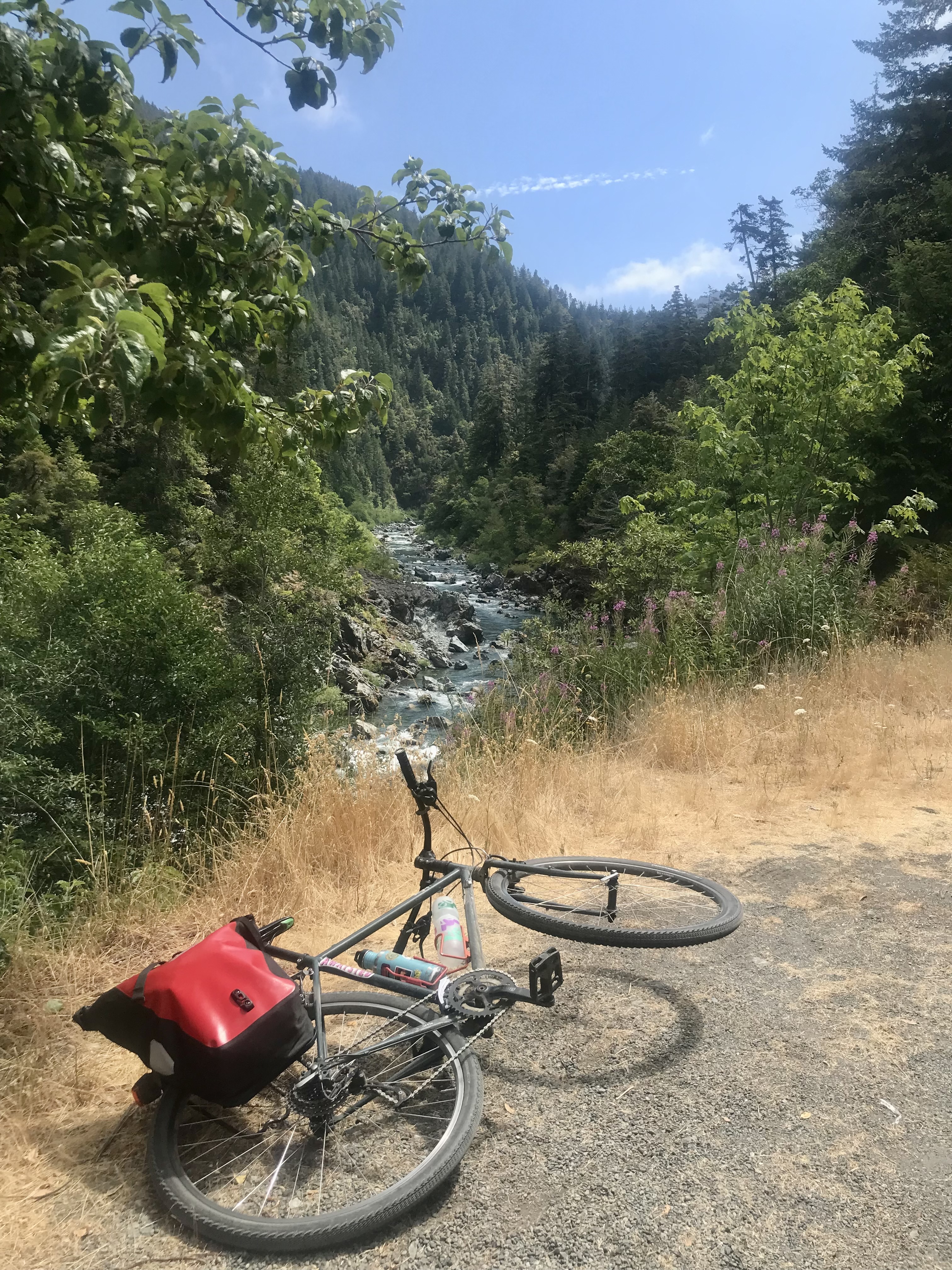
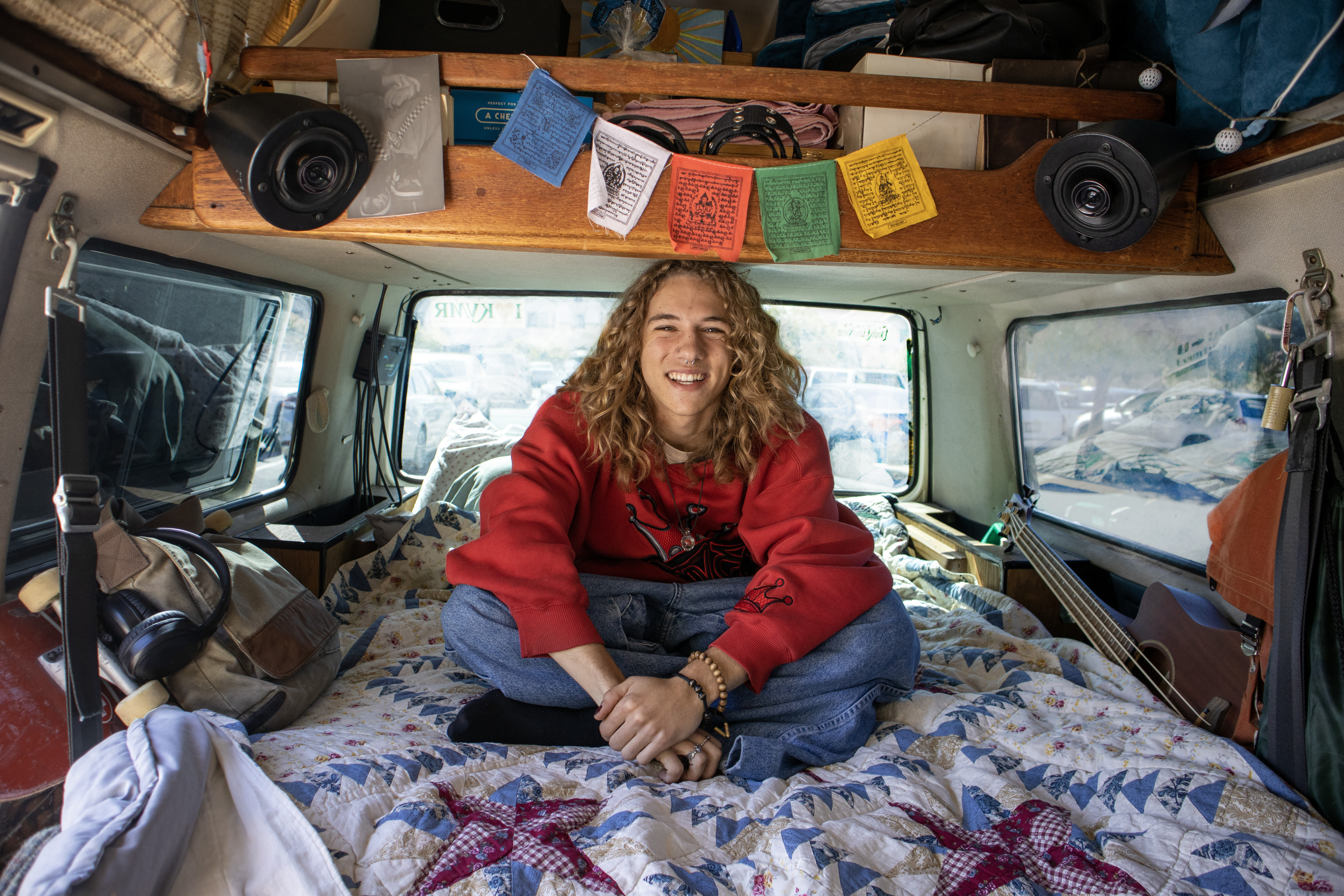
It was Spring semester’s first Monday, 11 p.m., 40 degrees fahrenheit. I was strumming through a sloppy chord progression in an empty campus parking lot with a fellow student I’d just met named Ryan Kelly. We tag-teamed a pasta dinner topped heavily with Egyptian hot sauce that sent me into a sweat.
Kelly’s right-hand-drive Toyota Hius van was parked next to my home on wheels – an all white Chevy 3500 christened ‘The Dump Truck.’ We are both student vanlifers. This unplanned, laughter filled jam session only tells a small aspect of what it means to live in a van.
In fact, my first week on campus was mostly colored by a lack of showering and being cold. This is to be expected. I have owned The Dump Truck for nearly three years now and have weathered a number of uncomfortable days in some strange places.
By week two on campus, I had found the best shower locations and was pleased to meet a handful of other fine folks choosing the same lifestyle as me. Vanlife is a lifestyle that attracts vastly varied characters with differing goals.
Wildlife major Steven Childs put it bluntly to me one evening in Bigfoot Burgers.
“It shows sheer willpower, and some intelligence,” Childs said “You don’t do this by fluke. Its not like one day you happen upon an RV or a van and are like -oh fuck it im going to college. You plan it out. You’ve thought about the things you need to do, and some people are willing to go a little further than other people to make it happen. Or their situation puts them in that position.”
Childs said there are also financial motivations behind his lifestyle choice.
“A room, which is about 500-600 dollars a month and utilities…that’s going to really put me in a financial bind,” Childs said. “On top of tuition and books -and then trying to juggle that- I’d put a bigger burden on my wife. And so, the idea was born.”
Obviously, it isn’t just frugality that leads to sleeping in the back of a van.
Ryan Kelly explained his sleeping setup to me, which consists of an inflatable camping mattress laid diagonally under his table and thermal undergarments to stay warm.
“I’m more mobile, it’s convenient,” Kelly said. “I want to see places and be able to travel and save money. Living in a van is the way to do that.”
When I pressed him on the lack of creature comforts afforded in our chosen way of life, Ryan doubled down without hesitation.
“If you want to live in a house and be comfortable, that’s fine,” Kelly said. “I don’t need much. Just got to have the bare essentials. A place to stay dry. Something to sleep on is good.”
Students are in a unique bubble here in Humboldt county. There is a lack of housing and lack of jobs. What jobs there are, are often low paying, particularly when compared to the jobs that students have left behind.
“I had come from bartending in San Diego in a very rich area and was making really good money and then came here,” said Bobby Howser, another vanlifer.“I passed out resumes for two weeks, didn’t hear back from anybody for two months and then got a bussing position at a spot. I was more experienced than the people that worked above me.”
Howser is content with his situation.
“Camping is my favorite thing,” Howser said. “I don’t need a lot to be happy. A comfy bed and I can figure the rest out. It’s about perspective.”
Of course, there are the unavoidable inconveniences that come along with sleeping in a vehicle. Vanlife is about perspective, as Howser said, but it is also about reality. And reality can be a gross beast.
“When you have an all metal interior, it’s the condensation that gets you,” Howser said. “Things don’t ever dry out here because it’s so moist. When it’s really wet outside, and my breathing is causing condensation on the walls, mold can grow. I had that happen last semester which sucked. And water will drip off the ceiling and hit me in the face while I’m sleeping, you know… Like super fucking cold.”
Walking up a cold, steep hill in the morning just to take a piss is less than ideal. I don’t want to have a conversation through the shower curtain either. These are the sacrifices that come when one doesn’t pay rent though; acceptance of these trade-offs was the common theme of all of the conversations I had with van dwellers this week.
In the past, I’ve used a propane heater to take the edge off of freezing nights. They don’t burn very efficiently and the safety of using one in an enclosed space is highly questionable. Arcata nights are cold, but thankfully not freezing. I have a few fluffy Costco blankets (thanks mom) that keep me comfortable through the night.
All of the vanlifers I spoke to were dealing with the chilly nights in a similar fashion. Layers, layers, layers. Of course at some point in the morning one has to depart their blanket cocoon and face the Humboldt dawn hour.
Childs has served in the military and is no stranger to sub-par sleeping situations. Still, sometimes the reality of the current situation drowns out perspective.
“When you wake up in your vehicle in the morning, that’s the snap to reality,” Childs said. “That’s when shit gets really real. When you wake up there’s no escaping that you’ve slept in a vehicle. The most challenging thing is to put on chilly pants in the morning.”

Following the release of her 2017 debut album, “CTRL,” SZA has graced us again. Known off-stage as Solána Imani Rowe, the singer recently delivered the juicy 23-track album “SOS.” It includes powerful vocal features from Travis Scott, Phoebe Bridgers, Don Toliver, and even a posthumous sample from Wu Tang Clan’s Ol Dirty Bastard.lmwd
“SOS” is on the search for blood following SZA’s 2017 triple-platinum album “CTRL.” Now “CTRL Deluxe” with the arrival of seven unreleased tracks this past June 2022, where she delivered a brutally honest 14-track journal entry assessing where she falls short in her relationships due to insecurities.
From apologetic melodies about her unshaven legs and lack of attractiveness to her ex in “Drew Barrymore” to longing for her father to be proud of her in “Normal Girl,” SZA has come back for vengeance with “SOS.”
Throughout the one-hour and eight-minute album, SZA enters an internal feud where she weighs the pros, cons, and desires she longs for within her past and present intimate relationships. Brutally honest once again, SZA doesn’t hold back in her sophomore album.
The 23 tracks are so personal and well-paced it feels like we’re listening to SZA’s stream of consciousness on a facetime call as her best friend.
SZA approaches all of her tracks from a critical lens of herself and her past partners. She begs plenty of questions listeners have probably asked themselves at some point, which makes the album that much more relatable and enjoyable.
Does she want a committed relationship? Is she searching for validation and meaning from her romantic partners? Why can’t she seem to end things with her ex? Is she the toxic partner in these relationships?
SZA explores all of these questions in a straightforward conversational manner throughout the album. SOS spans multiple genres, presenting loyal listeners with a twist on the R&B genre we’ve associated with the St. Louis artist in previous years.
We get a taste of SZA’s rapping abilities in “Smoking on my Ex Pack,” where the singer addresses the rumors and hate her exes have spewed towards her in previous years. The singer also spoils us with the indie-inspired hit “Kill Bill,” detailing her dramatic urge to kill her ex even though she still loves him.
She openly displays toxic traits in the alt-rock inspired track “F2F,” her vocals in which bear a striking similarity to Hayley Williams’, staged over a Paramore-esque beat. The lyrics dive into her pattern of having sex with other men just cause she misses her ex whom she continues to ignore for her own enjoyment.
The honesty that defines the entirety of “SOS” is what has made it so addicting to returning fans and new listeners.
SZA doesn’t hide the lack of shame she feels after getting her ‘body done’ in “Conceited.” She candidly sings about her sexual past and how her “pussy precedes” her in “Blind.”
Anyone who has been stuck in a whirlwind of lackluster situationships, or any intimate relationship that’s short of love and respect outside of the bedroom, can feel connected to SZA’s truthful verses.
It’s refreshing to see a female artist be so upfront about her sex life and toxic relationship traits. Which may be why she has gained newly devoted followers after “SOS” and kept the loyal fanbase she’s had since the release of “CTRL.”
SZA’s fresh melodies and beats on “SOS” paired with her open honesty have allowed the album to break the Billboard record for the biggest streaming week for an R&B record. The album also is in its fifth week on No. 1 for Billboard’s top 200.
SZA has brought a relatable and open edge to the R&B table once again and has obviously earned her seat with the big dogs within the genre.

By Nathan Sano
Through the endless cloud of hairspray, denim and the occasional crop dusting lies a paradise for local skaters, punks and music lovers alike. For the rest of us, it’s something adjacent to a welcome fever dream.
This fabled haven is none other than Rampart Skate Park. A place where the restless can indulge in both kickflips and mosh pits. Though I wouldn’t say it’s a relaxing experience having to dodge flying skateboards while you’re trying to bop around to some music, I will say it’s quite fitting for the genres common at the venue.
The show in all its hardcore glory was organized in support of a new LP release, Skate Sessions VOL 1, a compilation including tracks by local bands WarMoth, The Bored Again, Imperial Destructo, RACKET, FOIL, Biomass and Dead Drift. In conjunction with these local legends are songs from Scythe, of Mendocino, and War of Knives, from Oakland.
From what I could tell based on the numerous conversations I was able to eavesdrop on, most people were there to see FOIL and War Moth; for good reason, too. If you haven’t had the opportunity to listen to these guys or make it out to one of their shows, I highly encourage you to dip your toe into their Bandcamp discography.
At the show, there were songs about drug addiction, songs about the pigs, songs about hating your job, etc. These are aspects of mainstream culture that fuels the punk scene and bring so many to it, but it isn’t often you get to see a spectacle such as this LP release.

I guess I couldn’t say if it was the beer or just the nature of the music itself, but after a while, these great ballads of an anti-capitalist alternative started to blend together and became an incredibly distorted roar of noise that lit the revolutionary fire lying dormant within my gut. Most of what these bands were dishing out is exactly what one would expect and hope to hear at a punk show.
As the show went on and the crowd grew bigger, I began to notice a diverse mix of people both young and old. The show was of course all ages but I was quite taken aback when kids no older than twelve were thrashing around in the mosh pit.
I was just noticing the young average age of the crowd when a thought dawned on me. Punk rock as a genre, and the punk scene in general, haven’t really undergone any massive changes in twenty or so years. I suppose whether or not that’s true is relative, but my sentiments were confirmed by Travis Bille, guitarist and singer of the band Dead Drift, whom I was lucky enough to have a very lengthy conversation with.
“It’s for blowing off steam and having fun,” Bille said. “It’s stripped down, and there’s no fucking bullshit. That’s what I love. There’s so much bullshit everywhere and for me it’s raw.”

Change in one form or another is usually a component of survival for any existing medium, yet punk somehow seems to transcend that need to change due to the nature of what it is and what it’s always stood for. There is something about its raw flavor and aggressive behavior that takes you away from the bullshit. When those heavy riffs blow out your ears and those throaty vocals vibrate your insides, you kind of melt away into the crowd and become part of a larger community of people who all want the same thing – to express their humanity in the rawest way possible.

In masks and makeup, showgoers shook the barrier, moshed, and crowd surfed to queer punk anthems to kick off the Halloweekend in an alternative safe space. Destroy Boys, and Margaritas Podridas filled the Gutswurrak with noise on Oct. 28 with songs about radical self-love and systemic defiance. The show was free to attend and hosted by Cal Poly Humboldt as part of the second annual SAC Halloween Bash.
Destroy Boys were excited about the accessibility of their set, as it was their first college show.
“Shows are so expensive to put on, and there’s so many people to pay,” the band’s guitarist Violet Mayugba explained. “We try to make our ticket prices as low as possible, but we rarely get an opportunity to do something like this where the funds are there like the promoter is a college.”
As the opener, the Mexican punk band Margaritas Podridas exhilarated the crowd. Lead singer Carolina Enriquez filled the venue with her scream grunge vocals, sporting fairy wings, and a princess crown. They struck passion in the crowd with their recently released single, “No Quiero ser Madre,” a pro-abortion anthem. The crowd was surging and barely contained by the barrier by the end of their show.
Destroy Boys walked out to a frenzied crowd. For this Halloween show, they acted out a religious skit in which Mayugba, dressed as the devil, fought over the soul of lead vocalist and guitarist Alexia Roditis, dressed as a nun.
The show was preaching to the choir, the choir being a mostly queer cop-hating crowd who sang along to anti-cop lyrics throughout the show.
The band explains they’ve received a lot of LGBT support within the punk scene, their bassist David Orozco stating, “If you’re in a punk scene where they care about if you’re queer or not, that’s not punk.”
Roditis enthralled fans with crowd interaction, jumping down from the stage to run along the barrier more than once during the show. In their asides between songs, they preached radical self-love and acceptance, a message embedded in their music. Their shows reflect the same values; Roditis orchestrated a fems-only pit and encouraged the crowd to confront any abusive behavior.
The band hopes to inspire their young fans to find their own unique voice and be themselves.
“Do what you want to do, as much as you can, without hurting people,” they explained. “That can go into being queer, being trans, dressing a certain way. Do whatever it is you want to do. You can’t fuck up your own heart.”
The band is growing out of their diss track punk roots and towards more narrative songwriting that tackles bigger, philosophical topics.
“I used to write more about my personal experiences, but I’ve kind of wanted to stray away from that,” Roditis said. “I’m becoming a different songwriter.”
Recently signed to Hopeless Records in 2021, the band is excited to be working on a new album with two songs already done. Roditis said they don’t expect to be fully done with writing diss songs but are looking forward to potentially writing a nice love song for Destroy Boys one day.

Dildos, cock rings, and ropes, oh my! With the cooperation of the Peer Health Center, Check it, and Queer Humboldt, The Womens Resources Center hosted “Kink on the Quad” on Monday. Sex positivity was the theme of the event; it promoted open discussion of sexuality, sex education, and just plain sex, with an emphasis on violence prevention and LGTBQ+ identity.
There were mutiple sex-themed games for attendees, featuring pin the dildo, porn hole, and condom kerplunk. Students seemed distinctly unhesitant while holding a dildo to pin onto the image of a vagina, or when throwing bean bags into cardboard vaginas labeled with the names of popular porn categories.
Isabela Acosta, the Head Coordinator of Sex Health Body Politics at the WRC, did notice a difference between how students interact with the activities.
“Women are way more open to this,” Acosta said. “Men are so guarded and stuff.”
Tables covered with red table cloths had condoms, rows of sex toys and dildos pointed high in sky waiting to be grabbed. Acosta described how some students were very supportive, while others were weirded out by the dildos. Acosta wants students and people in general to be more open about sex.
“Just be comfortable,” Acosta said. “I know you’re having sex, we all do.”
Check-it and Students for Violence Sex Prevention were there to educate, not just about safe consensual sex, but also about preventing sexual violence.
Check-it focused on informing students on the 3D’s. The 3D’s are methods for helping someone get out of a harmful situation. They stand for “direct, delagate, and distract.” The groups saw the event as a way to open discussion on sexual violence.
“It opens the door for more in-depth conversation, for survivors to understand what consent is,” said the Students for Violence Sex Prevention team.
Queer Humboldt hosted their own game to educate students on sexual identity. The game involved identifying celebrities, historical figures, and activists, along with their connection to the LGBTQ+ community.
“A lot of the time most people have no idea these figures are in the LGBT community,” said Avery Sidonia, a volunteer with Queer Humboldt.
Sidonia called the event awesome; she was excited for it since it combined fun and education in a way that got people interested.
“Kink on the Quad” ended with a raffle of sex toys. A huge, boisterous crowd gathered in anticipation of hearing their name and winning a free sex toy
The Humboldt International Film Festival (HIFF) team hosted a night of film sharing at the Van Duzer Theatre on November 3. The films were pulled from the HIFF archives and all have a common theme: discomfort and exploring it more through that feeling.
The films shown were “Simon” (2015, directed by Camille de Galbert), “Dancing with Scissors” (2019, directed by Steven Vander Meer), “Gone Sale” (2018, directed by Matt Meindel), “Aviary” (2021, directed by Lauryn Blottin), “Prey” (2018, directed by Jing Sun), and “The Quiet” (2019, directed by Radheya Jegatheva).
“Change occurs at the point where it outweighs risks,” said Sarah Lasley, assistant film professor at CPH. “So when you are so uncomfortable that the fear of risks in change is no longer scary, we are kind of forced to make change.”
Lasley continued to speak about the night.
“A lot of new wave films are intended to make the audience feel some kind of discomfort and these films occurred in a huge shift and change in sociopolitical climate,” Lasley said. “When you think about how that mixes in with discomfort, you know this idea on how discomfort outweighs risk, this change is occurring.”
Students in the audience thought that the festival was cool and visually appealing. There were some who mentioned how certain films made them uncomfortable and freaked out, especially the film “Gone Sale,” which brings back memories of going to the mall but touches on consumerism.
“These nights are very successful nights because it is nice to see a variety of films coming to the school and the school has become a hub for all these international films,” said Ralph Valle, a film student and one of the co-directors of the film festival. “It is very honorable to be part of something like this. We get to distribute these films to a variety of people and it brings me joy because I get to see how people view life and movies that try to have some kind of message that they are trying to convey is pretty awesome to see.”
All kinds of people, not just film majors, came together to see films that can resonate with everyone in some kind of way. The films emphasized that, while we may come from different backgrounds but we have one thing in common. We are impacted by what we see around us. From historical perspective to animation, at the end of the day, film brings us around and we discover at times not just people we never planned on meeting, but also a new side of ourselves.

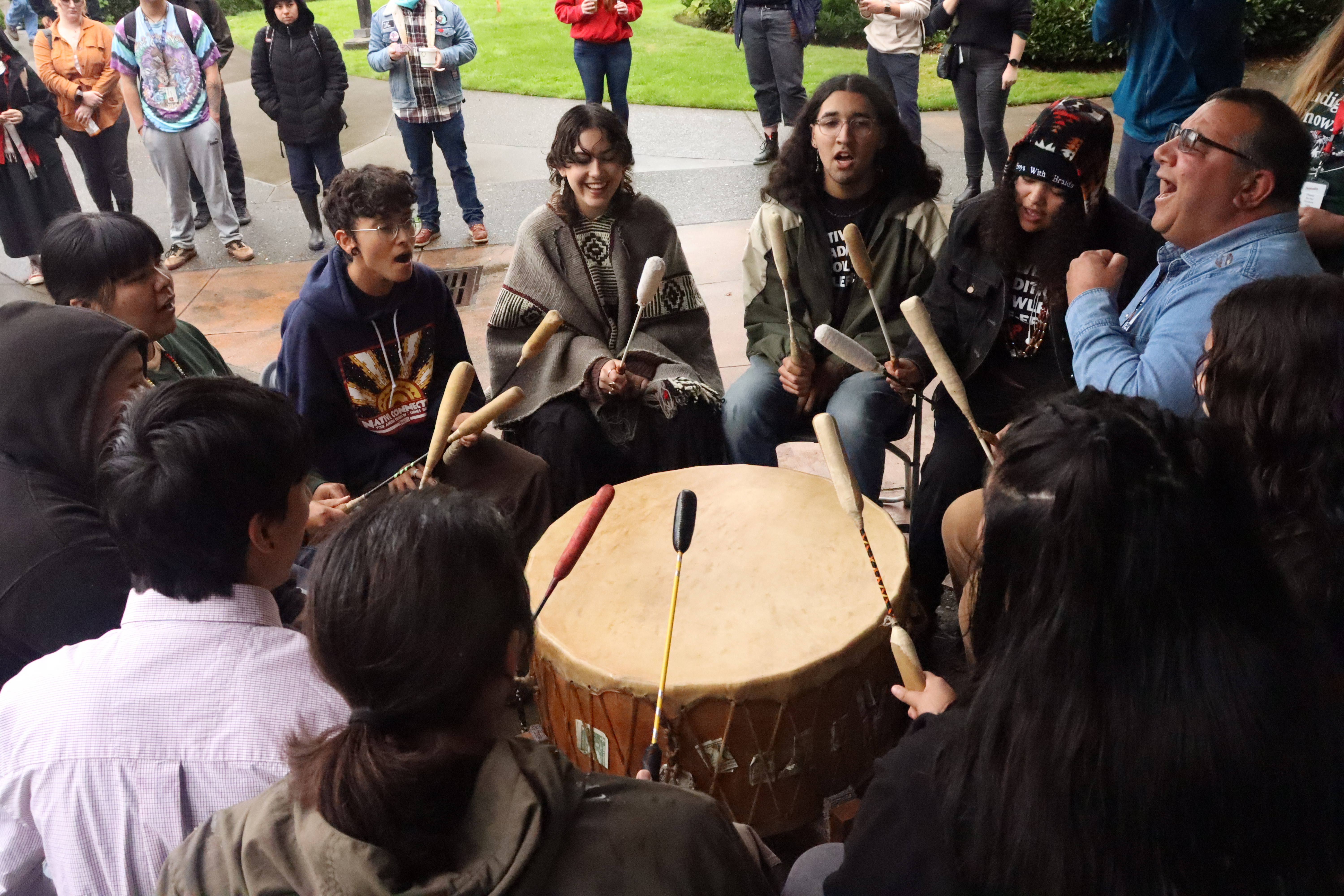
A great, warm sense of community filled the Eureka Theater during the Da’Luk Native Film Showcase on Saturday. Native American youth, their families and community members gathered to watch short films on Indigenous life in Humboldt, produced by participants in the Voices From the Center and Weaving Culture into Wellness short film projects. These set out to document Native American people’s experiences and ways they found meaning and health by giving them the tools and assistance to set them to video.
The critically-acclaimed 2022 short documentary “Long Line of Ladies” was also shown. It follows one Humboldt County family’s revitalization of the Karuk Ihuk ceremony, a traditional rite of passage for young women that had not been practiced in generations.
Da’Luk Youth Program Coordinator Vincent Feliz opened the event with information about how the program serves Indigenous youth. This division of the Northern California Indian Development Council (NCIDC) focuses on engaging youth with culturally rooted lessons and activities in Humboldt and Del Norte counties.
Da’Luk means ‘words and talking’ in Wiyot, a meaning that Feliz feels speaks to the ultimate purpose of the program: to connect youth to each other and ready them to participate in their community.
The NCIDC offers mental health, anti-discrimination, and educational support to Indigenous youth, and has recently completed several mural projects in Eureka and Arcata.
At the film showcase, community member Julian Lang also spoke about how language can build community.
“Look for your language, that’s really important to understanding who you are as a human being; who you are as a tribe, a group, a village,” Lang said. “Not to heal but to reconnect your brain…your soul to where it’s supposed to be connected.”
Lang then performed an opening song/prayer for the event, which he encouraged others to sing along to if they knew the words. The final descending note rang off the high ceilings with many voices.
The Voices from the Center film project focused on native youth and elders as the subjects, consisting of many short films ranging from one minute to around five.
One film documented the experience of building a Yurok plank house, including the healing experience of residing in a traditional Indigenous space. A brief film taught viewers to count to ten in Karuck, using acorns as visuals, while another film explored one woman’s passion for making and wearing regalia, such as bark skirts and deer-skin dresses.
COVID-19 isolation gave one of the filmmakers, Celinda Gonzales, more time to engage in traditional practices such as beadwork. Her film compares the strength and resilience of her community with how new plants grow out of the burn scar of wildfires.
“You see these flowers, the trees coming back, the grasses coming back, you see beauty in the midst of that,” said Gonzales. “With COVID, even though we were all separated out, there was still beauty in that…I had more time at home, I was weaving more, talking to family more.”
Robbie Lara’s film was about her connection with the plants in the garden she cultivates, and her realization that plants have souls like any other creature. She spoke of her gratitude to the plants for nourishing her and encouraged the audience to keep gardens.
“It came to me that while I’m passing by all these trees and all this greenery, why can’t I give that my attention,” Lara said. “What I hope that the video does is help you have a relationship with the plant world.”
A second collection of short films was shown, produced by the United Indian Health Services’ Weaving Culture into Wellness project. Facilitator Jude Marshall said he started the project after traditional cultural practices improved his health. It was made possible with funding from UIHS and from the Rural Indian Health Board’s program to reduce chronic diseases in Native communities.
Ernie Albers Jr. starred in a film about the gym that he runs, Lifted Arcata. He described his ‘human-specific’ approach to working out. This means incorporating postures and motions which he said mirror those used in traditional lifestyles.
Another film in this collection focused on food sovereignty. Liz Lewis shows the process of making salmon head soup, and speaks on the role of food in reclaiming one’s culture. She uses salmon fished locally by Native people and peppers from the UIHS’ Potawot Community Garden.
“Not everyone may be able to do all the practices that we used to do, but cooking is a great way to be connected [to your culture,]” Lewis said.
In Willard Carlson’s film, he recounts his experiences fighting for river access and fishing rights in the 70s.
“We never ever want to give up our cultural identity and where we came from,” Carlson said. “I feel good, optimistic about our future…coming into this inheritance is very special.”
These documentaries eloquently showed how deeply supportive and connected the community around their production was through food, song, and stories.
Daniel Aipa, the Native Hawaiian producer of the Weaving Culture into Wellness films, believes in the power of spreading Indigenous stories.
“When you tell one story …it becomes 50 or 100 different stories, depending on what you take from it,” Aipa said. “And that’s Native culture. Our oral history is everything to us.”
“Long Line of Ladies” was shown next, following the Allen family, their spiritual family, and their preparations for Ahtyirahm “Ahty” Allen’s Ihuk coming of age ceremony. The Ihuk is performed for Karuk young women once they have their first period, and was revived in 1995 after a long dormancy.
“There’s points [in life] where we all come together, and that’s something that Native people have lost,” said Pimm Tripp-Allen. “This is the kind of thing that we’re supposed to be doing for our young people.”
The family lives in McKinleyville, and many scenes are set in familiar Humboldt locations, such as the walking path across the Mad River trestle bridge. The documentary has been shown at Sundance, SXSW, and other film festivals. It is available to stream through the end of November on New York Times Op Docs, a platform for independent short films.
The family felt at ease among the home crowd attendees, and opened up about funny and personal experiences they’d had during production.
“We’re talking to you guys a little different than we talk to other communities,” said Alme Allen. “Because we’re back home, and you’re our people.”

In five years at Cal Poly Humboldt, lecturer Dionna Ndlovu had not seen a single production written by a Black playwright. On Monday, Oct. 24, she will direct one.
Rooted and Rising is a series of staged readings produced by CDOR and the Umoja Center for Pan African Student Excellence in collaboration with the Theatre Arts Department, beginning this semester with a reading of “Twilight: Los Angeles, 1992” by Anna Deavere Smith. Each work, including this one, will be one written by a Black writer.
“The staged reading series will happen twice a year, once in the fall, once in the spring,” Ndlovu said. “It’s a collaboration between multiple departments, faculty, staff, students, and community members.”
A staged reading differs from a play in that there is not a set or full costumes. Traditionally, the cast reads off scripts, and there is minimal stage movement, allowing for a lower investment of time and energy while still creating theater. Ndlovu was personally drawn to theater by listening to and participating in staged readings.
“When I looked at our season, I noticed we didn’t have one staged reading, and we didn’t have use of our second stage space, which is our studio theater,” Ndlovu said. “It creates an opportunity for students who are maybe looking for more performance opportunities, for faculty and staff who want to participate, at low stakes.”
To Ndlovu, another important aspect of the staged reading format is that it is often followed by a talkback between the audience and the cast and crew. This work, she believes, is part of an important dialogue to be had in the Humboldt community.
“Twilight: Los Angeles, 1992” is a series of monologues about the 1992 Los Angeles Uprising, a six-day series of riots. The conflict was born from the acquittal of four police officers in the beating of Rodney King, the killing of 15-year-old Latasha Harlins by a Korean convenience store owner, and years of racial tensions, particularly between the Black and Korean communities. When the riots ended, 63 people were dead, 2,383 more were injured, and over 12,000 had been arrested. All of the monologues are derived from real interviews with people who were involved or directly affected, their words translated directly to the page.
Performer Jennifer Be, born in LA county, is very aware of the history behind the show.
“I did some research on what the production was going to be, and saw that it was something I could contribute to,” Be said. “It showcases so many perspectives and experiences after the riots, that felt like something I wanted to contribute to and be a part of.”
The cast is composed of eight actors, including Ndlovu, of various races, ethnicities, genders, and ages. Casting was entirely open— some actors are students, others members of the greater Humboldt community. Every performer delivers several monologues, each one from a different person’s perspective.
“I’m reading four folks, and they all have very contrasting backgrounds,” Be said. “They’re all from different socioeconomic experiences, and what sort of their purpose was during that time was very contrasting as well. There’s such a juxtaposition, that’s really fun, but the most important thing is that there’s something relatable about everyone’s experience.”
Several performers had not had any previous experience with theater. Performer Elijah Moore had not acted before, but found himself intrigued by a casting call flyer and joined the production. He says he’s proud of the opportunity to present such powerful monologues on a crucial topic.
“It’s groundbreaking work, of course,” Moore said. “The written word is very important, and I think highlighting the massacres and the terrible things that happened during the riots is really important to understand that police brutality is really a thing. Being able to highlight those topics in a performance is really cool.”
Patricia Iwok, also new to performance, found the experience to be educational as well. She had never heard about the Los Angeles Uprising before, and feels that she has learned a lot from her involvement. She particularly appreciated the staged reading format.
“I feel like it’s the most stress-free experience, like it’s really nice,” Iwok said. “Just reading lines, experiencing what we’re reading, I feel like that’s cool. It’s something new, something exciting.”
Fellow performer Binta Wright finds Rooted and Rising to be incredibly significant for Humboldt’s Black community, and an important step forward for representation locally.
“To be part of something like this where we are is unprecedented,” Wright said. “Humboldt has never had a focus on Black works, and stage readings have been just as scarce. It’s refreshing and I’m excited that there will be more presence of Black playwrights and stories told in theater here at Cal Poly in the near future.”
“Twilight: Los Angeles 1992” will be performed at 7 pm Oct. 24 in the JVD Studio Theater, and is free to attend and open to everyone. The reading will be followed by a talkback with the audience.

In the hours before I attended the opening night of She Kills Monsters, I was excited. Live theater has been absent from my life, and the chance to see people perform a play was one I relished. But I didn’t enjoy this production for many reasons, mostly stemming from an amateurish air, and a lack of sensitivity in its queer representation.
Certain elements of the show’s queerness were successful. The relationship between Tillius the Paladin (Geneva Bell) and Lilith the Demon Queen (Kyrstie Obiso) and their real-world counterparts was surprising and wonderful in its intimacy. As someone who was a nerdy gay teenager, I saw myself in their fear, their yearning. It affected me to see a gay kiss on stage— I hadn’t before. Queerness often intersects with desire to escape into fantasy, and I saw that genuinely represented in She Kills Monsters.
The decision to cast one of the succubus villains, Evil Tommy (played by Oliver David) as a gay man felt strange considering the role this character occupies. The character is regularly called Evil Tina and played by a female actress. I found myself uncomfortable and struggling with cognitive dissonance as an obviously queer-coded character bullied, screamed slurs at, and borderline sexually harassed another character.
The stage combat, too, left me wanting something more. It’s evident that the cast spent blood, sweat, and tears on choreographing and practicing the show’s many fights, but many stretched my suspension of disbelief. Swords swung three feet from their targets, while victims lowered themselves to the ground rather than falling. A show with such a focus on its fights deserved better.
The production design, however, impressed me and greatly increased my enjoyment of the show. The boss monster props especially charmed and impressed me. The undulating fabric-covered frame of the gelatinous cube, intensely staring papier mache orb of the beholder, and numerous large dragon heads of the final boss fight wow and amaze in cinematic fashion.
Other elements of the production seemed unfinished or fell flat, including sometimes jarring sound design and inconsistent costuming. This gave She Kills Monsters a distinctly high school play feel, despite the myriad uses of the word fuck.
The age of She Kills Monsters as a script showed in its dialogue and in its ideology. Released in 2011 and set in 1995, it has many elements and jokes which fell flat. Why does the main character Agnes (Miah Carter) treat her sister’s gayness with disbelief and fear? The politics of dating and marriage in Agnes and Miles’ (Stephan Chittenden) relationship also felt dated, and weirdly emphasized. And what was with that joke about Miles touching his girlfriend’s younger sister?
Despite this, Bell and Obiso as Tilly and Lilith were two standouts, bringing a wide variety of attitudes to their characters in both the real world and the dream world. The character of the Great Mage Steve (Maverick Cheney) deserves a special shout out for being a consistent source of laughs every time he flopped onto the stage to be killed in yet another gruesome way. Vera (Elena German) also very much embodied the role of high school guidance counselor, and drew laughs with her creative use of a rolling chair. However, much of the ensemble’s acting didn’t impress me, lacking physicality and emotion. She Kills Monsters has an emotional core of loss and drama that felt smothered by the production’s issues.
At the end of the show, about a quarter of the audience stood up, attempting to trigger a standing ovation. It didn’t happen.

by Jack Hallinan
Artists Ryan Farmer and Samm Melton plan to fill the void of community-accessible darkrooms in Humboldt County with a photography studio based out of Ferndale. Their goal is to provide a space which will serve as both an educational and communal studio for photographers working with film, as well as a rentable darkroom for independent artists.
“We know that it’s not going to be perfect for everything, but it is going to be a spot that people can learn,” said Farmer as he navigated the space. “We can do classes, we can talk about the concepts of everything, and then if somebody has their own personal projects or product photography, any sort of thing that they need a studio space, they can rent it out.”
The studio will be based out of the garage in the Main Street building that Farmer and Melton currently work out of. While the space is limited, the artists aim to meet the demands of the local photography community. The facility will contain a small studio, a gallery and a darkroom.
For artists working within the medium of analog photography in Humboldt County, resources such as studio spaces and film supply stores have been scarce. Working with film photography necessitates the use of a darkroom, a space which requires complete darkness, ventilation, and the use of film processing chemicals, factors which make it extremely difficult for photographers to practice their art at home independently.
While there is an on-campus photography lab and darkroom at Cal Poly Humboldt, these resources are accessible only to students enrolled in photography classes. This has historically served as one of the only functioning analog photography studios in the county.
Another major focus for Farmer and Melton is sustainability. The chemicals that are used for film development, such as developer, are not environmentally friendly, and they hope to reduce their environmental footprint by exploring more sustainable methods of film processing.
“There’s a lot of potential in creating developers that are plant-based, as well as using things like coffee grounds to break down developers,” Farmer said. “Where we’re located thankfully has a lot of water at the end of the Eel River Valley, and a community of ecologically minded people that are supporting us, whether that be providing the wood to make box cameras, or the gardens to grow plants for chemistry. With analog photography comes a large bit of waste, and we know that it’s important to think of the future and lower that footprint.”
Farmer and Melton are taking both locals and traveling artists into account when establishing prices for use of the darkroom.
“We’ve talked about offering the ability to be a part of a membership that will provide a significant discount on the hourly rentals of the darkroom space, or for people that are passing through the area to be able to just rent it out as a one-time deal,” Farmer said. “So it not only supports local people that wanna use it regularly, but people that are passing through and have a use for either a professional studio or the darkroom.”
Farmer and Melton hope to have their darkroom available to the public in the coming months. In the meantime, they are providing film processing and scanning services, including color film, through their personal studio located in the Mind’s Eye Coffee Lounge on Main Street.

The Medieval Festival of Courage graced the Blue Lake Horse Arena this weekend with shining knights, horseback archery, axe throwing, and of course, a reason to don your frilliest skirt. A good ren faire is a wonderful occasion to dress up, dance around to medieval music, and beef up your collection of linen shirts. The event was put on by the Coastal Grove Charter School Parent Organization.
The knights looked very impressive in their shimmering suits of armor, adorned with chainmail and plumes sprouting from their helmets. I was originally under the impression that they would be attempting to knock each other off of their horses, but “full-contact jousting” is apparently the knights attempting to break each other’s lances. Watching the jousting was still very entertaining, and I briefly felt like I was in the 1500’s and could catch the bubonic plague at any moment.
Now I understand why peasants would watch medieval sporting events with such fervor! Observing two men ride towards each other with long, dangerous sticks on horseback is an invigorating affair to witness. The horses had beautiful, luscious coats that were adorned with colorful capes sporting the knights’ coats of arms, and had braided manes in fantastical patterns.
Theodore Duquette, one of the knights that participated in Sunday’s events, has been jousting for over twenty-two years. He goes by the stage name Sir Theodore, and his eternal opponent in all matches was the nefarious Sir Tyler. Sir Theodore first dislocated his shoulder falling off a horse, and says he’s since repeated the injury over 26 times during the course of one year. His right arm is shorter than his left arm due to the process it took to rebuild his shoulder, where the surgeons over-tightened his muscles to keep his arm together so he could continue jousting.
To get the perspective of what it’s like to work the Faire and not be able to enjoy it as an attendee, I asked some stall merchants how their weekend had been.
Sarah Borok, who worked at an apple cider stand, still had cider from the presses dripping off of her hands when we talked. This is her eighth year working for events like the Medieval Festival of Courage.
“We are [overwhelmed],” Borok said. “Yesterday was pretty bad, we came home and we were all hoarse. It was crazy!”
Medieval vittles available at the Faire included caramel apples, elotes, and various whimsical meats roasted on a large dragon-shaped grill. Including snacks such as “Dragon on a Stick,” and “Beast on a Stick,” these were sold to benefit the Coastal Grove Charter School Parent Organization.
The Society for Creative Anachronism had also set up a tent at the Faire, showcasing recreation and craftsmanship of pre-seventeenth century skills and culture.
According to their website, SCA is “an inclusive community pursuing research and re-creation of pre-seventeenth century skills, arts, combat and culture.”
Evin Skidmore, a local SCA member, showed me around their tent, which was adorned with various works of craftsmanship and art. He showed a gauntlet that was gifted to him back when he first became involved with SCA, and told me that the most important part about the group is to keep showing up even when you feel intimidated.
“It can be a little overwhelming and intimidating when you first get started, but you just have to show up!” Skidmore said.
Despite how dusty it was, I would say that I had a pretty good time at the Ren Faire. My main qualm is that it did not seem very accessible for disabled people, and the lines for water were very long to stand in. The ground around the Blue Lake Horse Arena was also very uneven, which would make it very difficult to navigate in a wheelchair.

by Victoria Olsen
Tucked away on the second floor of the library, students gather with plastic needles and metalhooks to partake in the weekly Cal Poly Humboldt knitting group, Close-Knit Friends. This is the group’s first year back since the COVID-19 shutdown in 2020. The group was founded by Katrina Maynez, who started knitting in middle school and has enjoyed it ever since.
“I love doing different crafts and such, and so I really wanted to have a space where people could be creative and have that time to really be themselves and just relax and destress,” Maynez said.
Knitting needles and crochet hooks as well as yarn are all provided. They also provide “how-to” books and a bunch of other books with pattern ideas and ways to knit or crochet different items.
You are also welcome to bring your own supplies and projects if you have them.
Haleigh Singleton was one of many people at this event, but one of the few crocheters.
“I taught myself during COVID, and then I’m kind of relearning as we speak,” Singleton said, intently focused on her project.
Close-Knit Friends welcomes all skill-levels of knitters and crocheters. If you are a pro, you are more than welcome to come by and relax with everyone. Or if you are interested in learning, they are more than happy to get you started.
Julien Jones’s first time ever knitting was a week prior, and they’d already made tremendous progress on their project.
Emma Lowe was one of the other few crocheters among the group and was working on a fairly elaborate cardigan.
“I love crocheting, and I came last week and they taught me how to knit, so that was really cool,” Lowe said.
There were a variety of skill levels. Some had been at this for years, others a few months, some a week or so, and others were in the process of learning.
If you are interested in knitting or crocheting projects and also interested in volunteering, Y.E.S. provides a knitting group every Wednesday from 12-12:50 pm. in the library basement, Suite 1. There they work on projects such as scarves, gloves, socks, hats, etc to donate.
If you are feeling crafty and happen to have a free afternoon on Mondays check out “Close-Knit Friends” in the Makerspace on the second floor of the Library in room 205. They meet every Monday from 3-5 pm.

Bright colors, dance, laughter, singing, and conversation filled up the entire day in Goudi’ni (known as Arcata, California). Community organizations and members walked together from Arcata Playhouse to Carson Park to participate in the second annual Migration Day event on Oct. 1. By following the rhythm of the foot, the community was able to create solidarity and connections with one another by walking together.
The Migration Day event is a procession that celebrates the communities and cultures that reside in Goudi’ni. There were conversations and performances including theater movement, poetry, puppets and visual arts.
Laura Muñoz, Round Story Coordinator and Enlace Communitaria for Arcata Playhouse was the main organizer of “Migrations.” She welcomed everyone to the event, speaking in English and Spanish. Muñoz explained the significance of celebrating migration.
“Migrations have happened since the beginning of the earth, and they will continue to happen,” Muñoz said. “It’s a dynamic that happens in the natural world, now we as humans know it holds this social, political and economical component, all of this celebrates migrations.”
There were seven procession locations and stops along the journey. At each location, walkers and community members engaged in different activities and performances that encompassed acts of migration in a localized fashion.
The first location was at 8th Street Mural, where the Playhouse Movement Choir performed in theatrics. They made various animal noises as they moved with cutouts of fish, some dressed as crows, and others wearing wings of butterflies. These are all migratory species of animals that travel long distances in their natural life cycle.
The next location was at El Jardin Santuario. Here, Centro del Pueblo organizers gave walkers cempasúchil, an Aztec marigold significant in an Indigenous culture that is traditionally used to honor the dead. In this case, it was used to honor migrants who have lost their lives while crossing borders.
At G Street under the Cal Poly Humboldt Bridge, mobile musicians Ponies of Harmony carried their instruments on their bikes, singing songs as walkers listened and rested in the shade.
At Cahill Park, members of Humboldt Asian, Pacific Islanders in Solidarity (HAPI) guided walkers through the history of the Eureka Chinese Exclusion Act of 1885. These stories also embraced the resistance, resilience, and return of Chinese migrants despite the racism they faced during their migration.
Jones Creek Affirmation Bridge is where Caroline Griffith from the Northcoast Environmental Center welcomed everyone to walk in a “V” formation, to migrate together and enjoy the ambiance and ecological system of our environment. Like many of the animals that inhabit that environment, they also migrate near and far.
Abelos Gaumot, a Tribal Forestry major at Cal Poly Humboldt and the president of the Indian Tribal & Educational Personnel Program, joined and participated in the march. He felt motivated to stay after he wandered into the event, and was welcomed by participants.
“Realizing that we’re all in this crazy life together, and that’s not a human perspective it’s also including the plants, animals, and the environment,” said Gaumot.
At Chevret-Vaissade Park, Julio Cesar-Tores Garcia sang to the audience as they gathered together in the grass. Marchers rested there before the long walk to the Potawot Health Village.
This is where Yurok community outreach specialist Laura Woods shared a personal story of loss, growth, and acceptance. She invited the community of participants to write down their stories and tear them up after they were done.
“I hope people take away something useful that they can use to release things that don’t serve them or their higher good, so they can travel lighter,” Woods said.
The parade concluded with someone in a 12 foot tall, flower-crowned Mother Earth costume leading walkers across Carlson Park at Mad River Parkway, where they cheered and waved flags celebrating the beauty of their own small migration.

Get out your wallets, folks, this is not your average Asian eatery.
Curry Leaf: Asian Fusion and Sake Bar opened earlier this month in Eureka, making its place as the only restaurant in Humboldt county to serve Malaysian, Indian, Chinese, Japanese, Korean, Thai food, and more, all under one roof.
Opened by Chef Joe Tan, who designed the sushi bar at Bayfront Restaurant in Eureka, as well as partnering to open Nori in Arcata, Curry Leaf is Tan’s third Humboldt restaurant and it’s gearing up to be a major success.
Walking into Curry Leaf, you are greeted by a pair of Chinese guardian lions. The restaurant space feels refreshed and has undergone renovations since its days as the restaurant Gonsea.
My partner and I were greeted warmly and seated quickly at a purple leather booth near the back of the bustling restaurant. I was beyond thrilled when I looked at the menu and saw the range of options available to me.

Curry Leaf is a cultural explosion for the city of Eureka, bringing many new foods to the diners of Humboldt county. The menu includes ingredients like screwpine leaves, dried chili coated anchovies and fried taro nests, to name a few.
To start off the meal, I ordered the fried street wontons with special szechuan red chili sauce. The wontons come either steamed or fried and contain ground pork, shrimp, yellow onion, and black mushrooms.
They were so crunchy and flavorful. The red chili sauce is made with a savory spicy bright red chili oil that really compliments the wontons.
Even the side salad we ordered was beautifully plated and had crisp, fresh ingredients with a delicious tangy sweet miso dressing.
Make sure to order appetizers because though the waitstaff is friendly and professional, it can be a bit of wait due to the popularity of the restaurant.
For our entrees my partner and I shared the beef chow fun and the honey glazed prawns.
The beef chow fun is a large portion of velvety beef, rice noodles, bean sprouts, soy sauce and green onions. This dish is hearty and perfect for sharing.
The honey glazed prawns were the star of the evening. The prawns are lightly fried and coated in a succulent honey lemon glaze. The portion is huge and is served with perfectly cooked broccoli and aromatic steamed rice.
For lovers of classic honey walnut shrimp, the honey glazed prawns at Curry Leaf elevate this dish to the next level.
As our meal came to a close we shared the almond pudding—a Chinese soft-style jelly made of apricot kernel milk, topped with whipped cream, honey and bright goji berries.
This dish is served cold and has a similar texture to flan, but tastes like an almond vanilla ice cream. It’s sweet and rich, making it the perfect ending to a very well crafted meal.
All of the food was cooked perfectly and plated professionally. Even the drink menu is fantastic with desert alcohols like chocolate nigiri and pineapple sake, as well as more traditional beer, wine and sake. The restaurant also offers free refills on non-alcoholic specialty drinks like Roy Rogers and Shirley Temples.
If you are looking for a delicious meal and a good night out, Curry Leaf is the place for you. Curry Leaf is located at 2335 US-101 in Eureka and can be reached for take-out at (707) 798-2049. It is open from 11:30 a.m. to 9 p.m. Wednesday through Monday.

National Latinx Heritage Month began on Thursday, Sept. 15, and was commenced on campus in a kickoff event by El Centro Academico Cultural. The event featured performances by Mariachi de Humboldt, Danza Azteca, and Ballet Folklorico, catering by Los Giles Taqueria and Pupuseria San Miguel, and keynote speaker Johanna Toruño.

The event brought in over 100 students and community members of all ages as Humboldt’s Latinx community gathered to celebrate their heritage.
According to Fernando Paz, Coordinator for El Centro, community is what the month is all about.
“It’s a moment to really recognize and uplift the unique achievements, and celebrate and honor what the Latinx community has accomplished within the United States,” Paz said.
This national observation began in 1968 as Hispanic Heritage Week, and it was expanded to a month, Sept. 15 to Oct. 15, in 1988. The starting date of Sept. 15 is significant as it is the anniversary of independence from Spain for Costa Rica, El Salvador, Guatemala, Honduras and Nicaragua. In addition, Mexican Independence Day and Chilean Independence Day are Sept. 16 and 18, respectively.
After a land acknowledgement from El Centro, the event began with several songs by Mariachi de Humboldt. Mariachi de Humboldt features performers from the student body as well as the larger Humboldt community, and they soon amassed an enraptured audience, some singing along with the refrains while others simply listened.

Next up was speaker Johanna Toruño, a well-known street artist and activist. Much of her work involves messages of queer pride, Latinx identity, community support, and anticapitalism, and she works to make her art accessible through social media. Toruño was born in El Salvador and immigrated to the United States as a child. Many elements of her life are reflected in her artwork: floral frames in reference to the flowers her mother would buy, and a collage on supporting your own inner child featuring her own childhood photos.
Her art contrasts strong political messages with pink and pastel imagery in a deliberate subversion of cisheteronormative gender roles. The messages are soft and feminine, and with that, powerful.
Toruño answered questions from the audience after her presentation, including one on what influences her art.
“People,” Toruño said. “And I know that sounds like a very generic answer, but I mean it. People in the community and the folks that look at this work. The people, the migrants, the people around here living our lives, I think of them when I put up posters and I’m telling you right now, the Dominican salon ladies, the mail folks, the kids who are playing in the street– gente. That’s what inspires my work. 100%.”

Soon after Toruño wrapped up the questioning, the food was served. Students queued the length of the JGC for tacos, pupusas, beans and rice, and horchatas. Meanwhile, the Danza Azteca club, led by instructor Elizabeth Rivera, performed several dances for the assembled guests, even teaching the steps to audience volunteers and encouraging them to dance along.
As Paz and Toruño previously expressed, however, the most important part of the event was the people. Attendees eagerly dug into locally made food, applauded the performers, and danced in small groups as music played over the speakers. There was a sense of community, even as people were meeting for the first time.
Student Jess Angulo was one of many who felt at home at the event.
“I really enjoy it because I’m Hispanic, Latino, whatever,” Angulo said. “It feels familiar, like even the food feels nostalgic. It’s nice to see people like me.” El Centro will continue to hold events throughout the month, and their event calendar can be found on their website and their social media.

The Staff and Faculty Exhibition is now open at the Cal Poly Humboldt Reese Bullen Gallery, featuring artwork created by members of the art department.
The exhibition will run until Oct. 15. It features a variety of mediums from all of the divisions of the art and film departments. Isabela Acosta, a gallery attendant and art history major, was excited about the variety of work presented.
“It’s literally every faculty member from every art sector, and they’re presenting their work here which is super cool,” Acosta said. “You have jewelry, ceramics, sculptures, paintings, some videos, there’s some digital art that’s really cool. It’s just like a whole nebula of stuff.”

Students were excited to see their teachers’ work in a gallery setting. Jack Miklik, an English major, talked about the importance of featuring faculty work.
“They’re practicing artists and teachers,” Miklik said. “It’s good to like, look and see if you enjoy the work that your instructor is making. I think it’s like one of the more important shows as students for us to see in the art department.”
Many of the artists featured in the exhibition were heavily impacted by COVID-19. Their works feature themes of isolation and a desire for connectedness.
“A lot of this work I think was done during like COVID so when you read their little manuscripts they just talk about like what they were doing during COVID and what came out of it,” Acosta said.
Dave Woody, a photography and film lecturer, has two pieces in the gallery. “Gabe” and “Madeline” are both silver gelatin prints created in 2022. In the card next to his work, Woody discusses how the pandemic has impacted his art.

“The lessons learned during that period of isolation really helped me to value the time that I do have with friends and strangers,” Woody wrote. “These photographs included in this show feel reflective of my current state of thinking about images of people- a desire to connect and to embrace the beauty and mystery of life.”
Dan Molyneux, a lecturer specializing in ceramics, also wrote about his experience of the pandemic. His featured work “Chroma Teapot” is part of a series of ceramic teapots that were created during the pandemic.
“As a ceramic sculptor, it became important to focus on this series of teapots/ewers over the course of the pandemic,” Molyneux wrote. “These are abstract vessels that project an idea of function rather than functionality itself but served me as a touchstone of sharing and community during a very isolated time.”
COVID-19 was not the only subject of the faculty artworks. Sondra Schwetman, an associate professor who specializes in sculpture. Her piece “Witness” was created in 2019 from fabric, pigment, and steel. In her description of the piece, Schwetman writes about how her work embodies the themes of the female experience.
“My current body of work addresses the ambiguous space between reality and fiction where the female form and therefore females often dwell,” Schwetman wrote. “The works in this series concentrate on psychological, religious, cultural, and social issues that impact women everyday such as: reproduction and reproductive rights, illness and COVID-19, class systems, colonization, compliance, silence, and war.”
Marilyn Koch, a visiting faculty member who specializes in jewelry and small metals, discussed the concept of “self” in her two featured works, “We are a colony,” and “Year 30: Age Badges.” The pieces utilize unique mediums like hair and synthetic teeth.

“It is egocentric in nature and at first glance, coyly uses replicas of the human body to simultaneously repel and entice us,” Koch wrote. “Beyond the skin, teeth, or hair, are themes of ephemeral youth, community, social norms, and a prominent objective: A desperate attempt to define the Self.”
A wide variety of mediums and subject matter means that there is something that everyone can connect with.
“My favorite piece is this painting over here and it’s called ‘From palms to pines.’ It’s just about moving from SoCal to up here,” Acosta said. “There’s like the map of Los Angeles and Orange County that goes into the map of Humboldt County.”“Gina [Tuzzi]’s paintings are really nice,” said Martin Lopez, an economics and studio art major. “And the cars, the ceramic cars, are pretty sweet. Yeah, that shit’s tight.”

Nestled in the redwood forest, the Sequoia Park Zoo is a Humboldt County staple. The zoo opened in 1907 and evolved with the times to become one of the smallest Association of Zoos and Aquariums (AZA) accredited zoos in the nation. The zoo’s next exhibit is set to open in November of this year, with the addition of American black bears and coyotes. The bears will be placed in the enclosure first, with coyote cohabitation expected to occur in early 2023 once the bears have gotten settled.
Zoo Activities Coordinator Kate Baldwin is excited about the opening, which will be the first major addition to the zoo since the construction of the Redwood Skywalk was completed in 2021.
“This is actually going to be a truly state of the art habitat,” Baldwin said. “We increased our footprint by a whole acre to accommodate the Redwood Skywalk and then the addition of bear and coyote, so the Sequoia Park Zoo went from five acres to six.”
The exhibit will be thematically connected with the nearby river otter exhibit and raptor aviary as a display of local wildlife.
“It was always the intent to expand our native animals and specifically our native predators,” Baldwin said.
The exhibit is going to feature two major areas that can be divided or open, night houses for the bears and coyotes, a naturally filtered waterfall feature, and an observation platform around the perimeter. According to Zoo Director Jim Campbell-Spickler, a Humboldt graduate and former university researcher, the exhibit is designed to provide a naturalistic habitat for the animals as well as offering regular enrichment.
“I’ve never seen a bear exhibit habitat like this,” Campbell-Spickler said. “This is just one of a kind.”
Campbell-Spickler, as a wildlife biologist, has done extensive work with animals and plant life in the local area. Despite the common public perception of zoos as 1980s-style barred cages and animals ripped from the wilderness, an AZA-accredited facility such as the Sequoia Park Zoo has much more in common with an animal sanctuary than that outdated image.

“We don’t go to the wild and just take bears, we adopt bears that need a home, bears that are unreleasable, and we are working with the California Fish and Wildlife [Department],” Campbell-Spickler said.
The bears and coyotes will be supplied by the state, and will most likely be orphaned animals, animals that have grown too accustomed to humans, or animals with injuries that would impede their ability to survive in the wild. Many other animals at Sequoia Park Zoo, including Winky the spotted owl, Sequoia and Huckleberry the raccoons, and Cheyenne and Juno the bald eagles, are also rescues that could not be safely released.
One unique local touch to the exhibit will be due to the zoo’s partnership with the Bear River Band of the Rohnerville Rancheria, a local tribe. The Band has been working closely with the zoo on the project since its inception.
“It’s been an amazing collaboration. We’re currently working with them to construct a plank house, which is a traditional build for native folks of our area, and they are also the major funder,” Campbell-Spickler said. “It was their money, they have a very close tie to bear and coyote. They’re going to help us interpret that Native American relationship with these two animals that have been very important in their culture and it’s been a great partnership.”
Ironically, the plank house will be modified from the traditional design, which served the express purpose of keeping out bears. It will serve as a training and viewing area.
“Sequoia Park Zoo is a modern zoo,” Campbell-Spickler said. “We exhibit our animals on a mission of conservation and education. That’s a very important thing for us: an opportunity for us to share these wonderful creatures with the world.”