The Lumberjack


Students Serving The Cal Poly Humboldt Campus and Community Since 1929

Category: News

  • The Stimulus isn’t Over Yet

    The Stimulus isn’t Over Yet

    FAFSA just released its first wave of emergency CARES grants earlier this month to over 5,200 students enrolled at HSU.

    With classes being switched completely online, unemployment at an all-time high, and major debt underway, college students have been hit hard during these times.

    Colleges across the country are losing money as time continues and with no definite sign of an end to this crisis, the stimulus package that was issued in late March, sent out emergency grants to all colleges/universities.

    The stimulus package conjured up about $14 billion for higher education. Around $12.5 billion will be distributed to every college, while the remaining funds will be given to minority and smaller institutions. Many students will receive extra money to help with whatever they need.

    Each college has been sent a set allocation, some higher than others. Humboldt State has been granted an allocation of $10 million, with $5 million to be divided and distributed to enrolled students.

    The financial aid services confirmed that each student should expect to see $500-$1000 directly deposited into their banking accounts. Those who do not have direct deposit should expect a check to come in the mail during the months of May and June.

    For students who haven’t filed for a 2019-2020 FAFSA and are worried about not receiving the grant, you are still eligible for it. Students can still apply for the CARES emergency grant, the deadline for the application is June 15.

  • Humboldt State Elects a New Student Board

    Humboldt State Elects a New Student Board

    Newly Elected Associated Student Board prepares from the 2020-21 school year

    Former Associated Students, Student Affairs Vice President and AS Legislative Vice President Jeremiah Finley will be returning to Humboldt State University next year as the President of AS.

    “We’re here to deliver some genuine change,” Finley said. “We’re in a place where we haven’t been before. But I’m optimistic and we should all be optimistic about the direction we’re about to head in.”

    Over the summer Finley will be focusing on creating guidelines for allocation processes and beginning to tackle the four-point approach he campaigned on.

    “It’s gonna take more than just one person to advocate that something happens,” Finley said. “My leadership style is not centralized. I’m very much a person who’s gonna take input from everybody.”

    Finley acknowledges there are students on campus that didn’t vote for him, and not without reason.

    “Ultimately, I know that 258 students voted for the runner-up. With that being said, I know 258 students still believe that those points that that candidate brought up were valid, so we want to recognize that.”

    Unique to this year, the new AS board will be meeting several times through out the summer, to get a much needed head start.

    “This platform allows me to be a voice for all students. I don’t take that for granted.”

    Jeremiah Finley

    “I think that the work needs to be done,” Finley said. “That way when we move into the actual academic year, we’re able to hit the ground running.”

    AS Representative for the College of Art, Humanities and Social Sciences for the 2019-2020 academic year, Montel Floyd will be returning to the AS board next year to serve as an At-Large Representative. He chose to shift roles to gain access to the entire student body.

    “This platform allows me to be a voice for all students,” Floyd said. “I don’t take that for granted.”

    Malluli Cuellar, Social Justice Equity Officer for AS 2019-2020, is also moving into a new role as the Legislative Vice President-Elect. Cuellar chose to run for the new position largely due to her interest in chairing the Board of Directors.

    “I hope to foster an inclusive and welcoming environment at each Board of Directors meeting,” Cuellar said. “While also making sure that Associated Students is running as best as it can internally, and that our codes and bylaws are setting up Associated Students to be the best it can be.”

    Floyd intends to spend his next year with the board focusing on breaking down communication barriers between students and administration and ensuring student safety.

    “I love advocating for students,” Floyd said. “Listening to their concerns and finding ways to solve the concerns as a collective is what I do best.”

    Cuellar believes in the power of student advocacy and students’ collective ability to promote institutional change on campus.

    “I want to push for Associated Students to continue to actively uplift the student voice and encourage our students to become involved in the governance of our campus by joining committees or writing resolutions.”

    Malluli Cuellar

    “The student advocacy that occurs within Associated Students is what inspired me to run for elected office for the very first time,” Cuellar said. “And it is what has kept me involved with Associated Students.”

    One of Cuellar’s goals for the coming year is to build and foster an environment that is inclusive and provide a safe space for collaborative thinking and change.

    “I want to push for Associated Students to continue to actively uplift the student voice and encourage our students to become involved in the governance of our campus by joining committees or writing resolutions.”

    With only seven students elected to the AS board for 2020-21, there are still plenty of positions open for students interested in joining. Incoming AS President Finley advocates that all students take the opportunity to share their voice.

    “I would recommend everybody to do it,” Finley said. “It’s empowering. You get the chance to show who you are and put your twist and your spin on what advocacy is and what it should look like, and you end up creating some really creative solutions to old problems.”

  • Associated Students Lose Core Programs and Student Wages

    Associated Students Lose Core Programs and Student Wages

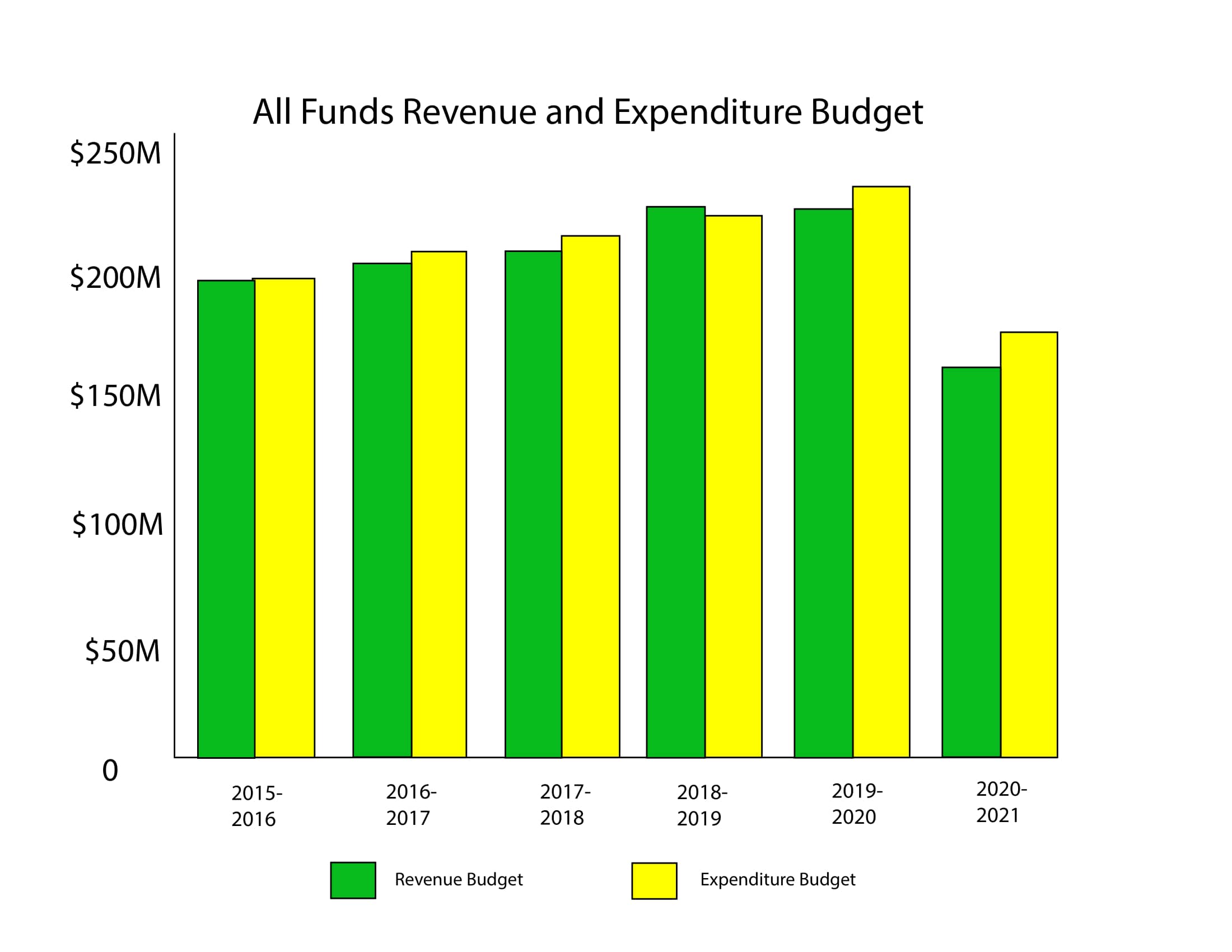
    Based on projected enrollment, the Associated Students budget is expected to decrease 20% each year, for the next five years

    The Associated Students Board finalized their proposed budget for the upcoming academic year, during the April 24 board meeting. The budget includes cutting the entire budgets of the Asian, Desi, Pacific Islander Center, the Eric Rofes Multicultural Queer Resource Center or ERC and the Women’s Resource Center, among other programs.

    Jeremiah Finley was elected the incoming AS President for the 2020-21 academic year. He wants to assure students they won’t be losing their programs.

    “The reality is that we want to support y’all so bad,” Finley said. “That we’re willing to go into our reserves almost $100,000 to be able to still support in some type of way.”

    Budget Administrator of the Campus Center for Appropriate Technology Justin Hawkins was baffled by the budget decisions and spoke out during the meeting.

    “How does the budget increase $14,000 and it’s going directly to the AS government in-between these recommended budgets, and yet, all of us are getting cut.”

    Justin Hawkins

    “It’s just tragic, honestly, to see these massive cuts to the ERC and the Women’s Resource Center,” Hawkins said. “I’m a male body person, I identify that way, but that doesn’t mean that I don’t empathize and really appreciate the services that are provided.”

    Hawkins questioned the justification for the AS budget increase after having several thousand dollars of his own program cut.

    “It’s really troubling what I see going on,” Hawkins said. “How does the budget increase $14,000 and it’s going directly to the AS government in-between these recommended budgets, and yet, all of us are getting cut.”

    Despite losing one of their three staff positions, the AS general operations budget has increased over $15,000 for the upcoming academic-year. This comes as a result of general operations losing miscellaneous revenue, largely made up of compensation for the oversight of Instructionally Related Activities. Without the $35,000 miscellaneous revenue provided for the 2019-20 year, the general operations budget requires additional funds to function.

    As a result of budget reductions, AS was forced to down-size their office administrator position. This sharp deadline made it impossible for AS to administer payroll for the upcoming year and as a result student-wages have been removed from AS and most of its funded-programs. Executive Director of AS, Jenessa Lund, said the current system isn’t working.

    “Even with three employees,” Lund said. “When we have eight programs spread across campus, the oversight is impossible. It’s a huge liability!”

    In order to compensate students for their time, AS has come up with several loopholes to get around the extra paperwork that comes with administering official wages. These include paid-internships and stipends for students, both of which have been allocated specific funds in the final budget.

    These allocations include a $15,000 committee compensation package that increased the AS government budget. The package is specifically set aside for non-AS board members that are involved in AS committees.

    “The optics on the final number of $111,000 looks bad,” Lund said. “But if you really look at what’s inside of it, it’s support to the students.”

    The finalized proposal includes a significant increase to the clubs’ budget, with money that can be used for student-stipends and internships. Programs that didn’t receive any funding from AS have the option to transition their organization into a club and can apply for funding through AS and the clubs’ office. Programs that weren’t given a budget for the upcoming year have also been allocated specific funds.

    “I don’t think that all of the clubs should have an equal opportunity for that funding.”

    Alexia Siebuhr

    Queer Coordinator for the MultiCultural Center, Alexia Siebuhr voiced her concerns about access to AS grants distributed through clubs, at a board meeting on May 8. Siebuhr pointed out a white supremacist club on campus, who promotes hateful behavior towards groups denied an AS budget, is competition for club funding.

    “I don’t think that all of the clubs should have an equal opportunity for that funding,” Siebuhr said. “They have the equal opportunity to apply for those grants. That just rubs me a little bit the wrong way.”

    President-Elect Finley addressed Siebuhr’s concerns, explaining the reasoning behind the allocation.

    “Every fee-paying student has to be able to have access to these funds,” Finley said. “If we do not allow them to have access to these funds, then we are doing a dis-service to our students.”

    Programs with a department and a state employee overseeing paperwork are the only ones able to maintain regular wages because their payroll doesn’t go through AS. For programs that didn’t receive a budget from AS, finding a department to adopt them and re-applying for funding is currently their only option.

    AS is already in discussion with the Student Access Gallery, the Waste-Reduction and Resource Awareness Program, the Campus Center for Appropriate Technology and several departments about the possibility of adoption. Executive Director Lund believes this will be the most beneficial direction for the programs, moving into next year.

    “We didn’t have enough time to do that for every program,” Lund said. “That would’ve been ideal.”

    AS is prepared for the possibility of refunding fee-paying students for potentially cancelled events and other unspent student-fee funds. Ultimately, if they aren’t providing the services outlined by student-fees, they shouldn’t be charging them.

  • Athletics Deals with a Budget Curveball

    Athletics Deals with a Budget Curveball

    With Humboldt State University anticipating lower enrollment for the upcoming academic year, the athletics department has been preparing to make budget adjustments in alignment with the rest of the university. While the department is still waiting on official numbers from the administration to what the budget will look like next semester, Athletics Director Jane Teixeira has been actively working towards making changes with athletics.

    “We are going to start going through program by program, looking at ways that we can reduce costs or maximize our benefits and resources,” Teixeira said. “We look at everything from corporate partnerships and how we can maximize those, to donations, to can we live without a second pair of tennis shoes if that’s something we were buying.”

    Student enrollment is directly linked to the budget through the Instructionally Related Activities fee that every student pays each semester. The fee currently costs students $337 and covers coach salaries as well as operational expenses for athletics. The funds generated by the IRA fee are also split among the IRA Committee Fund, Jack Pass Fund and Humboldt Energy Independence. A large majority of the money goes to athletics. However, with the department receiving $3.3 million for the 2019-2020 academic year. There is no talk at this time of the fee being raised even if enrollment drops in the future.

    The IRA Fee may not be changing, but faculty salary which applies to coaches and is determined with unions and includes automatic increases is at risk. Associated Students Executive Director Jenessa Lund points out that at a certain stage this model will simply stop working as salaries fall out of balance with the fee.

    “Salary increases for positions paid by the state are included in the state allocation, as the state builds in a cost of living increase when funding for CSU’s,” Lund said. “When salaries are paid by a flat fee, eventually the salary increases will exceed the amount of fees.”

    Newly elected Associated Students President Jeremiah Finley believes that students should not be having to pay for athletics faculty and instead should be paid with state-side funds.

    “Ultimately I believe that the wages should be off the back of students. So I’ll advocate that it moves back to state-side.”

    Jeremiah Finley

    Moving faculty wages back to state-side funding is something the budget office has been looking into since Spring 2018 according to Lund. If this move is made then the money allocated by the CSU system would take rising salaries into consideration. While the current flat fee does not.

    Athletics will certainly take a financial hit if enrollment drops as the university predicts. Teixeira was adamant that even though the department has been asked to make changes, the existing programs will not be going anywhere.

    “There’s no talk of contracting on our sports,” Teixeira said. “I know there has been some thought from some individuals that were nervous about that because you’re starting to see that happen across the country.”

    With enrollment down significantly in the Fall semester, athletics will be leaning more heavily on other sources of revenue; state-side, private donations and corporate sponsorships. Teixeira was unable to provide exact numbers on how much money comes from these sources, but did say that support from the community is especially important for athletics. However with the long term effects following COVID-19, donors contributions will potentially be affected.

    “I appreciate the individuals who have given to us and hope we can continue to gather their support for that,” Teixeira said. “We’re going to need it as we move forward in this budgetary time. But we also are aware that this pandemic has affected people. It’s affected our neighbors and we have to be really smart about that.”

    “Rec sports is a huge part of what HSU does for students. So it’s not just an athletic issue, this is a student issue.”

    Athletics Director Jane Teixeira

    If student enrollment takes the anticipated dip for the 2020-2021 school year, recreational sports would see a dip in funding, since they’re part of the athletics department. Teixeira said that recreational sports had already taken a reduction and needs support since it applies to so many students.

    “Rec sports is a huge part of what HSU does for students,” Teixeira said. “So it’s not just an athletic issue, this is a student issue.”

    The potential to use unspent money from this semester to bolster athletics is being explored as an option. While the final numbers haven’t been released, track and field, softball and rowing all had their seasons cancelled before completion. Meaning funds that are normally spent on travel and lodging are still available. This money could be used for other operations in the future.

    Finley thinks that any athletic money not spent due to COVID-19 should be dispersed back into the program.

    “Ultimately if that money is allocated, which it currently is, for our student athletes,” Finley said. “Then our student athletes should still benefit from that. I don’t know what that looks like, but that’s why we have different bodies in different pockets of excellence around campus to get that input.”

    Without certainty from HSU’s administration, the athletic department continues to create scenarios for possible budget outcomes they will face going into the 2020-21 school year.

  • HSU Wraps Up Faculty Sex Solicitation Investigation

    HSU Wraps Up Faculty Sex Solicitation Investigation

    Faculty member no longer employed by HSU

    Humboldt State issued a press release today notifying the campus community that it had finished its investigation into a faculty member soliciting students for sex. According to the release, HSU no longer employs the faculty member, but since no formal criminal charges have been filed, the University Police Department is not able to bring charges.

    Read the full release below:

    HSU Concludes Faculty Misconduct Investigation

    Humboldt State University has concluded an administrative investigation into anonymous allegations of faculty misconduct, in which a faculty member was accused of soliciting students for paid sex.

    Upon discovery of the allegation, the University took immediate steps to protect students from harm, and the employee subject to the investigation is no longer employed at Humboldt State. Because this is a personnel matter, the University is not able to provide details of the investigation or the outcome. However, the University is confident that it responded strongly and appropriately, and that it reached a resolution that ensures the safety and well-being of our students, faculty, and staff.

    The University Police Department has also been investigating the incident for any potential criminal violations and charges. Because no formal criminal complaints have been filed, University Police is not able to bring criminal charges at this time. However, the University Police Department’s investigation remains open. 

    The University encourages anyone who may have been harmed to seek assistance through the following campus support services.

    • Counseling & Psychological Services (CAPS) provides a variety of support services. You may make an appointment by calling (707) 826-3236. If you are having a crisis, you may reach a CAPS therapist 24 hours a day at the same number (707) 826-3236.
    • The Campus Advocate Team (CAT) is an on-campus resource for students, staff, and faculty at HSU. CAT is a program of the North Coast Rape Crisis Team, a private nonprofit organization that has been contracted by HSU to provide specialized services to the HSU community. CAT provides 24-hour, confidential support to any HSU student, staff, or faculty who wants to talk about harm they’ve survived (sexual harassment, sexual assault, dating/domestic violence, stalking), or explore their options for support and/or holding accountable the person who harmed them. CAT can be reached at (707) 445-2881, 24 hours a day. On-campus appointments are available.
    • The Dean of Students Office can help students navigate the steps of any reporting process and provide support and advocacy while navigating a formal complaint, as well as helping students find resources on- and off-campus to best meet their needs. You can reach the office at (707) 826-3504.
    • Human Resources handles staff employment as well as Title IX matters and can be reached at (707) 826-3626. Academic Personnel Services handles employment and related responsibilities for faculty, and can be reached at (707) 826-5086.

    The University also requests that anyone with information report it to one of the offices listed below. The Title IX Office helps students navigate accountability and accommodation for incidents of harm. The University Police Department, which operates from a trauma-informed perspective, assists with accountability and responds to reports of criminal activity.

    • Title IX Office, David Hickcox at office (707) 826-5177, cell (707) 296-4032, or david.hickcox@humboldt.edu.
    • University Police Department at (707) 826-5555.

  • Rent Strikes are on the Rise

    Rent Strikes are on the Rise

    What are rent strikes and why are they building during a pandemic?

    Almost a third of Americans have not paid their rent for April, a significant increase from this time last year. In the weeks since the shelter-in-place order, many people have lost their jobs, either temporarily or permanently. Many are wondering how they’re going to pay their rent if they don’t have jobs, but some tenants are wondering why they should have to pay rent at all. You may have seen calls for a rent strike circulating online, but what does that entail?

    A rent strike involves a group of tenants organizing and withholding rent until a set of demands are met by their landlords or government. They can be an effective way of improving the conditions of living spaces, lowering rent or creating political change. They have a wide variety of potential benefits as well as risks.

    The goal of organizations like Rent Strike 2020 is to freeze rent nationally for the next few months. Although many local governments, including Arcata’s government, have taken measures against evictions due to the pandemic, renters still owe money. The goal of a rent strike would be to eliminate the need to pay while under a shelter-in-place order entirely.

    Rent strikes require neighborhood coordination and organization. If one or two tenants in a neighborhood decided to strike by themselves, they are still vulnerable to eviction after a lift on eviction freezes. For a rent strike to be effective, they need to be well organized.

    With almost 80% of Americans living paycheck to paycheck, a few months of sheltering in place may mean tenants cannot pay, strike or no strike.

  • 2020 Census: Raise Your Hand If You’re Here

    2020 Census: Raise Your Hand If You’re Here

    Everything you might want to know about the 2020 census

    The United States Census Bureau has fulfilled the constitutional obligation to count every human in the country since 1790. Every home in the United States should have received an invitation to participate in the 24th United States census by April 1.

    “The census tells us who we are and where we are going as a nation,” the Bureau’s website said.

    The census is a measure of what’s going on in American communities. The data collected from the census helps communities determine where to build infrastructure, from schools and supermarkets to homes and hospitals. Beyond that, California District One (Humboldt County included) House Representative Jared Huffman said it’s a fundamental element of the United States.

    “The significance of everyone participating goes so far beyond that,” Huffman said in an email through his spokesperson. “Having a complete picture of the people in communities across the country determines how folks are represented and makes sure everyone has a voice in the decisions their government makes. That’s the foundation of our democracy.”

    In the past couple of years, the Trump administration tried to politicize the census as they pursued the addition of a citizenship question, but they failed. To be clear, there is no citizenship question on the 2020 census.

    John Meyer, chair of the Humboldt State politics department, explained how an accurate census requires trust between the federal government and residents.

    “The goal of the census was an accurate count of who residents are and where they live,” Meyer said. “The citizenship question discouraged that.”

    “Students today are the most diverse demographic, and if you’re not counted, other resources will not follow.”

    Nicola Walters

    Meyer said answering the census should have no personal impact on respondent’s lives, and that there should be no arrests nor barriers to voting following a response. Meyer said immigrants from other countries, especially those with authoritarian, surveillance-heavy governments were often wary of answering the questions for fear of retaliation.

    The U.S. Census Bureau has been politicized in the last few years, but the law prevents the Census Bureau from sharing information with law enforcement. The information is supposed to be kept strictly confidential.

    “It is in the interest of powerless people to answer the census,” HSU American government lecturer Nicola Walters said. “Students today are the most diverse demographic, and if you’re not counted, other resources will not follow.”

    Walters said she would have liked to see the citizenship question on the census. The census is a rare opportunity for scientists like her to collect data on the entire population, rather than just the samples she’s used to. Nonetheless, she is looking forward to the results of the 2020 census.

    According to the Census Bureau’s website, many of the planned elements of getting a full count, including door to door interviews, will be postponed.

    “The 2020 Census is underway and the most important thing you can do is respond online, by phone, or by mail when you receive your invitation,” the Census press kit said. “Responding now will minimize the need for the Census Bureau to send census takers out into communities to follow up.”

  • HSU Sails into Uncharted Waters

    HSU Sails into Uncharted Waters

    Humboldt State faces enrollment drop, budget cuts and academic department reorganizations

    If Humboldt State University was a ship, it would be sailing straight into uncharted seas, thick with fog.

    Atop the tallest mast, HSU administrators spy an enrollment drop of around 20% for the fall semester, mainly due to COVID-19. Administrators project a resulting budget cut of around $7.4 million for the next school year and $20 million in the next two years, according to HSU’s most recent enrollment report and webinars held April 13 and 15.

    Faculty and staff are scrambling across the deck to reorganize HSU’s academic departments.

    Vice President of Academic Affairs and Interim Provost Lisa Bond-Maupin said HSU’s colleges are looking at combining department staff and faculty and adjusting fall course schedules for a smaller student population.

    “Those are the strategies we’re looking at—combining staffing where it makes sense and combining chair leadership where it makes sense,” Bond-Maupin said via Zoom interview. “We’re not doing away with academic programs.”

    A proposed plan emailed to department chairs of the College of the Arts, Humanities and Social Sciences divided CAHSS departments into four schools, each of which would have one chair. The presumed thinking behind the plan would be to eliminate the need for each department to have its own chair and free up chairs to teach more courses—reducing the number of other needed faculty.

    Bond-Maupin did assure that HSU has no plan to cut any academic departments—but semester course offerings will depend on what students need.

    Bond-Maupin said that exact proposal probably would not move forward. Bond-Maupin said she and the deans of the HSU colleges are still figuring out what they will do.

    With department reorganizations and course offerings expected to be adjusted for the fall, lecturers will likely end up with fewer courses to teach. Bond-Maupin said schedules for a reduced number of students inevitably affect the availability of work. In other words, if all of a lecturer’s courses are pushed off the fall schedule, they would be thrown overboard too.

    Bond-Maupin did assure that HSU has no plan to cut any academic departments—but semester course offerings will depend on what students need.

    “As enrollment changes, we need to sort of follow the needs of the students,” Bond-Maupin said.

    Over 2,000 individuals signed a change.org petition asking for HSU tuition to be reduced for the spring. Bond-Maupin said a change in tuition would come from the California State University Chancellor’s Office, not HSU.

    Tuition reduction or not, HSU faces serious challenges. In an April 13 webinar HSU held on the enrollment decline and budget cuts, Vice President of Enrollment Management Jason Meriwether delivered dire news on enrollment.

    “If the CSU is in a recession for enrollment, Humboldt State needs to worry about being in a depression for enrollment,” Meriwether said. “I hate to use those terms, but it just forecasts the impact HSU could face in the terms of COVID-19.”

    HSU has refunded nearly $2.5 million to students for housing, parking and dining and projects to lose around $7 million by the end of June.

    “We are hearing from the governor that there may be some return to being together but with some new social distancing parameters—so that’s possible.”

    Lisa Bond-Maupin

    Vice President of Administration and Finance Douglas Dawes emphasized the importance of the campus understanding the need to make quick budget cuts. Dawes said HSU is looking into a mix of measures, including hiring chills, spending freezes and retirement incentives.

    These hits to the hull come despite progress HSU made before it entered the murky waters of the pandemic—208 local students accepted the Humboldt First scholarship, up from 32 local students per year for the last three years.

    Both Meriwether and Bond-Maupin said details of the fall semester remain uncertain and hinge on public health recommendations. Bond-Maupin said HSU is preparing for a variety of potential scenarios, from remaining online to opening partially.

    “We are hearing from the governor that there may be some return to being together but with some new social distancing parameters—so that’s possible,” Bond-Maupin said. “We might work with spacing. We also may look at timing. One scenario I can think of is that we are delayed in going back fully to face-to-face, so we begin online. I think we just have to plan for all those scenarios.”

    The Lumberjack requested an interview with HSU President Tom Jackson multiple times for this story, but he could not be reached. HSU Communications Specialist Grant Scott-Goforth cited an “incredibly busy time.”

  • HSU is Holding Administrative Meetings Online and You Can Attend Them

    HSU is Holding Administrative Meetings Online and You Can Attend Them

    How and when to watch HSU administrators make big decisions

    University Senate Meetings: 

    Meetings are available online via Zoom from 3-5 p.m. Email senate@humboldt.edu to receive a Zoom link.

    Senate meetings will be held Tuesdays on April 21, May 5 and May 19 (if needed—undecided at the moment).

    University Senate Meetings are open to the public. If members of the campus wish to speak during the senate’s open forum period from 3:15-3:30 p.m., sign-ups are available on their website. 

    University Senate Executive Committee Meetings:

    Meetings are available online via Zoom from 3-5 p.m. Email senate@humboldt.edu to receive a Zoom link.

    Executive Committee meetings will be held on alternate Tuesdays from regular University Senate meetings on April 28 and May 12 (if needed—undecided at the moment).

    Associated Students Board of Finance Meetings:

    Meetings are available online via Zoom from 2:30-3:30 p.m. Zoom link (unless changed).

    Thursdays on April 23, April 30 and May 7.

    Weekly schedule of administrative meetings:

    MondaysTuesdaysWednesdaysThursdaysFridays
    4/21: University Senate Meeting
    3-5 p.m.
    4/23: CAHSS Council of Chairs Meeting
    TBD
    AS Board of Finance Meeting
    2:30-3:30 p.m.
    4/28: Executive Committee Meeting
    3-5 p.m.
    4/30: CAHSS Council of Chairs Meeting
    9-11 a.m. 
    AS Board of Finance Meeting
    2:30-3:30 p.m.
    5/5: Associated- Residential-Athletic Council
    1-2:30 p.m.
    University Senate Meeting
    3-5 p.m.
    5/7: CAHSS Council of Chairs Meeting
    9-11 a.m.
    A.S. Board of Finance Meeting
    2:30-3:30 p.m.
    5/12: Executive Committee Meeting (“if needed” – undecided at moment)
    3-5 p.m.
    5/14: CAHSS Council of Chairs Meeting
    9-11 a.m.
    5/19: University Senate Meeting (“if needed” – undecided at moment)
    3-5 p.m.
  • IRA Budget Expected to Take Substantial Hit

    IRA Budget Expected to Take Substantial Hit

    Associated Students prepare for massive budget cuts

    Associated Students is anticipating a nearly 20% cut to the Instructionally Related Activities Committee budget.

    As of April 7, the IRA Committee budget for the 2020-2021 academic year is predicted to be about $375,000, compared with around $520,000 approved for the 2019-2020 budget. This accounts for an anticipated loss of around $27,000 due to COVID-19.

    As a condition of enrollment at Humboldt State University, each full-time student pays about $3,900 in student fees, around $2,900 of which is tuition. The remaining amount of about $1,000 is split between six student fees, including a $337 contribution the IRA.

    From that $337 paid by each student, the IRA budget is divided into about $260 for athletics, $8 for the Humboldt Energy Independence Fund, about $17 for the Jack Pass and about $19 for the IRA Committee. Made up entirely of Associated Students board members, the IRA Committee votes on the allocation of their budget among instructionally related activities.

    Executive Director of AS Jenessa Lund is heavily involved in the committee.

    “It’s interesting that there is not a lot of money compared to the big budget, but what I’ve realized over the past couple of years is because they are so visible, people react to them very strongly,” Lund said. “IRA is less than $500,000, and compared to the campus budget that’s just drops in the bucket. But because it means whether or not a group of students can go compete, or do something, they feel it directly.”

    “We had conflicting pieces of arguments that said, ‘You do this, but you don’t do that in these cases,’ which makes it very hard to evaluate who’s gonna be in and who’s gonna be out.”

    Sandy Wieckowski

    IRAs are limited to those that are disciplined, department-based and sponsored, and are integral to formal instructional offerings. They are intensive, structured activities that reflect active rather than passive student involvement. They are considered essential to the quality of an educational program and an important instructional experience, and they demonstrate skills derived from intensive coursework. They include everything from The Lumberjack newspaper to club sports, and almost everything in between.

    Made up of majority student voters, the IRA Committee has been meeting to re-evaluate their funding guidelines, based on the Education Code, their current IRA funding guidelines and memos between the AS president and HSU president from the 2019-2020 academic year that outline the direction they were headed. Sandy Wieckowski is currently the longest-acting board member.

    “This is the same thing we hit last year,” Wieckowski said. “We had conflicting pieces of arguments that said, ‘You do this, but you don’t do that in these cases,’ which makes it very hard to evaluate who’s gonna be in and who’s gonna be out.”

    Lund blamed the rotating chairs for inconsistent goals.

    “This current model has annual turnover,” Lund said. “It’s new faculty on this committee every year, and it’s often new student leaders every year.”

    On top of HSU having new administration for the past three years, AS has had four presidents in three years. With administrations in a constant state of change, it’s much more difficult to accomplish progress.

    “I’ve been on the committee four years and we’ve done it different every year,” Wieckowski said.

    Board members were assigned budget applications from IRA groups to review in advance of their April 7 meeting. During the meeting, the board looked at each application and adjusted the proposed budgets where they saw fit. As Lund scrolled down the list of submissions, board members weighed in with their recommendations.

    One significant impact looks to be the denial of a budget for the campus sexual assault prevention program, CHECK IT, as the “swag” the budget was requested to pay for wasn’t considered a priority.

    Other impacts include The Lumberjack newspaper, which faces over $8,000 in cuts from a budget of around $28,000. Osprey magazine faces about $4,000 in cuts from a $10,000 budget, and the KRFH student radio station also faces a $5,000 cut from their budget of $10,000. AS Public Relations Officer Cassaundra Caudillo suggested the cuts.

    “All of the publications on campus tend to over-print,” said Caudillo. “I think all of the publications could probably take a little bit of a cut because of that.”

    Despite the budget crunch, the IRA committee managed to make room for programs that did not receive IRA funding in the 2019-2020 academic year, including $2,500 for the Youth Educational Services program, $5,000 for reserve library textbooks and $3,000 for the Society of American Foresters Quiz Bowl. The IRA budget recommendations have been finalized, but they currently have an open appeals period before the budget will be sent to HSU President Tom Jackson by April 30.

    A potentially significant factor in next year’s budget is possible carry-over from money that didn’t get spent in the 2019-2020 academic year. That amount, for now, is yet to be known. However, the IRA Committee felt comfortable over-allocating about $25,000 they expect to gain in roll-over.

    “We have all these potential expenses out there that we need to get covered and tidy up before we try and allocate that money to next year,” Lund said.

    In the past, AS has put in place a contingency plan to allocate money based on a projected headcount in case there is money left over from the previous school year’s budget.

    “If money were to roll forward and be available in addition to what we’re looking at today, then they gave three priorities, and that was already voted,” Lund said. “So, it made it a pretty clean process for us if there was funding there.”

  • HSU Health Center Remains Open

    HSU Health Center Remains Open

    Students on campus can still reach out to medical services

    The Humboldt State University campus is closed to the public, but the Student Health Center expects to remain open for the remainder of the semester to help any students remaining on campus. The health center is limiting face-to-face contact as much as possible, but is still helping students without physical appointments when possible.

    “We’re doing everything we can to help minimize the risk of exposure for students and Student Health and Counseling staff by limiting as much face-to-face contact as possible,” HSU Director of News and Information Aileen Yoo said. “For emotional support, for instance, students can talk to a CAPS counselor over the phone and, in most cases, if preferred, Zoom.”

    The Health Center is still offering other essential services like prescription refills and COVID-19 testing.

    “For those who are sick or suspect they have COVID-19, we have urged them to call before visiting the health center,” Yoo said. “When it comes to COVID-19, our main focus is assessing the student and collecting swab samples if we think that’s necessary.”

    “It is normal to have ebbs and flows with your mood and productivity levels but if you get “stuck” in a dark space for an uncomfortably long time, consider reaching out to get help such as from a counselor at CAPS.”

    Jennifer Sanford, director of Counseling and Psychological Services and associate director of student health and wellbeing

    The Health Center set up white triage tents in front of the building to help students check in and get assessed. If a student tests positive for COVID-19, the Health Center will work with county health services to make sure the student gets the treatment they need.

    During a pandemic, the disease itself isn’t the only medical problem facing students. The Center for Disease Control warns the stress of a pandemic can cause or worsen mental health problems, and recommends calling a health care provider if symptoms persist.

    The Director of Counseling and Psychological Services and Associate Director of Student Health and Wellbeing Jennifer Sanford asked students to consider reaching out to Counseling and Psychological Services if they feel their mental health is deteriorating.

    “Pay attention to how your thoughts and attitudes in any given moment are impacting your mood and overall wellbeing,” Sanford said. “Talk with others, connect. It is normal to have ebbs and flows with your mood and productivity levels but if you get “stuck” in a dark space for an uncomfortably long time, consider reaching out to get help such as from a counselor at CAPS.”

    Sanford said that this can be an uncertain time, but it’s important to see social distancing as community care.

    “The reality is that in our physical distancing, we are displaying compassion and care for our elderly and medically compromised,” Sanford said. “We are allowing our healthcare system to better manage the flow and care of patients, and we are caring for ourselves by lessening our own risk.”

  • Humboldt State Violated California Law by Requiring Registration for a Public Meeting

    Humboldt State Violated California Law by Requiring Registration for a Public Meeting

    HSU briefly required registration for two public webinars as a security measure

    Update, April 22: Humboldt State Vice President of Enrollment Management Jason Meriwether penned a letter to The Lumberjack, making the case that HSU did not violate California law. Read it here.

    Editor’s note: Grace Caswell is a student in Journalism Department Chair Vicky Sama’s media law course. Almost the entire staff of The Lumberjack has also had Sama as an instructor in journalism courses.

    Humboldt State University hosted public meetings via Zoom to inform the public about its projected enrollment decline and budget cuts April 13 and 15. However, as a security measure protecting the university from “Zoom bombings,” HSU enacted mandatory registration requirements prior to entering the meetings in violation of California state law.

    “Zoom bombings” describe a new term for an infiltration or hijacking of a Zoom session with the intent to harass and disrupt the session. With an increase in Zoom users, from 10 million in December 2019 to more than 200 million in March of 2020, Zoom CEO Eric S. Yuan released a statement April 1 detailing additional measures being taken to enhance Zoom security over the next 90 days.

    HSU Vice President of Enrollment Jason Meriwether claimed HSU has experienced Zoom bombings and enacted the registration as an additional security measure. The additional measures required the public to respond twice via Google forms before being sent the Zoom meeting invitations, basically giving the administration, a government body, the power to sift through and deny public access.

    An approved registration screen for one of HSU’s enrollment and budget webinars held April 13 and 15.

    HSU Chair of the Department of Journalism and Mass Communication and media law professor Vicky Sama alerted and engaged with HSU administration, specifically Meriwether, on the violations being committed.

    “Using ‘security’ reasons to require the public additional registration to access a public meeting on the people’s business does not satisfy the openness and liberties that our Constitution provides,” Sama said in an email. “In addition to violating state law that I explained in my earlier email.”

    “The unintentional message is that some people are not welcome and/or we at HSU don’t want the public to know what is going on.”

    Vicky Sama, HSU journalism chair

    Sama said the additional requirement for the public to register prior to receiving an invitation was tantamount to reviewing their qualifications.

    “The email did not justify the registration nor did it outline its purpose, raising suspicions that the university doesn’t want certain people to attend or know what is going on,” Sama wrote. “The unintentional message is that some people are not welcome and/or we at HSU don’t want the public to know what is going on.”

    Specifically, HSU’s actions against the public violated the Brown Act and Bagley-Keene Act. Both California state acts provide assurance of rights to the public. Sommer Ingram Dean, staff attorney for the Student Press Law Center, explained how these security measures directly conflict with both acts.

    “Section 54953.3 of Brown says ‘A member of the public shall not be required, as a condition to attendance at a meeting of a legislative body of a local agency, to register his or her name, to provide other information, to complete a questionnaire, or otherwise to fulfill any condition precedent to his or her attendance,’” Dean explained in an email.

    “Section 11124 of Bagley Keene says ‘No person shall be required, as a condition to attendance at a meeting of a state body, to register his or her name, to provide other information, to complete a questionnaire, or otherwise to fulfill any condition precedent to his or her attendance.’”

    Sommer Ingram Dean, staff attorney for Student Press Law Center

    Additionally, Dean cited the Bagley-Keene Act and the measures it provides ensuring the public’s rights.

    “Section 11124 of Bagley Keene says ‘No person shall be required, as a condition to attendance at a meeting of a state body, to register his or her name, to provide other information, to complete a questionnaire, or otherwise to fulfill any condition precedent to his or her attendance,’” Dean wrote.

    Sama informed Meriwether of the illegal activity violating both the Brown and Bagley-Keene Acts April 13, citing the specific sections mentioned above. In response, Meriwether continued with the registration in place and adjusted the meetings by offering public links.

    “Since this issue was just raised today, it appears to me that the best thing to do is to move forward with today as planned,” Meriwether said in an email. “We will also explore hosting a third event. We will provide both the option for registration and the public link for the already scheduled event on Wednesday. The entire point of having these events was to be transparent.”

    Since then, the links to the April 13 and 15 meetings went public. However, the concern more surrounds HSU’s decision to filter through the public’s right to access a public meeting regarding matters directly impacting them.

    The registration requirement, Sama wrote, amounts to intimidation and goes against the spirit of openness and transparency, and “reeks of sneakiness.” In a time of crisis, government bodies can use the mirage of security to deny the public their right to voice their opinions. Ultimately, it can amount to an abuse of power against the public.

  • Housing the Homeless in Humboldt

    Housing the Homeless in Humboldt

    California houses, shelters and aids homeless as COVID-19 cases continue to rise

    With at least 151,278 homeless individuals in California, measures to keep them safe and healthy during the current shelter-in-place order are crucial.

    Governor Gavin Newsom and his administration have sought ways to provide shelter and temporary homes for the homeless. On March 18, Newsom published a statement addressing what actions are to take place to ensure that everyone in the state maintains their health.

    “People experiencing homelessness are among the most vulnerable to the spread of COVID-19,” Governor Newsom said. “California is deploying massive resources to get these vulnerable residents safely into shelter, removing regulatory barriers and securing trailers and hotels to provide immediate housing options for those most at risk. Helping these residents is critical to protecting public health, flattening the curve and slowing the spread of COVID-19.”

    To help with the crisis, Newsom released $150 million to local governments to pursue leases with hotels and motels for temporary shelter. An additional $650 million is said to be released on April 1 from last year’s budget, to ensure that enough supplies are given to shelters and other medical resources. Shelters all over the state are struggling to gain more medical supplies and are losing volunteers.

    Around 130 homeless individuals are staying in shelters around Arcata and Eureka.

    “This is one of the biggest challenges our homeless system has ever seen,” Deputy Secretary for Homelessness for the Newsom administration Ali Sutton said. “And our population is one of the most at risk.”

    Newsom also said he and his administration are working on creating leases lasting a few months with hotels and motels in order to house more homeless. According to an article from The Latest, Newsom announced 2,400 more hotel and motel rooms have been secured to house those on the streets, with 1,900 of those rooms coming from San Diego alone. There are now 4,000 rooms secured statewide. San Diego plans to continue sheltering the homeless by moving them to the city’s Golden Hall, the downtown Convention Center (home to Comic-Con), and other vacant rooms in hotels.

    Humboldt County is also working to gain more shelters, rooms and supplies for those on the streets. Around 130 homeless individuals are staying in shelters around Arcata and Eureka. Some shelters have already taken place like Eureka Rescue Mission and Arcata House Partnership.

    Each shelter in Humboldt County is expected to receive $300,000 in order to keep up with medical resources and other supplies, but shelters might still need more help to make sure they have everything they need. Eureka Rescue Mission, for example, had to close their thrift store, which was a main source of income, making sheltering the homeless more difficult as the pandemic continues.

    The city of Arcata, along with AHP, have been working together to find other ways to help. After calling and surveying businesses and other organizations, Arcata was able to secure two parking lots in town. The lot on G Street can maintain at least 19 people, while the Transit Center lot can hold up to 15 people. Tents inside the lot are recommended to be six feet apart. AHP is working with Affordable Housing Homeless to ensure portable showers, sinks and bathrooms are provided for the lots. The lots can also expect to soon see mobile health services to make sure individuals are healthy.

    The Centers for Disease Control and Prevention set out guidelines for how to manage tent camps, recommending that local law enforcement should not force individuals out of the camps unless there is immediate housing available for them to go to.

    Hotel and motel rooms, meanwhile, are still in the process of being secured for more individuals. Arcata is also giving out food at the Arcata Food Pantry on Wednesdays from 4 p.m. to 6 p.m at the Trinity Baptist Church.

  • Press Release: APD Still Seeks Public’s Help in Lawson Case

    Press Release: APD Still Seeks Public’s Help in Lawson Case

    APD asks witnesses to come forward on third anniversary of David Josiah Lawson’s death

    FOR IMMEDIATE RELEASE

    JOSIAH LAWSON HOMICIDE OCCURRED THREE YEARS AGO

    On this day three years ago HSU Student David Josiah Lawson was murdered in Arcata. This case remains under investigation and the Arcata Police Department is seeking the public’s assistance during the on-going investigation. On April 15, 2017, while attending a house party on Spear Avenue, Josiah was stabbed during an altercation. Josiah was pronounced deceased shortly thereafter at Mad River Community Hospital. 

    Witnesses described upwards of 100 people in attendance at the house party. Many of those who were present have not been identified nor have they been interviewed by Detectives from the Arcata Police Department. The completion of this investigation is dependent on a number of factors including interviewing all people who were present at some point during the party or who have information that can corroborate what occurred that night.

    The Arcata Police Department established a 24 hour confidential tip line for community members to provide information relative to this investigation. The phone number is (707) 825-2590. Community members can also call the APD’s Dispatch Center at (707) 822-2424.  

    Keeping Josiah’s memory alive is paramount to this case. The Arcata Police Department will continue to investigate this case and will continue to work all investigative leads until justice prevails.  

    Attached in a separate email is a Public Service Announcement developed in partnership with DJ’s Mother, Charmaine Lawson, the Arcata Police Department, the Eureka Broadcasting Company and the City of Arcata’s IT Department. The PSA link is Facebook compatible. All are encouraged to share this link with anyone in order to never forget DJ and to encourage community members who have any information at all regarding who else was in attendance at the party and/or the events that led to DJ’s death, to come forward. 

    Public service announcement video reposted by the North Coast Journal:

  • With Future Unknown Amid Pandemic, HSU Plans for Enrollment Drops and Budget Cuts

    With Future Unknown Amid Pandemic, HSU Plans for Enrollment Drops and Budget Cuts

    HSU, like all colleges, prepares for tough times and serious measures

    Humboldt State University is preparing for an enrollment drop of around 20% for the fall and a budget cut of around $20 million by the 2022 fiscal year, according to a joint press release from HSU and College of the Redwoods.

    Before the COVID-19 pandemic, HSU projected an enrollment drop for total students of around 14% for the fall and had proposed a budget cut of around $5.4 million by the 2022 fiscal year. 

    Given the uncertainty of the next year, HSU is planning for an even larger enrollment decline and budget cut. HSU currently projects new student enrollment to drop by 30%. The specifics of what the budget cuts will mean are still being worked out.

    “Many options are being looked at, including combinations of a hiring chill, spending freeze, operational changes, incentives for retirements, travel reductions, and more,” the press release said.

    In a Zoom interview, HSU Vice President of Enrollment Management Jason Meriwether said a worst case scenario projection might be only 500 new students and 500 transfer students admitted to HSU in the fall. 

    These numbers, to be clear, are projections. No one knows exactly how the next year will play out. Meriwether hoped HSU could keep enrollment and retention as high as possible.

    “The sad part is, I don’t know,” Meriwether said. “There’s no benchmark. There’s nothing to project against. We could be doing all this and, you know, 1400 students show up—which would be wonderful.”

    HSU is not alone. As noted in Meriwether’s Tuesday enrollment management report to the HSU Senate, colleges everywhere are facing enrollment drops amid the pandemic. The report cited articles from Forbes and the Associated Press along with some early data suggesting one out of every six college-bound students won’t attend college in the fall.

    With education expected to shift to a more local focus, Meriwether pointed out that HSU already shifted to local recruitment in the last year with measures like the Humboldt First Scholarship.

    Compared to an average of about 32 local students attending HSU per year in the last three years, HSU currently has 208 local students confirmed to attend HSU in the fall with the Humboldt First Scholarship. 

    “The good news is we’re not starting local recruitment today because there’s a problem,” Meriwether said. “That’s the best part of all this—is that we already have a really solid foundation that we built in the community over the last eight or nine months.” 

    The enrollment management report includes a graph of enrollment scenarios, with red lines for lower enrollment scenarios and a blue line for a growth scenario. Meriwether hoped for HSU to remain close to the blue line.

    “Essentially, pray we get as close to the blue line as possible,” he said. 

    Meriwether pointed out that, since COVID-19 has hit everywhere, current students might not have much reason to transfer. If classes are still online in the fall at HSU, they will presumably be online everywhere. 

    “Let’s say a student says, ‘OK, well, you know, I want to transfer because I didn’t want this experience,’” he said. “OK. Well, the question will be, ‘What school are you going to transfer to?’ Because every school is stuck in this scenario right now.”

    Nevertheless, the pandemic will likely temporarily derail HSU’s efforts to improve enrollment. 

    “Long term, you know, prior to COVID-19, prior to this hit, we had a plan of getting to an FTE of 7600 students [full-time students] in about four years,” he said. “So now, what if the COVID-19 environment says, well, gosh, it can make us take eight years to get there.”

    Meriwether was optimistic that eventually, HSU would get through this.

    “I believe that we will bounce back, and I believe we will bounce back strong if the hit is really bad,” he said. “This is a marathon. Enrollment is a marathon.”

  • HSU Projecting Grave Hit to Enrollment for Fall Semester

    HSU Projecting Grave Hit to Enrollment for Fall Semester

    Freshman class projected to shrink, number of academic departments to be reduced

    For the latest information, see our story here.

    Update 11:10 a.m.: a second email sent yesterday from College of Natural Resources Dean Dale Oliver and obtained by The Lumberjack makes similar points but does not give a specific number to the expected enrollment drop for fall beyond noting that a 15-20% drop was expected prior to the COVID-19 outbreak. We will update this story when we have confirmed the numbers below. The second email is pasted below.

    Humboldt State University has issued a budget directive to take immediate action to prepare for the fall semester, including the freezing of open staff positions and the reduction of the number of academic departments, according to an email sent to faculty and staff of the College of Arts, Humanities and Social Sciences Tuesday morning.

    The email, sent by Interim Dean of CAHSS Rosamel Benavides-Garb, projected a freshmen class for fall 2020 of around 500 students, down from around 1,400 students five years ago and down from around 1,000 students for fall 2019.

    “The scale and impact of our current predicament is grave and as a result our budgetary practice has to be reconsidered and reformulated based on the simple equation of demand and resources,” the email said. “We have become, de facto, a much smaller institution, which compels us to undertake a comprehensive reset at HSU.”

    The email listed six directives, including requests to freeze all vacant staff positions, reduce the number of academic departments and develop online programs for current and transfer students to complete their degrees.

    The email promised to make the process consultative and sustainable.

    “We remain committed to “the student first” approach,” the email said, “and are extremely aware of the critical importance, now more than ever, of issues of social justice, equity, and inclusion in all we do.”


    The full email is copied below:

    Dear CAHSS Colleagues,

    On April 2, the deans of all three academic colleges received new administrative directives from Interim Provost Lisa Bond-Maupin regarding the coming academic year. The directives are a call to action, issued in response to the budget and recruitment/retention reality at HSU. The Interim Provost reiterated these directives yesterday, Monday, April 6 in her Provost/VPAA Report to the senate.

    As we all know, our student enrollment has been declining for several years and the institutional budget has been negatively impacted. The administration’s efforts to address the problem must now be reframed in light of new and profound challenges the current COVID-19 pandemic poses for HSU, and the CSU system in general.

    We are projecting a freshmen class of 500~ students across all three colleges. Five years ago, the freshmen class numbered 1,400+ students. The scale and impact of our current predicament is grave and as a result our budgetary practice has to be reconsidered and reformulated based on the simple equation of demand and resources. We have become, de facto, a much smaller institution, which compels us to undertake a comprehensive reset at HSU.

    The Interim Provost has directed the three academic deans to reduce spending and grow retention/recruitment. Her directives require our college to implement the following action areas immediately:

    1. Freeze all vacant staff positions: This is indefinite or until each college develops a plan to organize staff support within colleges and across colleges.

    2. Reduce the number of academic administrative units (departments): This needs to be planned immediately and be in place for this next fiscal year so we are reorganized starting fall 2020.

    3. Develop online degree completion opportunities for certain existing majors in the last two semesters of their programs.

    4. Develop two-year degree online completion opportunities for transfer students of certain majors beginning fall 2020.

    5. Develop a partnership with CEEGE related to workforce development, responding particularly to a post COVID-19 context.

    6. Integrate the Center for Teaching and Learning (CTL) in the development and implementation of new teaching capacity.The Interim Provost has also indicated that she expects this process to be:

    The Interim Provost has also indicated that she expects this process to be:

    · Consultative with unit leadership.

    · Consultative and collaborative across colleges.

    · Sustainable by creating new retention and recruitment opportunities.

    The deans of the three colleges have already begun discussing the directives. I have also initiated planning within CAHSS, in collaboration with the three associate dean fellows, and will continue to discuss budget with the chairs. We will move forward together, exploring multiple budget management opportunities to make our colleges strong and resilient in the face of present and future challenges. We can also regard these adjustments as unique opportunities to explore new and exciting programs to attract and serve our ever-diverse student population in a shifting and challenging workforce environment. We remain committed to “the student first” approach and are extremely aware of the critical importance, now more than ever, of issues of social justice, equity, and inclusion in all we do.

    Sincerely and in solidarity,

    Rosamel


    Email from CNRS Dean Dale Oliver:

    April 6, 2020

    CNRS Faculty and Staff

    Dear Colleagues,

    Earlier today Interim Provost Lisa Bond-Maupin sent out her report to the HSU University Senate in preparation for Tuesday’s meeting.  Included in her report was a call for collective action to prepare for fewer students and fewer resources in the next academic year.  I’ve pasted the relevant section of the Provost’s report below my signature.

    Current estimates indicate we could have 20% fewer students in Fall 2020 that we had in Fall 2019.  This reduction is significant, and we must plan over the next weeks and months so that those students who start or continue with us in the fall experience high quality, engaged learning that will prepare them well for STEM professions and advanced study.

    Three items from the Provost’s report that I want to highlight are personnel, administrative re-structuring, and online education.

    Personnel: Although we will be finishing out the two faculty searches currently underway, and ensuring we have sufficient temporary faculty to deliver our curriculum, all other hiring is frozen for the moment, including those which are currently vacant and those which will soon be vacant due to expected retirements. Through improving business processes, realigning and reorganizing staff positions, and targeting professional development we will find a way to support our educational enterprise without hiring additional personnel.  This work will be both necessary and challenging, and require collaboration with relevant unions and careful consideration of multiple factors.

    Administrative restructuring: At the Dean’s level we were already planning a partial re-assignment for Associate Dean Rick Zechman to manage the marine lab while marine lab director Brian Tissot transitions from full-time director to FERP faculty.  We are also being asked to reduce the number of administrative units in the college, meaning that some departments will be merged or reformed.  This work will be done in close collaboration with the CNRS Council of Chairs and the other two academic deans.

    Online Education: There are some programs in CNRS for which one of the following scenarios might make sense:  provide an online degree-completion option for a group of students who have a year or less left to complete their degree; provide a degree-starter program for a group of first year (or transfer) students to get started with HSU from home during the fall 2020 semester, and then begin on campus in Spring 2021; provide more online sections of general education courses for undeclared students or majors from outside CNRS.  For the moment, I recommend that faculty discuss within their departments whether one or more of these scenarios might be appropriate for their program.

    For this week I am collaborating with the Provost’s office, with the other academic deans, and with a working group of CNRS Chairs to create possible models for administrative restructuring that can then be discussed among all of the CNRS chairs the following week.  Relatively soon I will also set up a mechanism by which input can be given from across the college.

    We face a significant challenge as a college and university over the next few months and years, but I am confident that we will find solutions that serve our students and the citizens of California well.  My confidence rests solidly on the incredible talent, dedication, and creativity of our faculty and staff, whom I am proud to serve.

    Best wishes, safety, and health to you and your families,

    Dale R. Oliver, Dean

    College of Natural Resources and Sciences

    From Interim Provost Lisa Bond-Maupin’s report to HSU’s University Senate, April 6, 2020

    Realignment of Spending with Reduced Revenue

    In addition to supporting instructional continuity and Academic Master Planning, our division leadership is turning our attention to budget planning for next fiscal year and beyond. Prior to COVID-19, our enrollment picture for next academic year was apparently trending toward a 15-20% fall-to-fall (one year) student headcount decline. We were likely headed toward a reduction to the HSU budget for next fiscal year that was double that anticipated when the URPC created its annual budget recommendations to President Jackson.  While the college-going enrollment impact of the pandemic is unknown for all in higher education across the nation, it is clear that the CSU and HSU will experience further decline in student enrollment. Given the enrollment challenges felt across the state, it is likely that impaction at our southern campuses will be lifted. It is highly likely that more students will choose for financial and other reasons, in the shorter term at least, to remain at home or closer to home to study. 

    While we await the release of up-to-date enrollment projections and budget information, Academic Affairs is implementing a few immediate strategies toward student retention and recruitment on the heels of the pandemic and toward further reducing our spending. As we do so, we are guided by the URPC principles and our own commitments to meeting the instructional needs of our students and protecting employment. In addition to continuing to adjust our academic offerings for Fall, immediate strategies also include: 

    • Working with each dean and director to reduce budget allocations for FY 21 

    • Freezing hiring in all open staff positions for now and planning to absorb staff attrition

    • Working collaboratively with staff within and across colleges and budget units in Academic Affairs to reimagine and reorganize our staff support 

    • Working collaboratively with department chairs and faculty to condense the number of separate academic administrative units in the colleges 

    • Working within the Office of the Provost to realign and reorganize staffing

    • Identifying academic programs ready to continue to offer upper division major courses online into next year and beyond to: a) help students in their final semesters to study from home and complete their degrees, and b) offer new transfer students an opportunity to complete their degrees online 

    • Identifying a COVID-era retention specialist in Academic Affairs who will support the continued offering of all existing retention efforts in a virtual format and will work in collaboration with ODEI to implement inclusive retention practices at a distance. 

    Each one of us will be implicated in and needed for this work. It is tough and unavoidable at this time. Each one of us has a very important role to play, now, more than ever in maintaining close connections with our students, helping them to problem-solve their educational needs and connect to resources and to stay connected to HSU. We need our students. And I think we are finding in their response to our transformed instruction – they need us. This powerful connection will ultimately move HSU through and beyond this tough moment in our collective history to the future we envision. Thank you.

  • A Rundown of All The Emails HSU Has Sent Students

    A Rundown of All The Emails HSU Has Sent Students

    Since March 15 HSU has sent out over a dozen emails on their response to COVID-19

    Here is a summary of emails Humboldt State University has sent out since March 15.

    March 17: HSU informed students of its efforts to supply students with reliable laptops from the library as well as internet access for students without a reliable connection. HSU provided a list of locations where the university’s Eduroam Wi-Fi connection is strongest, as well as a list of services that are providing free Wi-Fi services during the COVID-19 crisis.

    March 19: HSU informed students of Humboldt County’s shelter in place order. HSU confirmed that essential employees would be asked to continue to work on campus, and all others would work by teleconferencing. In a second email on the same day, HSU confirmed rumors that commencement, originally planned for May 16, would be canceled. HSU asked in a now-closed Google form for creative alternatives to celebrate graduation.

    March 21: HSU released a more detailed email regarding its policies related to essential employees and payroll. Positions listed as essential included public safety, information technology, the library, University Center, health center, Oh SNAP!, residence life, dining, facilities management, research continuity, business services, payroll and mail distribution. HSU announced that its payroll department would be working on creating digital timesheets for employees working from home and that emergency pay would not be in effect as it was during the blackouts of the fall 2019 semester.

    March 23: HSU revealed its guidelines on returning to campus. HSU asked students returning to Humboldt from areas with community spread or international destinations to self isolate for at least 14 days before returning to campus. HSU also advised students who are feeling ill to contact the Student Health Center at (707) 826-3146 before visiting the center.

    March 24: HSU asked that students who live in on-campus housing and were on any of these three flights to contact Housing and Residence Life at (707) 826-3451:

    • March 16: United flight #5827 from Los Angeles Airport to Arcata
    • March 18: Delta flight #4124 from Seattle, Washington to Medford, Oregon
    • March 18: United flight #5555 from San Francisco Airport to Arcata

    March 26: HSU announced that the library would close on Friday Mar. 27 in response to the ongoing COVID-19 situation.

    March 27: HSU extended the deadline for changing the grading mode of classes to May 9. HSU said it’s looking into expanding the number of courses that can be switched to credit/no credit, as well as lifting restrictions on the number of courses that can be taken as credit/no credit.

    March 30: HSU announced the closure of Siemens Hall’s computer labs and the University Center to reduce transmission of COVID-19.

  • Photos Show Life Around Arcata in the Time of COVID-19

    Photos Show Life Around Arcata in the Time of COVID-19

    A photo series from the end of spring break

    Photographer and Sports Editor Thomas Lal captured these scenes from around Arcata on March 21 at the end of spring break at the beginning of Humboldt County’s shelter in place order.

    The storefronts on the Arcata Plaza look out on mostly empty streets.
    An employee sits at a computer while a sign advertises that the business is still open during the first week of a shelter in place order.
    The shelves in the Arcata Safeway.
    The Humboldt State Library.
    A lone person walks through the mostly empty parking lots at Humboldt State University.
    The Humboldt State Library.
    The Humboldt State Library.
    A single person works at the Humboldt State Library.
    A carton of eggs sits on the shelves at the Arcata Safeway.
    A lone person stands just off of the Arcata Plaza.
    An employee puts up a sign in the door of the Jitter Bean on the Arcata Plaza.

  • Associated Students Elections Delayed Due to COVID-19

    Associated Students Elections Delayed Due to COVID-19

    Associated Students Board of Directors redesigns spring elections

    The Associated Students Board of Directors motioned to push their voting period for their upcoming elections back two weeks and expand the period from three to five days, now April 27 through May 1.

    The March 27 AS Board meeting held through Zoom included the extension of the filing period for AS candidates to April 16 and several other amendments to the upcoming elections. Elections Commissioner Cassaundra Caudillo said postponing the election could be beneficial.

    “It allows for professional staff and the Elections Commission to promote elections a bit longer, so that way we raise our chances of having candidates for each position,” Caudillo said. “Because at the moment, we don’t have a candidate for every position. Not only that, but it also allows students themselves to have an additional two weeks to apply for candidacy.”

    “In general, postponing elections for two weeks allows everyone to have a fair and equitable chance at running.”

    Cassaundra Caudillo, AS Elections Commissioner and Public Relations Officer

    AS Executive Director Jenessa Lund said students expressed interest running in this election who haven’t had the opportunity to take the necessary steps to sign up before the office closed.

    “In general, postponing elections for two weeks allows everyone to have a fair and equitable chance at running—keeping in mind the situation we’re all in and how much added stress we’ve all been faced with as students and as human beings,” Caudillo said.

    While minimum residency and unit load qualifications are still in place, candidates are no longer required to appear in person to obtain their nomination materials, as the AS office has closed its doors. Students can find everything they need under the “Elections!” tab on the AS website.

    Students are also no longer required to supply petitions with 150 student signatures. The candidate quad talk will be replaced with one-minute videos of candidates reading their speeches that will be shared on AS social media. Requirements of wet signatures from candidates will be swapped with a Google forum, and the candidate orientations will now be held over Zoom on April 16 and 17.

    The AS Board is willing to review and consider reimbursing any campaign supplies that can no longer be distributed.

    AS President Lizbeth Cano-Sanchez described the value of joining AS in a separate interview with The Lumberjack.

    “Education is power, and in AS you can put your education to practice, because there’s a lot of things that correlate with it,” Cano-Sanchez said. “It helps you develop yourself, and at the same time, we’re students serving students and that’s really important.”

  • Here Are the Refunds Students Can Expect from HSU

    Here Are the Refunds Students Can Expect from HSU

    Refunds for various fees are available for Humboldt State students in the midst of the COVID-19 outbreak

    With closures and cancellations occurring left and right, many Humboldt State University students are wondering what kinds of refunds they can receive from the university. Here’s a list of them.

    Tuition and Fees:

    • Tuition and campus-based fees will continue on as normal for students that are taking courses from their professors to receive grades that factor into graduation.
    • If a student wants to withdraw from all spring semester courses, they must act by April 5 to be eligible for a prorated refund of tuition and fees.
    • Classes that students with financial aid are withdrawing from will be looked over and potentially adjusted based on the amount of days enrolled.

    Housing and Parking:

    • If students leave on-campus housing, they will get prorated refunds for both housing and dining fees once they check out.
    • Student parking permits will be automatically refunded back to student accounts to the tune of $78.75, 25% of the initial permit cost.

    Commencement:

    • Automatic refunds will be doled out to students graduating in spring or summer 2020. For more information, email HSU-cash@humboldt.edu
    • For unopened and unused regalia, refunds will be issued using the same method the order was placed with.
    • For the Graduation Writing Proficiency Exams on March 28 at 9 and 11 a.m. and April 11 at 9 and 11 a.m., all charges will be returned to the students’ accounts and refunds will follow if the student doesn’t have outstanding charges. Keep in mind that the GWPE is still required to graduate, and will be held online for the time being.
  • Students Bused Back to HSU Met with Mixed Messages

    Students Bused Back to HSU Met with Mixed Messages

    Locals react to HSU students bused back to Humboldt from coronavirus-afflicted areas

    A bus chartered by the Humboldt State Homeward Bound program picked up 31 HSU students March 21 from San Francisco and Los Angeles—two cities where the coronavirus has become more and more prominent—and brought the students back to Humboldt.

    Lost Coast Outpost posted an article about the bus March 24. The Facebook post for the story has 433 comments as of March 29, many of which are critical of HSU.

    “This is beyond irresponsible of HSU,” one comment reads.

    “And one more reason we feel GREAT about not sending our kids to HSU,” reads another.

    Sarah Ray, an environmental studies professor, defended the students.

    “Quite a few of our students live here and have moved here and have their lives here and they were visiting family,” Ray said. “So, just like we would expect and hope that kids and students who are from Arcata and the area—we would fully respect and appreciate that they would want to come home and be home with their families once their classes got cancelled in this really frightening moment—it’s reasonable that students would want to go where they’re most comfortable and feel at home.”

    She went on:

    “There’s also a lot of research out there about how many students across the nation going through this exact problem are not safe at home, and this might be a safer place for them,” Ray said.

    “I feel like it’s not a simple solution to just say, ‘Go back there,’ because many of these students live here.”

    Xochitl Andrade, HSU English and biology major

    Grant Scott-Goforth, communications specialist for HSU, explained the precautions implemented on the buses returning to HSU.

    “The buses were partially full so that people could have social distancing on the buses while they rode,” Scott-Goforth said. “And then, obviously when they return, we’re asking everyone to shelter-in-place, to quarantine if you’ve been exposed or been to an area with exposure, and to contact the Student Health Center or hospitals with concerns about health.”

    As much as HSU wished it could’ve been in command over which students came and which students left Humboldt, there was no way to do that. Of course, as Scott-Goforth asserted, the coronavirus situation is nothing to sneeze at.

    “I think it’s terribly unfortunate and I’m very sad for them and I feel very protective of students because it’s what I do.”

    Sarah Ray, HSU environmental studies professor

    Xochitl Andrade, an HSU senior majoring in English and biology, said the situation is complicated.

    “I feel like it’s not a simple solution to just say, ‘Go back there,’ because many of these students live here,” Andrade said. “They may have no where else to go if they were told to go back. We don’t know if they were just visiting friends or family. And for those who don’t have any family to go back to, what are they supposed to do?”

    While Andrade agrees that the students should be quarantined, she said she thought HSU knows what it’s doing.

    Ray hoped the harsh words toward HSU students from the Lost Coast Outpost article weren’t representative of the Arcata community.

    “I think it’s terribly unfortunate and I’m very sad for them and I feel very protective of students because it’s what I do,” Ray said. “I would like to think that it’s only an extreme, fringed, vocal, internet types of social media people who are saying those kinds of things. The vast majority of the university, especially the community and many people in the community—that’s not the kind of sentiment I see.”

  • Retention Rate on the Rise at HSU

    Retention Rate on the Rise at HSU

    More Humboldt State students are electing to stick around, but there’s still work to be done

    Corrections: a previous version of this story incorrectly quoted Casey Park as saying “We’re absent as an institution.” The quote should have said “We were absent as an institution.” The story also wrongly included “interim” in Jason Meriwether’s title.

    Humboldt State revealed more students were staying on its campus rather than taking off for other schools or ventures in a Jan. 31 press release.

    Tracy Smith, the director of the HSU Retention through Academic Mentoring Program, said she was proud of the work she and her peer mentors have accomplished over the years.

    “I think Humboldt sincerely believes that whether students decide to stay at Humboldt or not is really a product of our entire campus community and off-campus community,” Smith said. “RAMP really is designed to support incoming students and them finding a place where they feel a connection.”

    “85 percent of new first-year students said if they were given the option to choose a college again, they ‘probably’ or ‘definitely’ would attend HSU again.”

    National Survey of Student Engagement, spring 2019

    A study done in conjunction with HSU by the National Survey of Student Engagement in spring 2019 provided some data on student perceptions of HSU.

    “85 percent of new first-year students said if they were given the option to choose a college again, they ‘probably’ or ‘definitely’ would attend HSU again,” the study said. “And 89 percent of first-year students said their overall experience was ‘good’ or ‘excellent’, compared to an overall CSU system rate of 84 percent.”

    Jason Meriwether, Ph.D., vice president for Enrollment Management, said a few things have contributed to the increased retention rates, including Enrollment Management staff and related faculty streamlining the registration process and connecting students with support services—all in an attempt to create a sense of belonging for students.

    “It’s the experience but it’s also the listening and packaging it into one,” Meriwether said. “So, all of that is about looking at the students and giving them what they’re asking for first, and using the resources that we have to create an experience for the student.”

    Meriwether said his staff’s hard work has paid off by meeting student needs.

    “We have to be aligned with what students are expressing that they need and putting ourselves in a position to support students,” Meriwether said.

    “There wasn’t attention given to the most affected and traumatized students. And those are the students who went back to where we recruit from and said ‘Humboldt is not a place for me,’ and ‘Humboldt is not a place for you.’”

    Casey Park, HSU alumna

    He noted a growing trend at HSU of transfer students outnumbering first-time freshmen. HSU has needed to move around campus resources to accommodate the influx of transfer students.

    “It’s about being nimble and seeing where the student population is going and meeting those needs,” Meriwether said.

    Meriwether added that in recent months, the Student Disability Resource Center and cultural centers have received major face-lifts, which, in turn, have opened up more doors for students.

    Casey Park, an HSU alumna, was glad for the rising number of retained students, but said the campus administration’s past actions around retention shouldn’t be ignored as a new wave of measures are enacted. Park is an Associated Students coordinator, but gave her perspective only as an alumna.

    “We are still going to need to reconcile the years where we were neglectful of students,” Park said. “It’s going to take a lot of really good decisions to hold ourselves accountable for that and kind of be like, ‘We were absent as an institution.’”

    Park said the HSU administration’s inaction regarding the Josiah Lawson case and other events affected previous student perceptions of HSU.

    “There wasn’t attention given to the most affected and traumatized students,” Park said. “And those are the students who went back to where we recruit from and said ‘Humboldt is not a place for me,’ and ‘Humboldt is not a place for you.’”

  • The Lumberjack Takes Home 14 Media Awards

    The Lumberjack Takes Home 14 Media Awards

    Humboldt State student newspaper wins four first place California College Media Association awards

    The Lumberjack won 14 California College Media Association Excellence in Student Media awards for a variety of work in 2019. The Lumberjack took home four first place awards, seven second place awards and three third place awards at the CCMA awards banquet Feb. 29 in San Francisco.

    Deija Zavala won Best Photo Series, Phoebe Hughes won Best Cartoon Illustration, Megan Bender won Best Illustration and Chelsea Wood won Best Non-News Video.

    Megan Bender took second in Best Newspaper Front Page Design and Best Photo Illustration, Jose Herrera took second in Best Arts and Entertainment Story, Jett Williams took second in Best Newspaper Column, Liam Warner took second in Best Sports Story and Thomas Lal took second in Best News Photograph. James Wilde, Chelsea Wood and Collin Slavey took second in Best News Video.

    Freddy Brewster came third in Best Headline Portfolio for three different headlines and third in Best Breaking News Story, while Tony Wallin took third in Best Feature Story.

    HSU’s bilingual, monthly student-run newspaper, El Leñador, won 12 awards, including three first place awards. HSU’s student-run semesterly magazine, Osprey, won three awards, with a first place award to Megan Bender for Best Magazine Inside Page/Spread Design.

    The Lumberjack is the independent, student-run online media publication and newspaper established in 1929 at Humboldt State University.


    View the full list of HSU student award winners below:

    CCMA Winners 2020:
    FIRST PLACEPUBLICATIONSTUDENT(S)
    Best Photo SeriesThe LumberjackDeija Zavala
    Best Editorial CartoonThe LumberjackPhoebe Hughes
    Best IllustrationThe LumberjackMegan Bender
    Best Non-News VideoThe LumberjackChelsea Wood
    Best Newspaper Inside Page/Spread DesignEl Leñador Celeste Alvarez, Jose Herrera
    Best Newspaper Front Page DesignEl Leñador Kylee Conriquez, Jose Herrera
    Best Non-Breaking News StoryEl Leñador Jose Herrera
    Best Magazine Inside Page/Spread DesignOspreyMegan Bender
    SECOND PLACE
    Best Newspaper Front Page DesignThe LumberjackMegan Bender
    Best Arts and Entertainment StoryThe LumberjackJose Herrera
    Best Photo IllustrationThe LumberjackMegan Bender
    Best News VideoThe LumberjackJames Wilde, Chelsea Wood, Collin Slavey
    Best Newspaper ColumnThe LumberjackJett Williams
    Best Sports StoryThe LumberjackLiam Warner
    Best News PhotographThe LumberjackThomas Lal
    Best IllustrationEl LeñadorKylee Conriquez
    Best EditorialEl LeñadorBrenda Estrella
    Best Special Issue/SectionEl LeñadorJose Herrera, Vanessa Flores
    Best Overall Newspaper DesignEl LeñadorJose Herrera, Celeste Alvarez, Cara Peters, Ash Ramirez
    Best Social Media ReportingEl LeñadorVanessa Flores
    Best Magazine Cover DesignOspreyMegan Bender
    THIRD PLACE
    Best Headline PortfolioThe LumberjackFreddy Brewster
    Best Feature StoryThe LumberjackTony William Wallin
    Best Breaking News StoryThe LumberjackFreddy Brewster
    Best NewspaperEl LeñadorStaff
    Best Interactive GraphicEl LeñadorCeleste Alvarez
    Best InfographicEl LeñadorCara Peters
    Best Arts and Entertainment StoryEl LeñadorLora Neshovska
    Best Magazine Photo SeriesOspreyJett Williams, Megan Bender