The Lumberjack


Students Serving The Cal Poly Humboldt Campus and Community Since 1929

Category: News

  • Updated: Summarizing HSU’s COVID-19 Updates

    Updated: Summarizing HSU’s COVID-19 Updates

    All classes to go online for the rest of the semester and other plans, plus a translation

    Humboldt State University informed its students March 12 through email that classes would be going online following spring break. Concerns of spreading COVID-19 led the California State University system to suspend face-to-face instruction. HSU initially said it would be shifting to online classes March 26 until at least April 17. But in a March 17 message from President Tom Jackson, HSU announced classes would be taught online for the rest of the semester.

    Jackson’s message said all exams, labs, field trips and in-person meetings are canceled. HSU encouraged students living on-campus to return home if possible. However, HSU promised it would not displace students living on campus.

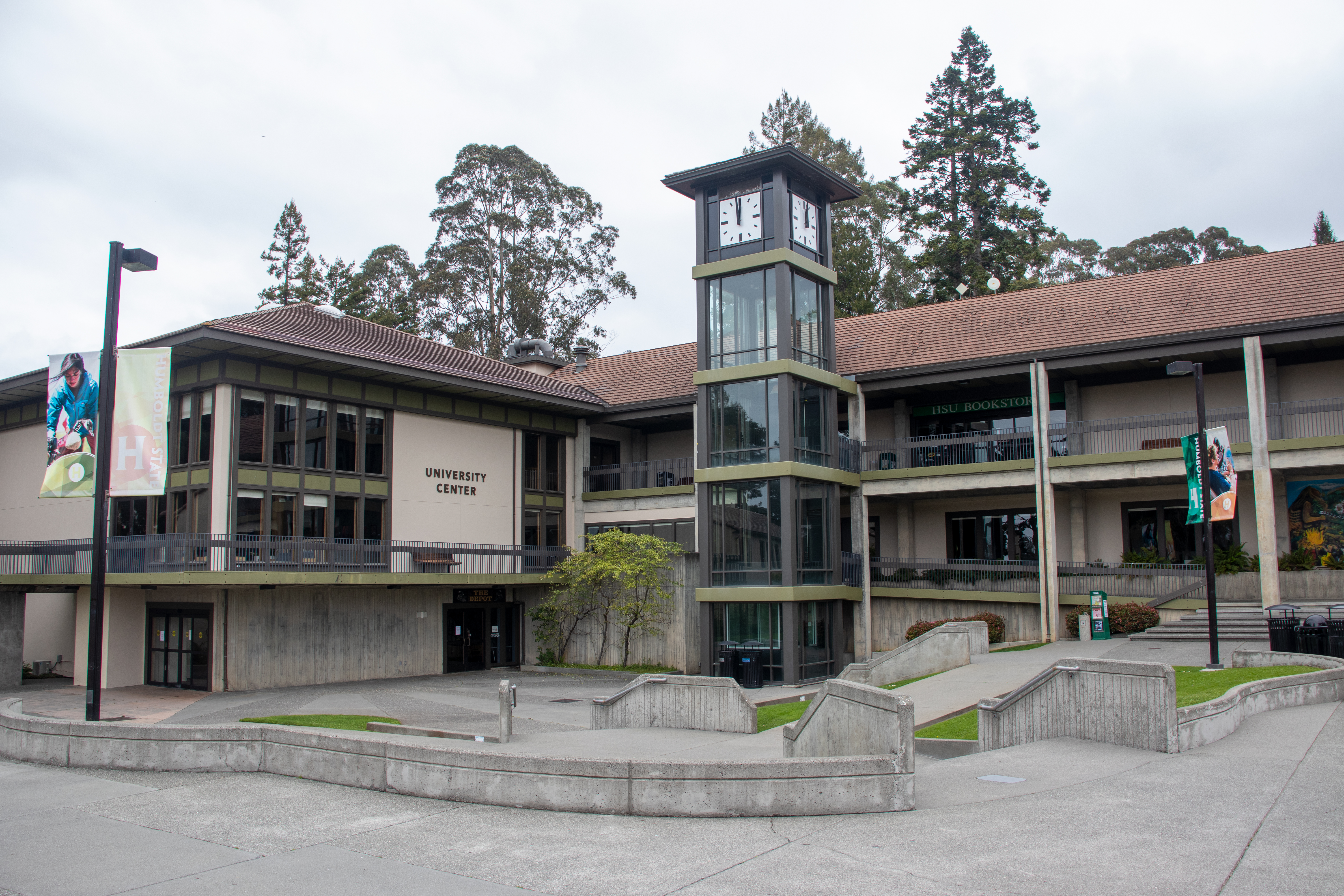
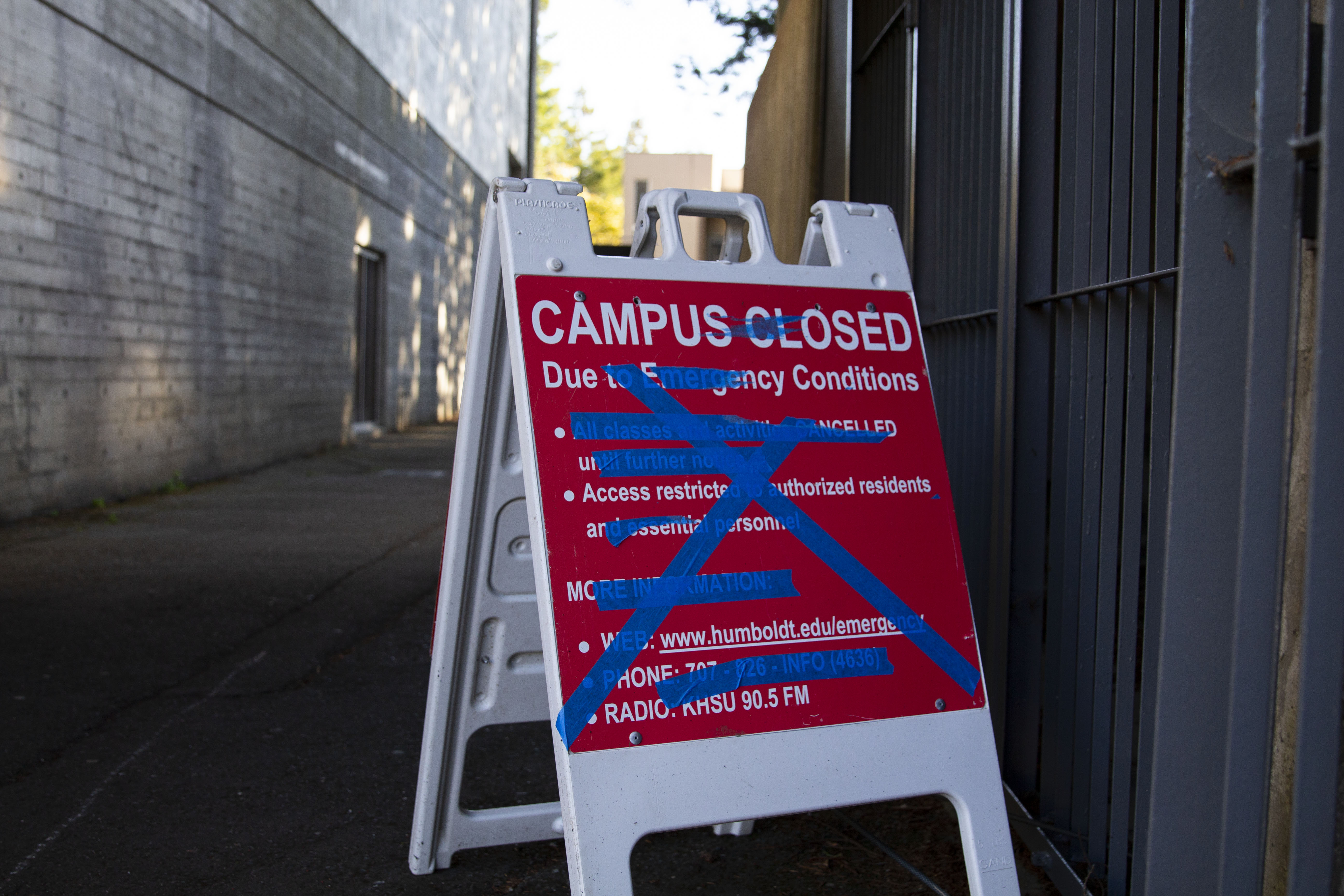
    Other notes from Jackson’s message included: non-essential student employees will work from home. Campus will close to the general public. Most of campus will close, with the exception of the Student Health Center, the University Center and the library, all of which will remain open with reduced staff. Finally, HSU said it will review alternatives to celebrate commencement.

    HSU has also launched a web page with resources for working from home. HSU plans to provide laptops for students without computers and internet hotspots for students with no internet at home. Programs like the Adobe Creative Cloud Suite and SPSS are expected to be available on HSU’s remotely accessible virtual lab and for downloads to personal computers. Multiple phone and internet companies have also agreed to waive late fees, not cutoff service and open up internet hotspots.

    HSU began updating students and staff through emails starting Feb. 24, when it informed them of the single case of COVID-19 confirmed in Humboldt County. They continued to provide updates weekly on how HSU would be handling a potential pandemic. The week before students were meant to head home or hunker down in Humboldt, HSU ramped up its online communications.

    HSU suspended all international and non-essential domestic travel March 10 for the remainder of the spring semester. In a March 11 email, they defined essential domestic travel as travel for academic credits that are necessary for graduation and cannot be postponed or substituted.

    Through several emails on March 11 and March 12, HSU canceled all instruction from March 23-25 to allow faculty to prepare for online classes. HSU then canceled all intercollegiate and club sports.

    HSU canceled non-essential events on and off campus March 13. Essential events—following HSU’s previous definition of essential—are any events done for academic credit necessary to meet a graduation requirement that cannot be postponed or substituted.

    On March 15, HSU noted the closure of local K-12 schools, and how that may affect staff and faculty. HSU later advised faculty aged 65 and older, or those with underlying health issues that make them more vulnerable to COVID-19, do not come to campus. HSU will arrange telecommuting for adaptable positions, but anyone not able to work remotely will be placed on administrative leave at their current rate of pay and for their normally scheduled work hours.

    Find all HSU COVID-19 updates here.


    Humboldt State University President Tom Jackson’s March 17 Message to Campus:

    Message from President Tom Jackson on Plans for the Semester

    Dear Campus Community: Over the last week, I have had the privilege of observing the amazing work of so many people in their efforts to assist others. The work by all of you to not only protect yourself, but to care for your family and our students is beyond remarkable. We are a very caring Lumberjack Family and I thank you.

    Things are changing rapidly and these updates are subject to change based on the fluidity of this situation. Every day, nearly every hour it seems, we are asked to pivot and address a new challenge in our efforts to reduce the spread of COVID-19. Our guiding light remains the health and safety of our Lumberjack Family while also helping our students to progress in their education. At times these efforts may appear in conflict, but they are not. At the root of all we do is our humanity and our underlying willingness to do what must be done.

    The time has come for HSU to implement a number of additional contingency plans and bolster our COVID-19 precautions. While there are no known active COVID-19 cases in our County at this time, and there have been none on campus, these additional precautions are consistent with recent federal and state health directives. In short, we must now do more to protect the health and safety of our campus and local communities.

    HSU will operate virtually through the end of the semester.

    1. Beginning today, we will shift as quickly as possible to virtual operations. Non-essential employees, including student staff, are to work remotely (telecommute) once they have received direction from their supervisor. Please continue to work with your supervisor on your work assignments and technology support needs.
    2. It is important we reduce the number of people on campus. We encourage students who can return to a home off-campus to do so. We will not displace students who are facing housing insecurities or homelessness. More information will follow.
    3. From Monday to Wednesday, March 23-25, the faculty will prepare for a complete shift to virtual instruction by Thursday, March 26. All professional development and preparation activities will now occur remotely. For the remainder of Spring 2020, all instruction is to be virtual and the primary operational state of campus is to be virtual. There will be no face to face meetings, events, instruction, exams, instructional labs, field trips, live performances, or small group seminars.
    4. We have closed all access to campus facilities to the general public.
    5. Most campus facilities will be closed to the campus community, including all sports and recreation facilities. We have also suspended all intramural and recreational activities for students. Any services remaining open for students – such as the library, student health center, and university center – will be operating with reduced staffing and must implement social distancing.
    6. As a campus we must continue to carefully practice social distancing techniques for those essential individuals who remain on campus, including students in our residence halls who truly have no other place to reside, and the food services and other staff who are supporting those students.
    7. Lastly, and sadly, we must review other ways to celebrate degree recipients instead of the traditional Commencement. We are a very creative campus and we will find alternative ways to celebrate our students’ success.

    There are many questions to be answered, and we will do our best to answer them in a timely way. We will share more information soon as we prepare campus to shift to virtual operations.

    We are resilient. From the Marching Lumberjacks doing what they do, to alumni making a difference in the world, to hiking in the Redwoods, to kayaking in the great Pacific ocean, we are Humboldt. This pandemic is challenging us but it will not break us. We are Humboldt, and while we may be socially distant for now we remain close at heart.

    Thank you for all that you are doing. I ask you to be flexible and understanding as we work together to protect the health and safety of the campus community. You are appreciated.

    Respectfully,

    Tom Jackson, Jr.
    President


    El Mensaje en Español:

    Mensaje del Rector Tom Jackson sobre los planes para el semestre

    Estimada comunidad universitaria, durante la última semana he tenido el privilegio de observar el increíble trabajo y esfuerzo de tantas personas que quieren ayudar a otros. El trabajo de todos ustedes, no sólo para protegerse, sino que también para cuidar a su familia y a nuestros estudiantes es notable. Somos una familia muy cariñosa de leñadores y se los agradezco.

    Las cosas están cambiando rápidamente debido a la fluidez de la situación. Todos los días, parece que casi cada hora, se nos pide que viremos y abordemos un nuevo desafío en nuestros esfuerzos para reducir la propagación del COVID-19. Nuestra luz guía sigue siendo la salud y seguridad de nuestra familia de leñadores y, al mismo tiempo, el apoyo necesario para que nuestros estudiantes progresen en su educación. A veces, estos esfuerzos pueden aparecer en conflicto, pero no lo están. La raíz de todo lo que hacemos está nuestra humanidad y en nuestra voluntad fundamental de hacer lo que sea necesario.

    Ha llegado el momento de implementar en HSU una serie de planes de contingencia adicionales para reforzar nuestras precauciones acerca del COVID-19. Si bien no hay casos activos conocidos del COVID-19 en nuestro Condado en este momento, y no ha habido ninguno en el campus, estas precauciones adicionales son consistentes con las recientes políticas de salud de nivel federal y estatal. En resumen, ahora debemos profundizar nuestros esfuerzos para proteger la salud y seguridad de nuestro campus y comunidades locales.

    HSU va a funcionar virtualmente hasta el fin del semestre.

    1. A partir de hoy, pasaremos lo más rápido posible a operar virtualmente. Los empleados no esenciales, incluyendo el personal estudiantil, deben trabajar de forma remota (teletrabajo) una vez que hayan recibido instrucciones de sus supervisores. Por favor continuar trabajando con su supervisor en sus tareas de trabajo y apoyo técnico.
    • Es importante que reduzcamos la cantidad de personas en el campus. Alentamos a los estudiantes que puedan regresar a sus hogares fuera del campus que lo hagan. No desplazaremos a los estudiantes con inseguridad de vivienda o falta de vivienda. Proveeremos más información sobre este tema.
    • Del lunes 23 al miércoles 25 de marzo, los profesores se prepararán para un cambio completo a la instrucción virtual, a comenzar el jueves 26 de marzo. Ahora todas las actividades de capacitación profesional y preparación se realizarán de forma remota. Durante el resto de la primavera del 2020, toda la instrucción será virtual y todo el campus funcionará de forma virtual. No habrá reuniones presenciales, eventos, instrucción, exámenes, laboratorios, excursiones, presentaciones en vivo, o seminarios de grupos pequeños.
    • Hemos suspendido todo acceso público a las instalaciones del campus.
    • La mayoría de las instalaciones del campus estarán cerradas a la comunidad del campus, incluyendo todas las instalaciones deportivas y recreativas. También hemos suspendido todas las actividades extracurriculares y recreativas de los estudiantes. Cualquier servicio que permanezca abierto para los estudiantes, como la biblioteca, el Centro de Salud Estudiantil y el Centro Universitario, funcionará con un personal reducido y se deben implementar distanciamiento social.
    • Como campus, debemos continuar practicando cuidadosamente técnicas de distanciamiento social. Esto se aplica a aquellas personas en roles esenciales que permanecen en el campus, incluyendo a los estudiantes en las residencias universitarias que realmente no tienen otro lugar donde ir, y proveedores de servicios de comida y otro personal que apoya a estos estudiantes.
    • Por último, y lamentablemente, debemos explorar otras formas de celebrar a los nuevos licenciados ya que no podrán tener una ceremonia de graduación tradicional. Somos un campus muy creativo y encontraremos formas alternativas de celebrar el éxito de nuestros estudiantes.

    Hay muchas preguntas por responder y haremos todo lo posible para responderlas de manera oportuna. Compartiremos más información pronto, a medida que preparemos el campus para cambiar a operaciones virtuales.

    Somos resistentes. Desde la banda de los “Marching Lumberjacks” que hacen lo que saben hacer, y los egresados que hacen una diferencia en el mundo, y las caminatas en los bosques de los gigantes rojos, hasta el paseo en kayak en el gran océano Pacífico, somos Humboldt. Esta pandemia nos desafía, pero no nos romperá. Somos Humboldt y aunque es posible que estemos socialmente distantes por ahora, seguimos estando cerca en el corazón.

    Gracias por todo lo que están haciendo. Les pido que sean flexible y comprensivas/os mientras trabajamos juntos para proteger la salud y seguridad de nuestra comunidad universitaria. Todos son apreciados. 

    Respetuosamente,

    Tom Jackson, Jr.
    Rector

  • Students Stressed and Frustrated Going into Somber Spring Break

    Students Stressed and Frustrated Going into Somber Spring Break

    Students react to in-person class cancellations due to global pandemic

    As spring break arrived and the COVID-19 pandemic continued its tear across the globe, many Humboldt State University students wondered what to do as HSU canceled face-to-face instruction until at least April 17. Some students stuck around while others went home. The pandemic, directly or not, has affected all students.

    “I feel like it’s a very serious outbreak and people need to take it seriously. I do think it’s getting blown out of proportion in some ways and people are panicking before they need to, but it’s just something I’m kind of trying to roll with, essentially.”

    Ashley Bailey, molecular biology major

    Ashley Bailey, a junior molecular biology major, planned to travel home. She admitted feeling stressed.

    “I feel like it’s a very serious outbreak and people need to take it seriously,” Bailey said. “I do think it’s getting blown out of proportion in some ways and people are panicking before they need to, but it’s just something I’m kind of trying to roll with, essentially.”

    Kiera Price, a junior journalism major, also said she would travel home. She thought both academic and national leaders should be more vigilant.

    “I feel like instead of limiting social interaction, they should do more to prepare for it,” Price said. “Like, for example, the fact that there isn’t more of a stricter way to limit survivors from coming in.”

    Price recognized there isn’t a lot to be done, but still expressed a longing for something more.

    Tim Arceneaux, a senior English major, looked forward to staying in Humboldt. With a sigh, Arceneaux said he understood the measures taken by HSU.

    “I think the precautions that the University is taking here and all around the country make sense, but at the same time, I find them to be really frustrating,” Arceneaux said. “I hope that this issue will bring the global community together and allow people to realize the importance of universal healthcare.”

    Arceneaux said there was one key thing HSU could do to mitigate the spread of the novel coronavirus.

    “They could try to alert students more about the health resources on campus,” Arceneaux said. “Because I feel like at this point, it’s almost an inevitability that someone is going to contract the coronavirus, and I’m not sure exactly what health resources are going to be available to students that contract the disease.”

    Norbert Rodriguez, a junior film major, had planned to travel to Southern California to visit family, but decided to stick around once the coronavirus broke out. He said he thought HSU took too long to respond to the pandemic compared to other universities.

    “At the moment, there aren’t any test kits [in Humboldt], so there’s really no way of knowing that there are any confirmed cases,” Rodriguez said. “I feel like it should’ve been a bit more proactive.”

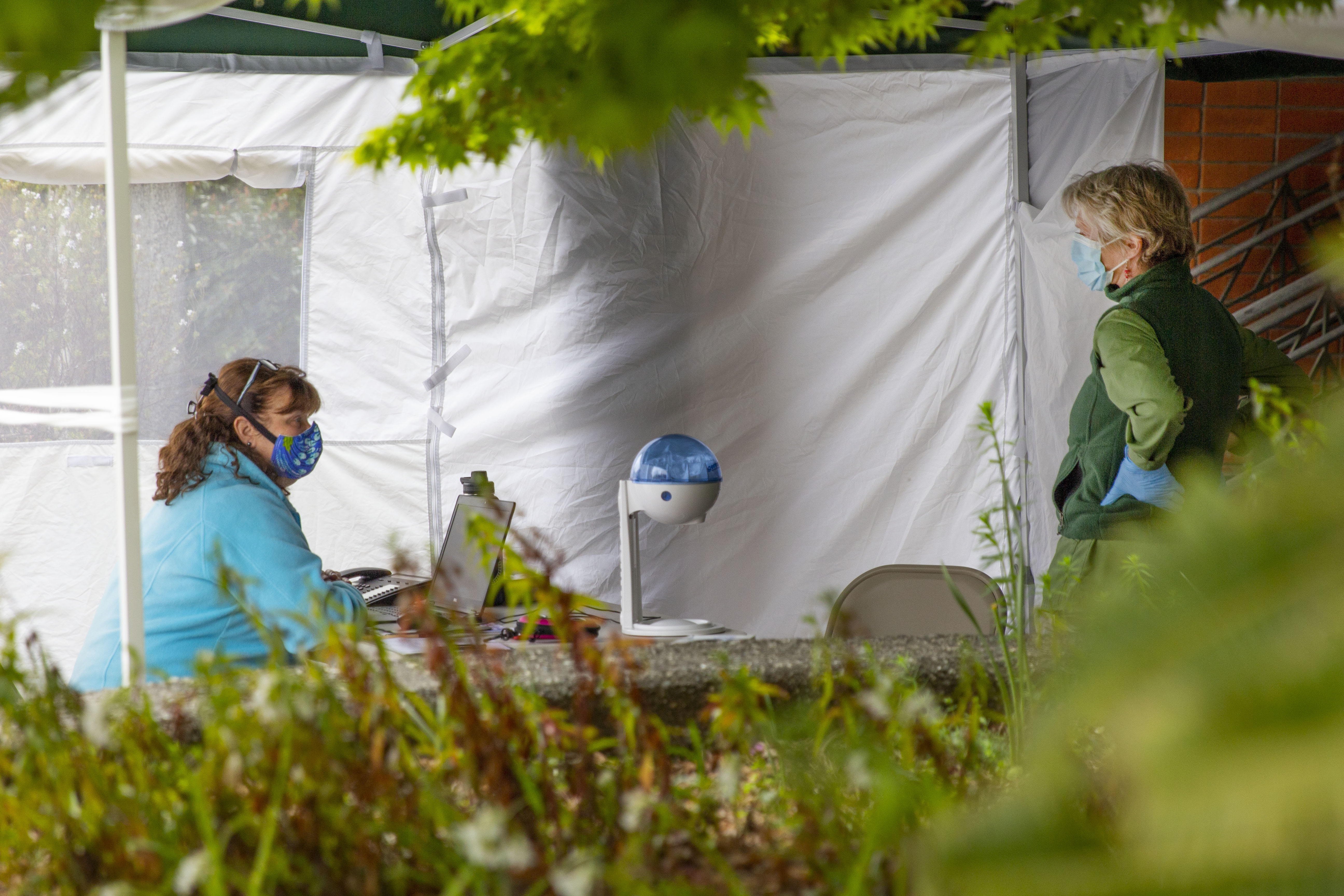
    Editor’s note: St. Joseph and Redwood Memorial Hospitals have set up screening tents for patients with COVID-19 symptoms.

  • Students Speak on Professor’s Use of N-Word

    Students Speak on Professor’s Use of N-Word

    Editor’s note: members of The Lumberjack staff have been and are currently part of KRFH, including the current KRFH student station manager. The author of this story had no previous affiliation with KRFH, but our coverage is inevitably biased by this crossover.

    Students expressed a range of emotions in response to a recent slip-up from their radio production teacher, Cliff Berkowitz.

    In a conversation that followed an interview with the Times Standard for his then-upcoming election for the First District Board of Supervisors, Berkowitz said the N-word in a comment he thought was off the record.

    When asked to chime in on the conversation surrounding a racist joke that had been made by his opponent in the election, Berkowitz did a Richard Pryor impersonation using the N-word—but he said the complete N-word. Berkowitz requested the reporters not print his slip-up, but they were well within their rights to do so.

    In the wake of the interview, Berkowitz lost his primary election by a landslide, although it’s not clear what impact the interview had. Berkowitz issued a public apology to the press that he also read to his students.

    “There are words that are so steeped in hate and racism, that they inflame our community when uttered; I am grateful to live somewhere that holds people accountable for what they say and do,” Berkowitz said. “While I did not wield that word as a weapon nor did I direct it at anyone, it does not remove the harm of saying the word. Nothing excuses what I said. There are people who have trusted me and for them this is a betrayal.”

    Mikayla Moore-Bastide, first-semester KRFH student, described her experience at the station leading up to Berkowitz’s remark as a welcoming family environment.

    “Whether he was on record or not, I still don’t understand why he felt he even had the right to say it anyways,” Moore-Bastide said. “Like, I’m a black person. I don’t even say it. I don’t even say the word at all. Anybody who knows me knows I don’t even say it, ’cause of the history behind it.”

    Moore-Bastide intends to return for another semester of KRFH in the fall, not because she forgives Berkowitz, but because of her passion for radio.

    “I don’t think I really forgive him yet,” Moore-Bastide said. “It’s gonna take a long while for me to forgive anyone who would just say the N-word around people who feel comfortable to say it.”

    “If I’m being totally honest, I was super hurt.”

    Delaney Duarte

    Moving forward, Moore-Bastide believed Berkowitz has done all he can to repair the damage his statement caused.

    “He knows what he did wrong, he knows that he hurt people, he’s not oblivious to that fact—he’s very aware,” said Moore-Bastide. “It’s one of those things where you kind of have to just put it behind you and then just kind of realize that people are probably gonna remember you for that, and you kinda have to accept it.”

    Delaney Duarte, manager of KRFH’s TALX program, has been at the station for three semesters.

    “If I’m being totally honest, I was super hurt,” Duarte said. “The whole day when I found out I was just like, I don’t know, I couldn’t wrap my mind around someone who I look up to so much to say that.”

    Duarte wanted it to be made clear that KRFH is a student-run radio program, and that Berkowitz’s role does not go beyond instruction in the classroom.

    “His apology in my opinion was just complete crap, if I’m being totally honest,” Duarte said. “It just seemed like he’s just saying sorry cause he has to. He got caught. You have to say sorry.”

    Duarte expressed sympathy and concern for the African-American students in class, feeling a great deal of pain, herself, as a Latinx student.

    “I wouldn’t blame them if they didn’t want to join because of that,” Duarte said. “Because, I mean, who wants to be taught by someone who doesn’t respect their students?”

    It’s not just the students of color that feel uncomfortable in the classroom.

    “People in our group, they’re just like really uncomfortable even going to the booth, like knowing that he’s either upstairs teaching his class, or like, his office is literally in the radio station,” Duarte said. “So it’s kinda hard to not run into him.”

    “You have to take into account the perspective of the people that would potentially be offended by these kinds of statements in that regard.”

    Elliott Portillo

    Elliott Portillo has been a part of KRFH for three semesters, and doesn’t think this single incident should overshadow the good Berkowitz has done for students and the community.

    “I think the joke was in bad taste,” Portillo said. “I think it came from more of a position of ignorance rather than of blatant hatred. I don’t think Cliff is a racist in any way, just based on the interactions he’s had with students and his passion for students.”

    Portillo pointed out that his perspective should be taken with a grain of salt, as a self-described “white-washed” Mexican.

    “You have to take into account the perspective of the people that would potentially be offended by these kinds of statements in that regard,” Portillo said. “But in my personal preference, I think he’s done so much that it’s hard for me to warrant lasting damage or lasting punishment.”

    Duarte said students have come forward to request Berkowitz’s replacement because of an unsafe learning environment.

    “As much as it hurts to say—I’ve always looked up to Cliff—but now at this point I’m kinda just bummed out and really hurt,” Duarte said. “So, I’d probably want to see a replacement. Someone who’s more respectable to our students of color.”


    Entire Statement from Cliff Berkowitz:

    I am writing this to formally apologize. I am truly contrite that my words caused pain or anyone to feel less than. I was wrong, it was stupid, and I should not have done it. We all commit harm, and when we do, it is only right to both apologize and work to make things better. I know I harmed people. I am sorry.

    I have been asked over and over again about my opponent’s racist comment, which he has attributed to a Cheech and Chong joke. While that may be true, it is still unacceptable. I foolishly compared that to quoting Richard Pryor, trying to make the point that even quoting someone saying the wrong thing is unacceptable, and in making my example, I too said the unacceptable.

    There are words that are so steeped in hate and racism, that they enflame our community when uttered; I am grateful to live somewhere that holds people accountable for what they say and do. While I did not wield that word as a weapon nor did I direct it at anyone, it does not remove the harm of saying the word. Nothing excuses what I said. There are people who have trusted me and for them this is a betrayal.

    I have spent the past decades of my life trying to facilitate conversations that include rather than exclude. I have used my position to try to give voice to those who often don’t get to talk about their lived experiences. However, that is not enough. I formally, and contritely apologize. I apologize to all those hurt by my words, my friends, my family, the community, and my students. My past actions to help People of Color do not absolve me for the harm I committed. I still said that word. It is still not okay.

    As I continue to reflect on how I have harmed people by saying that word, I will work towards a more just society. I will not stop activism or working to dismantle racism, and I will continue to interrogate how racist ideology has worked its way into my own mind. I will continue to work to make things better. I will uphold my promise to make sure all voices are heard and that there will be a place at the table for everyone, especially People of Color.

    I am deeply grateful to those people in my life who have held me accountable and shared their personal experiences and knowledge about racism. Thank you to the community for also holding me accountable.

  • Updated: HSU Suspends Classes After Spring Break, Also Cancels Sports and Large Events

    Updated: HSU Suspends Classes After Spring Break, Also Cancels Sports and Large Events

    Classes will be taught remotely starting March 26

    Latest press release from HSU:

    • All classes are canceled on March 23-25.
    • Classes will be taught in alternative modes starting March 26 to April 17.
    • The campus will remain open and all student services will be available.

    Humboldt State University will suspend face-to-face instruction and move to alternative modes of instruction on March 26. This will follow the regularly scheduled Spring Break and an extended three-day faculty preparation and development period (March 23-25) during which instruction is canceled. Based on the parameters set forth by the CSU system, this suspension of face-to-face instruction is temporary and currently scheduled to remain in place through April 17. 

    The schedule and agendas for three days (March 23-25) of mandatory faculty preparation and development is forthcoming. Lecturer faculty will receive a stipend for participation. 

    The schedule and agendas for three days (March 23-25) of mandatory faculty preparation and development is forthcoming. Lecturer faculty will receive a stipend for participation. 

    Alternative modes of instruction will include use of Canvas, Zoom, and other instructional technologies. For more information on preparing to use alternative modes of instruction please see the Keep Teaching website

    Students: Please look for email and Canvas-based communications from your instructors about plans for individual courses. Please also see the FAQ page on the HSU COVID-19 web page: https://covid19.humboldt.edu/faqs for general information. 

    The decision is intended to mitigate spread of coronavirus (COVID-19), and is based on current guidelines from the CSU system, Office of the Governor, as well as local and state health officials. It was made following consultation and meetings of the academic department Chairs, Deans, Provost and Chair of the University Senate. 

    The decision was not made lightly. The goal of these changes is to minimize the need to gather in large groups or spend prolonged time in close proximity in spaces such as classrooms.

    The University remains open. Residence halls, dining, student support services, health, counseling, disability services and other related offices remain fully available in support of all students. Students who need computers, Wi-Fi, or other technological support can continue to use the Library and computer lab spaces on campus. A social distancing policy is likely to be in place on campus following Spring Break. More information on HSU’s social distancing policy is forthcoming. All staff are expected to report to work. Student employees should return to their normal work as scheduled following Spring Break unless alternative arrangements are made with their supervisors.

    There is currently no community spread of COVID-19 in Humboldt County. There have been no cases of COVID-19 on campus. Because information about the virus is changing rapidly, please check your humboldt.edu email and HSU’s COVID-19 websitefrequently during the break for announcements from HSU and California State University system.

    Don’t forget there are basic steps you can take to protect yourself and help prevent the spread of COVID-19

    • Stay home if you are sick or have a fever. 
    • Wash your hands frequently and avoid touching your face and eyes, nose, mouth.
    • Routinely clean your home, particularly high touch surfaces like doorknobs.
    • Consider limiting attendance at optional large gatherings because this is where colds, flu, and other respiratory viral infections are spread.

    It’s important to remember to treat each other with care, respect, and empathy as the virus continues to disrupt daily life. 

    Please know that support and health and wellbeing services are available on campus. Students who would like to talk with a counselor can contact Counseling & Psychological Services in Student Health & Counseling at 707.826.3236 anytime. Staff or faculty seeking additional support may call the Employee Assistance Program at 707.443.7358.

    Old press release:

    Humboldt State University acknowledges its important role in the North Coast in bringing thought-leaders, visitors, artists, musicians, and entertainers to campus and the local community. In an effort to mitigate the possible spread of COVID-19, HSU continues to assess the impact of hosting large events on campus.

    There is no one response that works for all events. HSU understands that each event is different.

    HSU leadership, consistent with CSU guidelines and guidance from local health officials, continues to assess events and their relationship to HSU’s core mission. This ongoing assessment looks at event outcomes and whether postponement or other alternative modalities (such as virtual) can be used, participants’ ability to travel, participants’ relationship to high-risk areas or populations, local health standards, size of the event, fiscal and opportunity costs related to the event, and any other unique campus contexts that warrant consideration.

    Subject to change, effective Saturday, March 14 until Friday, April 17 all on-campus large events (greater than 150 attendees) are suspended. Event planners will be asked to cancel, postpone, or use an alternative modality (virtual). Events after April 17 will continue to be assessed on a case-by-case basis, with additional information and campus decisions made as more information becomes available. 

    All HSU-sponsored athletic events are scheduled to continue. However, based on strong guidance from CCAA, events will now be “fan-less,” meaning there should be no fans at the events and only essential personnel are permitted for the event.

    The campus continues to assess the most appropriate guidelines for smaller events, and will communicate new guidelines when available.

    This is a difficult decision, but the University asks the community and event planners to support these efforts in trying to reduce the spread of COVID-19.

    • Please consider staying in Humboldt during Spring Break.
    • If you leave during Spring Break, plan carefully about where you travel.
    • After Spring Break, classes, assignments, and exams are cancelled on March 23-24.
    • Instruction resumes as normal on March 25.
    • Stay home if you are sick or have a fever. 
    • Wash your hands frequently and avoid touching your face and eyes, nose, mouth.
    • Routinely clean your home, particularly high touch surfaces like doorknobs.
    • Consider limiting attendance at optional large gatherings because this is where colds, flu, and other respiratory viral infections are spread.

  • Clubs Budget Crunched in Wake of Declining Enrollment

    Clubs Budget Crunched in Wake of Declining Enrollment

    Associated Students takes over remains of the clubs budget

    The Associated Students Programs Grants budget has been cut by more than half of the previous academic year’s budget to $25,000 from $52,000. With student enrollment on the decline since 2016, student fees. which make up the entire AS budget, have taken a significant hit.

    As a result of the cuts, it was decided the control of the budgets would be kept within the Associated Students Board of Finance for this academic year. All student clubs are allowed to apply for AS grants, either for events or travel.

    Grant requests are brought to the Associated Students Board of Finance for evaluation before being handed off to the Associated Students Board of Directors, made up of 15 voting and three non-voting members, for final approval.

    In the past five years, between about 10-18% of the AS Programs Grants budget has gone to AS category two programs like CCAT and the MultiCultural Center, which receive separate funding through different outlets. This year, AS decided clubs will receive the entire AS Programs Grants budget in the 2019-2020 academic year.

    The AS Board is currently in the process of their third and final grant allocation for the 2019-2020 academic year. So far, the Board of Directors has approved grants to all 29 clubs that requested—however, not all requests have been entirely met.

    As a result of the budget reduction, AS put in place a cap of $500 per event, $800 per cultural event and $100 per person for travel. The Board of Directors will hold their final vote on March 13 to decide the 11 remaining grant requests for the academic year.

    AS Legislative Vice President Jeremiah Finley is working to provide a fair opportunity for all clubs to receive funding.

    “AS is doing the best with the situation that they’re having to navigate through.”

    Molly Kresl

    “I think clubs always need more access to more funds across the board,” Finley said. “I think the goal of AS here is to really try to make sure that they do have access to funds. And so, in trying to do that, we’re trying on our part, to find ways in our budget to make sure they have access.”

    The clubs budget reduction has forced everyone involved to be more responsible with their spending, according to Clubs and Activities Coordinator Molly Kresl.

    “That’s something that’s been really cool that’s come out of this unfortunate situation,” Kresl said. “Even though we have a decrease in funding, there’s an increase in collaboration with student-initiated programs.”

    However, there’s still much improvement to be made. AS wants to hear the voices of students that are affected by these decisions. For students who want to take matters into their own hands, they can sign up as a candidate for the AS Board.

    “AS is doing the best with the situation that they’re having to navigate through,” Kresl said. “It’s important to recognize the complexity of the situation, and that there are ways that we can help our students be successful and do what they wanna do on campus.”

  • HSU Activates Pandemic Planning Committee

    HSU Activates Pandemic Planning Committee

    With COVID-19 spreading, HSU plans post-spring break response

    Humboldt State University is planning for a possible partial or full campus closure in response to the spread of COVID-19.

    HSU has sent multiple emails since March 4 to students and faculty communicating the steps and measures the campus is taking to address the spread of COVID-19. In addition to creating a website with updates on the virus, HSU has organized the Pandemic Planning Committee.

    In the most recent email, sent out March 10, HSU suspended all international and non-essential domestic university-related travel. Communication Specialist Grant Scott-Goforth clarified to The Lumberjack that students are free to travel where they wish outside of school. Scott-Goforth said HSU would send out more messages in the coming days to define essential travel.

    “The idea is that we’re creating a flexible solution, and our main goal is to ensure that we can provide services and instruction.”

    Kris koczera

    The Lumberjack spoke with the emergency coordinator at HSU, Kris Koczera, who sits on the PPC. Koczera said the PPC is meeting weekly, but that is subject to increase if the outbreak becomes more severe locally. She was hesitant to talk specifics due to the committee’s confidential status and the pandemic’s shifting nature.

    “The idea is that we’re creating a flexible solution, and our main goal is to ensure that we can provide services and instruction,” Koczera said.

    Graphic by Jen Kelly

    Representatives from Dining Services, Housing and even the Dean of Students have attended meetings to address concerns about how the pandemic will impact their departments. Much of what the PPC is doing is modeled after other campuses in the California State University system and is advised by direct communication from the Chancellor’s Office of the CSU.

    “We have the benefit of kind of looking at what they are doing, the timing of what they’re doing and using that as almost a case study for us to move off of,” Koczera said.

    As of March 10, several college campuses including the University of California, Berkeley, UC Santa Cruz, San Francisco State and Stanford have suspended most of their in-person classes and will be offering all lecture courses through online instruction services like Zoom and Canvas.

    HSU has advised faculty to create a contingency plan in the event of a full campus closure. Koczera says life is first and foremost for the PPC and that they’re aiming for a fluid-but-reactive approach.

    “It doesn’t matter how great instruction is,” Koczera said,” if we have no students to instruct.”

  • New In-N-Out in Eureka

    New In-N-Out in Eureka

    “Quality You Can Taste” in Humboldt County

    In 2018, In-N-Out Burger announced the start of construction for a new location in Eureka. Now at the beginning of March, the new restaurant located at 2616 Broadway Street nears completion.

    The upcoming restaurant currently seeks job applicants for entry-level positions, suggesting the location will be opening soon, but an exact date is currently unavailable. They plan to interview applicants on March 2 and 3.

    The first customer at the new store will receive a free meal and a T-shirt as well.

    Eureka continues to expand its collection of restaurants as new locations for Chipotle and Mod Pizza are also under development nearby.

  • Students Suffer from Frequent Bike Thefts

    Students Suffer from Frequent Bike Thefts

    Humboldt State University police say a student on campus gets their bike stolen every day

    Many Humboldt State University students have their bikes disappear from where they left them. Either a front wheel attached to a bike rack with the lock around it or a frame without a back wheel remain. Some thieves can even take the whole bike by using bolt cutters to cut the bike lock. Bikes are expensive, and having them stolen is a real cost to a student.

    Kaitlin McKie, a 23-year-old student at HSU majoring in engineering, lives off-campus. Her partner’s bike was stolen at their apartment complex. She said bike theft has been going on for a while.

    “Use U-locks instead of the cable locks,” McKie said. “They’re a little bit heavier—a little bit harder to put on the bike rack—but it’s definitely worth the investment.”

    Bike thieves can dismantle newer bikes from the front and back tires by lifting a lever on the wheel and unscrewing it, which releases the wheel from the frame. This makes it easy to remove the frame from the front tire or remove the back wheel. This technique is manufactured for bike owners to easily break them down to create a more convenient way to travel.

    University Police Department Sergeant John Packer said a student’s bike is stolen on campus every day.

    Jack McLaughlin, a freshman chemistry major at HSU, said three of his friends had their bikes stolen this semester on campus.

    “Never leave your bike for a minute,” McLaughlin said. “Always keep your eyes on your bike. If you can, bring it into the classroom with you. If you’re leaving it somewhere overnight, bring it inside with you.”

    University Police Department Sergeant John Packer said a student’s bike is stolen on campus every day. While it’s hard to stop these crimes from happening, there are ways to prevent it.

    Packer suggested you register your bike at the police station. This allows officers to match your serial number to a newly confiscated bike to return to you if it is stolen.

    Police officers can find your bike at a pawn shop by matching the serial number to the numbers that the pawn shop will register in their system. Pawn shops can even give police officers copied images of the seller’s ID, which police can use when investigating the crime.

    “Ride your bike every day,” Packer said. “If you’re doing that, you know where it is, you’re locking it up, you’re moving it around from point A to point B. It will be with you at that point in time.”

    Packer also suggested investing in a Kryptonite bike lock. These bike locks are well known for being tough, reliable and hard to cut. If you don’t want to buy one a Kryptonite lock, Packer said a simple, thick chain with a lock can do the trick.

  • Sanders Wins California Primary

    Sanders Wins California Primary

    Sanders takes over 40 percent of Humboldt vote

    Vermont Senator Bernie Sanders won the California primary. With more than 400 delegates up for grabs, Sanders consistently polled higher for California Democrats leading up to the primary. Sanders’ progressive platform drew a coalition of voters and strong support from unions across the country.

    Tuesday night marked the biggest event in the primary season. Fourteen states plus American Samoa held primaries Tuesday, with 1,357 delegates to be allocated. That is just over a third of the delegate total needed to win the Democratic nomination.

    Humboldt County overwhelmingly voted for Sanders. Part of California’s second congressional district, Humboldt voters choose six delegates to send to the Democratic National Convention in July. Tuesday night reports around 9:30 p.m. showed Sanders leading Humboldt with 42.4% of the vote, followed by Massachusetts Senator Elizabeth Warren with 14.5%.

    Sanders led California overall with 28.7% of the vote. Michael Bloomberg was second with 18.8%. Biden was third at 17.2%.

    Biden had a surprising surge in support in other states. Biden is running as a moderate, citing the need to beat President Donald Trump in the general election. Though Sanders draws support from demographics with generally low-voter turnout, Biden’s campaign claims a candidate running too far to the left will discourage many potential Democratic voters from showing up in November.

    “I believe that Sanders is still going to be the delegate leader. And he has the enthusiastic base needed to beat Trump.”

    Billy Cook

    This boost in support may be a result of the recent dropouts of Indiana Mayor Pete Buttigieg and Minnesota Senator Amy Klobuchar. Both candidates were running moderate campaigns similar to Biden’s. Sanders had been accumulating significant momentum in the early primary states. Before Tuesday, many viewed Biden’s campaign as an insignificant challenge to Sanders’ campaign.

    One of Humboldt County for Bernie 2020’s lead organizers, Billy Cook, remained hopeful that Sanders will win the nomination.

    “I believe that Sanders is still going to be the delegate leader,” Cook said. “And he has the enthusiastic base needed to beat Trump.”

    Since 2016, Sanders has drawn support around his long-standing progressive platform. His main campaign points are Medicare for All and the Green New Deal. Many Humboldt residents cited these policies as the main draw to support Sanders.

    Sanders supporters in Humboldt County have been hard at work campaigning to get residents to vote for Sanders. They have regularly sent crews to canvass Arcata, Eureka, McKinleyville and Blue Lake. One of their strategies is to reach out to voters face-to-face. A few members of the group have also set up tables with voting and candidate information in pedestrian areas around Humboldt as well.

    Another organizer for Sanders-supporters in Humboldt, Evan T. Nixon, said Super Tuesday made the race more complicated. Nixon said that the strategy for organizers in Humboldt is going to change. Their focus will shift to states that have not yet voted in the primary, like Oregon and Arizona.

    “We need,” Nixon said, “to just hit the phones.”

  • Students Test Out the Voting Waters

    Students Test Out the Voting Waters

    Mock election prepares HSU students for local issues on ballot

    Humboldt State University’s Associated Students held a mock election with the help of the Politics Club Feb. 24 in the University Center Quad. On the ballot were candidates for both the Democratic and Republican primaries, as well as local election measures.

    “We’re gathering data from the student population about what would happen if we held the election today,” Legislative Vice President of Associated Students Jeremiah Finley said.

    The mock election gave students the opportunity to take a closer look at which candidates were on the ballot. When the results are released, students can gain a new insight into the perspectives of other students.

    “Some of the measures that were posted—I was like, ‘What is this?’”

    Tashenea Young

    “We’re trying to make sure our students at HSU are more educated about the decisions that they’re making,” Finley said. “This will give the students the opportunity to go back in and really investigate.”

    Tashenea Young is a computer science and math education major who felt more informed about the upcoming election because she participated in the mock elections.

    “Some of the measures that were posted—I was like, ‘What is this?’” Young said.

    Young said mock elections like the one on Monday are a step in the right direction for helping to inform the student body, but events like the mock election need more publicity to reach more people.

    “It’s better than nothing,” Young said.

    Real measures weren’t the only questions on the ballot. It also included a mock referendum on fluoridated water.

    Paul Hilton, an HSU politics major and member of the Politics Club, helped organize the mock election. He was curious about how students would vote concerning fluoride. He said that although there wouldn’t be a referendum on fluoridated water on the ballot in March, it was close to being on the ballot in November.

    “It was a step away from Arcata putting it on the Arcata ballot,” Hilton said. “After a whole lot of community city hall meetings and discussions, it was a 3-2 vote to not put it on the ballot.”

    Hilton hoped the mock election would help professors as well as students.

    “One of the questions was, ‘What day of the week is worst for you when it comes to nighttime deadlines?’” Hilton said. “So, one of those actually has informative results that we’ll tally up that might be able to go to professors.”

    Although Hilton was glad for the mock election, he thought there was room for improvement. The ballots were printed on colored paper and didn’t resemble voting material. Hilton said this may have discouraged potential voters.

    “People are more likely to pick up a pamphlet,” Hilton said. “If I was just going by, I’d be like, ‘What’s this kid’s construction paper kind of stuff just hanging out? I’m not interested in this.’”

    California votes Tuesday, March 3. Associated Students are now more experienced for their real elections, and students can take more knowledge on local issues to the polls.

  • Environment Takes Center Stage at Huffman Town Hall

    Environment Takes Center Stage at Huffman Town Hall

    Huffman talks greenhouse gases, sea level rise, salmon and more

    Jared Huffman, representative to California’s Second District, held a town hall at Eureka High School on Feb. 21 to engage his Humboldt constituents. After touting the progressive platform he’s pushing in Washington, D.C., Huffman answered questions spanning from immigration reform to the 2020 election—but the prevailing concerns surrounded the climate crisis.

    “You got about a decade—less than a decade—to dramatically transform the global economy to put us on a path of decarbonization that gets us to net-zero greenhouse gas emissions by the year 2050,” Huffman said.

    Huffman sits on the House Select Committee on the Climate Crisis along with 14 other representatives. Authorized in January of last year, the committee is set to release policy recommendations on March 31. The report will steer the current and upcoming Congress on legislation regarding the changing climate.

    “Sea level rise and resiliency in coastal communities like this are just a huge part of the climate crisis. We are gonna have to do a lot of planning and prioritization for critical infrastructure.”

    Jared Huffman

    Several Humboldt residents questioned Huffman about protecting infrastructure from rising sea levels. Much of the county would be at risk if the sea rose. Low bridges and roadways are at risk as well as economic infrastructure like fisheries and farmland.

    “Sea level rise and resiliency in coastal communities like this are just a huge part of the climate crisis,” Huffman said. “We are gonna have to do a lot of planning and prioritization for critical infrastructure.”

    Huffman also sits on the Transportation and Infrastructure Committee. Huffman aims to focus some of the funding for infrastructure on coastal communities that would be impacted by rising seas.

    Some audience members expressed concern about Pacific Gas and Electric’s role in California’s power supply. After months of sporadic power outages, many Californians are looking at the possibility of de-privatizing the utility company.

    “I’d be fine if [PG&E] were reinvented into some type of not-for-profit entity as well,” Huffman said. “It would be nice to take that profit motive out of the situation to convert it from an investor-owned utility, where they gotta meet Wall Street’s expectations, to something that was publicly-owned or possibly a cooperative.”

    Huffman then shifted his focus to the diversion of water from the tributaries that feed into the Trinity River to farmland in the San Joaquin Valley. The Trump administration is working to release a new biological opinion that will allow for significantly more water to be diverted from flowing down the Trinity. This would override the previous finding that diversion of water would drastically impact the salmon population.

    A similar decision was made by the Bush administration in 2001. Restrictions on the natural flow of water down the Klamath River led to the mass salmon kill in 2002.

    Huffman is hoping to hold the previous finding up long enough for a new administration and Congress that would prioritize protecting native species.

    “You get the picture, right?” Huffman said. “The deck is pretty stacked right now against protecting our rivers and fisheries here on the North Coast. And it’s a fight I will continue to fight.”

  • Report Reveals Shortcomings in Lawson Case

    Report Reveals Shortcomings in Lawson Case

    National Police Foundation identifies issues and makes recommendations

    By Grace Caswell and James Wilde

    The National Police Foundation assessment team reviewed the first 72 hours of the Josiah Lawson homicide case and released a 65-page review on Feb. 20. The report included NPF’s response to the case and feedback for the Arcata Police Department.

    NPF said APD responded professionally to the crime scene at 1120 Spear Ave. on April 15, 2017, but the crime scene lacked proper security and management.

    “Many basic tenets of crime scene security and management were not followed in this case,” NPF said.

    The Arcata City Council commissioned the report in September 2018 for $30,000. NPF is an independent, nonpartisan organization that analyzes police cases.

    From August 2018-2019, NPF conducted 24 interviews and reviewed reports, transcripts and court procedures, including 50 hours of recordings and 6 hours of APD dashboard camera video. Due to the ongoing status of the case, NPF couldn’t interview any witnesses or partygoers other than first responders.

    NPF said APD personnel weren’t trained or given access to necessary equipment, which are common issues in small law enforcement teams. As a result, APD couldn’t sufficiently manage the crime scene and investigation.

    NPF recommended APD do more to communicate and build relationships with the Arcata community.

    “The APD chief has an opportunity to institute a culture of ongoing evaluation of the department’s performance—especially in critical incidents or unusual responses,” NPF said. “This is how organizations grow, evolve, learn, and improve.”

  • Humboldt County Coronavirus Case Update

    Humboldt County Coronavirus Case Update

    Department of Health and Human Services quells concerns

    The Humboldt County Department of Health and Human Services informed the public Feb. 20 via press release they had received confirmation of one confirmed case of coronavirus in Humboldt County. A close contact of the confirmed patient has symptoms and is also being tested for the disease. 

    Information has come, and will continue to be provided from the California Department of Public Health and the U.S. Centers for Disease Control and Prevention.

    The DHHS has since been fielding questions from the concerned community.

    The Lumberjack spoke with Hava Phillips, the supervising public health nurse at DHHS. If you are concerned that you may have contracted the disease, she asked that you call them before visiting their department.

    For now, the county is not considering this a public outbreak, and the ill individuals are self-isolated and under close watch by the Public Health Communicable Disease Surveillance and Control Unit. This doesn’t mean they’re not prepared for the disease to spread.

    “We are making sure we have the infrastructure in place if this were to become a larger outbreak,” Phillips said.

    Phillips said because it’s also flu season, people should be following basic precautions to prevent the spread of communicable diseases of all varieties, summed up by these tips from the DHHS press release:

    • Stay home when you are sick.

    • If you have a fever, stay home or go home if you are already at work or school, and stay home for at least 24 hours after you no longer have a fever (without the use of fever-reducing medicine).

    • Wash your hands frequently and particularly before eating or drinking.

    • Promote good hand hygiene in your home by educating household members and making sure soap, hand sanitizers and tissues are available.

    • Avoid touching your face, particularly your eyes, nose and mouth.

    • Encourage proper cough etiquette. Cough or sneeze into a tissue, sleeve or arm. Do not use your hands.

    • Perform routine surface cleaning, particularly for items which are frequently touched such as doorknobs, handles, remotes, keyboards and other commonly shared surfaces.

  • New Grant Spurs CAPS Growth

    New Grant Spurs CAPS Growth

    CAPS will provide 36 more appointments per day by next year

    On Jan. 9, the California State University Office of the Chancellor gave Counseling and Psychological Services a grant of $150,000 under the California Budget Act of 2019 to provide Humboldt State University students with more counseling services to combat mental health issues.

    Director of Counseling and Psychological Services and Associate Director of Student Health and Wellbeing Services Jennifer Sanford was closely involved in the acceptance of the grant.

    “I’m most excited about the pilot project to get innovative programs off the ground that’s focused on high-risk students,” Sanford said. “In developing this program we will be doing some specialized training that we’re doing research on now to launch next year.”

    “Mental health doesn’t get the recognition that it should. When you’re not mentally well, your body reacts to that. If you’re stressed out, you’re only going to make it worse. More people should pay attention to it.”

    Danele Quijas

    Lobby areas will be built to hold more students and allow for an increase in counseling appointments. The grant will also fund two new therapy offices in the Behavioral and Social Sciences building, which will allow therapists to extend their hours. More tables and chairs will be added to the waiting areas to eliminate standing-room-only appointments. Construction will begin this summer.

    The funds are expected to help students learn life skills, cope, regulate stress and manage moods. CAPS says improving these areas can improve class attendance, retention in school and promote graduation. With anti-stigma campaigning, CAPS hopes to make students feel comfortable talking about their problems.

    Danele Quijas, a 22-year-old biology major, said students don’t pay enough attention to their mental health.

    “Mental health doesn’t get the recognition that it should,” Quijas said. “When you’re not mentally well, your body reacts to that. If you’re stressed out, you’re only going to make it worse. More people should pay attention to it.”

    A pilot project of $25,000 was also accepted by CAPS and will allow the growth of an intensive treatment program for high-risk students with disabling and chronic mental health issues. This treatment plan will include individual and group therapy as well as the highly-researched dialectical behavior therapy. CAPS hopes to continue this growth by providing other California State Universities with the tools to rebuild their own programs to be as effective as possible.

    Casey Pederson, a senior majoring in business marketing, said HSU should do more to make resources clearly available to students.

    “In a case like this with mental health, there can never be too many resources—so I definitely think it would help,” Pederson said. “I also think a big issue about it is getting people to know. Like I said, I had no knowledge that this was happening, and the big thing with mental health is the lack of knowledge and getting help. And there are resources available.”

  • First Case of Coronavirus Confirmed in Humboldt

    First Case of Coronavirus Confirmed in Humboldt

    Press release from Humboldt County Department of Health and Human Services Public Health Branch

    Press release:

    The Humboldt County Department of Health & Human Services Public Health Branch has received confirmation from the California Department of Public Health and the U.S. Centers for Disease Control and Prevention (CDC) of one case of COVID-19 in a Humboldt County resident. A close contact who has symptoms is being tested as well.

    This marks the first confirmed case of the novel coronavirus in Humboldt County. Presently, the ill individuals are doing well and self-isolating at home, while being monitored for symptoms by the Public Health Communicable Disease Surveillance and Control Unit.

    Close contacts of these individuals will also be quarantined at home and monitored for symptoms by Public Health staff. With the amount of foreign travel by county residents, including travel to China, it is not surprising that a case has emerged locally. Additional cases may occur either in returning travelers or their close contacts.

    “It’s important to remember that the risk to the general public remains low at this time,” said Humboldt County Health Officer Dr. Teresa Frankovich. “Despite the fact that Humboldt County now has a confirmed case of COVID-19, there is no evidence to suggest that novel coronavirus is circulating in the community at large.”

    Frankovich added that transmission in the U.S. to date has been among close contacts and not among the general public.

    Public Health suggests the following precautions to prevent the spread of COVID-19 and all infectious diseases, including common illnesses like colds and flu:

    • Stay home when you are sick
    • If you have a fever, stay home or go home if you are already at work or school, and stay home for at least 24 hours after you no longer have a fever (without the use of fever-reducing medicine).
    • Wash your hands frequently and particularly before eating or drinking.
    • Promote good hand hygiene in your home by educating household members and making sure soap, hand sanitizers, and tissues are available.
    • Avoid touching your face, particularly your eyes, nose and mouth.
    • Encourage proper cough etiquette. Cough or sneeze into a tissue, sleeve or arm. Do not use your hands.
    • Perform routine surface cleaning, particularly for items which are frequently touched such as doorknobs, handles, remotes, keyboards and other commonly shared surfaces.

    The county’s Communicable Disease Surveillance and Control Unit will continue to provide updated information about COVID-19 to health care providers, hospitals and schools, as well as the general public.

    The county’s Communicable Disease Surveillance and Control Unit will continue to provide updated information about COVID-19 to health care providers, hospitals and schools, as well as the general public.

    For updated information about COVID-19, please continue to check the https://www.cdc.gov/coronavirus/.

    If you are ill and in need of medical care and have been in China within the previous two weeks or have been in contact with an individual who has COVID-19, please contact your health care provider or emergency department before presenting for care. Arrangements will be made to have you evaluated in the safest manner possible for health care staff and other patients.

  • Flyers Allege Faculty Sex Solicitation

    Flyers Allege Faculty Sex Solicitation

    Humboldt State University investigation is ongoing

    Humboldt State University announced Feb. 14 it was investigating flyers posted in campus bathrooms alleging a faculty member solicited paid sex from students.

    The flyers showed a series of apparent phone messages between a student and a faculty member. In the messages, the faculty member asks the student for sexual contact in return for money.

    The flyers also include a demand for faculty members using positions of power to exploit students to be outed and for HSU to hire more counselors of color.

    (Warning: flyer contains potentiallytriggering content.)

    HSU confirmed on Feb. 18 it was investigating the allegations and had made progress beyond the flyers. HSU Spokesperson Grant Scott-Goforth said they could not share any further details.

    “It’s under investigation and it’s a personnel issue, so there are a lot of privacy issues,” Scott-Goforth said in an email. Scott-Goforth also declined to tell the Times Standard if HSU has cancelled any classes.

    Multiple anonymous student sources have confirmed to The Lumberjack that the classes of one faculty member have been cancelled and a substitute has taken over since the initial flyer investigation was announced. It’s not confirmed that these cancellations are tied to the investigation.

    Title IX Coordinator David Hickcox also told the Times Standard the investigation has not been classified as a Title IX case, as no accusers have come forward.

    HSU included multiple contacts for anyone with more information or for anyone who had been harmed, including the Campus Advocate Team, Counseling and Psychological Services, the Dean of Students Office, the Title IX Office and the National Sexual Assault Hotline.

  • No Parking, No Progress

    No Parking, No Progress

    Study reveals complex campus parking problem with solutions still far-off

    In 2017, Humboldt State University commissioned a parking market demand study which found exactly what commuters knew—there is a problem with parking on campus.

    HSU has a total of 2,162 spaces, about 1,000 of which are general parking. These spaces are shared among more than 9,000 students, staff, faculty, visitors and administrators. The study found solving the parking problem might be harder than adding more spaces. Terrain is challenging, space is limited and HSU has a finite budget.

    Film student Alice Peterson had a panic attack the first time she had to park on campus.

    “It was raining really hard, I was late to class, it was the second or third week, there were no spaces and there was a lot of over-stimulation,” Peterson said. “My fight or flight kind of kicked in and I left.”

    Peterson has needed to drive to class more and more ever since. A load of heavy, expensive film equipment makes walking every day impossible. During her time at HSU, she has racked up almost $500 in parking violations because she is forced to park illegally or in spaces meant for visitors.

    David Lieb is the national director of higher education mobility planning at Walker Consultants, the parking consultant firm that HSU contracted to conduct the market demand study. Lieb worked on the study personally and said that although universities are a group of people sharing a common parking problem, HSU faces some unique issues.

    “You have a challenging topography,” Lieb said. “Everybody wants to park in a space that’s convenient to where they go, but there’s a limit to the number of spaces.”

    There is barely any room on or near campus to add a significant amount of spaces, which is why many students are advocating for a parking structure. But Lieb did not recommend a structure.

    “The shortage at this point is such that we don’t believe it would solve the problem,” Lieb said. “The survey suggested that there was more demand out there, but people were saying, ‘Why would I buy a permit if I’m not going to get a space?’ So if you increased the number of spaces, the people who are currently saying, ‘I’m not going to buy one,’ are going to buy one.”

    This process means the parking situation would remain the same if a structure was built, but the parking prices would have to increase to pay for the construction.

    “By what we calculated, parking prices would at least double or possibly triple,” Lieb said. “Our company provides design services for parking structures. We would be delighted to design a parking structure for you, but we’re not going to recommend it if we don’t think it’s the right solution.”

    Alternative transportation and ride share programs are already available through HSU.

    Jeanne Rynne, the associate vice president of Facilities Management, and Krista Paddock, HSU’s Parking and Commuter Services program coordinator, are working together to alleviate parking demand. All plans are in preliminary stages of development, but the long-term goal is to limit the number of cars that are brought to campus instead of adding more parking spaces.

    “We are looking at potential park-and-ride lots in the area,” Paddock said.

    There are parking lots in Eureka and McKinleyville that stand nearly empty during HSU’s busiest times. Those lots could be used as off-campus parking. HSU could then provide buses to and from the designated lots to limit the number of cars coming to campus daily.

    “We’re always trying to promote ride share with the Zip Cars and the Zagster bikes and the Jack Pass program,” Rynne said.

    Alternative transportation and ride share programs are already available through HSU. Both Paddock and Rynne said there are no concrete solutions on the table yet. For the time being, they plan on heavily marketing the programs that already exist.

    “We’re always open to feedback,” Rynne said. “We have the Parking and Transportation Committee and there’s two student vacancies.”

    Rynne, Paddock and Lieb all agree that parking is an incredibly emotional issue. Finding a space can take a long time. The study noted many commuters take longer to find a space than to travel to and from HSU, and HSU’s lots fill to 100% capacity during peak hours.

    Parking is stressful in a special way. No one studying or working at HSU needs additional stress, but money and topography appear to be blocking all the solutions.

  • Struggles at the Station

    Struggles at the Station

    Floods and frequent power outages caused issues for KRFH during the fall semester

    Editor’s note: members of the editorial staff of The Lumberjack are part of and have been part of KRFH. The author of this article had no previous affiliation with KRFH.

    The Humboldt State University student radio station KRFH is back with new and old DJs for the spring semester after dealing with flash floods and frequent power outages during the last semester.

    Alejandro Zepeda was the station manager during the fall semester and is assistant station manager.

    “It’s been a rough semester for sure,” Zepeda said. “I ended up taking over halfway through the semester as station manager and just kinda walked into a shit storm.”

    KRFH is in the basement of Gist Hall, and when it flooded on Sept. 19, 2019, Zepeda said water started coming down from above.

    “There was a couple spots where the water literally just came in through the ceiling,” Zepeda said.

    Zoe Kelman, the manager for the live music program LIXX, said the lounge they use for recording ended up getting affected badly from the water.

    “I’ve probably turned the station back on myself after power outages somewhere between six and 10 times at this point.”

    Alejandro Zepeda

    “The whole LIXX lounge got flooded and it smelled horrible,” Kelman said.

    Kelman went on to say that pieces of the ceiling came down and the whole floor became dyed orange. Kelman also said it was lucky she came in before the event to set things up.

    “I had actually gone in and already moved some of the equipment,” Kelman said. “It was already sitting on a table, so we got lucky that when the flooding happened none of our stuff was on the floor.”

    Despite the salvaged equipment, the wiring in the KRFH studio runs in the ceiling. At first they couldn’t immediately tell if there was any direct damage to the wiring, but they ended up having to move the LIXX recording that day.

    “We couldn’t do it in the LIXX lounge ’cause it smelled like a swamp, so we decided to do it in a different room,” Kelman said. “It was just like a whole thing where basically all of our equipment cut out at some point. We got dead air. Like, anything that could’ve gone wrong, went wrong.”

    The frequent power outages were also an issue for the station.

    “I’ve probably turned the station back on myself after power outages somewhere between six and 10 times at this point,” Zepeda said.

    Zepeda said the power backup system was out of date so when the power went off, there was no leeway.

    Zepeda said KHSU could hold a solution for the station.

    “Within the year before they got gutted, they actually just upgraded all of their equipment and got a backup generator and a bunch of emergency supplies,” Zepeda said. “I remember thinking during the blackouts—having nothing to do at home—that I could’ve been on the air. I could’ve been talking. We could’ve been relaying news but instead we were all just sitting on our hands.”

    “You can’t break this KRFH spirit.”

    Eddie Rivera

    Zepeda said if the station was given access to the abandoned KHSU studios, they could’ve taken it over and helped the community.

    Last semester was Eddie Rivera’s first time as a DJ. Alongside the floods and power outages, he also described the station’s leadership struggles.

    “Students are so busy and so overworked that sometimes you just can’t attend to everything that the club might need,” Rivera said.

    He estimated that with class time and time spent on the air, students in the class will add an extra five hours of work to their week. Rivera said their manager struggles are a lot better now.

    “We have a couple new managers and people who are taking a lot of initiative,” Rivera said. “The managers that we have are very dedicated to it and very positive.”

    Rivera said the setbacks made the semester difficult for them, but they are still going.

    “You can’t break this KRFH spirit,” Rivera said.

  • Just One More Hour of Breakfast Burritos

    Just One More Hour of Breakfast Burritos

    Demand extends breakfast burrito availability to 11 a.m. at The Depot

    Popular demand for breakfast burritos has extended the serving time at The Depot by an hour. In previous semesters, breakfast burrito service stopped at 10 a.m. Now, it stops at 11 a.m. We asked The Depot’s staff and regular customers how the time extension affected them.

    Aileen Dominguez works at the breakfast bar in The Depot, and worked there every day for the last semester. This semester, Dominguez has to close the breakfast bar and open the rice bowl station at the same time, alone.

    “Overall it’s positive—the late students can get their burrito.”

    Aileen Dominguez

    “It is more hectic,” Dominguez said. “I have to be faster since there is only one person working the shift.”

    Dominguez said opening and closing two stations at once is a challenge, as there’s no room for both to be done simultaneously.

    Despite her challenges, Dominguez said she feels the extension has had a positive effect. For Dominguez, she noticed that students are able to get their burritos at a later time.

    “Overall it’s positive—the late students can get their burrito,” Dominguez said.

    Adriana Peck is a floor trainer, and oversees different zones at The Depot. This means she helps at the breakfast bar if needed. Peck agreed with Dominguez—she felt the time extension has had a positive impact.

    “It is excellent. I am able to get off my shift and still grab a burrito,” Peck said. “It’s nice to know that it’s there.”

    Leslie Rodriguez is a regular customer at The Depot. Rodriguez looks forward to eating breakfast burritos.

    “It’s really good with Tapatio,” Rodriguez said.

    However, Rodriguez didn’t feel like the time extension had much of an effect for her.

    “It sucks,” Rodriguez said. “They’re all out by the time I get there.”

  • Campus Construction Nears Completion

    Campus Construction Nears Completion

    You’ve seen it. You’ve heard it. You’ve become annoyed by it. When will it end?

    The seismic retrofitting project in the Humboldt State University library is a five-year project of additions and renovations to the library that aims to ensure the safety of the building in the event of a major earthquake. Much of the work of the project is done or is underway.

    The completion date of phase three of the project, which includes improvements and expansions to the basement of the library, has been moved to April 14—although there is a chance that it could get moved back again. Much to the dismay of students and faculty, this means jackhammering and drilling will continue throughout the coming weeks. Director of Planning, Design and Construction, Mike Fisher, pointed to a number of factors contributing to the delayed timeline.

    “We have to excavate through a number of existing conditions, and through that action, we reveal things we didn’t know about,” Fisher said.

    An example Fisher mentioned was the stairs in the library needing to be redone as his workers discovered that the original stairs were poorly designed.

    “It’s little instances like that that compound to lead to a time delay,” Fisher said.

    Fisher went on to talk about the permitting process.

    “During the project, we were moving through permitting and one of the jurisdictions having authority is the Office of the State Fire Marshal,” Fisher said. “Their permitting process took much longer than expected and we had to halt production until we could get that permit secured.”

    Fisher also said he and his crew have been working on retrofitting the theatre arts building alongside the library. They considered the theatre arts building to be a higher priority building, as it’s home to regular instruction.

    Deema Hindawi, a senior at HSU and a co-coordinator at the Multicultural Center, is one of many directly feeling the effects of the construction. She said it’s hard for her to function in the MCC both as a student and a co-coordinator because she has had meetings interrupted by construction noise.

    As a critical race, gender and sexuality studies and criminology double major, she has found it difficult to function because she has been constantly battling jackhammering and drilling.

    “It sucks that we don’t really get much of a say in it and it somehow always comes back onto us.”

    Maya Habis

    Hindawi also noted that there used to be a sign on the side of the MCC that was placed there as part of the retrofitting project without taking into consideration the impact of its words.

    “Having people look at that sign is really uncomfortable, especially when you identify as a part of a marginalized community and having to see the sign that constantly is blaring in your face that reads, ‘No trespassing,’” Hindawi said.

    Maya Habis, a junior critical race, gender and sexuality studies major and also a co-coordinator at the MCC, echoed much of what Hindawi said.

    Habis added their own two cents on being moved around to the bungalows and back.

    “It sucks that we don’t really get much of a say in it and it somehow always comes back onto us,” Habis said. “We kind of get put in between these two things—it’s an ultimatum.”

    Dean of the University Library, Cyril Oberlander, said he likes to see himself as part of the student body. He has been told and has noticed for himself that students are not enjoying the noise in the library. He wanted to make it clear that he understands the difficulties of the noise. He invited students and faculty to voice their displeasure with him directly along with suggestions for how he and his staff can make being in the library a better experience for all.

  • News Recap: HSU Budget

    News Recap: HSU Budget

    The Humboldt State University budget proposal is under overview from President Jackson

    What?

    The University Resources Planning Committee of Humboldt State University submitted its budget proposal to HSU President Tom Jackson on Dec. 23, 2019. The URPC spent last semester meeting each week to form a new budget to address a projected $5.4 million budget deficit for the next three fiscal years.

    The proposal includes $2,500,000 of cuts from instruction, $720,000 of cuts from academic support, $420,000 from student services, $1,070,000 from institutional support and $690,000 from operations and maintenance of plant.

    The total cuts amount to 4.4% of the total budget. The cuts would equal 4.4% of the instruction, academic support and operations and maintenance of plant budgets, 3.5% of the student services budget and 4.9% of the institutional support budget. The proposal must be approved by Jackson to come into effect.

    When?

    The URPC discussed the proposal in the University Senate Jan. 28, and will discuss it again Feb. 11., according to URPC Co-Chair James Woglom.

    Why?

    The budget deficit stems from HSU’s enrollment decline. Less tuition makes for a smaller budget. When Woglom spoke with The Lumberjack previously, he noted that the URPC has designed a scalable budget model, or a budget that allows HSU to be more flexible with its money as the University’s priorities change. Despite the cuts, Woglom assured The Lumberjack that the URPC was seeking to limit any negative impacts on students’ education. Thus far, HSU has publicly announced plans to phase out employees only through attrition, or not rehiring select employees, rather than outright cutting positions.

    See more of the HSU Budget here.

  • News Recap: Coronavirus Outbreak

    News Recap: Coronavirus Outbreak

    The coronavirus continues to spread across the globe

    What is it?

    A new coronavirus strain has afflicted over 20,000 people across the globe, according to data from Johns Hopkins University. A coronavirus is a type of virus found in mammals and birds. Most coronaviruses are mild, but certain strains can be severe and potentially fatal. Previous notable strains include SARS (severe acute respiratory syndrome) and MERS (Middle East respiratory syndrome).

    The new strain, scientifically called 2019-nCoV, has symptoms including fever, cough and shortness of breath. As of Feb. 4, over 400 people have died from the virus in China, with one reported death in the Philippines and one reported death in Hong Kong.

    Where is it?

    The virus strain began in Wuhan in China’s Hubei province. Eleven people have been confirmed with the coronavirus in the United States, with hundreds being screened. A case has been confirmed in the Bay Area, but no cases are known in Humboldt County.

    Should I be concerned?

    Thus far, those who have died from the disease have had other illnesses that limited their immune system, according to the World Health Organization. The disease is mainly spread through coughing or sneezing. The virus can cause pneumonia.

    The United States State Department raised the threat level of the virus to level four, the highest level, on Jan. 31, meaning that travel to China is no longer advised. Many airlines have since canceled or reduced flights to China.

    The World Health Organization determined coronavirus to be a Public Health Emergency of International Concern on Jan. 30. The virus has spread to at least 27 countries.

    According to a report by The Guardian, the current estimated mortality rate for the coronavirus is around 2% (though this is likely high, as many people without severe symptoms may not have gone to hospitals). Seasonal flus typically have around 1% mortality rates, while SARS has a mortality rate of 10%. Given current evidence, panic doesn’t appear warranted.

  • Deadly Fire at Arcata Apartments

    Deadly Fire at Arcata Apartments

    Fire leaves one dead and one hospitalized

    A fire at an Arcata apartment complex on Sunday, Feb. 2, left one resident hospitalized and another dead.

    Eyewitness Jalen Zerkel-Loomis was woken up by the fire and recounted what he saw.

    “You could see, like, directly into the inside of the building,” Zerkel-Loomis said. “It was like in The Sims where you can just remove one of the walls and perfectly see everything going on inside. The second story didn’t so much collapse into the first—it was like the floor inside the frame fell out under it.”

    “It was a pretty crazy sight.”

    Jalen Zerkel-Loomis

    The Arcata Fire District responded to calls reporting a heavy structure fire and at least one resident that had jumped from a second-story window around 5:30 a.m. Four units of the Meadowbrook Apartment Complex and a nearby car were engulfed in the flames.

    Zerkel-Loomis also noted several nearby gas tanks, which did not catch fire. He also said he heard several loud bangs.

    “It was a pretty crazy sight,” Zerkel-Loomis said.

    AFD said police provided aid to the injured resident until paramedics arrived. Firefighters contained the fire and searched the apartments for trapped residents. After the fire was extinguished, the remains of one resident were found on the first floor. The identity of the victim has not been released.

    The cause of the fire remains under investigation. Arcata Police Chief Brian Ahearn has not yet named any suspicions.