The Lumberjack


Students Serving The Cal Poly Humboldt Campus and Community Since 1929

Category: News

  • MCC Celebrates 25th Anniversary amid relocation concerns

    MCC Celebrates 25th Anniversary amid relocation concerns

    The Humboldt State Multicultural Center has been supporting students for years, but its days in Balabanis House are numbered

    Humboldt State’s Multicultural Center celebrated its 25th year of existence with a open house Monday, amid growing concerns from regulars about the future of the building itself, and the programs and resources found within. The center has been suffering from budget cuts and quick leadership turnover, and resides in one of several old buildings on campus slated to be demolished.

    The MCC was founded in 1994, and serves as a hub for student activists and a home-away-from-home for many students. The house has tons of resources for students, including free printing up to 10 pages, a full kitchen with microwave and refrigerator, a prayer room, and several quiet spaces where students can work. Colorful murals, posters and couches galore create a warm, friendly vibe.

    [perfectpullquote align=”left” bordertop=”false” cite=”” link=”” color=”” class=”” size=””]They don’t help us…we’re underfunded.[/perfectpullquote]

    Frank Herrera officially assumed the role of MCC Coordinator 12 days before the open house, and describes his position as a mentor to the students employed to work at the MCC. The MCC had been shuffling through interns and temporary hires for about two and a half years before settling on Herrera for their coordinator position.

    “It’s all about helping the student employees manage everything, become leaders and have them look at ways of doing things and point out things that we haven’t done yet…I’m just part of the team,” Herrera said.

    Herrera thinks that employing students is important, and the work they do at the MCC provides valuable learning experience.

    “I would have loved to do that when I was younger. It would’ve helped me today,” Herrera said.

    Unfortunately, the future of the MCC in its current state is in jeopardy. Deema Hindawi is a co-coordinator of the yearly Social Justice Summit, and said the center suffers from underfunding, and is located in one of the buildings currently slated to be demolished.

    “HSU tokenizes this house a lot. They don’t help us, we’re underfunded, and they took a very long time to find us a new coordinator,” Hindawi said. “We lose power in half the building if you use the microwave and the toaster oven at the same time. We also have really bad asbestos in the basement.”

    Relocation would mean a drastic loss in volume of the programs and resources offered by the MCC. The building as it currently stands is expansive, with a meeting room, multiple offices, study rooms, a prayer room, a woman’s resource center, an expansive foyer and front desk area, a full kitchen and two gender-neutral bathrooms. Trying to cram all that into a single room would be an exercise in futility, and valuable programs would have to be cut. And, the number of students employed to work in the building would be cut drastically.

    Daniel Segura is a regular who’s been coming to the center for the past year, and said he wishes he found out about it sooner. As his friend Rahkiv Lewis strummed an acoustic guitar, Segura said there aren’t any places on campus like this building.

    MVIMG_20190204_120315.jpg
    This room houses the meetings of several different school clubs, as well as students in need of a comfy place to study or decompress. | Photo by Jett Williams

    “It deserves so much more,” Segura said. “This place has helped me gain a part of myself back that I felt I had lost living in this community. I think places like this center, the LatinX center and the African-American center for Academic Success are important, but I am worried about the future of these places.”

    During the open house, students filtered in and out, grabbing food and chatting with other visitors or working on assignments. Music was playing and the energy in the house was positive and warm. The center’s future may be shaky, but the resolve of students who have made the house their home will ensure that no lack of funds or relocation will crush their spirit.

    The MCC is open Monday through Thursday from 10-6 p.m. and Friday from 10-5 p.m. They’re located south of the library, in Balabanis house and will be throwing a 25th Anniversary Gala on April 25, in the Kate Buchanan Room.

  • The search is on

    The search is on

    CSU Board of Trustees lists demands for new Humboldt State President

    The search is on for HSU’s new president with a public forum to be held on Monday, Feb. 4 from 1 p.m. to 3 p.m. in the Kate Buchanan Room. On Thursday night, there was a pre-forum set in place to brainstorm demands that the public would like to be included for the California State Board of Trustees to consider when selecting a replacement for current president Lisa Rossbacher.

    Some of the demands listed for the Board to consider are for the incoming president to be more engaged with the student population as well as the community; to support efforts to fund diverse communities; to be more engaged with conversation about climate change; and to have a strong “demonstrated history of social justice,” among other issues. Tay Triggs, Student Engagement and Leadership Dean, was in attendance at the meeting and felt that the new president will have to do more when it comes to cultural and racial equity at HSU.

    “I hope our new president is more vocal about their support of what the Office of Diversity, Equity, and Inclusion is trying to do,” Triggs said.

    During the nearly two-hour long meeting there were six different tables set up that discussed a variety of topics for 20 to 30 minutes at a time. Some of the topics discussed included: Budget and Fundraising; Campus and Community Engagement; Diversity, Inclusion, and Equity; Recruit and Retention; and Vision and Leadership.

    Although the meeting was open to the public as well as to the student body, most of those in attendance were non-students. However, Jazmin Sandoval, a senior majoring in film and current president of the Associated Students, was in attendance voicing her concerns for what she would like from the next president.

    “I would love to see the next president have more of an equitable lens when it comes to the indigenous community and to be cognizant of the racial tensions,” Sandoval said. “I also want them to be excited and to want to be here for the long term.”

    The shortcomings of the current administration were also discussed during the meeting with many people feeling that current president Rossbacher did not do enough outreach and lacked transparency.

    “I am a transfer student and had no idea about the racial tensions on this campus,” Sandoval said. “I think what fell short is the lack of communication and the sensitivity around a lot of things that have happened on this campus in the last couple of years.”

    The university will be sending out an email with the minutes and full list of proposed demands on Friday.

  • No more opioid deaths

    No more opioid deaths

    Lifesaving drug, Narcan will be given out for free starting this semester

    Starting this semester students, faculty, and members of the community will be able to obtain Naloxone, the lifesaving drug that reverses opioid overdoses, for free and without a prescription on campus. Every Thursday from 10 a.m. to 2 p.m. the Humboldt County Public Health Van will be parked behind the Student Health Center where people can pick up Naloxone, also known as Narcan, as well as access other services.
    “Narcan is a preventative measure used to prevent overdoses, it is a lifesaving medication,” said Mira Friedman, lead for Health Education and Clinic Support Services. “The van has been offering HIV and hepatitis testing, as well as PREP navigation services for a couple years now. They recently added Narcan.”

    Humboldt county is in the midst of an opioid epidemic and the Narcan services are part of a growing outreach to prevent overdoses. According to a report by the County Administrative Office, “In 2016 there were 156,444 opioid prescriptions, or more than 114 prescriptions per 100 residents.” The two following years saw a slight drop in numbers, with 2017 having 135,617 prescriptions issued and 2018 having 123,616 prescriptions written out to a population of about 136,000, according to statistics from California Department of Public Health.

    Heroin seizures are also on the rise in Humboldt. In 2018 there were about 35 pounds of heroin seized in Humboldt county, compared to 2017 when only 10 pounds were seized. So far in 2019, one recent drug bust resulted in the seizure of six pounds of heroin along with $6,000 in cash on Jan. 28.

    According to a public records request there were 57 deaths due to drugs and alcohol in 2018 in all of Humboldt, and 22 of them were linked to opioids. So far, Narcan is the only drug approved by the FDA that has the ability to be administered as a nasal spray and is designed to be used without any sort of significant training. However, Friedman and a social work intern will be leading training sessions on the use of Narcan later this semester. Friedman said that the sessions will teach students and other attendees about opioids and provide more background knowledge about Narcan. The trainings that Friedman will be leading are in collaboration with the Humboldt County Public Health Department.

    “They have been wonderful collaborators,” Friedman said. “They’ve worked with the library and the police departments.”

    Brian Ahearn, Chief of Police for the city of Arcata, said that his officers do not carry Narcan, but said that a few officers have gone through training.

    “The preservation of life takes precedent over any other outcome,” Chief Ahearn said, “including law enforcement.”

    Opioid use affects people of all backgrounds and can plague the general public. Jessica Smith, the program director at the Humboldt Area Center for Harm Reduction located in Eureka, said that they offer Narcan services and a clean needle exchange among other services to a large number of people, some of whom come in multiple times a week.

    “We see on average 20-35 people a day,” Smith said. “In a week, we can see upwards of 200 people. We provide our services because we understand that we are amidst an epidemic and overdose prevention is the first step.”

    Smith said that they have experienced some push back from the local residents because of their needle exchange program, but felt that it was unjust since they are one of the few places in the county that have programs where addicts can access clean syringes. Smith also said that they keep track of how many people come back for more Narcan and ask them if they had to use it to prevent an overdose.

    “Having the proper tools to stay alive is the first step in making better life choices,” Smith said. “By empowering them, we believe they will become the most effective tool at preventing overdoses.”

    A previous version of this article listed the Humboldt Area Center for Harm Reduction as the only place in Humboldt County that provides clean syringes. (Updated: 1:42am 02/06/19)

  • Communication breakdown

    Communication breakdown

    KHSU is still having trouble with its general manager

    The weekly KHSU staff meeting was abruptly cancelled at the last minute this morning by general manager Peter Fretwell. This cancellation comes after changes were made in the KHSU Facebook admin settings and the removal of long time staff and volunteer, Geraldine Goldberg from the website. Office manager, Lorna Bryant, and content director, Jessie Eden, were also removed from their admin position to a lower status as editors. Part of the email sent to Goldberg read:

    “Hi Geraldine, You’re getting this email to confirm that you’re no

    longer an admin on KHSU. You were removed on January 29, 2019 at 12:05pm.”

    “Geraldine has been the backbone of this station for decades,” Eden said. “I have no idea why she was removed from the website. Its very strange.”

    Eden said they were not informed of any changes being made to the Facebook page’s admin status. Goldberg has posted content to the website and helped edit other people’s content involving public affairs programs.

    “There’s not rational for her removal,” Eden said. “She has done nothing. I don’t think she’s seen posted anything for many months and this is a surprise to me.”

    Eden said she wasn’t sure who removed Goldberg but the only people that have that power are paid staff and general manager Peter Fretwell. The status changing of Bryant and Eden was made by KHSU development assistant, Monica Topping. Those with admin status on Facebook are now Monica Topping, David Reed, MarComm, and Peter Fretwell’s wife, Becky Fretwell. Monica Topping has also took the place of moderator for KHSU, which used to be Lorna Bryant’s position. Eden said the moderator is essentially an editor of messages that approves whether or not those messages get sent out to everyone else.

    “Lorna used to be the moderator but was removed and now is getting moderated herself,” Eden said. “She set up the whole moderator system. Because she’s being edited she cant just send out messages to the volunteers at the station, even though she’s responsible for their parking permits, and keys and all manner of day to day function of the station. She needs to be able to communicate”

    Because Topping doesn’t work five days a week, Eden said messages involving technical issues would sit and not reach everyone when needed, which was an increasing problem. The last KHSU staff meeting the question was raised why KHSU’s broadcast engineer needed to be moderated. Eden said that has now changed and the broadcast engineer is able to send out messages with out having them approved by Topping but message for Bryant to the CAB still need approval. A recent Facebook post involving tonight’s CAB meeting was immediately removed right after Bryant posted it. Eden said she had never heard that the KHSU Facebook page could not post about CAB meetings.

    “The CAB is the community liaison between KHSU and the community,” Eden said. “The CAB is essential for any public radio stations which is why the corporation of public broadcasting, which gives us money, wants public radio stations to have a board. They recognize we need that liaison for connection with community and to know what their needs are.”

    Tonight at 6:30pm the CAB will being having a meeting in the Karshner Lounge.

  • Lack of action for Lawsons

    Lack of action for Lawsons

    #JusticeForJosiah week of action to call on DA Flemming

    On the clear, crisp morning of Jan. 25, community members gathered at the Humboldt County courthouse to rally together for Justice For Josiah. It was the final day of the week of action in remembrance of murdered Humboldt State University student, David Josiah Lawson. Roughly 15 people came together around 9 a.m. to make their presence heard. For nearly an hour this group of people chanted, “Say his name!” and “When do we want justice?”.

    “We will be here to pressure DA Maggie Fleming to do the right thing,” Jill Larrabee, an organizer for Justice For Josiah, said. “We’re going to let the DA know that we’re still here and we’re not going anywhere.”

    CCACTIONweek2.jpg
    Kelsey Reedy leads chants for community members that came out for the final day of this week of action. Photo by Cassaundra Caudillo

    Just shy of 22 months ago Lawson was killed at an off-campus party and since then his case has remained unsolved, prompting the continuous weeks of action and rallies at different County events. This particular week of action was to bring District Attorney Maggie Fleming into the public light. Humboldt County turned over the case to her in hopes that she would get it resolved, but three months later there has been no outcome.

    “We are going to call them out when they aren’t doing what they’re supposed to do for those who have elected them,” Charmaine Lawson, mother of Josiah, said. “If they aren’t doing their jobs then we’re going to get them out.”

    Lawson met with DA Fleming this past Thursday to talk about the progress on the case. There has been no public announcement made that any headway in the case is advancing, so supporters of this movement continue calling and emailing DA Fleming and asking what is going on.

    “Humboldt County is a beautiful place,” Lawson said. “But they have a corrupt police department.”

    Lawson believes one reason for the stalling of her son’s case is because DA Fleming and her office refused to communicate with Arcata Police Department. Rick Ehle, who was interim police chief after Thomas Chapman resigned, wanted to get an outside prosecutor to review the investigation before turning it over to DA Fleming, which Lawson said did not sit well with Fleming.

    “If APD and the DA’s office were in communication then everything Fleming is reviewing and waiting on right now would already be done,” Lawson said. “All the search warrants, re-interviews, and anymore DNA that needed to be sent over to the DOJ she would have known. If she was doing her job and communicating with APD she would have known what was coming over.”

    Although this movement has a support team behind it, fellow organizers such as Kelsey Reedy are surprised by how many community members still show out.

    “It’s good to see a group of committed community members,” Reedy said. “Normally people don’t keep their attention span that long.”

    *A reminder that on the 15th of every month there is a vigil held in memoriam for Josiah Lawson. This coming month it will be held at the Humboldt County courthouse.

    Additional reporting by: Tony Wallin

  • Building bridges and breaking down barriers

    Building bridges and breaking down barriers

    The Arcata Police Department hosted a Sunday barbecue

    Nearly 50 people turned out for a community barbecue put on by the Arcata Police Department on Sunday afternoon. From 11 a.m. to 1 p.m. APD officers manned a grill in the Humboldt Plaza Apartments, building relationships while serving laughs, hot dogs, chips and refreshments.

    “We’re out here building relationships with the community,” Sergeant Brian Hoffman said. “We are trying to build trust, but it is not always so easy. We are laying the foundation for the future.”

    IMG_3272.jpeg
    Sergeant Brian Hoffman mans the grill during the Arcata police department’s community barbecue at the Humboldt Plaza Apartments on Sunday Jan. 27. | Photo by Freddy Brewster

    Two weeks prior to the event, APD officers walked throughout the apartment complex introducing themselves and asking tenants how they felt about a community barbecue. Chysha Williams, a resident of the Humboldt Plaza Apartments, welcomed the event as well as the opportunity to meet those in charge of keeping the community safe.

    “It is important to know who is here to protect you, and to know that they are good guys,” Williams said. “These events are good because if there is a bad situation, we’re not afraid to call the police.”

    IMG_3306.jpeg
    Arcata Chief of Police Brian Ahearn chats with Chysha Williams during the community barbecue put on by the Arcata Police Department at the Humboldt Plaza Apartments on Sunday Jan. 27. | Photo by Freddy Brewster

    The barbecue is part of an enhanced community outreach program that the APD is using to break down barriers in the community. A rise in the amount of violent crime in Arcata, as well as the murder of Josiah Lawson and the handling of that case have contributed to a tense atmosphere. Police Chief Brian Ahearn was recently hired after the former chief abruptly resigned about one year after the death of Lawson.

    “Having a community event, such as a barbecue, sort of tears down those walls that have divided us over the years and it gives the people a chance to get to know us,” Ahearn said.

    IMG_3251.jpeg
    Officer Heidi Groszmann hands out chips during a community barbecue at the Humboldt Plaza Apartments on Sunday Jan. 27 | Photo by Freddy Brewster

    Chief Ahearn moved here from the San Diego area, where he spent nearly 30 years working in law enforcement. He has been giving a lot of focus to rebuilding trust in the community and has been in attendance at a number of community events such as a vigil for Josiah Lawson and the Martin Luther King Day march. During the barbecue, Chief Ahearn offered praise to a new officer, Chris Rogers.

    “You’re on the right track and your heart is in a good place,” Chief Ahearn said to Rogers. “I sleep well at night knowing there are good cops like you.”

    IMG_3293.jpeg
    Officer Chris Rogers plays a game of “knockout” with the children of the Humboldt Plaza Apartments during Sunday’s community barbecue. | Photo by Freddy Brewster

    Rogers is a recent graduate from Humboldt State where he earned a degree in biology. He has only been with the APD for seven months but doesn’t shy away from interacting with the community. During the barbecue, Rogers played basketball with the kids and felt that it was a positive way for officers to interact with the youth.

    “We’re here to show the kids a different side of the police,” Rogers said. “There is more to policing than just enforcement.”

  • Temporary solution to bigger problem

    Temporary solution to bigger problem

    Longest government shutdown in U.S. history ends temporarily

    After 35 days of the United States’ longest government shutdown, the President has reopened it conditionally. The government reopened today and will be open for exactly three weeks due to a deal the President has proposed.

    If within the 21 days Republicans and Democrats cannot supply a solution to the supposed drug issue at the southern border then the President will continue with his will. In the past year the President proposed the idea of building a wall at the southern border to primarily keep immigrants out from Mexico.

    During this time of the government being open 800,000 government employees will be receiving back pay for any checks that weren’t received. However, as for federal contractors it is not yet clear whether the same can be said for them.

    If built, this wall will cost approximately $5.7 billion. The President plans to get these funds from various different departments throughout the government. As for now, the government has reopened and the wall is something to worry about in the next 21 days, but today all Americans alike rejoice.

  • University administration failed to notify students of white supremacists on campus

    University administration failed to notify students of white supremacists on campus

    By Tony Wallin and Freddy Brewster

    College campuses nationwide targeted with white nationalist posters

    IMG-9710.JPG
    Stickers representing the white nationalist hate group, Identity Evuropa, were found on the campus of CSU San Marcos the same week as posters reading “its okay to be white” on Humboldt State’s campus in Oct 2018. Courtesy of CSU San Marcos.

    On Nov. 1, 2018 unpermitted fliers were hung throughout HSU’s campus stating “it’s okay to be white,” which were part of a nationwide recruitment effort by white nationalist groups. The incident prompted UPD to patrol the campus tearing down the fliers and looking for any of the individuals responsible. The incident went unreported by the university administration and left some students worried and confused as to what was happening.

    “At that moment, all of us were on edge and upset that that was going on and we weren’t told about it until the end of the day,” said Laura Garcia, a junior majoring in social work. “I am Mexican and was pretty on edge and scared.”

    Garcia gathered over 30 signatures from students who were upset over the lack of attention the incident received and submitted them along with a prepared statement to the University Senate on Nov.13, 2018. Garcia’s statement outlined the group’s frustrations about being kept in the dark about the potential danger to their lives and demands for more safe spaces for students of color.

    “They didn’t do enough and they still haven’t told the students about it,” Garcia said. “I feel like we should have got an email like ones that go out when a student dies. I was waiting all that weekend to get an email but didn’t get anything. It is rude that we didn’t get anything. What if something happened?”

    According to the minutes from the University Senate meeting on Nov. 13, 2018, University Police Chief Donn Peterson “reported that some fliers… had recently been posted around HSU by a person or persons who, based on their attire, are potentially white nationalist(s) or white supremacist(s).” The fliers, and the lack of university response, are yet another issue on campus where some students of color feel let down by the current administration.

    “When the next group got up I realized that this is a recurring topic and issue,” Garcia said. “I knew it was an issue before with Josiah. They said it is an inclusive school, but it is not.”

    According to the minutes from the senate meeting, University Senator Jeffrey Dunk, a professor of environmental science and management, acknowledged a Washington Post article that stated “the intent of the fliers is to stir up trouble and recruit white nationalists.” Despite the acknowledgement of the intent of the fliers, HSU administration still failed to notify students, unlike other universities.

    IMG-9706.JPG
    Stickers representing the white nationalist hate group, Identity Evuropa, were found on the campus of CSU San Marcos the same week as posters reading “its okay to be white” on Humboldt State’s campus in Oct 2018. Courtesy of CSU San Marcos.

    CSU San Marcos had similar posters spread across their campus that bore only a logo that represents Identity Evuropa; a white nationalist organization deemed by Southern Poverty Law Center as a hate group on the “forefront of the racist ‘alt-right’s’ effort to recruit white, college-aged men and transform them into the fashionable new face of white nationalism.”

    Margaret Chantung, Associate Vice President of communications at San Marcos, said this wasn’t the first time racist advertisements were found on campus. Chantung said the President of San Marcos made the decision to release a statement across the campus the morning the posters were found to inform their student population of the incident, unlike HSU administration.

    “This came across the heel of national events where people had the sense of ‘What is happening here?’ like two shootings of African Americans and the Tree of Life shooting and we were already going to send out a solidarity message about that,” Chantung said. “I know every campus has issues with these occurrences and we aren’t unique to this.”

    Chantung said at 8 a.m. the posters were found by a staff member who then brought it up their boss and then University Police. Both the President and University Police at San Marcos felt it necessary to issue out a statement as soon as possible.

    “There was a national conversation already happening about hate and bias and for us [issuing a statement] felt like the right thing to do,” Chantung said. “From our President’s perspective it was important to her to condemn the message being spread across the campus. We wanted to make sure the campus knew we condemn anything that promotes racism, antisemitism, violence, homophobia and any kind of discrimination.”

  • The Village is back

    The Village is back

    Controversial student housing gets another attempt in Arcata

    In August of last year Arcata City Council voted against a proposed housing development called Village Student Housing Project, or simply “The Village.” Although the city council opposed The Village project, they reserved the notion that if changes were made in development plans they would reconsider, that time has come.

    “What we are trying to do on the 30th is to bring community back together,” David Loya, director of community development for Arcata, said. “We want to get a sense of the concerns with the council and provide a working environment so our community can provide feedback to the council.”

    Humboldt County, along with the entire state of California, is falling short for affordable housing while the wealth gap between rich and poor grows larger. According to the nonprofit Housing Association of Northern California, the state is short of 1.5 million affordable rental homes. Humboldt County needs 3,300 new housing units with 1,300 of those being for low-income residents, according to the California Department of Housing and Community Development. Loya said the staff at Arcata City Hall is excited to continue dialogue on The Village and that they support the project because of the housing crisis we are in.

    “Students can’t find housing in Arcata,” Loya said. “They look to McKinleyville or Eureka and the city needs to play a role in fighting for student housing.”

    The Village’s proposal was brought before the city council six times before being shut down by a split vote of two for and two abstaining with one vote absence. The city council received hundreds of letters and tens of hours of public testimony from divided community members. The original development plan for The Village was to be an off-campus student-only housing project, but city council members wanted the project to integrate more than just HSU students.

    City council member Susan Ornelas said in a letter written to The Village developer, David Moon, that “while we need student housing, we need every kind of housing in this community. We need professor housing, we need millennial professional housing, we need housing for young families.” Loya said Ornelas had discussions almost immediately with AMCAL after the project was opposed, addressing concerns with marketing housing instead of only student housing.

    “The project was critiqued by quite a bit of people because of its expense,” Loya said. “But the reality is it’s expensive to live anywhere in Arcata with the average rent being $600-650 per room. The apartments on Foster Ave. are upwards of $800 which isn’t really affordable to students, but that’s where they’re finding to live.”

    According to the City of Arcata, the project owner has reconsidered its development plans and has modified the project to include both open market and student oriented development as well as other “substantial changes.” Loya said the meeting will be open to the public and the developers will be there to answer questions.

    “We would love to hear students talk at the meeting and tell us any ideas they have about the project,” Loya said.

    City council meeting on The Village will be January 30, 2019 | 5:30 – 7:30 p.m. | Arcata City Hall Council Chamber | 736 F Street

  • Marijuana a no-go on CSU campuses

    Marijuana a no-go on CSU campuses

    40 adults charged with weed possession since legalization

    From Nov. 30, 2016 to Nov. 29, 2018 University Police issued 81 citations for marijuana possession, according to a public records request. Five of those citations were issued to minors, 36 were issued to adults between the ages of 18 and 20, and 40 infractions were issued to people over 21 in a state where marijuana is legal.

    “The rule in California is, you can possess up to one ounce of marijuana, but the campus can have their own policy and that can be different,” explained Adrian Kamada, Deputy District Attorney for Humboldt county. “Basically, with legalization it is decriminalized and not completely legal.”

    California State Universities have the authority to enforce their own policies using the University Code of Rules and Regulations. According to the UCRR, HSU was granted the authority to “enact rules and regulations governing the conduct of all persons upon the campus in Arcata and upon the satellite areas under the jurisdiction of the [university] president.” Since the university is technically state property, it does not have to abide by local ordinances that govern the surrounding areas.

    Angelica Preciado-Nessen, records and dispatch supervisor with UPD, said the university uses three to four laws to issue citations for marijuana possession on campus. Charge 11357 (A) (2) is used to charge for possession of marijuana or concentrates for adults ages 18-20, Charge 11357 (A) (1) is used to charge for possession by a minor and UCRR 5200 which states “any drug, narcotic or controlled substance… is prohibited on the university campus.”

    “They’re all infractions, they go away after so many years,” Preciado-Nessen said. “If we do not choose to enforce them, the federal government can pull our funding. We would not be able to fund ourselves with just state funding.”

    On Nov. 9, 2016 former Governor Jerry Brown signed Proposition 64, the Adult Use of Marijuana Act, allowing the recreational use of marijuana. This let individuals in California over 21 possess up to one ounce of marijuana and no more than 8 grams of cannabis concentrates.

    “Under 18 is generally a diversion and drug education program, 18 to 20 is a ticket,” Deputy DA Kamada said. “Over one ounce and over 21 is a misdemeanor up to a $500 fine and up to 6 months in jail. Same with over 8 grams of concentrates.”

    The public records request also revealed 34 complaints between August 2016 and December 2018 for marijuana smells, with most complaints coming from the Canyon and Jolly Giant common areas. There were 257 incidents where UPD responded to calls for suspected drug activity with 78 of them resulting in some sort of citation. Of the 257 incidents, 130 of them were called to the Canyon and Jolly Giant areas. During that same time period, only one person was charged for selling marijuana and four people were charged with 11377 (a), possession of a controlled substance. Deputy DA Kamada said that individuals charged with 11377 (a) were most likely caught with meth, MDMA or mushrooms. Three people were charged with 11350 (a), most likely for possession of heroin or cocaine according to Deputy DA Kamada.

  • MLK march in Eureka

    MLK march in Eureka

    The sun shined bright and warm on the morning of Jan. 21 as nearly 200 people showed up at the Humboldt county courthouse to commemorate the legacy of Dr. Martin Luther King Jr. The event was put on by Centro del Pueblo, Justice for Josiah, NAACP and the Seven Generation Fund for the Rights of Indigenous People. Nathaniel McGuigan, a senior majoring in biology, was there to show his support.

    “I am here to commemorate the radical legacy of Martin Luther King and to further demand justice for the family of Josiah Lawson,” McGuigan said.

    The event kicked off at 10:30 a.m. with a speech from Yurok tribal elder Jene L. McCovey. McCovey blessed the event and acknowledged some of the problems currently happening in the country such as the family separation policy and the migration problems at the U.S/Mexico border. The event at the courthouse featured a number of speakers from a variety of organizations. Renee Saucedo, volunteer organizer for Centro del Pueblo, was the first to take the stage after McCovey’s blessing and spoke of some of the problems people of color in Humboldt face.

    “There is still racial profiling, racial bias, poverty and homelessness,” Saucedo said to the crowd. “By us being here today, we are showing that we are going to continue to fight to change these things.”

    IMG_3153.JPG
    Deema Hindawi sharing her experiences in Humboldt County on Jan. 21. Photo by Freddy Brewster

    Deema Hindawi, a junior majoring in criminology and justice studies, also gave a speech detailing her experiences here in Humboldt. Hindawi spoke of micro-aggressions and how students of color feel othered in the community. Charmaine Lawson, mother of the late Josiah Lawson, was also in attendance and gave a riveting speech.

    “I stand here still waiting for justice to be served and I’m not going anywhere,” Lawson said to a cheering crowd. “When we send our children to college, we want them to come back alive.”

    Lawson also demanded justice for Corey Clark and Garret Rodriguez; both victims of unsolved murders here in Humboldt. After the speeches a march took place, ending at the Adorni Center on Waterfront Drive in Eureka. The chiefs of police for Eureka and Arcata were in attendance, as well as Fifth District Supervisor Steve Madrone and Allen McCloskey, Union Leader for the National Health Care Workers. Brian Ahearn, chief of police for the city of Arcata, said that he attended the event at the invitation of Steve Watson, Eureka’s chief of police.

    “I’m here to build solidarity and to recognize Martin Luther King Jr., to remember Josiah Lawson and all victims of violence,” Ahearn said. “Today is about healing and continuing the process.”

    IMG_3229.jpeg
    MLK marchers cross 3rd and L Street in Eureka on their way to the Adorni Center on Jan. 21. Photo by Freddy Brewster

    Ahearn is fairly new to the area and has come in amidst a number of resignations from local law enforcement; most of whom have been involved with the Lawson case. Ahearn has expressed a desire to build bridges and to tear down barriers between the community and law enforcement. Chief Steve Watson of Eureka PD expressed similar desires.

    “I am here to support our community coming together,” Watson said. “Events like this are good to build bridges. I long for the day that these uniforms we have on are not feared.”

    Correction: A previous version of this article listed McCovey as a Wiyot tribe member. (Updated 9:25 a.m. 1/24/19)

  • People’s Rally and March For Justice on MLK Day

    People’s Rally and March For Justice on MLK Day

    Charmaine Lawson and Communities of Color hold rally highlighting issues of racism and injustice

    Even before the Humboldt County Women’s march was reinstated, Charmaine Lawson organized a march after she heard of its cancellation. Lawson is the mother of David Josiah Lawson, a student of color who was murdered on April 15, 2017, while a sophomore at Humboldt State University and whose case is yet solved. In the 21 months since her son’s murder, Lawson has been driving community outreach and organizing events in Humboldt County while living in Southern California.

    “It’s Martin Luther King Jr. Day so lets invite people of all backgrounds, creed, religion, sexual orientation,” Lawson said. “Let’s invite everybody out to celebrate and have a wonderful day for a people’s rally.”

    Lawson reached out to her Justice For Josiah supporters the day after she heard the cancellation of the women’s march. She spoke with Rene Saucedo, a committee member at Centro del Pueblo, who Lawson said “has done a lot of our talks on race and whats going on on with DJ’s case.” From there, they reached out to the Wiyot Tribe, NAACP and Seven Generation Fund for Indigenous People, all who supported Lawson and are sponsoring the event.

    “It was my vision and I said ‘we have to do something’ so lets reach out to other organizations,” Lawson said. “We immediately got responses and a few phone calls later we had an event in a week and a half.”

    The original Women’s March in Humboldt County was cancelled on Dec. 28 for being “too white” and amid controversy was back on with new organizers. The cancellation made national headlines while the murder of Josiah Lawson has not. A problem which Jill Larrabee, an organizer for J4J, said is wrong with Humboldt County. During the 21 month anniversary vigil for Josiah on Jan. 15, Larrabee told the crowd of supporters of the open case, “We know it is racially charged, we have to say it especially as a white community.”

    “Charmaine has formed a coalition of communities of color in Humboldt County,” Larrabee said. “A rally for justice, justice for Josiah and justice for everyone. Justice denied to one is justice denied to all.”

    The past organizers of the Women’s March for Humboldt County cancelled due to a lack of diversity and said they wanted to put more energy in outreach efforts before the International Women’s March in March. Within 10 days Lawson had gained the support of diverse organizations in the community. Lawson said the people’s march on Martin Luther King Jr. Day is to show those outside Humboldt County that although it’s tucked away behind the redwood curtain, when it comes to banding together and preaching against hate the people stand united with one another. Lawson said Josiah’s case is being stalled by the office of Humboldt County District Attorney Maggie Fleming. Lawson said that on Monday they’ll, “focus on what isn’t being done and ask why they are letting a murderer walk the street.”

    “No one is going to divide us and we are going to continue to push,” Lawson said. “What’s prolonging my son’s case is what Martin Luther King talked about, injustice, and that is what DJ is getting.”

    The People’s Rally and March For Justice: Justice Denied To One Is Justice Denied To All will be held at on Martin Luther King Jr. Day on Monday Jan. 21 at 10 a.m. at the Humboldt County Courthouse.

  • Extreme Weather Shelters

    Extreme Weather Shelters

    On a below-freezing December night, Ricky Smith found himself outside in Arcata’s cold weather with nowhere to go. His only option was to find warmth in Arcata House Partnership, or AHP’s emergency weather shelter. Smith has a Yosemite Sam mustache layered atop a scruffy beard and can be spotted around town with a guitar strapped around his shoulder. He is 60 years old and has been homeless the last two years.

    “I was a local contractor and my house was foreclosed,” Smith said. “I lived in the same house for 25 years in McKinleyville but I took out one of those crazy loans.”

    Smith said he usually doesn’t use the emergency shelter, but that particular night was unbearable and he couldn’t see himself surviving the frost. Although the volunteers were friendly Smith said he would take his chances on the street next time. It isn’t uncommon for homeless people to choose the street rather than a shelter.

    David Pirtle, member of the Faces of Homelessness Speakers’ Bureau, National Coalition for the Homeless, told NPR reporter Ari Shapiro, “My fear of the unknown, of what might be waiting for me at that shelter, was worse than my fear of the known risk, you know, of staying out on the street.” Pirtle said that the negative actions talked about of certain shelters can outweigh the shelters that are safe.

    “The weather was below freezing when I used the emergency shelter but I prefer to sleep outside no matter how cold it is,” Smith said. “It isn’t worth the hassle to get loaned bedding.”

    Smith isn’t alone in his experience. According to AHP there are 1300 homeless people in Humboldt County, or roughly 1 percent of the population. Darlene Spoor is the executive director for AHP and said the emergency weather shelter is 100 percent volunteer ran and relies solely on donations from the community.

    “We can only do this with the generosity of our community,” Spoor said. “We do partner with the county, they are a great help with us and with people with mental health concerns.”

    Spoor said the emergency weather shelter is contingent on the National Weather Service’s extreme weather warning, which is around 34-33 degrees and below. Spoor said they can sleep up to 18 people including families. She works with local churches in Arcata that act as temporary housing for the homeless during nights with emergency weather warnings. When she is alerted by email they open their call building, the Annex, and offer dry clothes and food. After intake they can shower and receive bedding.

    “They get dinner and then we transport them to where they will sleep,” Spoor said. “We have staff that stays at the location the entire time then in the morning we bus them back so they can get breakfast and go on their way.”

    Spoor said although their regular shelter is full this year they haven’t filled up their emergency weather shelter, but that doesn’t mean there isn’t a need for the beds. They are in need of more sleeping bags, mats and large pans of food that can be frozen and feed 20. She said the main challenge is getting the information out into the community when the emergency weather shelter is open because it’s unpredictable.

    “What people can do is check our Facebook page, we post signs, we tell the hospital, 211 and the police,” Spoor said. “One of the misconceptions is people have to be clean and sober, which isn’t true, they just have to have a good behavior”

    The largest homeless population resides in Eureka where the Eureka Rescue Mission can house 46 women and children and around 73 men safely. Brian Hall Sr. is the executive director for the Eureka Rescue Mission and said during the winter season they act as if everyday is an extreme weather alert. Because the men’s shelter is under renovation they are sleeping in the small cafeteria, the size of half a basketball court. Hall said this doesn’t affect the amount of space they hold for those who need shelter and haven’t yet had to turn anyone away.

    “During the winter season we lower the bar at this time,” Hall said. “If we smell a little bit of booze we let it slide, but if their sloshy drunk we can’t take them in.”

    The Eureka Rescue Mission serviced over 100 people a night last. Hall said 160 or so was their maximum and if they’re completely full they call St. Vincent on 3rd St. in Eureka which can house 20 cots. Hall said this year is low in comparison but that could easily change. When the weather is rainy their outside area is covered with tarps and they can run a heater to accommodate an additional 15-20 men.

    “There has been an increase of men going from homeless to having an apartment,” Hall said. “According to some there is a need for more homeless shelters, my take is there more need in our community for places for people to go who are active in their addiction, or who have dogs. We don’t allow dogs and if I was homeless i would have a dog.”

    For more information on the emergency weather shelter you can contact Arcata House Partnership at (707) 633 6236 or the Eureka Rescue Mission at (707) 445-3787.

  • FAFSA payments remain unaffected during government shutdown

    FAFSA payments remain unaffected during government shutdown

    With the current federal government shutdown looking to continue indefinitely, financial aid disbursements should remain unaffected for now. However, according to Peggy Metzger, director of the financial aid office at HSU, about 50 to 60 students may see some setbacks.

    “The biggest impact is the students selected for verification and not being able to get information from the IRS,” Metzger said.

    The first financial aid disbursements are set to be released on Monday Jan. 14. About 30% of the students who file for financial aid must go through a verification process through the IRS, to ensure that they need the funds they claim. Metzger said that the Department of Education has recently loosened their regulations and that the verification process should be easier.

    “We can work with any students that may need the help,” Metzger said. “As long as the Federal Student Aid office stays open we should be fine. In previous shutdowns, the Department of Education has always stayed open.”

    Operators in the HSU financial aid office have said that they have received phone calls from students inquiring about any possible effects from the shutdown, but the university has yet to issue any sort of formal statement. The lack of notice from the university has some students worried about what may be happening with their disbursements.

    “The university hasn’t said anything, I haven’t got their usual emails,” said Anthony Julien, a senior majoring in zoology. “We got the email that something was due, but we didn’t get anything about [disbursements] being held up. I am concerned about it since the shutdown is going to continue.”

    Steven Schafer, an environmental science and monitoring junior, is also concerned about the shutdown’s effects.

    “I need my money to go to school,” Schafer said. “I need FAFSA. The university probably isn’t going to release a statement. I’m not optimistic about it to say the least.”

    Metzger, who has been employed at HSU for 17 years, said she has been out of the office doing work with the admissions office lately and had not seen the need to release a statement.

    “I had not thought about it, but it may not be a bad idea,” Metzger said. “I am always cautious about causing more questions than are necessary and more worry when there doesn’t need to be.”

    When questioned if the university was doing enough to let students know what was going on, Schafer had this to say.

    “No, they are definitely not doing enough,” Schafer said. “It is so stupid.”

  • Donation drive for migrant caravan

    Donation drive for migrant caravan

    On Dec. 6 student activist groups gathered at the quad to collect supplies for the migrant caravan that is assembled along the U.S-Mexico border. ­­Nathaniel McGuigan, minister of communication for the Party for Socialism and Liberation (PSL) and biology senior, helped spearhead the event.

    “We are out here collecting donations that will be sent down to the border to support the migrant caravan coming from Honduras and other countries,” McGuigan said.

    The donation drive was put on by members of PSL, Earth Guardians and Moviemiento Estudiantil Chicano de Aztlan (MECHA). McGuigan said that the donations will be driven to southern California and given to the Border Angels, a volunteer non-profit organization advocating for human rights along the U.S-Mexico border, on Dec. 16.

    The caravan includes people from a variety of Central American countries. Members of the caravan first started their journey north around mid-October. President Trump infamously sent 5,200 troops to the border just before the midterm elections to “secure the border and make America safe.”

    However, the way the federal government has been handling the migrant caravan is one of many reasons people showed up to support those coming to the U.S. Annie Bond is double-majoring in art education and studio arts and showed up in the quad to support the migrants.

    “Everyone deserves a place on Earth and we are pushing them out of their countries through corrupt political practices,” Bond said.

    Bond believes countries need to expand to be a global community because of the problems of climate change. A recent report from the World Bank Group found that by 2050, “over 143 million people…could be forced to move within their own countries to escape the slow-onset impacts of climate change.” The report also highlighted that “the poorest and most climate-vulnerable areas will be hardest hit.”

    Human rights advocate Jack Nounnan said he came to show support for migrants and to protest the federal government’s family separation policy.

    “The event is a vendetta against [the government] taking away children,” Nounnan said.

    Early this year, it was reported by major news outlets that the federal government had separated 2,654 children from their parents. The family separation policy has ended, but a family detention policy is still in place. Bond and McGuigan believe that U.S. policies are contributing factors to why people are fleeing Central American countries. Bond thinks the U.S. needs to do more to help migrants coming here.

    “We can’t keep being separatists,” Bond said. “It’s important to show solidarity because it is the foundation of humanity and community. At the end of the day [solidarity] is the end-all-be-all of why community exists.

    People can contact Simone McGowan of Earth Guardians if they would like to drop off donations anytime before Dec. 16

    srm830@humboldt.edu

  • Mass shooting threat at CSUN

    Mass shooting threat at CSUN

    California State University, Northridge face mass shooting threats during finals week

    There have been threats of a mass shooting to take place at California State University, Northridge on Dec. 12. The first threat was written on a wall of a building that stated “mass shooting in Sierra Hall 12/12/18,” with a swastika drawn under the date.

    A second threat was made in the form of a hand-written note that has been widely shared on social media. In the note the author states ,“I am writing this to inform the people of CSUN that I will kill everyone on the 12 of December 2018. I am aware that I will probably shot and killed… (sic)” The author goes on to blame teachers and professors for “making students depressed and giving us (expletive) work that will never serve us good in life.”

    However, the campus plans to stay open. After phone call to Carmen Chandler, Director of Media Relations, she referred to a media post on CSUN’s homepage for all inquiries.

    The post, signed by CSUN president Dianne F Harrison Ph. D, states the campus will remain open “based on the threat assessment and current information gathered by law enforcement.” CSUN police will be actively patrolling campus and investigating the incident alongside LAPD. The post also states that faculty has been instructed to “provide alternative examination options for their students that would not require students to be physically present on campus.”

    The post also states, “law enforcement officials continue to believe that there is no imminent threat,” and that if anyone has any information that should contact CSUN Police at 818-677-2111.

  • Too soon to tell

    Too soon to tell

    Humboldt State University looks to cut classes earlier for low enrollment

    Clarissa Cardenas is a first year student double-majoring in French and international studies. Initially, she enrolled in the wrong French class and had to switch and enroll into a different class a couple days into her first semester. If that class had been cut due to enrollment she would’ve never had the opportunity to enroll late.

    For spring semester Humboldt State University is attempting to cut classes earlier for low enrollment than previous semesters, putting situations like Cardenas’ in jeopardy. Before classes wouldn’t get cut until after winter break and up until the first day of the semester, sometimes longer.

    “I get nervous because the French program is small and if they cut those classes before school even starts then students have to scramble looking for classes,” Cardenas said.

    Vice provost of the dean for undergraduate and graduate studies Rock Braithwaite said cutting classes is routine and happens every semester. It occurs in the transitional stage between the end of one semester and the beginning of the next. Braithwaite said they’re trying to do a better job identifying and assessing class enrollment so they can address cutting classes sooner.

    “I’m almost embarrassed to say it but cutting classes happens up to the first day of the semester,” Braithwaite said. “Students are contacted if and when substitutions are needed.”

    Cardenas said that cutting classes early is taking away the opportunity for students to enroll in vital classes if they enroll late. She knows logistically the university has to cut classes, but said students get the short end of the stick.

    “Students enroll late in classes all the time and to cut those classes is very one-sided,” Cadenas said. “We shouldn’t be punished for enrolling late and should be given the opportunity to search for classes.”

    Junior film major Alfonso Trejos said cutting classes early can potentially affect students’ financial aid. Trejos said it’s a better outcome if the school cuts classes later so students are already enrolled and qualify for financial aid. If the class is cut due to low enrollment while he is already enrolled a professor can show open classes to take.

    “School is expensive and it comes down to the money most of the time for people,” Trejos said.

    Maria Sanchez is a junior in social work and plans on interning her last semester. Sanchez said she doesn’t want to overload herself while interning, so she’s taking more than the unit cap of classes. She has to petition for the extra units she enrolls in and that takes time.

    “Sometimes I’m not even able to enroll in a class until the first day of the semester,” Sanchez said.

    IMG_3591.jpg
    Screen grab of social work course rotations.

    The more time students have to search for classes without fear of having them cut, Sanchez said is best. She said it isn’t a huge deal to wait to cut classes like the school has been doing but for students cutting classes early is detrimental.

    “In my department if you don’t get in or pass a class you have to wait an entire year to take it again,” Sanchez said.


  • They mean business

    They mean business

    Two former Humboldt State students run their own companies

    Over the past year, two former Humboldt State University students Oscar Perez and Tex Keith created and manage their own Humboldt County based companies at the ages of just 23 and 21.

    Perez and Keith started off as football players for the HSU Lumberjacks but then decided earlier in the year to take a break from enrolling in classes in order to pursue their careers. Though both men’s companies are vastly different, they both enjoyed the idea of being their own boss.

    “Seeing the way my old boss ran his shop looked really fun, but I’ve never liked authority,” Perez said.

    Oscar Perez story.jpg
    Oscar Perez, owner of The Speakeasy Hair Lounge on K street in Arcata gives client a haircut on Nov. 29. Photo by Amanda Schultz

    Since freshman year of high school, Perez had always had a passion for cutting hair as a barber. He knew he wanted to one day open his own barber shop. It wasn’t until just a couple of months ago when Perez spontaneously decided to take a chance as he found a storefront available in a popular location in the middle of Arcata on K street. A month and a half later, The Speakeasy Hair Lounge opened up on Oct. 2.

    “I’ve always dreamed of opening my own shop,” Perez said. “The opportunity came up quick. I saw the shop and just ran with it.”

    As CEO of Inertial Media, Keith also manages a corporation within Humboldt. This business maven and marketing agency provides expert consulting, brand strategy, and social media management to help their clients. As Inertial Media grew larger Keith became more successful. Keith was awarded top 10 entrepreneurs and had his company featured in Entrepreneur Magazine.

    “I’m using this as momentum to keep on growing and helping out other people,” Keith said.

    As a college athlete, Keith had hopes of starting a career in the NFL. It wasn’t until after buying two laptops with extra financial aid money and discovering digital marketing did he make the decision to commit most of his time toward business.

    IMG-7326.JPG
    Former HSU student Tex Keith is the new CEO of Inertial Media. Photo courtesy by Tex Keith

    As Keith learned more about marketing, he was sought out by one of the most successful self-made entrepreneurs in America, Tai Lopez.Keith continued to learn and grow in Lopez’s program which ultimately landed him a spot in Tai Lopez’s Exclusive 300 Group which consists of his best students. Keith is also planning to teach in one of Lopez’s upcoming courses.

    “Going from seeing his YouTube videos in 2015, to being in them is pretty cool,” Keith said.

    Keith has strengthened his team at Inertial Media by hiring other young like-minded marketers and brokers to keep things running smoothly. Perez also hired like minded barbers with similar hair cutting styles.

    “I have a barber from Florida, Central California, and Riverside,”Perez said. “I never actually met any of them. I hired them through Instagram and gave them my pitch.”

    Efrain Rosario is one of The Speakeasy’s barbers. Perez first saw Rosario’s barber skills as he posted pictures of his work on social media. After a few conversations, Rosario was convinced to stay in Humboldt County for a fresh start in the industry after moving from Florida.

    “My experience working here so far has been pretty fruitful,” Rosario said.

    Both companies have plans to expand and further their business along in the future. Perez and Keith have put in countless hours and given up many nights of sleep to get these companies to where they are today. The grit and determination of these two men have started to inspire others to also follow their dreams of starting up a business.

    “Don’t hesitate,” Perez said. “Ride with the momentum and just go for it.”

  • The Educated Landlord and Tenant Program has been brought to the table

    The Educated Landlord and Tenant Program has been brought to the table

    Tenants, landlords and community members were invited to discuss the development of the ELT Program during town hall meeting

    A study done by the CSU office of the chancellor found that one in five Humboldt State students reported being without housing one or more times last year.

    Humboldt State’s off-campus housing coordinator, Chant’e Catt hosted a meeting on Nov. 30 in the Great Hall on campus to discuss this major concern of housing and other potential issues that lay ahead for student renters and landlords in Humboldt County.

    “We’re looking to get feedback and create connections in the community,” Catt said.

    Catt has been collecting data since Aug. to develop a program called the Tenant and Landlord Education Program. This program is centered around educating local landlords and student tenants. Catt’s goal is to raise awareness about equitable practices and cohesion between the two sides.

    “We want to create open communication and bridge the gap between the community and campus,” Catt said.

    SB.TOWN.HALL.IMG_9254.JPG
    A frustrated community member goes on about privatization in housing while event organizers Ashley Bradshaw and Chant’e Catt listen in the back. Photo by Sean Bendon

    Sasheen Raymond, a support administrator in the social work department on campus, explained the need for good communication between tenants and landlords. Raymond also called attention to the issue of finances in some cases.

    “The goal is coming to some sort of agreement between students and landlords,” Raymond said. “ We want to know where the middle ground is for both sides.”

    Raymond and Catt have been working to create a donor supported stipend that could be applied to student housing deposits in the future. This could help create a better system for student housing and alleviate some of the pressures students face when looking to find off campus housing.

    Humboldt State’s associate director of housing, Todd Larsen supports the idea of the program.

    “They’re trying to create a better future for the students,” Larsen said.

    SB.TOWN.HALL.
    Ashley Bradshaw listens as a community member voices their concerns at the landlord and tenant town hall meeting held in the Great Hall. Photo by Sean Bendon

    Catt and her associates have been working to reach out to students about their concerns by emailing well over a 1000 students and holding open meetings in the UC Quad. Students and landlords alike have come forward to express their fears in hopes of finding a balance.

    “Today’s meeting was a synthesis of all the concerns students and landlords presented us with,” Catt said. “We asked them what they didn’t like and now we’re working on it.”


  • A budding industry

    A budding industry

    A look at students who work in the marijuana industry

    Humboldt State University senior Brianna Chapman is the floor manager at the Heart of Humboldt marijuana dispensary in Arcata. On Fridays, Chapman spends the morning organizing products, preparing the cash registers and getting things together for the shop’s opening at 10 a.m.

    “My grandma had a (California Proposition 215 card) as soon as she could and I watched how much it helped her,” Chapman said. “I was taking her to Chemotherapy every week and I saw the value in medicinal cannabis. It’s definitely a family business for me. My sister and I have both worked in dispensaries for the last five years.”

    Chapman started worked in the cannabis industry right after high school. Chapman said the marijuana industry has always played a vital role in her life.

    “I didn’t smoke in high school or anything,” Chapman said. “So, it’s kind of funny that I grew up in this stoner family, but I waited until I was fully ready.”

    California Proposition 215 passed in 1996 allowing the legal use of medical marijuana. Since then, marijuana has seen a bumpy road on its path to legalization in California in 2016. Raids from the federal government and a back and forth on policy from the federal Attorneys General have contributed to an environment that left many wondering where legislation stands.

    But throughout all of the confusion, the marijuana industry of Humboldt county remained.

    Marcia Brownfield owns and operates Heart of Humboldt alongside her husband Danny. Both of them are Humboldt natives and believe in giving back to their community. Recently, they started a campaign to give $5 for every t-shirt sold to the Sequoia Park Zoo.

    “I wasn’t sure the zoo would be thrilled to be associated with us,” Brownfield said. “So, I called them and said we would love to advertise that we are donating $5 from every t-shirt sale to you and they said let me check it out. They called me back and said it’s a go.”

    Brownfield said she is from an older generation where marijuana still isn’t fully accepted the way it is with the Millennial generation.

    “A lot of people my age, and a lot of educators and people in those jobs, are uncomfortable coming into a dispensary; it has that stigma for older people,” Brownfield said. “And more and more that is getting dispelled. It’s an innocent plant that has somehow been demonized. It has so much medicinal value that people shouldn’t think of it as a negative thing.”

    Abel Anaya is another HSU student who works in the marijuana industry. Anaya is a junior majoring in journalism and works for Humboldt Legacy Organics in the processing department. Anaya said that the job mainly consists of cutting down plants and hanging them up to dry, cutting buds from the stem–or “bucking” as it’s known in the industry– and preparing hash, live resins and wax.

    “I’ve been doing this for about two to three years now,” Anaya said. “I did it back home in the (Central) Valley, but being up here is a lot more complicated because there is a large number of plants we have to work with.”

    Anaya said he used to work in the industry when it was still illegal, but was just trimming at the time. However, since he moved to Humboldt county he has found the vast benefits of working in the legal industry.

    “Now that it is legal, it has been a benefit to me because I’m getting payroll now,” Anaya said. “I’m able to use my W2s and my taxes now. I can use it as a job now. It is opening up the whole job industry.”

    Marijuana is still illegal on the federal level and students who get charged with certain marijuana offenses are at risk of losing their financial aid. The current question on the FAFSA form states: “Have you been convicted for the possession or sale of illegal drugs for an offense that occurred while you were receiving federal student (such as grants, work-study, or loans)?”

    This question leaves some ambiguity for students in states where marijuana is legal. But according to Sergeant John Packer of Campus Police, their policy is clear.

    “Literally nothing has changed for us whatsoever,” Packer said.

    Packer, a 15-year veteran of the Campus Police, said they still cite individuals who are caught with marijuana. He said anything under an ounce is considered a misdemeanor, while anything over an ounce, as well as concentrates, could result in a felony charge. Anaya said the ambiguity in the law has given him some pause.

    “If I get locked up I can ruin my whole college career,” Anaya said. “I’m not a bad person, I don’t have a criminal record. You could say I am an average person just working and stuff.”

    The marijuana industry provides a legal and steady income for many in Humboldt county and Chapman wants to continue a career in it long after she finishes school this year.

    “We want to make sure people are getting the products that are best suited for them because we know it works and we’ve seen how much it works,” Chapman said. “I am at a real place, at a real job. I pay my taxes, everything is so normal, it is so mild mannered. The worry is not nearly as much of a thing. Definitely not nearly as afraid as we used to be.”

    Humboldt State University communication major Brianna Chapman stands behind the counter at Heart of Humboldt where she is the floor manager. Chapman said there isn’t a “one size fits all for cannabis” when it comes to the right amount or strain for someone. | Photo by Freddy Brewster

    Madison White, an alcohol sober student at College of the Redwoods, makes a purchase from Humboldt State University student and floor manager Brianna Chapman on Nov. 16. | Photo by Freddy Brewster

    Abel Anaya bucks down marijuana at a grow ran by Humboldt Legacy Organics. Photo courtesy of Abel Anaya


  • Basketball travels south for a doubled matched weekend

    Basketball travels south for a doubled matched weekend

    Humboldt State Women and Mens’ basketball team travel south as they look for victories in their second and third conference play

    They will match-up against Cal State San Marcos and Cal State San Bernardino.

    The Lady Jacks (3-1, 1-0 CCAA) started off their conference play on Nov. 23 in Rohnert Park with a 68-56 victory over the Sonoma State Seawolves.

    Junior Madeline Hatch led the team with 26 points, and lifted a career best with eight of those shots being three pointers.

    The Lady Jacks were not going down without a fight in their first conference game. After a two point trail in the third quarter, HSU fought for a 23-2 run, and it paid off with a victory against the Seawolves.

    Junior guards Alexia Thrower and Tyra Turner showed dominance as well on Friday night. Thrower finished with 19 points and 11 boards, and Turner with eight points and six assists.

    Although the Lady Jacks traveled back home with a victory, the men’s team did not. In a tough game against the Seawolves, the Lumberjacks (3-3, 0-1 CCAA) lost with a final score of 69-66.

    Due to the lack of completed shots, the Lumberjacks trailed 38-20 at halftime.

    The second half was a little more exciting as the Lumberjacks found their footing and connected on 51.6 percent of their shot attempts. Senior forward Justin Everett and senior point guard Kameron Curl each led with 16 points and senior Calvin Young II followed with 11.

    On Thursday, Nov. 29 the HSU women’s team will play San Marcos at 5:30 p.m. and the men at 7:30 p.m. Both teams will play San Bernardino on Saturday, Dec. 1, women at 1 p.m. and men at 3 p.m.


  • ‘SpongeBob’ creator dead at 57

    ‘SpongeBob’ creator dead at 57

    Alumnus Stephen Hillenburg makes permanent mark at HSU before passing

    Stephen Hillenburg, Humboldt State alum and creator of Nickelodeon cartoon “SpongeBob SquarePants,” has passed away.

    Nickelodeon confirmed the news in a Tweet on Tuesday.

    “We are sad to share the news of the passing of Stephen Hillenburg, the creator of SpongeBob SquarePants,” the network wrote. “Today, we are observing a moment of silence to honor his life and work.”

    The 57-year-old Hillenburg revealed March of last year to Variety Magazine that he had been diagnosed with Lou Gehrig’s Disease, or ALS.

    Hillenburg and his wife Karen gifted $135,000 to HSU back in Sept. to grant awards for students doing research with faculty in the marine sciences. The couple used the money to create the Stephen Hillenburg Marine Science Research Award Endowment fund.

    According to an HSU press release, Stephen Hillenburg furthered both his knowledge of marine biology and his talent as an artist while he attended HSU. The creation of SpongeBob SquarePants was a natural merging of Hillenburg’s passion for art and the ocean.

    The animated series first aired on Nickelodeon in 1999 and features a square yellow sponge named SpongeBob SquarePants. He lives in a pineapple under the sea with his pet snail, Gary, in the city of Bikini Bottom on the floor of the Pacific Ocean.

    SpongeBob SquarePants has won both U.S. and British Emmy Awards and has been translated in more than 60 languages, including Urdu, Azerbaijani and Maori.

    Hillenburg is survived by his wife of 20 years Karen Hillenburg, son Clay, mother Nancy Hillenburg and brother Brian Kelly Hillenburg.

  • Prison inmates help battle fires for little pay

    Prison inmates help battle fires for little pay

    The number of deaths in the Camp Fire have increased to 85 people as of Nov. 26 with 993 people unaccounted for. More than 150,000 acres have burned with 18,804 structures destroyed.

    The Woolsey Fire has burned nearly 100,000 acres and destroyed 1,500 structures. The Woolsey fire is now 100 percent contained as of Thanksgiving day.

    CAL Fire has stated the Camp Fire is the deadliest fire in California history and Woolsey the eighth most destructive.

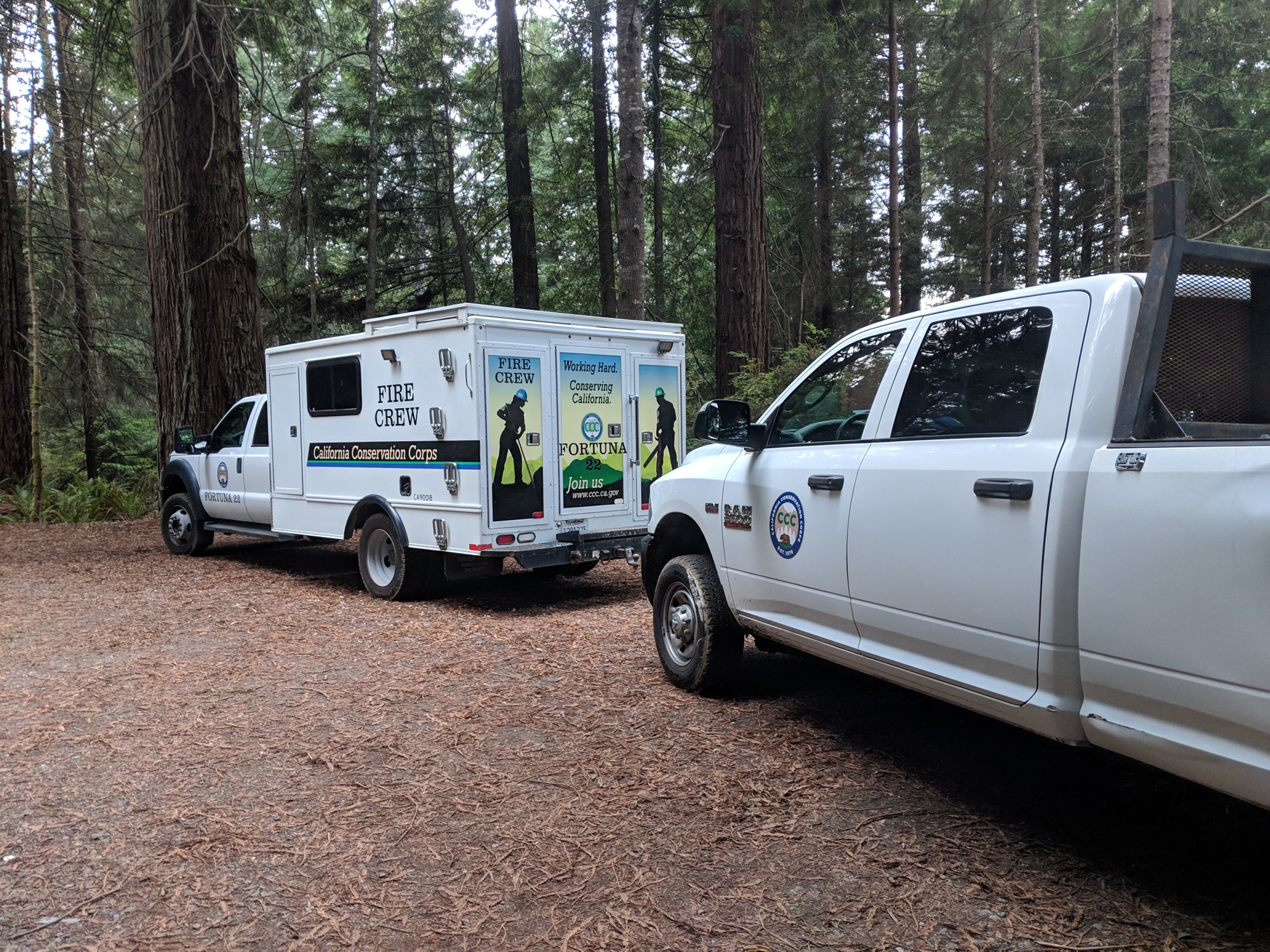
    Cal Fire firefighters are not the only ones fighting the many fires burning in California. Alexandra Powell, public information officer for the California Department of Corrections and Rehabilitation, said as of Wednesday November 21, there were 594 inmates and 66 CDCR staff members deployed to assist with wildfires around California.

    “All inmates receive the same entry-level training that CAL Fire’s seasonal firefighters receive, which includes both classroom and field training,” Powell said.

    There are 43 conservation camps, or fire camps, in 27 counties in California. Powell said these camps are minimum-security facilities that house 3,700 inmates who qualify for the fire camp program. There are three fire camps that are a part of the Humboldt-Del Norte Fire Unit: Eel River and High Rock Conservation Camps in Humboldt County and Alder Conservation Camp in Del Norte County.

    “When not fighting fires, inmate firefighters perform conservation and community service projects,” Powell said. “They work Monday through Friday for eight hours a day performing a wide range of duties.

    Powell said there are 96 inmates housed at High Rock and 91 at Eel River. The CDCR, or California Department of Corrections and Rehabilitation, states there are 109 inmates at Alder. California criminal defense attorneys, Greg Hill and Associates, said that every fire camp has at least 85 firefighters ready to fight fires.

    High Rock, established in 1954, is one of the oldest conservation camps in California. Eel River has been active in since 1967 and Alder opened in 1961.

    According to the CDCR website it is estimated Eel River Conservation Camp provided cost avoidance in excess of $1 million per year to the taxpayers of California.

    “Taxpayers spend a yearly average of $81,458 per inmate,” Powell said. “Which covers things such as health and dental care, food, housing, as well as education and other rehabilitative opportunities while serving their time.

    Powell said fire camp inmates earn an average of $2 a day, with an additional $1 an hour when fighting an active fire.

    According to Glassdoor, the average base pay for a CAL Fire firefighter is $63,174 a year. The Incarcerated Workers Organizing Committee’s second demand during the recent nationwide prison strike was to immediately end prison slavery. They called for all persons imprisoned to be paid prevailing wages for their labor.

    “Inmates who volunteer to serve their sentence in a fire camp also receive additional time off their sentence,” Powell said.

    The pay for inmates at fire camp is high compared to other prison labor. According to a 2018 CDCR report, depending on skill level an inmate will make $0.08-$.37 and hour. Powell said to be transferred to a fire camp an inmate must volunteer and have a minimum custody status.

    This status is based on inmates’ good behavior in prison, conforming to rules within prison, and participation in rehabilitative programming.

    High Rock and Alder Camps have college and other education course support and Eel River has music appreciation programs and gardening projects. All three have substance abuse meetings.

    “Each volunteer inmate is evaluated individually to ensure that all those selected for the fire camp program are willing to be team members with nonviolent behavior, even if their original conviction was for a violent crime,” Powell said.

    Powell said since 1983 there have been six deaths of fire camp inmate firefighters as a result of injuries sustained while actively working on containing a fire. She said the families of inmate firefighters may file a claim for death benefits in the event that the inmate dies from work-related injuries.

    According to The Marshall Project, closest relatives are informed of loved ones’ deaths through voicemails, text messages and letters and can take anywhere from days to weeks to be notified, if at all.

    “Just as with any job in prison, each inmate firefighter is entitled to workers’ compensation benefits for injuries sustained during work, and/or if those injuries result in proximate death,” Powell said.

    Visit https://www.cdcr.ca.gov/Conservation_Camps/ for more information.a