The Lumberjack


Students Serving The Cal Poly Humboldt Campus and Community Since 1929

Category: Opinion

  • Miscommunications and Misdirection

    Miscommunications and Misdirection

    Hold PG&E accountable for its reckless and unprofessional behavior

    During the most recent Public Safety Power Shutoffs, the Pacific Gas & Electric Company’s communication with its customers was awful.

    The first time the utility shutoff power in Humboldt County was on Oct. 9. The county had less than 12 hours of notice for residents to prepare for a possible four-day outage. Humboldt was the only county in California to lose all power and initially wasn’t even on the list of affected counties.

    After the outage, Michael Lewis, PG&E’s senior vice president of electric operations, said that Humboldt County shouldn’t have lost power in the first place. Although extreme weather and fire risk were at play in other counties’ outages, Humboldt went dark because of scheduled maintenance on one of the transmission lines coming into the county.

    On Saturday, Oct. 26, reports from PG&E said only about 2,000 customers in Humboldt would be affected. Several hours later, PG&E corrected itself and acknowledged that all Humboldt residents would be hit with the outage.

    During the most recent PSPS, the utility released news that another outage would likely hit Humboldt early Tuesday morning. Additional updates said that while many residents would regain power, it was possible that residents still without it may continue to be in the dark through to Tuesday’s outage.

    When Tuesday morning came and went, locals wondered when the outage would hit. Those who regained power the day previous still had it, and conflicting reports from PG&E, the Redwood Coast Energy Authority and the Humboldt County Office of Emergency Services led to mass uncertainty about when –and if– the power would go out again.

    For those PG&E customers who tuned in to one of the company’s many streamed press conferences, they were forced to wade through jargon including “operational event,” “incident commander,” and the terribly-named “Public Safety Power Shutoffs.”

    Late Monday night, the Redwood Coast Energy Authority posted on Facebook that PG&E said that power in Northern Humboldt wouldn’t go out until 9 p.m. That same night, OES made its own Facebook post stating that PG&E said power was still planned to go out early in the morning.

    On Tuesday morning, OES continued to stand by what it had learned from PG&E.

    PG&E’s own updates from Tuesday morning listed the outage time for Northern Humboldt as 9 p.m., and as the day went on, that seemed to be likely.

    Humboldt State University had no better idea of when the power would go out, as it noted in its update on Tuesday morning.

    “HSU is seeking clarity from PG&E regarding the timing of a possible power shutdown,” HSU’s update said. “There has been conflicting information from the company, and in local news reports, over the last 24 hours.”

    PG&E later updated its estimated timing to 7 p.m., and then, around 5 p.m., it called off any PSPS for Humboldt at all. On Facebook, OES said PG&E had given it inaccurate information.

    “PG&E has provided the Humboldt County Office of Emergency Services (OES) inaccurate information regarding times of de-energization in our County,” OES said.

    Communication is everything. PG&E changing times of planned outages makes sense, especially since the outages are primarily based around weather patterns. But failing to provide accurate information to emergency services and county officials is ludicrous. The company’s communication strategies are unacceptable.

    As a community and state we need to hold PG&E accountable and remove ourselves from its firm corporate grip. These blackouts should be the push California needs to turn toward alternative energy and municipal utility boards, ridding the state of monopolized power once and for all.

  • Ask Evergreen: Fight or flight

    Ask Evergreen: Fight or flight

    Ask Evergreen is a weekly advice column by the students of the Lumberjack.

    Each week we answer anonymous questions sent in by readers about anything and everything.


    Dear Evergreen,

    How do I become more of a fighter than a flighter?

    Dear Fight or Flighter,

    Discerning the best route to take for a situation can be strenuous on the mind as you decide whether to stand your ground or retreat peacefully.

    It takes strength to fight for something you believe as well as to flee from something that burdens you.

    Depending on the situation, you may want to be a fighter, flighter or both. There’s nothing wrong with running away from a situation, nor is it wrong to stay to strive for resolution.

    Don’t be a fighter just for revenge. You should have earnest intentions with the passion you feel for fighting for something, whether it’s for a cause, a relationship or an event.

    Remember, physically fighting someone is illegal. If you feel the need to duke it out with someone, cordially invite them to a round of fisticuffs at your local gym where the two of you can be coached professionally and geared up safely in a boxing ring.

    If you’re in a life threatening situation involving an aggressor, you should take caution with your departure. Don’t aggravate the circumstances by spouting back insults or being hastily bold.

    You should remove yourself from the situation and seek help from the authorities if need be. If you’re in a life threatening situation like a natural disaster, you should follow orders from the respective officials overseeing the event.

    Don’t try to be a hero if you think you’re incapable of fighting. Standing up to a situation with multiple people on your side fighting for the same sincere reason can help you all achieve something for the greater good.

    Fleeing from a situation, whether it’s a fire, flood or mass shooting isn’t cowardly. You’re allowed to be selfish to an extent if it saves your life, but don’t go sacrificing the safety of others by being a foolish fighter or a flawed flighter.

    If you’re in a situation that is less life threatening, fighting or fleeing are equal game—just use your best judgement. Ethical and moral dilemmas will challenge, but if you know and believe in the golden rule, you’re probably equipped enough to decipher the best outcome.

    Good luck!

    Sincerely,

    Evergreen


    If you have any questions you’d like to send in, email us at contactthejack@gmail.com. We won’t publish any names and you don’t need to use one.

  • Letter to the Editor: A Response to ‘Trumpsters’

    Letter to the Editor: A Response to ‘Trumpsters’

    What does Trump have to do to convince you he’s not on the side of the American people?

    Editor,

    I’m writing this in response to those who call themselves a Trumpster. First off, this man is a walking talking crime wave who has zero respect for the rule of law which he has demonstrated many times and sums up by saying, and I quote: “If I were standing on 5th Ave. and shot somebody, I would get away with it.”

    This kind of craziness has never been seen by any of our leaders by any party and to wear a had or shirt and support this man who with without morals, principles or knows no bounds and things he is above the law, those people have to start to think what was it they see in this man?

    What does he have to do to convince you he is not on the side of the working class or average American taxpayer? How much more damage does this man have to do to our Republic and Constitution and how many more laws must he break before he is removed from office.

    No matter what party you’re from, this is not a Republican, Democratic, or Independent issue it is an American issue only

    The only bottom line to me is do we stand with those that chose the Gospel of Hate and Division or do we stand on the side of America.

    Michael D. Owen

    Eureka, Ca.

  • Ask Evergreen: Group Project Pains

    Ask Evergreen: Group Project Pains

    Ask Evergreen is a weekly advice column by the students of the Lumberjack.

    Each week we’ll answer anonymous questions sent in by readers about anything and everything.


    Dear Evergreen

    How do you deal with a group member who’s refusing to do their part of the project?

    Dear Peeved Project Participant,

    Group projects can be excruciating enough, but even more so when you have a member who is not contributing. There are a few things you can do before throwing in the towel or taking on the slacker’s work. You can reach out to this group member, ask the other group members what they think or contact your professor.

    Before doing anything drastic you should ask the slacking group member if there is something confusing about the project. They might not understand their specific role in it and may be too ashamed to speak up. Maybe this group member is dealing with personal issues and isn’t focused on school as much as they could be, so be cordia. If they’re just plain lazy, you should politely call them out in person or through an email.

    Reach out to the any other project group members and mention the stalemate. Your peers might be experiencing the same frustrations as you. Ask them for advice on how to proceed with the project. You all might have to take on the incomplete work to submit a whole project, and you may still have to bring the problem up to the professor. Ideally, since your fellow partners are in the same situation, they will be able to back you up when it comes to explaining the issue.

    If you’ve exhausted all efforts of trying to wrangle in the straggler, you should definitely contact your professor to cue them in. This can be especially helpful if you aren’t getting an individual grade for the project.

    Thankfully, some professors allow for group feedback at the end of projects. Peer reviews can be a cathartic release after a stressful report. Make sure you get the positives and the negatives of all group members to not solely ridicule the lazy member. But don’t forget to emphasize the things that were harder to complete because of their lack of participation and communication. Remember that this is a group project and you’re not alone in this temporary headache.

    Teamwork makes the dream work!

    Sincerely,

    Evergreen


    If you have any questions you’d like to send in, email us at contactthejack@gmail.com. We won’t publish any names and you don’t need to use one.

  • Perpetuating Stereotypes Ain’t Cute

    Perpetuating Stereotypes Ain’t Cute

    Costumes that perpetuate stereotypes of cultures and minorities aren’t funny, they’re problematic

    The Halloween season provokes the competitive nature of costume shopping, but costumes that display a person’s culture, religion and tradition should remain off-limits.

    Costumes based off of Native American, Latinx, Asian, Middle Eastern and African cultures are appropriation, plain and simple. Feathered headdresses, beads and tassels don’t adequately reflect the entirety of Native American culture. Just as Egyptian culture is more than gold jewelry and eyeliner. These costumes are tasteless, especially if you aren’t from the cultures you’re dressing up as.

    While these are the obvious examples of appropriation, other costumes can still be offensive even if they aren’t directly ripping off a culture.

    Other costumes that take advantage of different lifestyles, religions and customs include nuns, priests, inmates and military personnel.

    The intentions behind a costume should be highly considered. You need to remain mindful of how you choose to display an idea to ensure you aren’t being offensive to any culture.

    Cultures can’t be boiled down to a single costume, accessory or prop, so don’t wear anything that diminishes a significant part of someone’s life just for some laughs or notoriety.

    The appropriation of cultures are so often portrayed in an ignorant and blind fashion that fail to value the importance and significance behind an item being used purely as an accessory. By appropriating a culture or religion with a costume you’re perpetuating ignorance and preventing the education of how to accurately respect and represent people.

    Costumes that appropriate heritage and traditions pick and choose aspects of a culture purely for entertainment purposes. These ultimately cast a stereotypical image that fails to accurately reflect reality.

    The transition from culture into costume disregards past movements, practices and emotions experienced by those who are being appropriated. Costumes often fail to reflect the original garments through the commercializing process, furthermore disrespecting the authenticity.

    You should be able to decipher which outfits are appropriate and which are inappropriate. If not, you shouldn’t consider these ideas as viable costume options.

    If you’re questioning whether or not your costume choice is offensive, put yourself into the shoes of someone who genuinely practices what you’re posing in.

    Be a critical thinker. Before attending a Halloween party or heading out, check the fit. Examine your decisions, and if it feels unethical or immoral, don’t wear it. That’s it.

  • Blackout Preparation

    Blackout Preparation

    Our first PSPS was a wakeup call, now it’s time to go into the next blackout more ready than ever

    In early October, Humboldt County residents trailed around the block at gas stations hoping to fill up their tanks and stripped local grocery stores of food, water and battery operated lights. The Public Safety Power Shutoff made us realize how often we take electricity for granted, and how we use power for most of our daily activities. Simple tasks like cooking, cleaning, eating, working and watching television all require some form of electricity.

    Some locals were fortunate enough to have gas-operated stoves to make and warm food, but most of the LJ staff didn’t. Many of us rent apartments or live on campus and have electric stoves, so something as simple as warming a can of beans was nearly impossible.

    With the lights out, it felt like we time traveled back to the 1800s. The usual ways of entertainment were off the table, and when we went shopping in preparation most of us didn’t consider buying board games or downloading movies to a laptop. When it came down to sitting in a dark room with nothing to do we made a pact that the next time we would be better prepared.

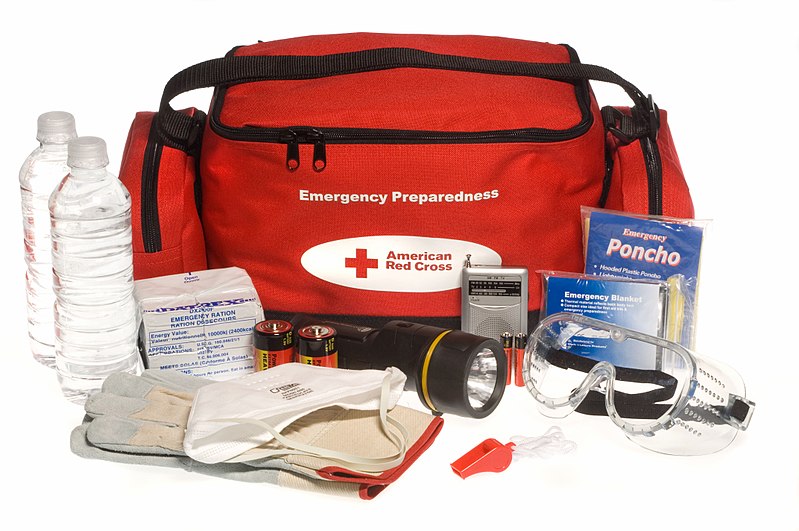
    Having a bag prepped for extreme situations could be lifesaving, and with a little forward thinking, your bag could be ready in minutes.

    Here some items we think you should grab from the store or make sure you have before the power outage:

    • Flashlights and batteries. An obvious choice, but oil or battery-operated lanterns work great, too.
    • Candles and matches/lighters. This is Humboldt, so we wouldn’t be surprised if most people had a lighter on hand or nearby, but if you don’t you should look into easy means of lighting candles (or that oil lamp) to have some light once the sun goes down.
    • Cash and gasoline. When the electricity is down, systems are down. This generally means that stores –if open– can’t take cards because they have no way of charging them. This can also include gas stations. We recommend filling up and taking out some cash just in case you need to buy something or drive during the blackout.
    • Water. You need a minimum of one gallon of water per day per person. We recommend having even more and making an effort to conserve. During the initial PSPS, the City of Arcata urged residents to minimize sewer use and conserve water to the best of their ability. That’s a good rule of thumb, and especially smart if the power outage last longer than before. 
    • Ice. You’ll need lots of ice if you’re interested in trying to save any of the food that was already in your fridge or freezer. We also recommend moving expensive perishables to the freezer and using gallon baggies filled with water as makeshift ice packs to help keep food cold. A cooler filled with ice is also a great option. If you have the money and the storage space, buying a cooler for emergencies like these and any future camping trips could really come in handy.
    • First Aid kit. You may already have one hanging around. If so, check the the kit to make sure it’s well-stocked and move it to a central place in your home. Communicate the new location with any family or roommates so it’s accessible for any who may need it.
    • Canned goods. Think of foods you wouldn’t mind eating cold. There’s no need to buy something that will make you gag when you’re trying to stay fed.
    • Fruit. Apples, bananas and oranges are just a few options. Fruit doesn’t need to be refrigerated and it can help keep your blood sugar up as well as making sure you have some daily fiber, potassium and vitamin C.
    • Non-perishable snacks. Crackers and chips make an easy snacks but they don’t replace an actual meal. If you have means of warming up water, we recommend grabbing some potato flakes and pasta to keep that stomach from grumbling.
    • A French press and some pre-ground coffee. If you’re a coffee drinker then we would highly recommend grinding some coffee today. Your future self will thank you. Thankfully a French press doesn’t require electricity, but it does require hot water. If you have an electric stove, instant coffee may be your best bet to get that caffeine fix.
    • Beef jerky and granola bars. For all you meat eaters, jerky is a great way to keep your protein levels up if you despise cold beans. Granola bars are also great. They’re convenient and versatile, and depending on the bar, they can be a good source of fiber and protein.
    • Applesauce, puddings and fruit cups. Your pick. But if the power’s out for a while you might get sick of Saltines and canned corn. To keep your mood up, give yourself a treat with a chocolate pudding, or enjoy a sweet, but semi-healthy snack with an applesauce or fruit cup.
    • Playing cards and boardgames. Whether it’s just you or a group, a deck of cards could most definitely come in handy. Playing cards or boardgames is a great way to pass the time. We recommend a regular deck of cards to start before moving into heavier, emotional games like Uno or Monopoly that could take a toll on your relationships.
    • Sleeping bags and blankets. It may not be the coldest time of the year, but if you’re used to having your electric heat on, then you’re in for a wake up call. Sleeping bags and blankets, as well as sweats, long socks, hoodies and beanies will help you stay warm while your heater can’t. It’s also good practice if you’re looking for ways to lower that pesky PG&E bill.
    • An emergency radio. If you’re lucky, you’ll never need to use one, but having a weather radio on hand can be lifesaving. Radios can help you find hot coffee, hot food, shelter or even a place to charge your phone. Some weather radios even double-up as lights and backup chargers.
    • Portable chargers. These are a great investment. We recommend having one fully charged at all times. If anything happens you can make sure your phone doesn’t lose its battery. If cell towers are active or have backup generators during a blackout, having enough phone battery to call family or friends to keep them updated or ask for updates can be essential.

    While all of these items are helpful and important, it’s vital to try and stay calm when the outage hits. Extreme situations can cause mass chaos, and it often becomes more dangerous and stressful than it needs to be. Check our website for updates, sign up for Humboldt County alerts to stay in the know and remember to only call 9-1-1 in emergency situations.

  • Ask Evergreen: Stuck in the Middle

    Ask Evergreen: Stuck in the Middle

    Ask Evergreen is a weekly advice column by the students of the Lumberjack.

    Each week we’ll answer anonymous questions sent in by readers about anything and everything.


    Dear Evergreen,

    Should I just sleep with the two guys coming after me even though they have girlfriends because no other men like me?

    Dear Stuck in the Middle,

    You sure got yourself caught in crossroads with this one, but don’t fret. The best thing to do is cut off connections with both men, and here’s why:

    You shouldn’t facilitate the poor decisions of two men in any manner. Even if you don’t want a relationship from these men you should consider how their attitudes and treatments towards their partners can be perpetuated onto you. Think about each of their partners and how your choice in this situation will affect them.

    You shouldn’t be the person to come between someone else’s relationship. Don’t assume their burdens by entangling yourself in their drama.

    It’s clear that both of these men are dealing with personal issues within their respective relationships and are acting out using someone else. People who are unhappy in their own relationships, but do little to change their circumstances, aren’t the type of people you want to spend your time with.

    The best thing to do is to remove yourself from these situations through the decisions you make. With the position you’re in, you could even contact the partners of these men to let them know what’s been happening. Sometimes involving yourself further can make things worse, so carry on with caution.

    It may seem tantalizing having two different men as potential lovers, but neither are viable options for you to pursue. While you may think they are the only men interested in you, it’s highly unlikely that is the case. The characters of these two are definitely too shady for any connection to be worth it.

    Don’t allow their behavior to influence you and any desires you may think they fulfill. Be the bigger person and end things before it’s too late to take back a possible bad choice.

    Good luck!

    Sincerely,

    Evergreen


    If you have any questions you’d like to send in, email us at contactthejack@gmail.com. We won’t publish any names and you don’t need to use one.

  • #ExploreHumboldt: Arcata Marsh

    #ExploreHumboldt: Arcata Marsh

    Try and lose yourself in the Arcata Marsh for the best experience

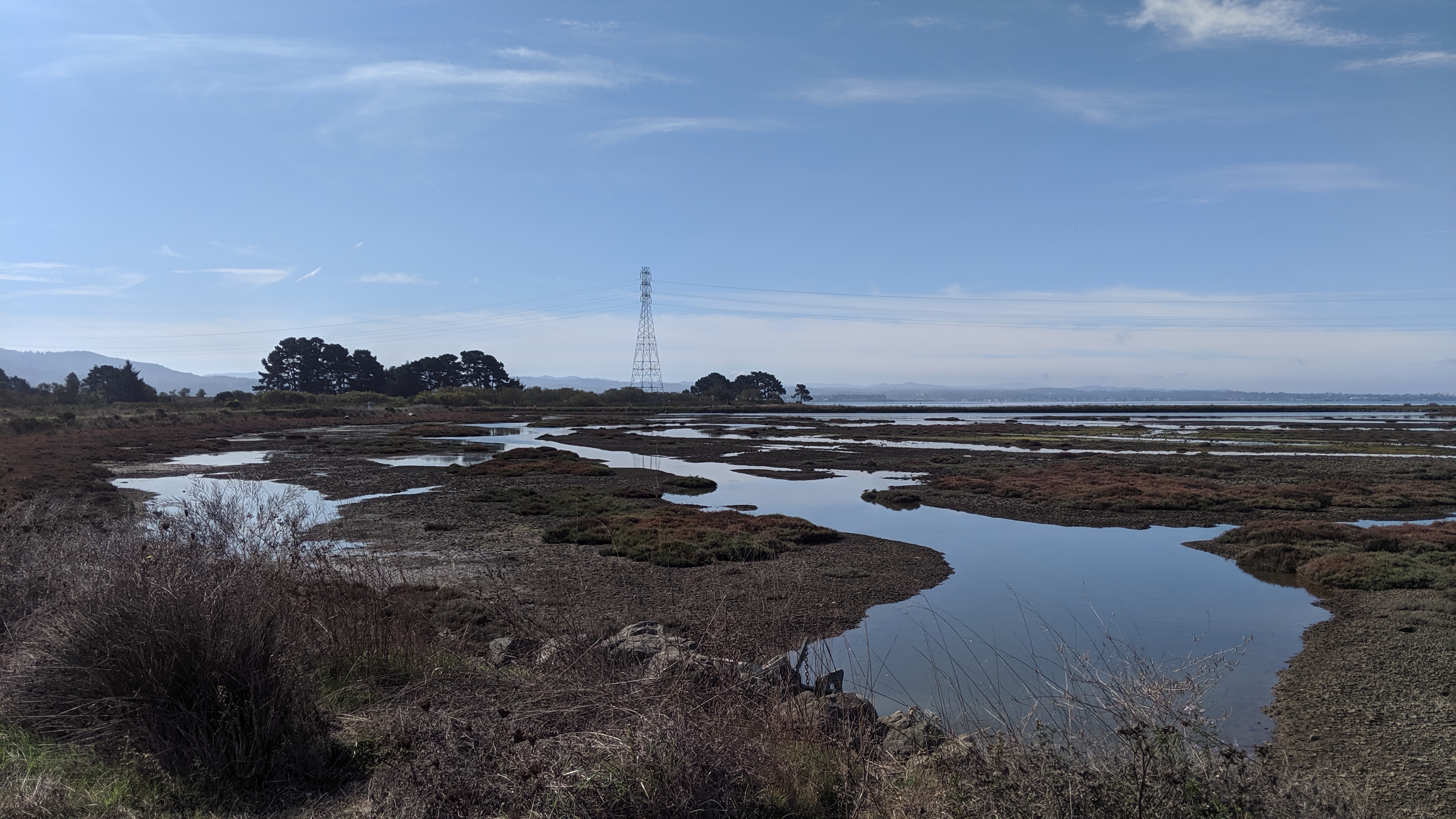
    Welcome back to the #ExploreHumboldt column, your source for accessible natural areas to visit in your spare time. This week, we’ll look at a unique, double-duty location that serves as a wastewater treatment facility and a beautiful habitat for countless bird species: the Arcata Marsh!

    This 307-acre sanctuary is located in southern Arcata, and can be accessed from South G and I streets. This places the marsh within a 15-minute walk or a five-minute bike ride from campus.

    The Marsh’s interpretive center provides information on the wide variety of bird species that frequent the marsh, and how the marsh filters Arcata’s wastewater into clean water that can be released back into the bay. | Photo by Jett Williams

    Any trip to the Marsh should start at the Interpretive Center. There, you’ll find installations detailing the many exotic bird species that stop at the marsh on their migratory journeys up and down the coast. So far, over 300 unique bird species have been spotted in the marsh this year. Some of these are extremely rare, or are typically found on the East Coast.

    From the Interpretive Center, multiple trails spiderweb out to every corner of the park. In total, there are about 5.4 miles of mostly gravel trail, with some paved sections. Strategically-placed maps ensure that you won’t get lost and provide interesting information on the park’s science and history.

    But, as with any natural area, the best way to get a lay of the land is to get lost. Around every corner is another table or bench overlooking a scenic view, or an enclosed shelter for birdwatchers to observe the local wildlife.

    Organized nature walks are a good way to experience the marsh in a social environment, with experienced birdwatchers who can point out and identify rare bird species. | Photo by Jett Williams

    If you want a recommended route to get started, begin at the Interpretive Center and head north along the west side of Butcher Slough Log Pond. Turn left and follow the trail as it winds around Brackish Pond.

    This time of year, Brackish Pond is covered in a layer of green algae that gives it a surreal look and is a hotspot for birds. Stop at the bird viewing station on the northwest corner before heading south past Gearheart Marsh, and looping back to the Interpretive Center.

    In addition to being a nearby natural spot to get out to for some nature time, the Arcata Marsh serves as a wastewater treatment plant. Algae and bacteria help to purify the water as it moves through the different ponds of the marsh.

    One can spend hours wandering the marsh, checking out the different ponds and looking for exotic bird species. The marsh is expansive and rarely crowded, offering ample opportunities for seclusion. | Photo by Jett Williams

    Eventually, the water is sterilized with chlorine and flows back into the Humboldt Bay. This system allows Arcata to manage its wastewater production while providing a refuge for local wildlife and a local park for residents to enjoy.

    If you’d like to check out the Arcata Marsh with the help of experienced and knowledgable guides, there are several guided marsh walks available. Friends of the Arcata Marsh meets every Saturday at 2:00 p.m. at the Interpretive Center for a guided marsh walk.

    For those looking to learn more about the many bird species that call the marsh a temporary home, the Redwood Region Audubon Society meets for guided birding walks every Saturday at 8:30 a.m. This walk meets at the I street parking lot.

    The Arcata Marsh is an amazing free resource for students in need of a quiet oceanside spot to explore and relax in. Get it while you can, and don’t forget to #ExploreHumboldt!

  • Marijuana Legalization is a Race Issue

    Marijuana Legalization is a Race Issue

    Marijuana laws are enforced unequally and minority communities bear the brunt of the consequences

    Many states have voted on the legalization of marijuana, a schedule one drug, and 11 states have legalized recreational cannabis. Weed is now a large source of legal income in the U.S.

    Forbes shows that the top three states where recreational marijuana is legal profited over $4 billion in 2018 on cannabis sales. But according to a 2010 study by the American Civil Liberties Union, states waste over $3 billion a year in weed-related arrests.

    We believe states waste more time and taxpayer money by not legalizing and decriminalizing weed. Law enforcement often enforce weed laws unequally, with more arrests in underprivileged neighborhoods, which are often filled with people of color. According to the ACLU, black people are four times as likely than white people to be arrested for marijuana possession despite similar usage rates.

    We are fed up with blatant inequality and discrimination.

    In July 2016, a Minnesota police officer shot and killed black 32-year-old Philando Castile in his vehicle. The Minnesota Bureau of Criminal Apprehension investigated the case, and was told by the officer that he “feared for his life” due to the smell of marijuana and Castile’s lack of concern for the child in the vehicle. This ended in the officer’s acquittal.

    While most states don’t keep data for marijuana possession by Latinx individuals, New York City’s data shows that the Latinx community has the same rate of use as black and white individuals, but recent data shows that marijuana possession is the fourth most common cause of deportation.

    It’s obvious that many of those affected by these ludicrous laws are from black and brown communities. And it may be relevant to note that there is political gain to keep it this way, as many people who have been arrested for marijuana can no longer vote.

    This war on drugs, specifically the war on marijuana, is a war on communities of color. Children are left without parents and people are locked up for years on minor counts. And yet, even when white people commit similar crimes the punishments are all too different.

    Opioid addiction is at an all time highs in the states. It has largely affected white communities, but the amount of arrests is no where near that of other cultural communities when marijuana is involved.

    If treatment and repercussions are unequal, we need to understand that the system is flawed. When one group is given more freedom to make mistakes than another, it seems that there is a hidden agenda at work to keep white communities more prosperous.

    Drug laws are just one example of discriminatory regulations within the United States. Data shows that law enforcement agencies often treat people of color differently, our laws only add tension to the problem.

    As of now, 10 states plus Washington D.C. have legalized recreation marijuana and an additional 20 allow medicinal use. These states should quickly look into decriminalizing the drug fully. If we take steps to free individuals locked up for minor drug possession charges and use the money saved to focus on bigger issues, then we take one major step toward reforming the country’s unjust system.

    It may be a slow process, but it’s one that needs to happen now.

  • Ask Evergreen: Long-Lasting Break-Ups?

    Ask Evergreen: Long-Lasting Break-Ups?

    Ask Evergreen is a weekly advice column by the students of the Lumberjack.

    Each week we’ll answer anonymous questions sent in by readers about anything and everything.


    Dear Evergreen,

    How long do break-ups last?

    Dear Break-up Battler,

    Some say a break-up lasts half as long as the length of the relationship. Science says it lasts roughly three months. I say it lasts however long you need.

    Don’t force yourself to get over a connection so quickly that you numb out feelings that can help you process. Don’t wallow in your despair and let it consume you, that will just make things all the more difficult to get over.

    Take time for yourself to be alone. Solitude is bliss, and it can facilitate your ability to digest what has happened. Reflect on what went well and what went wrong. Use this ending as a lesson on what to do differently when you decide you’re ready to date again. Be sure to surround yourself with friends and loved ones–not to distract you, but to remind yourself of those who unconditionally care for you.

    There are all different types of relationships and different kinds of break-ups as well. Relationships in which love is involved tend to have lingering feelings long after a parting. Short-term relationships might be easier to move on from. Disdainful break-ups happen, but don’t leave without answers for the peace of mind of all involved. Civil break-ups leave the least amount of wreckage and may lead to strong friendships with those who weren’t the best romantic partners.

    Some break-ups are healthy and necessary for your personal growth, so take things slow and focus on you.

    Sincerely,

    Evergreen


    If you have any questions you’d like to send in, email us at contactthejack@gmail.com. We won’t publish any names and you don’t need to use one.

  • Editorial: College Athletes Deserve Compensation

    Editorial: College Athletes Deserve Compensation

    Playing collegiate sports and taking a full-time schedule is the equivalent of having two full-time jobs

    During an online-only episode of “The Shop,” California Governor Gavin Newsom signed Senate Bill 206, or the Fair Pay to Play Act on Sept. 30.

    Along with several other former college athletes, Newsom believes college athletes, especially Division I athletes, deserve compensation for their hard work and dedication to the game that makes their “bosses” rich.

    “Colleges reap billions from student athletes but block them from earning a single dollar,” Newsom tweeted. “That’s a bankrupt model.”

    Despite Humboldt State being a NCAA Division II program, we still agree that our athletes deserve some type of compensation based on the amount of revenue our athletic program brings in.

    “The Shop” is a HBO talk show owned under the digital sports media company Uninterpreted. During the episode, Newsom was accompanied by NBA star LeBron James and they both shared the news on Twitter by posting a video snippet.

    In a world that is so divided, sports can bring people together. Whether an athlete plays for a professional team or a college team, the support and compassion they receive from fans remains loyal.

    In professional sports, athletes sign contracts with a team or an organization. When they sign, they are agreeing to the specific payment details they were offered or that they negotiated with their organization. For collegiate sports, college athletes are offered a scholarship breakdown and have the decision of accepting it or not.

    However, anyone who is up to date with our budget crisis around campus knows that our athletic program probably receives close to no money to provide to our athletes. Especially considering that we still have athletes attending HSU out of pocket to participate in an intercollegiate sports.

    HSU may not seem like a great example when pushing the idea that college athletes deserve compensation, but the Fair Pay to Play Act doesn’t allow athletes to be paid by their university, it just gives them the leeway to find sponsorship and make money off their hard work.

    When we consider professional athletes, endorsement deals are contracted regularly. These deals allow companies to use athletes’ names, numbers and any other marketing facet that’s agreed upon, in exchange for money paid to the athlete. College athletes do not receive endorsement offers, but they still partake in similar marketing techniques that bring in revenue for their college and coaches.

    The counterargument to this case states that college athletes are provided a scholarship that pays their tuition and resources that help them get through the academic portion of school.

    Although this is true, many fail to realize the dedication and time commitment it takes to be a successful student-athlete. Being a student-athlete is essentially equivalent to holding two full-time jobs: studying and playing. This doesn’t leave time for a job off-campus to provide a steady source of income.

    The fact that colleges and head coaches make money off their players’ successes is ludicrous, especially when the players themselves aren’t receiving any portion of that revenue. It is this exact argument that Newsom brought to light.

    The proposed bill allows college athletes to receive a portion of the revenue that their college receives and sign endorsement deals like the pro athletes they aspire to be. Although the NCAA fought against the signing of this bill, Newsom stuck to his belief. He proposed providing the NCAA with a grace period to narrow down rules and regulations in hopes of making the transition smooth and effective. Therefore, the bill does not play any effect on college sports in California until Jan. 1, 2023.

  • Mountain Biking Has a Sustainability Problem

    Mountain Biking Has a Sustainability Problem

    With all the gear and gadgets, mountain biking isn’t as sustainable as it may seem

    For a sport that usually occurs in natural settings, and whose participants generally value the ecosystem and the world around us, mountain biking has a serious sustainability problem.

    Everything has an expiration date. No matter the maintenance, nothing is ever ‘for life,’ and nowhere is this truer than in the mountain bike industry. Chains stretch, tires bald or blow out, brake pads get worn down and bearings become crunchy and rough.

    Issues arise when one attempts to revive or service a bike. Many of the functions are delicate and precise, requiring fresh parts to operate smoothly. This means something as simple as a tune-up often results in cables, housing, tubes and tires being thrown away.

    Improper installation or use means that these parts break before they should and get replaced prematurely. Some people replace prematurely simply because they want improved performance.

    It’s hard to process this waste on an individual level, but walk into your local bike shop and look in the trash cans. Often, they’re filled with very un-recyclable items that are used, removed and replaced.

    Of course, the nature of the sport is that parts get worn down or broken and must be swapped. That so many of these parts get replaced prematurely or destroyed early due to user error is only part of the problem.

    With the way our world is headed, mountain biking is due for a rude awakening on the ways that it creates unnecessary waste.

    Other issues arise when we look at the bike industry and the way they market their high-end products. Often, these brands will swaddle their expensive parts in multiple layers of processed cardboard and plastics.

    Recently, I purchased a new shifter for my bike. The shifter is a small plastic pod, about the size of a mandarin orange. It arrived in a box that I could’ve fit my shoes into.

    Just because you can get away with selling drivetrain parts that cost as much as high-end electronics, doesn’t mean you need to package them like iPhones.

    If these parts were packaged in plastic bags rather than bulky cardboard, you could fit 10 times the items in a similar space, drastically cutting down on shipping material and resources.

    Usually, I give corporations a bit of lee-way with the way they package expensive items. It makes sense that they’d want to provide the customer with a sense of exclusivity for choosing to spend their hard-earned dollars on these parts. But with the news about our world’s climate becoming grimmer with every passing day, the mountain bike industry needs to step up and restructure their priorities to make the sport more sustainable.

    I’ve never met a mountain biker who didn’t care about the environment and the future of our planet. Unfortunately, when something breaks usually the whole bike is unrideable until the issue is corrected. Most of us just accept the impact of our sport as there aren’t many other options.

    With the way our world is headed, mountain biking is due for a rude awakening on the ways that it creates unnecessary waste.

  • Ask Evergreen: Ending Things Easy

    Ask Evergreen: Ending Things Easy

    Ask Evergreen is a weekly advice column by the students of the Lumberjack.

    Each week we’ll answer anonymous questions sent in by readers about anything and everything.


    Dear Evergreen,

    How do I let someone down easy?

    Dear Easy-Ender,

    It’s never easy to let someone down, whether you’re ending something romantic or platonic. However, there are always civilized ways to cease a connection no matter how strong the bond. If you’re trying to end a toxic relationship, an uninteresting connection or a friendship with someone who is no longer a positive influence, remember these things: be straightforward with your reasoning, be the bigger person and be a badass if you need to.

    Try to understand the reasons why you want to end something. Finding reason can help you cut the connection. Don’t end things hastily, hatefully or immaturely. You can weigh the pros and cons of the situation to understand how continuing things will affect you and the person you’re connected to. Ask yourself why you want to end it and how you’ll be better if you do.

    You don’t always owe people explanations for why you no longer want to have ties to them. If you’re letting someone down that you’ve met on a dating site, or someone you’ve gone out with several times but no longer have interest for, you can leave things with simply saying, “I’m no longer interested.” Don’t worry about patting someone’s ego before bidding farewell, and don’t make excuses for why it’s more your fault than theirs. No one’s at fault, you just don’t have a connection with that person anymore.

    If you’re trying to end a relationship with a long-term partner, you may want to put in more effort to your parting words. Your goodbye to a partner could be cordial or crude depending on your situation and reasons for ending a relationship. You could use more energy by getting angry at them or save your energy and invest it in yourself. Remember, your happiness and well-being come first. Don’t bother appeasing people if they aren’t going to listen to how you’re feeling in a situation, and don’t lose your cool trying to get them to listen. You’re better off focusing on yourself and your healing process.

    You’ve got this!

    Sincerely,

    Evergreen


    If you have any questions you’d like to send in, email us at contactthejack@gmail.com. We won’t publish any names and you don’t need to use one.

  • #ExploreHumboldt: Hammond Trail and the North Coast

    #ExploreHumboldt: Hammond Trail and the North Coast

    Hammond Trail and Scenic Drive offer numerous natural areas to visit

    Hello and welcome to the #ExploreHumboldt column, the HSU student source for the most stunningly scenic natural areas close by. For this week’s column, I’m doing something a little different.

    Instead of giving you one condensed area to check out, I’ll be going over some of my favorite spots along the stretch of coastline just north of here. This article barely scratches the surface of what’s out there, so as always use this as a guide for your own adventures.

    The Hammond Trail starts at the Mad River Bridge in the Arcata bottoms. | Photo by Jett Williams

    It all starts with the Hammond Trail. This 5.5-mile, mostly paved line follows the coast up from the Arcata bottoms to Clam Beach, just north of McKinleyville. To get there, take Janes Road to Upper Bay Road, and turn right onto Mad River Road. Follow this until you come to the trailhead.

    Hammond Trail starts at an old footbridge spanning the Mad River, decorated with typical Humboldt graffiti and a series of padlocks attached to the rusty chain-link fence. The trail was voted “Best Place to Walk, Jog or Bike” in a Times-Standard poll, and alternates between roads and paved pedestrian trail as you make your way through McKinleyville.

    The Mad River bridge has several padlocks, ranging from rusty and old to fresh, dangling from its chain links. | Photo by Jett Williams

    After meandering along for roughly 5 miles, you will make your way to Clam Beach County Park. This spot offers sandy beach access, paid camping spots and scenic picnic tables with BBQ pits. A solid destination for a weekend excursion, or a nice rest spot during a run or bike ride, but the best locations are still further north.

    Unfortunately, this is as far as the Hammond Trail goes. To get to the real goods along the aptly-named Scenic Drive, you can take your vehicle of choice onto the freeway at the end of Clam Beach Drive, then take the first exit for Westhaven Drive. Turn left, then right to continue north on Scenic.

    The Hammond Trail has an optional section for hikers only that traces the local watershed, and provides a quieter hiking option. | Photo by Jett Williams

    If you’re on foot or don’t feel like biking on 101, it’s probably better to park in Clam Beach, walk the trail, then come back and drive to Scenic. There are plenty of places to park once you reach the road. Alternatively, you could park in Trinidad and ride a bike down the road from there.

    It should be noted that taking a bike on the freeway carries a whole host of extra risks, and should not be done frivolously. Wear bright colors and use a daytime taillight to ensure that you’re seen by motorists, never take longer on the freeway than you absolutely have to and don’t forget your helmet!

    Multiple footbridges like this one can be found along the Hammond Trail. | Photo by Jett Williams

    Scenic Drive is aptly named, and first-timers will find it difficult to keep their eyes on the road as they’re treated to vista after vista of rugged northern coastline. But sections of the road turn unexpectedly to gravel and it becomes single-lane in a few areas, so it’s best to keep your wits about you.

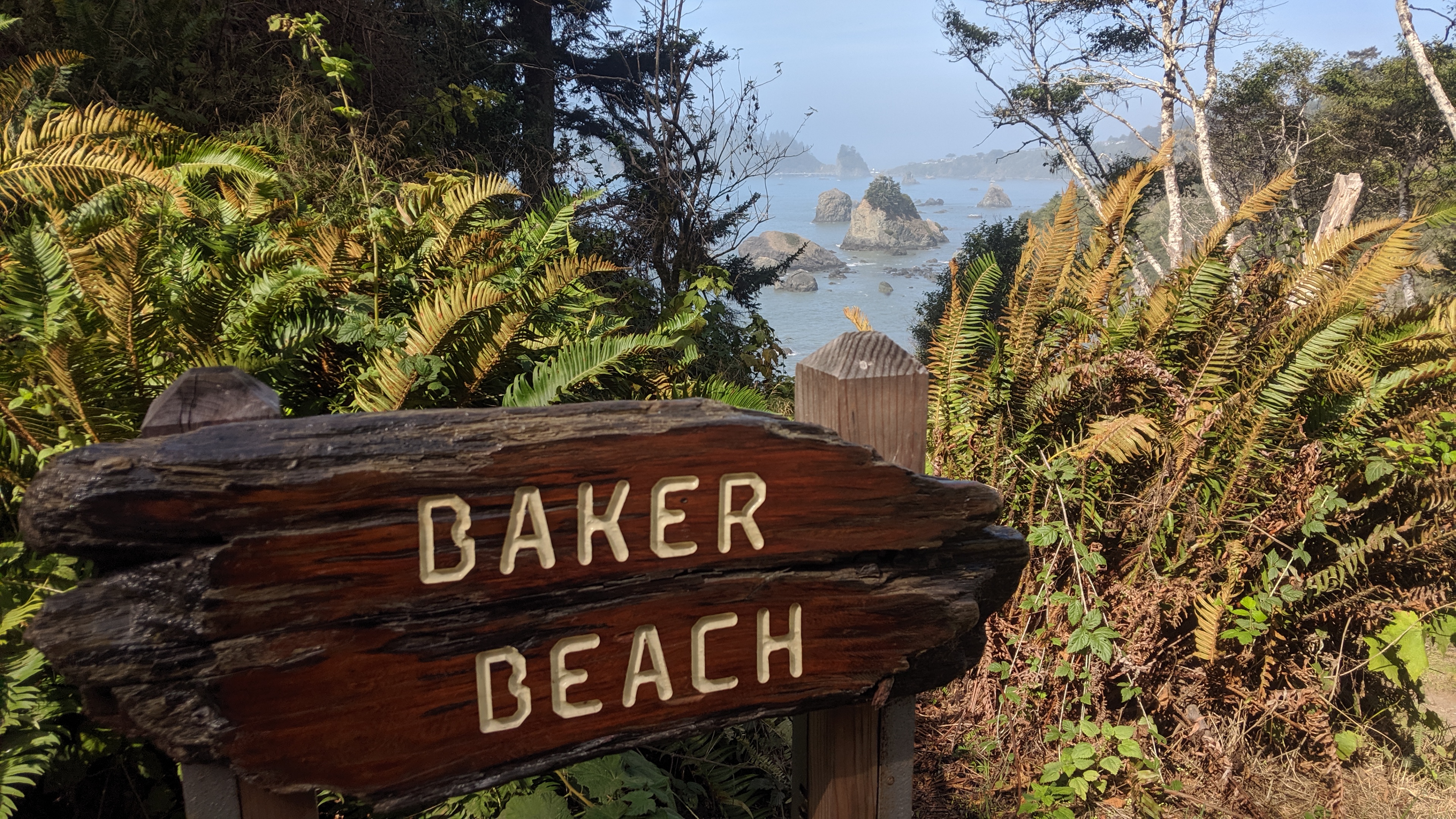
    Around every corner are turnouts and parking lots for the many beaches and access points along the road. One of my personal favorites is Baker Beach. This secluded beach is dotted with monstrous coastal boulders, scalable at low tide but inaccessible when the waves roll in. Baker Beach is also clothing-optional, but you won’t get kicked out if you prefer to keep it in your pants.

    Baker Beach provides scenic seclusion. During low tide, one can climb the rocks in the center frame. | Photo by Jett Williams

    Near this beach are two of my favorite spots, a hidden swing that looks to the southern coast, and a treehouse platform with two chairs that looks to the north with mind-blowing views of Trinidad Head. Not all spots are for everyone, so I’ll leave the details of the exact location up to you to find. If you get out to the beach, finding these locations is fairly straightforward as long as you look around.

    After Baker Beach, it’s a short jaunt along Scenic Drive to get to Trinidad. While you’re there, check out The Lighthouse Grill. I recommend the Mashed Potato Cone (a Lighthouse Grill staple) and the Jalapeño Jelly Burger (an acquired taste).

    The access trail to Baker Beach is clearly not handicapped-accessible. | Photo by Jett Williams

    The best thing about this stretch of coastline is its different options. You can park in Trinidad and bike south along Scenic, park at Clam Beach and jog or walk south or leave from Arcata and ride the whole thing.

    Whatever you decide, the point is to do something. Make these days count, as soon we’ll be trapped under an oppressive sheet of rain. Find some time, and don’t forget to #ExploreHumboldt.

  • Editorial: Impeachment Should Be Mandatory

    Editorial: Impeachment Should Be Mandatory

    Senate requires 2/3 majority to fully impeach and we hope they get it

    Speaker of the House Nancy Pelosi announced a formal impeachment investigation against President of the United States Donald Trump on Sept. 24. The motion to charge the president is long overdue and the Senate must not fail us when the time comes to remove Trump from office.

    The U.S. has been teased with impeachment since the Mueller report and the investigation into Russia’s interference with the 2016 presidential election, however, it took until now to initiate the formal process.

    This time, the abuse of power that pushed the democrats and Pelosi to act was a whistleblower complaint regarding a controversial phone call between Trump and Ukrianian President Volodymyr Zelensky from July.

    The White House released a manuscript on Sept. 25, laying out how Trump abused his position of presidential power by asking Zelensky to investigate former Vice President Joe Biden and his son Hunter Biden. At the time of the call, Trump was withholding millions of dollars worth of military assistance from Ukraine.

    This is a clear act of bribery; and asking a foreign power to dig up dirt for the sake of reelection is a clear abuse of power. But does it matter?

    In order to be impeached from office, according to Article 2 Section 4 of the constitution, “the president, vice president and all civil Officers of the United States, shall be removed from Office on Impeachment for, and Conviction of, Treason, Bribery, or other high Crimes and Misdemeanors.”

    The impeachment of a president is rare and has only happened twice in U.S. history. It’s important to understand that impeachment does not mean removal.

    The 17th President of the United States Andrew Johnson was impeached for removing an appointed official without the consent of Congress in Feb. 24, 1868. Johnson was acquitted based on a Senate vote.

    The 37th President of the United States Richard Nixon faced imminent impeachment but became the first president to resign in August 8, 1974. In a “you can’t fire me because I quit” fashion, Nixon left office before he could forcibly booted after the infamous Watergate Scandal where he facilitated political spying to aid with reelection.

    The 42nd President of the United States Bill Clinton was “impeached” but not necessarily removed. The House of Representatives impeached Clinton but just as with Johnson, the senate did not come to the necessary 2/3 majority agreement.

    Fast forward to 2019 and the recently exposed phone call.

    “…There’s a lot of talk about Biden’s son, that Biden stopped the persecution and a lot of people want to find out about that so whatever you can do with the Attorney General would be great,” Trump said in the phone call. “Biden went around bragging that he stopped the prosecution so if you can look into it… It sounds horrible to me.”

    This refers to Hunter Biden’s employment with Burisma Holdings, a Ukrianian gas company, back in May 2014. Trump states Joe Biden used his influence and wealth to persuade Ukraine to remove the prosecutor investigating Burisma and Biden’s son. Trump then says the prosecutor was replaced within hours of the request.

    The House of Representatives claims the phone call was a turning point for many Democrats, who, after reading the transcript, began to consider impeachment seriously.

    The House initially bet on the Mueller report to initiate an impeachment inquiry, but the report failed to surface any firm presidential wrongdoings. Additionally, Pelosi wanted to be mindful of the approaching 2020 election, making an effort to not popularize Trump’s platform or sway voters.

    The process seems to be moving along quickly, but the trial is postponed until security surrounding the whistleblower’s identity and safety is finalized.

    House Intelligence Committee Chairman Adam Shiff announced the whistleblower will testify “very soon.” Meanwhile, Schiff, House Foreign Affairs Chairman Eliot Engel and House Oversight Chairman Elijah Cummings issued Rudy Giuliani, Trump’s lawyer, a subpoena.

    “You [Giuliani] acted as an agent of the President in a scheme to advance his personal political interests by abusing the power of the Office of the President…” the subpoena said.

    The subpoena requires that Giuliani present “…communications, and other related documents, to the Committees in order to determine the full extent of this effort by the President and his Administration to press Ukraine to interfere in our 2020 presidential election” by Oct. 15.

    We can only hope the Senate will pull through this time and formally remove the 45th President of the United States from office.

  • Vaping Epidemic Overshadows Opioid Crisis

    Vaping Epidemic Overshadows Opioid Crisis

    Opioid crisis overlooked as ‘vaping epidemic’ is brought to the foreground

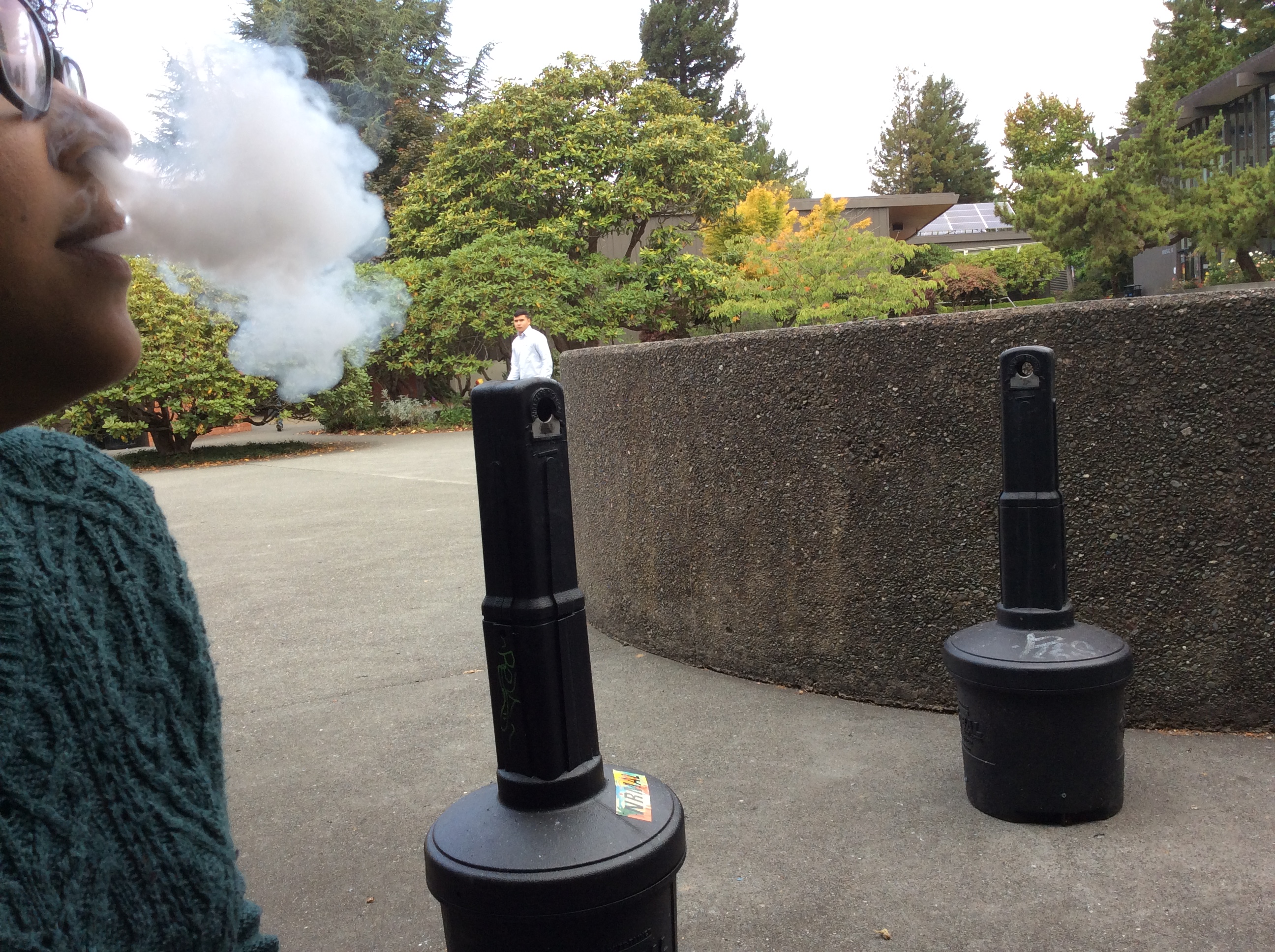
    With Hollywood actors and prominent public figures accessorizing day-to-day life with a JUUL in hand, vaping was quick to enter the teenage party scene and develop a reputation amongst the younger crowd.

    Years ago, public disapproval was primarily aimed at the advertisements vaping companies released. The younger crowd became the target audience with the promotion of sweet, tempting flavors, and the original audience, adults who were looking to quit cigarettes, quickly became a secondary target.

    In late August, seven deaths in relation to vaping were confirmed. Beyond that, 530 cases of lung illness found in young adults have been attached to vaping with the numbers on the rise. Regardless of whether marijuana or nicotine cartridges are being used, an unrelated chemical substance is being singled out. Vitamin E acetate, a common diluent used in vaping cartridges to cut the product and increase shelf longevity, appears to be the cause.

    Vitamin E comes in many forms and is most commonly known for its moisturizing and adhering quality. Physicians are dumbfounded by the idea of smoking it. Medical officials compare smoking Vitamin E acetate to “[s]aran wrap around your lungs” as the tocopherol element adheres to the lungs liner fluid, blocking oxygen travel.

    The light on vaping has cast a shadow on a much older and somehow less prominent issue affecting our country, the opioid epidemic. Since the ’90s, medical officials began distributing pain relievers at a higher rate after pharmaceutical companies assured them of their non-addictive quality. Proven to be false, this ultimately resulted in over 700,000 people dying from a drug overdose within the 1999 to 2017 time period. And according to the CDC, 400,000 of the deaths were due to overdose involving opioids, prescription and illicit.

    Since then, an estimated 130 people die daily from opioid-related drug overdoses. Unlike the vaping “epidemic,” officials are aware that 40% of opioid overdose deaths are connected to a prescription but refuse to take action and put restrictions on pharmaceutical companies.

    Focus continues to surround vaping. Measures are being introduced to limit access to vaping devices. Meanwhile, the country has been at war with drugs since the ’70s with little to no improvement.

    It took less than two months for legislators to begin discussions on vaping issues and introduce more than 200 bills to combat it. In almost half a century the opioid epidemic has claimed more than 400,000 lives, with 47,000 in 2017 alone, and leaves 1.7 million people suffering from substance disorders relating to prescription opioid pain relievers.

    The more urgent issue is somehow the least prominent thought in any officials mind.

    Before jumping into the next news-worthy drug epidemic, let’s overcome the current opioid battle we’ve been struggling with for almost 50 years and relieve the pain of over a million people before forgetting them altogether.

  • Bruce Bochy’s Giant Impact

    Bruce Bochy’s Giant Impact

    Capping off a legendary career, Bruce Bochy retires as manager of the San Francisco Giants

    When Bruce Bochy got his job as manager of the San Francisco Giants in 2007, the Giants hadn’t won a World Series title since the franchise moved from New York in 1958. The Giants weren’t necessarily a lousy franchise since moving to San Francisco, reaching the World Series in 1962, 1989 and 2002 but they were never able to claim baseball’s ultimate prize.

    Bochy’s first few years as manager of the Giants were subpar, but in 2010 Bochy gave San Francisco something the city had waited for decades to get: a World Series title.

    As a die-hard Giants fan, things have gone pretty well over the last decade with Bochy at the helm (with the exception of the last few seasons). The Giants won the World Series three times in a span of five years: 2010, 2012 and 2014. Which is something the Giants’ blue colored rivals to the south haven’t done since before I was born.

    Bochy ended his hall of fame career today after the Giants played their last game of the regular season at Oracle Park in San Francisco. It’s been an emotional day for every single person that is a fan of the Giants or has been a part of the organization. There have been tributes from players and coaches past and present. I guarantee that tears have been shed, including my own.

    It may be hard to understand what Bochy has meant to San Francisco and the game of baseball if you’re not a Giants fan. The impact he has made on both the franchise and the game of baseball is hard to put into words. It starts with the way that he treats his players and the way that he situated his players to win three World Series titles.

    In 2010 the Giants had few superstar players and no one expected them to make the postseason, much less win the World Series. The team had a budding superstar as catcher, Buster Posey, and Tim Lincecum, a Cy Young Award winner, as its pitching ace. Outside of that the Giants were never expected to be a World Series contender.

    After winning the division and beating the Braves and Phillies, the Giants found themselves in the World Series against the Texas Rangers and were able to beat them in five games to capture the title.

    The players are the ones that win the game, but the manager moves the pieces around so that the team has the best chance to win. Baseball is a very detail-oriented game, and Bochy was able to create lineups and use his pitching rotation to put his teams in the best position to win. It also speaks to Bochy’s character that he treated his players with respect. In every World Series team that Bochy managed, his players bought in and played their absolute hardest for him.

    Another aspect of Bochy’s style that is unique in this day and age, is that he manages with his gut. Nowadays, baseball is about advanced metrics and stats. Almost every lineup and pitching decision is made off of computer data. Bochy still manages the game the old-fashioned way, using his knowledge of the game and scouting reports of opponents to set his lineups and make pitching changes.

    The entire 2019 season, at every ballpark that Bochy visited for the last time, he was presented with a gift from the opposing manager and given a standing ovation by opposing players and fans. But there was one moment in particular that stood out to me during Bochy’s farewell tour.

    On Sept. 7th at Dodger Stadium in Los Angeles, a place where pure hatred of the Giants is felt every time they make the trip down, the Dodgers’ manager Dave Roberts presented Bruce Bochy with a gift. A montage of Bochy’s highlights played on the big screen, including his World Series highlights.

    For those who don’t understand the rivalry between the Giants and the Dodgers, the teams and the fans hate everything that has to do with the other. When the presentation was shown at Dodger Stadium that night, fans cheered. In a rare moment, the SoCal team and its fans showed respect for the Giants and their manager that had been their adversary for so long.

    Bruce Bochy will forever live on as one of the greatest managers in San Francisco Giants’ history. After today, the Giants will search for a new manager and hopefully return to the glory days of beating the Dodgers and parading the World Series trophy through the streets of San Francisco.

  • Ask Evergreen: Meaningful Friendships

    Ask Evergreen: Meaningful Friendships

    Ask Evergreen is a weekly advice column by the students of the Lumberjack.

    Each week we’ll answer anonymous questions sent in by readers about anything and everything.


    Dear Evergreen,

    How do we navigate meaningful friendships in a college setting where friendships are based on talking about bullshit?

    Dear Friendship Keeper,

    Friendships come in all different forms, some healthy and others not. Genuine friendships usually aren’t based from a bond of bullshit talking, but to each their own. You can do a couple different things to avoid befriending bombastic people who blather.

    First, find people that you might have common interests with. This is the easiest place to start when searching for a meaningful connection, as you control who and what you let into your life. Join a club or frequent places that you enjoy to find others interested in similar activities. Strike up a friendly conversation with someone at your favorite bookstore or while you’re hiking in the community forest on a special trail.

    Second, when you notice people itching to gossip or spew meaningless rhetoric, separate yourself from those situations. If you strive to surround yourself with positive-thinking people, chances are one of those people will vibe with you. Don’t settle if it isn’t significant and beneficial to you.

    Third, get out of your comfort zone. Maybe you’ve allowed yourself to become complacent with the type of people who are around you. Change that. Voice your discomfort when it comes to people forcing their absurdities upon you. Challenge yourself to push for what you want rather than settling for what others push onto you. If you don’t want to have small talk about the weather, or a heated conversation about politics, say something to change that. Be the navigator of this ship we call life, and choose who you want on your crew.

    Lastly, it’s okay if you’re a lone wolf for the time being. It’s no fun when people around you drain your energy, so don’t feel selfish for choosing not to have them in your life. Sometimes we just need to self-reflect and ask ourselves if what we have is enough. The best things come to those who wait, right? A meaningful friendship can’t be forced, so don’t rush into anything and trust your gut.

    All the best!

    Sincerely,

    Evergreen


    If you have any questions you’d like to send in, email us at contactthejack@gmail.com. We won’t publish any names and you don’t need to use one.

  • Humboldt Lacks Medi-Cal Resources

    Humboldt Lacks Medi-Cal Resources

    When dentists don’t take Medi-Cal, it forces individuals to travel to seek treatment

    For any students dealing with dental issues while attending Humboldt State, I suggest you plan out time to take off from your courses and work to go home and have it dealt with. The sad truth is that the proper resources don’t exist in Humboldt County, and traveling great distances to receive medical attention isn’t actually that uncommon.

    When I was 11, I ran face-first into a pole and broke my front tooth in half. Followed by days of crying and constant mirror checks, I would switch between laughing at how stupid I felt I looked to uncontrollable sobbing. I couldn’t eat anything cold or my whole face would be met with a violent sensitive reaction. The only option I had as a self-conscious 11-year-old was to replace the broken tooth with a filling and hope it looked as normal as possible, so that’s what I did.

    While the sensitivity eventually subsided, a year later the filling fell out. Again, I was hit with overwhelming sensitivity and due to my being a pre-teen, I was also terribly embarrassed. Every time the filling fell out after, it would be remade. I figured it was time to find a permanent fix and my dentist told me I would eventually need a veneer.

    Veneers are what Instagram models and celebrities have on their teeth to make them look like perfect pearls. Basically, it’s a thin layer of material that’s placed directly over the tooth and protects the natural tooth’s surface, making your smile flawless.

    “The sad truth is that the proper resources don’t exist in Humboldt County, and traveling great distances to receive medical attention isn’t actually that uncommon.”

    I was scheduled to receive a single veneer. This is because I only needed one tooth fixed, but in large part because they are terribly expensive. I was told that getting just one was risky, as it has to be perfectly engineered to match the rest of my teeth. I was willing to take the risk.

    This past semester I was hit with that same violent sensitive feeling in my tooth but the filling hadn’t fallen out. It seemed that the filling was slowly deteriorating and I began to feel it everyday. The tooth slowly turned a different shade and began to chip away. I knew that I was going to need an even better permanent fix. This meant looking at getting a full set of veneers.

    My normal dentist and physician are five hours away. Not a horrible distance, but not next door. I knew for this procedure I would have to leave and miss some days of school, but I wanted to explore my options first.

    I went to the campus health center to see if they could help me with my sensitivity or lead me in the right direction to begin services with a local dentist. I was met with two nurses that seemed disappointed to tell me that the center couldn’t help much with dental issues. They prescribed me a numbing cream and gave me a list of local dentists.

    Of the local dentists, only one took Medi-Cal, California’s Medicaid program. This was disheartening as it was my only insurance but I made an appointment anyway. The facility was called the Open Door Clinic Dental and was located in Eureka.

    The appointment was short and they told me I needed a root canal. Unfortunately, the clinic doesn’t provide the procedure and they gave me another list of dentists, more specifically endodontists, that could help me. As I called around, I realized that none of the dentists listed accepted Medi-Cal either and I was faced with the reality that I was going to have to travel back home to seek treatment.

    While I understand that Eureka, Arcata and McKinleyville are small, I think there should be more medical professionals that accept Medi-Cal in Humboldt County.

    Medi-Cal is a free state program. It’s what you sign up for if you can’t afford other insurances. Because it’s a state program you’d think it’d be more widely accepted, but it seems to be the other way around. Kind of defeats the purpose, doesn’t it?

  • #ExploreHumboldt: Patrick’s Point

    #ExploreHumboldt: Patrick’s Point

    Patrick’s Point offers multiple options for beach-lovers at an affordable price

    This week’s #ExploreHumboldt column covers a fan favorite, the majestic and expansive Patrick’s Point. This one-square-mile State Park features some of the best beach spots around and is a perfect destination for a daytime picnic, sunset beach run or weekend camping trip.

    As a state park, Patrick’s Point includes amenities that we have not seen in previous #ExploreHumboldt entries. These include bathrooms with running water, clearly marked trailheads with accurate mileage, picnic tables with BBQ grills and over 120 overnight camping spots.

    Because of its State Park status, Patrick’s Point has well-maintained and clearly-marked trails with mileage indicators. | Photo by Jett Williams

    However, these benefits come at a cost. There is a $8 vehicle fee, with no student discount. The litany of areas to explore and the overall quality of the experience make it worth the price of admission. You should leave a couple hours of time minimum to to fully experience the park and get your money’s worth.

    Patrick’s Point also features several “Hike n’ Bike” campsites. Those who bike or hike into the park benefit from free admission as well as their own area with campsites reserved for non-car users. These sites include all the features of a car site, with a location closer to the best points of interest.

    The view looking north from Wedding Rock is one of the most spectacular in the park. The beach access trail can be seen in the bottom left corner. | Photo by Jett Williams

    To get to Patrick’s Point, take Hwy 101 north past Trinidad, and take the ‘Patrick’s Point’ exit. Turn left, and continue until you see signs for the park. Alternatively, you can drive to Trinidad and bike along Stagecoach Road, turning left onto Patrick’s Point drive before arriving at the park. This way, you get a bit of extra exploration in, while avoiding the $8 vehicle fee.

    If you want to see everything, it’s worth bringing some hiking shoes and a day pack to walk the length of the park. There are a ton of different spots to visit at Patrick’s Point, so I’ll quickly go over some of my favorites.

    Sea Anemones are easily found at the tidepools near Palmer’s Point during low tide. Tide tables are available online and at the park’s entrance. | Photo by Jett Williams

    A network of trails connects the different points of interest spread throughout the park. Plan to hike at least a couple of miles if you want to see everything. Most of the main rim trail is fairly flat and some sections are wheelchair-accessible. However, the access trails that take you to most of the prominent locations are very steep, as they often run straight up and down the steep coastal hills.

    Wedding Rock is the most spectacular point in the park. This massive rock structure juts up from the coastline, providing stellar views of the surrounding rough coastline. The park’s original caretaker was married there in the early 1900s, and Wedding Rock has been home to several weddings every year since.

    Sumeg Village is a recreated Yurok village, built by the local tribe with modern tools and traditional materials and practices. The village is used by the tribe for cultural traditions and features two redwood canoes, a sweat room and a native plant garden, also maintained by the tribe.

    Sumeg Village provides a nice spot for quiet reflection. The area was built with traditional Yurok techniques by the local tribe, and is still used today for rituals and ceremonies. | Photo by Jett Williams

    The Agate Beach is another location worth your time. This expansive stretch of coastline seems to span as far as the eye can see, with a pristine beach of light sand and naturally-occurring agate stones.

    When visiting Patrick’s Point, remember that swimming in the frigid North Coast waters is highly discouraged. The undertow is strong, and sweeper waves can catch unattentive visitors off-guard. Dogs are allowed, on-leash only, but are not permitted on trails or beaches. Also, refrain from picking the local mushrooms and wildflowers. They have a hard enough time surviving without being plucked by the unaware.

    After a long school week, we all need a bit of calm reflection and relaxation. Carve out at least an afternoon later this week or this weekend to visit our closest state park, and don’t forget to keep exploring!

  • Ask Evergreen: Switching Majors

    Ask Evergreen: Switching Majors

    Ask Evergreen is a weekly advice column by the students of the Lumberjack.

    Each week we’ll answer anonymous questions sent in by readers about anything and everything.


    Dear Evergreen,

    I’m a third-year switching majors. Is that a big issue, or should I worry about not graduating on time?

    Dear third-year major switcher,

    Switching your major as a third-year student can be a blessing and a curse. On one side, it’s the perfect time to do it because you’re still enrolled in school. It’s better to do it now than to come back years later to try to major in your new studies. On the other side, switching now might create an unwanted financial hassle as you’re most likely starting from square one with your new major. Unless you’re switching to a major that has similar course requirements that you’ve already fulfilled.

    College is not a race. It is completely normal to not finish a degree within four years. Don’t beat yourself up or compare yourself to your peers. Make sure to schedule a meeting and talk with your adviser to map out the smoothest route for your degree transition—you might have less to do than you expect. You could even consider minoring in the major you want to change to. But remember, many people take gap years, change their majors or come back to school years later. Be proud of yourself for making this decision now.

    Best of luck!

    Sincerely,

    Evergreen


    If you have any questions you’d like to send in, email us at contactthejack@gmail.com. We won’t publish any names and you don’t need to use one.

  • Athletes Are People Too

    Athletes Are People Too

    Pro sports is a two-sided business in need of a power redistribution 

    Owners of professional sports teams have made headlines the last few years for all the wrong reasons. The primary issue regards team owners treating players as property instead of as people, and a good amount of this coverage surrounds the National Basketball Association and the National Football League.

    Since 2014 there have been numerous situations where owners of sports teams made racially-toned remarks concerning their athletes, who are predominately black. Simply referring to whomever controls the majority of the team as ‘owner’ can have its own racial implications in leagues where most players are people of color.

    According to the NBA’s 2015 Racial and Gender Report Card and a 2014 NFL Census, 75% of NBA players and 68% of NFL athletes are black. The NBA also has the largest percentage of people of color in its fan base, whereas NFL fans are primarily white.

    In 2014, The NBA forced former LA Clippers’ shareholder Donald Sterling to sell his team after a tape of him spouting racist remarks was released to TMZ. But in the NFL it seems like their majority shareholders are able to get away with more. NFL team owners were more vocal than ever this past season due to the outrage from many fans about players kneeling during the National Anthem.

    While NFL contracts may seem ridiculous compared to other high-grossing sports, professional football players receive the lowest percentage of guaranteed money in their contracts. In contrast, NBA athletes make every cent of their contracts and are often considered to be involved in the daily running of the league as opposed to just their respective teams’ shareholders making all the decisions.

    When it comes to the relationship between owners and their athletes, a large factor in the athlete’s treatment is how fans act. Rhetoric during the kneeling protests relayed many of the players who took a knee as unpatriotic, spoiled and privileged, with fans telling players to “shut up and play.”

    Fans treat players as if they are toys for amusement instead of human beings. And team owners treat players like property that can be replaced at any moment. But when there is a media storm of fans and others calling for change like with the Clippers in 2014, progress can be made. Fans hold more power than they know and can directly affect how teams are handled and how athletes are treated.

  • A Local’s Perspective on HSU Football

    A Local’s Perspective on HSU Football

    HSU football brought two communities together and now we’re at a loss

    In July of 2018, with most of the student population home for the summer, former Humboldt State President Lisa Rossbacher and former Athletic Director Duncan Robins made the announcement that the HSU football team would be cut following the conclusion of the 2018 season.

    The efforts of many community members to raise money for the football program earlier in the year were seemingly for nothing. Many community members, including myself, were outraged about the decision to cut the football team, but some applauded the move, saying that a football program was unnecessary and a drain on academics. Either side you may be on, it was a polarizing move for the university to make.

    I am part of the small percentage of HSU students that grew up in Humboldt County. In fact, I grew up right here in Arcata about a mile away from the HSU campus. I am as local as a local student can get. I spent a good portion of my life going to HSU football games and it became a significant source of pride that my small town had a Division II college football team. When I started attending HSU, this was not just my school’s football team, this was my hometown team as well.

    When I transferred to HSU from College of the Redwoods, the first thing that caught me off guard about HSU was how separate it seemed from the rest of Arcata. Even though I was going to school in my hometown, HSU felt like a world of its own, far from the Arcata I grew up in. I felt that my identity as a native of Arcata and a student at HSU were two separate worlds, even though in a geographic sense I was in the same place.

    HSU football games were one of the only times that these two worlds felt one and the same. The games became some of the only times where I saw both students and local community members in the same place, at the same time, rooting for the same team. People from Arcata and Los Angeles alike, all rooting for the Jacks.

    It wasn’t just about the football team itself, but it was how football brought the entire community together. Getting rid of the football team felt like severing one of the last ties between the campus community and the local community.

    The only good news I can gather from this is that the Redwood Bowl is actually seeing more football this season than when the HSU football team was active. My alma mater, College of the Redwoods will be playing their football games at the Redwood Bowl starting on October 5, and both Arcata High and McKinleyville High are playing their football games on campus as well.

    I hope that someday HSU football will be brought back, but in the meantime, all of the other HSU athletes that are still here deserve our full support. Go Jacks!