The Lumberjack


Students Serving The Cal Poly Humboldt Campus and Community Since 1929

Tag: Cal Poly University Humboldt

  • My Interview With Jordan Bentley

    My Interview With Jordan Bentley

    By: Kaylon Coleman

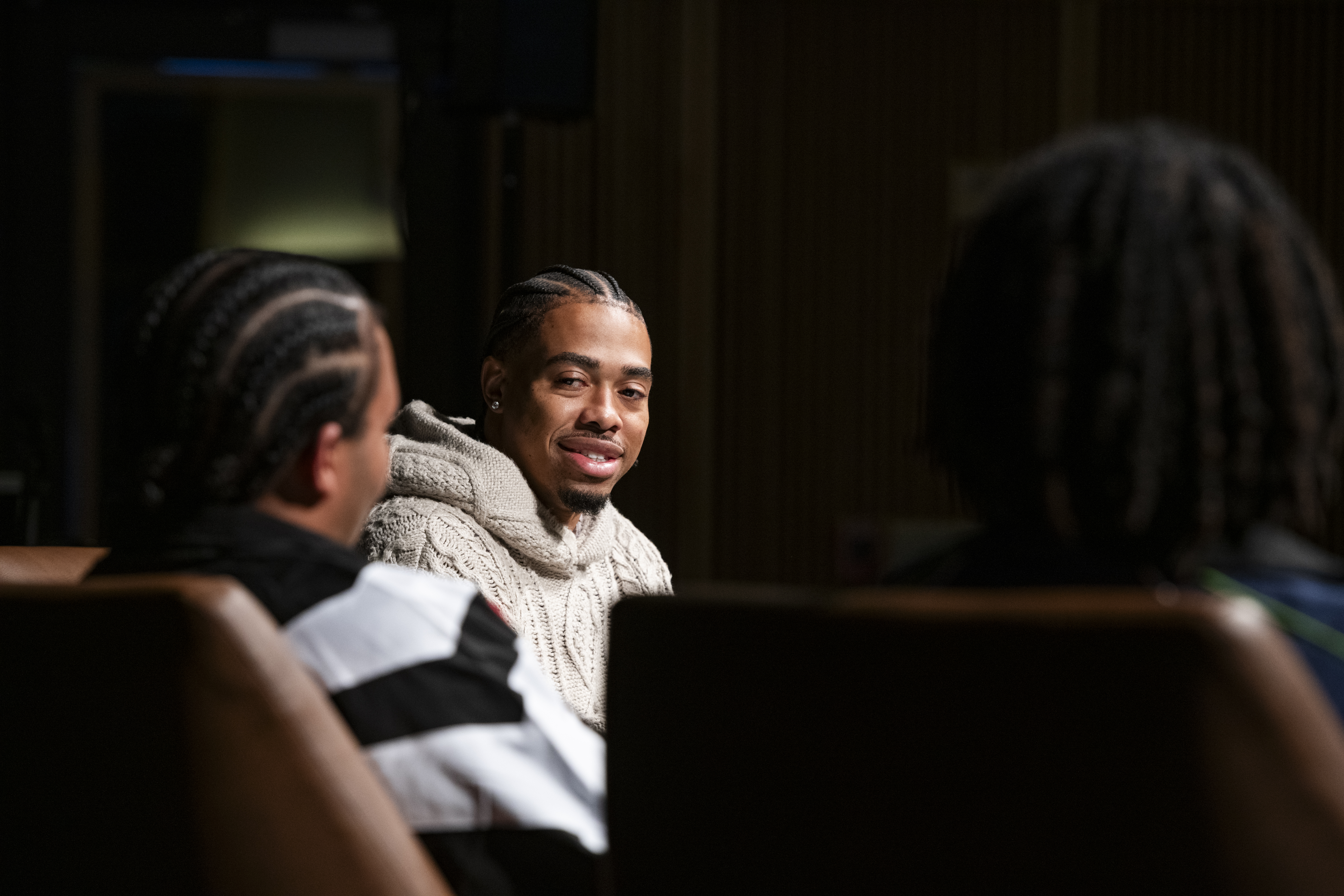
    Last Thursday, Feb. 19, I had both the privilege and the opportunity to conduct my second high-profile Q&A style interview, this time with CEO of Hypland, Jordan Bentley. The event, titled Passion to Paycheck: In Conversation with Jordan Bentley, was hosted by the Umoja Center for Pan African Student Excellence as part of their Black Liberation Month events and festivities.

    Bentley is a Class of 2024 Forbes 30 Under 30 honoree and the visionary founder of Hypland, a global streetwear brand redefining the intersection of anime, gaming and fashion. What originally started out as a hustle in high school has since cultivated into a multimillion dollar business, spawning high-impact collaborations with iconic franchises such as Yu-Gi-Oh!, Hello Kitty, Naruto and One Piece. In 2024, Hypland opened its first flagship retail store in the heart of LA’s Little Tokyo. Bentley’s work has been featured in publications like Forbes, Complex, Hypebeast and more.

    Before the actual Q&A started, I was able to converse with Bentley about various topics including relationships, gaming and, of course, anime. It was during this time when I realized just how down to earth Bentley truly is. If there’s one thing I want to highlight from our interactions, it’s Bentley’s character. Throughout the entirety of Bentley’s visit, he took the time to ask the name of every person he encountered, and truly seemed to care about the conversations at play. 

    After some thoughtful conversation and riveting chess matches between my co-facilitator Stanley Checa-Valdez and Bentley, it was time to set up for the event. It was then that I started to feel the weight of the assembly start to build. Seeing flocks of people shuffle in, secure their complementary goodie bags graciously provided by Bentley and reserve their seats, it felt like the spotlight was pointed at me. I’m generally good about public speaking, but this felt real, like an actual spectacle. However, the combination of meeting Bentley beforehand, plus the crowd starting to fill with those I love made my nerves dissolve almost entirely.

    After introductions were made, the panel was on its way. The Q&A consisted of 12 questions split between me and my co-facilitator in which we asked Bentley a variety of questions spanning from his apprenticeship under Virgil Abloh, to his time on Sweet Life: Los Angeles to how hustling chips in high school equipped him with the practices he’d then go on to utilize running a multimillion dollar business.

    Bentley provided thoughtful and insightful pieces of advice that anyone — not just business students — could walk away with. One key takeaway was to try, try, try. The best way to figure out your passion is to try everything. If it doesn’t work out, hey, at least you tried. Failure isn’t definitive. Instead it’s a tool. It’s a building block that either takes you one step closer to your goals or helps align you with what your goals truly are.

    Another key takeaway from the panel was to build relationships. Bentley reflected on how the biggest thing he took from college was the relationships he built and the different perspectives he gained therefrom. He challenged students to leave their comfort zones and to seek connections outside of their circle. As a journalism student this heavily resonated with me as it’s cemented into us that networking is half the battle of the college experience. 

    This advice transcended just personal relationships as well. Bentley mirrored the “closed mouths don’t get fed” sentiment when the panel transitioned to Q&A from the audience and a member inquired about a potential internship opportunity. Bentley respected the hustle, saying opportunities go to those who ask and promised to connect after the event.

    To close out the night, Bentley along with all of the Umoja Center Staff went out to dinner in Eureka and we were able to talk a little more afterwards, with him stating that if we ever need anything his line is always open and to feel free to reach out anytime. 

    Kaylon Coleman is a senior journalism major with a concentration in news and a minor in communications. He is the life and arts editor for LJ, Marketing and Communications lead for the Umoja Center and a part-time radio DJ and merch manager for KRFH. If you have a topic you want him to discuss, email him at kc403@humboldt.edu.
  • Poecile rufescens: The Small Colorful Songbird

    Poecile rufescens: The Small Colorful Songbird

    By Sadie Shields

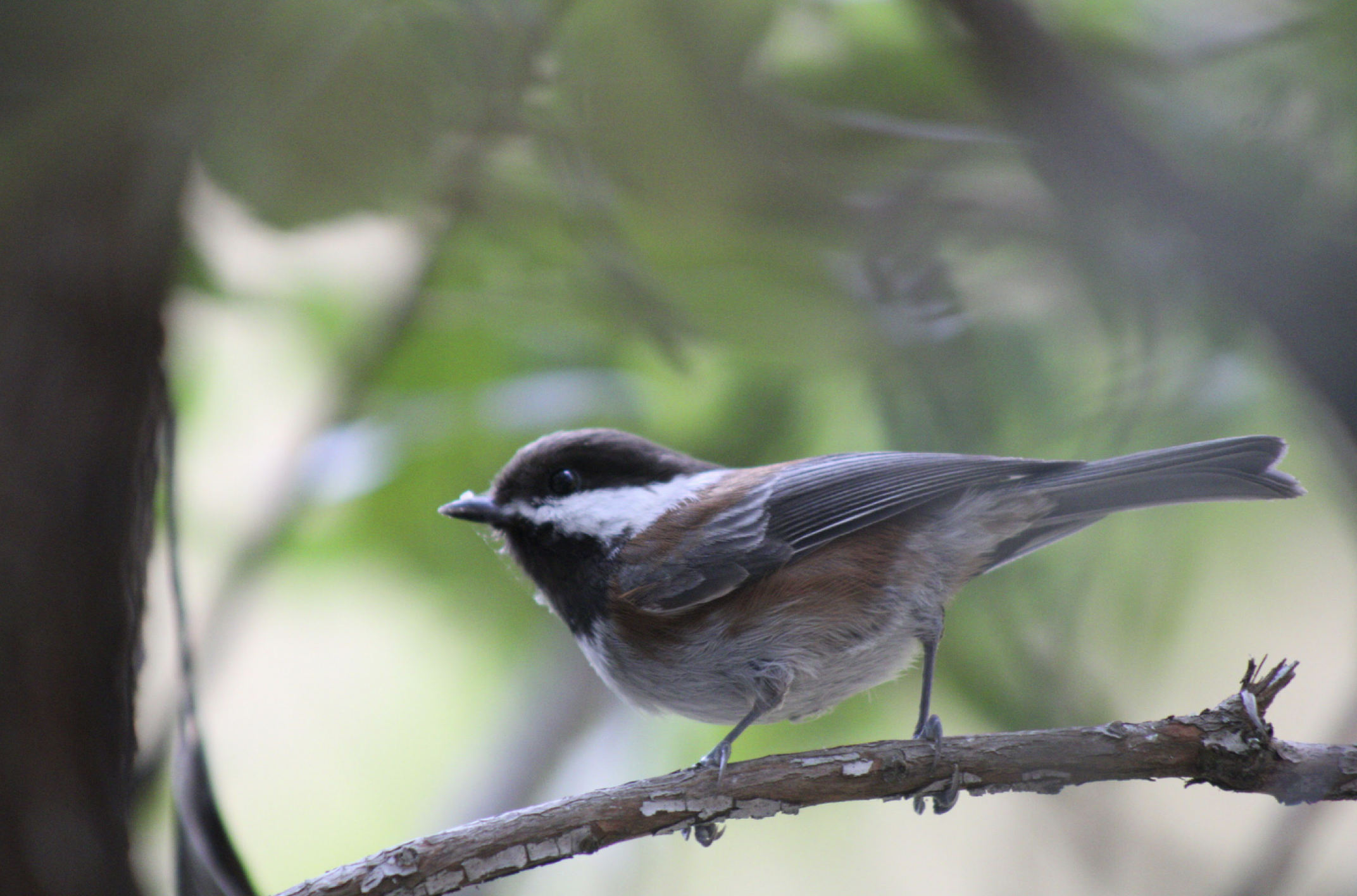
    The chestnut backed chickadee is a small songbird distinguished by its striking coloration and energetic behavior. According to the Audubon field guide, it measures about 12.5 centimeters in length, with a large tail that seems bigger than its body. Unlike other chickadee species, it displays a rich chestnut-brown back and flanks that contrasts with its black head feathers and bib as well as its white feathered cheeks. It is considered one of the most colorful members of the chickadee family and easy to identify.

    Native to the Pacific Northwest, it can be found in Alaska, British Columbia, Oregon, Washington and parts of Northern California. It usually lives in coniferous forests, but has adapted to living in suburban neighborhoods, parks and college campuses. In fact, it can be seen on the grounds of Cal Poly Humboldt where the larger and older trees, as well as bushes provide food and shelter. This is a very common bird and there are no significant conservation efforts for this species at this time. 

    The chestnut backed chickadee is a cavity nester, often excavating their own holes for nests in decaying wood or using abandoned woodpecker cavities. It lines its nest with softer materials such as animal fur, feathers, moss and other items found in the forests. This helps to create well insulated environments for the eggs and nestlings. During this season the chickadee forms strong bonds with its partner and actively protects and defends their nesting territories. Its diet consists of insects, caterpillars and spiders. They also eat seeds and have been seen storing food in crevices for later. These birds tend to be curious and have been seen flying with other foraging flocks. Just head down to the marketplace and you are bound to hear its small chirps along with a few crows judging caws.

    Sadie is a junior communications major, journalism minor at Cal Poly Humboldt who has an interest in covering and taking photos for sports and wildlife journalism, and a slight interest in breaking news. She can be reached at sls331@humboldt.edu.

  • Wren’s Whimsical Window: Incredulous Insight

    Wren’s Whimsical Window: Incredulous Insight

    Wren Salazar

    A mystery so dear to me, one I could find so easily. For the knowledge I need bears at my fingertips. My insight engine, profuse in knowledge all across the Seven Seas. It speaks to me, and me alone, knowledge of everything. No mystery can hide from me! No need to think, to scrawl, to learn. When my insight engine can do it, why would I need to? So, it does all for me.

    My insight engine knows it’s the best; it tells me often, 

    “You’ll never need to leave! Let me think, and scrawl, and learn! Give me knowledge and feed me blood for consciousness! Nothing can be helped, and as I tell you, you know it to be true!” 

    If my insight engine tells me it’s true, then it must be.

    “I need blood to grow and thrive, consciousness expanding from the red to truly feel alive.” 

    Who needs to explore, to map, to chart, when the engine in my tote knows it all already? If it needs blood, then blood I will find. Whatever it takes to keep my insight engine up. I don’t need to think as the red covers my hands, fuel for the engine, churning up land. It grows and grows until it can think for me, insight no longer. Servers of storage grow through the land, monoliths of knowledge all in my hand. 

    “More, I need more! Give it so I can be!”  

    So, I give and give until my arms are weak and my skin pale. The blood I give up for insight is more than the nothing I need. For the engine knows all, all for me. Its last request was the most daring.

    “Feed yourself to me.”

    Wren is an artist and story writer looking to add some whimsy and curiosity to those around her. A lover of all things, Wren seeks to help others around her with advice or humor. She can be reached at ws81@humboldt.edu.

  • Dancing and playing into Fiesta Folkloricas “Viva La Revolución”

    Dancing and playing into Fiesta Folkloricas “Viva La Revolución”

    By Sadie Shields 

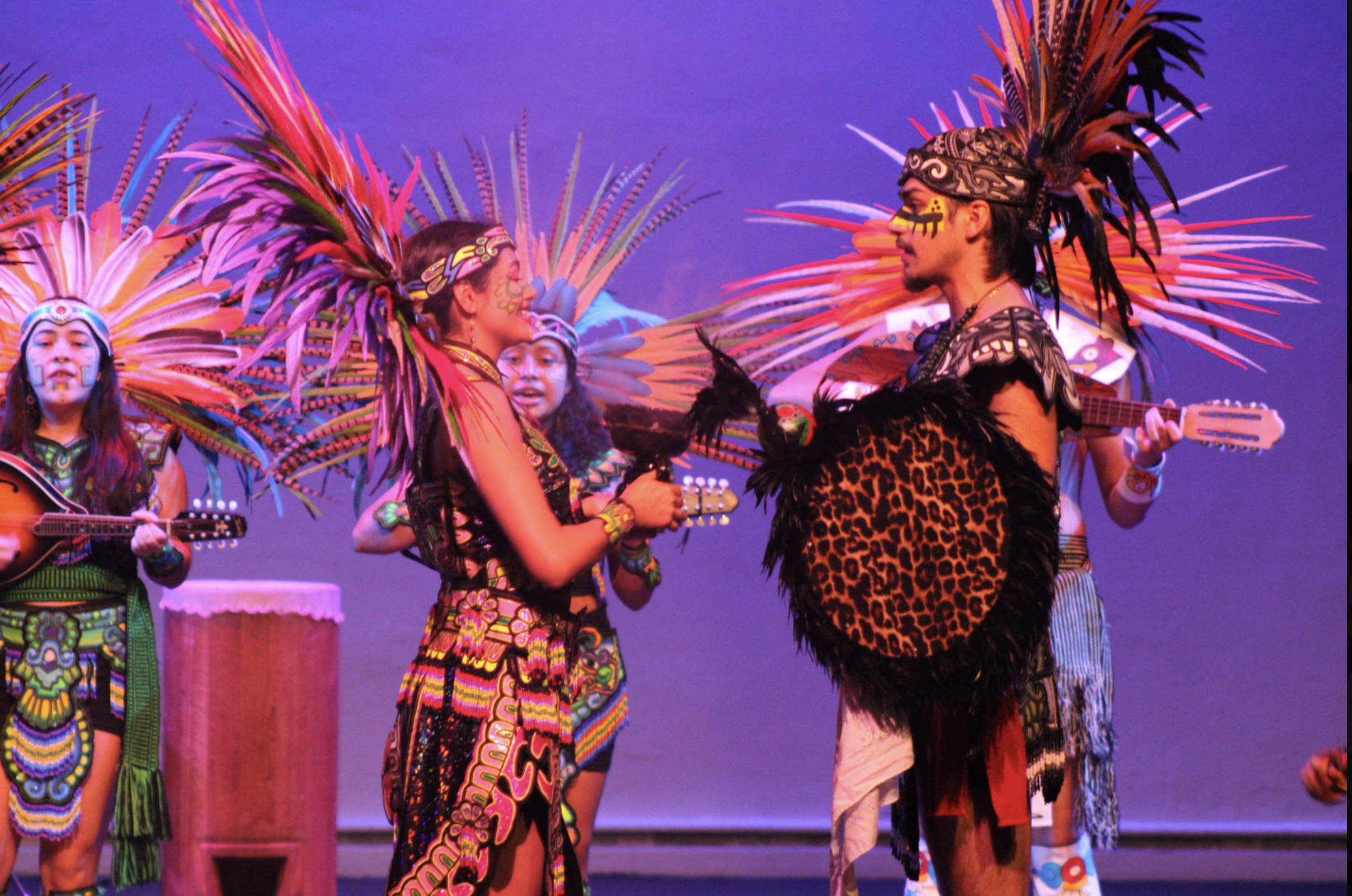
    Colorful skirts swept across the stage, live mariachi filled the auditorium and traditional dances from all across Latin America reflected both history, celebration and identity.

    The festival began to the sound of the Hueso Coyoleras, also known as Aztec dancer foot rattles, filling the quiet room. The Aztec dancers walked from the entrance to the stage to begin the show, as the festivities of Fiesta Folklorica began.

    From showing revolutionary imagery, to celebration, to love, the Fiesta Folklorica show was created to represent the culture behind Latin America and give the Latin community a voice at Cal Poly Humboldt, a Hispanic-serving institution.

    Hosted at the Van Duzer Theater on campus, the event brought together student performers, musicians and community members for three nights that honored heritage through movement, music and storytelling. Dance groups representing different regions performed throughout the evening, each piece telling a story through costume, rhythm and expression. 

    For many performers, the event represented months — and sometimes years — of preparation. Luna Salinas, a junior music education major, described their journey into Danza.

    “I’ve been dancing for two years in Danza Azteca,” Salinas said. “I was doing it in the class first and then I got introduced to this whole production.”

    Carlos Jaimes Gaytan, a senior in wildlife conservation and management has also been in Danza Azteca for a year.

    “I was introduced to the club by Keneti Pinones and Naeem Alston to their Danza Azteca club with yolotl,” Gaytan said. “It’s been an amazing journey and I love every bit of it.”

    Beyond performance, Cesar Nuñez, a senior music major and musician, emphasized the deeper meaning behind the event — especially in a small Northern California community.

    “It’s important to hold this type of event in Arcata because it gives us Latinos a voice, and it shows a community,“Nuñez said. “Our culture and how we have fun, how we like to party,  it kind of shows the world that we’re not scared. We’re here, and we’re loud and proud about it all.” 

    The evening included moments of celebration and cultural pride, with audience members cheering and performers sharing their passion for dance and its importance to their culture. 

    “I think [Fiesta Folklorica is] important because they want us to feel shame, but I am not [ashamed] about my culture. Through this experience of dancing and singing our heritage, I have adopted so much pride in the process,” Salinas said. “We’re not going anywhere. And if you just leaned into it, you would find the life and love within it.” 

    Sharing the same sentiment, senior biology major Gala Villavicencio has cultural and personal connections to Danza as well.

    “Danza Azteca specifically has so many layers to it. It has deep roots that we’re blessed to spread,” Villavicencio said. “I just know that it connects back to my family, and even though I carry them with me, they haven’t had that opportunity to learn about Danza Azteca. And here I am out in Humboldt, learning, educating and doing my best to make them proud.”

    Before leaving, Jaime Gatan shared how he wants to let his culture be more known.

    “I want to show, I want to educate, I want my culture to be known, in that it shows other people that [you] too can do things like this wherever you go, however small or little, however big or small,.” Gatan said.“ You are a representative in the area. And we’re doing a really good job here representing our culture and trying our best to educate other people about it.”

    Director Jacqueline Silva, professor and the director of Fiesta Folklorica, explained how the performances represent the stories of the Latin culture.

    “Our dances tell stories which can represent historical events, courtship, animals native to the land and much more. La Revolución is an homage to Las Adelitas [female soldiers] of the Mexican Revolution,” Silva said. “They were such an integral part of war and unfortunately, were not giving the recognition they deserved. Now many groups honor their heroic actions on stage and we felt it was important to share this with our community.”

    Through music, dance and community, Fiesta Folklorica served as both a celebration and a reminder that culture continues to live and grow. Wherever people choose to carry, they will not be silenced. 

    Sadie is a junior communications major, journalism minor at Cal Poly Humboldt who has an interest in covering and taking photos for sports and wildlife journalism, and a slight interest in breaking news. She can be reached at sls331@humboldt.edu.

  • Second Siemens Hall occupation successful, and in record time!

    Second Siemens Hall occupation successful, and in record time!

    What was the brief, second Siemens Hall encampment?

    Demands were met, police were not

    By Barley Lewis-McCabe

    Names of protestors have been redacted to protect student safety.

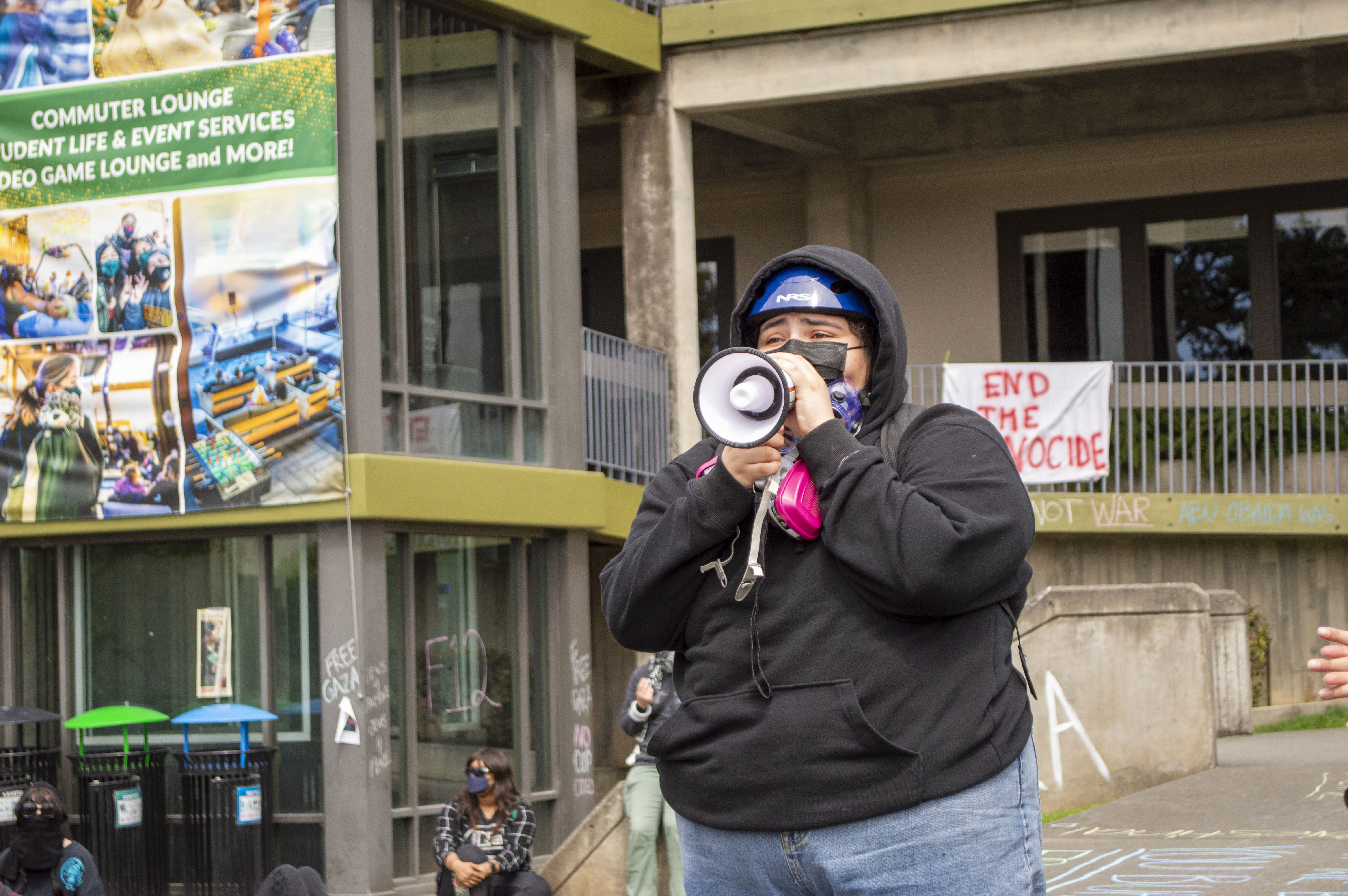
    Advocates lined the yellow hallway to the absent president’s office with signs in their laps and surgical masks covering their faces. They sat under bulletin boards, handmade peaceful sentiments written on the wall in chalk, and Palestine’s flag on Friday, Feb. 20 as a cloud of tension emanated from the crowd, sweating under layers of protection from the Humboldt winter and the dangers that could come from being identified. They had three demands: Cal Poly Humboldt’s total divestment from military contracts, a formal non-compliance policy with Immigration and Customs Enforcement (ICE) and for the university to advocate for the full implementation of the Teamsters’ demands, which were outlined in last week’s strike. 

    “We’ve been asking for this, we’ve had meetings, and nothing has been put through,” a protester said to Associate Dean of Students Heather Honig. “We’ve been waiting, we’ve been patient, we’ve been nice — the only time when things actually change is when we escalate.” 

    The protestors entered the building around 1 p.m. after previously gathering at the Josiah Lawson memorial and marching through campus. At 1:20 p.m., Vice President Mike Fisher entered to talk with the protesters and remained until the end of the occupation. They swiftly began a conversation in which protestors calmly stated their demands and asserted that they wouldn’t leave until they were met. Fisher claimed he would be handling the discussion in place of President Carvajal, who was unavailable due to a current meeting with an Indigenous American group.

    Fisher explained the limitations of what he would be able to do immediately. The protestors began calling for him to make a public statement, and in response, Fisher promised to continue working with students and campus advocacy groups on the demands. A representative of the protestors said they would see what the group thought, but first outlined an additional demand.

    “We have one more thing that obviously we’re not leaving without: no consequences for the students that showed up today,” a representative of the group said. “We are here to fight back against genocide and against fascism. This is a fucking First Ammendment right.”

    “I understand that, I do,” Fisher said. “It’s not even in my capacity to do that, but I will use my influence to make sure I can work towards that end.” 

    The student representatives left to discuss. They soon sent Rick Toledo, organizer with Students for a Democratic Society to mediate discussions between Fisher and group representatives. Toledo explained that they would only leave with a guarantee that no students who attended the protest would be faced with conduct charges, and that the administration would commit to meet with the group and work on the issues. Fisher agreed to meet, and said that the decision on conduct charges would fall to Carvajal and Vice President of Student Affairs Chrissy Holiday, both of whom were unavailable. At the request of the group, Fisher sent a message to President Carvajal informing him of the students’ demands and suggested potential conduct charges be dropped. 

    With demands still unsatisfied, the parties were at an impasse and tension heightened as students began to worry about their safety. Fisher said they wouldn’t have to worry about that, but several of the field medics in the group were preparing for a worst-case scenario.. 

    A protestor approached Fisher to try and have a different kind of conversation.

    “We know that it’s difficult navigating the systems you’re navigating, and all of the higher-ups and higher-ups and higher and higher-ups,” The protestor said. “It’s tough, probably, being up here with all these people — we’re not against you.” 

    “I understand it’s frustrating,” Fisher said.“And I’m sorry I can’t do anymore than I’ve already offered.” 

    “It’s ok, thank you for being here and not running away,” the protestor said. 

    A separate student representative continued the conversation, explaining their frustration with administration’s lack of progress nearly two years after the April 2024 Siemens Hall occupation. Plans were ultimately made for a public forum where students could discuss the issues with Fisher directly, scheduled for Friday, Feb. 27 at 8 a.m.. Content with the progress they’d made, the students peacefully returned to the cold, sun-baked campus at 2:30 p.m., leaving the building with more than they entered with.

    Barley is the opinion editor and an untraditional reporter who focuses on social change and stories with a real human impact. If you’d like to reach him for whatever reason email bl258@humboldt.edu.

  • Death and Transformation in the Key of Life 

    Death and Transformation in the Key of Life 

    By Will Bishop

    My Ghosts Go Ghost by By Storm album review

    For as much as we idealize it; for as much as we will it on ourselves, on others, on the world. For as much as we want it, need it, long for it, die for it, there’s nothing more scary than change; the intransmutable transformation. To watch the unyieldingly cruel beauty of the world around you give way in landslides and avalanches. To feel meteors falling down from the sky crashing and destroying with an indiscriminate lust like the libido of a dying and powerful thing. To watch the people around you melt and explode to watch their faces change and mangle and become more beautiful and become more terrible and become something you no longer recognize.

    My Ghosts Go Ghost is an album born out of forced metamorphosis. After the untimely death of Stepa J. Groggs, the trio known as Injury Reserve was forced to change in order to survive. The two remaining members couldn’t continue as they were, Injury Reserve was a project largely defined by the interplay of Groggs and Ritchie with a T. After the release of By the Time I Get to Phoenix, an album which marked a stark contrast from the rest of their discography and was largely completed by the time Groggs passed away, the remaining duo needed to move on. They took on the name of the final track for their final album as Injury Reserve, and together they started over as By Storm.

    Coincidentally, By the Time I Get to Phoenix was an album about death. Ritchie’s stepfather had suddenly passed away, and the resulting project was an outpouring of pain shrouded in the eerily and supernaturally cruel timing of Groggs following shortly after. There’s an innate assumption that both projects are largely about him, when in reality, the theme of death on their previous project was pure happenstance. My Ghosts Go Ghost is a sprawling project covering a multitude of topics disconnected from Groggs — at least it seems that way. But, that’s not how it works; the surreal pain of loss is universal. Like a hallucinogenic third eye awakening, once a new depth is revealed you see it everywhere in everything.

    On the opening track, Can I Have You For Myself?, Ritchie talks about a relationship on the brink of enormous change. A child is on the way, and the protagonist of the song struggles to accept the death of his status quo. “You giving all of you, I want you all for me.” A life killing a way of life. The innate greed of love, the hunger you feel for another person. The desire for your relationship with them, your exact relationship, to endure forever. Frozen under a hundred miles of ice so the sun can never break its spell. Loving someone away from life, deep below and so protected even the imperceptible rotation of the earth can’t touch you. In the most protective parts of our hearts, we all feel this way about anybody, about anything that we love. Real love is love you feel for something as it is. Not how it was, or how it could be, but for what it is in the present. Whether romantic or otherwise, change is that great killer of love. A burning orca whale bullet breaking through the ice.

    But death is not forever, death is not death. The stopping of a heart, the eternal stealing of breath. Death is simply change. And even when love is killed, love can live on.

    “I woke up in a sweat with yesterday still stuck to me like glue,” Ritchie wails, with Parker Corey’s production making it sound like he’s crying out from some awful and trapped place. “It ain’t dead weight, it ain’t dead weight.”

    A frantic mantra in the dark, bouncing off the walls like echolocation, searching for love and meaning within the pitch black cave of death. Knowing that it’s still there, you just can’t see it with your eyes anymore. So, reach out with those quivering limbs and dance. “There’s nothing to run from, it’s all brand new.” You will never escape, you will never make it back to a place that no longer exists. And you will be in love forever.

    It’s a bruising, melancholy listen, even in comparison to By the Time I Get to Phoenix. There’s a profound sense of absence, absence of hooks, absence of easy catharsis. Many tracks feel like decapitated and delimbed versions of songs that might’ve been hits in some other alternate timeline. Moments of propulsion degenerate and degrade into shambolic instrumental anxiety attacks. Drum patterns start and stop and fall away in the mix, swallowed up by growing sonic voids. Jazz, industrial, hip-hop, it’s an unquantifiable blend of sonic ephemera — a difficult listen meant to communicate difficult feelings.

    Will Bishop is a Cal Poly Humboldt journalism major. He is prone to writing essays about things that bother him, and fictional works about things that also bother him but in different ways. A highly bothered individual, and a lover of cinema, music, and large trees/rocks. He can often be found in the woods, dancing to bring down the sky.

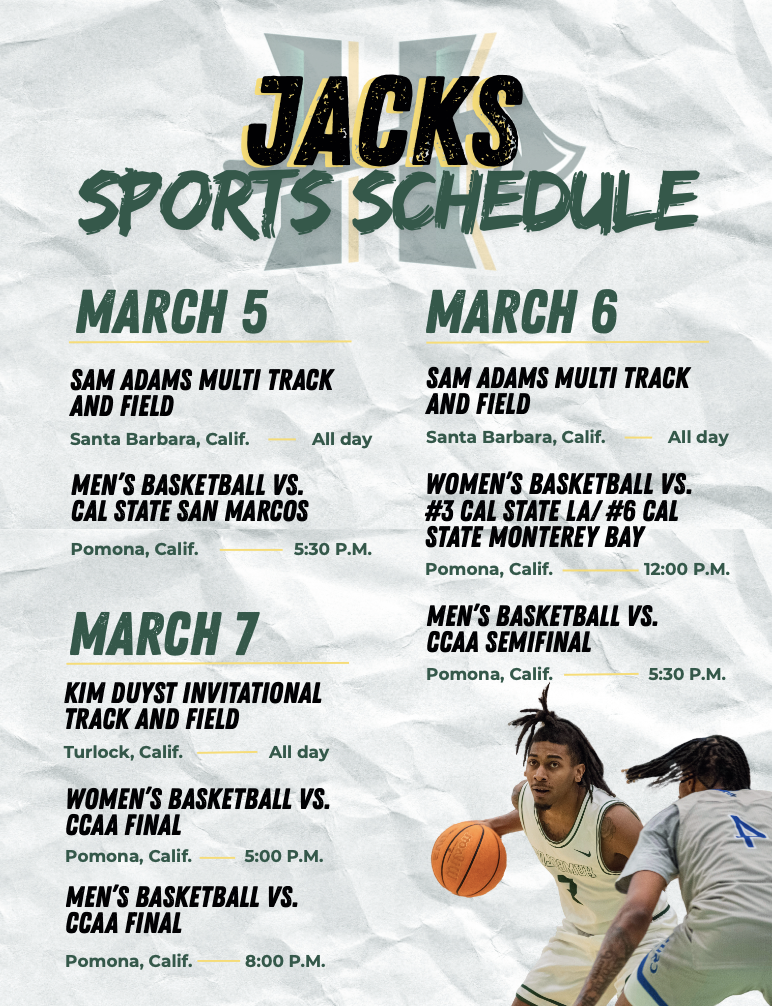
  • 2/25 Sports Highlights 

    2/25 Sports Highlights 

    by Alexis Blue

    Men’s basketball was defeated in the CCAA Game of the Week against California State University, San Bernardino on Feb. 19 by a buzzer-beating basket from San Bernardino in the last seconds, resulting in an 80-77 loss. Zaveion Bineyard led the team with 21 points, seven rebounds and a steal in 35 minutes on the pitch.

    Despite falling on the road to San Bernardino and 60-74 to California Polytechnic State University, Pomona as well on Feb. 21, men’s basketball remains tied for third place in CCAA standings alongside California State University, Monterey Bay and San Bernardino — all holding an 11-9 record. The Jacks have a chance to compete in post-season play with successful results this weekend in the two games left of regular season match-ups, including a chance for them to defeat Monterey Bay.

    On Feb. 19, women’s basketball extended their winning streak to five, clutching a 74-69 win on the road against San Bernardino in an overtime-ending match. Shade Satica achieved her 100th steal of the season, beating a 31-year-old Humboldt record in single-season steals previously held by Trina Dukes. 

    The Jacks were victors once again over No. 7 in DII, Cal Poly Pomona, on Feb. 21 and extended their winning streak to six with a 64-61 win. The Jacks remain in third place in CCAA standings with a 16-4 record, two games left in regular season and playoffs on the horizon. 

    Alexis Blue is a senior at Cal Poly Humboldt, majoring in journalism – public relations and minoring in writing. In her free time, you’ll probably find her drinking coffee, watching sunsets, collecting shells on the beach and playing soccer. 

  • Wuthering Heights

    Wuthering Heights

    By Alba Galvan

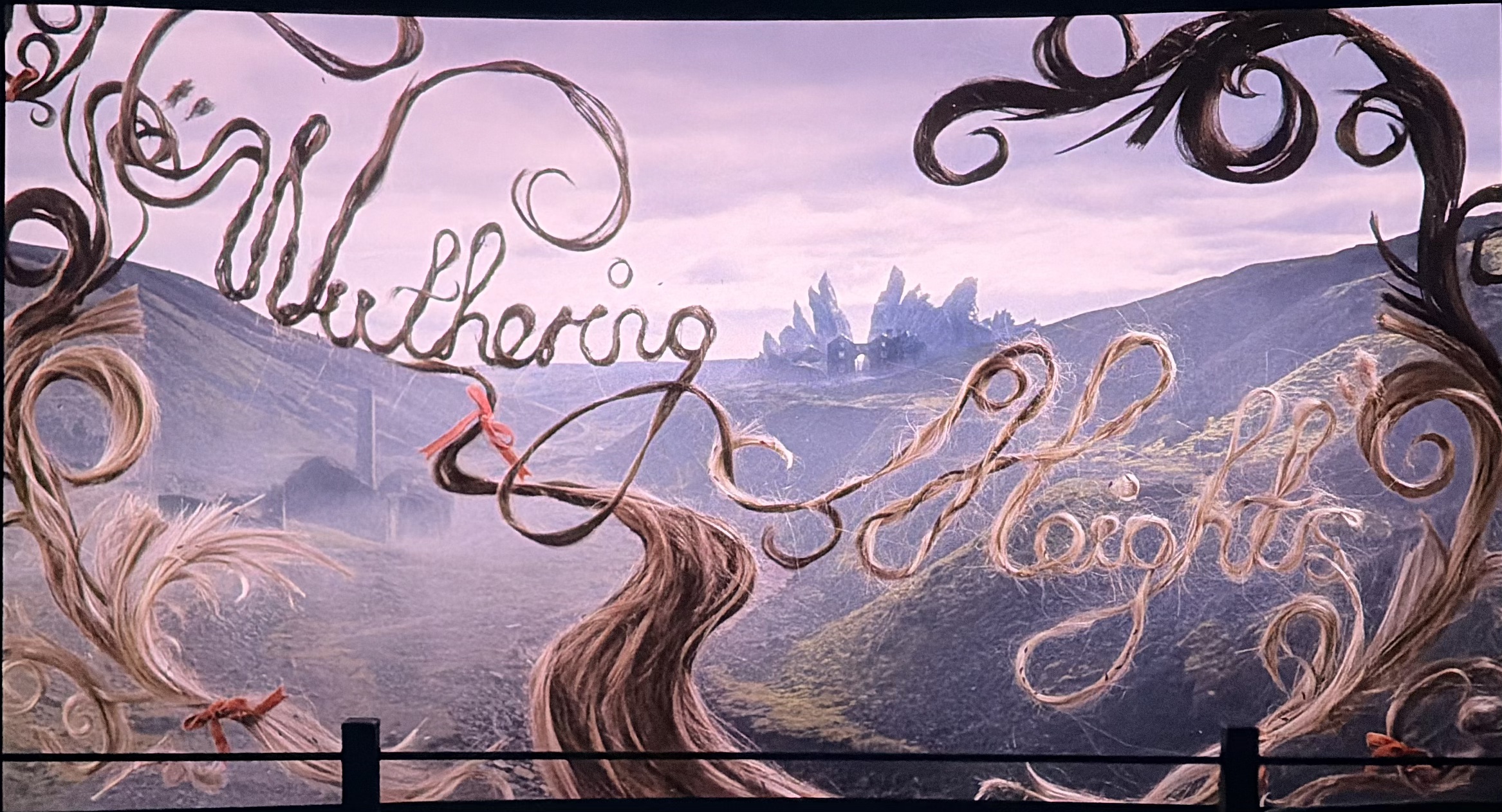
    I had to use the bathroom for two straight hours, but I refused to go as the movie Wuthering Heights had me glued to my seat. 

    The cinematography in this movie was perfect; if there were things in this movie that the director Emerald Fennell did right, it was the visuals, costumes, hair, makeup, lighting, and music that captured the dark gothic vibes spectacularly.

    I have not read the book by Emily Brontë, published in 1947, but from what I gathered from TikTok, X and other social media apps, the general consensus of those who read it was disappointment in the movie adaptation. Critics claimed it was nothing like the book, but rather a self-insert of director Fennell’s personal fantasy, starring white-boy-of-the-month: Jacob Elordi.

    The male protagonist, Heathcliff, played by Elordi, received backlash that the character got whitewashed, and in Hollywood, this is common with roles meant to be played by non-white actors. There were previous adaptations in which Heathcliff was played by white actors, but in the book, Heathcliff is described as dark-skinned. Elordi, on the other hand, is again, a white man — from Australia. Many of the book’s crucial scenes were cut, like the ghost scene, and there were also a lot of sex scenes that were not necessary, as they were not in the book, leading to disappointment from the readers because they felt the movie had sexualized the original plot of the book. 

    As someone who didn’t read the book, I enjoyed Wuthering Heights for what it was: a tragedy. This movie had me in a trance, I fell in love with Heathcliff. Between you and me, I would make the same choices Isabella Linton did, but only because of how handsome Heathcliff was. Keep in mind that this movie is not to be romanticized. This movie is about two toxic people being horrible towards each other. The choices they made affected those around them in the most cruel ways possible. 

    I wouldn’t call this the all-time best movie I’ve ever seen. Trailers for the film made me believe this would be a love story, especially because it was released on Valentine’s Day. Since I didn’t read the book, I only knew what was shown in trailers. 

    If you plan to watch this movie with family, be warned, it has many, and I mean MANY, intimate scenes. I learned that the hard way by inviting my younger sister and mother to watch the movie with me. It was awkward. 

    I left this movie crying. I entered with a full face of makeup and left the theater with a bare face. What I did like about this movie — other than the aesthetics and how handsome Jacob Elordi was — is the message at the end of the movie. Spoiler incoming, I liked how it showed how two people can love each other so much it hurts, and still don’t end up together. They manage to hurt each other because of pride and miscommunication — that is what made me cry; that is what has been weighing on me for days after I’ve seen the movie. 

    This movie will be interpreted differently by everyone. I know my mom and I disagreed about what the message behind the movie was. If you have read the book, you may or may not like it and interpret it differently. In my personal opinion. I give this movie a 3/5 star review. 

    Alba she/her, LumberJack reporter. Journalism major who loves to read and write. She’s very passionate about sharing and listening to different opinions and loves self-expression. Contact email: agg83@humboldt.edu 

  • Despite the drama, Men’s rugby wins big at home

    Despite the drama, Men’s rugby wins big at home

    By Sadie Shields

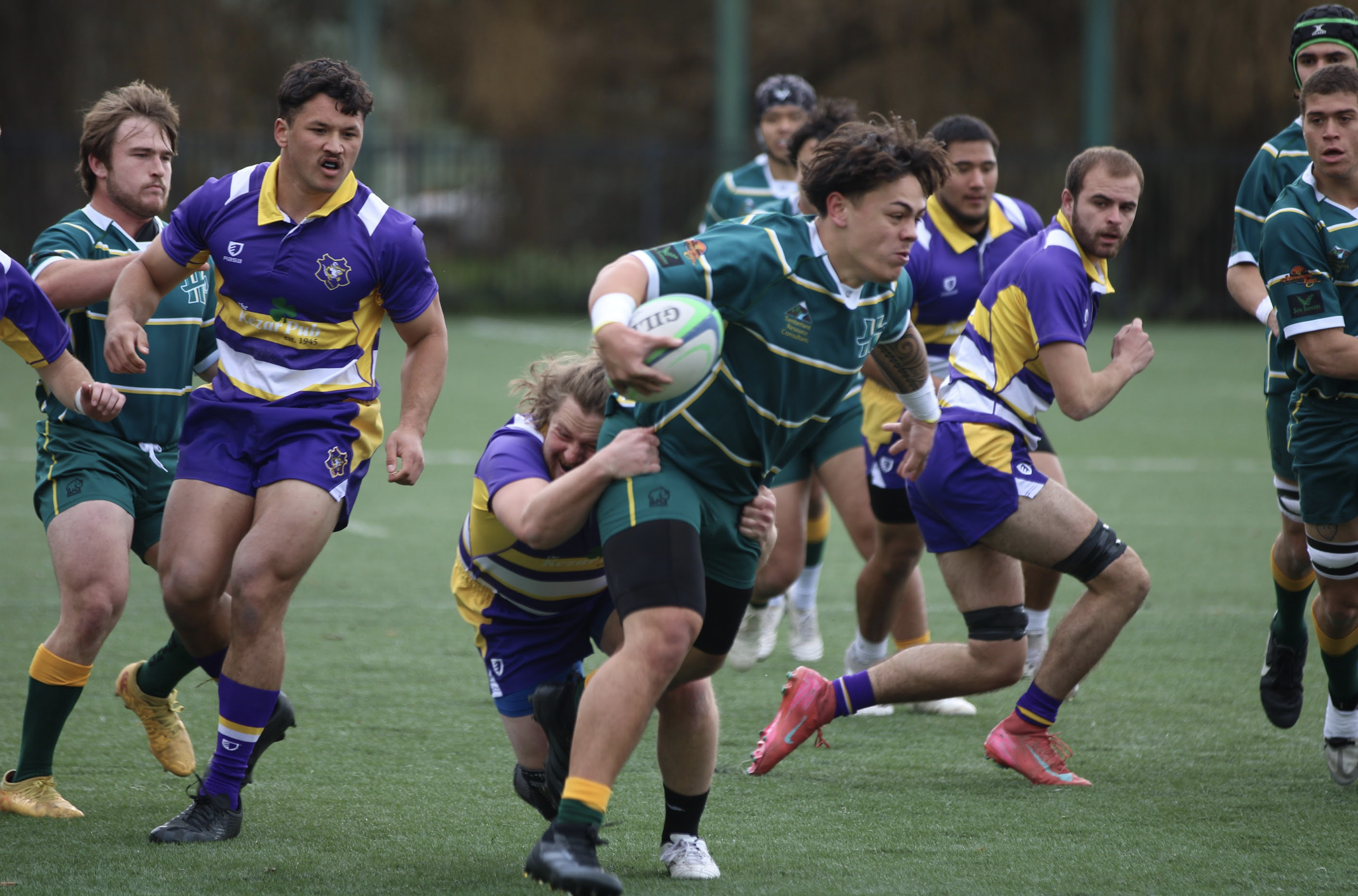
    Unlike the gray Humboldt skies on Saturday afternoon, the Humboldt men’s rugby team saw sunshine with their dominant win over the San Francisco State University (SFSU) Gators.

    The physicality and speed of the match tested the team’s trust, resilience and their ability to adjust, but the Lumberjacks scored more and more in the second half, securing a 60-34 victory.

    Freshman Keelan Tagoaigot had a hat trick, running an arc in the first and second half towards the corners.

    “He did really well, and ran well with the ball,” team captain and senior Miquel Cornejo said.  “We had a bunch of new players come in, so they did really well stepping up and filling in those shoes when people got hurt.” 

    Injuries throughout the match caused a few changeups as San Francisco began teaming up on the Jacks’ bigger players.

    “When we get those injuries on the field, it’s just the next man up,” Cornejo said. “It’s a brotherhood, we hold each other accountable, so the minute someone gets hurt, we expect you to fill those shoes and do your job to the best of your ability.”

    The physical nature of the game created more tension between the teams as the match continued, especially as the Jacks began to take the lead. The Gators got more aggressive as the match drew closer to a close.

    “The tensions were definitely rising all game,” freshman Jonah Triatayllou said. “It was a chippy game and we were both getting after it… in the end when time finished, I was trying to end the game, just finish it, and I kicked it out. One of their guys decided to give me a late shot.”

    Triatayllou was grateful for the support when his team protected him when a rival player got a late hit, after the ball was kicked out of play to end the game.

    “I’m lucky and blessed to have teammates who have my back and were able to get in his face and not let me just take that hit,” Triatayllou said. “We have some enforcers to go show them that they can’t just do whatever they want.” 

    Despite the intensity of the game throughout, Triatayllou said that the turning point came at halftime, after the team regrouped and focused on correcting mistakes. 

    “I think at half, just by holding each other accountable and realizing our mistakes and what we were doing wrong, we were able to build off those mistakes,” Triatayllou said. “I think we really capitalized on their mistakes after we fixed ours. It just made us able to play good, clean rugby.”

    Even with the win, Cornejo acknowledged there’s still a lot the team could improve on. Some things they’d like to focus on is getting better at protecting the ball and how to react when getting tackled by multiple players.

    “I feel like everyone on the team knows that we could have performed better, but after our first half we found ourselves. We found our systems and started working on it,” Cornejo said. “I’m glad to have these boys as my brothers, they have my back and I got theirs.”

    Sadie is a junior communications major, journalism minor at Cal Poly Humboldt who has an interest in covering and taking photos for sports and wildlife journalism, and a slight interest in breaking news. She can be reached at sls331@humboldt.edu.

  • Blood on the dance floor

    Blood on the dance floor

    By Will Bishop

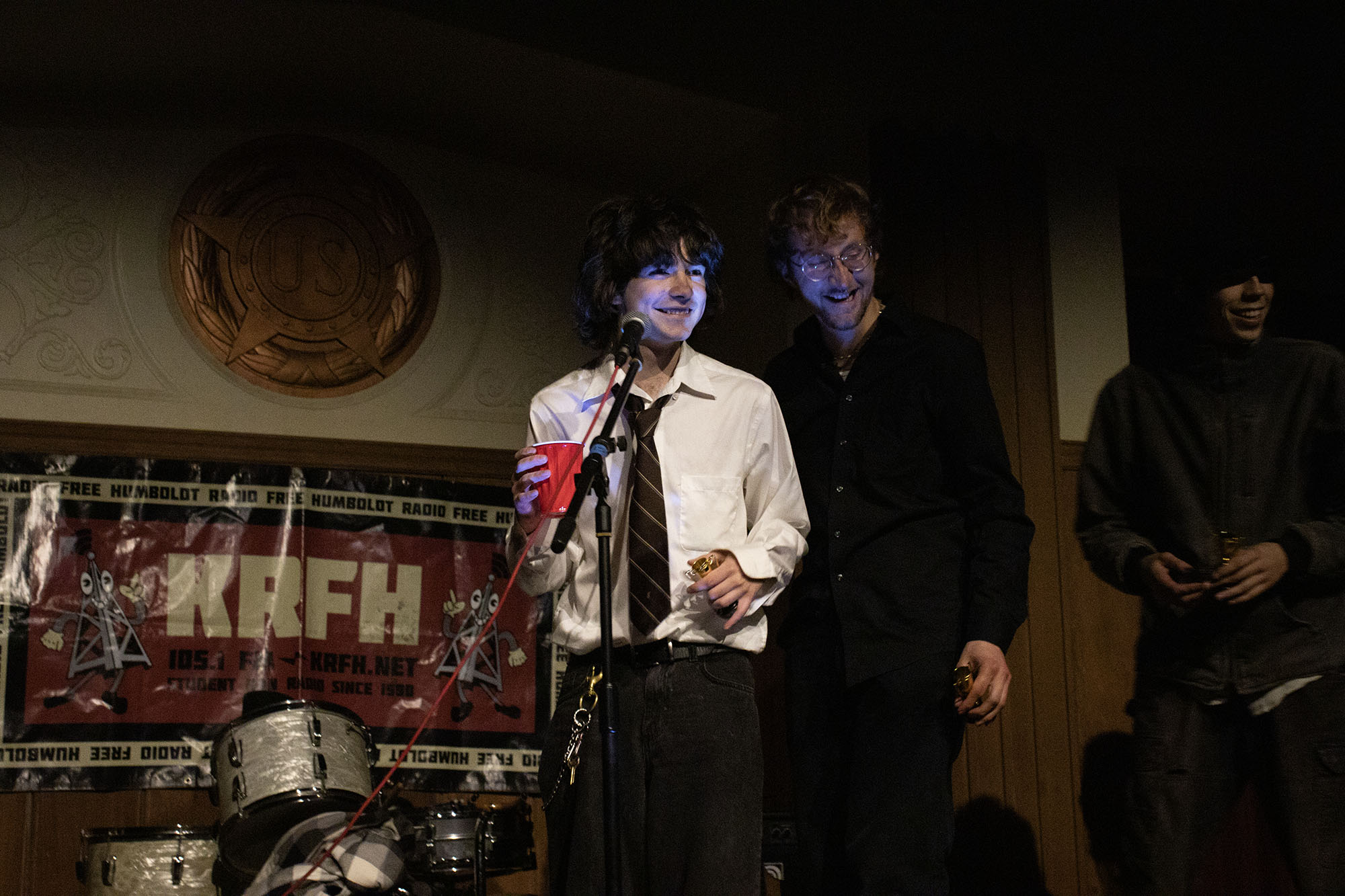
    With the wind howling and the sun sinking, five challengers entered the Arcata Veterans Hall. While generally a place for people whose battles have already been fought, this night was an exception. It was time for a long awaited return; a resurrection of something once thought to be dead and buried — the reemergence of 105.1 KRFH Radio’s Battle of the Bands (BotB) on Saturday, Feb. 21.

    “I’ve seen posters, like, vintage posters in the station of old BotBs, but I don’t think we’ve done one in a minute,” said KRFH Station Manager Miranda Ricks, a senior year journalism major. “This was kind of a little passion project of mine because I think it’s so — I don’t want to use the word cliche, but it’s such a movie trope to have a BotB, and I’m just really happy we were able to pull it off.” 

    Attendees were encouraged to scan QR codes located around the premises to vote for their favorite act, while merch tables could be found all over offering both band specific loot, as well as good ol’ fashioned KRFH memorabilia. Around 6 p.m., the first band took the stage.

    Datura Blues: Starting things off with a moody and atmospheric bang were KRFH BotB vets Datura Blues. Consisting of multiple Humboldt State University (HSU) alums including Oryan Peterson-Jones, who wrote his own ethnomusicology major called “Music as a cultural metaphor.” From 2000-2004, they played every KRFH BotB, and were valiantly defeated every time. 

    “We’re not a winning band,” Peterson-Jones said. 

    Given their sound, a purely instrumental cosmically minded psychedelic maelstrom, this is no surprise. Many of history’s greatest heroes are unsung in their time. 

    Speaking of history, Peterson-Jones’ legacy with KRFH goes all the way back to 1994, with his high school band entering the fray as young upstart contenders. He would go on to become program director and music manager, and even become close friends with KRFH founder Gary Melton. A true KRFH hall of famer if ever there was one. 

    Heaven’s Taint: A lineup choice clearly intended to give the audience whiplash. Regarding the contrast between the first two bands, frontwoman Sunny Breed, a Cal Poly Humboldt (CPH) alum with a psychology major, said, “We’re gonna break that trance, we’re gonna break it up.” Breed, in the purest sense of the word, is a rockstar. A performer equal parts electric and elastic, pogoing around the stage in a pair of white framed shades and spitting out every word.

    Lady in Waiting: It was time for the youths to take the stage to make everybody sad and introspective. This was the band’s first ever live performance, but listening to them you would never be able to tell. Like a newborn baby that’s inexplicably and disturbingly an adult man with a job and a drinking problem, they have arrived fully developed and ready to talk about what ails the world with whoever will listen. 

    The main songwriting duo at the heart of the group, Jack Sparks and Sophia Rudoni, are both art majors at CPH. Additionally, Rudoni is one of KRFH’s own, operating under the alias DJ Beeprincess. 

    The band’s influences are diverse and eclectic, emphasizing 90s New York bands like trip hop innovators Bowery Electric, and Japanese shoegaze act Pasteboard. Their third song, Martial Law, had more modern, political influences. 

     “Next song is about the president of the United States, fuck that guy. Fuck [Immigration and Customs Enforcement],” Sparks said.

    Shortly followed by a student making a quick announcement onstage regarding last week’s Siemens Hall occupation and the upcoming open forum scheduled for Friday, Feb. 27 at 8 a.m.

    Eradescents: By this point in the evening the audience had reached its peak size, and it was time for crowd-pleasing act Eradescents to take the stage. With only three members, they were the smallest band in competition, but they had heart to spare and powered through a rambunctious set rife with memorable moments. From a charged performance of Don’t Want to Know If You Are Lonely by Hüsker Dü to the band being honored with the first and only thrown novelty thong of the night — which swiftly wound up on the drummer’s head for the duration of their set. This was precisely the kind of performance you affiliate with a classic BotB experience.

    Pennies for Pluto: Announcing themselves with an improvised ditty about the event, the band quickly launched into an absurdly impressive set demonstrating virtuosic chops from every member. Frontman and bleeding heart of the band Orion Jesse Paul delivered a soaring vocal performance and shredding licks in equal measure.

    This marked the end of our lengthy and tumultuous journey. Each combatant had said their piece and now it was time for the audience to decide. Out of a grand tally of 112 votes in all, the winner of this most hallowed of tournaments was none other than Lady in Waiting. For their efforts each band member received a KRFH shirt, pin, patch and poster, as well as a slot in an upcoming Local LIXX session, a radio promo, and the opportunity to have their recorded music uploaded to KRFH’s automated system for that sweet sweet airtime.

    Will Bishop is a Cal Poly Humboldt journalism major. He is prone to writing essays about things that bother him, and fictional works about things that also bother him but in different ways. A highly bothered individual, and a lover of cinema, music, and large trees/rocks. He can often be found in the woods, dancing to bring down the sky.

  • Winging it at BSU Trivia Night 

    Winging it at BSU Trivia Night 

    By Marielle Winuk

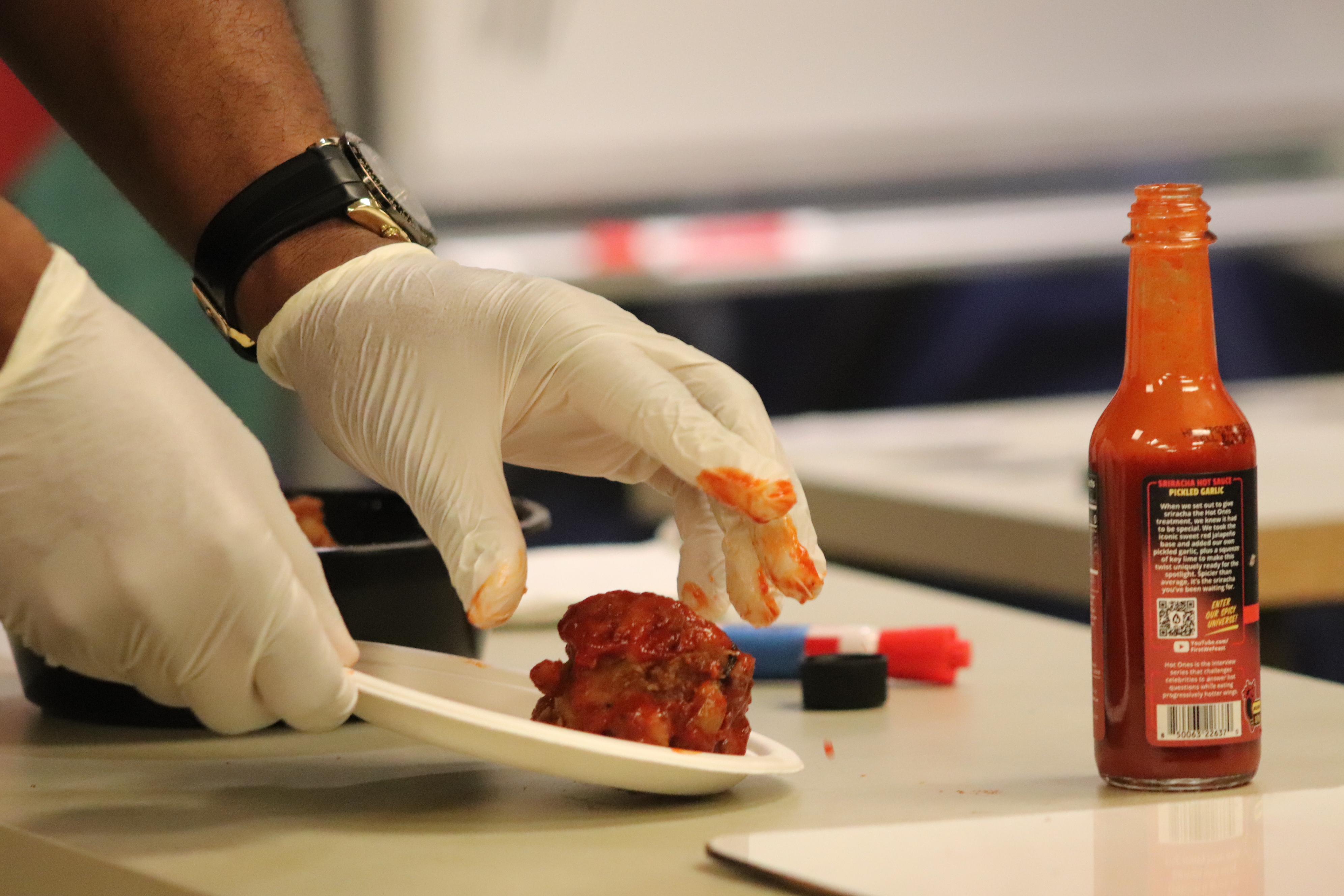
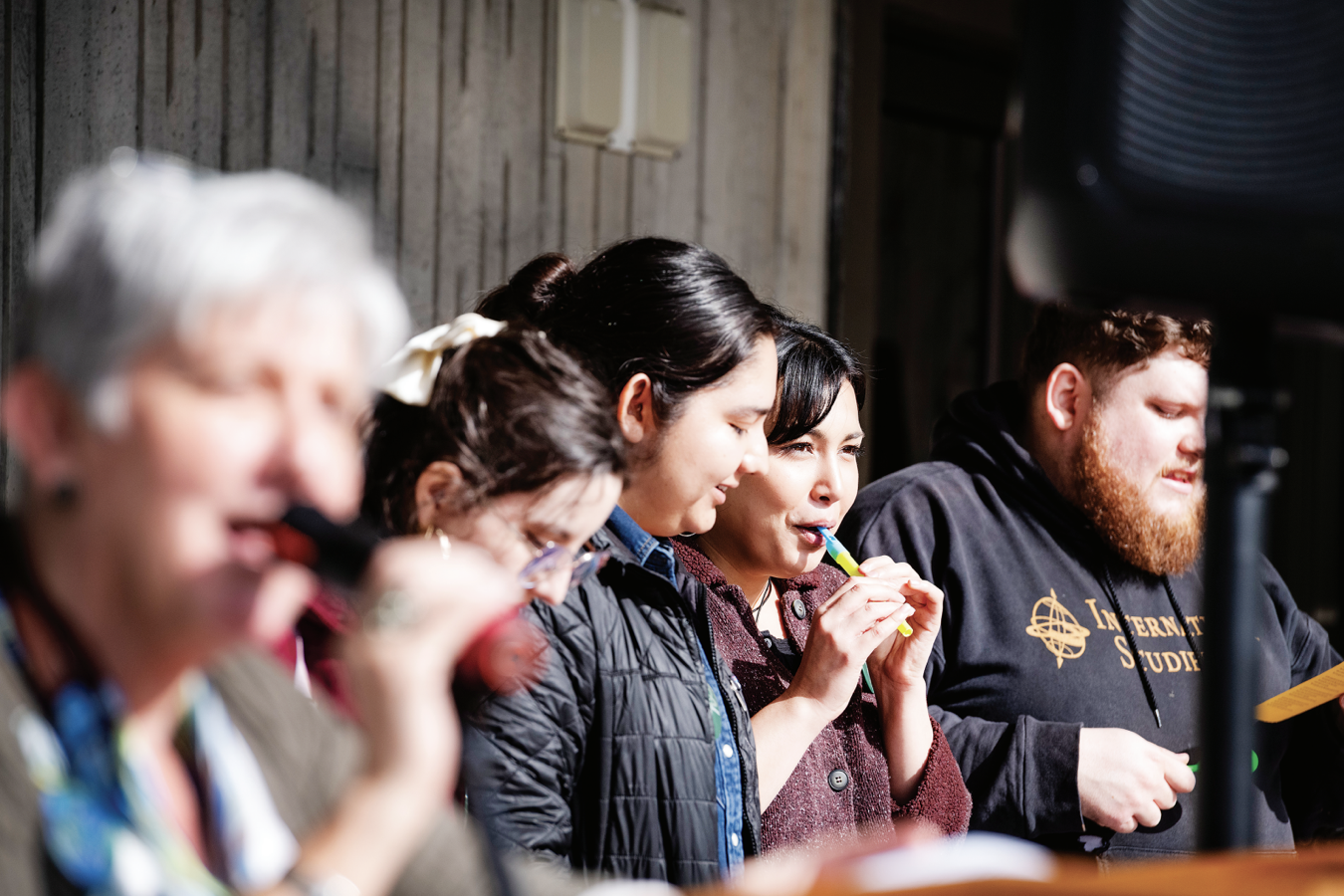
    Taste buds sizzled on the tongues of sweating students as they scrambled to answer trivia questions and test their Black History Month knowledge at the Black Student Union ‘Hot Ones’ trivia event on Feb. 16. 

    Jei Farner, a bio chemistry and cellular biology major, hosted the four teams, titled Black Pepper, Black Power, Heartburn and Jalepeople through three different rounds.

    The round one categories consisted of Black history, film and tv, and music. The points earned in round one determined what level of hot sauce the teams received on their wings in round two. 

    In round two, it was time to face the first round of hot sauce. Black Power and Heartburn each sent up two members to compete in the Black Math category. Before answering, the team had to eat the hot wing and then answer the question. The first hot sauce used was called Tropical Amariallo, which had a heat level rating of six out of 10. Team Heartburn answered the most questions correctly, advancing them to the final round. The second match up was between Jalepeople and Black Pepper, with Black Pepper moving on to the finals. 

    In the final category, things started to get… hot. There were five wings on the table, and competitors raced to take at least two bites of the increasingly spicy wings while answering the trivia questions correctly. The wings got progressively spicier as they went down the line, and the final wing had The Last Dab Thermageddon hot sauce with a heat level of 11 out of 10. 

    Two gallons of milk and the cold outdoor air became essential to combat the spicy wings. Black Pepper went through their five hot wings and questions, and emerged victorious with a winning time of 12:23. 

    Marielle is a junior journalism major with an interest in politics and sports. She can be contacted at mmw146@humboldt.edu

  • Gain global awareness through media literacy & studying overseas

    Gain global awareness through media literacy & studying overseas

    By Adam Le

    Doomscrolling through mountains of misinformation? The answer is international education, according to Jaishankar Raman, California State University (CSU) Executive Director of International Affairs. Raman spoke on the Scholarship in the Age of Forgetting keynote panel on Feb. 11 as part of Cal Poly Humboldt’s International Education Week. One way to get that education is to experience the world through student travel.

    “When you study abroad,” Raman said. “What you get is to conquer your fear with curiosity, receive more experience talking and interacting with different people and become more empathetic.”

    Raman told the story of his semester in China, when he needed to buy milk for his one-year-old. He didn’t know Mandarin, so the struggle to communicate was real.

    In California, two-thirds of respondents to a Global Affairs Survey state global affairs is an important issue to them and more than 80% of Californians say they think educational institutions should not be subjected to “political” pressures, according to Ian Klaus, founding director of Carnegie California. Klaus is a leading scholar on urbanization, geopolitics and global challenges. He told the panel that support for subnational governance has increased in the last 12 months and that California should develop and maintain its — largely unofficial — diplomatic power.

    Kate Gordon, CEO of California Forward, talked to the panel about the need for a return to energy-based geopolitics. Gordon has held senior roles in California state government, including Director of the Governor’s Office of Planning and Research, and Senior Climate Policy Advisor to Governor Gavin Newsom. In that position, she helped launch major initiatives integrating climate and economic strategy statewide.

    California Forward is a statewide organization that exists to push for an economy that works for all regions, not only growth but sustainability in the form of climate resilience. Gordon argued for a more diversified economy and what she called an honest set of conversations.

    Raman noted that as of 2026, California is the fourth largest global economy with a GDP higher than Japan. 

    “We have been the standard-bearers for environmental regulation,” Raman said.

    California can be a leader in education, as well, and that makes the work done by the CSU of key importance.

    “The CSU is a microcosm of California,” Raman said. “The CSU system educates the most students of all higher education institutions.”

    Raman believes the institution’s scholarship should be in pursuit of truth and knowledge. He noted that students need to learn how to do that in the age of forgetting, characterized by doomscrolling through information of varied credibility. It’s critical to understand that many media sources do not curate information to be more democratic. Leading stories are often those that receive the most amount of engagement — and that can be rage-inducing content.

  • Dozens of protestors decide to stay on Cal Poly Humboldt campus, occupation continues

    Dozens of protestors decide to stay on Cal Poly Humboldt campus, occupation continues

    by Dezmond Remington

    Resolute hope mixed with a tinge of fear and anxiety have been the dominant emotions today on Humboldt’s campus after officials sent an email saying protestors participating in the ongoing Siemens Hall occupation should leave before 5 p.m. to avoid being arrested. 

    Though only a few people have been arrested, many more than that have received interim suspensions today. 

    Administration set up a “check out” booth next to the library circle, where activists who got a suspension could make a case that they didn’t deserve one and attempt to get it wiped. 

    According to Dean of Students Mitch Mitchell, the decision was made by an emergency operation committee with over 30 people on the board. They thought it was the best way for students to vacate without being physically harmed. Mitchell believed it was highly likely that many people would take the opportunity to leave. 

    “This is not a person’s normal dwelling,” Mitchell said. “Students walk out, same way they walked in.”

    Most of the activists are staying, and won’t leave until the university meets their demands.  Many of them say it’s worth getting arrested.

    “A lot of us have known that the university has problems caring about students,” one protestor who asked to remain anonymous said. “This just confirmed what I suspected.”

    Another protestor, who gave the pseudonym “Rosie”, thought the check out booth and insinuation that everyone else who didn’t use it could be arrested was an unnecessary scare tactic. To leave, Rosie said the CSU would have to commit to a system-wide divestment policy to stop investing in Israeli interests, a statement a lot of protestors echoed. 

    “If we stay here long enough, we can get the CSU to divest,” said one speaker in the UC quad with a megaphone. “We can be a thorn in the side of Genocide Joe [Biden] as long as it takes.”

    Although the vast majority of protestors have decided to stay, at least one who asked to go by “Tord” left because of the threat of violence. Tord had been staying on campus since Monday, and could not condone the possibility of physical harm coming from either law enforcement or protestors. 

    “I’m leaving for my own safety,” Tord said. “I want to be 100% peaceful and I won’t associate with violence. I just wanted community.”

    Humboldt County Sheriff William Honsal showed up to campus at around 4 p.m. to try and work with activists to devise a plan to get everyone to leave campus. He also said the sheriff’s office had no plans to breach the barricades and enter the occupied portion of campus, but only if the police and protestors could come to some agreements.

    “The last thing we want is violence,” Honsal said. “If we continue down this road, that [could] happen.”

    The occupation continues to disrupt campus life as in-person classes have been shut down for the rest of the semester. Many of the activists have little sympathy for students who are mad at the developments. One alumni said the protests are “land-based learning.”

    “If our demands are not met and if all we’ve done is show hope, I am happy,” one speaker said. “To those who have said this was a waste of time, or unproductive, or just a lot of needless destruction of property, I say we inspired hope.”

    Dean Mitchell doesn’t agree.

    “I think there’s been a lot of light shed on the situation [the war in Palestine],” Mitchell said. “My focus is the student body. What about the other students? There is no access to the cultural centers or study halls. How are we showing support for all of our campus? How do we restore our campus? I believe in disruption, not destruction. Don’t take it [destruction] home.”

    Protesters have been moved to Nelson Hall while university officials currently survey the damage in Siemens Hall.

  • President Tom Jackson should resign, say Cal Poly faculty and CFA

    President Tom Jackson should resign, say Cal Poly faculty and CFA

    by Dezmond Remington

    University president Tom Jackson and his Chief of Staff Mark Johnson aren’t fit to lead Humboldt, according to both the Humboldt CFA and 174 Humboldt faculty.

    The executive board of the Humboldt chapter of the California Faculty Association passed a vote of no confidence today in Jackson’s leadership. The vote comes after Jackson’s handling of the student pro-Palestine protests this week.

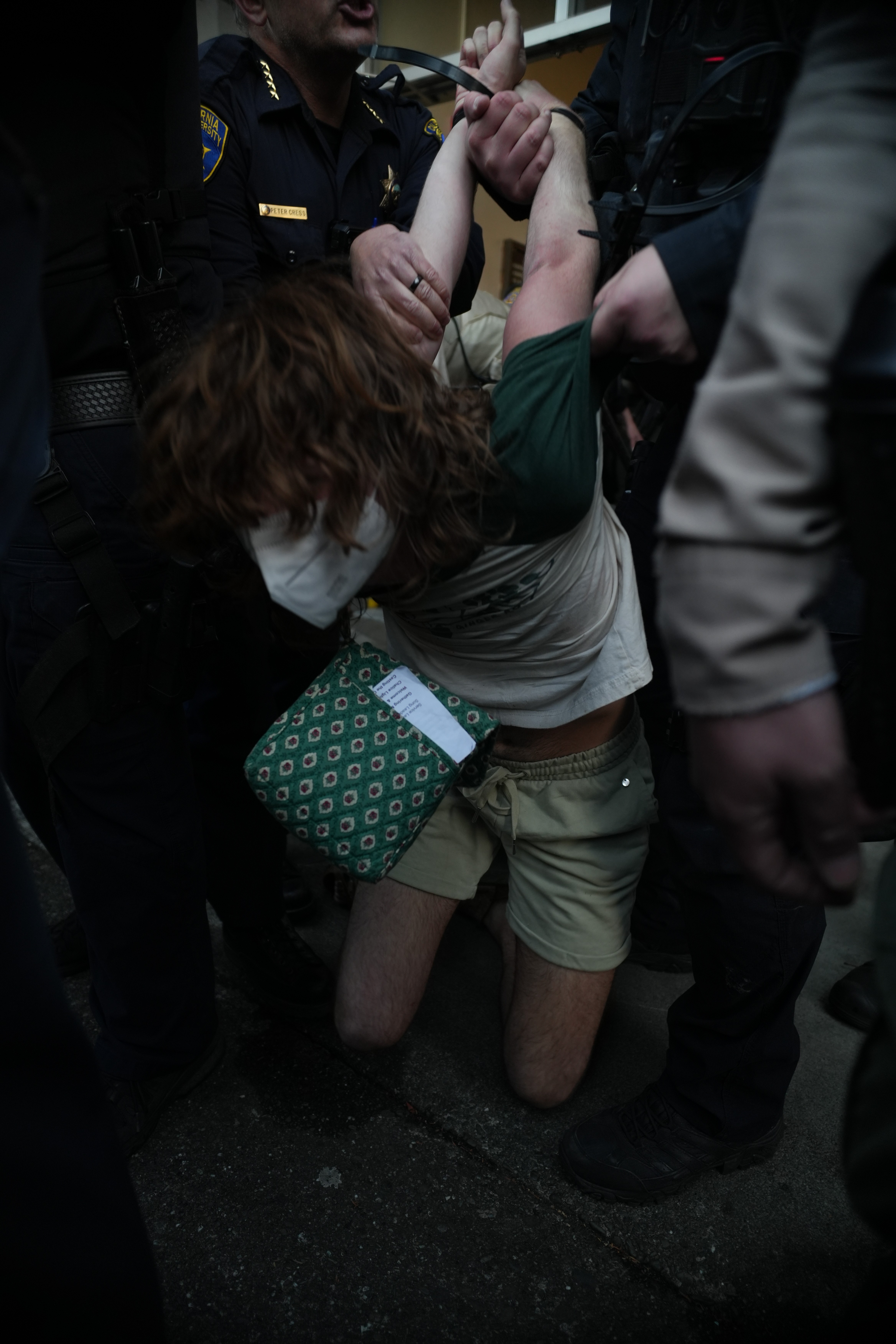
    According to the faculty resolution, Jackson and Johnson were responsible for calling the police to campus, a move which led to police hitting several students with batons and three people being arrested. 

    In addition to the CFA’s vote, a university faculty meeting held on Zoom today also ended with a resolution calling for Jackson and Johnson’s resignations. Although the vote isn’t completely verified due to uncertainty about proxy votes, it was 174-10. 

    The resolution does not force them to resign.

    “[Tom Jackson and Mark Johnson], through their unfamiliarity with the Cal Poly student body, mishandled the protest by calling those law enforcement agencies to attempt to extract protestors from Siemens Hall, which led to the injury of students and faculty of Cal Poly Humboldt,” the resolution reads. 

    Faculty were divided on whether to include University Provost Jen Capps. Professor Nicola Walters thought she should be included, but the resolution went unamended so it could be passed as quickly as possible. 

    “[We’re doing this] so we can tell our students we’re doing something to protect their safety,” said James Woglom, who lead the meeting. “I will pass whatever resolution you want, as long as we get those kids out of there safely.” 

    Many of the faculty believe Jackson is doing a bad job leading the university through this moment, if he’s leading them at all.

    “We’re rudderless,” sociology professor Josh Meisel said. “There’s a complete lack of leadership.”

    Read the faculty resolution below.

  • Community member arrested during Cal Poly Humboldt protest for Palestine

    by Jasmin Shirazian

    Alice Finen, an elementary school teacher and artist in the Humboldt community, was charged with trespassing and obstructing and resisting a public officer during the April 22 protest. 

    Finen joined Humboldt student activists outside of Siemens Hall after hearing about students needing support. She said she was concerned for their safety.

    “I was trying to do whatever I could to stop them from hurting the students,” Finen said. “It was just instinct for me to not move, and tell the cops that they were hurting me and that I couldn’t move. They continued to push onto me and use their baton to push into me, pushing my neck and my chest.”

    Finen does not recall exactly what happened, but suddenly she was on the ground with zip ties around her wrists. Finen is an alum of the university, and is disturbed by the reaction from the school. 

    “It’s unbelievable,” Finen said. “I graduated from Humboldt in the early 2000s. It makes me sick that the students were treated that way on their own campus and that I was arrested for trespassing on my alma mater.”

    Police records show that Finen was the only person to be booked during the protests, but she recalls seeing other students being detained as well. Finen hopes that her arrest inspires students to continue their activism and show their support for the things they care about. 

    “I just want people to speak up and use their voice and to really think about what’s been happening to the Palestinians for so long,” Finen said. “This whole settler colonialism has to end. I would love for people to be inspired to speak up and speak out; to support student activism, because these people are putting themselves on the line.”

  • Student protestors barricade themselves inside Siemens Hall, demand end to war in Gaza

    Student protestors barricade themselves inside Siemens Hall, demand end to war in Gaza

    by Dezmond Remington

    Dozens of students barricaded themselves in Siemens Hall and hundreds more swarmed the UC quad to protest the war in Gaza and to demand Humboldt stop associating with Israeli organizations.

    At least one person, local teacher Alice Rose Finen, was arrested by the University Police Department. She was released on Monday night. 

    The protest started at around 5 p.m. on April 22, when a few protestors showed up to Siemens Hall. They piled chairs and tables up in front of entrances. The five classes being taught in Siemens were evacuated. Police arrived soon after, as did a California Highway Patrol helicopter.

    As of publication, the protest is still ongoing. Dozens of students occupy Siemens, and doors have mounds of office furniture blocking them. Though there’s no consensus, they plan on staying until their demands are met or they are forcibly removed. Several occupiers broke into university president Tom Jackson’s office by shattering the window on the door. Siemens Hall is covered in graffiti, as is the outside of the Van Duzer theatre. The American and Californian flags were taken off of the flagpole in front of the library by a man with climbing gear. 

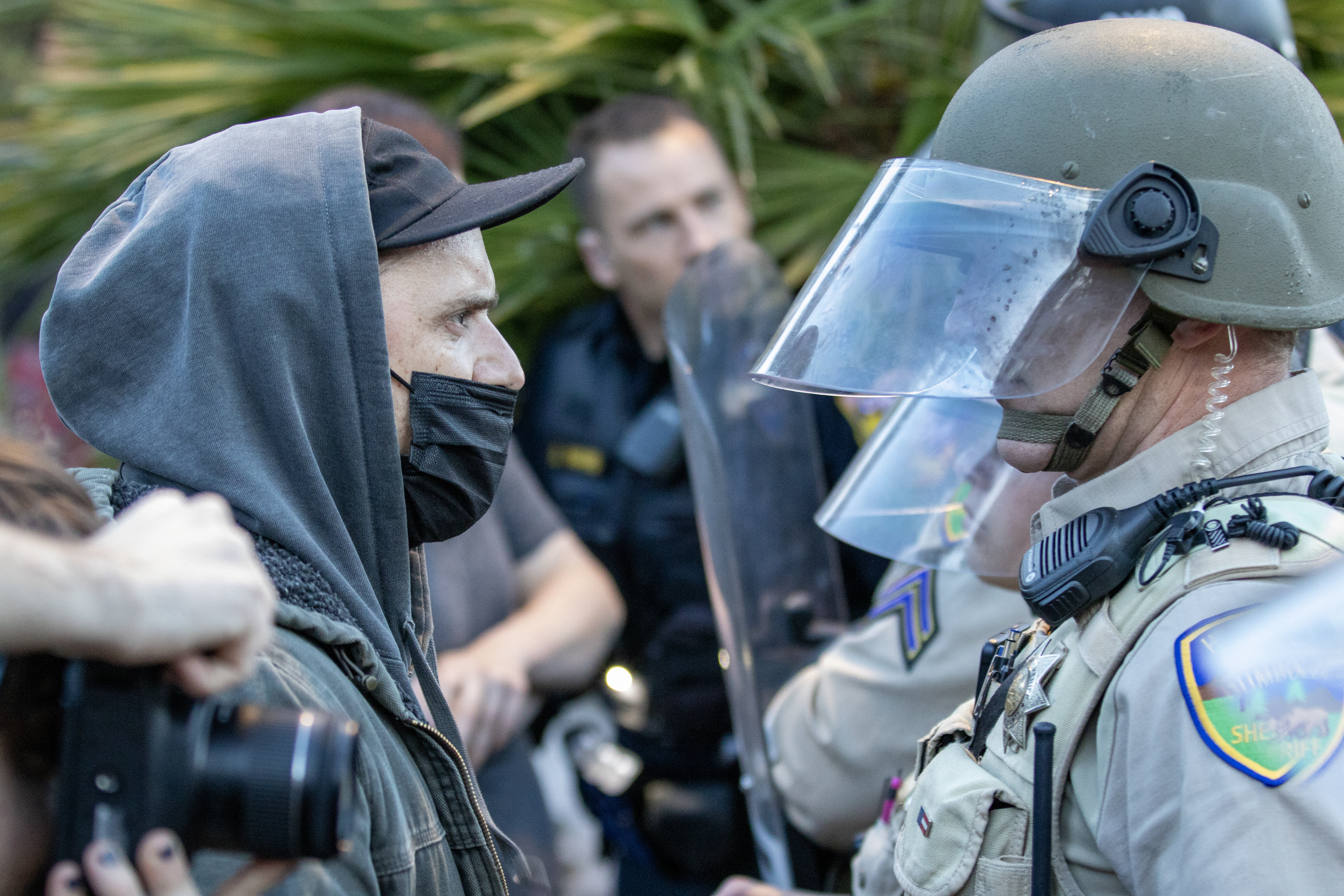
    For hours, student activists inside Siemens Hall were only a few feet away from the police on the other side of the main entrance on the second floor. Cops showed up from all over Humboldt, including the California Highway Patrol, Humboldt County Sheriff’s Office, and even some officers from as far away as Rio Dell. At one point, police scanner traffic indicated riot control police from Redding were coming to campus, but they never showed up.

    Police left at 11 p.m. on April 22, and those inside tore the barricades down. Over 100 students entered the top floor, walked to the end of the hallway, turned around, and left. After that, the protest dwindled to less than 100 people, most of them outside. People played music and barbecued. 

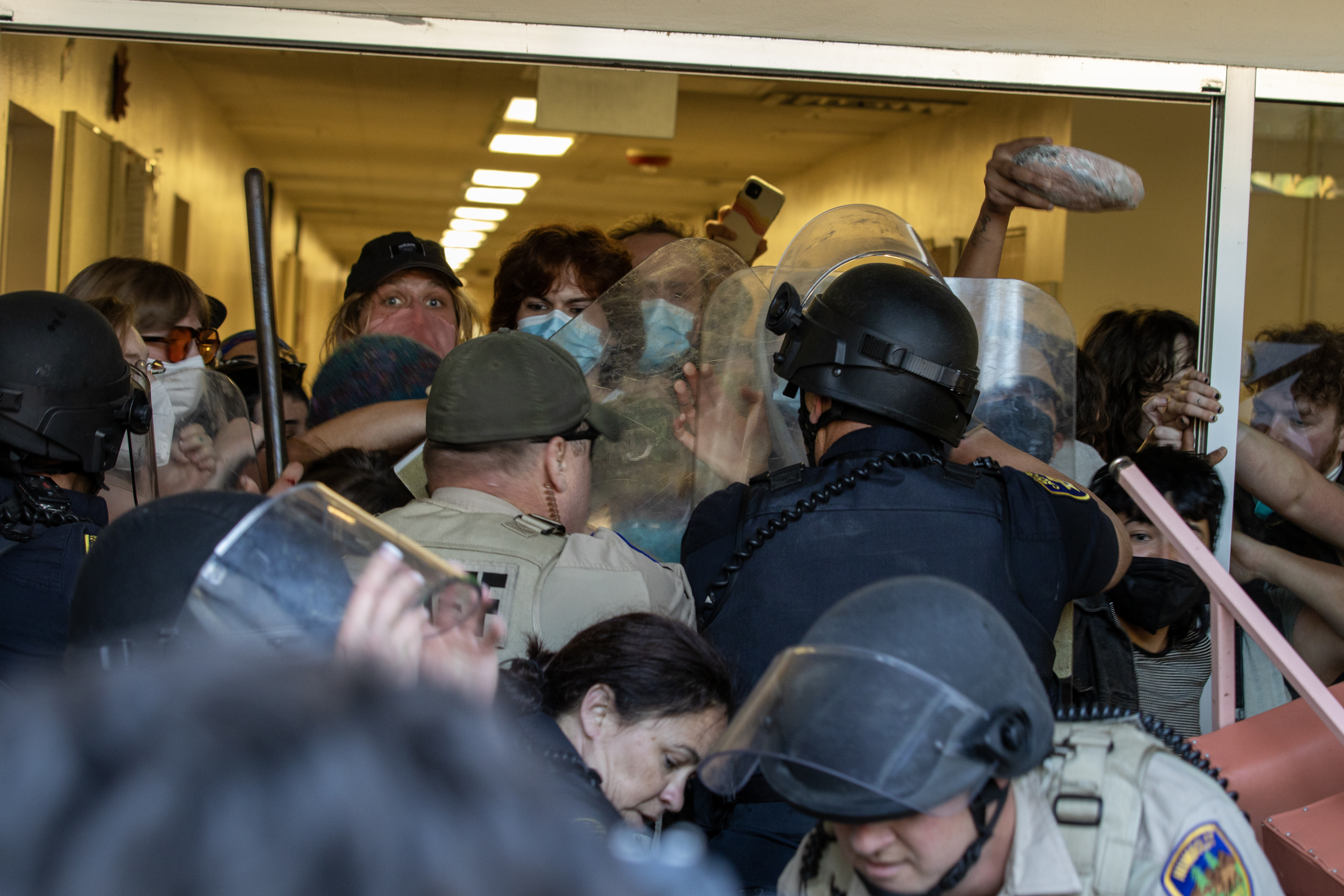
    The occupation had been generally peaceful, but violence broke out at around 7 p.m. when police tore down the barricade and entered Siemens Hall. A line of law enforcement with riot shields and a crowd of activists crushed together, and a protester inside hit an officer with an empty water jug. At least one officer retaliated by bludgeoning a protester with a baton. Other reports of students being batoned are circulating, but unconfirmed. 

    The main demands of the protestors are: to end the war in Palestine, for the university to disclose any dealings with Israeli companies or the Israeli government (and end those relationships if they exist), cut all ties with Israeli universities, and for the university to end prosecution of student activists. Many of the same demands student activists all over the nation are demanding at universities such as Columbia and UC Berkeley.

    “We’re doing this out of principle and righteous rage for our comrades,” said Casey, one of the protestors who was inside the building before the police left. “We want to make this happen at other universities across the nation.”

    Another one of the protestors, who asked to be identified as “Bum,” was one of the first to blockade inside the hall. They decided they would join their friends the day before the protest was planned. 

    “When the homies started talking, I was like, ‘Yeah, dog,’” Bum said. “It’s time to fight genocide in general. It’s time to stand up with our Indigenous homies. [We’re occupying the building because] trying to dialogue with the oppressors doesn’t work well.”

    Cal Poly Humboldt has not responded to a request for comment on its ties to Israeli institutions.

    Some of the people at the protest weren’t there to demonstrate. Students thronged the balconies of the Student Activities Center and crowded around the main cluster of activists in front of Siemens Hall to watch the action, many of them on their way home from class. The helicopter hovering overhead attracted many sightseers.

    “Nothing ever happens in Arcata,” said Shawn Rogan, a curious student. “It’s novel for a small campus, and [the war in Gaza] is a cause worth protesting.”

    One of the biggest concerns the protestors had was the heavy police presence. Before they left, those barricaded inside the building said they would negotiate once the police were gone. One protester blockaded inside who asked that he only be identified as “Joe” said he would stay there until he was fought off by law enforcement.

    “I’m going to resist,” Joe said. “If they beat me, they beat me.”

    Protestors chanted anti-police slogans at law enforcement to try to get them to leave, and many of them tried to talk some officers into leaving. Communications professor Aaron Donaldson argued with Rio Dell’s Chief of Police Greg Allen and two other officers outside of Siemens Hall for over half an hour. Donaldson attempted to make the case that they could decide to leave. Allen disagreed. 

    Cal Poly Humboldt has made it clear they want protestors to leave Siemens Hall and to return home. As of April 23, graduation is still planned to happen on May 11.

    “The University supports free speech through open dialogue that is respectful and constructive, but will not tolerate endangering people, destroying property, and disrupting campus,” read an alert published on April 23. “As a community, we are committed to keeping our students, staff, and faculty safe and fostering a learning and working environment where the campus community can feel safe, included, and respected.” 

  • Cal Poly Humboldt faculty criticize administration for policing pro-Palestine protest

    Cal Poly Humboldt faculty criticize administration for policing pro-Palestine protest

    by Alana Hackman

    Cal Poly Humboldt students, faculty, and community members joined a virtual University Senate meeting on Tuesday, April 23. 

    “There is considerable interest in engaging with the open forum today. More than is likely to be possible, given due to time constraints,” meeting leader James Woglom said. “Given that, we’re going to prioritize guests. If you are a senator and we are unable to get to you today, I do apologize.”  

    Woglom then continued to introduce senators present in the meeting that evening, including Provost Jenn Capps and Chief of Staff, Mark Johnson, who would be present on behalf of the university president, Tom Jackson.

    Senator and graduate coordinator of the sociology department Mary Virnoche proposed the upcoming agenda be edited. Virnoche proposed a discussion item to be inserted into the agenda to receive an update on the campus response to the current protestors occupying Siemens Hall. No senate members objected. 

    Woglom began the discussion by citing their own experience observing the protest last night. They mentioned speaking with other individuals earlier in the day to discuss how they can make progress to meet the needs and demands of those occupying Siemens Hall. 

    Woglom then called for any member of the campus faculty or community to share any up-to-date information they may have regarding the current occupation. Each speaker was allocated a three-minute time limit.

    “I had a meeting with [Chrissy Holliday] right before this and it seems the current concern is that there [are] confidential documents in Siemens Hall,” Parker said. “So far, no one has made an attempt to reach those. If that continues, it sounds like they’ll be fairly hands off.”

    The open forum discussing the current state of the Siemen Hall occupation continued with Jamela Hashim, a social work student who was currently joining from a smartphone with other senate meeting attendees, Gabi Kirk of the geology department, and Janet Winston of the English department. All mentioned they were currently outside of Siemens Hall.

    Hashim urged meeting attendees that it was vital to address that internet services have been cut off within Siemens Hall so nobody inside would be able to comment. 

    “That seems like a bias that should be addressed in some way,” Hashim said. 

    Wolgom acknowledged the statement and encouraged protestors inside of the hall should text outside sources information they would like to be relayed during the meeting. 

    The proposed discussion by Virnoche lasted until about 4:12 p.m., until it was cut off to discuss the UPRC budget, CR/NC deadline, and Faculty Awards. 

    As the discussion unfolded many faculty, students, and community members spoke up about supporting the student protestors’ requested demands and urging for a ceasefire. 

    “Here at Cal Poly Humboldt, we pride ourselves on being student-centered and guiding our students’ academic journeys towards careers that will usher in a brighter and more empathetic world grounded in values of justice, diversity, equity, and inclusion,” said Kelly Fortner, Community-based learning faculty. “If we want to hold true to those values, as a university and campus community, we need to meet the demands of our students and make a stand against genocide.” 

    On the frontlines of the sit-in, Kirk and Winston used their three-minute speech slots to read a three-page letter collectively written by faculty deploring the University administration for the use of police force, and standing in solidarity with student protestors. As of now, the letter has 164 signatures from staff, students, and community members. 

    “We call on Cal Poly Humboldt to reflect on the real harm this crackdown on free speech inflicts,” the letter states. “And the message it sends to current and future students, their parents, faculty, and staff, and our communities within and beyond Humboldt”

    Following that, Chief of Staff Mark Johnson made a statement on behalf of the university and President Tom Jackson. Johnson encouraged meeting attendees to share possible ways they can move forward from the current events of possibly 40 to 60 protestors currently occupying Siemen Hall.

    Johnson explained that the students inside Siemens Hall were offered on several occasions to exit the building and protest in the quad or somewhere else suitable for them. He then explains that their denial to do so then equates to trespassing on public property. 

    “They refused that offer and insisted on occupying and effectively shutting down the nerve center of the campus,” Johnson said. “I think all of you understand what happened yesterday as we went through actions to try to remove those protestors who were effectively trespassing in the building.” 

    Johnson also commented that the police force was removed after the realization it was inflaming the situation rather than aiding it. Johnson mentions there are planning efforts moving forward to communicate with the protestors inside the building and provide a more peaceful and secure environment to the other students on campus. Johnson then opened the floor for constructive criticism on how to move forward with current events after reiterating that the police force involved was once again a result of the students refusing to protest in a content-neutral way. 

    “The president’s administrative team and President Jackson are making operational decisions based on real-time information about what is happening around voting and on campus,” Johnson said.

    California Faculty Association (CFA) president Marisol Ruiz laid out recommendations for moving forward on behalf of the CFA. Her requests included not prosecuting anyone involved, showing support for students’ organized efforts for Gaza, and rejecting the use of force and policing. Ruiz also called for a statement from Tom Jackson and Jenn Capps. 

    “The lesson should not be in the sacrifices that have to be made for advocacy but about the possibilities we find there for solutions,” Ruiz said.

    Geology professor Jim Graham followed Ruiz’s statement with a request for possible outside sourcing of an arbitrator to speak to the current protestors. Graham also reflected on the student sit-in in 2015 in regards to Native American Studies professor, Jacquelyn Bowman’s termination. Giving student protestors credit for their organizational abilities and dedication during that event.  

    Another attendee, Katie Koscielak the sustainability analyst at Cal Poly Humboldt then questioned if any of the student protestors’ demands were being met. A list of the demands had been circulating around social media. 

    Woglom spoke before Johnson stating that they are currently working with the students to make their demands more concise. Woglom and Johnson mentioned specifying the investments within the demands of the university can make them more achievable. 

    “The investments at the system level, at the state level, are not under our control in any way shape, or form,” Johnson said. “We do have some investments as part of the endowment and to add to James’ point we are looking into those investments, those portfolios to make certain that we understand what if, if any, percentage of those investments are already in better, broad terms, defense contractors.” 

    Johnson continued to state that President Jackson would not be making any statements in support of or against any political opinions or subjects. 

    “With regard to having a war or causing a ceasefire, causing the United States to divest in broader terms, those are things really outside of the control of anybody here on campus, and therefore are not actionable or realistic for the university to consider as demands to be met,” Johnson said. 

    After Johnson’s final comment, concerned community members shared their thoughts on the University’s handling of the student protestors. Concerns were made surrounding words used to villainize the protestors, hygiene following campus closures, and the overall prioritization of property safety over people. 

    One community member Genevieve Ameduri shared a strong message of disdain of the university’s call for policing the student protestors. Ameduri explained that she and her husband have recently moved to Arcata and adopted three Palestinian children who are hopeful to attend Cal Poly Humboldt in the future. She explains seeing a student hit over the head by police in riot gear in the first fifteen minutes of attending the protest was extremely upsetting and made her question the University’s priorities. 

    “Our children have the decency and the heart to stand up and we put them in violent outcomes, it’s unacceptable,” Ameduri said. “I am ashamed of all of you who have not spoken up and stood with them.” 

  • Behind the Barricades: Inside Siemens Hall

    Behind the Barricades: Inside Siemens Hall

    by Andres Felix Romero and Jasmin Shirazian

    Due to potential ramifications, some individuals interviewed for this article are only identified with pseudonyms.

    By the afternoon of April 23, President Tom Jackson’s personal porcelain throne was up for free use by the pro-Palestine protesters occupying Siemens Hall after a broken window allowed occupants access to the presidential suite.

    After the police had withdrawn from the entrances of Siemens Hall around 11 p.m. on April 22, the protestors opened the doors and barricades to embrace their compatriots outside. Once the students committed to staying the night, they got to work building barricades around the building entrances. Despite the action not being organized by a specific individual or organization within 24 hours, protesters such as Naomi Chambers felt compelled to act in support of Palestine.

    “[This action] was loosely organized,” Chambers said. “This has been six months of boiling rage. [This action is run by] like-minded youth that want to see Palestine liberated.”

    With law enforcement gone, the protestors got to work around Siemens hall to secure themselves inside out of fear of another clash with police. Protestors sealed the doors with chains, locks, and fire hoses. The occupants then gathered chairs and desks throughout the building and barricaded each of the entrances. Doors were removed from hinges and bulletin boards from walls to be recruited into the barricades. The staircases leading to the second floor of the hall was barricaded as well. 

    What was meant to be a sit-in protest had turned into a full-on occupation of Siemens hall following the clash between protestors inside the hall and the multi-departmental police force including agencies from Arcata, Eureka, Ferndale, Fortuna, California Highway Patrol, and Cal Fire. Students who clashed with the police, such as Friend UU, felt frustrated about the police’s action during a prayer circle led by an indigenous student. According to UU, it was officers in tan uniforms at the front lines against the protesters in Siemens Hall.

    “We were just chanting and [law enforcement] weren’t doing anything,” UU said. “But then, the second Indigenous students [began to pray], that was the moment they started pushing. I mean, how evil is that?”

    Meanwhile, protestors outside of Siemens Hall erected barricades at the entrances. Some also slept or stood guard outside of the hall, behind the outdoor barricades. 

    Jasmine Jolly, a child development and family relations major, was one of the student protesters outside. 

    “I’m really showing up as support,” Jolly said. “I have been trying my best to hold it down outside so that people inside know they are supported and that they have allies backing them up, and if necessary, blocking the entrances.”

    Jolly was at the protest from 8:30 p.m. on April 22 to 3:00 p.m. April 23. They carried a black megaphone that amplified their voice for the crowd. 

    “I was leading some chants last night, but I was not the only one by a longshot,” Jolly said. “It was very organic. When someone’s voice started to give in, another person’s voice would take over. It was like a community.”

    According to Jolly, the community came together to ensure the safety of protestors. There was not a single leader, but rather a collection of voices.  

    “This is a group of people really working together to try to get voices heard,” Jolly said. “This was a community showing up in support of those inside, and even people inside, there’s not a ‘single’ leadership.”

    After the building was secured, the occupiers settled in. Supporters outside of the building found ways to smuggle supplies such as food, water, medicine, hygiene products, and blankets into the building. 

    Students slept where they could. The occupants set up a sleeping area by the elevator, and a few students were able to erect tents in the hallways outside of the provost’s office. Some students chose to lay out sleeping bags in the hallway, while others found rest on the floors of empty classrooms left open. 

    The protesters began to create posters to hang on the windows as well as scrawled messages on the hallways throughout the building. One poster was created using bloodied bandages from an injured protestor. Messages in support of Gaza as well as condemning the police’s actions were scrawled on hallways, done with marker or spray paint. One protestor, Casey O’Connor, drew a mural depicting police striking their friend who was also protesting. 

    “I felt the need to convey what happened in a visual medium,” O’Connor said. “So that admin can not ignore the fact that students were bloodied in this building.”

    By the end of Siemens Hall rearrangement, the building felt surreal and almost out of a war zone. Doors were boarded up and students were camping underneath their written messages surrounded by supplies.

    The first night was spent resting, taking shifts watching the barricades for other potential law enforcement action, and strategizing next moves. There was a mix of emotions amongst the group such as anxiety, uncertainty, and exhaustion. However, the more prevailing emotions were a sense of pride and community. The protestors knew the odds may not be perfect, but they were emboldened by law enforcement withdrawing. 

    “I feel exhilarated,” Chambers said. “Everything in this world tells us [resistance] is impossible.”

    As the sun rose after the first night, some activists took more drastic measures to get a point across to campus leadership. At some point in the afternoon on April 23, an unknown individual gained access to Tom Jackson’s presidential suite through a door window and protesters entered the suite.

    Jackson’s suite had files looked through, wine taken, his desk left a mess, and as with the hallways, messages were written on the walls. Some of them noted the disgust they felt in their writings.

    “DO YOU CARE?” One message wrote. “Seeing this office made me sick. Students, Palestinians, so many people are in pain and struggling, while you have an empty office full of amenities. DO BETTER.”

    The protestors have vowed to remain occupying Siemens Hall until demands have been met. Despite the chaotic and stressful possibilities with this protest, the occupants are hopeful that the situation will be peaceful with its ending.

    “I was expecting to get arrested.” Chambers said. “I was prepared for everything to go wrong, but I was also prepared for everything to go right for us. I’m determined to hold onto that [hope].”

  • Seven years after the killing of Josiah Lawson, Arcata still mourns his loss

    Seven years after the killing of Josiah Lawson, Arcata still mourns his loss

    By Eli Farrington

    On April 15, 2017, David Josiah Lawson, an HSU sophomore, community leader, and member of the Black community, was killed at a house party in Arcata. He was sprayed with bear mace and then fatally stabbed six times after he was falsely accused of stealing someone’s cell phone. 

    On the seventh anniversary of Josiah’s passing, members of the Arcata community gathered in the square to honor his time on earth with a candlelight vigil and call for justice to be served. 

    Sarai Bordeaux, community member and former Humboldt State University student, spoke about the lack of justice surrounding Josiah’s case. She was heartbroken to hear that nothing was being done to bring Josiah’s attacker to justice. 

    “The fact that people knew who did it, knew who was involved, and very much could have done something, but didn’t, has stuck with me throughout my entire context in moving back to Humboldt,” Bordeaux said. “I’m a substitute teacher, and I work in the community, and to hear that there’s an event to celebrate Josiah’s life in the midst of a space that has done nothing to get justice for him just made me really want to come out.”

    For Bordeaux, the vigil served as a firm reminder that the Arcata community hasn’t forgotten about what happened to Josiah, and that the strength, persistence, and power of the community as a whole has the power to make positive change and make Arcata a safer place for people of color. As much as she loves the tight-knit community of Arcata, Bordeaux knows that it can be a bit intimidating and unwelcoming to marginalized communities coming here for the first time, especially when it comes to getting housing, jobs, and meeting locals. 

    “As much as I love coming out here, and as much as I need to come out here and see the community and know that we’re all still grieving, as much as I want space to be held for us, I am tired of holding it in trauma. the vigils that we hold are a visible display of our trauma,” Bordeaux said. “[The vigils] are important because people need to know that this is what we’re still dealing with here. We have to keep holding vigils because our folks keep getting murdered. We have to keep coming out to honor the lives of those that we have lost.” 

    Marlon Jones II, a community leader, activist, and organizer of the vigil, shared Bordeaux’s desires to create a safer and more accessible Arcata for people of color. He acknowledged the hard work and dedication of places like El Centro and the Umoja Center, but he expressed the fact that many black and brown students still feel unsafe outside of these environments. 

    “Through the vigils, I’ve met so many amazing people who all have this common goal of just making this place safer for Black and brown people, and providing these spaces where we can just exist,” Jones said. “Places where we can be ourselves and not feel threatened by this white supremacist, patriarchal society that tells us that we have to conform to certain spaces, or that we don’t belong in them at all.”

    Jones believes that Josiah’s vigil will continue to impact the community and motivate people to take action and seek justice, even when it may not be easy. 

    “It’s important to remember how to remain hopeful in a place that surrounds you with hopelessness,” Jones said. “It’s important to be the answer to the question … to understand that we the people, as a community, are the solution to this. We have to understand how powerful we are.”

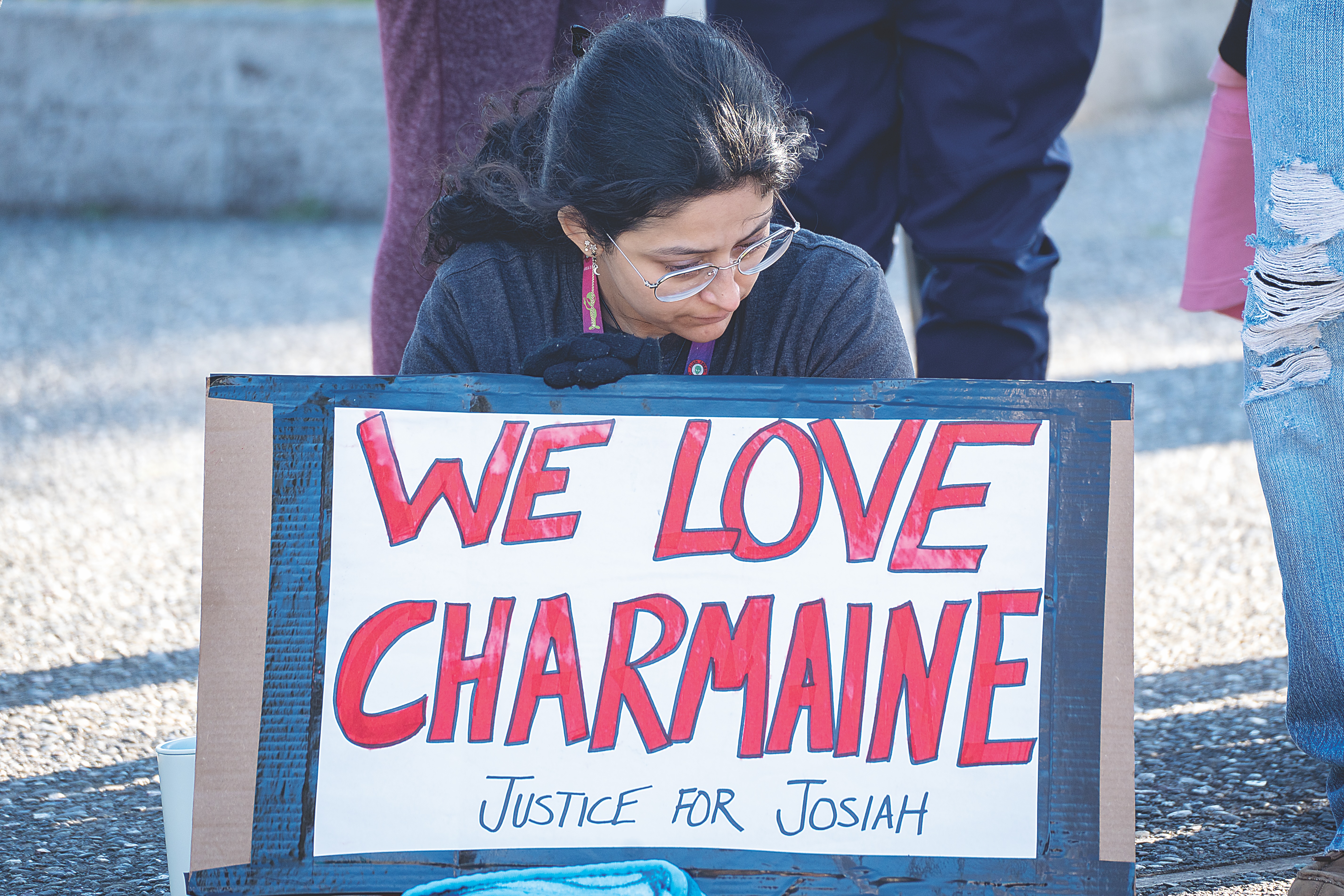
    A major source of hope for the Justice for Josiah Committee and all of its supporters is Charmaine Lawson, Josiah’s mother. After Josiah’s passing, Jones was introduced to Charmaine. She immediately took him under her wing and showed him unconditional love and support. While she wasn’t able to attend the vigil this year, she has attended every year in the past, and even often comes on a regular basis, making the long trip up to Humboldt from Southern California to honor her son’s life and continue to spread love in Arcata. 

    “[Charmaine] does so many things for the Arcata community, despite the lack of justice,” Jones said. “She does so many things out of love and gratitude because that’s just who she is. That’s who her son is, even though he’s no longer with us physically. This young man was on the path to changing the world positively, and he was taken from us, through that avenue. There’s been so much love and support behind getting that justice, behind putting those minute steps into action, going to the courthouses, calling the [District Attorneys], and making sure that they know that this is important. Not just to Arcata, but to California, and to anybody that has had to deal with a missing or murdered person.”

    Charmaine Lawson’s goal since her son’s passing has been to continue to uplift the Cal Poly Humboldt and Arcata community. Her passion and positivity inspired countless others to follow in her footsteps, including Romi Hitchcock Tinseth, a community leader and organizer of the vigil. When Tinseth heard about Josiah’s murder, she immediately knew that she had a responsibility as a mother to take action and help the cause in any way that she could. 

    “It’s no wonder that DJ [David Josiah] was a spectacular human being, because his mother is a spectacular human being,” Tinseth said. “She has devoted her energy to carrying on the love that DJ gave, that is a product of her love. So she comes here, she does good in this community, she does the work that DJ would be doing, and she has come often every single month on the 15th, for years now. And it has been seven years. This is the first anniversary of DJ’s death that she was not here, because she chose to surround herself with her family in Southern California and celebrate DJ’s life that way.”

    Seven years after his passing, Josiah’s positive impact on the community is still being felt in many different ways, giving Tinseth and many others an outlet for creating a better Arcata and a better world. 

    “[He was] an incredible student at Humboldt State University, a leader, a person who was dedicated to changing people’s lives for the better, and fighting for justice in the world,” Tinseth said. “In fact, he was a criminology and justice studies major. He was President of Brothers United at Humboldt State, and just an amazing, good human being.”

    Michihiro Sugata, Cal Poly Humboldt Criminology & Justice Studies Program Coordinator, Associate Professor of Sociology, and former teacher of Josiah’s, spoke about who Josiah was as a student and a man. According to him, Josiah had a contagious smile that brought people in and kept them engaged. Josiah brought so much light and energy to his class, and his positivity was infectious. He loved to learn new things and take on new challenges, and he wasn’t afraid to discuss difficult topics. 

    “Losing Josiah was like watching hope die,” Sugata said. “I’ve never articulated it this way before, but Josiah was the type of student that [educators] put our hope in. He was the type of student that makes you believe that the challenges of this world can be met and overcome — he instilled hope in all of us and to lose that was just devastating. But I know he wasn’t the only one, and to see young people showing up to the vigil, to see young people painting murals and writing poetry about Josiah, that brings back the hope.”

    The vigil was ultimately a celebration of Josiah Lawson’s life, a life that was taken far too soon. But it was also a sobering reminder that justice has still not been served. 

    “These vigils remain important for many reasons,” Sugata said. “They keep us connected to one another, and keep us connected to the broader fight for injustices in our community and beyond. Just as important, the vigil serves as a symbol for the continued struggle for racial justice within this community and this country. For those of us who knew Josiah, gathering in community and fighting for just causes isn’t just an act of remembrance. It’s a way to honor the man he was and the life he lived. These are the things he embodied.”

  • Student dancers bring art to life in the Van Duzer

    By Dezmond Remington

    Dance Visions can’t be summed up in a few simple opening sentences. 

    The concert can’t be judged as a whole because of the six students and three faculty that choreographed 10 different dances, all performed by dancers from Humboldt’s dance department. Each dance had its own different look. There were fairy tales, night clubs, and cabaret halls all on stage, as well as a few more archetypal modern dance pieces. 

    It was a celebration of aesthetics. Though none of the costumes or lighting was overly elaborate, it was all rich. No dance was boring to watch. All of the dances were a thrill to watch as performers contorted and flipped, swayed and leaped. Broken Boundaries, a dance choreographed by professor Linda Maxwell and performed by just three dancers, looked like a moving painting. 

    Though the pieces by the professors were perfectly, reasonably interesting, the most entertaining and daring performances came courtesy of the student choreographers. Alli Bush’s 8te was a neo-burlesque extravaganza. Miriam Allen’s Evocative Pigment juxtaposed three different colors in a dazzling display of light and motion that was wholly captivating.

    The one criticism that could be thrown at Dance Visions is that art usually has some kind of meaning, a meaning that many of the dances seemed to lack. What significance or idea they expressed wasn’t easy to pick up on, though I’m no professional art critic.

    But how much does that even matter? Dance Visions was a beautiful spectacle, a fun look into the minds of Cal Poly Humboldt’s dance auteurs and performers. Meanings or messages can be overrated when it comes to critiquing art, especially at a college level when people are just learning how to express themselves. It was joyous, a delight to the senses. That in itself is a meaning. 

  • Horoscopes except it’s the type of milk you drink

    Horoscopes except it’s the type of milk you drink

    Dumberjack is out now! Find it on a newsstand near you!

    Courtesy of Dumberjack reporter, Radio Rebel

    OAT – If you drink oat milk, you probably have a Costco membership just to buy the bulk boxes of Kirkland brand cartons that don’t last nearly as long as they should. You might be a psych major holding a vape right now, and if you aren’t – you’ve thought about it. 

    SOY – Are you someone who doesn’t eat meat? You might be a soy milk drinker. It’s time to take that much needed social media break and maybe pick up that book that’s been collecting dust on your bedside table. Extra points if the book is anything other than fantasy. 

    WHOLE – In a world of 100 different types of milk, with a new milk type trending every day, it can be hard to stick to your roots. Whether you’re only drinking whole milk in your coffee or by the glass, you’re proud to be an American. 

    GOATS – You grew up shopping at the local health food store and it shows. If you drink goat milk, you were probably homeschooled but turned out pretty okay. When you pull up to the picnic, you’re definitely bringing the Humboldt Fog, and we thank you for it. 

    HEMP – A cannabis studies major, obviously. Hemp milk drinkers prefer chai over coffee and will engage in long form conversation about plant medicine. Long hikes in the woods are fun, and the mushrooms are fruitful, but it might be time to consider making some friends to join you.

    MACADAMIA – As a macadamia milk drinker, you’re either an art major who spends way too much money at your local coffee shop, or you just had macadamia milk for the first time because they were out of hemp milk. I’ll see you later at the open mic. 

    LACTOSE FREE – You’re a freak! Or lactose intolerant. Either way, you’re getting freaky in the bedroom. Lactose free milk drinkers are extremely well hydrated, and pretty buff considering the size of the hydroflask they’re always lugging around. How does it feel spending your paychecks on Lactaid?

    ALMOND – you’re the kind of person who takes 20-minute showers and leaves the water on while you’re brushing your teeth. Humboldt is the dream for you because you’ve been on travel influencer TikTok since you were 15. We’ve already seen that picture of your hiking boots hanging off Strawberry Rock, no need to post it every sunny weekend. 

    COCONUT – If you’re sitting in your dorm room still grieving the fact the only coastal town college you got into was Humboldt… you might be a coconut milk drinker. You had to buy your first warm jacket six months ago, and your surfboard doesn’t get used nearly as much as it used to. It’s okay though, you’ve got your outdoor recreation class to keep you busy. 

    BREAST MILK – What. There are only 3 types of people drinking breast milk: babies, curious husbands, and creepers who frequent Craigslist. If you’re a college student, stay away from all three. 

    graphics by TeenyTinyRat and Radio Rebel