The Lumberjack


Students Serving The Cal Poly Humboldt Campus and Community Since 1929

Category: Life & Arts

  • Reel Talk With Julia

    Reel Talk With Julia


    When good movies get nominated for Razzies

    By Julia Kelm

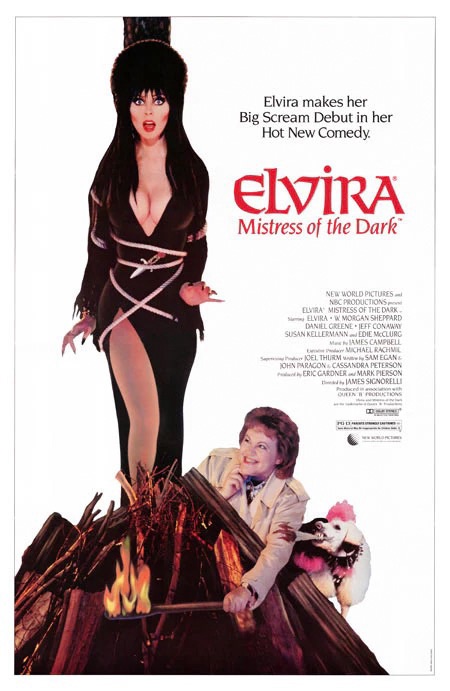
    Elvira Mistress of the Dark was released in 1988 and directed by James Signorelli. The creation of the movie was a direct reaction to Cassandra Peterson’s successful persona as a horror movie TV host, Elvira. 

    The film follows Elvira arriving in the small town of Fallwell, Massachusetts, to claim her inheritance from a great aunt she never knew about. Elvira receives a less-than-enthusiastic reception from the very conservative locals of Fallwell. Amongst these locals is her uncle Vincent, who is probably the most evil villain of all time. In true Kevin Bacon Footloose fashion, Elvira is a helping hand in altering the backward ways of this middle-of-nowhere town.

    This movie is hilarious. I’m probably a little biased, as I generally have a soft spot for cheesy 80s films with spooky vibes. There are a lot of visual gags used in the movie, as evident in Elvira herself, and sexual innuendos that’ll make your dad snort. 

    Nothing about this movie is too offensively bad. The humor in this movie is perfectly comparable to successful male-led comedies of the era like, Bill & Ted’s Excellent Adventure or Airplane! However, Elvira Mistress of the Dark lead actress Peterson was nominated and won a Golden Raspberry Award for her role as Elvira. 

    If you are unaware of the Golden Raspberry Awards, or Razzies for short, it’s a parody award show honoring the worst cinematic failures of the year. However, they have an issue of nominating so-called bad movies that are actually good. 

    Stanley Kubrick’s The Shining and Jennifer’s Body were both nominees for the award. Oddly enough, it was Shelley Duvall’s portrayal as Wendy Torrance and Megan Fox as Jennifer who were nominated for worst actress. I don’t know about you, but I’m sensing a trend here.

    How come the Razzies seem to be labeling women as being the worst? Scott Meslow, a writer for GQ, shares my suspicions in an article entitled Ignore the Razzies. 

    “You can basically divide the Razzies’ most hated movies into three categories: Big mediocre blockbusters, movies starring and targeted at women, and movies made by Tyler Perry,” Meslow wrote. “So the Razzies are, in order: pretty lazy, very sexist, and a little racist.” 

    The Razzies have a few good takes, like naming Jared Leto the worst actor for Morbius, but that doesn’t change the fact that it mostly feels like a point-and-laugh fest at films led by women.

    So take my advice, and watch Elvira Mistress of the Dark, have yourself a chuckle or two. While you’re at it, skim through some of the other winners and nominees for the Golden Raspberry Awards. I bet you they’re probably at least decent, if not amazing, like The Shining — I seriously can’t believe that was among the nominees. 

    This is also a PSA to not listen to film snob critics and film bros who can only name one female director — Greta Gerwig. Watch and talk about movies you like, and you relate to. Life’s too short to only watch Christopher Nolen films.

    Julia is a journalism major at Cal Poly Humboldt. She loves film and is a regular on Letterboxd. To quote Robin Williams in her all-time favorite movie, Dead Poets Society, “The powerful play goes on and you may contribute a verse. What will your verse be?”

  • A Life of Literary Glamor:

    A Life of Literary Glamor:

    In some ways, I agree with the four agreements

    By Alexandra Berrocal

    I am doing this week’s book review on the request of Andres Felix Romero, one of the other journalists on The Lumberjack. He asked me to do a review on The Four Agreements by Don Miguel Ruiz, and so I shall.

    This book was released in 1997. Ruiz is an author who is popular in New Thought circles. New Thought focuses on ancient teachings as a means of achieving spiritual enlightenment. He is a Mexican author and Toltec Wisdom Master who derives his spiritual texts from Toltec teachings. The main theme of this book is that it shares four agreements you can make with yourself in order to achieve a perfectly happy life. The four agreements are to be impeccable with your word, don’t take anything personally, don’t make assumptions, and always do your best. This is pretty sensible advice. 

    However, the author seems to feel the need to dress up his message and sometimes speaks in a way that is vague. To be impeccable with your word may seem simple to put into practice, but the meaning of the word impeccable isn’t always clear. The meaning of “your word” isn’t always clear either, because the author starts talking about emotional poison and black magic, which doesn’t resonate with me. 

    The rest of this book makes sense, though. However, it may be a bad idea not to take anything personally. Behind this assumption is the assumption that if you hurt someone and they are hurt by your actions, that’s their problem. That’s not right. People should hold each other accountable for their actions. You shouldn’t just brush it off and say, “Oh, I hurt you? That’s your problem.” Other than these overtones and all of the magical stuff, this was a very good book with very good advice.

    However, I do object to the author’s stance on mental illness. He says that psychotic mental illness happens as a result of fear and pain. That isn’t true. Psychosis is a disease of the brain that can be passed down from generation to generation. At least, that has been my experience of mental illness. Assuming the origins of someone’s suffering in this way is very invalidating for people with disabilities of all kinds.   Honestly, Ruiz should stick to talking about basic life issues, and leave discussion of mental illness to the psychiatrists and psychologists. I was — mostly — behind him until he started going on about that. I am a person with mental illness. I do not appreciate that sort of thing at all.

    Another thing I’ve noticed is that he promises an end to all of your suffering, just like Byron Katie, another self-help guru. Katie sells four questions. Ruiz sells four agreements. I actually prefer Ruiz’s method to attaining happiness over Katie’s. I mean, I agree a lot with both. I can’t pretend that Katie hasn’t influenced me over the years that I’ve known about her work. However, it kind of drove me crazy after a while so I decided to stop using her method. I could see Ruiz’s method driving me crazy in a similar way, blaming all of my small frustrations on bad “agreements” I have made with myself.

    I think people just need to realize that suffering is a part of life, and trying to have a life free from suffering will just make it worse. That’s not to say you shouldn’t try to help yourself if you’re suffering. It’s sad, though. To someone who is really, really suffering, an offer of heaven on earth looks tempting. However, we need to realize it’s not real. Then maybe, just maybe, we can live decent lives while we have them.

    Alexandra Berrocal is a journalism major at Cal Poly Humboldt.  She has self published fifteen short books.  In her spare time, she loves to read books and chat with her friends on Discord.  If you enjoy reading their book reviews, or you have a suggestion for a book to read, feel free to email them at alexandraberrocal@gmail.com

  • Mar’s Gaming Garage: Branching paths add depth to a classic story in “Sparking Zero”  

    Mar’s Gaming Garage: Branching paths add depth to a classic story in “Sparking Zero”  

    By Mario Orozco

    The Dragon Ball franchise has been around since the 80s and is a childhood favorite for many people, including myself. This week’s Mar’s Gaming Garage will be on a brand-new game, Dragon Ball Sparking Zero. Sparking Zero is filled with content, it builds off past games to create something that feels nostalgic yet fresh at the same time. 

    One of my favorite aspects of this game is the episode battles. What makes episode battles unique are the branching story paths that create different outcomes in the scenarios. Episode battles allow you to play the story of Dragon Ball through eight different unique perspectives, each with its own branching paths that heavily impact the story. Being able to experience events through different perspectives is a cool feature on its own, but adding in the branching paths adds depth and replayability. 

    Battles, both online and offline, are another way that Sparking Zero excels. The game has a massive roster of 182 characters with unique abilities that you can use against others in solo or team battles. I had a blast using some of the sillier character choices in online battles and it made losing to try-hards sting a little less.

    The game also offers different tournament styles you can create and play with up to eight players. The tournaments are exciting to compete in and are my favorite part of the multiplayer experience. If you’re not interested in playing against other players, the tournaments can be experienced offline as well. The Yamcha Tournament has some great commentary and is my go-to.

    The actual gameplay mechanics of Sparking Zero are fantastic. At first, all of the different combos and defensive mechanics can be a little overwhelming, but once you start to get the hang of them, the game becomes even more enjoyable. The skill gap in this game is quite large, so before you hop into online battles, I would recommend doing some training to get a better grasp of these mechanics.

    I want to briefly touch on three honorable mentions from Sparking Zero before I get into my critique. First, custom battles are hilarious. They allow you to create your own custom scenarios that can be as tame or unhinged as your heart desires. Second, you can summon any of the three eternal dragons from the series to grant your wishes which provides an awesome visual. Finally, the encyclopedia allows you to view each character on the roster and listen to the main characters’ wives gossip about them, which are entertaining to listen to.

    I only have one complaint for Sparking Zero — it doesn’t allow for crossplay. To me, this is ridiculous. How does an online multiplayer game released in 2024 not have crossplay? If indie games can handle it, then Sparking Zero can handle it. Despite this injustice, I recognize this isn’t a necessity for everyone and it doesn’t have a significant impact on my overall rating.

    Overall, Dragon Ball Sparking Zero was a blast to play. I have a total of 37 hours put into this game and it took me 32 hours to complete every branching path for each character in the episode battles. I rate Sparking Zero a 4.9 out of 5. If the game was crossplay, it could’ve been my first 5, but that will have to wait for now. If you’re a fan of Dragon Ball or just want an engaging fighting game, then I highly recommend this game for you.

    If you have any games you would like me to review or any thoughts on this review, you can email marsgaminggarage@gmail.com.

    Mario Orozco is a writer and assistant social media editor for The Lumberjack. He transferred to Cal Poly Humboldt in 2022 and his favorite game of all time is The Legend of Zelda: Breath of the Wild.

  • From one bay to another: E-40 sends the Van Duzer into a frenzy at the Block Party

    From one bay to another: E-40 sends the Van Duzer into a frenzy at the Block Party

    By Noah Pond

    Thursday, Oct. 17, the Van Duzer was packed to the gills with sweaty college students, swaying adults, and more Raiders gear than I have ever seen in Humboldt. Nearly no one sat in the theater’s seats as they all had pushed to the front, creating a wall of anticipating HYPHY enjoyers ready for Bay Area Legend E-40. It was 9 p.m.. 

    The first DJ was coming to the end of their set as I got there. People took the time between sets to go get a drink from the concessions bar or smoke something outside. I decided to go up to the balcony to scope out a better view of the stage. 

    Next, DJ Sovern-T from Honolulu came on to take the crowd through a history of hip-hop by way of the tracks he played. He reminded the crowd that hip-hop came from Africa before going into a rhythm and bass track. Around 10:30 p.m., Sovern-T started asking the crowd if they were ready for E-40. The crowd erupted in cheers for the Bay Area rapper.

    He asked the crowd the same question every 15 minutes for the next hour. I talked to four dudes who said they were just gonna leave if E-40 didn’t come out soon — I didn’t see them again after that. 

    It was 11:30 pm by the time E-40 showed up. The crowd had been waiting for two and a half hours so, naturally, they went insane when he came out. He played his classics like U and Dat, My Shit Bang, and even Lil Jon’s Snap Yo Fingers. 

    When the beat came on for his 2014 classic, Choices (Yup), the crowd was on time with the, “YUP. NOPE. YUP. NOPE.” 

    I was still up on the balcony and people had started lighting blunts and joints as Choices played. I’ve really never seen the Van Duzer so lit, bro. 

    E-40 took some time to address the crowd after he played Choices to say thanks for coming out and how he’s thankful our generation is still bumping his stuff. He compared us to his generation in the way that we still listen to the music our parents showed us. I thought he was being kind of sweet and sentimental. 

    Before I could relish in the moment too long, he started playing his top song and biggest feature, “I Don’t Fuck With You.” Immediately, the crowd was with him. 

    “I don’t fuck with you! You lil’ stupid ass bitch, I ain’t fuckin’ with you. You lil’ dumb ass bitch, I ain’t fuckin with you. I got a million trillion things I’d rather fuckin’ do, than to be fuckin’ with you,” the crowd screamed. 

    Just as soon as he came on, it seemed as though he was leaving. It was 12:10 p.m.. The night seemed like a blur; I don’t know if it was the 800-seat hotbox in the Van Duzer or the hours of built-up sweat waiting for E-40 to come out, but I had a blast. It’s cool that Cal Poly Humboldt is getting more pull in the artists they invite and the Van Duzer theater is seeing maximum litness. 

    Noah Pond is a Junior at Cal Poly Humboldt and a reporter and opinion editor for the Lumberjack. During his free time he enjoys cold beer and his skateboard.

  • Hannah Grace makes artistic impressions from Humboldt County to the Himalayas

    Hannah Grace makes artistic impressions from Humboldt County to the Himalayas

    By Julia Kelm

    Hannah Grace has always been interested in art, starting with crayons as a child. 

    It wasn’t until she turned 10 — when she began formal art lessons that continued in and out of high school — that she began to take art more seriously.

    “I did AP art,” said Grace. “And then in my junior year, I left public school to go to an independent art school.”

    This decision ended up being something Grace was extremely grateful for, using sheet money and scholarships to fund this once-in-a-lifetime opportunity to further her dedication to art.

    Her family also gave her a solid foundation for an appreciation of art. Her grandfather, in particular, was a shining light on her art career.

    “He’s a huge portion of my life, and I love him so much,” said Grace.

    Grace’s grandfather additionally introduced her to artist Tsherin Sherpa, who would become her future mentor.

    Sherpa is an outstanding and influential artist from Nepal, whom her grandfather met and became a patron of many years ago.

    Her grandfather first met Sherpa when he only had a studio apartment in Oakland. Now Sherpa resides between California and Nepal. He is known for his traditional Tibetan Thangka paintings, which he learned from his father, Master Urgen Dorje.

    Grace met Sherpa over a dinner with him and his wife, Dolma, that her grandfather organized for her. 

    “I’ve idolized this person since I was a little kid,” Grace said. “I absolutely love their artwork. So it was kinda a dream come true.”

    Grace brought her portfolio to dinner, where she received wonderful feedback from the Sherpas. However, the true highlight of the evening came when Sherpa’s wife turned to Grace and asked if she’d be interested in showcasing her work in Kathmandu, Nepal.

    “Yes, absolutely,” Grace said. The rest became history.

    Grace left for Nepal and stayed with her host mom for about two months to show her work.

    Grace expresses her deep gratitude to the Sherpas for everything they’ve done, acknowledging how they made it possible for her to not only participate in the showcase but also fulfill her dream of traveling to Nepal.

    The style of art Grace practices is a type of traditional Tibetan thangka, the same style Sherpa paints in. A style of Buddhist art that’s found in many other sects other than Nepali culture. The paintings are typically colorful and intricate and are very unique to the Western eye.

    “It’s a very beautiful meditation based in artwork,” Grace said. “It’s kind of like a religious painting, telling a story within it.”

    Grace’s showcase in Nepal was made up of this thangka style. Her exhibition was titled Where My Home and Allegiance Lies.

    I asked Grace what her title meant, and what she wanted her viewer to feel or understand while looking at her artwork.

    “I really wanted people to understand the beauty and fragility of the environment around us and how important it is, and the fact we’re losing it, but simultaneously understanding that this is where we belong,” Grace said. “This is something worth protecting, because it’s so beautiful and so precious.” 

    It’s often heard that art isn’t as important or as necessary as occupations like doctors or engineers. However, could you imagine a world without art? Art is all around us, from the shoes on your feet to the phone in your back pocket. 

    Art can be empowering and provides a voice to causes, issues, and things of personal importance, like Grace’s work.

    Grace described to me an art piece she did for her grandfather when she was 16.

    “It was a skull with butterflies,” Grace said. “I painted this as a [way to show] death is very beautiful. It’s just a change. Like, how lucky are we to get to die one day?”

    I found this to be particularly touching, as Grace told me how her grandfather is getting older, but will always be an important piece in her life. His impact led her to be who she is today.

    Alongside her art, Grace has an interest in environmental sciences. Pursuing environmental science was the original plan until 2020 when the Covid-19 pandemic happened.

    Feeling like a change in scenery was needed, she returned to her love of art, which felt like a natural transition. Her art still has major themes of environmentalism, due to her love for both the environment and art.

    “Environmental science still really plays a heavy role with my artwork,” Grace said. “I did some environmental science fieldwork with Northern California Resource Center tracking owl populations. And a lot of the photos that I took while I was out there ended up being art pieces.”

    Grace now resides in Arcata and is pursuing a studio arts degree here at Cal Poly Humboldt. 

    Upcoming showcases for Grace’s work include one in Arcata for a burlesque show in December, then another in San Miguel de Allende in Mexico, which will be a larger event.

    Grace plans to continue improving her artistic skills and eventually expand her presence to San Francisco or other art-friendly locations in California like Carmel, where opportunities for artists to thrive are more abundant.

    Julia is a journalism major at Cal Poly Humboldt. She loves film and is a regular on Letterboxd. To quote Robin Williams in her all-time favorite movie, Dead Poets Society, “The powerful play goes on and you may contribute a verse. What will your verse be?”

  • Reel Talk with Julia

    Reel Talk with Julia

    Hollywood’s soul-crushing toll on artistic integrity 

    By Julia Kern

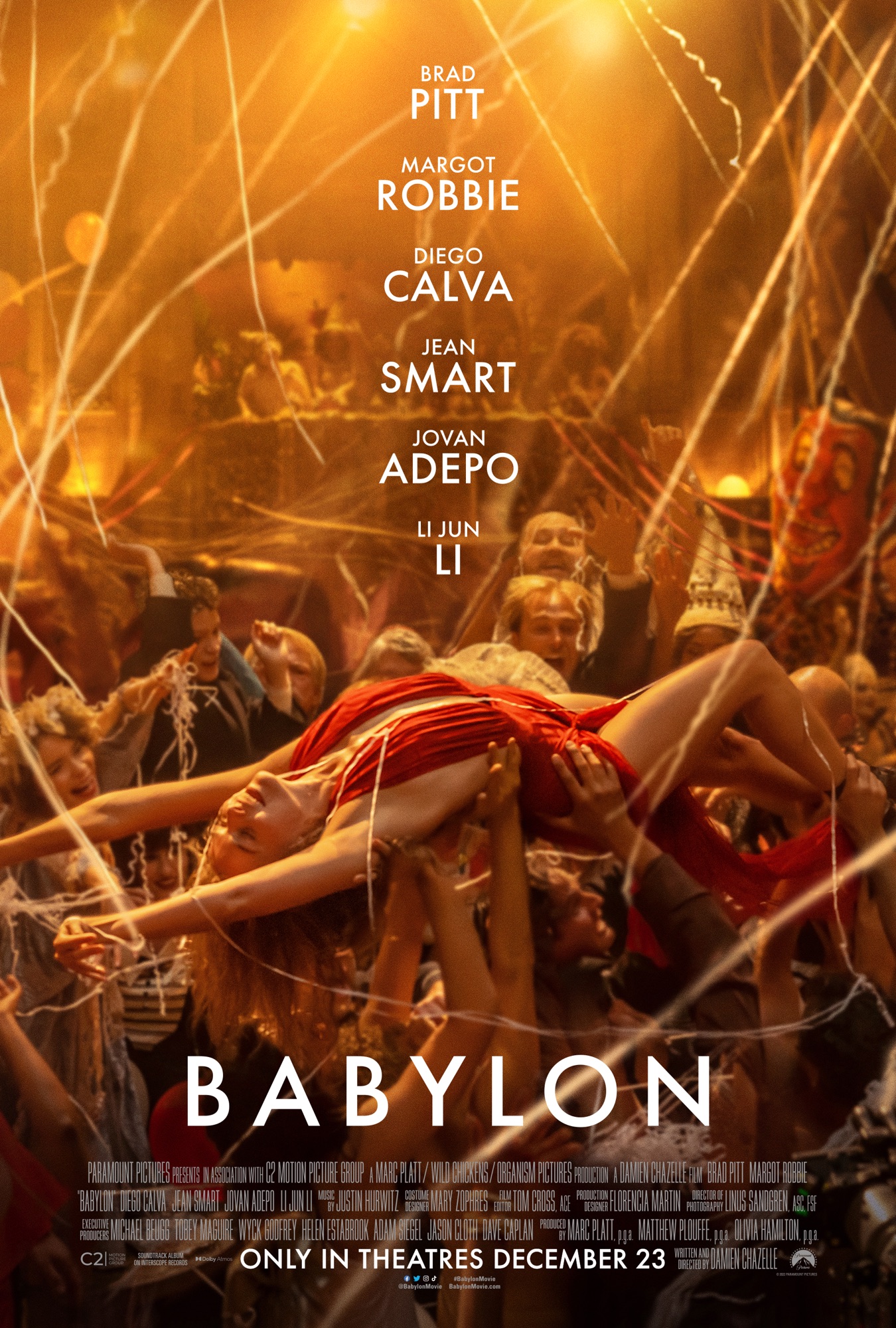
    Babylon, released in 2022 and directed by Damien Chazelle, follows the outrageous and shocking tale of the rise and fall of multiple characters in 1920s Hollywood. The film stars Diego Calva as Manny Torres, a starry-eyed young man with a passion for filmmaking who is eager to do anything to make his dream a reality. This 189-minute fast-paced, extremely shock-value-filled epic does not drag for one second. If you’re easily squeamish, particularly bothered by an extensive amount of piss and shit, or freaked out by a creepy Toby Maguire, you may want to avoid this film. However, if you’re obsessed with Hollywood lore and filmmaking in general — as I am — I encourage you to power through some of the more intense scenes.

    To give a broader overview of the film, it follows three major characters. Jack Conrad, played by Brad Pitt, and Nellie LaRoy, played by Margot Robbie, and the aforementioned Torres as they live in the ever-changing landscape of Hollywood. 

    Conrad is a successful silent film actor who, at the beginning of the film, is at the height of his career and ends with his life and career slowly sizzling out, as new actors come onto the scene leaving him in the dust. Something that stands out to me about Conrad’s character, and what he represents, is the immortality of fame. There’s a poignant quote near the end of the film where Conrad angrily confronts a journalist, Elinor St. John, who wrote a story about his fall from grace as an actor. However, in reply to his outrage, she reminds him of his legacy.

    “In a hundred years, when you and I are both long gone, any time someone threads a frame of yours through a sprocket, you will be alive again. You see what that means? One day, every person on every film shot this year will be dead. And one day, all those films will be pulled from the vaults, and all their ghosts will dine together, and adventure together, go to the jungle, to war together. A child born in 50 years will stumble across your image flickering on a screen and feel he knows you, like… like a friend, though you breathed your last before he breathed his first. You’ve been given a gift. Be grateful. Your time today is through, but you’ll spend eternity with angels and ghosts,” said St. John (Chazelle, 2022).

    I know that’s a long quote, but I can’t bring myself to cut it down. It just perfectly encapsulates the feeling and message of this film. It’s something I think about every time I watch, read, or listen to some form of art. I think about the faces, voices, and stories that would’ve been totally forgotten if it weren’t for this recording representing a flicker of that life.

    Laroy is also an interesting character and shares similar themes to Conrad’s and Torres’ characters. Laroy starts the film as a wannabe actress, trying to get herself noticed at big-shot Hollywood parties. Later, she becomes quite successful as a silent movie actress, but then in the latter half struggles with the transition to talking films. However, her struggles aren’t only with her acting; she battles addiction, along with finding it hard to fit in with the classier side of Hollywood, due to her party-girl persona getting in the way of anyone liking her. 

    Laroy is consistently mocked in the film. Whether that be in the beginning when nobody believed she could become a star, or how she acted in high-brow events, or when she couldn’t adapt to talking in film. Laroy represents wanting something so bad, getting it, and then losing it because of a mixture of self-sabotage and not being able to fit into Hollywood’s environment. All Laroy wanted was to be a star — and she got that. Although in contrast to Conrad’s slowly sizzling out career, Layroy’s burns hot and fast.

    Torres embodies an important theme and a core message of the film: no matter how hard you try or how perfectly you follow the rules, sometimes it’s just not enough. This theme is driven home by the film’s ending, which I won’t spoil in detail, but due to circumstances beyond his control, Torres is forced to leave his Hollywood career behind and settle into a normal life. Years later, he returns to Los Angeles. He watches a screening of Singin’ in the Rain, a film about the transition from silent movies to talkies. Ironically, the film mocks the very reality that Torres experienced. As the audience laughs, Torres weeps, devastated to see his former hopes and dreams reduced to a joke by the industry he fought so hard to be a part of.

    Maybe I sound too much like a jaded old man. Maybe it’s because I listen to too much Bob Dylan and identify a little too much with Tony Soprano. The truth of the matter is, I do have a pessimistic look at what it means to become a successful artist. It’s all because of the corrupt industry in which art must be produced to become successful. Hollywood is far from the rose-colored point of view most of us have, Babylon illustrates that. However, that doesn’t stop me from daydreaming about living my life as a successful artist. I think that will forever be my dream, even though it will only just be that — a dream. 

    Julia is a journalism major at Cal Poly Humboldt. She loves film and is a regular on Letterboxd. To quote Robin Williams in her all-time favorite movie, Dead Poets Society, “The powerful play goes on and you may contribute a verse. What will your verse be?”

  • A young girl discovers she has superpowers

    A young girl discovers she has superpowers

    By Alexandra Berrocal

    A Like The Flowers, B Like The Ocean is a children’s book by Sarah Godlin that was published in 2023. She is a local author and this book can be found in the Authors’ Hall of the school library, where many local authors can be found. She is also an alumna from Cal Poly Humboldt, coming from the English department, and was illustrated by Kylee Conriquez, another Humboldt local. They studied studio art with a concentration in painting at Cal Poly Humboldt.

    Godlin has something called synesthesia, which is when two of your senses sort of mesh. People with synesthesia might see numbers and letters as colors. They might feel certain sounds. When they taste food, they may see shapes, and so on. This book is about a young girl with synesthesia entering school for the first time. She is upset because her teacher is teaching about numbers and letters all wrong, with no attention to what colors the numbers and letters are, which causes her great distress. She then sees a doctor — a child psychologist to be exact — and this person evaluates her and explains that she has synesthesia. She also explains to the young girl that other people can’t see the colors that she can. This alleviates a lot of the girl’s distress. The book pretty much ends there, on a happy note, with her realizing she has a special gift and she is accepted by her classmates.

    One of my high school besties, Jason, has synesthesia. I am not sure exactly how his synesthesia works, but I know that he often sees numbers and letters as colors. I am not sure if that extends to all sounds he hears. The funny thing is, it never affected our relationship one way or the other. Jason and I met as children.

    He once told me that he saw a certain number as a really pretty royal blue. He also said that seeing letters and numbers as colors is an everyday thing for him, that it was nothing special. I didn’t treat him differently when I found out about that, for better or for worse. I didn’t think much of it. However, I do think that his world must be very interesting in a way that mine isn’t. On the other hand, I’ve experienced autism. Sometimes, when I tell people about that, they ask me what it’s like to have autism. I am always tempted to ask what it’s like to be neurotypical. Autism is as normal to me, and synesthesia normal to him, as being neurotypical is to… well… neurotypical people.

    I guess we all have superpowers.

    Alexandra Berrocal is a self-published author who has written fifteen books. She likes to crochet and draw, as well as read and write. She is from Orange County.  They are a journalism major at Cal Poly Humboldt. They like dogs, and they sing alto in a choir. If you have an idea for a book she could review, email them at alexandraberrocal@gmail.com.

  • Watch to see the Cal Poly Humboldt Logging Team in action!

    Watch to see the Cal Poly Humboldt Logging Team in action!

    Video by Maranda Vargas

    Watch to see the Cal Poly Humboldt Logging Team in action! Check out the next issue of The Lumberjack for a full article on the team!

  • Huzzah! Humboldt welcomes the medieval era through the annual Festival of Courage

    Huzzah! Humboldt welcomes the medieval era through the annual Festival of Courage

    By Julia Kelm

    It was a hot 69 degrees in Blue Lake, just under 10 miles from Cal Poly Humboldt’s campus. Large crowds formed, chuckling and grinning, dressed in an assortment of medieval and fantastical garb. 

    The people were scattered all across the event space, which was decorated to look like we were transported back to the Dark Ages. 

    I traversed this new open land with my camera strapped to my hip and a cider in hand. Even with the sun beating down on me, I had a very pleasant afternoon at this fair. 

    There were many events for me to witness and be impressed by — and impressed I was! The fair truly had a performance for every type of person. 

    I was able to witness the Knights of Valour and their full-contact jousting tournament, which was as remarkable as it looked dangerous. At one point, both of the knights were knocked onto their backs and were helped up. 

    Don’t like horses? Maybe you would prefer to bang your head to the epic sound of Celtica Nova, a Scottish rock group with flaming bagpipes. 

    Too hot? Then explore the many vendors selling all types of jewelry, crafts, and goods. Then grab yourself a pint of beer, cider, mead, or some lavender lemonade to wash down some skewered dragon meat (tri-tip on a stick) to finish off the day.

    However you prefer to spend your time, the Medieval Festival of Courage has a lot to offer.

    According to the Medieval Festival of Courage’s official website, proceeds collected go to support local schools and nonprofits to raise money for educational programs. Tickets to this event were $10 for adults and $5 for children. The event dates were held on Oct. 5 and 6, from 10 a.m. until 5 p.m.

    If you missed this festival, no worries. The event is held annually, so you can gallivant with some fair lords and ladies next year!

  • A Life of Literary Glamor

    A Life of Literary Glamor

    The rich history beneath the rainbow flag

    By Alexandra Berrocal

    The American LGBTQ Rights Movement: An Introduction was written by Kyle Morgan and Meg Rodriguez. Morgan is a librarian at Cal Poly Humboldt. Rodriguez spent many years as an AIDS researcher. It is impossible to know exactly when this book was written, because it isn’t copyrighted. However, it was definitely written after 2016 because it mentions Pete Buttigieg as a historical figure. 

    This book is mainly about the history of the LGBTQ+ movement in America, from Stonewall to other lesser-known events. This book is shorter than some other books out there on the subject — but boy, is it dense. There is a lot of information packed into this book and reads more like a textbook than it does an ordinary book. This is the sort of book that you would be expected to be assigned in your average women’s studies or critical race theory class, which isn’t a bad thing. However, it does mean that there is a lot to take in at once.

    The book is very much written like a story. The famous people, like Marsha P. Johnson, who is famous for instigating the Stonewall riots, which were the beginning of the modern Pride movement, are given blurbs on the side. There are so many blurbs in this book that I have trouble remembering them all. However, the photos are excellent. Each photo portrays the person tastefully, and not in a demeaning light in the least.

    They even talk about lesser-known figures, like Dr. Harry Benjamin. Benjamin was one of the first doctors to treat transgender people and assisted them in getting medical help. This took the form of helping them change their bodies, and getting them social and legal support. He also published a book called Transgender Phenomenon. He retired in the 1970s.

    The book also mentions Bayard Rustin, who was the person who schooled Martin Luther King Jr. on Gandhi’s philosophy of nonviolence. He organized the March on Washington, where King gave his famous I Have a Dream speech. However, he was forced out of the civil rights movement because he was an openly gay man in a time when that wasn’t as accepted as it is today.

    Consider reading this book multiple times. If you really want to learn from it, I suggest you take notes. I personally was dismayed at the lack of asexual representation in this book, as this book was written fairly recently. There is a fair amount of awareness of asexuality within the modern LGBTQ+ movement. Yes, I know that there hasn’t been a distinct movement for very long; they were considered bisexual for many years, until the Internet came around. I wish that there had been more on this dynamic. 

    As it is, this book is great, but it isn’t all-inclusive. However, if you are looking for a book on LGBTQ+ history from 1900 to now, you could do worse than this book. For something that reads like a textbook, is pretty dense, and isn’t inclusive of asexuals as part of the LGBTQ+ movement, this is a pretty good book.

    Alexandra Berrocal is a self-published author who has written fifteen books. She likes to crochet and draw, as well as read and write. She is from Orange County. They like dogs, and they sing alto in Humboldt Chorale. If you have an idea for a book she could review, email them at alexandraberrocal@gmail.com.

  • Reel Talk with Julia: Dogma: Censorship, Controversy, now Lost Media

    Reel Talk with Julia: Dogma: Censorship, Controversy, now Lost Media

    By Julia Kelm

    Dogma, released in 1999 and directed by Kevin Smith, tells the tale of an abortion clinic worker, Bethany, played by Linda Fiorentino. The Metatron — the archangel who serves as the speaker for God — calls upon Bethany to save the world and entire human existence from being destroyed by two renegade angels, Loki and Bartleby, who are trying to exploit a loophole so they can return to heaven. Bethany goes on a quest to New Jersey, forming a group of unlikely characters to stop these angels.

    This religious satire is an entertaining, unique, clever, and hilarious film that pokes fun at Catholicism in a way that hadn’t been done before. Cast names include Matt Damon, Ben Affleck, Alan Rickman, Salma Hayek, Jason Lee, Chris Rock, and even Alanis Morissette makes an unexpected appearance in this film. My only gripe with the movie is that it’s a tad outdated, with a few unsavory jokes that I could do without.

    However, even with everything the film had going for itself, there was a lot of controversy surrounding the film even before its release. The Catholic League, an American Catholic organization, found out about Smith’s screenplay for Dogma after it was leaked online. The Catholic League thought Smith’s script was unattractive, to say the least, and voices from the organization went to work on bad-mouthing a film they hadn’t even seen.

    Because of this, the film was almost canceled. Originally, the film was supposed to be produced by Disney, but CEO Michael Eisner was afraid of offending The Catholic League and planned to shut Dogma down. However, an infamous Hollywood producer swept in to save Dogma. 

    Even with the bad press, Smith was determined to get his film to theaters. He even poked fun at the protesters, showing up at one of the meetups to bash the film alongside them. Despite Catholic boycotting, the film received fairly positive reviews and made $44 million dollars at the box office. 

    Unfortunately, Dogma is not on streaming sites or available to purchase anywhere, and it probably will not be for a very long time. Your best bet in finding a way to watch Dogma is by pirating it off a website or buying a bootleg DVD.

    There are a few sites where you can look for this film, although I would recommend looking for a version of the film off of YouTube. Pirating movies online can potentially lead to getting viruses on your computer, so be careful and maybe look into a vpn before watching. 

    Now, how did this happen? Why can’t we watch Dogma normally? An interview done by The Wrap with Director Smith shined a light on this dilemma. 

    “In order to tell the story, unfortunately, I’m gonna have to say the name that nobody wants to hear anymore,” Smith said. “But of course, Harvey Weinstein figures into the story.”

    The gist of the situation is that Smith worked with Miramax, a television production and distribution company that was notoriously owned and founded by Harvey and Bob Weinstein. Because Harvey Weinstein came in to save Dogma when he did, he personally owns distribution rights to the film and is not allowing the film to be bought, rented, or streamed digitally, for whatever reason. Smith has tried to make offers to sell the rights back to him, but Weinstein always declined or asked way above a fair price. 

    So now, Dogma sits on the metaphorical shelf of films that will collect dust and ultimately be forgotten. It makes me upset when I think about all the lost media out there. All the faces, voices, and stories that will fade away because nobody will remember them. I think of the times I searched for a movie on Amazon and it said something like, “This title is not available right now,” and I just stared at the screen in dismay wondering what had happened. This is why I’m a big advocate of buying physical media whenever possible. Owning physical media is the only way to ensure it stays and doesn’t get forgotten. Plus, buying DVDs, CDs, vinyl, 8-track tapes, or whatever, often pays your favorite artists more than streaming does. 

    So next time you’re at a thrift store, take a minute to look at the stack of dusty DVDs and see if you can find a copy of Dogma. Or, better yet, some other movie you almost forgot about. Don’t let media be forgotten; keep it alive and let those stories be replayed forever.

    Julia is a journalism major at Cal Poly Humboldt. She loves film and is a regular on Letterboxd. To quote Robin Williams in her all-time favorite movie, Dead Poets Society, “The powerful play goes on and you may contribute a verse. What will your verse be?”
  • Tassels, rhinestones, action! Burlesque dancers draw a crowd at College Night

    Tassels, rhinestones, action! Burlesque dancers draw a crowd at College Night

    By, Gabriel Zucker

    As each piece of clothing was taken off, the crowd cheered louder and louder in approval. Crumpled dollar bills were thrown at the stage from all angles. The glitter of rhinestones glittered as a skirt was thrown into the crowd. This was a night of self expression and art colliding on stage to a rapt audience.

    According to Olivia Gambino, a local burlesque performer, burlesque is a form of adult entertainment that not only celebrates sexuality but also makes a satire of it.

    “Burlesque is an art form that is inherently comical in its very performance. It is meant to delight, entice, entertain, but ultimately take the audience to a place where they can enjoy something sexy without pressure and anxiety,” Gambino said. “Neo-burlesque is defined by its choice of modern music and fashion. Furthermore, it incorporates more modern dance moves and contemporary reveals.”

    On Friday, Sept. 27, new neo-burlesque group Renegade Revue held their second-ever performance, College Night, at the Siren’s Song Tavern in Old Town Eureka. After the audience filled the bar to the brim, they put on a show that had the crowd screaming and cheering all night. 

    This was very different from their first performance at Crisp Lounge, where the crowd was sparse. The expectations going into the second show were not high, but to the surprise and joy of the production team and artists, people were still showing up during the second half of the show. Lotties Deluscious, one of the founders of Renegade Revue, was overwhelmed with the love and support she received during the show.

    “We chose Siren’s Song as a location because it’s great in Old Town,” Deluscious said. “They’ve been nothing but supportive and they always have events here. And again, just having people come in, some people just like to go there anyway. I’m really excited about the turnout that we had and the huge support from the different artists, because they also brought in a lot of people too. It’s a great community.”

    Renegade Revue started with an idea of community and teamwork. It is a collective of different burlesque artists, who have all come from different walks of life. They wanted to create something unique and special together.

    “Renegade Revue started off with four girls who loved burlesque and decided that we wanted to come together and do it connected,” said Tinytr2ntup, an artist and producer for the show. “So instead of having one person be in charge and have a president, we all collectively decide who does this project, who can help with this. How we can help each other as a team, instead of being a hierarchy.”

    Every artist who performed for College Night had a different story to tell. Each performance was unique and told something different. Napoleon Dynamite came alive when Dixon Lips came out dressed in a Vote 4 Pedro shirt and a curly wig, before throwing off the outfit to the joy of everyone in attendance. Felix Flex, another local artist, drank from a bottle of alcohol in the middle of their set. Baby Fontaine came out dressed as an old meager librarian before stripping down revealing the freak hidden underneath. Tinytr2ntup brought inspiration from a childhood photo with a close friend and the film Not Another Teen Movie, bringing these very different ideas into a beautiful choreographed dance. Each artist prepped individually for their own performance, using Renegade Revue for support if they needed anything.

    “That’s the cool thing about burlesque, you are your own producer, choreographer, costume maker, [and] marketing team, so you’re always learning,” Tinytr2ntup said.

    On top of setting up shows and rehearsing performances, Renegade Revue also needs to fundraise to make sure that they can pay the artists and put on a complete show. They try to meet up weekly, running ideas between each other in regards to finances, fundraising, and to check in if everyone needs help. They also plan meet-ups so all the girls can get to know each other on a more personal level. Recently, they ran a sensual flow dance class and are preparing for a Sex Toy 101 class in partnership with Peaches and Pearls.

    For a lot of these artists, burlesque is just one of many performances and shows they do. Deluscious used to be in a local fire dancing troupe, and hopes to perform at different shows and festivals out of town. Tiny has been a dancer for most of her life, and is working on getting a masters in dance. She first stepped into burlesque in college, and when she moved to Humboldt County, she joined a burlesque boot camp, and the rest was history.

    Gambino was also the MC for College Night. Unlike other artists, she uses her legal name. 

    “I realized I did not need to make a distinction between my private life and stage life,” Gambino said. “I enjoy the holistic experience of being OG 24/7.” 

    This was only her third time performing as an MC and it was very different from what she was used to. Trying to come up with the jokes was a journey in self-discovery.

    “For some reason, I thought I was going to be very classy, very demure,” Gambino said. “But it turns out, I love dick and fart joke island a little too much. So, my jokes can be a little off color and a little raunchy, but I think it loosens up the crowd. Now that I’m older, I don’t look back at my cringe moments and let them consume my life.”

    One thing all of these artists have in common is their shared love of performance and self love. Gambino emphasized the collaboration and reciprocity between the artist and the audience. Deluscious fell in love with burlesque because of the confidence it gives her.

    “I’ve had a lot of body image issues, and so with burlesque, you kind of can’t really hide from your body, and so it’s given me a lot of empowerment and trust in my body,” Deluscious said. “It’s been really affirming as an artist and as a creative to be like, ‘Oh, I’m making the art. I’m sharing this art, and people actually like and appreciate this art that I’m sharing.’”

    Renegade Revue is preparing for their next show, Kinktober, on October 18th at Siren’s Song. Their instagram is @renegaderevue, where they regularly update their followers on what projects they are working on.

    Gabriel Zucker is a senior journalism student at Cal Poly Humboldt. He is the photo editor for The Lumberjack. He loves photojournalism and wants to use his platform as a journalist to give a voice to the voiceless.

  • Jennifer’s Body: The Underrated Feminist Cult Classic We Didn’t Appreciate Enough

    Jennifer’s Body: The Underrated Feminist Cult Classic We Didn’t Appreciate Enough

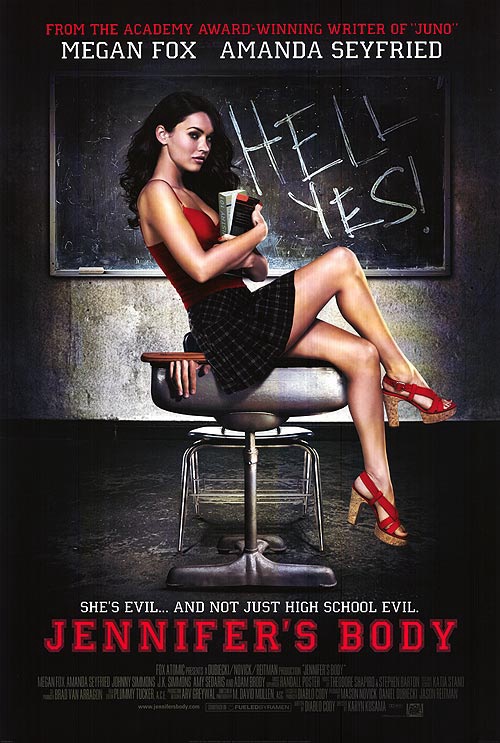
    Jennifer’s Body, released in 2009, is directed by Karyn Kusama. I would describe it as a comedy chick-flick meets horror film. It follows two childhood best friends, Jennifer played by Megan Fox, and Needy played by Amanda Seyfried. The plot follows Jennifer, a popular cheerleader, who is kidnapped by a Satanic emo pop-punk band as a virgin sacrifice so they can become famous. However, because Jennifer is not a virgin, she is brought back and possessed by a demon and goes on a murder streak. Needy, uncovering this knowledge, makes it her duty to stop Jennifer.

    On a surface-level inspection, one might conclude that Jennifer’s Body is simply a silly slasher film for people who are attracted to Megan Fox. I wouldn’t blame you if this is your perspective on the film. Upon initial release, Jennifer’s Body was marketed as a trashy sexy movie for straight men, when in reality, it’s actually a movie about female friendship and womanhood.

    Yes, Jennifer’s Body is a horror comedy, but it is also much more than that. I am dead serious when I tell you it’s a thoughtful perspective and scary examination of what it means to be a teenage girl or young woman. This is especially evident in Jennifer’s sacrifice scene, which is incredibly emotionally charged and brings me to tears every time I watch it. When Jennifer is transformed into a monster, I can’t help but feel conflicted. I almost feel like she’s justified because of the atrocities that were done to her. If only she was using her demon powers to only go after the band that did this to her.

    Needy and Jennifer’s relationship is compelling for a few reasons. Again upon first glance, these two characters fall under the stereotype of slut — Jennifer — and nerd — Needy. However, these two characters go beyond this stereotype. Instead, they represent to anyone who’s been a teenager before, the intense emotions, and the consistent theme of jealousy.

    Needy is jealous of Jennifer and Jennifer is jealous of Needy. There are many differing opinions on the nature of Jennifer and Needy’s relationship. The common conclusion is that Jennifer is jealous of Needy because she has a stable relationship with her boyfriend, Chip. While Needy is jealous of Jennifer’s social status, she doesn’t become outwardly jealous until Jennifer tries to steal and kill Chip. I am an advocate for the opinion that Jennifer is in love with Needy, and is more or less jealous of Chip — or any other person who shows interest in Needy specifically. This is considerably evident when Jennifer immediately chooses Colin, a boy who shows obvious interest in Needy, as her next victim. Other scenes represent Jennifer’s obvious queerness, as well. Such as Jennifer and Needy share a kiss, and then Jennifer suggests “playing boyfriend and girlfriend like they used to.” 

    Regardless of the deeper undertones of the film, it’s an overall spooky and hilarious time. Jennifer’s Body is the perfect film for Halloween, which is conveniently coming up in the next couple of weeks! If you’re interested in watching Jennifer’s Body, it’s available to watch on streaming for Disney+, and Hulu.

    Julia is a journalism major at Cal Poly Humboldt. She loves film and is a regular on Letterboxd. To quote Robin Williams in her all-time favorite mou-ie, Dead Poets Society, “The powerful play goes on and you may contribute a verse. What will your verse be?”

  • How to talk with dying relatives and why you should

    How to talk with dying relatives and why you should

    By Alexandra Berrocal

    I have always had an interest in end-of-life related things. A close friend of mine died when I was seventeen years old. She was no ordinary friend. I had been planning on moving in with her. So, having said that, I don’t know when my interest in end-of-life related things began. It could have begun with that thick book in my grandma’s house that was called How We Die, by Sherwin B. Nuland. 

    I also tend not to get overly upset when people around me die. I got upset when my friend died, but when other people around me have died, I haven’t been as upset. My therapist says this is because of my autism, and that a lot of people with autism are this way. That being said, I am not sure I am any better with mortality than anyone else, in terms of knowing what to say to a dying person and things like that. To be exact, my therapist said I am friendly with death. I feel this is pretty apt.

    Final Conversations: Helping The Living And The Dying Talk To Each Other, published in 2007, was written by Maureen P. Keeley and Julie M. Yingling. Keeley is an associate professor at Texas State University and has taught college students for 20 years. Yingling is a retired professor emerita at Cal Poly Humboldt. During her 25 years as a professor, she specialized in communication.

    Final Conversations is a book about how to communicate with people who are on their deathbed. It especially focuses on final conversations as something that can be positive both for the dying and for the people they leave behind. It doesn’t sugarcoat the difficult aspects, but it also gives helpful suggestions on why you should still try to communicate with a dying parent even if your relationship in life wasn’t that great. 

    What I took away from the book is that life is precious and that you should nurture your close relationships while you can. There was a big emphasis on family in this book, which I can relate to because I’ve had rough periods with my family, as much as I love them. 

    Spouses were also heavily featured, because most people in our society marry. Interestingly enough, a lot of spouses want their surviving spouse to remarry — this is something I didn’t expect. You don’t see this in other relationships. But then again, other relationships can’t be replaced. On the other hand, you can replace a spouse to a degree. You can’t replace the person, but you can replace the role. I am not sure if I see myself with a spouse in the future, but you never know. 

    The perspectives of children whose relatives have passed were also featured in this book. That was refreshing. Their viewpoints were treated with respect, too, instead of condescension. I feel that children are often not treated with respect in our culture. When a kid says something, they are not taken seriously. Adults make decisions for them, often without their input, which can be justified. However, in this book, children are given a remarkable amount of airtime, comparable to adults.

    I relate to this book. My biological father died roughly around the end of 2020. One of the saddest things about his death, from my point of view, was that he couldn’t go to the beach in his final days because of COVID-19 restrictions in his country. My dad is from Colombia. I am not against COVID-19 restrictions, however it did make my dad’s death sadder. 

    I did get to have a final conversation with my dad, though. Before the COVID-19 pandemic started, he came to this country to visit my mom. I have never had the best relationship with my dad, so it was a difficult time. However, one time we went out to one of my favorite restaurants. I have bipolar disorder and, unfortunately, I was depressed that day. When my mom told my dad how I was feeling, he started crying. She told me later that he wished he could have been the sort of father I needed at that moment. 

    Some time passed. That evening, he was standing in the kitchen. I just sort of looked at him, and said, “I don’t think I’ve been a very good daughter.”

    He said, “No, you’re nice.”

    We hugged, and that was my final conversation with my Dad. So, when we did fly to Colombia to say our official goodbyes, I wasn’t too bent out of shape when my mom got the text that my dad had died the moment our plane hit the ground. My mom was destroyed, but I had already said my goodbye. So, for me, I was okay. I still have no regrets. It’s these sorts of conversations that Keeley and Yingling promote in Final Conversations, and I agree with them. I think everyone deserves that sort of closure.

  • Creating community through full contact

    Creating community through full contact

    Cal Poly Humboldt alumni and faculty slam the competition in derby

    By Maranda Vargas

    The Redwood Acres Fairgrounds buzzed with energy as the Humboldt Roller Derby League practiced for the Fall Brawl. The sound of skates clinking and rumbling on the smooth concrete floor echoed through the building while the team methodically zoomed around the track, suddenly screeching to a halt as they practiced braking and maneuvering. 

    The Humboldt Roller Derby (HRD) is a flat-track roller derby competitive sports team founded in 2007. The league is composed of two teams that compete against other leagues and also operates a training camp for new skaters. There’s two different levels, level one and level two. The level one training camp is for beginner skaters needing to work on basic skills. Those in the level two training build upon maneuvering skills and stops needed to play derby competitively. The league provides a safe and empowering space for women and gender-expansive athletes and offers camaraderie, athleticism, and personal growth. 

    On Saturday, Sept. 21, roller derby fans came out in full force for the doubleheader where they will go head to head against Southern Oregon and Monterey Bay Derby to cheer on the team. The crowd excitedly cheered for the skaters who have derby names, like Daddy Long Legs, Furious George, Slam Chowder, and Latinx Turner. 

    The athletes seamlessly worked together to apply strategy along with brute force to weave past a barricade of bodies. Beyond the fierce, competitive nature of the full-contact sport lies a tight-knit community that provides each other with unwavering support, empowerment, and a sense of belonging. A group of Cal Poly Humboldt students and graduates united by their passion for the sport are making their mark on the derby track.

    Cal Poly Humboldt Film Professor Michelle Cartier initially discovered Humboldt Roller Derby in 2009, while in post graduate school and working on a documentary about the sport. The documentary never came to fruition, however the encounter quickly evolved from working the camera at games to competing at a high level and coaching the team. 

    “So, here I was, doing video, but then finally got on skates and started figuring it out myself,” Cartier said. “It was a wild experience. I had skateboarded all my life, but doing quad skates? That was a totally different learning of balance.”

    Life quickly became a mixture of derby, finishing up grad school and beginning a career as a teacher, all at once. Cartier, whose derby name is Atreyu, became immersed in the sport. Within a few years, they were traveling with the team and playing at the higher level. 

    “I’m a big fan of tenacity, so in terms of learning and getting to make things as an artist, as a filmmaker, then being on the track to use my body is just a nice collision of alignment,” Cartier said.

    The name Atreyu was Cartier’s chosen derby name, however the name quickly became Tre to their fans. Now that Cartier was traveling to competitions with the team, an opportunity arose — they joined the Women’s Flat Track Derby Association broadcasting team and were flown to cover events around the world.

    “We were reaching this peak of our league, and really, kind of, for a small town league, getting to compete with some higher end teams all over the world,” Cartier said. “And then, covid hit, and that was kind of like, ‘whoa, crash and burn.’ We’d like, built up. But it was fun; it was a fun ride.”

    Humboldt County district supervisor Natalie Arroyo, who goes by Brawn Luc Picard in derby, is adjunct faculty teaching Environmental conflict resolution at Cal Poly Humboldt. 

    “I love the physical activity, and the chance to come here and sweat, have some high octane fun with all of my friends,” Arroyo said. “It’s really nice when we have the rainy season and it’s cold to come indoors and skate with my friends. That is a huge part that I love.” 

    Cassandra Johnson, known as Slam Chowder, a blocker and pivot in the roller derby league, has been an active member of the league for five years and graduated from Cal Poly Humboldt with bachelor’s and master’s degrees in English. 

    “HRD is such a big part of my life,” Johnson said. “I’m the PR coordinator, so I do a lot of the social media. I feel like it’s super enriching. A lot of my best friends play roller derby. I have never felt tougher, which is not something that I think I was used to growing up, so it’s just a wonderful opportunity.”

    Linette Cortes-Lorenzo, aka Latinx Turner, a cultural resources professional at Cal Poly Humboldt, discovered a second family in the Humboldt Roller Derby league. Cortes-Lorenzo has a BA in Anthropology and has helped with a roller derby ethnography, studying the subculture of HRD — one of the more long-standing subcultures in Humboldt. Cortes-Lorenzo said the sport has not only provided a physical outlet, but has also helped her forge deep, lasting connections with her teammates over the years.

    “There’s not a ton of bonding outside of Derby,” Cortes-Lorenzo said. “The short moments that we do have here are just precious, and they’re unforgettable. You take them home with you on the car ride home, because you’re like, ‘How did I do?’ you know? You go through a lot mentally when you play a sport and you just want to, and hope, that you do good, because the people that you love are on the team.”

    Maranda Vargas is a senior at Cal Poly Humboldt majoring in journalism with a minor in film production. She is a visual storyteller with a passion for covering stories on lifestyle, the arts and nature.

  • A life of literary Glamor: All the colors of the rainbow: a guide to watercolor books

    A life of literary Glamor: All the colors of the rainbow: a guide to watercolor books

    By Alexandra Berrocal

    Watercolor can be very hard to control. For that reason, it is considered a challenging medium by most artists. It is also considered by some to be illegitimate. While there has been a lot of impressionist art done in oil and acrylic, there hasn’t been a lot of impressionist art done in watercolor. I am not sure why this is, but then again, I am not a formal artist and have never been one. 

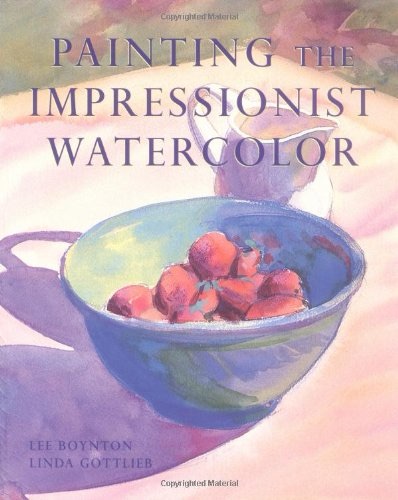
    I read the book Painting the Impressionist Watercolor by Lee Boynton and Linda Gottlieb. It was published in 2004. Lee Boynton is known for his impressive body of work regarding Impressionism in watercolor. This book is co-authored with one of his students, Linda Gottlieb. This book aims to teach you how to paint authentic Impressionist paintings in watercolor. This is done by guiding you through buying the right tools — that is, paints, brushes, palettes, and paper — that will enable you to get the job done. Boynton starts by having you paint blocks, and then you gradually work your way up to still lifes. I find it interesting that Boynton never has you do a portrait, because portraits are very demanding and difficult. I also find it interesting that he has you paint in a very specific manner. But, then again, the goal is to paint like him, so this shouldn’t be a surprise.  

      I initially picked up this book because I was charmed by the author’s artistic style. I was hoping that reading it and maybe doing some of his exercises would make me a better artist. However, I was disappointed.

    I think that this is a very good book, but it’s definitely not for beginners. This book is also not for people who prefer to work with pans, which are shallow dishes of paint you find in most craft stores. Lee Boynton clearly prefers to work with tubes and this book advises you to work with such, which are more like acrylic and oil paints and require more preparation.

    Tubes are not bad. If you prefer to work that way, more power to you. However, during the times I have dabbled with watercolors, I have always preferred to work with pans. Therefore, I can’t really use this book. This book also requires specific colors from specific brands in tubes. As someone who doesn’t like to work with tubes, this leaves me high and dry. 

    That said, if you are willing to buy and work with tubes, as well as everything that this artist wishes you to buy in order to follow his regimen, you will become somewhat of a real Impressionist painter. I came away with a much better understanding of Impressionism than when I began. Impressionism is a school of art that is about portraying light. I never really understood that before reading his book, but now I do.

    Last semester, when there were therapy animals in the school library, I brought my small pan of watercolor paints to the scene so that I could paint a picture of one of the dogs, Garbo. It wasn’t meant to be a study of light, like most impressionism is. It was my interpretation of something I thought was cool and interesting, or rather someone I thought was cool and interesting.

    I have taken my pan to the library quite a few times, because last year I didn’t always feel like painting in my dorm. I don’t paint as much these days. Nowadays, I prefer to draw more, especially with pen and ink. You can’t do that as much with tubes. With tubes, you still need a palette and an easel and all that. That doesn’t appeal to me nearly as much. I enjoy the minimalism involved in putting a pan, a sketchpad, a bottle of water, and a pencil and pen in my pack and going to the library to paint there.

    If you are a beginner to art in general, there are three books I recommend for you. I recommend What Adults Don’t Know About Art: Inspiring young minds to love and enjoy art by The School of Life, Urban Watercolor Sketching: A Guide to Drawing, Painting, and Storytelling in Color by Felix Scheinberger, and Draw Your World: How to Sketch and Paint Your Remarkable Life by Samantha Dion Baker. With those three books, you can’t go wrong. I don’t recommend Painting the Impressionist Watercolor, unless you are already good at drawing, are dedicated to Impressionism, and/or are willing to work with tubes.

    What Adults Don’t Know About Art was written for children with special needs. However, it is the best book about art appreciation that I have ever read and I wholeheartedly recommend it. I recommend Urban Watercolor Sketching for anyone who wants to get into watercolor. It is appropriate for all skill levels. I have reread this book countless times, and every time I read it I feel like I have more to learn. Scheinberger presents tough concepts, in an accessible way. Even if you don’t initially understand everything, you still go away feeling like you can paint. 

    I also prefer Scheinberger’s approach to art over the emphasis on light in Painting the Impressionist Watercolor. Scheinberger’s approach resonates more with me. I don’t care about portraying light when I do art.  I care about portraying people and places that I love, that are dear to me, or that I just find interesting.  This is Scheinberger’s approach as well, although he does emphasize “the light” somewhat. As for Draw Your World, that isn’t necessarily a book I would read multiple times. However, I enjoy her approach to art as well. I also feel anyone can benefit from her exercises. So, paint on!

  • Conflict’s cost: Howl’s Moving Castle fuses war and nature’s fragility in a magical tale

    Conflict’s cost: Howl’s Moving Castle fuses war and nature’s fragility in a magical tale

    By Julia Kern

    Howl’s Moving Castle, directed by Hayao Miyazaki, is an adaptation of the original fantasy novel by the same name. British author Diana Wynne Jones first published this novel in 1986 by Greenwillow Books of New York. 

    The story follows our protagonist Sophie, a young milliner (a person who makes hats), who is turned into an elderly woman by a witch who enters her shop and curses her. Sophie seeks the wizard, Howl, in hopes of lifting the curse. However, Sophie gets caught up in Howl’s avoidance of being recruited to aid the king in a war which Howl has a pacifist outlook on. Sophie and Howl also have an eventual romance that blossoms between them throughout the runtime of the film. 

    Fans of Miyazaki’s films will note that a lot of his films, although made for all audiences, have political or personal messages meant for a more mature perspective. Themes of anti-war messaging, as well as the protection of nature, are most common. 

    Miyazaki is an artist as well as a storyteller. Miyazaki illustrates his message not just through the story and characters, but also the beautiful and sometimes frightening imagery.

    The world of Howl’s Moving Castle is a captivating one. The fictional, vaguely Germanic country of Ingary is colorful, bright, and lively at the beginning of the film.

    Nearing the end of the film, the ongoing war reaches the town. Bombs fall from fantasy-like airships, destroying the beautiful town we have come to know and love. The colors used are purposeful, in depicting how horrible and evil war is. Once a brightly lit and colorful world now turned to fire and ash. 

    Howl’s Moving Castle, although based on a preexisting work, was influenced by Miyazaki’s opposition to the United States invasion of Iraq in 2003. 

    Similar themes are shown in other works such as My Neighbor Totoro, Porco Rosso, Pom Poko, and many others. However, I think Howl’s Moving Castle most effectively combined these themes of nature and man’s obsession with war and destruction

    I think Howl’s Moving Castle is a beautiful movie, with an important message that can still be applied today. It’s often the case that animation is looked down upon due to its association with children’s content. This is why it’s important to remind ourselves that animation is a medium, rather than a genre. There are things you can show in animation that would never have the same effect in a live-action adaptation. I’m unsure if the message of the film would have the same impact if it was told without the stunning animation that Miyazaki provides.

    If you are at all interested in viewing Howl’s Moving Castle on your own time, you’re in luck! The film is celebrating its 20th anniversary and will be back in theaters from Sept. 29 through Oct. 12.

    Julia is a journalism major at Cal Poly Humboldt. She loves film and is a regular on Letterboxd, and is an ex-Regal subscriber (never subscribed)! To quote Robin Williams in her all-time favorite movie, Dead Poets Society, “The powerful play goes on and you may contribute a verse. What will your verse be?” 

  • A Life of Literary Glamor

    A Life of Literary Glamor

    Natalie Goldberg and her girlfriend face grief and illness

    By Alexandra Berrocal

    Ever since her Zen teacher Katagiri Roshi died, Natalie Goldberg has been slightly more sickly than other people. Colds that would leave most people fine after a few days took weeks for Goldberg to recover from. Despite this, Goldberg never started to ask serious questions about her health until she absolutely had to. 

    After going to the doctor for a routine check-up, she discovered that she had a rare form of blood cancer, with a high mortality rate. Later in the story, Yu-kwan, her beloved girlfriend of 4 years, is diagnosed with breast cancer. Let The Whole Thundering World Come Home explores what it is like to have cancer when your partner has cancer at the same time, which has to be an unusual situation.

    Although Goldberg is a prolific writer who has written extensively on many other topics, this is her only memoir on what it is like to have cancer. At the beginning of Thundering World, she encourages us to read The Great Spring, another book of hers. She says that The Great Spring is really a long, extended afterward to this story. 

    She also says that she wasn’t initially sure if she wanted to write about cancer. Part of her wanted to leave the past in the past, which I must confess is an unusual stance to take for someone who wrote Old Friend From Far Away, a book that encourages us to explore the past as a means of self discovery and self understanding. Cancer must be terrifying if a talented memoirist like Goldberg is afraid to look at it.

    This isn’t a story about how the cancer twins — as Goldberg called herself and Yu-kwan — supported each other through cancer. Throughout this book, there is an odd separation between the two. Sharing silence initially brings the pair together, but as the story goes on, it starts to tear them apart. This resolves at the end of the story, but both women struggle for a while as they go through their own journeys with cancer and are both too sick for one to act as a caregiver to the other. 

    Goldberg definitely admires Yu-kwan, and not just for her great physical beauty. She admires Yu-kwan for all she has accomplished in her life and all she has overcome. This prevents the descriptions of Yu-kwan from feeling like sexual objectification. For one thing, Goldberg’s admiration of Yu-kwan doesn’t feel terribly sexual. This is refreshing in a world where relationships between queer women are sexualized. Goldberg’s love for Yu-kwan definitely has a sexual element, but it’s not the entire reason why she loves and admires her partner. 

    Goldberg wrote this book having already written many books. Also, she didn’t write this story while she was actually experiencing cancer. She didn’t even write it right after she went into remission. She waited a while and then wrote her story. I think she wanted to put her past behind her.

    If anything, this is a story of reconciliation. Cancer drives Yu-kwan and Goldberg apart as each deals with their illness in their own way. However, after Goldberg makes a delicious roast chicken for both of them in the end, the two start to reconcile. The story ends on a hopeful note for both of them. I, too, love a good roast chicken.

    Alexandra Berrocal is a self-published author who has written fifteen books. She likes to crochet and draw, as well as read and write. She is from Orange County. They like dogs, and they sing alto in a choir. If you have an idea for a book she could review, email them at alexandraberrocal@gmail.com.

  • On-campus food delivery for hungry hungry byppos

    On-campus food delivery for hungry hungry byppos

    By Noah Pond

    Cal Poly Humboldt is implementing a new student-to-student on-campus food delivery program. The university has partnered up with a company called BYPPO Campus. BYPPO’s website states that they are powered by students for students.

    The program is similar to DoorDash. It will allow students to order food on the BYPPO Campus app, then campus restaurants/vendors will fulfill their orders. Lastly, students—referred to as delivery heroes—bring the food either to students’ dorms or to one of over 30 campus hotspots.

    Aug. 26 was the Fall 2024 launch with BigFoot Burger as the only vendor currently available on the app. Soon, The Depot, The Cupboard, and College Creek Marketplace will all be available for delivery. 

    John Shermer, Director of Marketing of Humboldt Dining, seemed to be very excited about the new app.

    “Humboldt Dining is thrilled to launch the new BYPPO Campus student-to-student food delivery service at Cal Poly Humboldt! Students can become food delivery runners, earning extra income while enhancing the campus dining experience,” Shermer said on the BYPPO Campus website. 

  • A life of literary glamor

    A life of literary glamor

    Lonely Quiet Highway and The Great Failure

    By Alexandra Berrocal

    Natalie Goldberg woke up at 5 a.m. to go to the zendo, a Japanese meditation hall.  She described waking up in the biting cold and walking in the freezing snow; the wind, the cold, how punishing a routine this was to engage in before going to work, school, or wherever she needed to go. It mirrored how demanding Zen Buddhism—a Japanese sect of Buddhism that emphasizes meditation—could be to follow. This was especially true during practice sessions, where a person would go to the zendo to meditate more often than usual—both in the early morning and late into the afternoon and night. Zen may have a reputation for serenity, but it is not a faith for wussies.

    Goldberg wrote about the experience of being a Zen Buddhist with a Jewish background in America in her book, Long Quiet Highway: Waking Up in America.  She further explores these themes in The Great Faliure her sequel to Long Quiet Highway.

    Natalie explores how she dealt with death compared how her husband dealt with the loss of his parent. At one point, she wrote that while her husband was at the deathbed of his parent, she was at the zendo extolling impermanence. It was her way of running from the problem. She doesn’t go into greater detail about this, but the little she does say is very intriguing and sad.

    Long Quiet Highway is also about Goldberg’s relationship with Katagiri Roshi, her beloved Zen teacher, but it places him in a far more idealized role. In that book, Katagiri taught her a lot about life in general. However, I think The Great Failure is a lot more interesting. The quality of the writing is lacking — some of the writing feels like it belongs in a journal, not a memoir, especially the parts where Goldberg is speaking to Roshi. However, the themes it tackles are far more meaningful — at least to me. It talks about how lonely it can be to be a spiritual leader.

    Goldberg says that she never loved any man as much as she loved Katagiri Roshi. I found this very moving. Goldberg is married for a good portion of Long Quiet Highway, and Roshi is also married for the entire time he knew her. For most of both books, Roshi respected Goldberg’s marrige, and he even gave her good advice after she fought with her husband. 

    He adivses her to be quiet and really think carefully before she says anything in a heated moment and to not speak rashly. Unfortunately, she doesn’t follow that advice, and her marriage ends in divorce. She comes to understand the significance of his advice quite some time later.

    Ultimately, Long Quiet Highway and The Great Failure is a love story between Goldberg and Roshi. It is profound because by the end of both books, she doesn’t have any illusions about Roshi anymore. However, she loves him just as much. If you’re seeking a somewhat unconventional story of the love that can exist between a person and their spiritual teacher, look no further, this is the story. 

    Alexandra Berrocal is a self-published author who has written fifteen books. She likes to crochet and draw, as well as read and write. She is from Orange County. They like dogs, and they sing alto in a choir. If you have an idea for a book she could review, email them at alexandraberrocal@gmail.com.

  • The hidden gems of Humboldt County

    The hidden gems of Humboldt County

    By Julia Kern

  • Mar’s Gaming Garage: A purrfect adventure through the eyes of a cat

    Mar’s Gaming Garage: A purrfect adventure through the eyes of a cat

    By Mario Orozco

    Lost in a robotic world, you journey through neon-lit streets as a cat trying to find your way back home. This week’s edition of Mar’s Gaming Garage will focus on Stray, an indie game recommended by a fellow journalism major.

    Stray is set in a cyberpunk environment filled with bright neon signs and crumbling buildings. The lost city is completely walled off with a giant dome., keeping the residents secluded from the outside world.

    I am typically not a huge fan of the cyberpunk aesthetic, but seeing this strange world from the perspective of a cat adds a fresh feel to an otherwise bleak setting. The environment is used creatively, with much of the gameplay only being possible because you’re a cat. 

    Stray excels at immersing the player into the role of a cat and does a fantastic job at incorporating cat behaviors. You can tear at carpet, knock things off shelves, scratch at wallpaper, and more. These actions are often used to chaotically progress through the story. Little details like these ground you in the feline perspective, adding life to the game.

    The characters in Stray almost entirely consist of robots. Despite this, they all feel very human, they have bonds with each other, care for each other, and overall are very emotional beings. 

    The secondary protagonist of Stray, B-12, is my favorite character in the game. Throughout the story, you recover B-12’s past memories, which allow you to unlock a very touching and emotional experience that I did not expect coming into the game. 

    Stray has two sets of antagonists. The first are small, mutated bacteria called Zurks. Zurks resemble wrinkly potatoes and share the primary goal of eating you and anything else in sight. They chase and leap at you from every direction, making every interaction with them extremely thrilling.

    The second and main antagonists of the game are the Sentinels. The Sentinels are small security drones that chase and shoot at you whenever you enter their view. While I enjoyed the Zurks, the Sentinels didn’t do it for me. Getting past them requires waiting and observing their patrol patterns, which wasn’t as fun as running for your life from a pack of potato monsters.

    While I enjoyed playing Stray, there are a couple of things I thought could be improved. The first is the game’s lack of replay value. While this isn’t a necessity, if Stray had more side quests, it could help flesh out the world more. The other issue is the lack of other animal-like beings. The addition of robotic animals could have created some funny and interesting interactions. 

    Overall, Stray is a short and sweet experience that I had a blast playing. It took me a total of 4 hours and 36 minutes to complete. While I had some issues with it, Stray was such a fun and unique experience and I rate it a 4.2 out of 5. If you love cats or are interested in dystopian games, I would definitely recommend Stray to you.

    If you have any games you would like me to review, you can email marsgaminggarage@gmail.com.

    Mario Orozco is a writer and assistant social media editor for The Lumberjack. He transferred to Cal Poly Humboldt in 2022 and his favorite game of all time is The Legend of Zelda: Breath of the Wild.

  • Mar’s Gaming Garage: Until Dawn 

    Mar’s Gaming Garage: Until Dawn 

    By Mario Orozco

    For my first game review of the new semester, I took a recommendation from an anthropology major and played Until Dawn. With the game getting a remaster in the coming months, now is a perfect time to dive in and see if Until Dawn is worth your money.

    Until Dawn is an interactive horror game released in 2015 that follows a group of friends trying to survive on Blackwood Mountain. The game has a butterfly effect system that allows players to shape the narrative through their own decisions, making the experience a little bit different for each individual player. 

    My playthrough of this game would definitely be looked down upon by the perfectionists of the gaming world. By the time I made it to the end, only three of the eight protagonists had lived to tell the tale. Despite my lackluster performance, Until Dawn was an amazing experience that kept me hooked the entire time. 

    The first aspect of Until Dawn that I enjoyed was the cast of characters. Each one of the main cast has their own individual journey that develops their character as you progress through the story. The relationships the cast have with each other also changes depending on your choices. The beautiful part of character development within Until Dawn is that the decisions of the player can shape whether someone changes for better or for worse. 

    Until Dawn also excels at establishing its atmosphere. Most of the game takes place in a remote lodge in the middle of a snowstorm, adding feelings of isolation and vulnerability. The dark hallways, creaking floors, eerie music, and distant whispers give a constant uneasy feeling – as if something could jump out at you at any second. The game also incorporates moments of silence in a way that makes you feel like something is always just out of sight. 

    The final aspect I enjoy about this game is the branching narratives. I am a sucker for interactive storytelling, especially interactive storytelling that matters to the player. Until Dawn is a game where your decisions definitely matter and can lead to the survival or death of your favorite characters. Until Dawn’s butterfly narrative provides so much replayability, even the smallest change in the way you play can drastically change the fate of the characters and change the relationships they have with one another.

    Despite all the good things about Until Dawn there is one main issue that I have with the game. Funnily enough, my favorite part of the game is also what I think could be improved. While the decisions of the player definitely matter, all they really do is determine who survives and who doesn’t. If certain decisions could also affect the ending of the game, it would add even more to the already high replay value. With the remaster coming Oct. 4, maybe this is something we’ll see in the near future.

    Until Dawn took me a grand total of 9 hours and 13 minutes to complete. I genuinely enjoyed every minute of it and would rate it a 4 out of 5. If you’re into suspense filled horror, interactive games, or both, then I definitely recommend Until Dawn. Based on how good the original game was, I’m sure the remaster will be just as good – if not better.

    If you have any games you would like me to review, you can email marsgaminggarage@gmail.com.